The Texas Pond Plants That Turn Backyard Water Features Into Cooling Retreats
A backyard pond in Texas summer is not just a nice idea. It is a legitimate mood upgrade.
When the heat gets serious and everything feels a little too bright and a little too loud, there is something genuinely calming about a water feature surrounded by the right plants.
Soft edges, dappled shade across the water surface, the occasional frog hanging out like it owns the place: this is the kind of backyard moment worth designing for.
The right pond plants do a surprising amount of work, shading the water, supporting wildlife, softening hard edges, and making the whole feature feel more like a natural retreat and less like a DIY project.
They will not cool down your entire Texas yard, but they can absolutely transform how your water garden looks, feels, and functions through the long warm season.
1. American White Water-Lily For Floating Shade
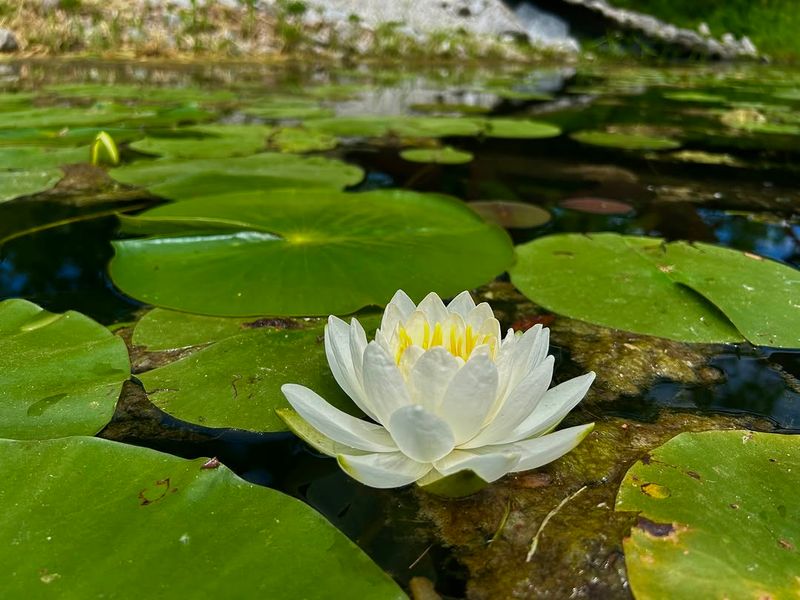
Broad, flat lily pads drifting across still water are one of the most recognizable signs of a well-established pond, and the American White Water-Lily delivers exactly that kind of presence.
Native to Texas and much of the eastern United States, this aquatic plant sends up large, rounded leaves that float at the surface and shade the water below.
That shade can help reduce water temperature in smaller ponds and may slow algae growth by limiting sunlight penetration, though results depend on pond size, water depth, and how much surface coverage the lily achieves.
The white blooms are fragrant and open during morning hours, adding a subtle elegance to a water garden. Each flower sits just above the water surface and closes by afternoon, making early morning the best time to enjoy them fully.
Planting depth typically ranges from one to three feet, and the lily grows best in still or slow-moving water with full sun.
In a Texas backyard pond, this plant works well on deeper shelves or in the main basin. Container planting helps manage its spread and keeps maintenance more manageable over time.
Wildlife, including frogs and small fish, often use the lily pads as resting and feeding spots.
2. Pickerelweed For Colorful Pond Edges
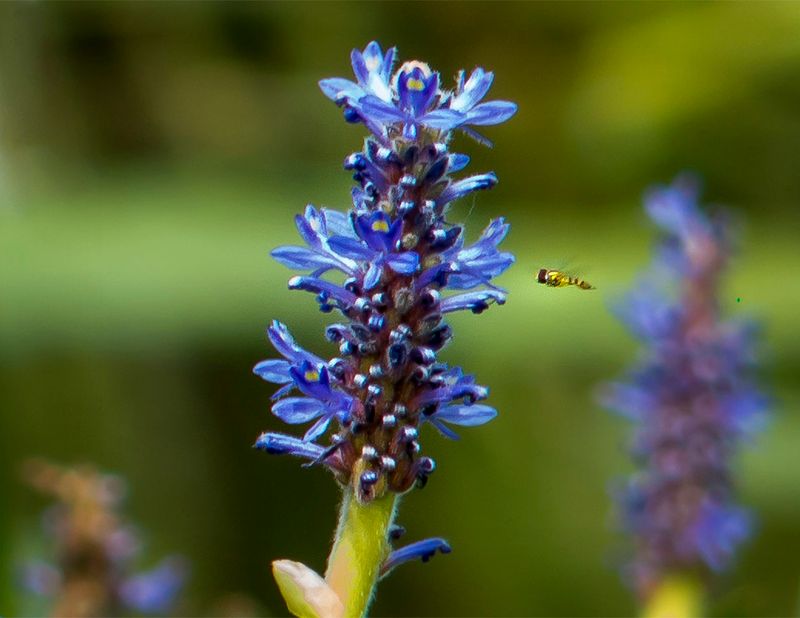
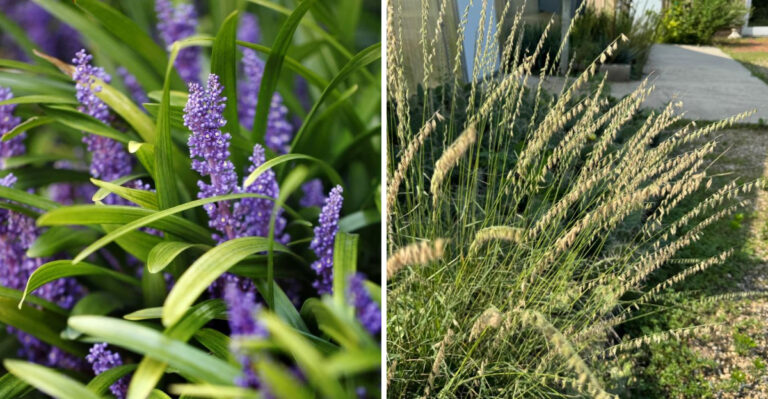
Purple flower spikes rising from the shallow edge of a pond have a way of catching attention, and Pickerelweed earns its place in water gardens with both color and function.
This native marginal plant thrives in shallow water, typically six to twelve inches deep, and grows well along pond shelves, wet margins, and the edges of naturalistic water features throughout much of Texas.
The blooms appear in summer and attract bees, butterflies, and other pollinators, making it a genuinely useful addition to a wildlife-friendly pond.
The dense upright leaves also help soften the transition between open water and the surrounding landscape, giving a pond edge a more natural, finished appearance.
Beyond aesthetics, the root systems can help stabilize shallow banks and filter water moving through the root zone, though Pickerelweed should not be considered a complete water-quality solution on its own.
For homeowners working with smaller ponds or patio water features, Pickerelweed can be planted in submerged containers to control its spread. It prefers full sun to partial shade and generally performs well in the warm conditions that define a Texas summer.
Your Texas Garden Changes Every Week. Your Plan Should Too.
Gardening in Texas changes quickly throughout the season. Every Friday you’ll receive a simple weekly plan showing exactly what to plant, prune, fertilize, harvest, and protect so you never miss the right timing.
Regular division every few years keeps growth tidy and encourages fresh blooms season after season.
3. Soft Rush For A Natural Cooling Border
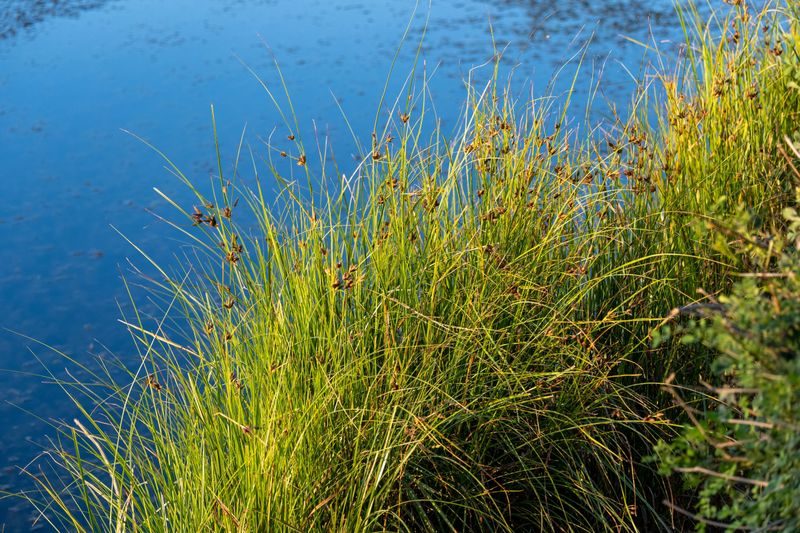
Something shifts in the feel of a pond when a stiff concrete or liner edge gives way to a border of tall, slender stems swaying gently in a breeze.
Soft Rush creates exactly that kind of natural transition, and it is well suited to water gardens where a softer shoreline look is the goal.
This native rush grows in wet soil and shallow water, typically in depths up to about six inches, and forms dense clumps that visually anchor a pond edge.
Soft Rush does not produce showy flowers, but its texture and movement add life to a water feature in a way that hard landscaping simply cannot match.
The upright stems provide cover for frogs, small birds, and insects, supporting a modest but meaningful habitat layer around a Texas backyard pond.
The root system also helps hold soil and slow erosion along wet bank areas, which can be especially helpful after heavy Texas rains.
Maintenance is relatively straightforward. Cutting back old stems in late winter or early spring encourages fresh growth and keeps clumps from becoming too dense.
Soft Rush tolerates full sun and partial shade, giving pond owners some flexibility in placement. Container planting is an option for smaller features where spread needs to be managed carefully.
4. Blue Flag Iris For Wet Margins
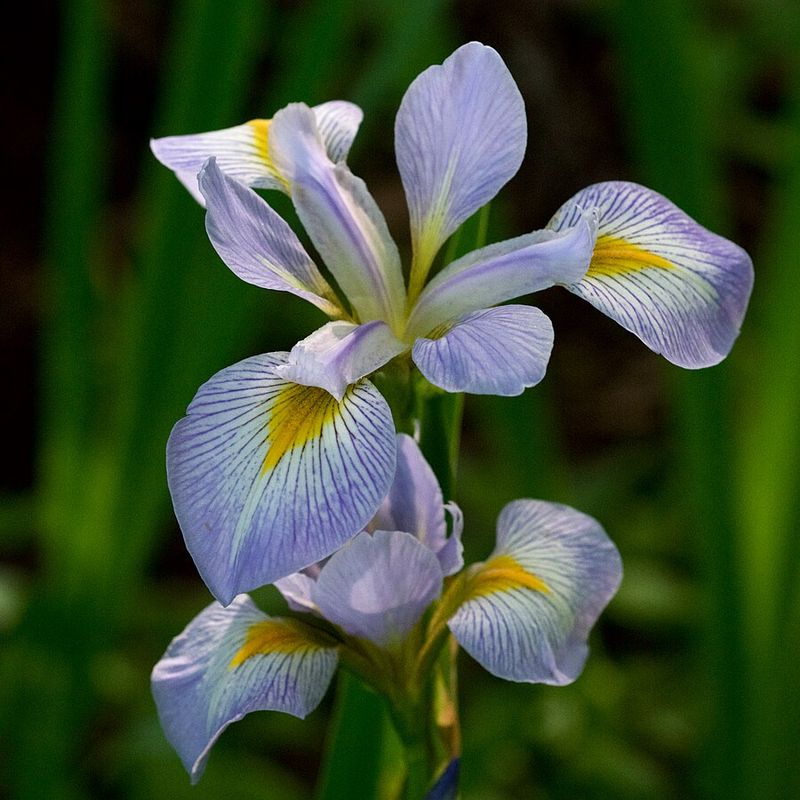
Few plants command attention along a pond edge the way Blue Flag Iris does when it blooms in spring. The blue-to-violet flowers are striking, and the tall, sword-shaped leaves add vertical structure to a water garden even after the blooms have faded.
Blue Flag Iris is native to parts of Texas and grows naturally in wet meadows, stream edges, and pond margins, making it a well-matched choice for backyard water features with consistently moist or shallow-water conditions.
This iris prefers wet soil to very shallow water, usually no more than a few inches deep, and does best in full sun or light partial shade. In a backyard pond, it fits well along the pond’s wet edge or on a shallow planted shelf.
The spring bloom period is relatively brief, but the foliage remains attractive through the growing season and continues supporting the overall look of the water feature.
Blue Flag Iris can spread by rhizome over time, so dividing clumps every two to three years helps keep growth in check and promotes stronger blooming.
It is worth noting that all parts of this plant can cause irritation if ingested, so placement should be considered in households with curious pets or young children.
Overall, it brings reliable beauty and a native character to a Texas pond margin.
5. Arrowhead For Shallow Water Texture
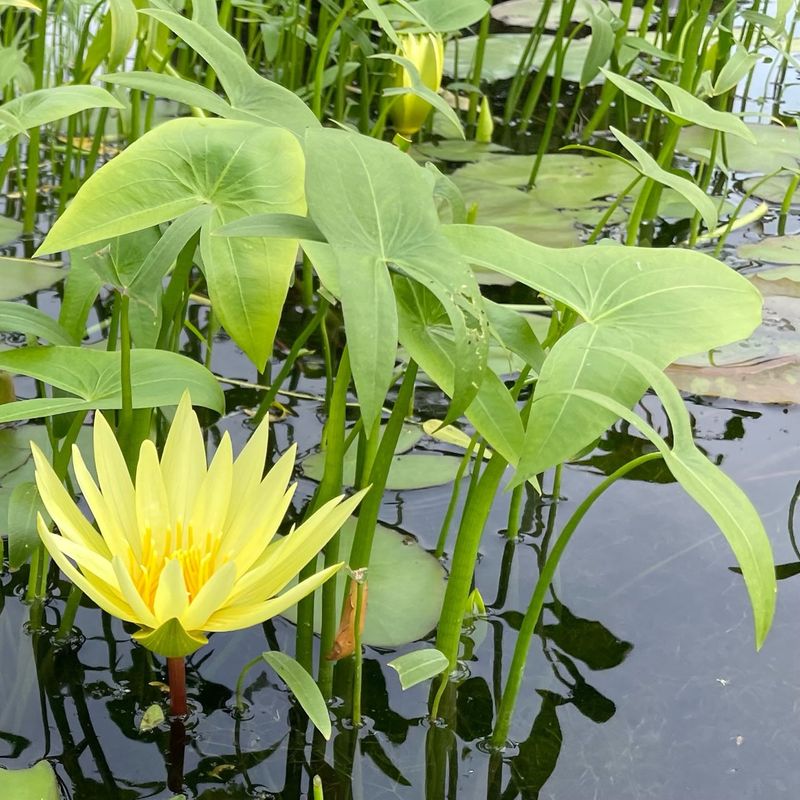
Named for the unmistakable shape of its leaves, Arrowhead brings bold visual texture to the shallows of a Texas pond.
The arrow-shaped foliage rises cleanly above the water surface and creates an interesting layered look when mixed with lower-growing marginals or floating-leaf plants.
Several Sagittaria species are native to Texas, and they tend to adapt well to the warm, sometimes unpredictable conditions of a backyard water garden in the region.
Arrowhead grows best in shallow water, typically two to twelve inches deep, and prefers full sun. Small white flowers with three rounded petals appear on upright stalks during summer, adding a delicate seasonal accent to the plant’s strong leaf structure.
Waterfowl and some small mammals are known to feed on the tubers, making Arrowhead a worthwhile addition to ponds where wildlife habitat is a priority.
In a water garden, Arrowhead works well along planted shelves or in the shallower zones near the pond edge. It can spread assertively in open, fertile conditions, so growing it in submerged containers helps keep it manageable in smaller ponds.
Periodic thinning encourages healthier growth and prevents the plant from crowding out neighboring species. Its clean, architectural leaf shape makes it one of the more visually distinctive options for pond margins.
6. Lizard’s Tail For Soft White Summer Blooms
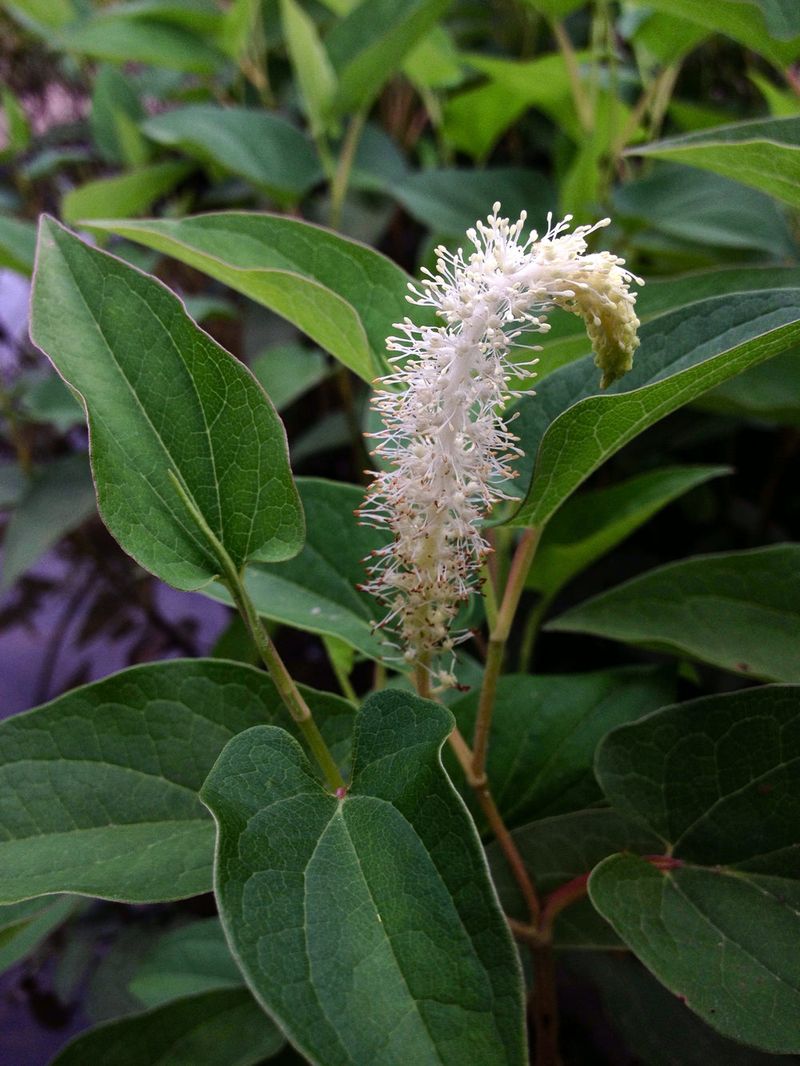
Tucked into a shaded corner of a pond margin, Lizard’s Tail has a quiet charm that sets it apart from showier water garden plants.
The long, arching white flower spikes appear in summer and have a delicate, slightly fragrant quality that feels at home in a naturalistic water garden.
Native to much of the eastern and southern United States, including parts of Texas, this plant grows naturally along stream banks, pond edges, and shaded wet areas where the soil stays consistently moist.
Lizard’s Tail thrives in partial to full shade, which makes it especially useful in spots where other sun-loving marginals would struggle. It grows in wet soil or very shallow water and spreads gradually by rhizome, forming soft colonies over time.
The heart-shaped leaves add a lush, layered texture to a shaded pond margin and can help fill in areas that might otherwise look bare or unfinished.
For water garden owners who have a partially shaded pond edge or a spot beneath an overhanging tree, Lizard’s Tail is worth considering.
It tends to be low maintenance once established, though periodic thinning keeps the colony from expanding too broadly.
The combination of shade tolerance, native status, and soft summer blooms makes it a genuinely distinctive choice among Texas pond marginals.
7. Buttonbush For Wildlife-Friendly Pond Edges
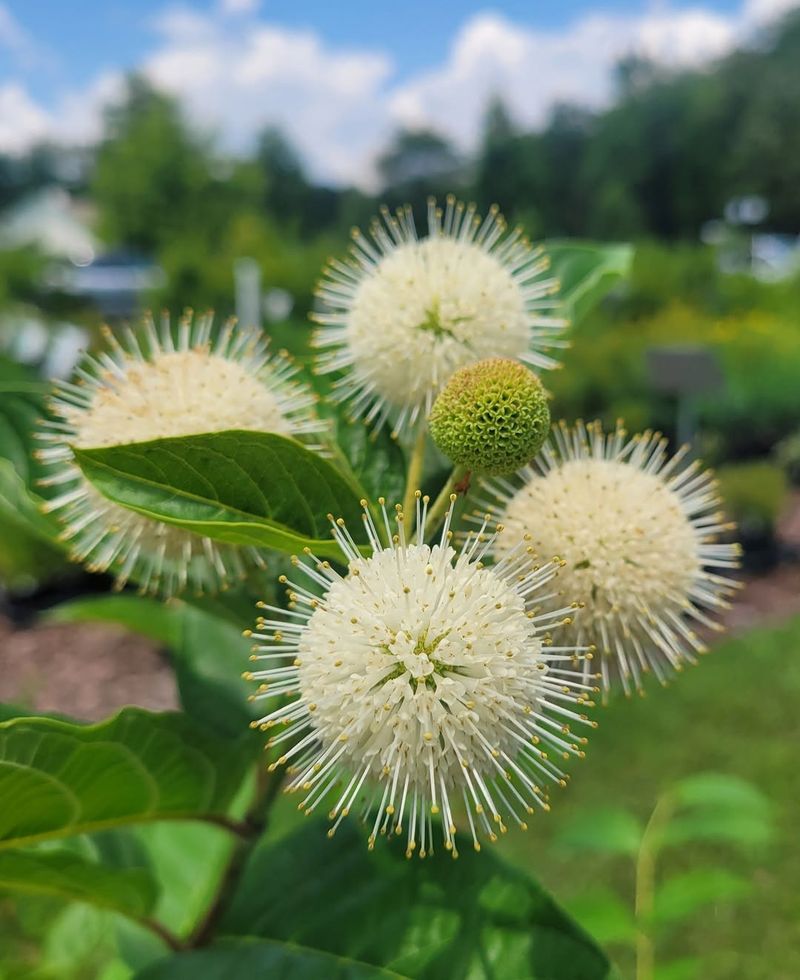
Round, creamy-white flower clusters that look a bit like pincushions make Buttonbush one of the most visually interesting plants you can add to a Texas pond edge, and the wildlife response to those blooms is remarkable.
Bees, butterflies, and hummingbirds visit the flowers regularly during summer, and the seeds that follow attract waterfowl and songbirds into fall.
For a backyard pond where supporting habitat is part of the goal, Buttonbush earns its space quickly.
Unlike most of the plants on this list, Buttonbush is a native shrub rather than an herbaceous aquatic or marginal plant.
It can grow several feet tall and wide, so it works best along larger pond edges, rural water features, or in spots where a taller, more structural plant is welcome.
It tolerates wet soil and periodic flooding well, which makes it a natural fit for the fluctuating water levels common in Texas ponds after seasonal rains.
Buttonbush prefers full sun to partial shade and is generally adaptable across much of Texas. Pruning in late winter helps maintain a manageable size and encourages vigorous new growth.
Because of its size potential, placement planning matters.
When sited thoughtfully, Buttonbush can anchor a pond edge visually while providing some of the most reliable wildlife activity of any plant in a water garden setting.
8. Spikerush Or Native Sedges For Bank Stabilizing
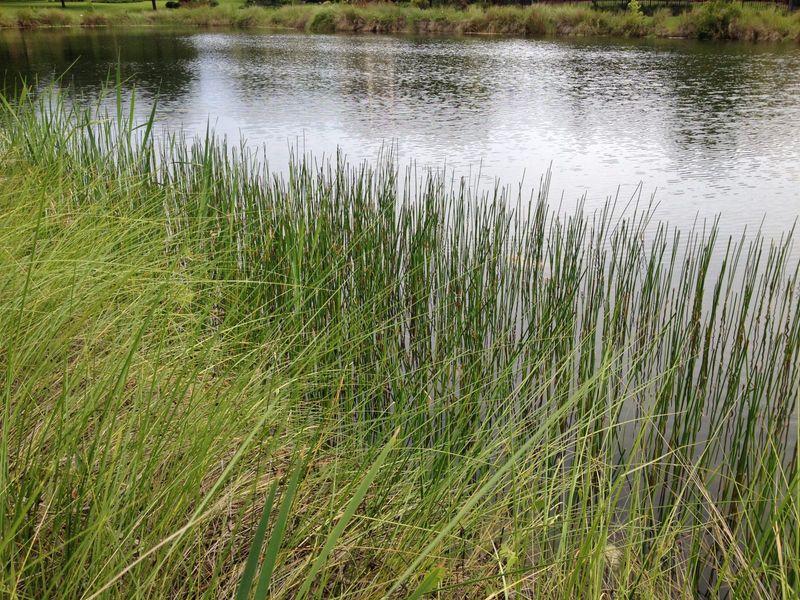
Bank erosion is a real challenge for Texas pond owners, especially after heavy rains that can wash soil directly into the water.
Spikerush and native sedges address this problem quietly but effectively by sending fibrous root systems into wet, shallow soils along pond edges and shorelines.
These plants may not draw attention with dramatic flowers or bold foliage, but they earn their place by doing the steady, practical work of holding a bank together.
Several native sedge species are well suited to Texas conditions, and Eleocharis species, commonly called Spikerush, grow naturally in wet areas, pond margins, and shallow standing water across the state.
Both groups tolerate full sun and can handle the wet-to-dry cycles that Texas weather sometimes delivers.
Their low growth habit and fine texture create a natural, meadow-like edge that transitions smoothly between open water and drier ground.
For smaller ponds or patio water features, these plants can be grown in containers placed at the water’s edge to manage their spread.
In larger or more naturalistic pond settings, allowing them to form a continuous shoreline band offers the most stabilization benefit.
They also provide cover for small frogs and aquatic insects, adding a functional habitat layer to a water garden without requiring much ongoing maintenance.
9. Water Willow For Shallow Edge Habitat
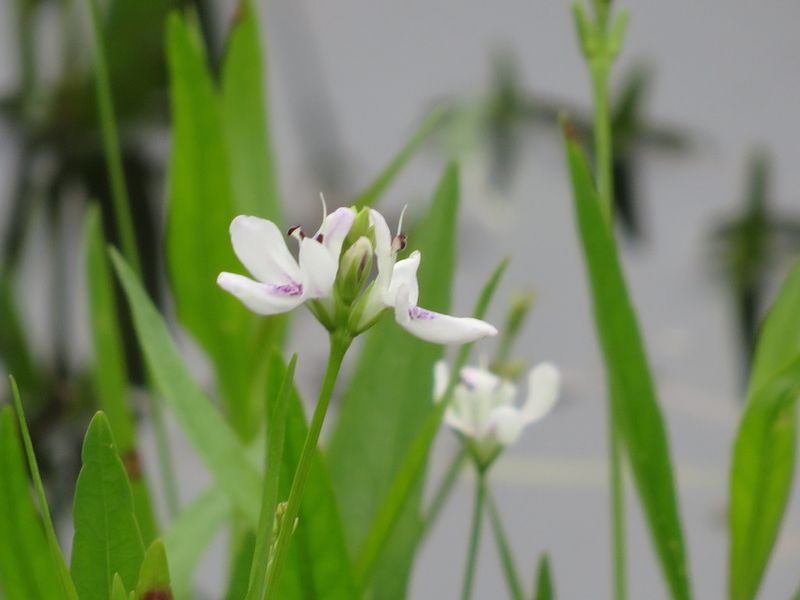
Spreading steadily along a shallow pond edge, Water Willow has a way of making a water feature look like it has been there for years. Despite the name, this plant is not a true willow but rather a native aquatic perennial in the Acanthus family.
Justicia americana grows naturally along stream banks, river edges, and shallow pond margins across much of the eastern and central United States, including parts of Texas, and it adapts well to backyard water garden conditions.
The narrow, willow-like leaves give this plant a graceful, fine-textured appearance, and the small purple-and-white flowers that appear in summer add a subtle seasonal accent.
Water Willow grows in shallow water, generally two to eighteen inches deep, and spreads by rhizome to form colonies along a pond edge.
That spreading habit makes it effective for stabilizing banks and filling in shoreline gaps, though container planting is worth considering in smaller ponds where spread needs to be managed.
Fish, frogs, and aquatic insects often use Water Willow colonies as cover and feeding habitat, which makes it a strong choice for pond owners who want to encourage a more active wildlife presence.
It prefers full sun and handles Texas summer heat reasonably well once established. Regular monitoring keeps growth from extending beyond the intended planting zone.