Plant These 8 Shade Trees And Watch Your Virginia Yard Cool Down
Virginia summers show up swinging. The heat lands early. The humidity clings like a wet blanket. By mid-afternoon your patio might as well be a cast iron skillet.
Step outside without cover and you’ll feel it instantly. Sweat before you’ve even sat down. Here’s the part most homeowners overlook.
According to USDA Forest Service research, the right tree, planted with a dense canopy and good placement, can lower your yard’s temperature by up to ten degrees under the right conditions. No electricity involved.
That’s not a minor bonus. That’s the gap between a backyard nobody touches and one where the whole family lingers until dark.
Virginia throws a lot at trees. Sticky humidity. Stubborn clay soil. Rainfall that never seems to follow a schedule. Some species wilt in soggy ground. Others fry under full sun.
The picks below earn their spot on this list. They handle whatever your yard hands them: wet corner, dry slope, or scorching exposure.
Plant one now. You’re locking in decades of shade, lower bills, and a yard worth stepping into.
1. Red Maple
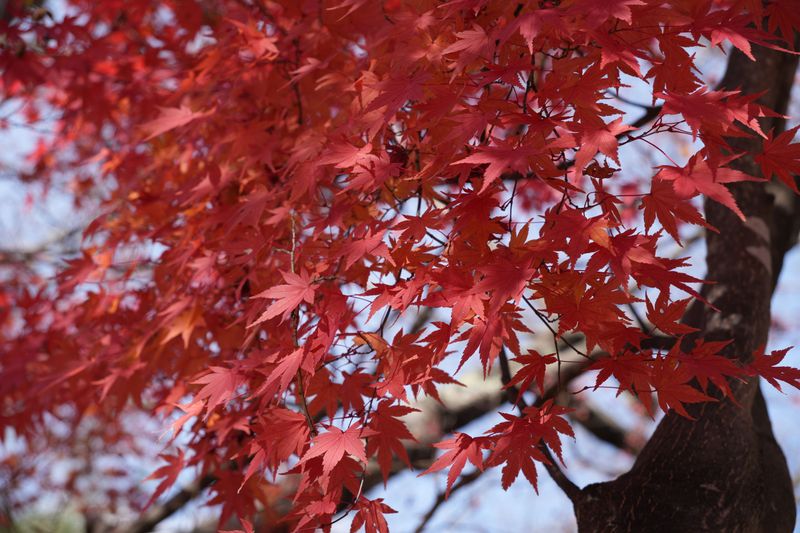
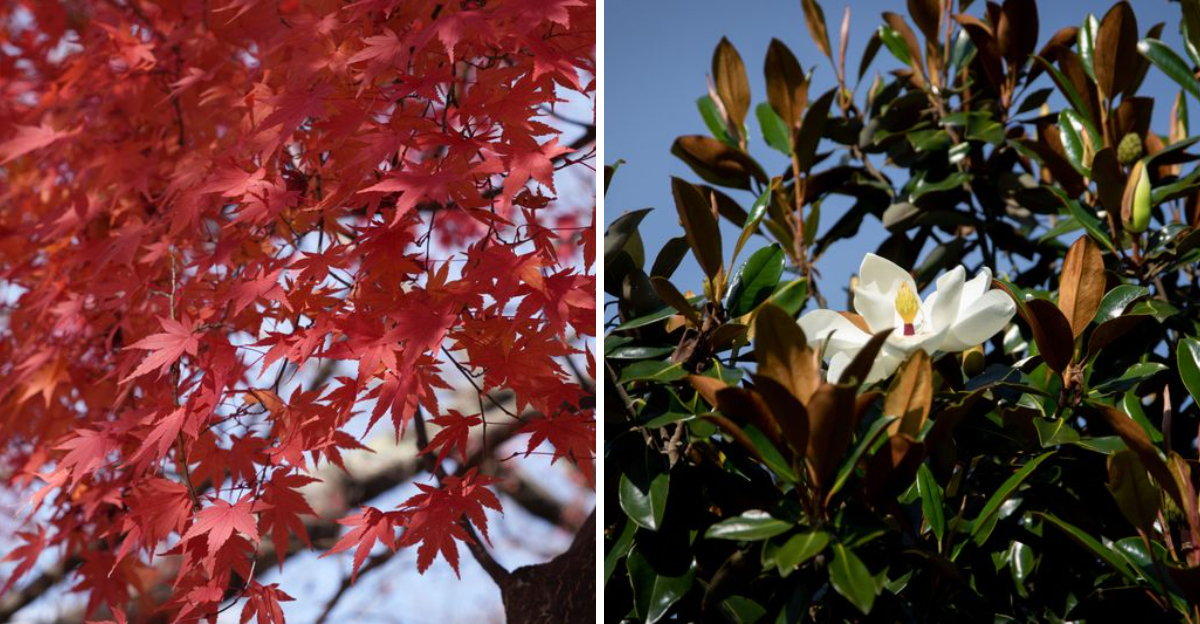
Few trees put on a show quite like the Red Maple. Every fall, it transforms into a bright display of red, orange, and gold that catches the eye on quiet neighborhood streets
Red Maple is one of the most adaptable shade trees you can plant in a Virginia yard. It handles wet soil, clay-heavy ground, and even the occasional drought without much complaint.
This tree grows fast, averaging two to three feet per year under good conditions. That means you start seeing real, meaningful shade within just a few years of planting.
In spring, tiny red flowers appear before the leaves do. It is one of the earliest signs that warm weather is finally on its way back.
Red Maple tops out between 40 and 70 feet tall with a wide, rounded canopy. Plant it on the southwest side of your home for maximum summer cooling effect.
It prefers full sun but tolerates partial shade without losing much of its signature beauty. Water it well during its first two summers, and then it largely takes care of itself.
Homeowners love this tree because it delivers three seasons of visual interest. Spring blooms, summer shade, and fall color make it one of the hardest-working trees in any landscape.
One thing to watch is surface roots as the tree matures. Give it plenty of open space and avoid planting it too close to sidewalks or driveways.
2. American Sycamore
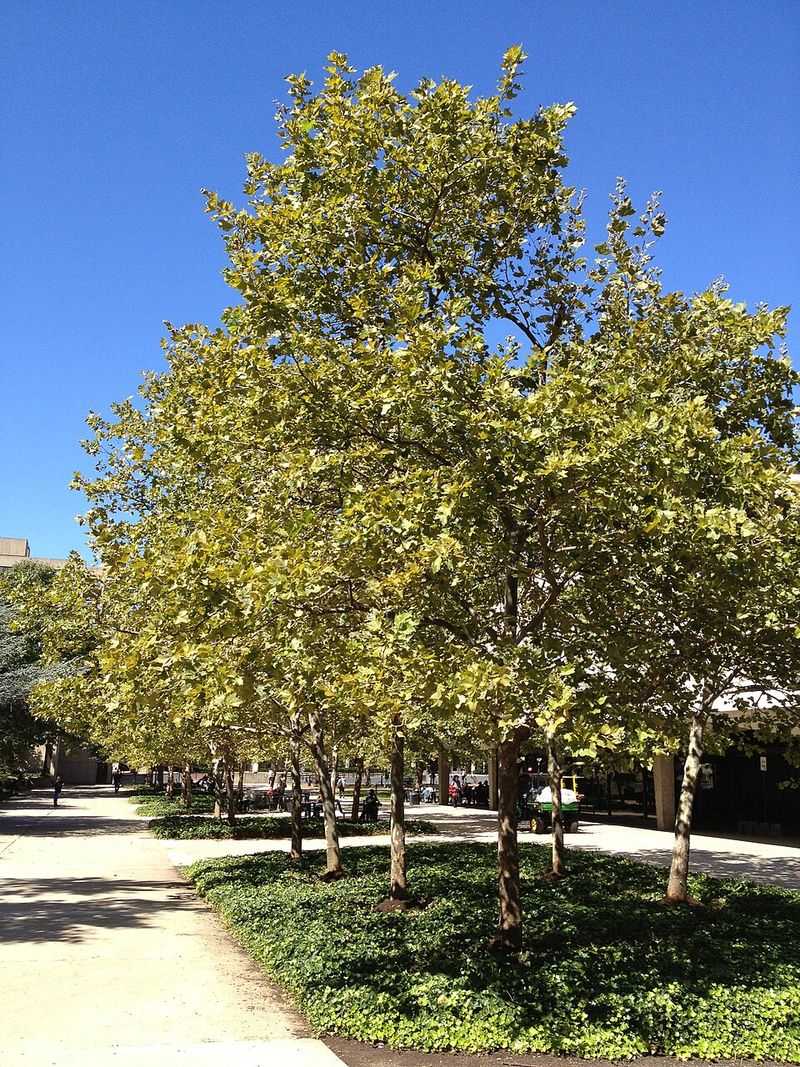
If you want a tree that looks like it belongs in a nature documentary, the American Sycamore is your answer. Its bark peels away in patches to reveal a stunning white and cream surface underneath.
This is one of the largest native trees in North America. A mature Sycamore can spread its canopy over 70 feet wide, creating shade that covers your entire yard in one shot.
American Sycamore thrives near water, so it performs especially well in low-lying Virginia yards with moist or poorly drained soil. It anchors itself deeply and holds up well through summer storms.
Your Virginia Garden Changes Every Week. Your Plan Should Too.
Gardening in Virginia changes quickly throughout the season. Every Friday you’ll receive a simple weekly plan showing exactly what to plant, prune, fertilize, harvest, and protect so you never miss the right timing.
Growth rate is impressive, often reaching two to four feet per year in ideal conditions. You will not be waiting around a decade before you feel any real difference in your yard temperature.
The large, maple-like leaves create a dense canopy that blocks a serious amount of direct sunlight. Sitting under a mature Sycamore on a July afternoon feels like nature’s own air conditioning.
Birds absolutely love this tree. Woodpeckers, owls, and songbirds all use Sycamore’s deep cavities and wide branches for nesting and shelter throughout the year.
Plant it away from structures since the root system is vigorous and wide-spreading. Give it room to grow and it will reward you with decades of dramatic, stunning beauty.
The Sycamore is a striking choice for homeowners who want maximum shade and visual impact in their landscape.
3. Willow Oak
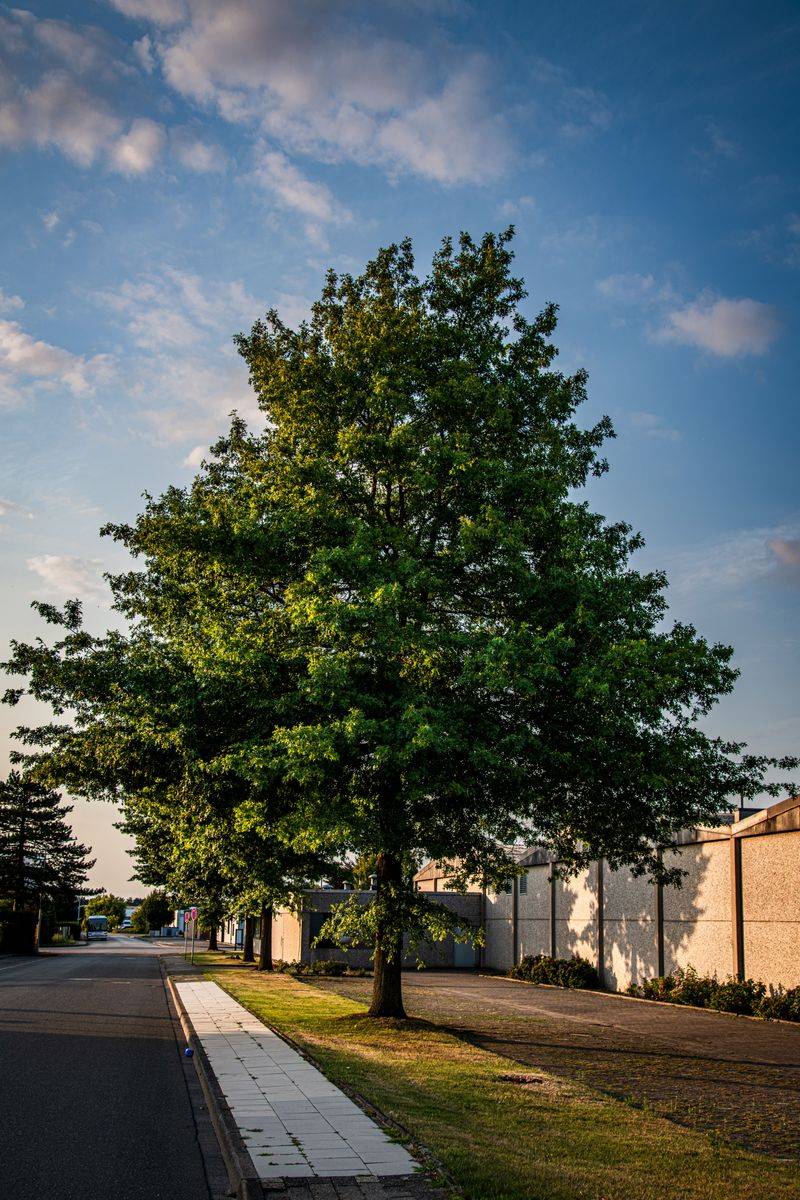
Willow Oak is the quiet overachiever of the shade tree world. It does not shout for attention, but once it is established, it delivers a canopy that transforms an entire yard.
Unlike most oaks, Willow Oak has long, narrow leaves that look almost like willow leaves. The result is a soft, feathery texture that sways gently in the breeze and catches the light beautifully.
This tree is a staple along Virginia streets and in suburban neighborhoods because it tolerates urban conditions surprisingly well. Compacted soil, heat, and air pollution do not slow it down much at all.
Willow Oak grows at a moderate pace, adding about one to two feet per year. It reaches 40 to 75 feet tall at maturity, forming a broad, rounded crown full of dense foliage.
The shade it produces is slightly filtered rather than dense, which is actually great for lawns. Grass beneath a Willow Oak tends to stay healthier than under trees with heavier canopies.
Fall color is a warm golden yellow that softens the yard beautifully before winter sets in. It is not the flashiest fall display, but it is consistently lovely every single year.
Willow Oak acorns are small and abundant, making them a favorite food source for squirrels, deer, and many bird species. Planting one is essentially building a wildlife buffet in your backyard.
For homeowners who want a low-drama, high-reward shade tree, Willow Oak checks every box on the list.
4. River Birch
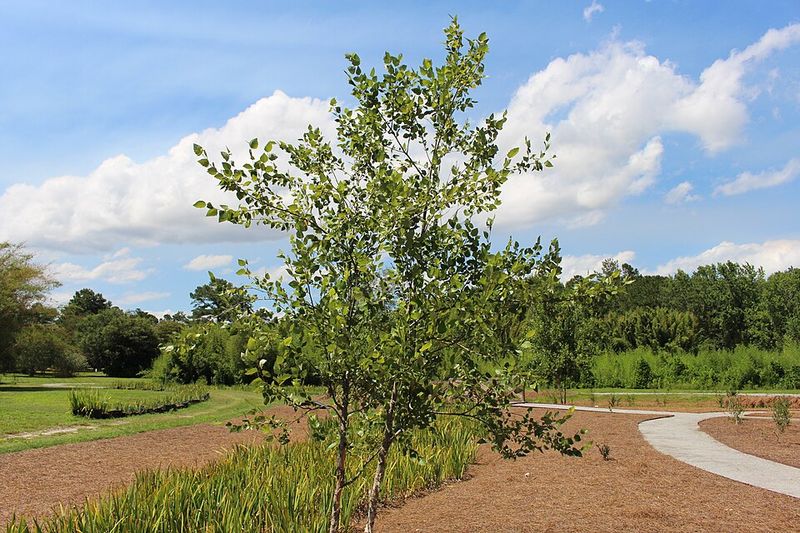
River Birch is the tree that makes people stop and ask, what kind of tree is that? Its peeling, papery bark in shades of cinnamon, cream, and tan is genuinely unlike anything else in a typical yard.
This native tree loves moisture and thrives along Virginia streams, ponds, and low-lying areas where other trees struggle to take root. It is one of the best solutions for wet spots that seem impossible to landscape.
River Birch grows quickly, often adding two to three feet annually when it is happy. Within five to seven years, you have a legitimate canopy that starts making a real dent in summer heat.
Most homeowners plant it in a multi-trunk clump form, which creates a sculptural, artistic look year-round. Even in winter, the exfoliating bark makes the tree a standout feature in any yard.
The dappled shade it produces is perfect for patios and seating areas. It blocks enough sun to cool things down without making the space feel dark or closed in.
River Birch is also highly resistant to the bronze birch borer, an insect that devastates other birch species. That makes it a much safer long-term investment for Virginia homeowners.
Catkins appear in early spring, adding a delicate, feathery texture before the leaves fully open. The whole tree has a lightness and elegance that feels almost poetic throughout every season.
Plant these shade trees in moist, slightly acidic soil and watch them reward you with years of effortless beauty.
5. Eastern Redbud
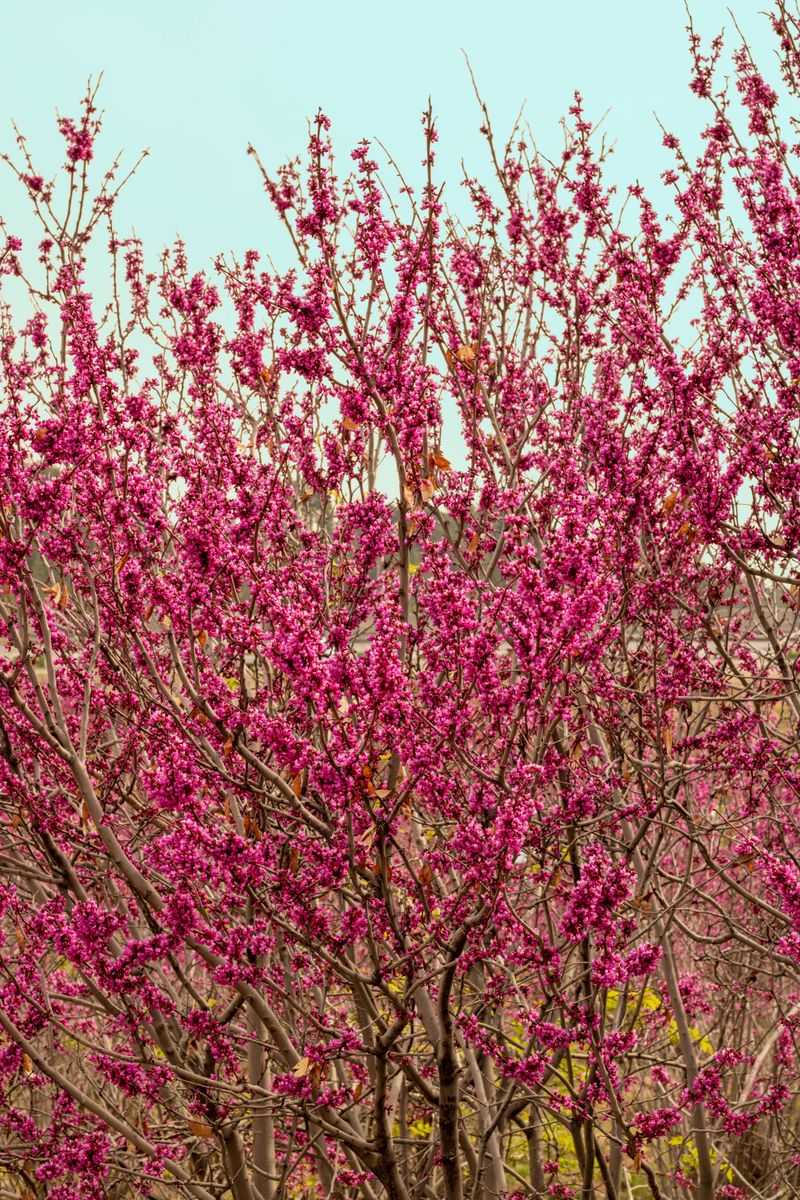
Every spring, the Eastern Redbud does something almost magical. Before a single leaf appears, the entire tree bursts into bloom with clusters of bright pink and magenta flowers along every branch and trunk.
It is one of the most photographed trees in Virginia for good reason. No other native tree delivers that kind of jaw-dropping color when the rest of the landscape is still waking up from winter.
Eastern Redbud is a smaller shade tree, typically topping out between 20 and 30 feet tall. That makes it ideal for smaller yards, under power lines, or as an understory tree beneath larger canopies.
The heart-shaped leaves that follow the spring blooms are charming and lush throughout summer. They create a pleasant, dappled shade that works beautifully over garden beds and seating areas.
This tree is remarkably adaptable to Virginia’s varied soil types. Clay, loam, or sandy ground — Redbud handles them all without needing much fuss or extra care from the homeowner.
Fall color on the Eastern Redbud is a soft, warm yellow that quietly closes out the growing season. It is the kind of understated elegance that makes a yard feel thoughtfully designed.
Native pollinators are strongly drawn to Redbud blossoms in spring. Bees, butterflies, and hummingbirds show up in droves when this tree is in full bloom.
For a smaller yard that still wants serious personality and seasonal drama, Eastern Redbud brings more visual impact per square foot than almost any other option.
6. American Holly
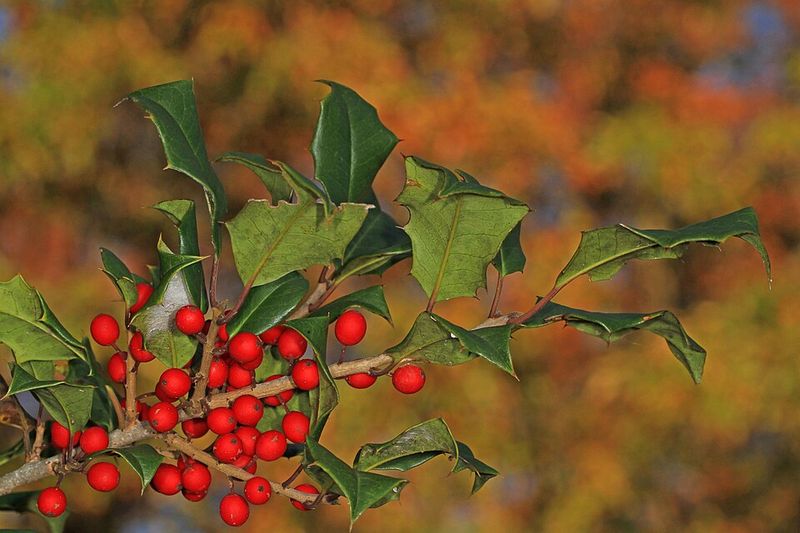
American Holly is the rare shade tree that earns its place in the yard every single month of the year. While other trees stand bare in winter, Holly keeps its glossy green leaves and brilliant red berries on full display.
This native evergreen grows slowly but steadily, eventually reaching 40 to 50 feet tall. Its dense, pyramidal shape provides excellent privacy screening along with meaningful shade during the warmer months.
The deep green, spiny leaves are unmistakable and beautiful in all four seasons. They reflect light in a way that makes the tree look polished and intentional no matter where it is planted.
American Holly is dioecious, which means you need a male and female tree nearby for berry production. Most nurseries sell them in matched pairs, making it easy to get that iconic red berry display each winter.
Wildlife benefits are enormous with this species. Cedar waxwings, mockingbirds, and dozens of other bird species depend on Holly berries as a critical winter food source when other options disappear.
It performs well in full sun to partial shade and tolerates a wide range of soil conditions. Once established, it handles both dry spells and heavy rain without showing much stress at all.
Planting American Holly along a property line creates a living fence that stays green and attractive year-round. It is one of the most hardworking, multi-season performers in the entire Virginia native plant palette.
These shade trees earn every inch of space they occupy, delivering beauty and function in equal measure.
7. Southern Magnolia
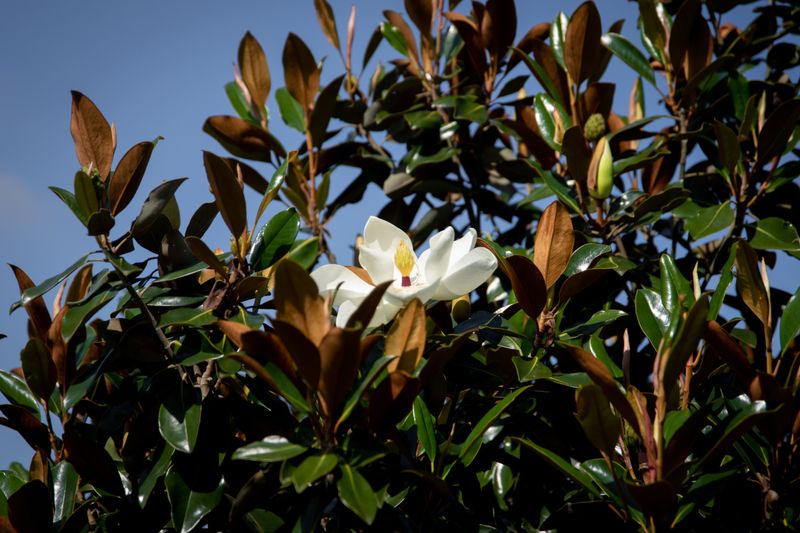
There is something deeply Southern and deeply satisfying about a Southern Magnolia in full bloom. Those enormous white flowers, some as wide as a dinner plate, fill the summer air with a scent that is almost impossibly sweet.
Southern Magnolia is an evergreen, meaning it holds onto its large, leathery leaves all year long. That makes it one of the best choices for homeowners who want both shade and year-round visual structure in their yard.
This tree grows slowly at first, but once it gets established, it picks up pace and can eventually reach 60 to 80 feet tall. The dense, glossy canopy it builds is among the most effective shade producers of any tree on this list.
The underside of each leaf is a warm, rusty brown that creates a beautiful two-tone effect when the wind moves through the branches. It is a subtle detail that makes the tree feel alive and dynamic throughout the day.
Southern Magnolia does shed leaves year-round rather than all at once in fall. A light layer of mulch beneath it helps manage the leaf drop and keeps the root zone healthy and moist.
It thrives in full sun and well-drained soil, making it an excellent choice for Virginia’s Piedmont and coastal plain regions. Avoid planting it in low spots where water pools after heavy rain.
Few trees command a yard the way a mature Magnolia does. It turns an ordinary front lawn into something that feels both grand and welcoming at the same time.
8. Tulip Poplar
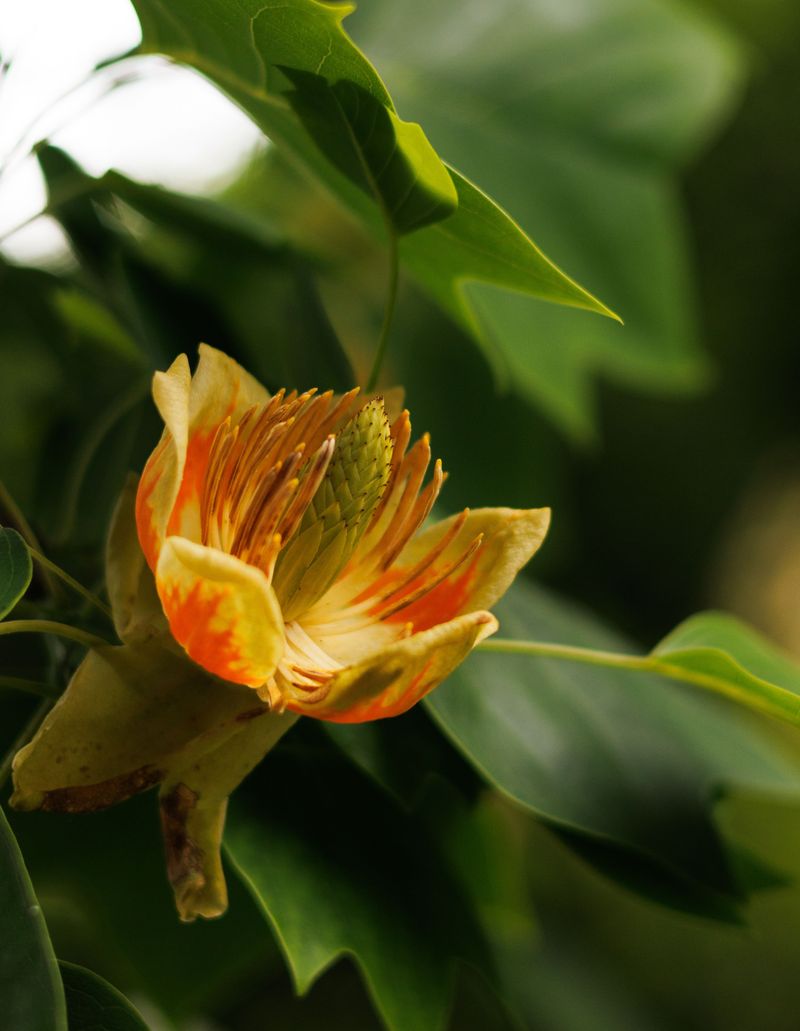
Tulip Poplar is Virginia’s state tree, and it earned that honor the hard way. It is fast-growing, strikingly beautiful, and one of the most effective shade trees you can put in a large yard.
The name comes from the tulip-shaped flowers that bloom high in the canopy each spring. They are green and orange and absolutely gorgeous, though you often need binoculars to fully appreciate them up close.
Growth rate is one of Tulip Poplar’s biggest selling points. In good conditions, it can add three to four feet of height per year, making it one of the fastest routes to serious overhead shade.
At maturity, these trees reach 70 to 90 feet tall with a straight, impressive trunk that looks like something out of an old-growth forest. The canopy spreads wide and creates deep, cooling shade across a large area.
Tulip Poplar prefers deep, moist, well-drained soil and full sun. It does not love dry, compacted ground, so give it a good planting spot and it will absolutely thrive for generations.
The fall color is a clean, bright yellow that lights up the yard before the leaves drop. It is a vivid yellow that brightens the entire street when the leaves turn.
Hummingbirds and bees are huge fans of Tulip Poplar nectar. Planting one is like setting up a pollinator welcome center right in your own backyard.
When you plant these shade trees in a Virginia yard, Tulip Poplar is the one that will genuinely change the entire scale and feel of your outdoor space.