The Pocono Native Plants Every Pennsylvania Yard Should Consider Adding
There is a particular kind of beauty to a Pocono-style landscape that is genuinely hard to replicate with conventional garden plants, and yet Pennsylvania homeowners with the right site conditions are sitting on a real opportunity.
Moist woodland shade, acidic soils, rocky edges, sunny openings, damp borders, these are not gardening challenges.
They are invitations for some of the most interesting native plants in the region to do exactly what they were built to do.
Mountain laurel, great rhododendron, lowbush blueberry, serviceberry, summersweet, wild columbine, and a handful of others each bring something distinct to a home garden when matched to the right spot.
If your Pennsylvania yard has any of these conditions and you have not yet explored Pocono-native plants, that is honestly one of the more rewarding gardening rabbit holes you can fall into right now.
1. Mountain Laurel Brings Classic Pocono Evergreen Beauty
Few plants capture the spirit of Pennsylvania woodlands quite like mountain laurel.
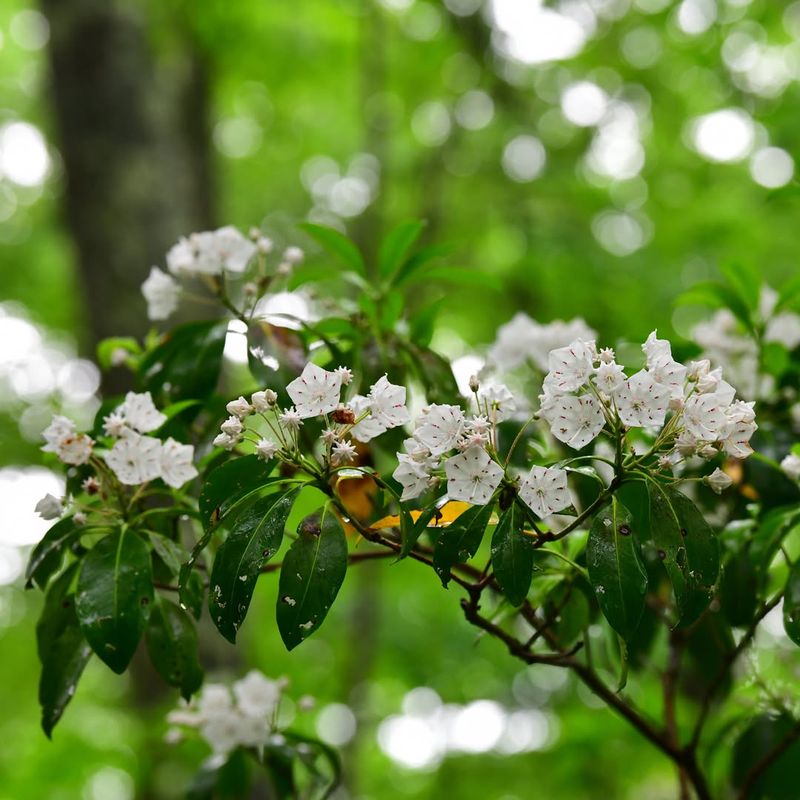
Its clusters of pink to white flowers appear in late spring, usually from May into June, and the glossy, dark green leaves stay on the shrub year-round, giving your yard structure even in winter.
If you have ever driven through the Pocono region during bloom season, you already know how striking this plant can be growing along shaded roadsides and forest edges.
Mountain laurel is the official state flower, which tells you a lot about how well it belongs here. It prefers acidic, well-drained soil with partial to full shade, though it can tolerate more sun if the soil stays consistently moist.
Sandy or rocky soil with a low pH is where this shrub tends to look its healthiest. It grows slowly, which means it takes patience, but also that it rarely needs aggressive pruning once it finds its place.
Before planting, check your soil pH, since mountain laurel really does prefer acidic conditions, typically in the range of 4.5 to 6.0. Deer browsing can be a concern in some Pennsylvania areas, so placement near structures or fencing may help.
Mature shrubs can reach six to ten feet tall and wide, so give them room to spread. For a homeowner wanting year-round evergreen interest along a shaded border or woodland edge, mountain laurel is genuinely worth considering.
2. Great Rhododendron Fits Moist Woodland Shade
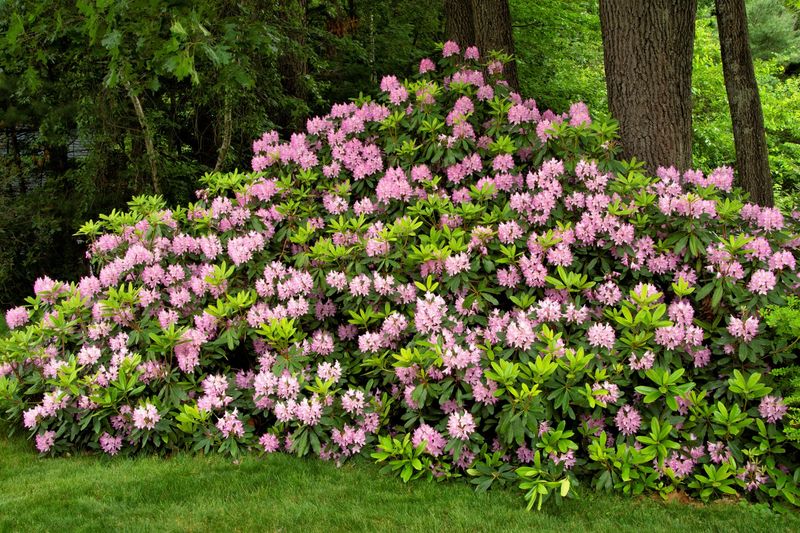
Walk along almost any shaded stream bank in the Pocono region and you will likely spot great rhododendron growing in thick, layered masses beneath the tree canopy.
This is a bold, large-scale native shrub that can reach eight to twenty feet tall under the right conditions, and it brings a dramatic presence to shaded Pennsylvania yards that few other plants can match.
The broad, leathery evergreen leaves stay on all year, and the lavender-pink flower clusters typically open in June or July.
Great rhododendron is best suited for sites with moist, acidic, well-drained soil and significant shade. It does not handle drought well, and it struggles in compacted or alkaline soils.
If your yard has a shaded area near a slope or natural drainage path where moisture lingers, that could be an ideal spot. Homeowners with mature tree canopies overhead often find this shrub fits naturally into those spaces without much coaxing.
Your Pennsylvania Garden Changes Every Week. Your Plan Should Too.
Gardening in Pennsylvania changes quickly throughout the season. Every Friday you’ll receive a simple weekly plan showing exactly what to plant, prune, fertilize, harvest, and protect so you never miss the right timing.
Because of its eventual size, great rhododendron works better as a background planting or naturalized screen rather than a foundation shrub close to the house.
It can form dense thickets over time, which provides excellent cover for birds and small wildlife.
Soil preparation matters a lot here, since adding organic matter and ensuring proper drainage before planting can make a meaningful difference in how well the shrub establishes over its first few years in your Pennsylvania landscape.
3. Lowbush Blueberry Loves Acidic Sunny Soil
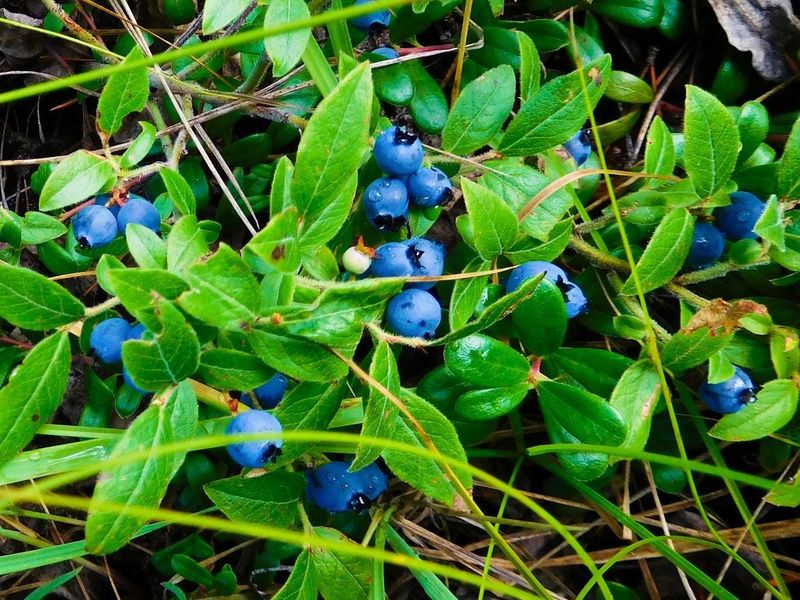
Acidic, rocky, sun-baked soil that discourages most garden plants is exactly where lowbush blueberry tends to thrive.
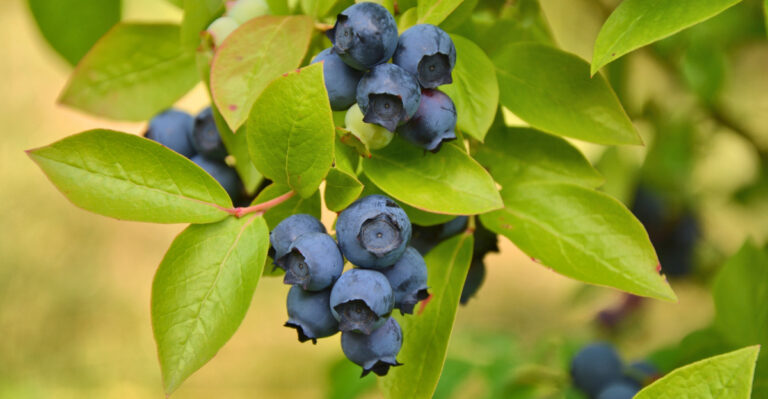
This low-growing native shrub typically stays under two feet tall, spreading gradually to form a ground-hugging mat of stems, small leaves, and seasonal interest across all four seasons.
In spring, tiny white bell-shaped flowers attract native bees. By midsummer, small blue-black berries ripen, and in fall the foliage turns shades of red and orange that rival any ornamental shrub.
For Pennsylvania homeowners dealing with open, sunny slopes or rocky beds where other plants struggle, lowbush blueberry can be a genuinely practical choice. It handles dry-to-moderately-moist acidic soil well, and it actually prefers soil with a pH between 4.5 and 5.5.
If your yard sits on sandy or gravelly ground with full sun exposure, this is one native plant worth checking against your actual site conditions before assuming it will work.
Wildlife value is one of lowbush blueberry’s strongest selling points. Birds, small mammals, and pollinators all use this plant at different times of year.
Planting it in groups rather than as single specimens tends to improve berry production and gives the planting a more natural, cohesive look. It spreads slowly by rhizomes, so it can gradually fill in a rocky bank or open bed without becoming aggressive.
For a low-maintenance, four-season native ground layer in a sunny Pennsylvania yard, lowbush blueberry earns serious consideration.
4. Serviceberry Adds Flowers, Fruit, And Wildlife Value
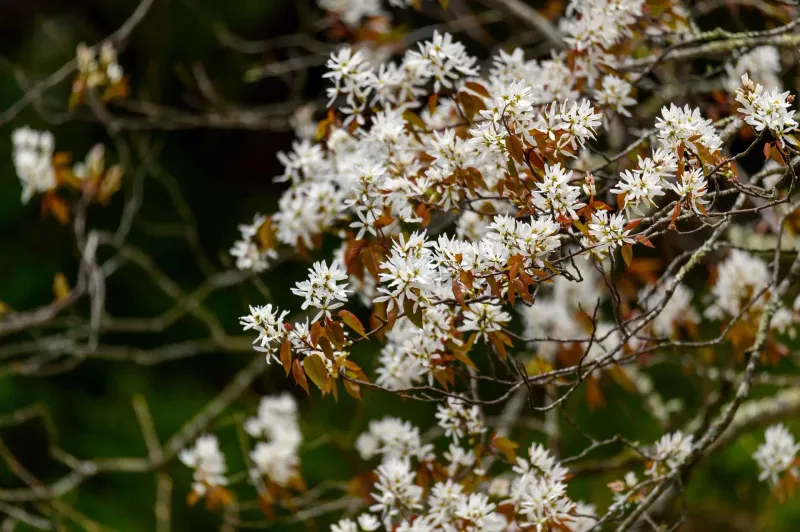
Serviceberry earns its place in Pennsylvania yards by delivering something interesting in nearly every season. In early spring, before most other trees have leafed out, serviceberry bursts into clouds of white flowers that can stop you in your tracks.
By early summer, small reddish-purple berries ripen, and they tend to disappear quickly because birds find them irresistible. In fall, the foliage shifts to orange, red, and yellow tones that hold their own against flashier ornamentals.
Several serviceberry species are native to Pennsylvania, and they range from multi-stemmed large shrubs to small trees reaching fifteen to twenty-five feet.
Shadblow serviceberry and Allegheny serviceberry are among the most commonly referenced native options for Pennsylvania landscapes.
Both prefer moist, well-drained, acidic to slightly acidic soil and do well in full sun to partial shade, making them adaptable to a range of yard conditions including woodland edges and open borders.
One thing homeowners appreciate about serviceberry is its relatively modest size compared to large shade trees, which makes it a comfortable fit near patios, along property edges, or as a focal point in a mixed native planting.
Deer browsing can be a factor in some Pennsylvania areas, particularly when plants are young and stems are within easy reach.
Serviceberry is also a host plant for several native moth and butterfly species, which adds another layer of ecological value beyond the flowers and fruit that most gardeners notice first.
5. Inkberry Holly Gives Damp Borders Evergreen Structure
Damp spots in Pennsylvania yards can be genuinely tricky to plant. Many ornamental shrubs dislike wet feet, and finding something that holds its structure through winter while tolerating periodic moisture is not always easy.
Inkberry holly handles those conditions better than most, and it does it while staying evergreen, which gives low-lying borders a sense of presence even in the coldest months.
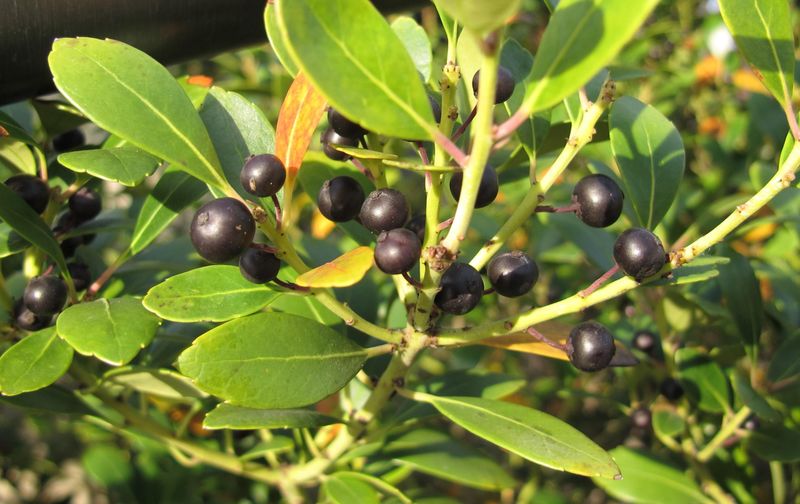
This native holly grows as a rounded to upright shrub, typically reaching six to eight feet tall and wide at maturity, though compact cultivars of the species exist if space is limited.
The small, glossy dark green leaves persist through winter, and by fall, clusters of small black berries develop on female plants, provided a male plant is nearby for pollination.
Those berries are an important food source for birds during late fall and winter when other options are scarce in Pennsylvania landscapes.
Inkberry prefers moist to wet, acidic soil and tolerates part shade to full sun.
It naturally grows along stream banks, pond edges, and wet meadow margins in Pennsylvania, so a yard with a rain garden, low-lying border, or area that stays consistently damp after storms could be a good candidate.
It spreads slowly by root suckers, which can help it fill in a naturalized border over time, though homeowners who prefer a tidier look may want to manage that spreading periodically.
For wet-site evergreen structure, inkberry is a dependable native option worth thinking about seriously.
6. Summersweet Brightens Moist Part-Shade Areas
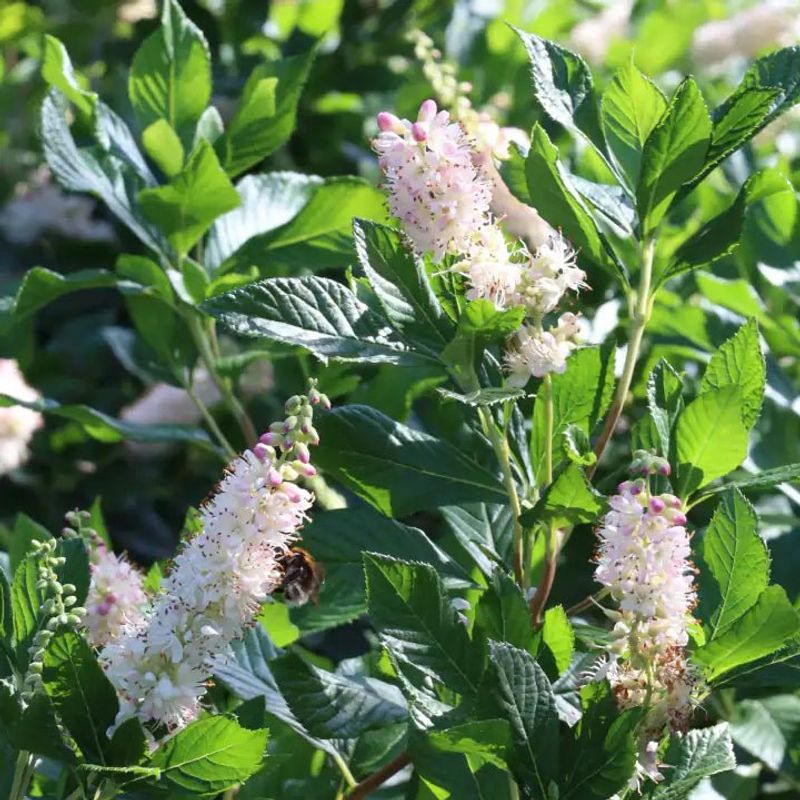
Finding shrubs that bloom well in moist, partially shaded spots is one of the more persistent challenges in Pennsylvania garden design, and summersweet meets that challenge reliably.
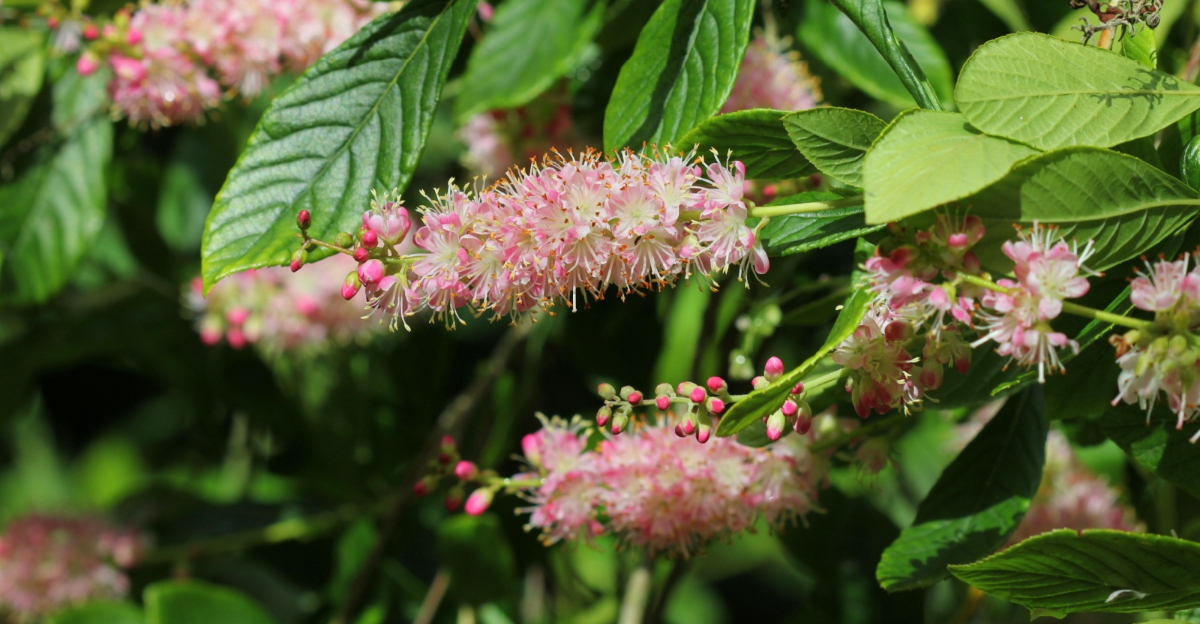
Its fragrant white or pale pink flower spikes appear in midsummer, right when many other shade-tolerant shrubs have already finished blooming for the season.
The fragrance is noticeable and pleasant, and it draws in native bees and butterflies during a time of year when good pollinator plants in shaded Pennsylvania gardens can be hard to find.
Summersweet, also known as sweet pepperbush, is native to moist woodlands and stream edges across the eastern United States, including Pennsylvania. It typically grows six to eight feet tall, though compact selections of the species tend to stay a bit smaller.
It handles part shade to full shade reasonably well, though flowering tends to be more robust with a bit more light.
Moist, acidic, organic-rich soil suits it best, and it handles periodic flooding or wet conditions better than many ornamental alternatives.
Fall color is another reason to consider summersweet. The foliage turns a warm golden yellow before dropping, adding a seasonal highlight that homeowners in shaded Pennsylvania yards do not always expect.
It also spreads slowly by suckers, which can help naturalize a damp border over time. Deer tend to browse it less than some other native shrubs, though that can vary by location and local deer pressure.
For moist, shaded spots where bloom color and fragrance are priorities, summersweet brings real seasonal value across spring through fall.
7. Wild Columbine Fits Rocky Woodland Edges
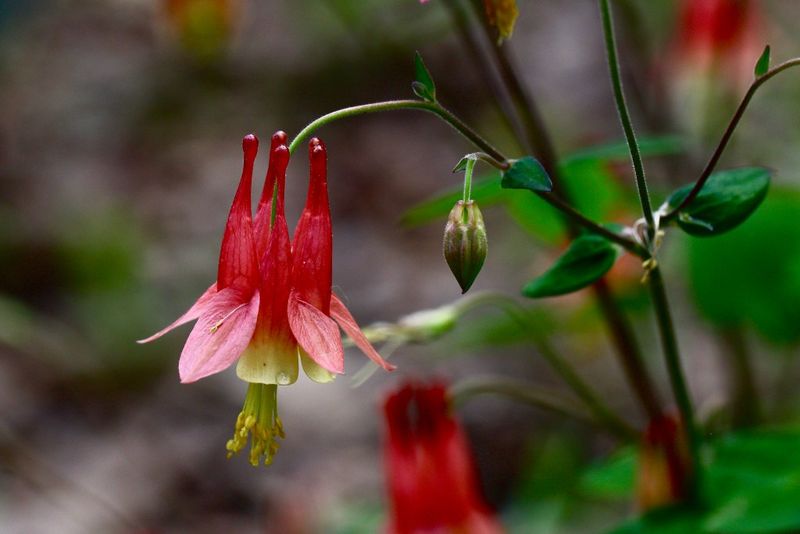
Rocky slopes and thin-soiled woodland edges in Pennsylvania often feel like the most stubborn planting challenges in the yard, but wild columbine seems almost designed for exactly those conditions.
The nodding red and yellow flowers, with their distinctive backward-pointing spurs, are unlike anything else blooming in a Pennsylvania woodland in spring.
They appear from April through June, depending on the site, and they are a critical early nectar source for hummingbirds and long-tongued native bees that emerge during the same window.
Wild columbine grows naturally in rocky, well-drained, and even dry soils in open woods, ledges, and shaded slopes across Pennsylvania.
It handles part shade to full shade, though it often produces more flowers with a bit of dappled light filtering through the canopy.
Unlike many native perennials that demand rich, moist conditions, wild columbine is genuinely at home where the soil is thin and drainage is sharp. That makes it a useful option for spots under large oaks or along rocky garden edges where other plants have struggled.
It is a relatively short-lived perennial, but it self-seeds reliably in the right conditions, which means a small planting can gradually naturalize and spread through a rocky border without much intervention.
Mature plants typically reach one to three feet tall and have attractive blue-green lobed foliage even when not in bloom.
For Pennsylvania homeowners wanting spring color and hummingbird interest along a shaded rocky edge, wild columbine is a low-fuss native perennial that rewards patient planting.
8. White Wood Aster Adds Late Woodland Blooms
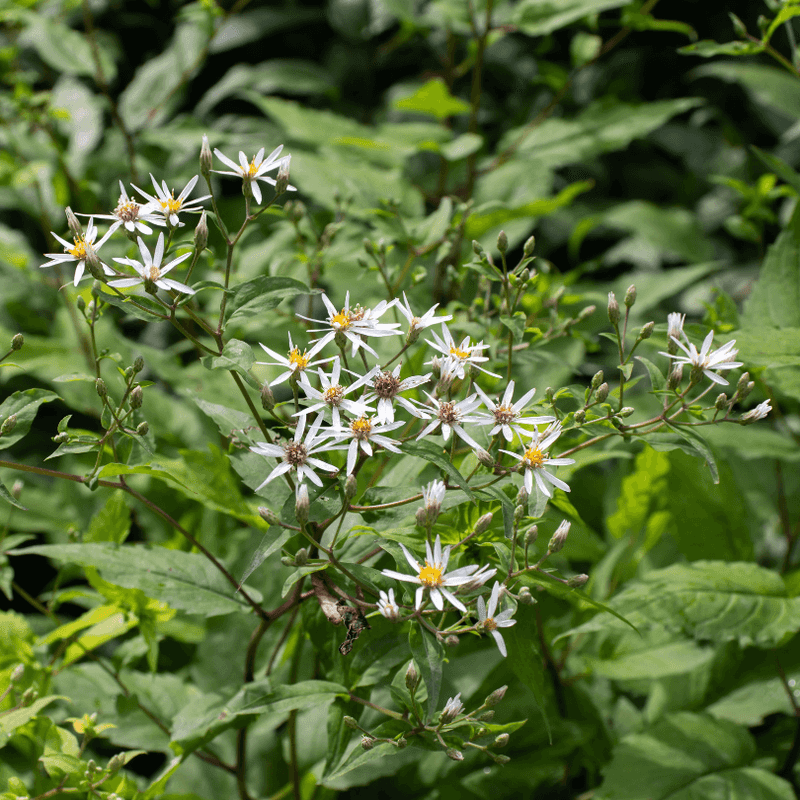
By the time late summer and fall arrive in Pennsylvania, the shaded parts of most yards have very little blooming.
White wood aster steps into that gap with clouds of small white daisy-like flowers that brighten shaded borders and woodland edges from August into October, sometimes later.
For native bees and butterflies preparing for the season’s end, those late blooms represent a meaningful food source at a time when options are thinning out across the landscape.
White wood aster is a native perennial that grows naturally in dry to moist woodland edges, shaded slopes, and forest understories across Pennsylvania. It typically reaches two to four feet tall and spreads gradually by rhizomes to form loose colonies over time.
It handles full shade to part shade well, and it tolerates dry, rocky, or thin soils better than many other asters, which makes it a practical choice for shaded spots under trees where the soil tends to be dry and root-competitive.
The heart-shaped lower leaves are attractive even before the plant blooms, and the white flowers pair naturally with other late-season natives like goldenrods and Joe-Pye weed in Pennsylvania native plant gardens.
It can spread assertively in ideal conditions, so homeowners who prefer defined borders may want to monitor its spread over time.
For a Pennsylvania yard with a shaded corner, woodland edge, or dry understory spot that needs late-season life, white wood aster is a native perennial worth serious consideration.