Signs A Storm-Damaged Tree Can Still Be Saved In Virginia
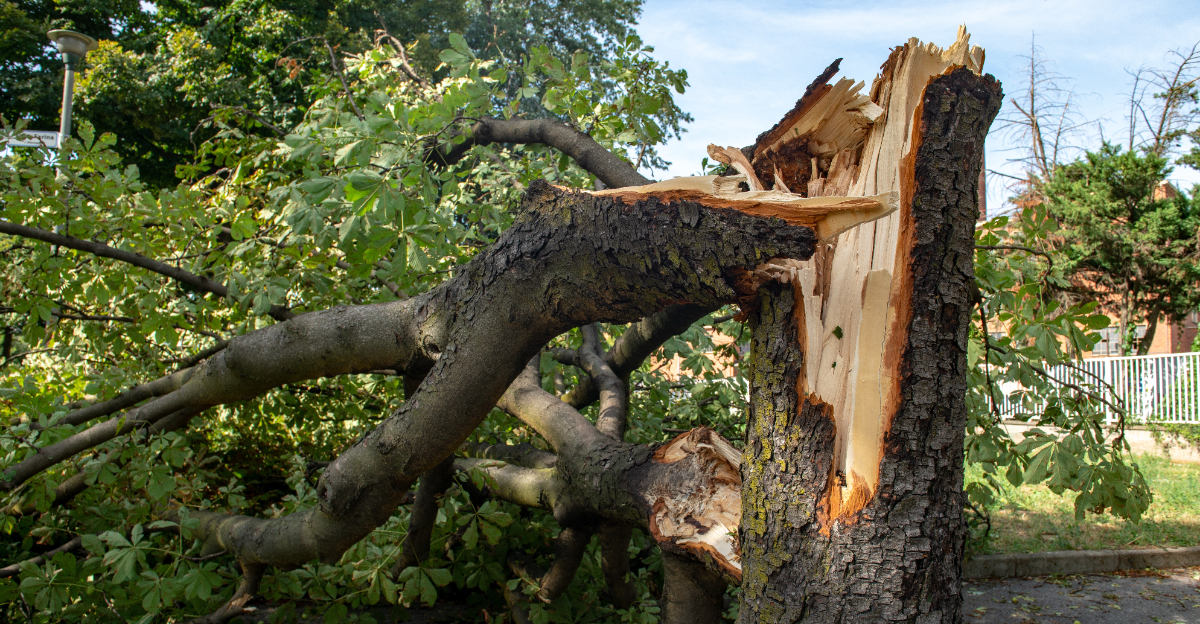
The wind finally lets up, and you step outside to survey the damage. Your yard looks like it lost a fight, but that leaning oak in the corner isn’t necessarily done for.
A tilted trunk can trigger panic faster than almost any other storm aftermath. Homeowners across Virginia reach for the phone to call a removal crew before checking a single sign that the tree might pull through.
Here’s the part most people miss. A tree can look wrecked and still have everything it needs to recover, since root systems, bark integrity, and canopy balance tell a very different story than a first glance at broken limbs.
Eight signals are worth checking before any tree comes down. None of them require special training, just patience, a flashlight, and a willingness to look past the mess.
1. Crown Retains At Least Half Its Branches
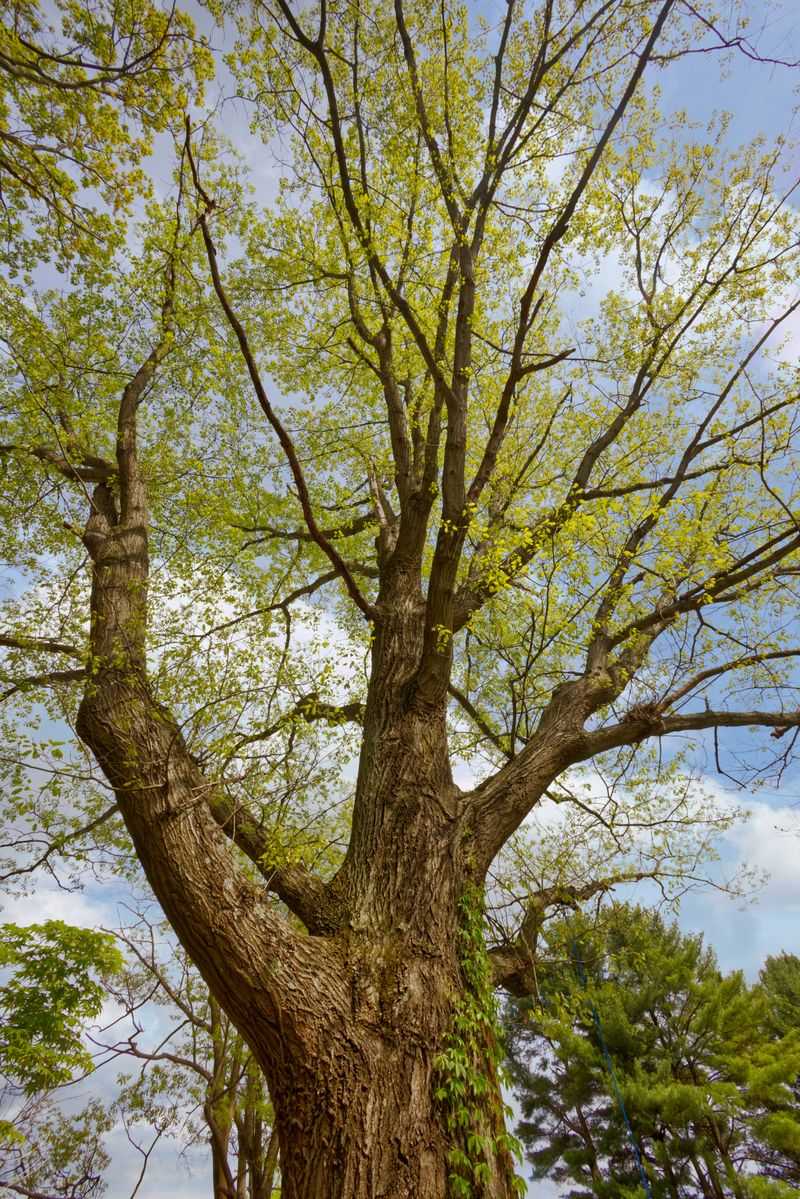
After a storm, the crown tells the story fast. Walk around your tree and look up, if more than half the branches are still attached and holding leaves, that is a strong sign the tree can recover.
A crown with good coverage means the tree can still make food through photosynthesis. Without enough leaves, the tree cannot fuel its own healing process, and that is when things get grim.
Think of the crown like a solar panel array. Lose too many panels, and the whole system shuts down.
In Virginia, hardwoods like oaks and maples can push new growth even after losing a third of their canopy. Softer species like Bradford pears struggle more, so species matters when you are making your call.
Look closely at the remaining branches too, are they alive and flexible, or snapped and dry? Living branches bend slightly without cracking, and the bark stays smooth and intact.
Broken stubs left behind can invite disease and insects, but those are fixable problems. A skilled pruning job can clean up the mess and encourage fresh, healthy growth in its place.
One of the most hopeful signs a storm-damaged tree can still be saved is a full, green upper crown. If you see that after a Virginia storm, do not give up on your tree just yet, it is already fighting back for you.
2. Trunk Remains Straight Without Cracks Or Splits
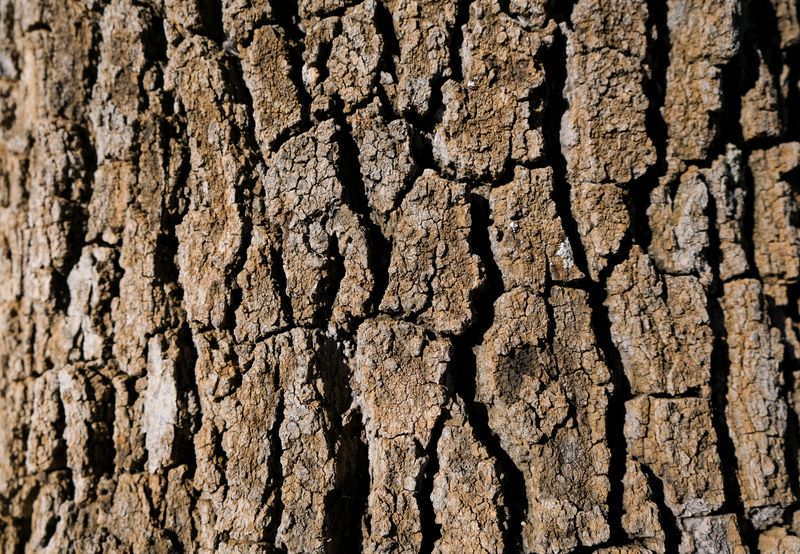
The trunk is the backbone of your tree, if it is compromised, everything above it is at risk. Run your hands along the bark after a storm and look for deep cracks, splits, or missing chunks of wood.
A straight trunk with solid bark is a fantastic sign that your tree held its ground. Minor surface scrapes from falling debris are cosmetic and nothing to lose sleep over.
Deep splits are a different story entirely. When a crack runs through the heartwood, the tree loses structural strength and becomes a genuine safety hazard during future storms.
Virginia sees a wild mix of weather, ice storms in winter, high winds in summer, and a compromised trunk will not hold up through the next round. If the trunk looks solid, though, your tree has a real chance.
Your Virginia Garden Changes Every Week. Your Plan Should Too.
Gardening in Virginia changes quickly throughout the season. Every Friday you’ll receive a simple weekly plan showing exactly what to plant, prune, fertilize, harvest, and protect so you never miss the right timing.
Check for seams where two large stems meet, called co-dominant stems. These spots are common failure points, and a crack there deserves a professional eye before you decide anything.
Bark that is still attached and lying flat against the wood is a positive signal. Bark peeling away in large sheets, especially combined with soft or mushy wood underneath, means decay has already set in.
A sound, upright trunk is one of the clearest signs a storm-damaged tree can still be saved. Treat it like the foundation of a house, if the base is solid, the rest can be rebuilt with time and care.
3. Root System Stays Firmly Anchored In Soil
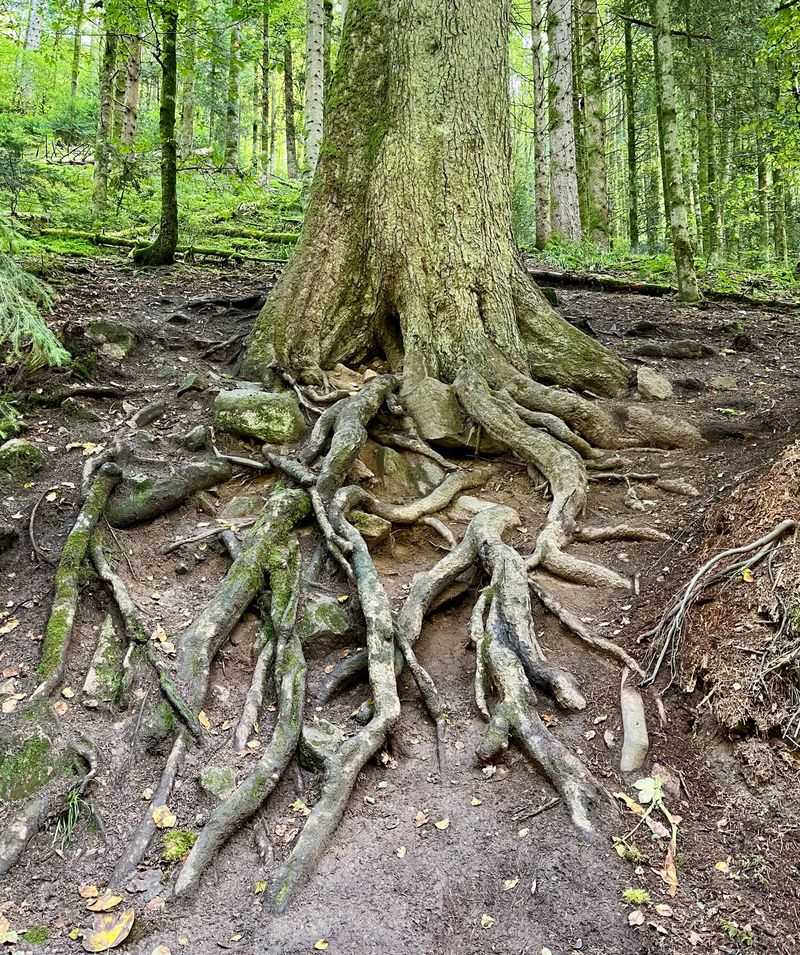
Roots are the anchor and the lifeline all at once. If your tree is still standing straight and the soil around the base looks undisturbed, that is one of the best things you can see after a storm.
Soil heaving, where the ground lifts and buckles near the base, is a red flag that the root plate has shifted. Even if the tree looks upright, a shifted root system means it could topple without much warning.
Get down low and check the base from multiple angles. Look for gaps between the soil and the trunk, exposed roots that were not there before, or fresh cracks in the earth radiating outward from the base.
Virginia’s clay-heavy soils can hold a tree tightly in normal conditions but become slippery and unstable when fully saturated. After heavy rain combined with strong winds, even healthy trees can shift slightly.
A small amount of root movement is not always a lost cause. Arborists sometimes cable or brace a tree with minor root displacement to give it time to re-anchor naturally.
If the tree has not moved and the ground looks normal, the root system likely did its job well. That kind of stability is hard-won and worth protecting.
Recognizing intact roots as one of the signs a storm-damaged tree can still be saved gives you a solid foundation for what comes next. That knowledge makes it easier to move forward with a smart, informed decision about your tree’s future.
4. Lean Angle Stays Under Fifteen Degrees
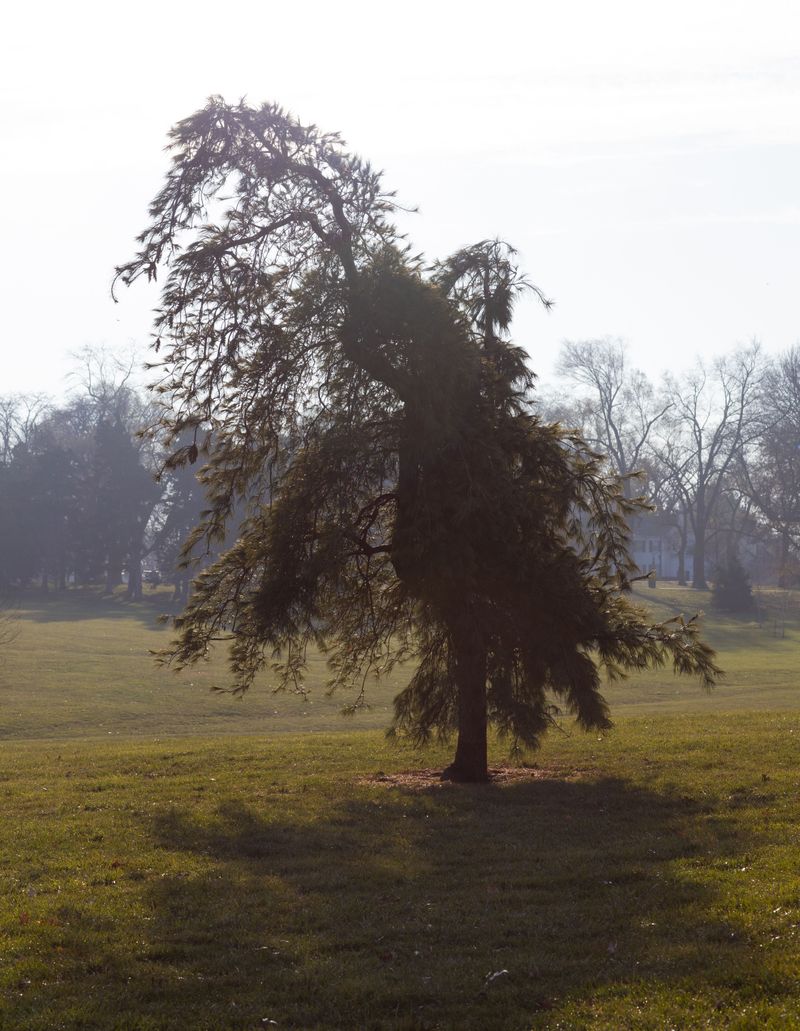
Every tree has a little personality in its posture. A slight natural lean is normal and nothing to worry about. The trouble starts when a storm pushes that lean past a safe threshold.
Arborists generally use fifteen degrees as the guideline. Beyond that angle, the tree’s center of gravity shifts enough that it becomes a structural risk, especially during future high-wind events.
You do not need a protractor to eyeball this. Stand back about thirty feet and look at the trunk relative to a vertical reference point, like the edge of your house or a fence post.
A lean under fifteen degrees, combined with a stable root zone and healthy crown, puts your tree in a recoverable category. Many Virginia homeowners are surprised to learn their leaning tree is not as bad off as it looks.
Keep in mind that the direction of the lean matters too. A tree leaning toward a structure, a power line, or a frequently used area needs more urgent attention than one leaning toward an open lawn.
If the lean happened suddenly during the storm rather than developing gradually over years, that is worth noting. Sudden leans suggest root or trunk failure, while gradual leans are often just a growth pattern.
A modest lean is not a reason to panic, it is a reason to pay attention. Catching it early and consulting a certified arborist could be the move that saves your tree for another generation.
5. Broken Limbs Are Small And Easy To Prune
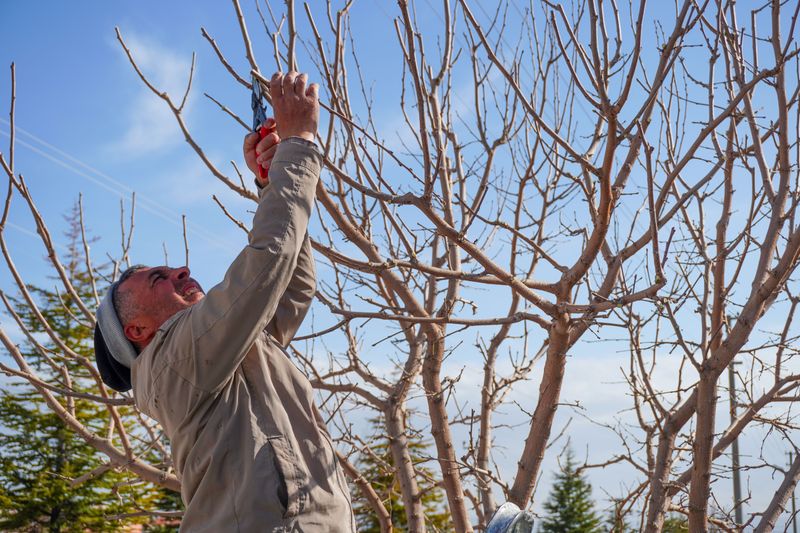
Not all storm damage is created equal, and small broken limbs are about as manageable as tree problems get. If the branches snapped are less than four inches in diameter, a clean pruning cut is usually all it takes to set things right.
Larger limbs are a different challenge, they leave big wounds that take years to compartmentalize and can invite rot or insects in the meantime. Small limbs heal relatively quickly when pruned correctly.
The key word there is correctly. A ragged, torn cut invites disease, while a clean cut just outside the branch collar allows the tree’s natural defenses to kick in efficiently.
Virginia’s warm, humid summers actually help trees callus over wounds faster than in drier climates. That is a genuine advantage for tree recovery here compared to other parts of the country.
Walk the perimeter of your tree and make a mental inventory of the damage. If most of what you see is small, manageable limbs rather than massive structural failures, you are probably looking at a tree worth saving.
Do not try to tackle large overhead limbs yourself, that is a job for someone with the right equipment and training. But small limb cleanup is something a confident homeowner can handle safely with the proper tools.
Seeing mostly small, prunable damage is one of the most encouraging signs a storm-damaged tree can still be saved. A little cleanup work now can set your tree up for a strong, healthy growing season ahead.
6. Central Leader Remains Intact
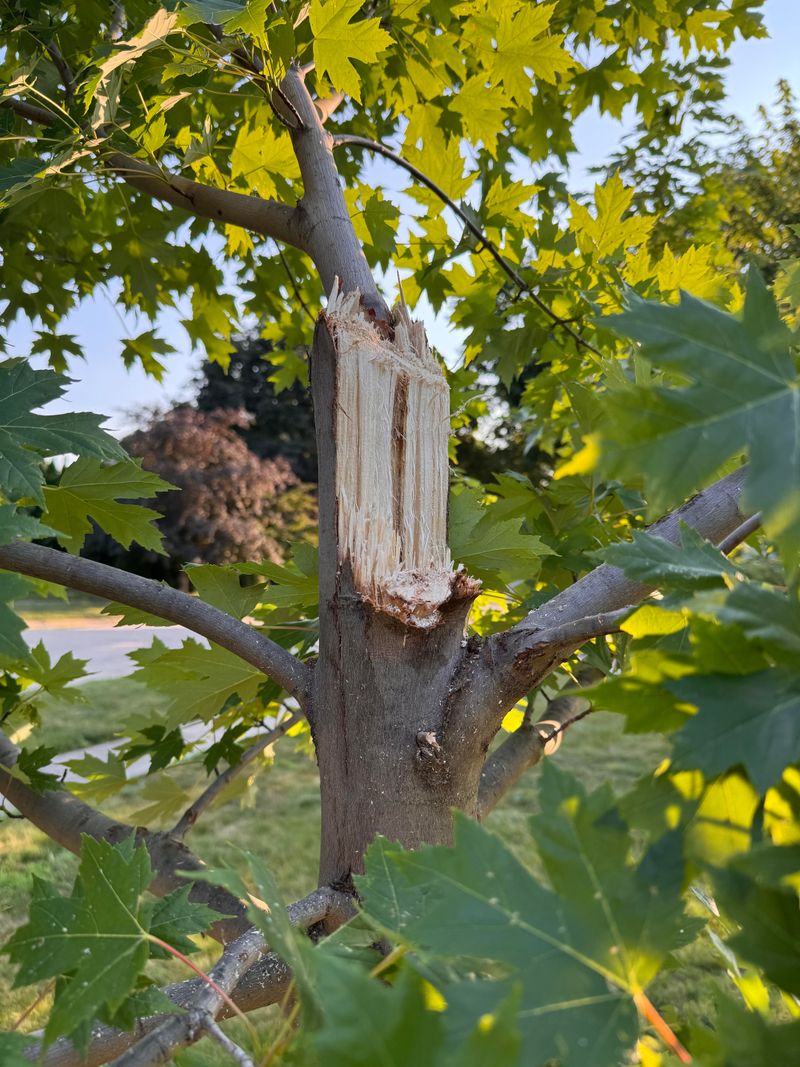
Picture the central leader as the tree’s compass, it sets the direction for all future growth. This is the main upward-growing stem that runs through the center of the crown, and its condition after a storm tells you a lot.
When the central leader survives intact, the tree retains its natural growth blueprint. Without it, the tree may fork awkwardly, grow lopsided, or develop weak branch attachments that cause problems for years down the road.
Some tree species, like oaks and sweetgums common in Virginia, are especially dependent on a strong central leader for long-term structural health. Losing it does not always mean losing the tree, but it does mean more work ahead.
Look up through the crown and trace the tallest, most central stem from the trunk upward. If it is still there, still upright, and still has living buds or leaves, that is a genuinely hopeful sign.
A bent or cracked leader is not automatically a lost cause either. Arborists can sometimes stake or support a damaged leader while it heals, especially in younger trees with more flexibility.
Older, established trees with a compromised leader need a professional assessment before any decisions are made. The structure they have built over decades is worth protecting with expert guidance.
An intact central leader is one of the quieter but more powerful signs a storm-damaged tree can still be saved. It means the tree’s growth engine is still running strong and ready to push forward.
7. Tree Was Healthy And Strong Before The Storm
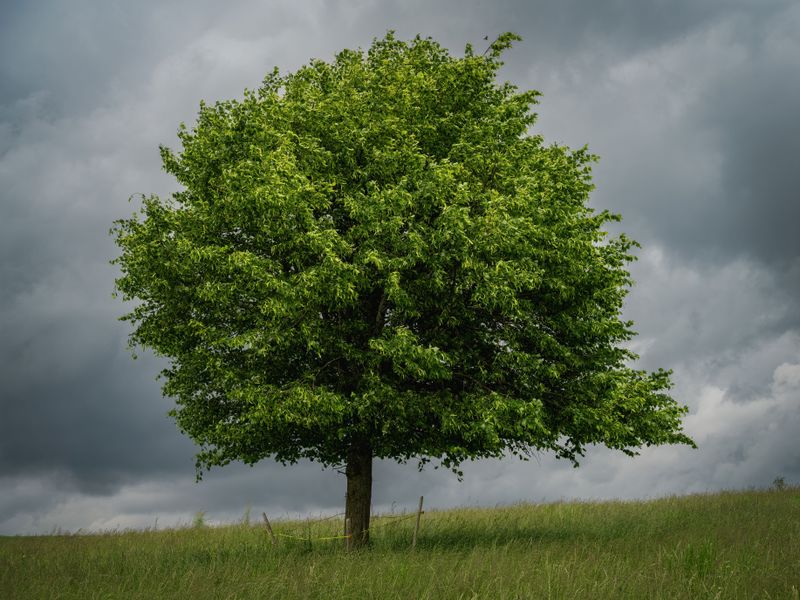
A tree’s history matters just as much as its present condition. A tree that was thriving before the storm hit has a biological reserve of energy, nutrients, and strong wood that a struggling tree simply does not have.
Think of it like a person going into surgery, someone in peak physical condition recovers faster than someone already fighting illness. The same principle applies to trees after storm damage.
Before making any decisions, think back on how your tree looked over the past few growing seasons. Was the canopy full and green each spring, and were there any signs of fungal growth, hollow spots, or decaying wood?
Healthy pre-storm trees in Virginia tend to have well-developed root systems, dense wood, and active cambium layers. All of those qualities help a tree wall off wounds and fight off secondary infections after damage occurs.
If you had the tree treated, fertilized, or pruned in recent years, that investment may now be paying off. Proper care builds the kind of resilience that gets a tree through rough weather events.
Conversely, a tree that was already stressed by drought, compacted soil, or pest pressure will struggle far more to recover from the same level of damage. Pre-existing weakness compounds storm injury quickly.
A strong health history is one of the most underrated signs a storm-damaged tree can still be saved in Virginia. What you put into a tree over the years becomes its armor when the storms roll in.
8. New Growth Appears In The Following Weeks
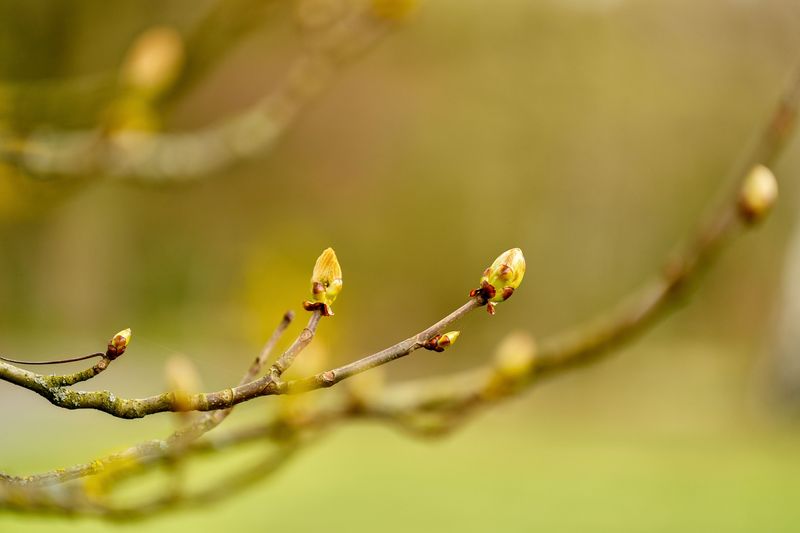
Nature has a way of surprising you when you least expect it. A few weeks after a major storm, walk out to your damaged tree and look closely at the branch tips, you might spot tiny green buds pushing through.
New growth is one of the most undeniable signs of life a tree can show. When buds swell and leaves unfurl after storm stress, the tree is telling you it still has the energy and will to keep going.
This signal is especially meaningful if the tree lost a significant portion of its crown. Seeing fresh growth in the weeks following a storm confirms that the vascular system is still moving water and nutrients effectively.
Virginia’s spring and early summer conditions are ideal for post-storm recovery. Warm temperatures, regular rainfall, and long daylight hours give damaged trees a solid window to push new growth and start the healing process.
Watch for growth on multiple parts of the tree, not just one or two spots. Widespread budding across the remaining branches suggests the whole tree is responding, not just a single surviving section.
If growth only appears on one side or one branch cluster, that could indicate internal damage limiting resources to parts of the tree. That pattern warrants a closer look from a professional before you celebrate too soon.
Spotting fresh buds and leaves is the most hopeful of all the signs a storm-damaged tree can still be saved. Your tree is not just surviving, it is already working hard on its own comeback story.