The Meaning Behind Seeing A Pileated Woodpecker In Your Pennsylvania Yard
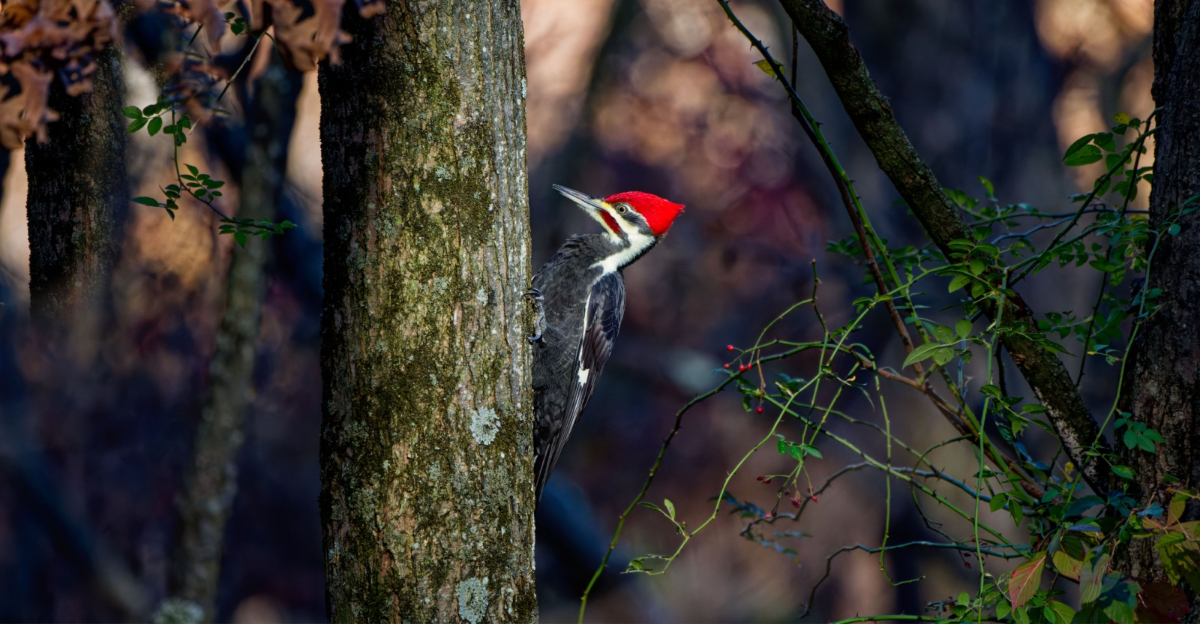
A pileated woodpecker showing up in a Pennsylvania yard has a way of stopping people in their tracks, and honestly that reaction makes complete sense.
These are large, crow-sized birds with a bold red crest that looks almost too dramatic to be real, and spotting one feels more like a wildlife encounter than a backyard moment.
The first instinct for a lot of homeowners is to wonder what it means, and that is a fair question.
The straightforward answer is that pileated woodpeckers do not carry one proven symbolic message, but what a visit can tell you about your yard is genuinely interesting.
Mature trees nearby, large snags, downed logs, carpenter ants, natural food sources worth investigating. This bird is responding to something specific, and understanding what that something is makes you a more informed and curious backyard wildlife observer.
1. Your Yard May Be Close To Mature Woods
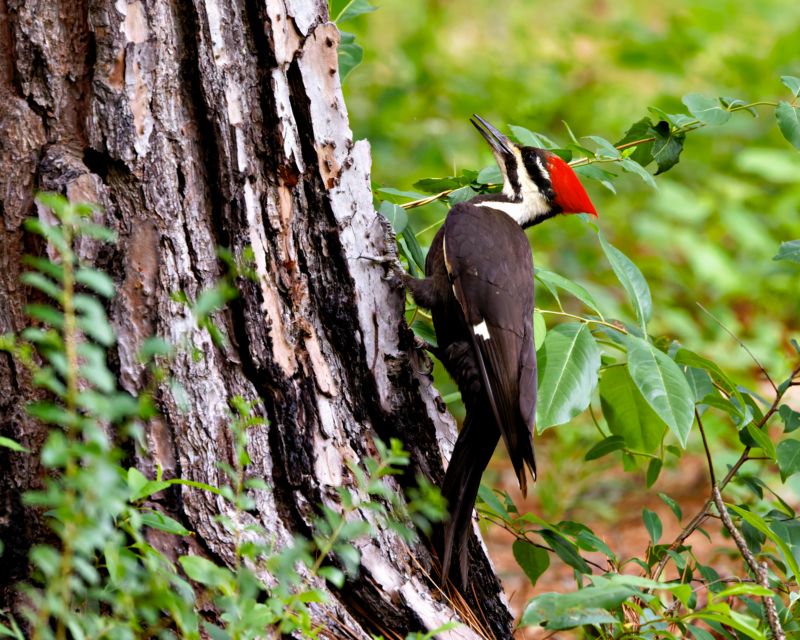
That loud, almost prehistoric call echoing from the edge of your property is often the first sign that a pileated woodpecker is somewhere nearby.
These large birds tend to stick close to mature forest, and if one is visiting your Pennsylvania yard, there is a reasonable chance you are living near a woodland edge or a patch of older trees.
Pennsylvania has a lot of that kind of habitat, from the Pocono forests to the wooded hillsides of the Ridge and Valley region.
Pileated woodpeckers generally prefer areas where large, older trees have had time to grow and age. They are not typically birds of open fields or brand-new subdivisions surrounded by young saplings.
When one appears in a residential yard in Pennsylvania, it is often because a stretch of mature woodland sits within a short flying distance, even if the yard itself is not heavily wooded.
Homeowners sometimes do not realize how much forest edge habitat surrounds their property until a bird like this shows up.
If your yard backs up to a wooded lot, a creek corridor, a state game land, or even a long hedgerow of older trees, that connection to mature habitat may be exactly what drew the bird in.
Appreciating that connection is a good first step toward understanding what your yard offers local wildlife beyond just a lawn.
2. Large Trees May Be Supporting Wildlife
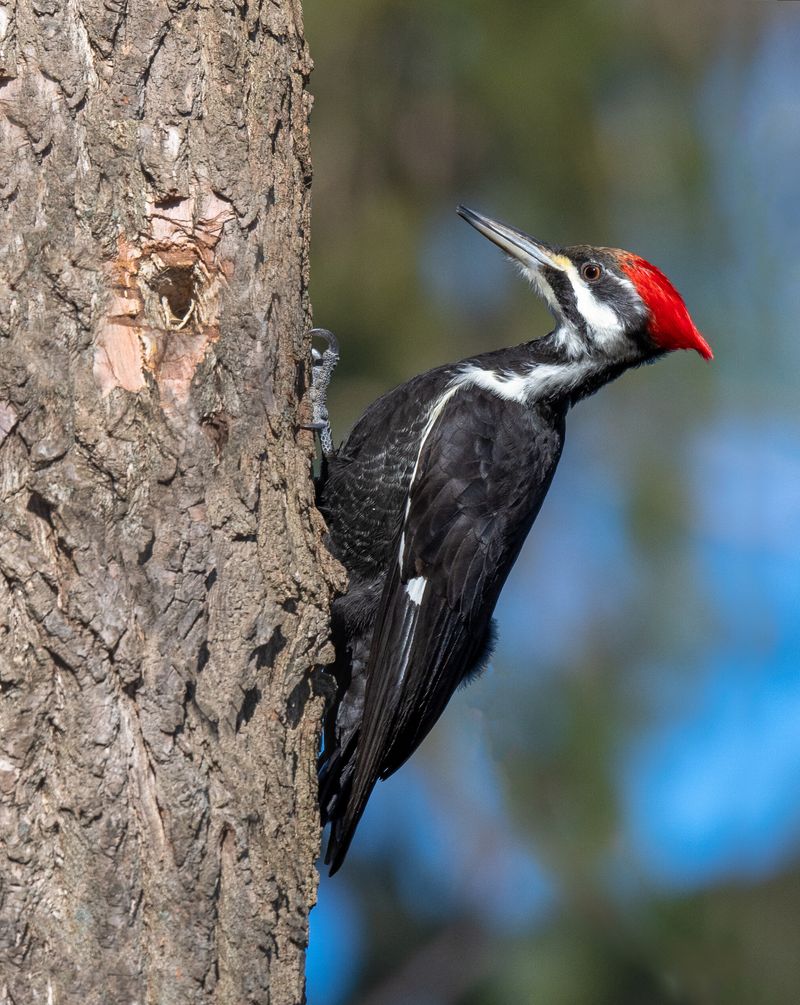
A flash of red crest high up on one of your biggest backyard trees is a clue worth paying attention to.
Large, older trees do a lot more for local wildlife than most Pennsylvania homeowners realize, and a pileated woodpecker landing on one is a sign that the tree may be offering food or foraging opportunities that smaller, younger trees simply cannot.
Trees like tulip poplar, white oak, beech, and large silver maple are common in Pennsylvania yards and forest edges, and they often develop the kinds of features that attract pileated woodpeckers over time.
As trees age, they can develop softer wood in certain sections, cavities, or bark layers that harbor insects the bird wants to find.
Your Pennsylvania Garden Changes Every Week. Your Plan Should Too.
Gardening in Pennsylvania changes quickly throughout the season. Every Friday you’ll receive a simple weekly plan showing exactly what to plant, prune, fertilize, harvest, and protect so you never miss the right timing.
The tree does not need to be in serious trouble to attract a woodpecker. Sometimes a healthy tree simply has a patch of bark or a lower limb that holds insects worth investigating.
Keeping large trees in a Pennsylvania yard tends to support a wider range of wildlife overall.
Pileated woodpeckers are one visible example of that benefit, but large trees also support cavity-nesting birds, small mammals, and native insects throughout the seasons.
If a pileated woodpecker is spending time in one of your big trees, it is worth observing where exactly the bird is foraging before drawing any conclusions about the health of the tree itself.
3. Damaged Wood Or Downed Logs May Be Attracting It
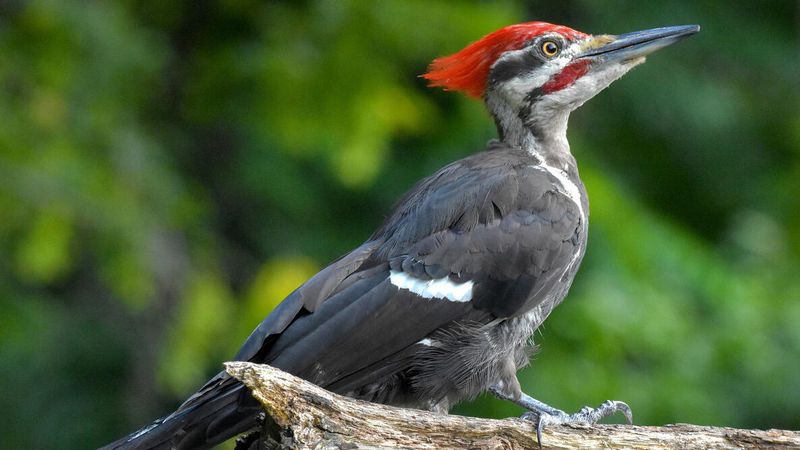
Fresh wood chips scattered near a fallen log at the back of a Pennsylvania yard are often the clearest sign that a pileated woodpecker has been working the area.
These birds are powerful excavators, and a downed log or a section of softened wood on an old stump can become a reliable foraging spot they return to again and again.
Wood that has begun to soften over time becomes home to the insects pileated woodpeckers are after.
A log that has been on the ground for a season or two, or a standing section of an older tree that has lost its bark in places, can hold exactly the kind of food this bird is searching for.
In Pennsylvania yards that border woodland or that have older landscaping with natural debris, these foraging opportunities are more common than most people expect.
Leaving a downed log or two in a low-traffic corner of a Pennsylvania yard is one of the simplest ways to support a wider range of wildlife. It is not about letting the yard look neglected.
It is about recognizing that what looks like yard waste to a homeowner can look like a meal to a pileated woodpecker. If the bird keeps returning to the same spot, take a look at what is there.
A mossy, partially softened log is often the quiet reason behind a surprisingly regular visitor.
4. Carpenter Ants Or Wood-Boring Insects May Be Present
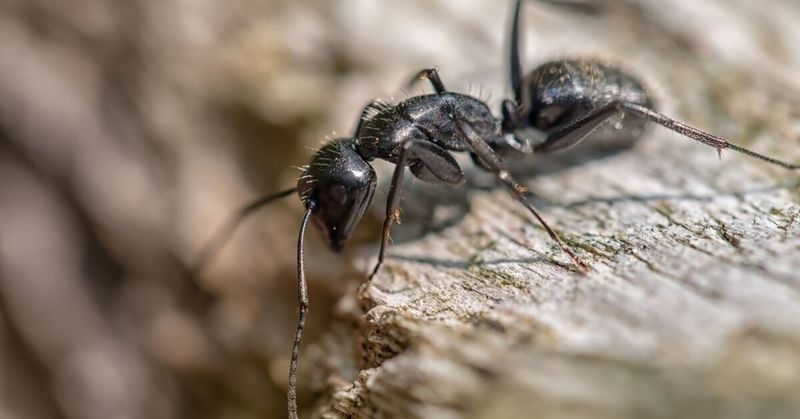
Carpenter ants are one of the main reasons a pileated woodpecker will spend serious time working a tree or log in a Pennsylvania yard. These birds have long, barbed tongues designed to reach deep into wood galleries where ant colonies set up their tunnels.
When a pileated woodpecker is hammering steadily into a specific spot, there is a good chance it has found something worth digging for.
Carpenter ants in Pennsylvania tend to colonize wood that has already softened from prolonged moisture exposure.
They do not eat the wood the way termites do, but they hollow out galleries to nest in, and those galleries become a food source for birds like the pileated woodpecker.
Seeing the bird work a particular log or tree section does not automatically mean the ants are a threat to your home. They are often simply living in outdoor wood where conditions suited them.
Wood-boring beetles and their larvae are another food source pileated woodpeckers seek out. These insects live beneath bark and inside softened wood, and the woodpecker can detect them by sound and vibration as it taps along the surface.
If a pileated woodpecker is visiting your Pennsylvania yard regularly and focusing on the same tree or log, it is reasonable to take a calm look at what might be drawing it back to that specific spot.
Checking nearby outdoor wooden structures like old fences, woodpiles, or garden borders for any moisture-related softening is a practical and worthwhile step in that process.
5. Rectangular Holes Can Be A Clue
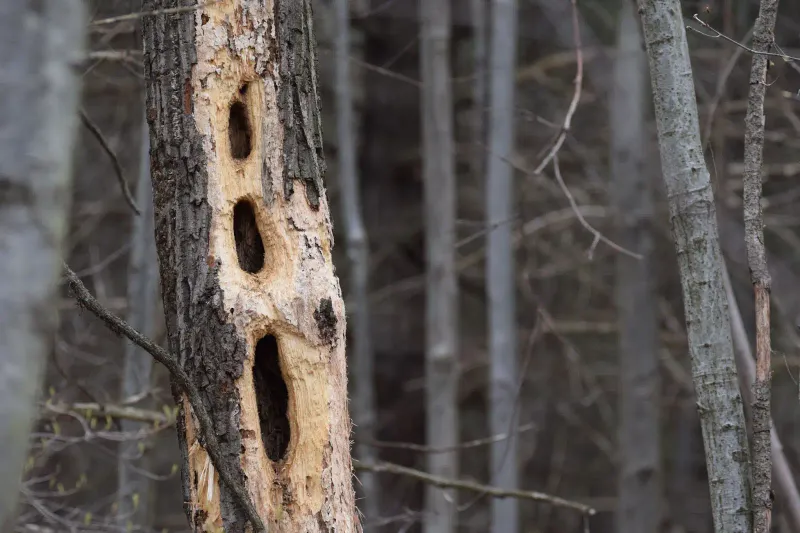
A deep, rectangular mark chiseled into a tree trunk is one of the most recognizable signs that a pileated woodpecker has been at work.
Unlike the round holes made by smaller woodpecker species, pileated woodpeckers leave behind large, oblong cavities that can be several inches deep and wide.
Spotting one of these marks in a Pennsylvania yard is a fairly reliable way to confirm the bird has been present, even if you did not see it directly.
The shape of these holes reflects the way the bird excavates. Pileated woodpeckers chisel systematically along the grain of the wood, following the tunnels left by carpenter ants or other insects.
The result is a hole that looks almost carved rather than drilled, and it tends to stand out clearly on the side of a large tree trunk or a sizable downed log.
In Pennsylvania forests and wooded suburban areas, these marks are considered a normal part of the landscape.
Finding rectangular holes in a tree does not automatically mean the tree is in serious trouble or that the yard has a major insect issue. The bird may have found a small colony in one section of the wood and moved on.
Multiple large excavations concentrated in one area of a tree can be a reasonable signal that something worth investigating is going on beneath the bark.
Having a certified arborist take a closer look at the tree’s overall condition is a smart next step, especially if it sits close to a structure or a well-traveled area of the yard.
6. Your Yard May Offer More Natural Food Than You Realize
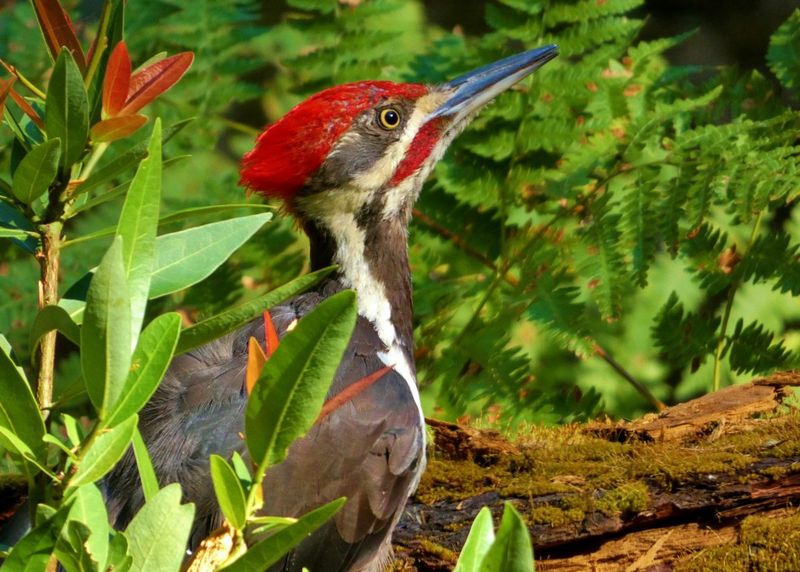
Dogwood berries ripening along the edge of a Pennsylvania yard, wild blackberries growing near a fence line, or elderberries clustered at the back of a property can all quietly signal that a yard offers more than just lawn grass.
Pileated woodpeckers are primarily insect hunters, but they do occasionally take wild fruits and berries, and a yard rich in native plantings tends to attract a broader range of wildlife overall.
Beyond fruit, the real food draw for pileated woodpeckers is the insect life that thrives in and around natural vegetation. Native trees, shrubs, and groundcover support a much denser and more varied insect community than ornamental plantings or turfgrass alone.
In Pennsylvania yards that include native oaks, serviceberry, spicebush, or wild grape, the insect population tends to be higher, which in turn supports birds higher up the food chain.
A pileated woodpecker appearing in a yard with a good mix of native plants, older trees, and some natural debris is not a coincidence.
The yard has likely developed into a genuinely productive wildlife habitat over time, even if the homeowner has not thought of it that way.
Adding more native plants to a Pennsylvania yard, reducing pesticide use, and leaving some natural leaf litter and woody debris in low-traffic areas are all steps that can make a yard more appealing to this impressive bird and many other species.
7. A Safe Snag May Be Worth Keeping
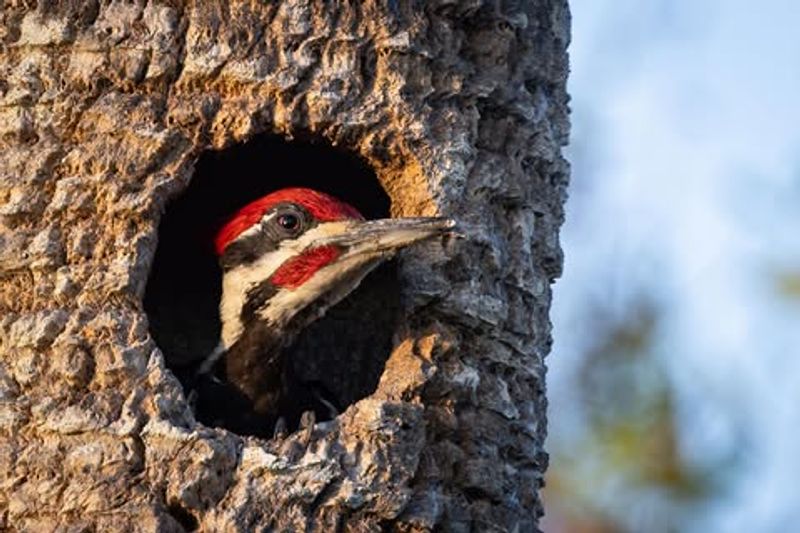
An old snag standing near the back of a Pennsylvania yard might not look like much at first glance, but to a pileated woodpecker, it can represent exactly the kind of structure worth investigating.
A snag is simply a standing tree that has lost most or all of its foliage and bark over time, and these structures are among the most valuable wildlife features a yard can offer in Pennsylvania and throughout the eastern United States.
Pileated woodpeckers use snags heavily for foraging. The softened interior wood often holds the insect colonies they are searching for, and the exposed surface makes it easy for the bird to work efficiently.
Over time, the cavities pileated woodpeckers excavate in snags can also become nesting spots for other cavity-dependent wildlife, including wood ducks, screech owls, and flying squirrels.
Not every snag is safe to keep in a residential yard. Homeowners in Pennsylvania should consider the snag’s location carefully before deciding to leave it in place.
A snag that stands away from structures, play areas, and frequently traveled parts of the yard can be a genuine wildlife asset. One that leans toward a fence, a roof, or a pathway may need to be assessed by a professional for safety.
The goal is to support wildlife thoughtfully, not to take unnecessary risks, and in many Pennsylvania yards there is a way to do both at the same time.
8. A Visit Does Not Automatically Mean A Pest Problem In Your House
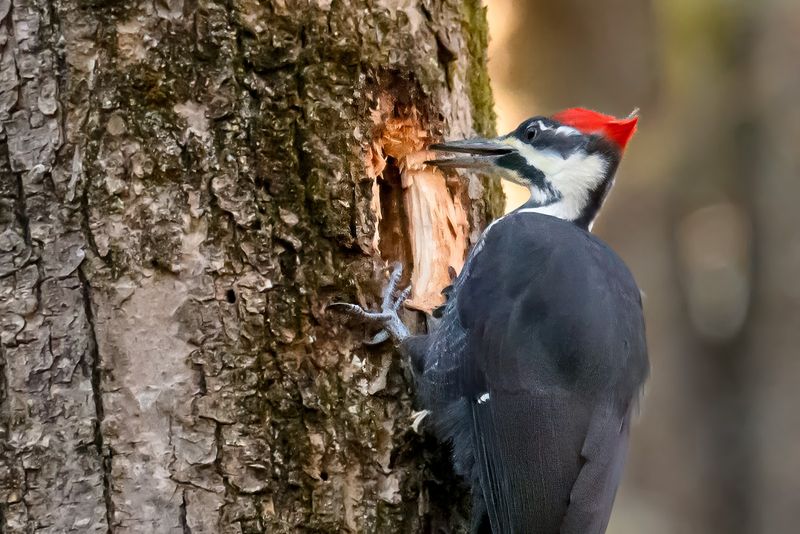
Watching a pileated woodpecker land on a tree rather than on the siding of your house is actually the most common scenario for Pennsylvania homeowners who spot this bird.
Despite what some people assume, a pileated woodpecker visiting a yard does not automatically mean the house has a carpenter ant infestation or a structural wood issue.
The bird is almost always responding to something in the yard’s trees, logs, or natural debris, not the house itself.
Pileated woodpeckers occasionally do peck at wooden structures when insects have colonized them, but this is far less common than foraging on trees or downed wood.
When it does happen, the bird is usually responding to a real insect presence in the wood, not exploring randomly.
If a pileated woodpecker is pecking at your home’s siding or wooden trim, that is a reasonable signal to have a pest professional take a calm, non-urgent look at the area in question.
For most Pennsylvania homeowners, though, a pileated woodpecker in the yard is simply good news about the local habitat.
It suggests the area supports mature trees, natural food sources, and the kind of wooded character that larger, more habitat-sensitive birds need.
Rather than worrying, taking a moment to watch where the bird goes and what it focuses on can tell you a lot about what is quietly thriving in your own backyard.