The Best Trees To Plant In Heavy Clay Soil In Georgia
Trying to grow a tree in the wrong spot can test anyone’s patience.
You water it, give it time, and hope it will finally take off, but the results never match your expectations.
After a while, it starts feeling like the problem is not the tree at all. The ground beneath it often has more to do with success than many realize.
Some soils make it much harder for roots to spread and establish themselves. Choosing a tree without thinking about those conditions can lead to years of disappointment instead of steady growth.
Heavy clay soil creates challenges that not every tree can handle. Georgia has many species that are naturally better suited to those conditions.
Picking one of those reliable trees from the beginning can save time, reduce frustration, and give your landscape a much stronger start.
1. Bald Cypress Handles Wet Clay With Ease
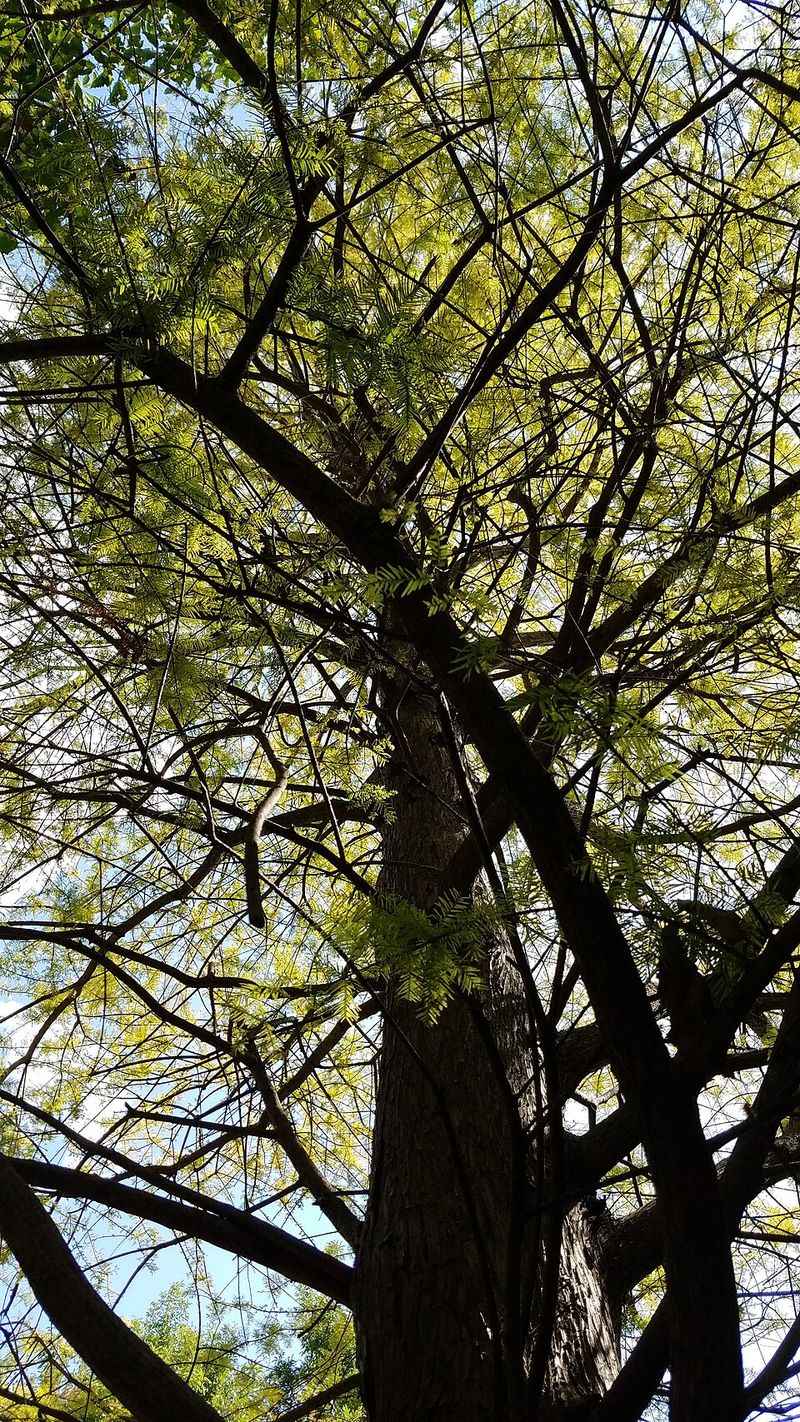
Bald Cypress is one of the toughest trees you can put in soggy, compacted ground. Most people picture it standing in swampy water, but it handles heavy clay just as well.
Roots adapt to low-oxygen soil better than almost any other tree you can find in the nursery.
Growth is steady rather than fast. Expect around one to two feet per year under decent conditions.
Over time, it becomes a tall, pyramid-shaped tree with feathery, soft needles that turn coppery orange in fall before dropping.
One thing to know upfront: Bald Cypress can develop woody root structures called knees. These pop up around the base and can be quirky-looking in a yard setting.
Some homeowners love the look, others find it annoying. Either way, it does not harm the tree.
Planting in a low spot where water collects after rain is a smart move. Clay soil holds moisture longer, which actually works in this tree’s favor.
Just make sure the planting hole is not deeper than the root ball itself.
No serious pest or disease problems typically plague this species in the Southeast. It is also surprisingly drought-tolerant once established, which makes it more flexible than its swamp reputation suggests.
For yards with drainage issues, few trees offer this level of reliability.
2. River Birch Grows Well In Heavy Soil
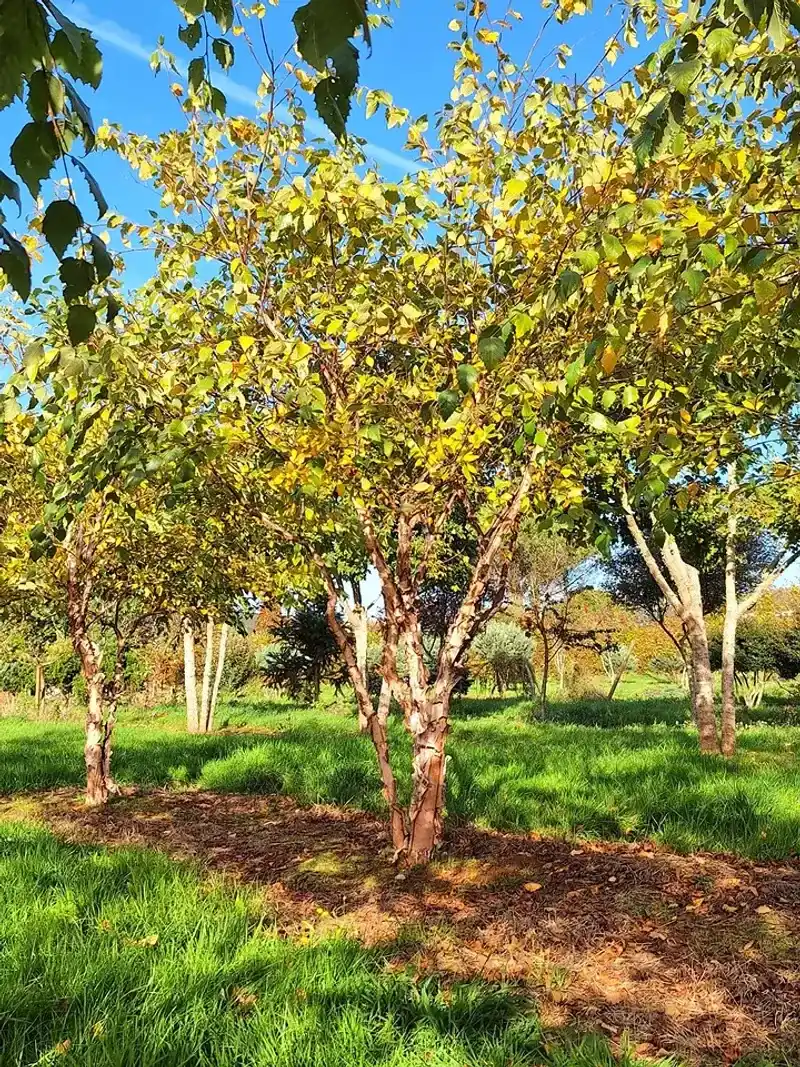
Peeling bark, graceful branches, and serious toughness — River Birch brings a lot to the table. It is one of the most popular shade trees in the Southeast, and for good reason.
Clay soil does not slow it down much at all.
What makes it stand out is that cinnamon-colored, papery bark that peels away in curling layers. Even in winter, the tree looks interesting.
Landscape designers lean on it heavily for that reason.
River Birch grows quickly, often putting on two or more feet per year. It handles wet periods well and bounces back after heavy rains that leave other trees waterlogged.
Established trees show decent drought tolerance too, though consistent moisture helps.
Planting in full sun gives the best results. It can manage partial shade, but growth slows noticeably.
Your Georgia Garden Changes Every Week. Your Plan Should Too.
Gardening in Georgia changes quickly throughout the season. Every Friday you’ll receive a simple weekly plan showing exactly what to plant, prune, fertilize, harvest, and protect so you never miss the right timing.
When planting in clay, avoid amending the hole with too much organic material, since that can cause roots to circle inside the hole rather than pushing outward.
Aphids can be an occasional issue, leaving a sticky residue on leaves. This rarely causes lasting harm, and natural predators often handle the problem without any intervention needed.
Leaf miners sometimes appear mid-summer but do not typically affect the tree’s overall health in any serious way. Multi-stem forms are widely available and tend to look more natural in residential settings than single-trunk specimens.
3. Swamp White Oak Adapts To Poor Drainage
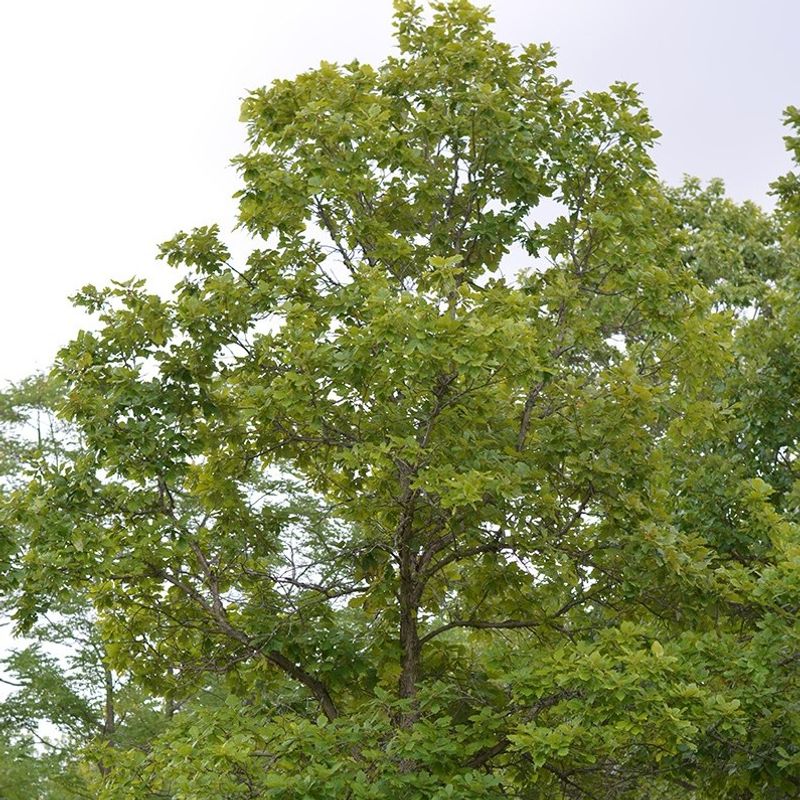
Poor drainage stops a lot of trees cold. Swamp White Oak shrugs it off.
Named for its natural habitat along floodplains and wetland edges, this oak handles standing water and compacted clay better than most of its relatives.
Leaves are distinctive — wider at the tip than at the base, with a glossy dark green top and a pale underside. Fall color ranges from yellow to reddish-brown depending on the season and the individual tree.
It is not the most dramatic fall display, but it is consistent.
Growth rate lands in the moderate category. Count on one to two feet per year under good conditions.
Over decades, it becomes a broad, handsome shade tree reaching 50 to 60 feet in height. Canopy spread can match or exceed height at maturity.
Acorn production starts once the tree reaches maturity, usually around 20 years. Wildlife activity picks up noticeably when acorns drop in fall.
Deer, turkeys, and squirrels all show up reliably around established Swamp White Oaks.
Root systems go wide rather than deep in clay soil, which is actually an advantage. Shallow, spreading roots capture surface moisture and anchor the tree without needing deep penetration into compacted layers.
Mulching around the base helps retain moisture and keeps lawn equipment from damaging surface roots. Avoid heavy foot traffic over the root zone during the establishment period.
4. Willow Oak Thrives In Clay Conditions
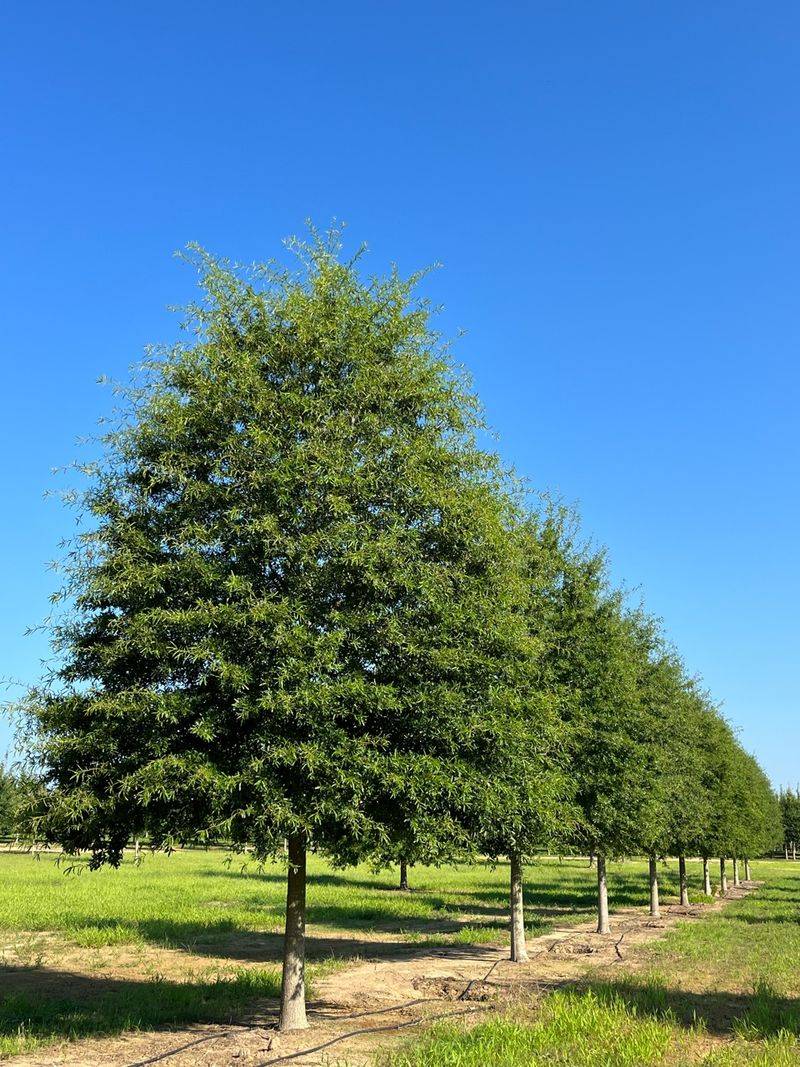
Narrow leaves on a massive oak tree — that contrast alone makes Willow Oak worth a second look. Unlike most oaks, its leaves are long and slender, almost like a willow’s.
The fine texture gives the canopy a soft, airy appearance that stands out in any landscape.
Clay soil suits this tree well. It grows naturally along river bottoms and low-lying areas where drainage is slow and soil is dense.
Transplanting into heavy clay does not cause the stress you might expect with other oak species.
Growth rate is moderate to fast for an oak. Under favorable conditions, it can put on two feet per year.
Expect a mature height around 40 to 60 feet with a rounded, symmetrical canopy that provides reliable shade.
Willow Oak is widely used as a street tree across the Southeast because it handles compaction, heat, and occasional flooding without much complaint. Urban conditions that stress other trees tend to slow it down rather than cause serious problems.
Fall color is not its strongest feature. Leaves turn yellow to yellowish-brown before dropping, which is decent but not spectacular.
What it lacks in fall drama it makes up for in summer shade and overall durability. Acorns are small — about the size of a pea — and produced in large quantities.
Birds and small mammals depend on them heavily. Planting in full sun produces the densest, most attractive canopy over time.
5. American Hornbeam Tolerates Dense Ground
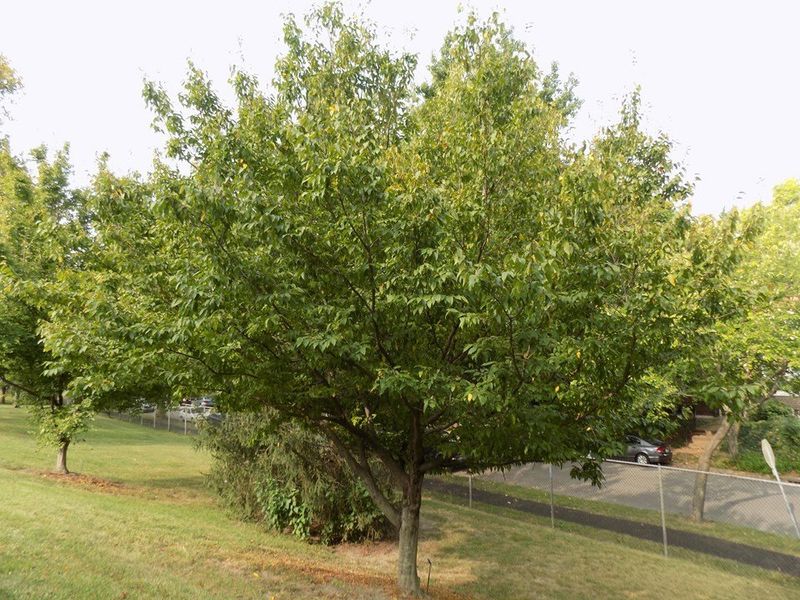
Muscle-like ripples run along the smooth gray bark of American Hornbeam, earning it the nickname musclewood. Up close, the trunk looks carved.
It is a small native tree that fits naturally into shaded corners where larger trees struggle to establish.
Dense clay soil does not intimidate it. American Hornbeam grows natively along stream banks and in low-lying woodland areas where soil is consistently moist and compact.
That natural background makes it a reliable choice for problem spots in the yard.
Size stays manageable. Most specimens top out between 20 and 30 feet, making it a practical option for smaller properties or areas under utility lines.
Canopy spread roughly matches height, creating a rounded, layered look that works well in naturalistic plantings.
Shade tolerance sets it apart from most trees on this list. It handles deep shade better than almost any other native tree available in the Southeast.
That makes it useful beneath established tree canopies where light is limited and soil is root-compacted.
Fall color can be surprisingly good in the right year. Leaves shift to orange, red, and yellow in autumn.
Catkins and small hop-like fruit clusters add interest through winter after leaves drop. Birds use the seeds as a food source, so wildlife value is solid.
Slow growth means patience is required, but once established, maintenance needs are low and the tree rarely causes problems.
6. Black Gum Adapts To Clay-Rich Soil
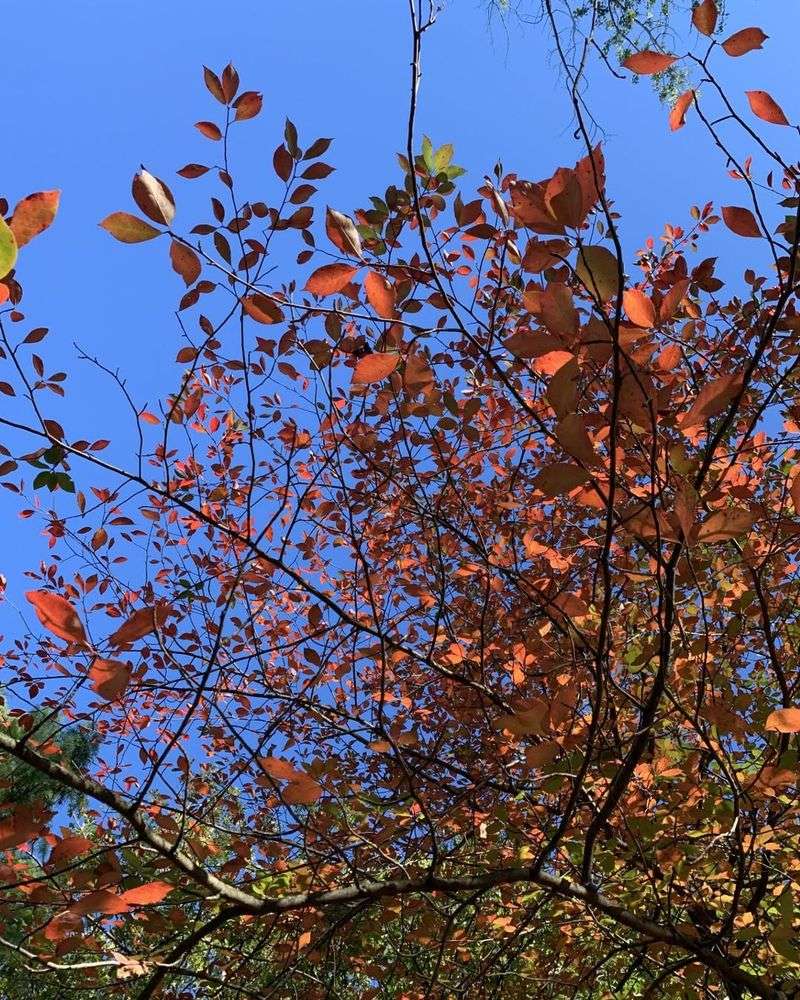
Few native trees match Black Gum for fall color. Leaves shift from deep green to blazing red, orange, and sometimes purple.
The color comes early and stays vivid longer than most other trees in the yard.
Heavy clay is not a dealbreaker for this species. Black Gum grows naturally across a wide range of soil conditions, from wet bottomlands to dry upland slopes.
That flexibility makes it one of the more adaptable native trees available for residential planting.
Growth is slow to moderate. Planting a young tree requires patience, but the payoff is a long-lived specimen that can persist for centuries under the right conditions.
Mature trees develop a distinctive layered branch structure that looks striking even in winter.
Small blue-black fruit clusters form in late summer and drop in fall. Songbirds go after them quickly, so wildlife value is high.
The fruit is edible but quite sour, so most people leave it for the birds without any argument.
Tap roots develop early, which means transplanting older specimens is difficult. Container-grown or small balled-and-burlapped trees establish better than large dug trees.
Plant young and let it settle in slowly. Clay soil holds the moisture this tree needs during dry spells, which actually works in its favor after the first season or two.
Mulching around the base during the first two winters helps protect roots while they expand.
7. Red Maple Grows In A Wide Range Of Clay Soils
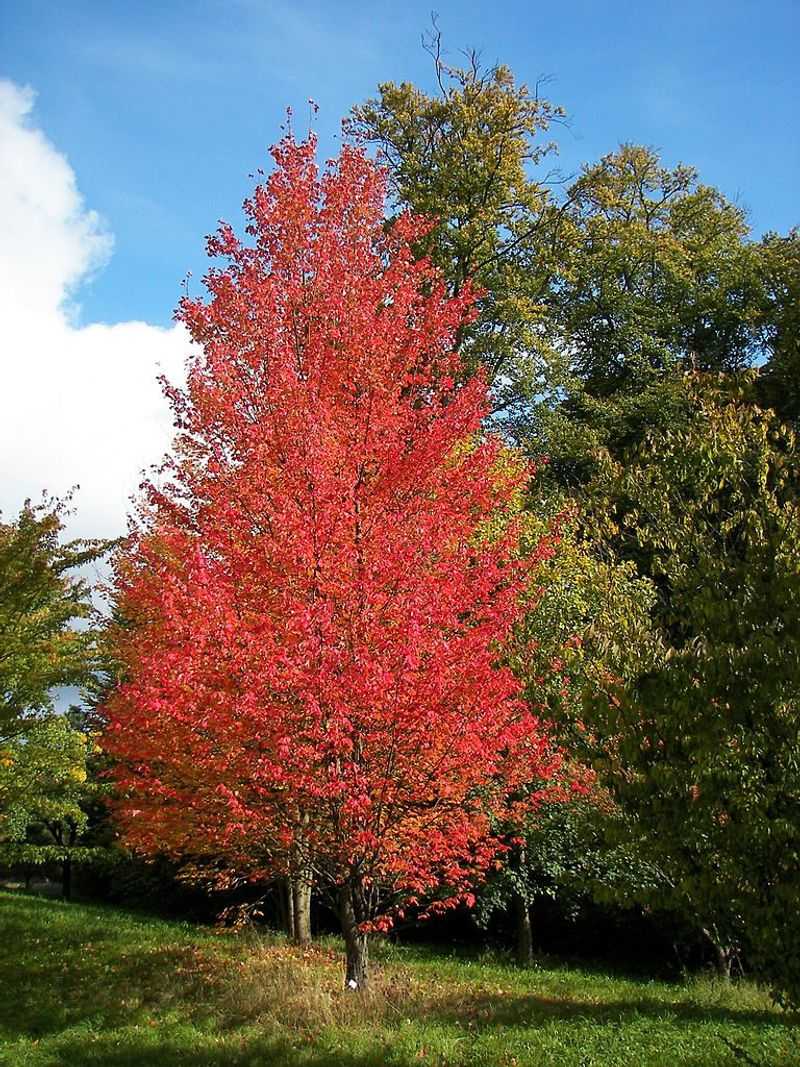
Red Maple puts on a show twice a year. Tiny red flowers cover the branches in late winter before leaves even appear, and then fall color arrives in shades of red, orange, and yellow.
Not bad for a tree that also handles heavy clay without much fuss.
Adaptability is genuinely one of this tree’s strongest qualities. It grows in wet bottomlands, dry upland sites, and everything in between.
Clay soil in Georgia yards suits it well, especially in areas where seasonal flooding is occasional rather than permanent.
Growth rate is fast by tree standards. Expect two to three feet per year under good conditions.
That pace makes it one of the quicker ways to get meaningful shade into a yard without waiting a decade.
Root systems can be aggressive near the surface in clay. Keep it away from sidewalks, driveways, and shallow utility lines.
Giving it space to spread reduces maintenance issues down the road significantly.
Several cultivars are available with improved fall color or more compact growth habits.
October Glory and Red Sunset are two commonly planted selections worth asking about at local nurseries. Cultivar performance can vary by region, so local sourcing matters.
Full sun produces the best growth and fall color, though partial shade is tolerable.
Water regularly during the first two growing seasons to help roots push through compacted clay layers before summer heat peaks.
8. Overcup Oak Handles Poorly Drained Areas
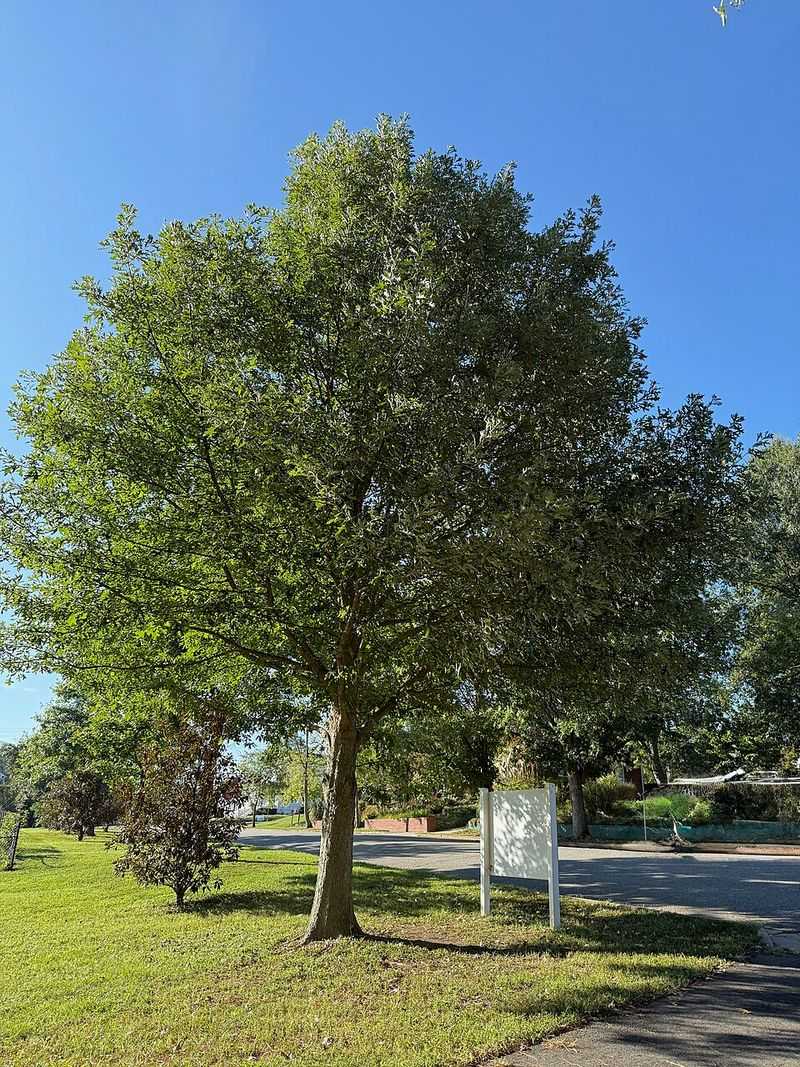
Overcup Oak is the underdog of native oaks. It does not get talked about much, but for waterlogged clay soil, it might be the most practical choice on this entire list.
Natural stands grow in river bottomlands and seasonally flooded flats across the Southeast.
What makes it distinctive is the acorn. A large cup nearly covers the entire nut, which is how it got its name.
Wildlife, especially deer and ducks, seek out those acorns. Planting one near a low area can turn a drainage problem into a habitat feature.
Growth is slow to moderate, which is typical for oaks in the white oak group. Long-term patience is part of the deal.
Mature trees reach 40 to 60 feet with a broad, irregular canopy that develops real character with age.
Wet winters and spring flooding do not set it back the way they would most other trees. That flooding tolerance is the whole point of choosing Overcup Oak over a more common species.
It simply handles conditions that would stress other oaks.
Bark is light gray and scaly, giving mature trees a rugged, textured appearance. Leaves are deeply lobed with a rounded outline typical of white oaks.
Fall color is variable, ranging from yellow-brown to reddish-brown. No single specimen guarantees vivid fall display, but the tree earns its keep through function and wildlife value rather than seasonal drama.
Plant in full to partial sun for best results.