How Oregon Gardeners Water Pumpkins Now To Get Maximum Size Before First Frost Arrives
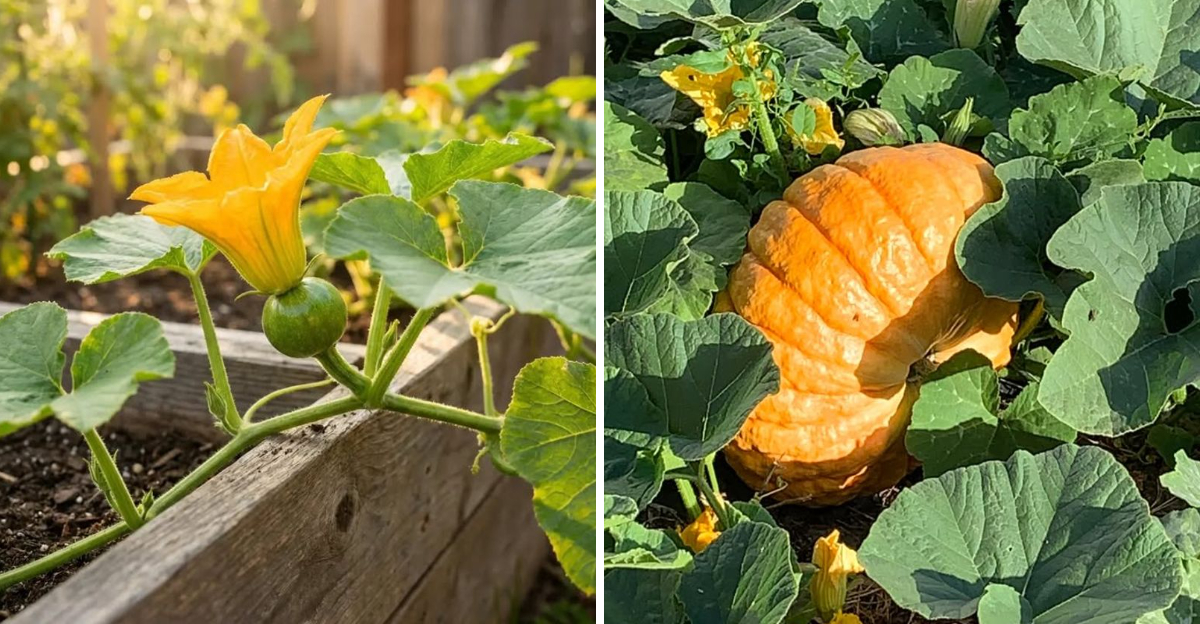
Oregon pumpkins do not have much time for lazy watering in late summer.
The vines are sprawled, the fruit is sizing up, and the first frost is somewhere out there quietly sharpening its calendar.
This is the stretch that decides whether your pumpkin becomes porch-worthy or stays a little too polite.
A quick daily splash may feel helpful, but pumpkin roots need water deeper than that. Shallow watering keeps the surface damp while the real root zone misses the steady moisture needed to push fruit size before cold weather slows everything down.
That is where good timing matters.
Late summer watering in Oregon is not about panic. It is about deep, consistent moisture that supports swelling fruit without leaving the crown soggy or inviting disease.
So what should gardeners do right now while the vines are still working hard?
Start with the root zone, not the leaves. A pumpkin with steady deep water has a much better chance of finishing big before frost ends the race.
1. Water Deep Instead Of Often
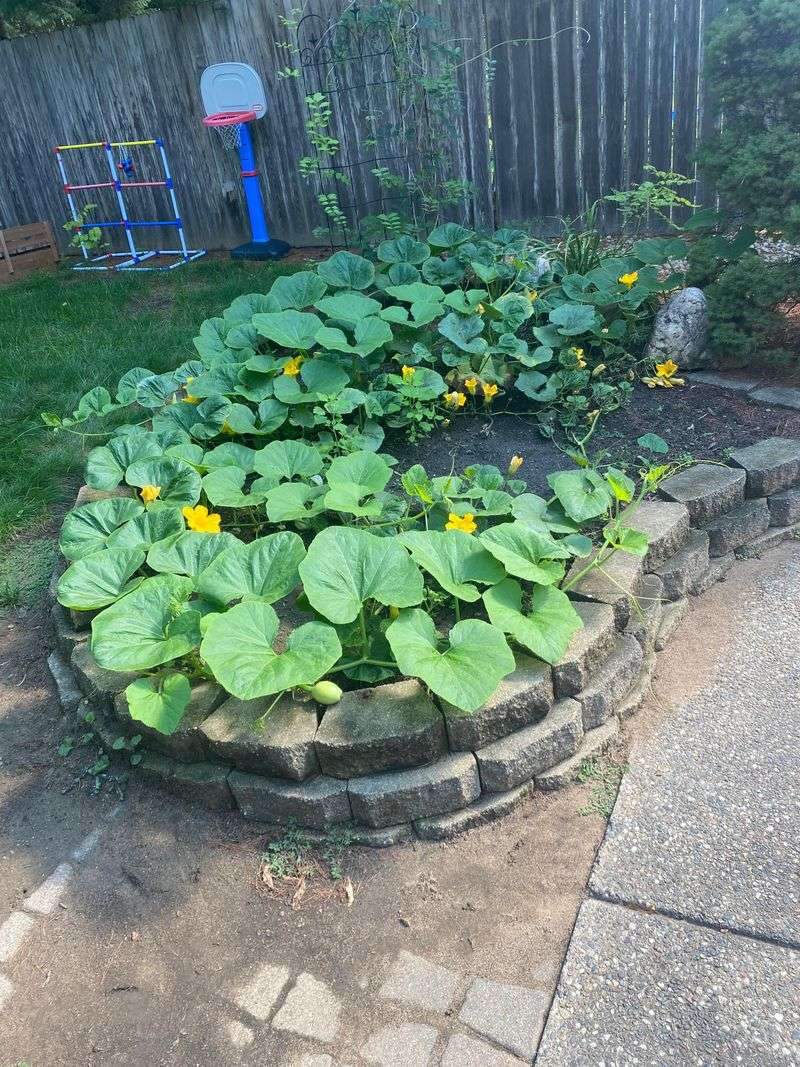
A hose turned on for five minutes barely gets the job done.
Shallow watering might look like enough on the surface, but pumpkin roots reach down far into the soil, sometimes two feet or more, and a quick sprinkle never reaches them.
The roots that matter most are not right at the surface.
Oregon State University Extension recommends slow, deep irrigation for large fruiting vegetables like pumpkins and squash.
The goal is to push moisture down into the root zone so roots chase water deeper rather than staying near the top where soil dries out fast during August heat.
Deep roots are more stable roots.
A soaker hose or drip line left running for 45 minutes to an hour does far more good than a quick daily splash.
Sandy soils in parts of the Willamette Valley drain faster and may need longer soaks. Heavy clay soils common in western Oregon hold water longer, so watch for pooling and adjust your time accordingly.
Try watering two or three times a week instead of every day.
Let the soil dry slightly between sessions, but never let it crack or pull away from the base of the plant.
Check soil moisture six inches down by pressing a finger or a screwdriver into the ground. If it slides in easily and feels cool and damp, you are hitting the right depth.
2. Soak The Full Root Zone
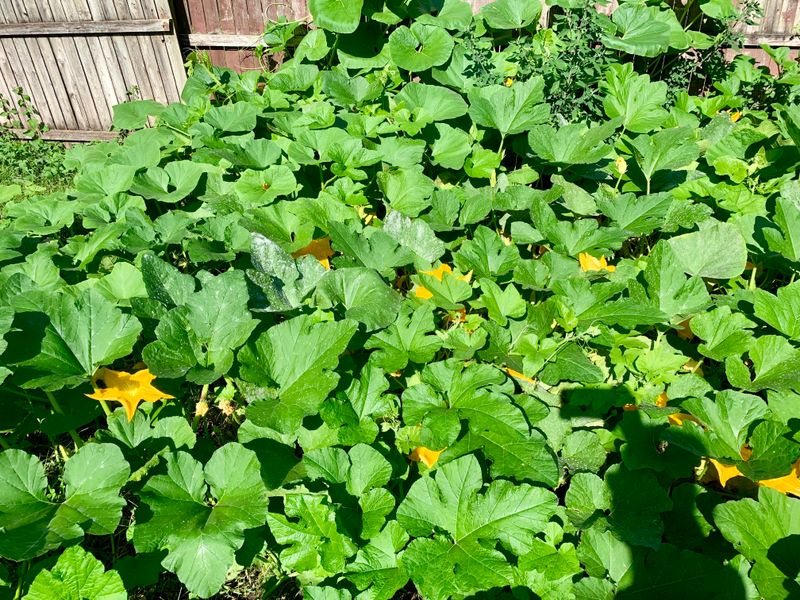
Many gardeners water right at the base of the plant and call it done. That habit misses a huge portion of where pumpkin roots actually live.
Pumpkin root systems spread outward just as aggressively as the vines above ground, reaching several feet beyond the crown in every direction.
OSU Extension guidance on squash and cucurbits points out that feeder roots extend well past where you might expect.
Watering only the crown leaves those distant roots dry and limits how much water and nutrients the plant can pull in during the critical sizing weeks of late summer.
Your Oregon Garden Changes Every Week. Your Plan Should Too.
Gardening in Oregon changes quickly throughout the season. Every Friday you’ll receive a simple weekly plan showing exactly what to plant, prune, fertilize, harvest, and protect so you never miss the right timing.
Think of the root zone as a wide circle, not a tight spot around the stem.
Walk the vine length and water along both sides of it, not just at the base. If your main vine is eight feet long, water from the crown all the way out to the tip and a foot or two beyond.
A good trick is to place soaker hoses in a loop that follows the vine path.
This way every section of root gets attention without you having to move the hose constantly.
You can also use a slow-running garden hose and walk it along the vine in the morning before the heat of the day sets in.
Giving the full root zone a good drink every few days will reward you with noticeably bigger fruit as harvest approaches. Oregon pumpkins are worth that extra walk.
3. Keep Water Off The Leaves
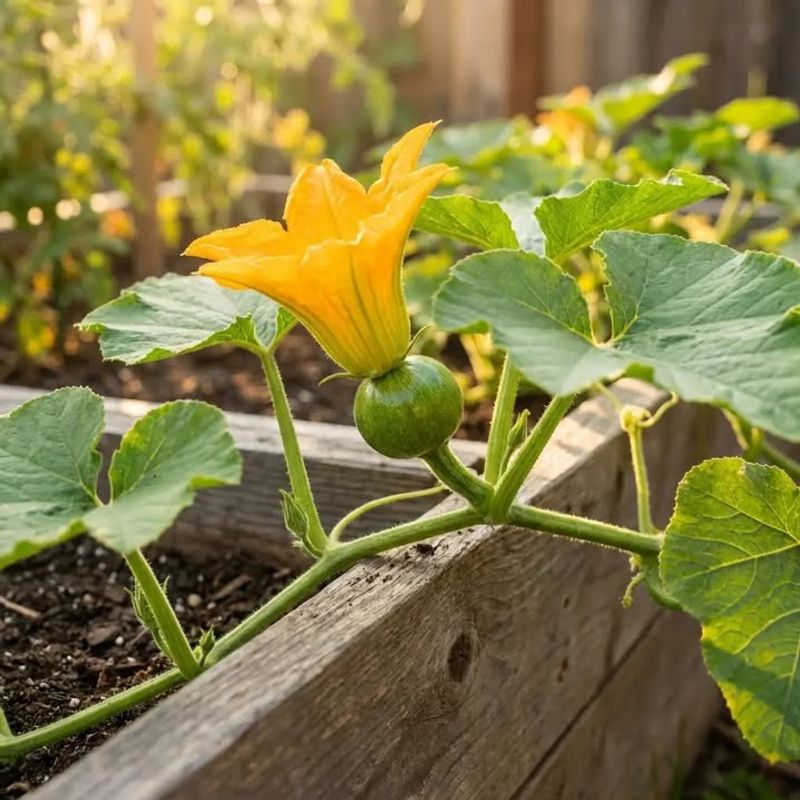
Wet leaves on a pumpkin plant are an open invitation for trouble.
Powdery mildew and other fungal issues thrive in moist conditions, and once they take hold on the foliage, the plant loses its ability to photosynthesize efficiently.
Less leaf power means slower fruit growth right when you need it most.
Oregon summers can bring surprising humidity, especially in valleys and near the coast.
Watering overhead with a sprinkler adds unnecessary moisture to leaves that are already dealing with morning dew and fog.
Switching to ground-level watering is one of the simplest and most effective moves you can make in August and September.
Drip lines and soaker hoses deliver water directly to the soil without sending a single drop onto the foliage.
If you have to use a regular hose, aim the water at the base of the plant and keep the spray low and gentle.
Early morning is the best time to water because any accidental splashing on leaves has time to dry before evening.
Keeping foliage dry also helps the plant hold onto the big, broad leaves it needs to feed those growing pumpkins.
A healthy leaf canopy traps heat around the fruit, which is especially helpful on cool Oregon nights.
Treating your leaves like they matter, because they do, gives your pumpkins the clean, efficient energy system they need to put on size in the final stretch before frost rolls in from the Cascades.
4. Watch Fruit Size After Each Soak
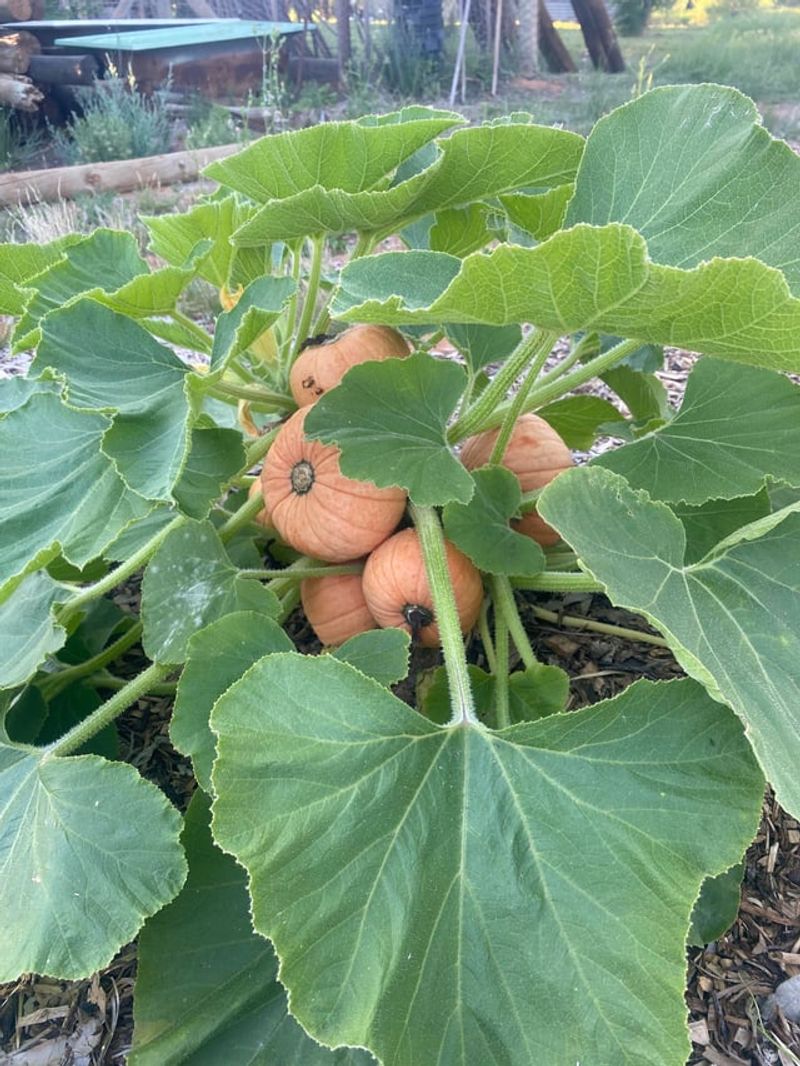
Paying close attention after each deep watering session tells you more than any calendar can.
A pumpkin that is sizing up well will look visibly larger every few days during peak growing season. One that stalls out despite good watering is sending you a signal worth investigating.
Keep a simple log or just take a photo of your largest fruit every few days.
Lay a tape measure beside it or mark a spot on the rind with a grease pencil. This is not about obsessing over inches but about noticing trends.
If growth slows down suddenly, check your soil moisture, look for vine stress, and review how much water the plant has actually received.
OSU Extension notes that consistent moisture is key during fruit bulking stages for squash and pumpkins.
Uneven water delivery, too much one week and too little the next, can cause the fruit to stall or develop uneven shapes. Steady and consistent beats random and heavy every time.
Watch for the fruit to shift from a dull, matte surface to a slightly glossier look as it fills out.
The stem will thicken and the skin will start to firm up. These are signs that your watering schedule is working.
If you notice the fruit looking wrinkled or the vine wilting even after a good soak, it may be time to check for root issues or adjust where you are placing the water.
Smart observation is half the harvest.
5. Use Mulch To Hold Moisture
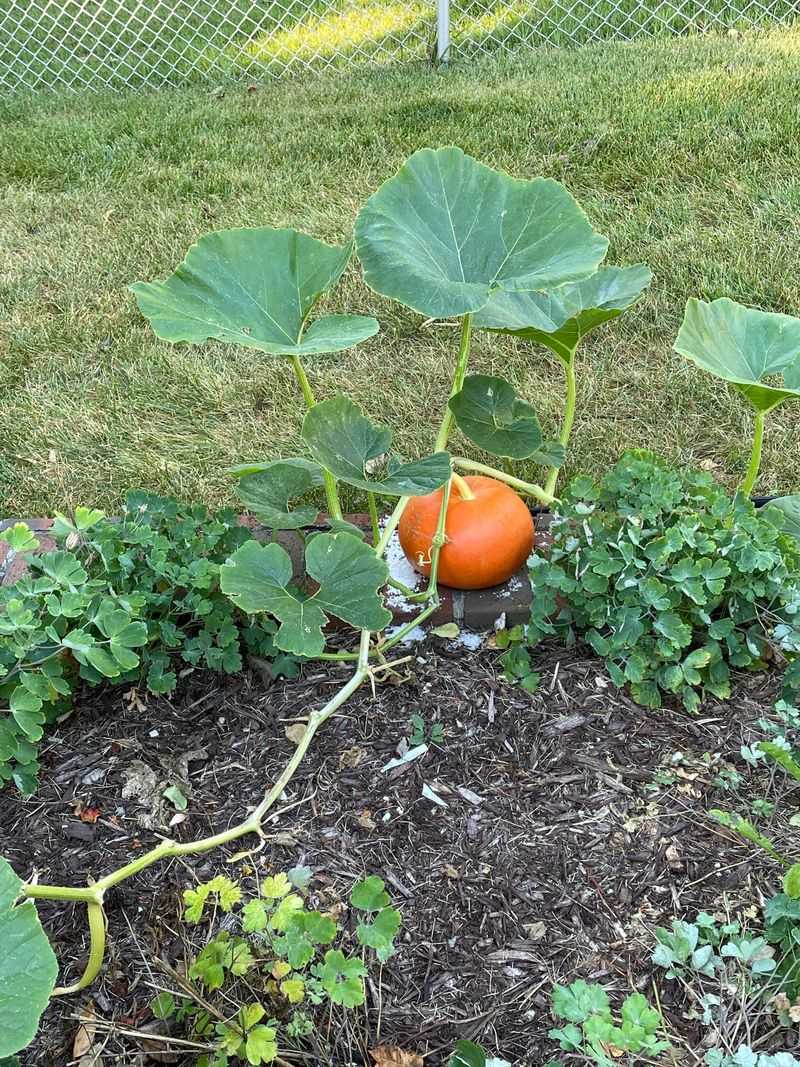
Straw spread around the base of your pumpkin vines is one of the hardest-working tools in any Oregon garden.
It acts like a blanket for the soil, slowing down evaporation so the water you put in actually stays where the roots can use it.
Without mulch, a deep soak can lose a significant amount of moisture within just a few hours on a warm August afternoon.
OSU Extension recommends organic mulches like straw, wood chips, or grass clippings for vegetable gardens throughout the Pacific Northwest.
A layer three to four inches thick is ideal. Too thin and it barely slows evaporation. Too thick and it can trap excess moisture against the crown and cause rot at the stem base, which is the last thing you want this close to harvest.
Mulch also keeps soil temperatures more stable.
Oregon nights can cool down fast, especially in September, and soil that stays warmer longer keeps roots active and pulling in nutrients.
Roots slow down in cold soil, and slow roots mean slower fruit growth at exactly the wrong time.
Spread your mulch in a wide circle around the plant, following the root zone rather than just piling it around the stem.
Pull it back a few inches from the main stem to allow airflow at the crown.
Refreshing your mulch layer now, even if you put some down in spring, gives your pumpkins a real advantage in the final push toward that prize-worthy fall harvest.
6. Stop Big Dry Swings
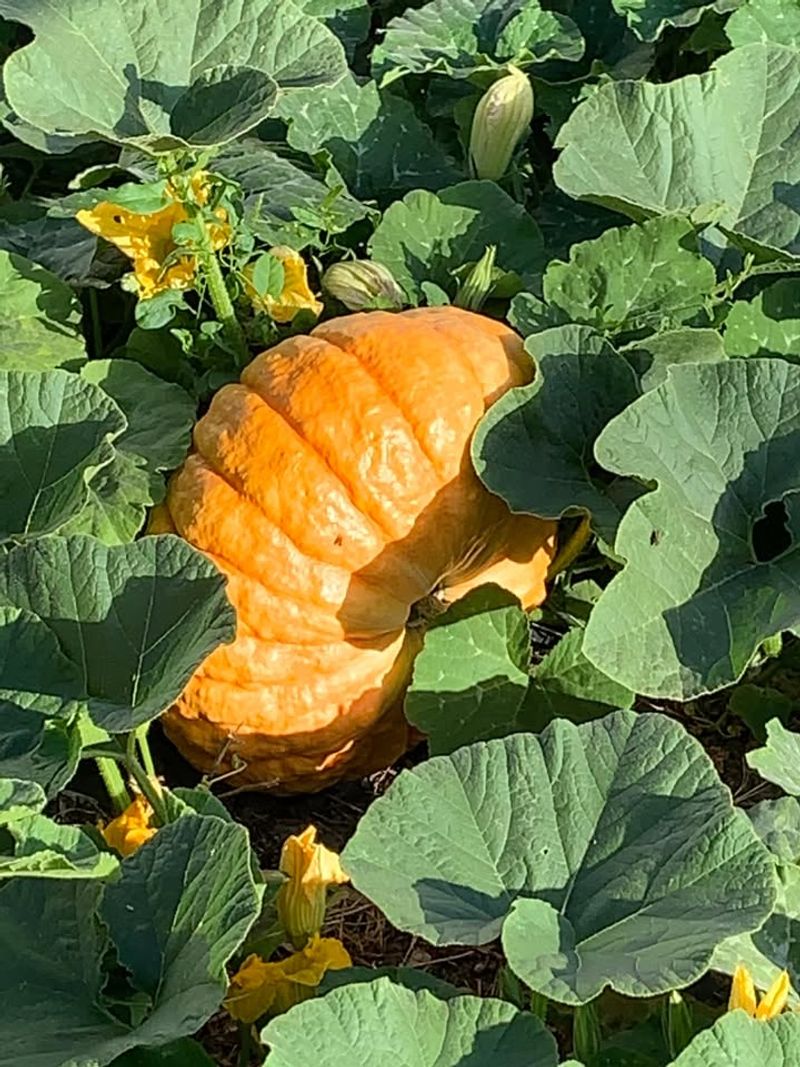
A vine that goes from bone dry to soaking wet and back again is a stressed vine.
Pumpkins are tougher than they look, but dramatic swings between drought and flooding take a real toll on fruit quality and size.
Stress from uneven moisture can cause blossom drop, misshapen fruit, and vines that simply stop putting energy into sizing up.
Oregon gardeners know this cycle well.
A dry stretch in August followed by a sudden rainstorm can feel like a watering gift, but the swing from drought to flood can actually crack developing rinds or cause the fruit to take up water too fast.
Slow and steady is always the better path for cucurbits.
Check soil moisture every two to three days, especially during hot spells.
Water before the soil gets truly dry rather than waiting until the vine shows stress signs like drooping leaves in the late afternoon.
Drooping midday is normal in heat, but if the vine is still wilted in the evening, it needed water sooner.
A consistent schedule also helps your pumpkins build a tough, even rind that stores well after harvest.
Rinds that develop through stress cycles often have weak spots or uneven thickness.
Think of consistent moisture as building a better shell from the inside out. Oregon weather will throw surprises at you, but your job is to smooth out the bumps as much as possible before frost arrives.
7. Ease Up As Rinds Harden
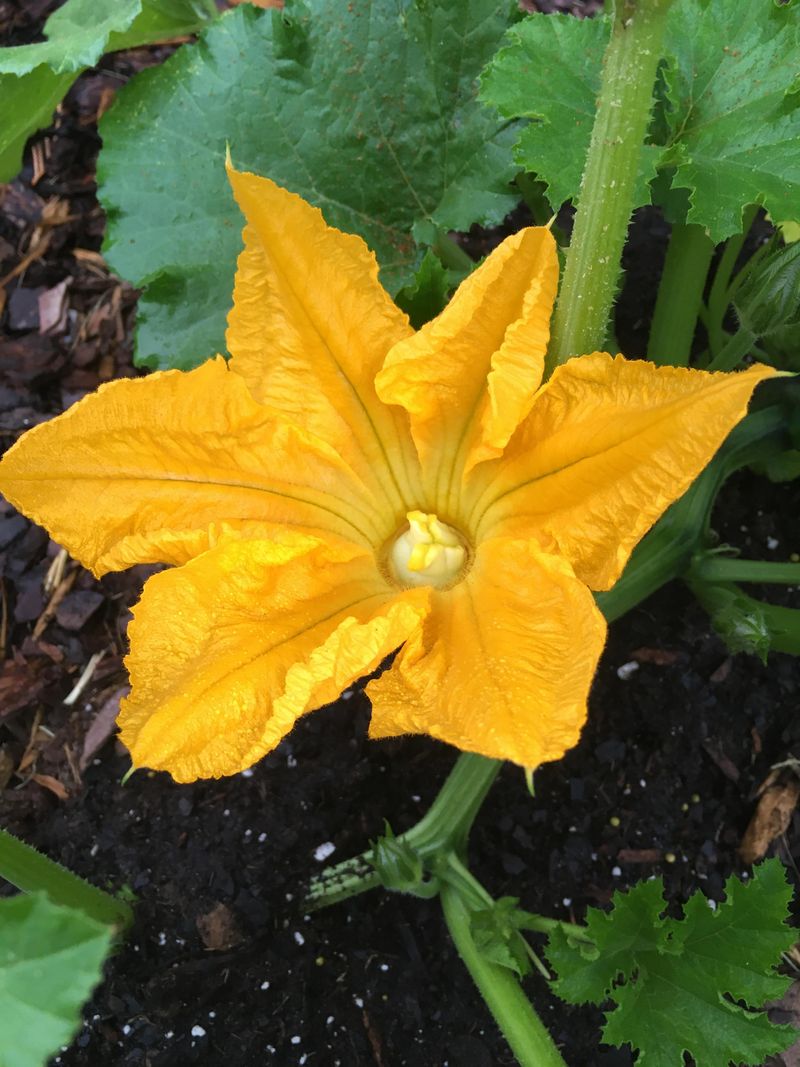
There is a clear moment in late summer when your pumpkin shifts from growing mode to finishing mode.
The rind starts to firm up, the color deepens toward its final orange or tan shade, and the vine near the fruit begins to look a little tired.
This is your signal to ease back on the water.
Overwatering a maturing pumpkin can actually work against you.
Too much moisture during the final ripening stage dilutes flavor, softens the rind, and makes the fruit harder to store after harvest.
OSU Extension notes that reducing irrigation as cucurbits approach maturity helps the rind toughen and the flesh cure properly.
You do not need to stop watering entirely.
The vine still needs some moisture to finish the job. But cutting back from three times a week to once or twice a week is usually the right move once you notice the rind resisting your thumbnail.
Press gently with your nail and if it does not leave a mark, the rind is hardening nicely.
The stem also gives you clues.
A mature pumpkin stem starts to dry and cork up, turning from green to tan and slightly rough. Leaves near the fruit may begin to yellow.
All of these are signs that the plant is naturally winding down its water demand.
Respect that signal and back off the hose a bit. Letting the pumpkin finish on its own terms produces a tougher, longer-lasting fruit that will look great on your porch well into November.
8. Harvest Before Frost Arrives
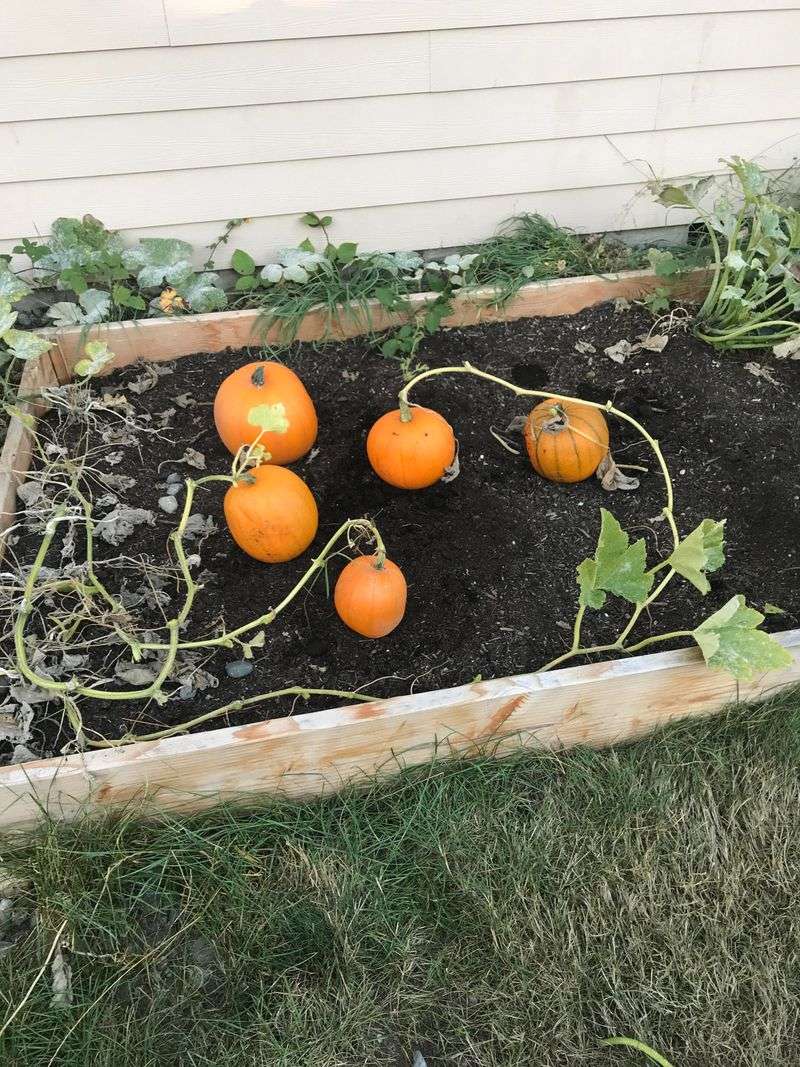
Frost in Oregon does not announce itself politely.
One morning you walk outside and the garden tells the story in wilted, blackened leaves.
Getting your pumpkins off the vine before that happens is the final piece of the whole watering-and-growing puzzle you have been working on all summer.
OSU Extension recommends harvesting pumpkins before the first hard frost, which typically arrives in the Willamette Valley between late September and mid-October depending on elevation and location.
Coastal areas often get a bit more time, while higher elevation gardens in the Cascades or eastern Oregon face earlier freezes.
Check your local frost date and keep an eye on the seven-day forecast starting in late September.
Look for these harvest signals before you cut: the rind feels firm and resists scratching, the skin has reached its full color, the stem has turned dry and corky, and the tendril closest to the fruit on the vine has dried out completely.
If all four of those signs are present, your pumpkin is ready to come in.
Cut the stem with clean pruners, leaving at least three to four inches of stem attached.
A short or missing stem shortens storage life significantly.
Cure your harvested pumpkins in a warm, dry spot for about ten days to harden the skin further before moving them to a cool, dry storage area.
All that careful watering you did through late summer pays off in a pumpkin that lasts and looks great long after the garden has gone quiet for the year.