The Arizona Native Tree That Creates Dense Shade Without Constant Cleanup
Finding the right shade tree can feel harder than it should. You picture cool afternoons outside, but then someone reminds you about endless raking and constant cleanup.
Suddenly the decision does not seem so simple anymore. Nobody wants a beautiful tree that creates another weekend chore.
A little shade is nice, but spending hours picking up leaves and broken branches is not. That is why choosing the right tree matters from the very beginning.
Some trees give far more than they take. They grow into reliable shade without leaving a constant mess behind.
That combination is harder to find than many people expect.
One native tree has become a favorite for exactly that reason. Arizona landscapes have long benefited from its dense shade and lower-maintenance nature.
It keeps outdoor spaces cooler while asking for far less cleanup than many popular landscape trees. That is exactly why it continues earning attention year after year.
1. Desert Ironwood Grows A Wide Canopy
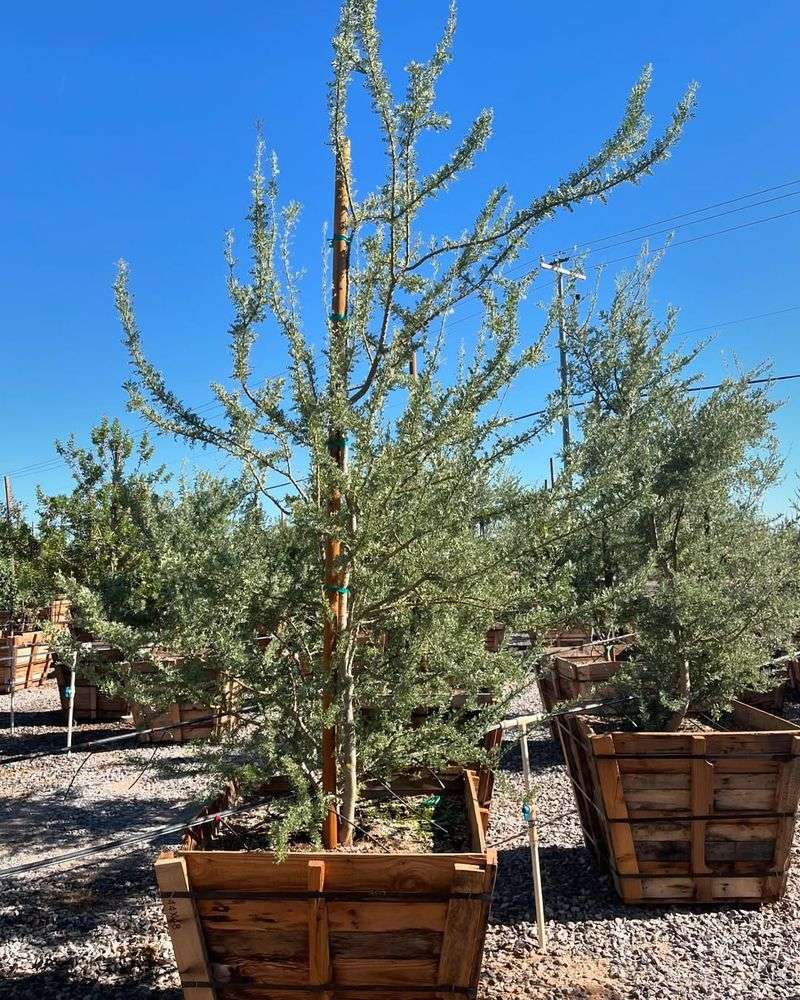
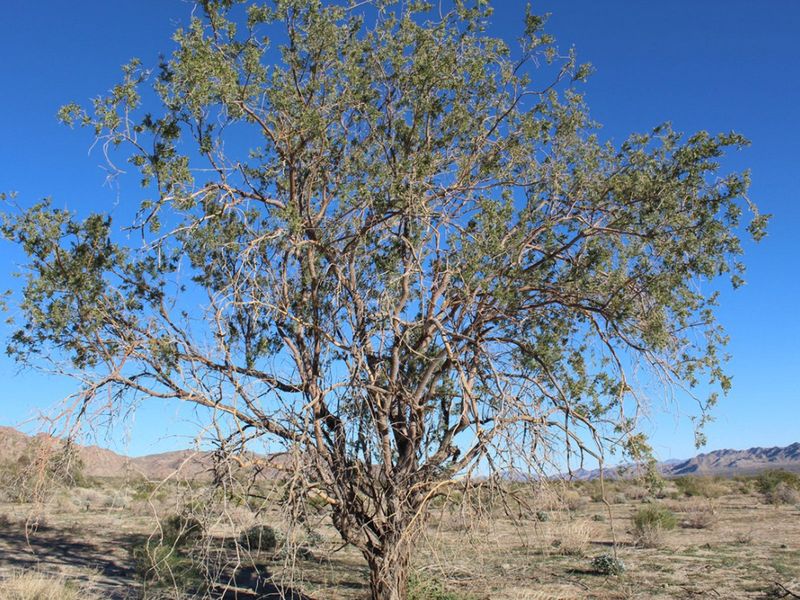
Few native desert trees match the shading power of Desert Ironwood. Its canopy can spread 20 to 30 feet wide under good conditions, creating a broad, layered umbrella of fine-textured leaves that genuinely block the sun.
Unlike fast-growing shade trees that often have weak branch structure, Ironwood builds its canopy slowly and steadily. Each branch grows dense and strong over many years.
That slow pace actually works in your favor because the tree holds its shape well without constant trimming.
Positioned on the west or south side of a patio or outdoor seating area, a mature Ironwood can drop outdoor temperatures noticeably on hot afternoons.
Gardeners who have planted one near a sitting area often say the difference in comfort is significant during peak summer heat.
The canopy stays fairly full even through mild winters in lower desert elevations. Some leaf drop happens, but it tends to be gradual rather than a sudden dump of debris.
Compared to deciduous trees that shed everything at once, Ironwood keeps its coverage longer through the cooler months.
Spacing matters when planting. Give the tree enough room to spread without crowding structures or other plants.
2. Full Sun Helps It Grow Well
Shade-loving plants would wilt fast in a fully exposed desert yard. Desert Ironwood, on the other hand, actually performs better when it gets unfiltered sun all day long.
Full sun exposure encourages stronger branch development and a denser canopy over time. Trees planted in partial shade tend to grow more open and less full.
If your goal is maximum shade coverage, a spot with direct sun from morning through afternoon gives the best long-term results.
Reflected heat from walls, driveways, or gravel surfaces does not stress this tree the way it affects many others.
Ironwood evolved in one of the hottest desert regions in North America, so high ambient temperatures are simply normal conditions for it rather than a challenge to overcome.
Young trees still benefit from some protection during their first summer or two. A temporary shade cloth or strategic placement near an existing structure can reduce stress while roots establish.
Your Arizona Garden Changes Every Week. Your Plan Should Too.
Gardening in Arizona changes quickly throughout the season. Every Friday you’ll receive a simple weekly plan showing exactly what to plant, prune, fertilize, harvest, and protect so you never miss the right timing.
Once the root system is solid, the tree handles full exposure without noticeable strain under most conditions.
Avoid planting in areas with heavy shade from buildings or larger trees. Ironwood planted in low-light spots tends to grow sparse and may lean toward available light.
3. Deep Watering Builds Strong Roots
Shallow watering trains roots to stay near the surface, which can make a tree more vulnerable during dry stretches. Deep, infrequent watering pushes roots downward where soil moisture stays more consistent.
For a newly planted Ironwood, watering once or twice a week during the first summer is a reasonable starting point. Each session should wet the soil to at least 18 to 24 inches deep.
A simple soil probe or long screwdriver pushed into the ground can help check how far moisture is actually reaching.
Slow, steady application works better than a quick blast from a hose. A drip system set to run for an extended period, or a slow trickle from a hose left at the base for an hour or more, allows water to soak in rather than run off the surface.
Watering frequency should drop as the tree matures. By the second or third year, many established Ironwoods in lower desert elevations can get by with supplemental water every two to three weeks during summer.
Actual needs vary based on soil type, drainage, and local heat levels.
Avoid watering right at the trunk base.
Keeping moisture a foot or more away from the trunk and spreading it out toward the drip line encourages roots to spread wide.
4. Well Drained Soil Keeps Roots Healthy
Ironwood roots do not handle standing water well. Soil that drains poorly can cause root problems over time, especially after heavy monsoon rains when water pools and lingers in low spots.
Rocky, sandy, or gravelly soils typical of desert washes and open desert flats are actually ideal for this tree. Water moves through those soils quickly, which keeps roots in the aerated conditions they need.
Heavy clay soils that hold moisture for extended periods are a tougher environment for Ironwood to thrive in.
If your yard has compacted or clay-heavy soil, amending the planting area with coarse sand or decomposed granite can improve drainage.
Raising the planting area slightly above grade is another option that helps water move away from the root zone faster after heavy rain.
Gravel mulch spread around the base of the tree can also help. It reduces surface evaporation, keeps soil temperatures more stable, and prevents surface crusting that slows water infiltration.
Organic mulch works too but breaks down faster in hot desert conditions and may need more frequent replacement.
Avoid creating a watering basin that holds water directly against the trunk. A ring of soil or gravel that directs water outward, toward the wider root zone, is a better setup.
5. Light Pruning Keeps Its Natural Shape
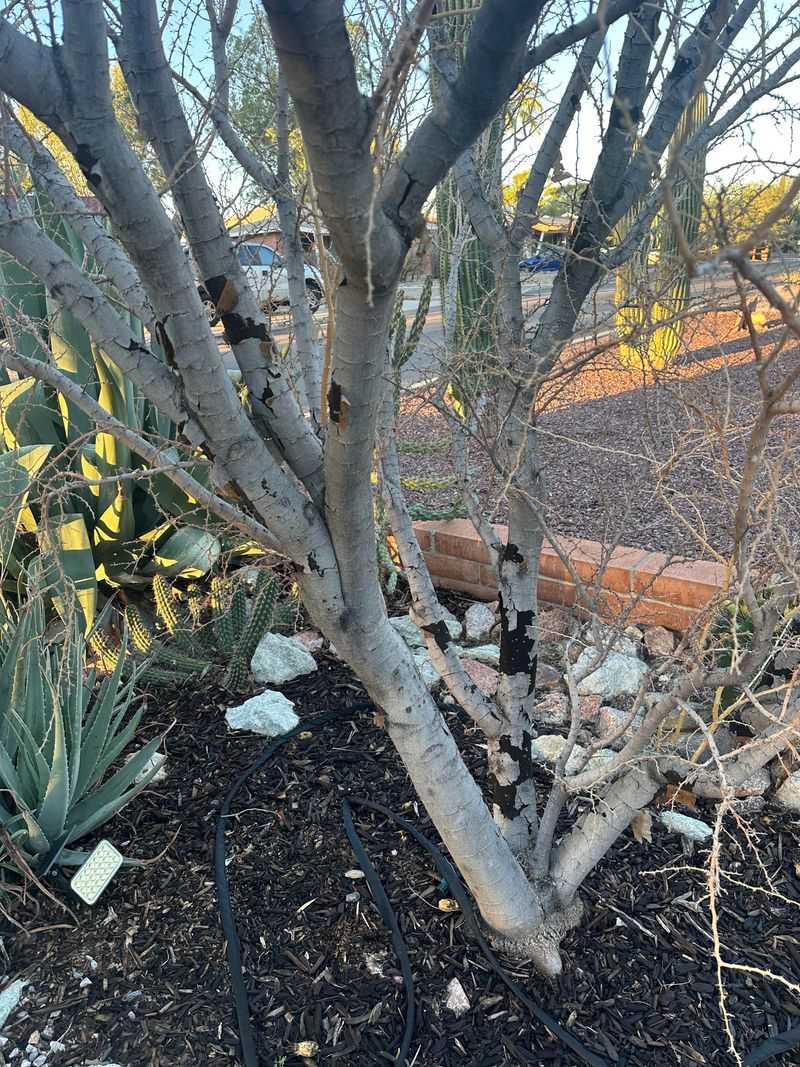
Heavy pruning is one of the fastest ways to ruin the natural look of a Desert Ironwood. Over-trimming removes the layered branching that gives the tree its broad, dense canopy and can leave it looking thin and awkward for years.
Light, targeted pruning is a better approach. Removing crossing branches, damaged branches, or limbs growing toward structures keeps the tree tidy without disrupting its overall form.
Most mature Ironwoods need very little corrective pruning once they are established and growing in an open space.
Timing matters more than people expect. Late winter or early spring, before new growth begins, is generally a good window for pruning in lower desert regions.
Pruning during extreme summer heat can stress the tree and slow recovery. Avoid heavy cuts during the hottest months when possible.
Ironwood has sharp thorns, especially on younger wood. Thick gloves and long sleeves are worth wearing before reaching into the canopy.
Taking a few minutes to assess which branches actually need removal before cutting saves time and reduces unnecessary wounds to the tree.
Raising the canopy by removing lower branches is a common reason homeowners prune Ironwood. Lifting the canopy a few feet off the ground improves clearance for walking or sitting beneath the tree.
6. Older Trees Need Less Water
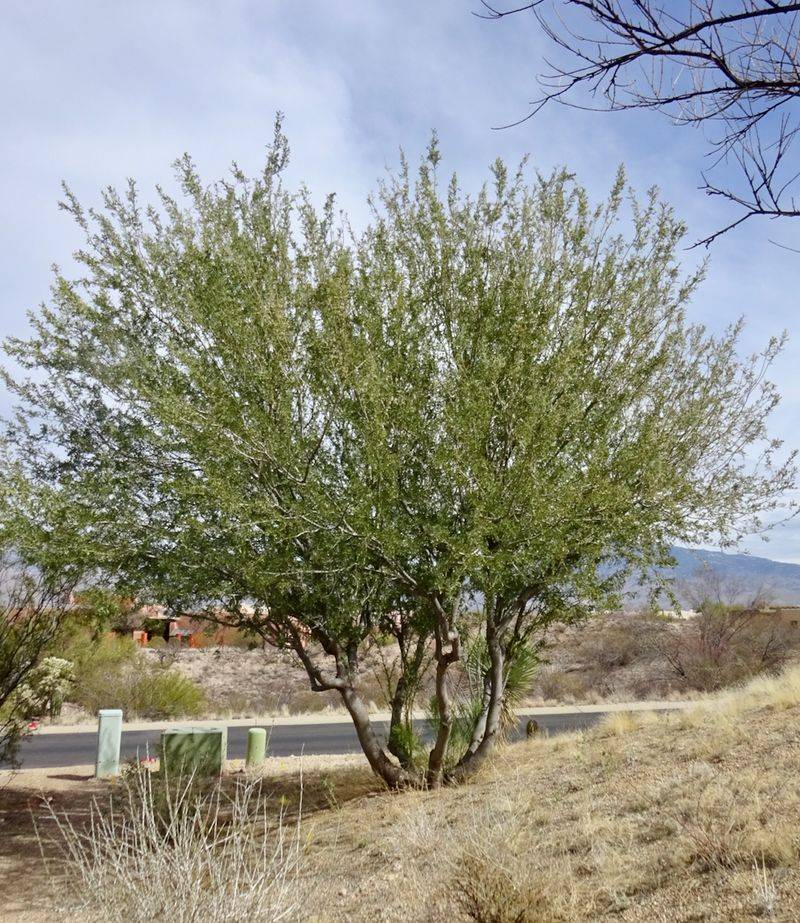
One of the most practical things about Desert Ironwood is how its water needs drop significantly as it ages.
Young trees need regular supplemental irrigation to establish, but older, well-rooted trees can often get by on seasonal rainfall alone in many parts of the Sonoran Desert.
Root systems on mature Ironwoods run deep and wide. Those roots access moisture stored well below the surface, which helps the tree survive extended dry periods without visible stress.
In years with decent monsoon rainfall, supplemental watering may not be needed at all for established trees.
Reducing irrigation too quickly can cause problems, though. Cutting back water gradually over two to three years gives roots time to adapt and extend deeper.
Dropping irrigation suddenly on a young tree that has not fully established can stress it during peak summer heat.
Mature Ironwoods in established desert landscapes often go years without any supplemental water. That level of independence is genuinely rare among shade trees that also produce a wide, dense canopy.
Most trees with similar canopy coverage require consistent irrigation to maintain their size and health.
Monitoring the tree for signs of stress, such as unusual leaf drop outside of normal seasonal patterns or damaged branches, gives early warning if supplemental water is needed.
7. Small Leaves Mean Less Yard Cleanup
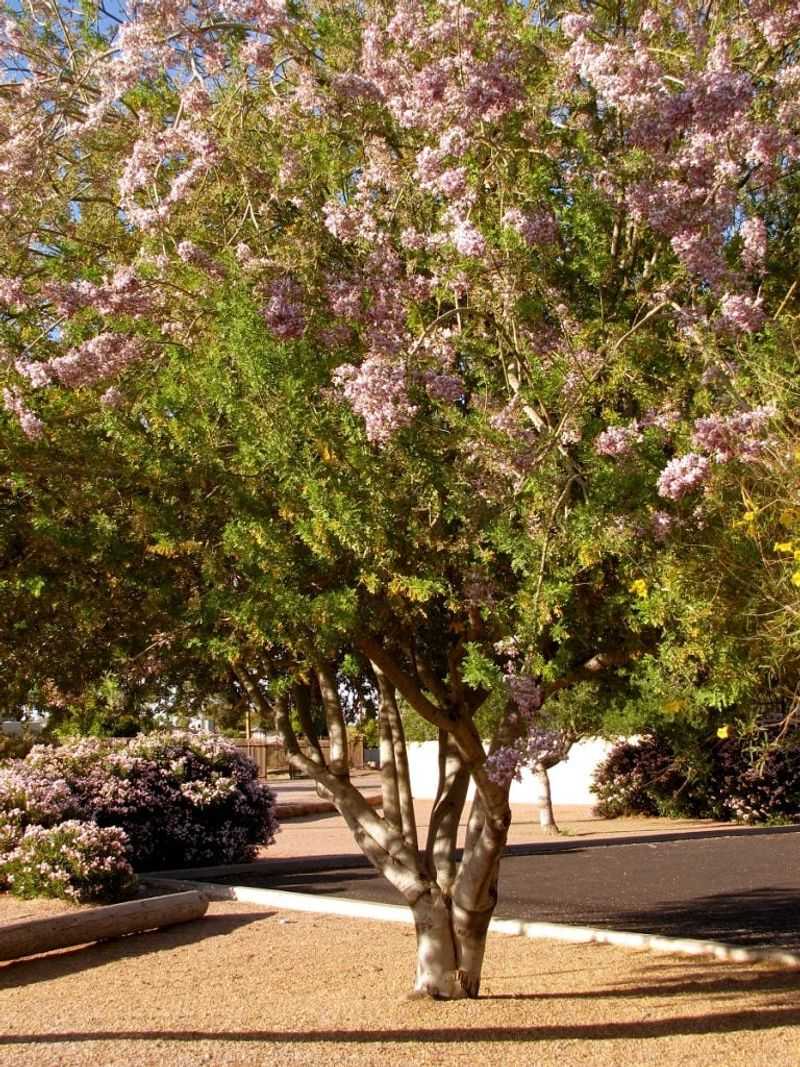
Yard cleanup is a real consideration when choosing a shade tree. Large-leafed trees can drop thick layers of debris that mat down, block drains, and take real effort to clear.
Ironwood sidesteps that problem with its very small, fine-textured leaves.
Each individual leaf is tiny. When they drop, they fall loosely and tend to filter down between gravel, decompose fairly quickly, or simply blow away with light wind.
For yards with decomposed granite or crushed gravel ground cover, Ironwood leaf litter is usually not a significant maintenance issue.
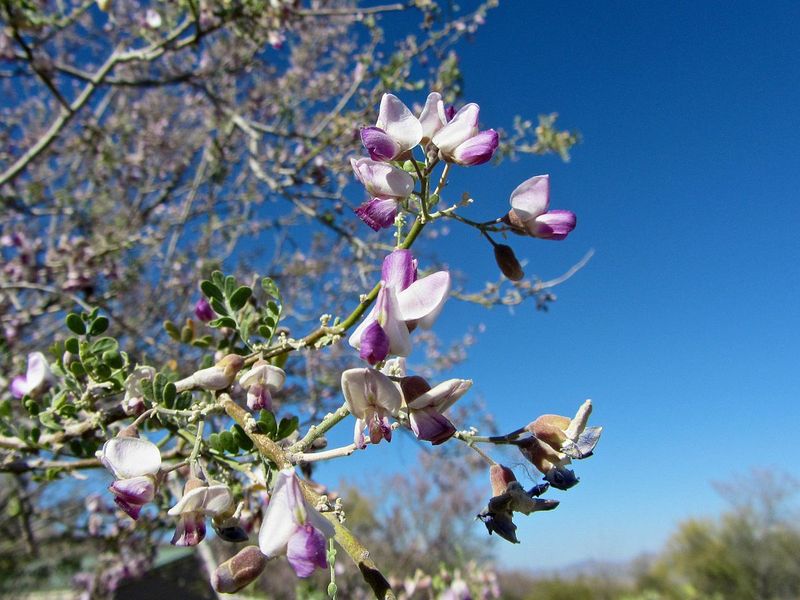
Seed pods do fall seasonally and are worth noting. They are small and not particularly messy, but they can sprout if conditions are right.
Raking or blowing the area around the tree once after seed drop keeps volunteer seedlings from establishing in unwanted spots.
Compared to alternatives like mulberry, cottonwood, or ash trees, the cleanup difference is noticeable. Those trees can bury a yard in debris during peak drop periods.
Ironwood leaf fall is gradual and much lighter by comparison, which makes it a more practical choice for low-maintenance desert yards.
Homeowners who have switched from high-litter trees to Ironwood often mention the cleanup reduction as one of the most appreciated changes.