9 Signs Your Arizona Palo Verde Tree Is Suffering From Heat Stress
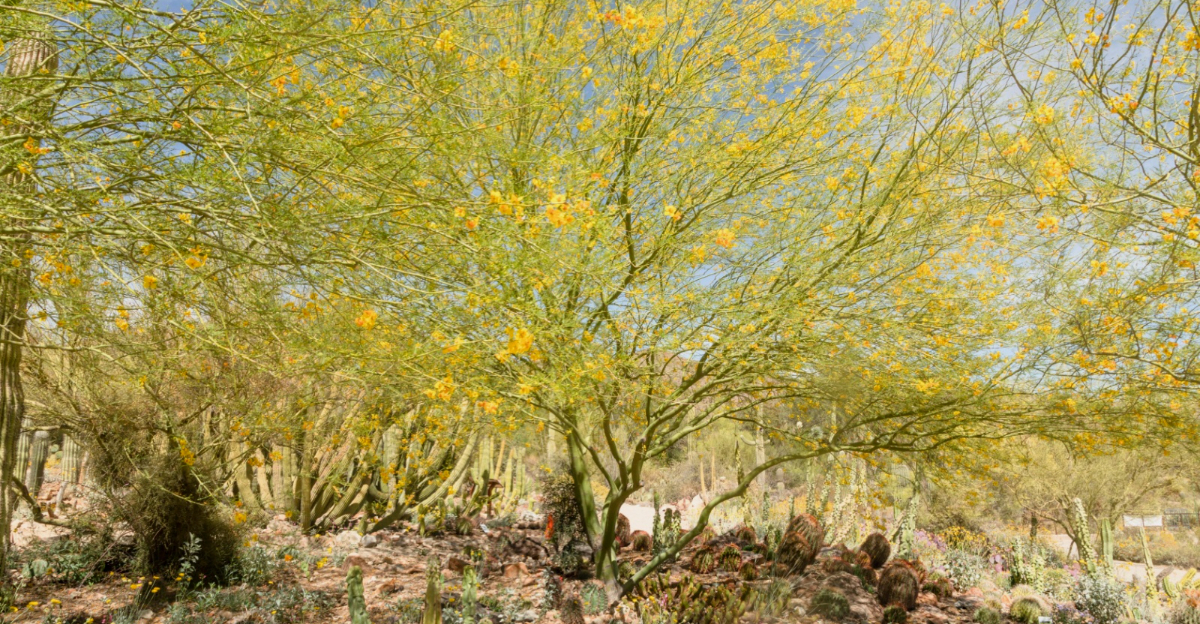
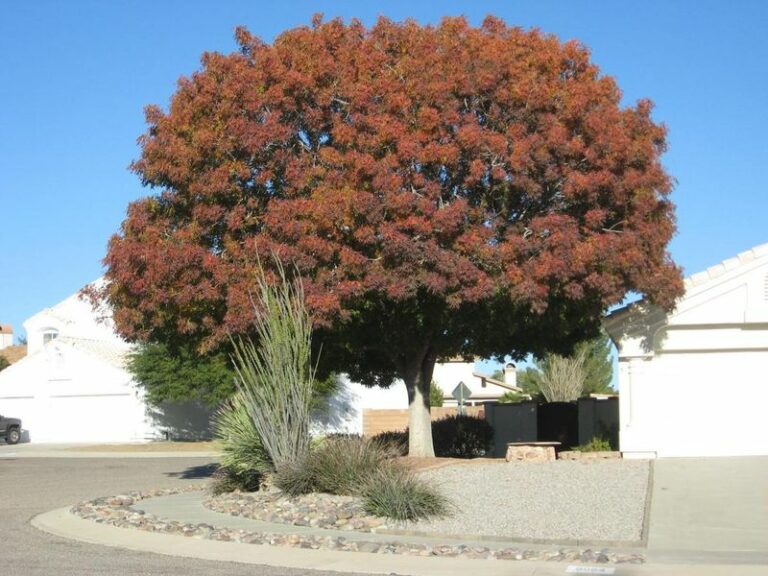
Palo verde trees have a well-earned reputation for being tough. These are plants that evolved specifically for the Sonoran Desert, and they handle dry heat in a way that makes most other trees look genuinely fragile by comparison.
But even a palo verde has its limits, and Arizona summers have a way of finding them. Here’s where it gets a little confusing though.
Some of the things that look like warning signs on a palo verde are actually completely normal stress responses that the tree has been doing for thousands of years. Leaf drop in intense heat?
Probably fine. Sparse canopy during a dry stretch?
Often not a problem at all. But certain other symptoms are worth paying closer attention to.
Knowing the difference between a tree that’s just doing its thing and one that actually needs help can save you a lot of unnecessary worry, and occasionally a tree.
1. Sudden Leaf Drop During Extreme Heat
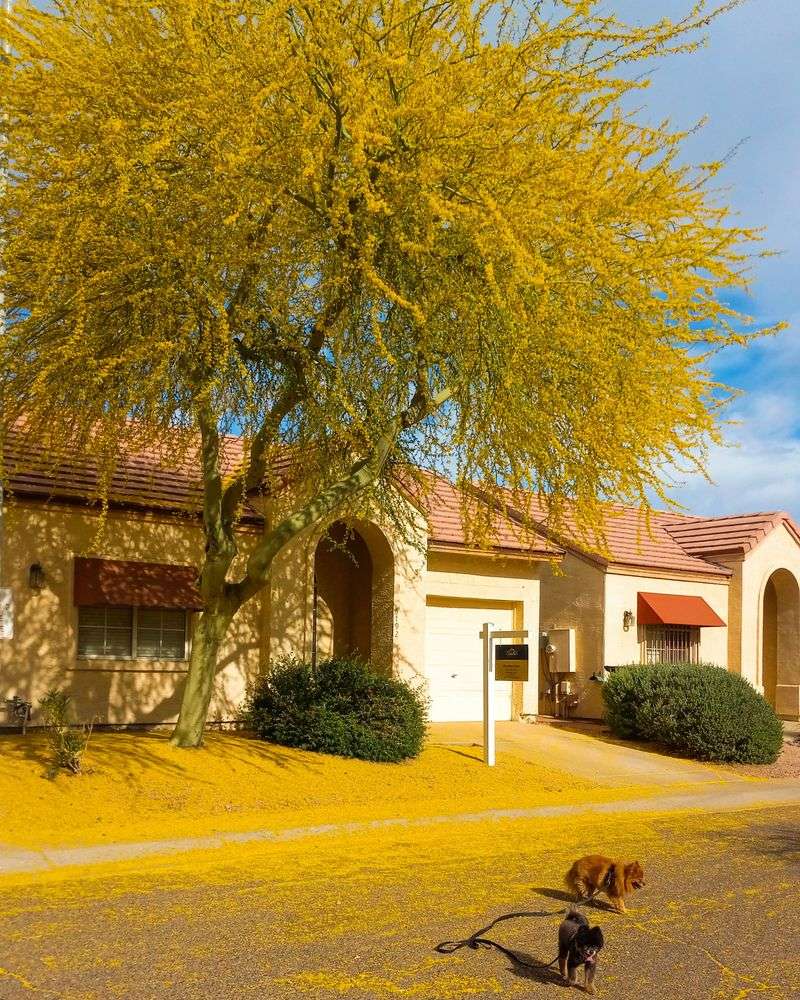
Walking out to your Arizona front yard during a heat wave and finding a carpet of tiny leaves under your palo verde can feel alarming. Before assuming the worst, it helps to understand why this happens.
Palo verde trees are wired to drop their leaves when water is scarce or temperatures spike, because their green bark can still carry out photosynthesis even without foliage.
Leaf drop is one of the tree’s built-in survival responses, and in Arizona summers it is fairly common.
The concern grows when leaf drop is sudden, heavy, and paired with other symptoms like dry soil, wilting, or branches that appear dry and brittle with no signs of new growth.
A tree losing a moderate amount of leaves during a stretch of 110-degree days is likely managing its water budget.
However, if nearly all the leaves fall off outside of the usual summer pattern and the tree does not seem to recover after watering or a monsoon rain, that is worth watching more closely. Check the soil moisture a few inches down.
If the root zone feels bone dry and the tree keeps dropping leaves, adjusting your deep-watering schedule may help stabilize the tree through the rest of Arizona’s brutal summer season.
2. Wilting Or Drying Leaves
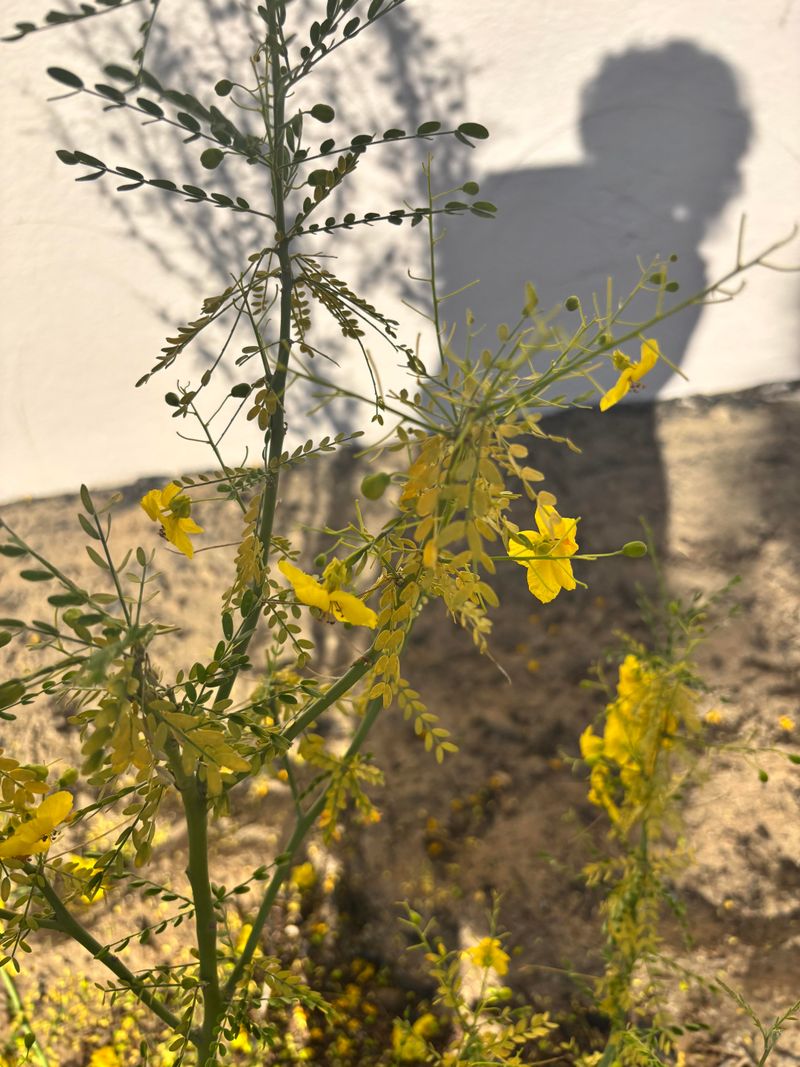
Soft, curling, or limp leaves on a palo verde are one of the more telling signs that the tree is under pressure. In Arizona, wilting often points to a mismatch between the heat load the tree is carrying and the moisture available in the soil.
When roots cannot pull enough water to keep up with what the sun and dry air are pulling out through the leaves, the foliage starts to show it.
Wilting that appears in the afternoon during peak heat and then firms back up by morning is less worrying. That kind of temporary wilt is a normal response to intense Arizona sun and hot, dry air moving through the yard.
Wilting that stays through the cooler morning hours is a stronger signal that the tree is genuinely short on water.
Your Arizona Garden Changes Every Week. Your Plan Should Too.
Gardening in Arizona changes quickly throughout the season. Every Friday you’ll receive a simple weekly plan showing exactly what to plant, prune, fertilize, harvest, and protect so you never miss the right timing.
Gravel yards and paved driveways can make this worse by radiating extra heat back up into the canopy. If your palo verde sits near a south-facing wall or a concrete surface, the heat load on that tree is higher than one planted in open ground.
Checking soil moisture at a depth of several inches rather than just the surface can give you a much clearer picture of what the roots are actually dealing with.
3. Browning Or Scorched Foliage
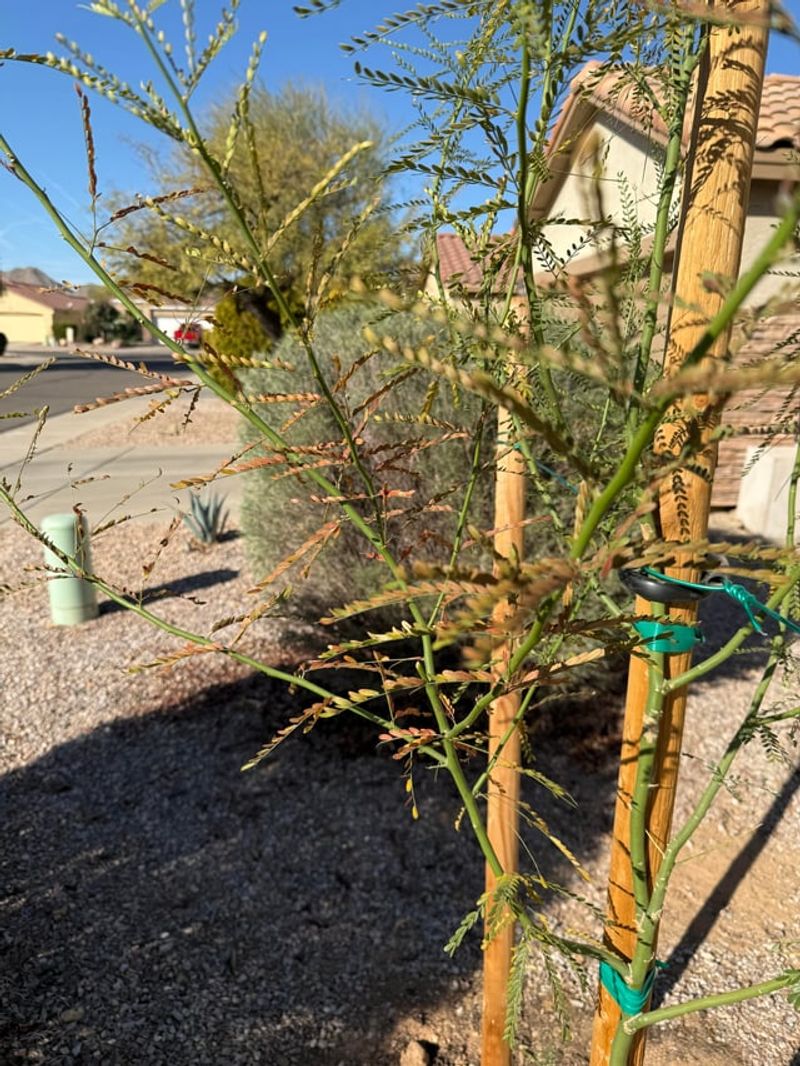
Crispy brown leaf edges or fully scorched foliage on a palo verde can look dramatic, but the cause is usually pretty straightforward in Arizona.
When temperatures stay extreme for days in a row and soil moisture runs low, the outer edges of leaves lose moisture faster than the roots can replace it.
The result is browning that starts at the tips and works inward.
Reflected heat from stucco walls, light-colored gravel, or nearby pavement can intensify this effect. A palo verde planted along a driveway or against a west-facing wall may show scorching earlier in the season than a tree with more shade and airflow around it.
The foliage acts like a heat map, showing you exactly where the stress is hitting hardest.
Mild browning on a few leaf clusters during a heat wave is not unusual in Arizona, and the tree can often bounce back once temperatures ease or deep watering is applied.
But if browning spreads across large portions of the canopy and the green bark on the branches looks dull or shrunken rather than plump, the tree may be running low on stored moisture.
At that point, a slow, deep watering session extended out to the tree’s drip line may be the most useful thing you can do.
4. Branch Tips Losing Life After Prolonged Dry Stretches
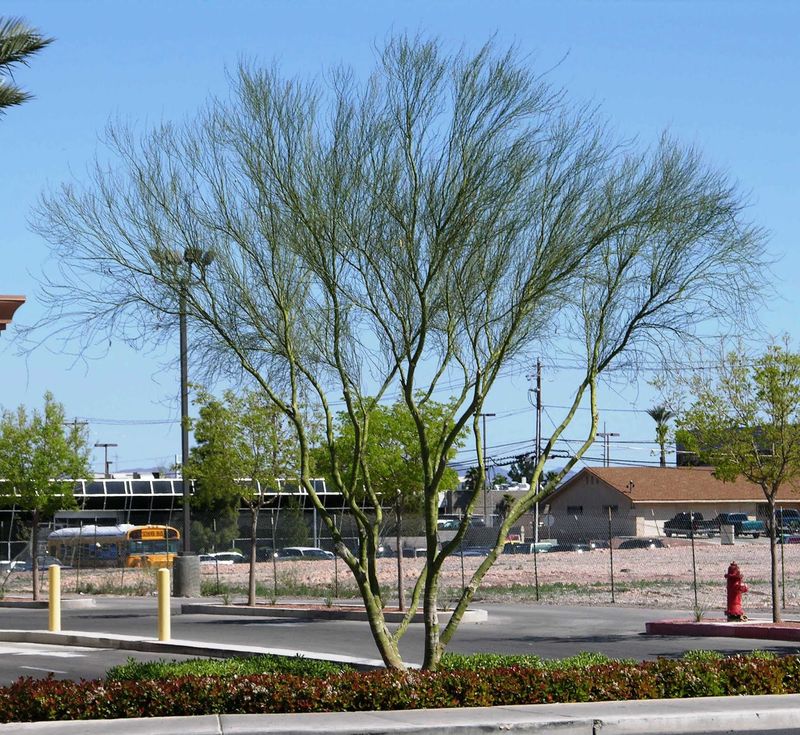
Brittle, bare branch tips that snap off easily are a sign that the outermost growth on your palo verde has not had enough moisture to stay viable.
In Arizona, this kind of tip deterioration tends to show up after extended dry stretches, especially when monsoon rains arrive late or skip certain areas entirely.
The tree essentially sacrifices its outer growth to protect its core structure.
You may notice the tips first because they stop producing new leaves while the rest of the canopy still looks reasonably full. Running a fingernail lightly across a suspect branch tip can help you check.
If the tissue underneath is green and slightly moist, the branch may still be alive. If it is dry, tan, or papery all the way through, that section has likely shut down.
A small amount of tip deterioration during a severe Arizona drought is not automatically a crisis. Palo verdes are resilient and can push new growth from lower on the branch once conditions improve.
What matters more is the pattern.
If deterioration is spreading inward from many tips across multiple branches after you have been watering consistently, it may be worth having a qualified tree professional take a look to rule out other contributing factors beyond heat and drought alone.
5. Sunscald On Exposed Branches Or Trunks
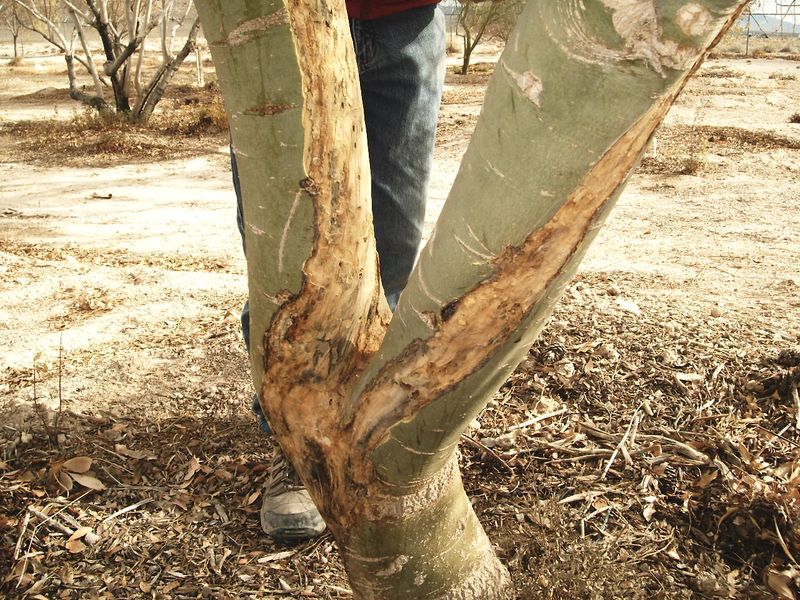
One thing that catches many Arizona homeowners off guard is seeing pale, cracked, or peeling patches on a palo verde trunk or branch.
That is often sunscald, and it happens when bark tissue is exposed to intense direct sun for long periods without the protection of surrounding foliage.
Palo verdes have green bark that is well adapted to sun, but extreme Arizona summer conditions can still push past that tolerance, especially on younger or recently pruned trees.
Sunscald tends to appear on the south and southwest sides of the trunk and main branches, which receive the most direct afternoon sun. Over-pruning is one of the most common reasons a palo verde becomes more vulnerable to this kind of damage.
When too much of the canopy is removed, previously shaded bark suddenly gets full sun exposure without time to adjust.
Affected bark may look bleached, slightly sunken, or develop shallow cracks. While palo verdes can often recover from mild sunscald, the damaged areas can become entry points for other problems over time.
Avoiding heavy pruning during the hottest part of Arizona summer can reduce the risk. If a tree has already developed sunscald, keeping it well watered and allowing new growth to shade the affected areas naturally is usually the most sensible approach.
6. Reduced Or Stalled New Growth
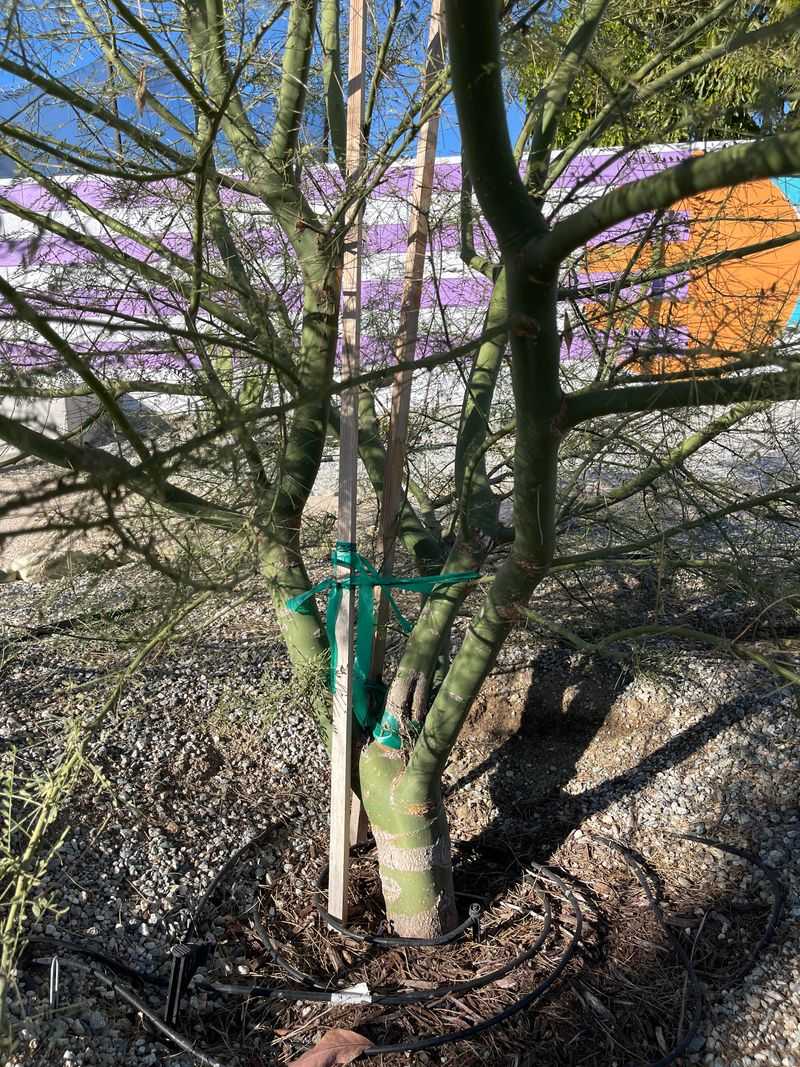
Watching a palo verde sit completely still through spring and into summer without putting out any fresh shoots or leaves can be puzzling. New growth is one of the clearest signals that a tree has enough moisture and energy to invest in expanding.
When a palo verde stalls out, it is often telling you that its resources are stretched thin.
In Arizona, some slowdown during the absolute peak of summer heat is expected. Trees naturally shift into a kind of low-activity mode when temperatures are extreme, conserving what they have rather than spending energy on new growth.
The concern rises when a tree shows no meaningful new growth even during the milder stretches of spring or after a good monsoon rain event.
Stalled growth paired with a thinning canopy, dry soil, and dull-looking bark suggests the tree has been running a deficit for a while.
Deep, infrequent watering that reaches well below the surface tends to encourage root activity and, eventually, new shoot production.
Surface watering that only wets the top inch or two of soil may not be reaching the deeper root zone where palo verdes actually draw most of their moisture in an Arizona landscape.
Adjusting how deep your irrigation reaches can sometimes make a noticeable difference over several weeks.
7. A Thinning Canopy That Does Not Refill After Watering Or Rain
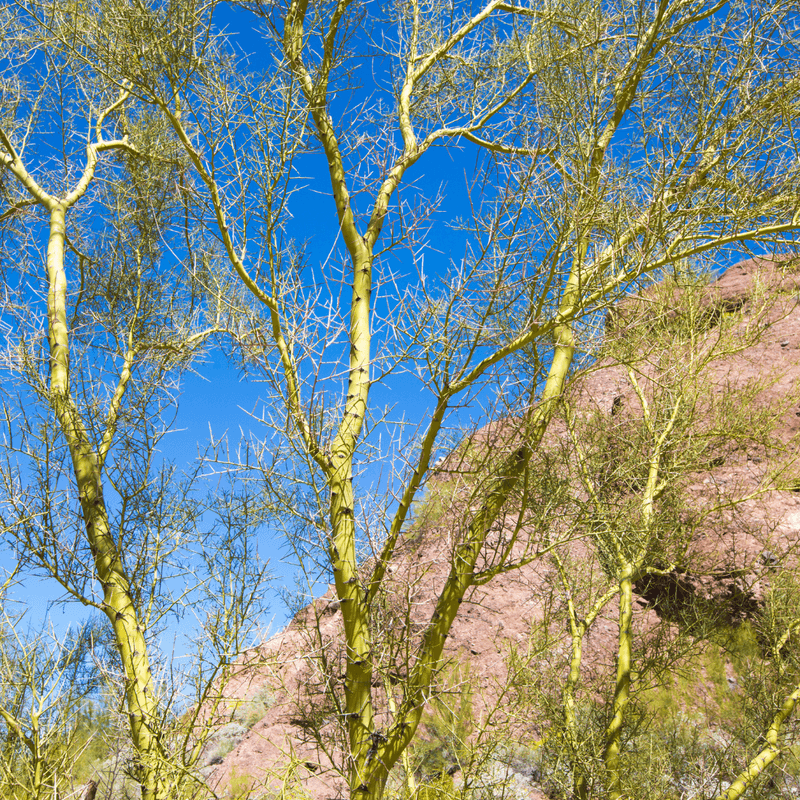
Standing back and looking at a palo verde from across the yard can tell you a lot. A healthy tree in an Arizona landscape fills in with small leaves and delicate branches that create a soft, layered canopy.
When that canopy starts showing large gaps, bare branches running through the middle, or an overall scraggly appearance that does not improve after rain or supplemental watering, the tree may be carrying more stress than it can easily recover from on its own.
Some canopy thinning during peak summer heat is part of the tree’s normal leaf-drop response. The difference is that a tree doing well will typically push new growth back out once conditions improve, even modestly.
A tree under prolonged heat or drought stress may not have the stored energy to refill its canopy the way it normally would.
Checking whether the thin areas are concentrated on one side, near a heat-reflecting surface, or spread evenly across the whole tree can help point toward a cause.
Uneven thinning on the south or west side often links back to reflected heat or sun exposure.
Thinning spread across the whole canopy more often connects to a root-zone moisture issue. In either case, consistent deep watering that reaches the outer drip line of the tree gives it the best foundation for recovery during Arizona’s long, hot season.
8. Soil That Stays Dry Below The Root Zone
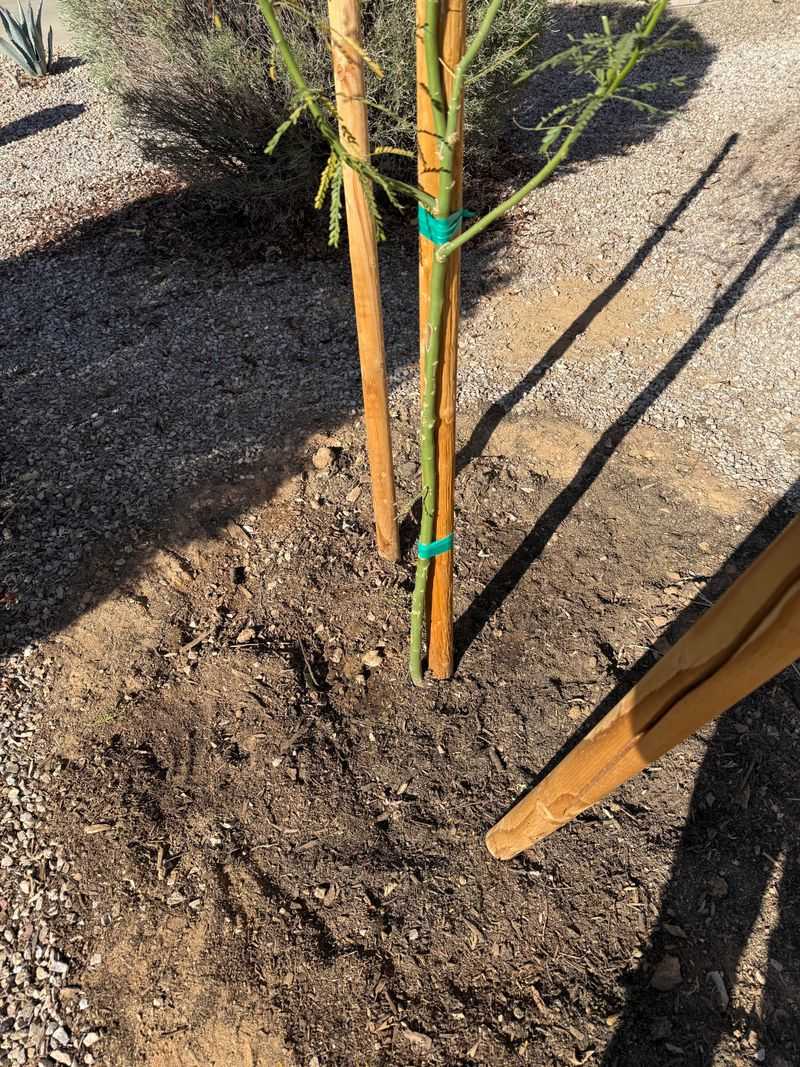
The surface of the soil under an Arizona palo verde can look completely dry even when the deeper root zone has decent moisture, and the opposite is also true.
Gravel mulch and compacted caliche layers common in many Arizona yards can fool you into thinking a tree is getting enough water when the roots are actually sitting in dry ground.
Checking soil moisture at a depth of 12 to 18 inches gives a much more accurate picture than a glance at the surface.
A simple way to do this is to push a long screwdriver or soil probe into the ground near the outer edge of the canopy, which is roughly where the feeder roots are most active. If it slides in easily, there is likely some moisture present.
If it stops short or the soil that comes up is powdery and pale, the root zone is dry.
Palo verdes in Arizona gravel yards often receive water that runs off the surface before it can penetrate deeply.
Slow, extended watering sessions that allow water time to soak down rather than run off are generally more effective than short, frequent cycles.
Adjusting your irrigation schedule to run longer and less often, especially during the hottest months, can make a real difference in how well your palo verde handles Arizona summer heat.
9. Stress After Overwatering Or Poor Drainage
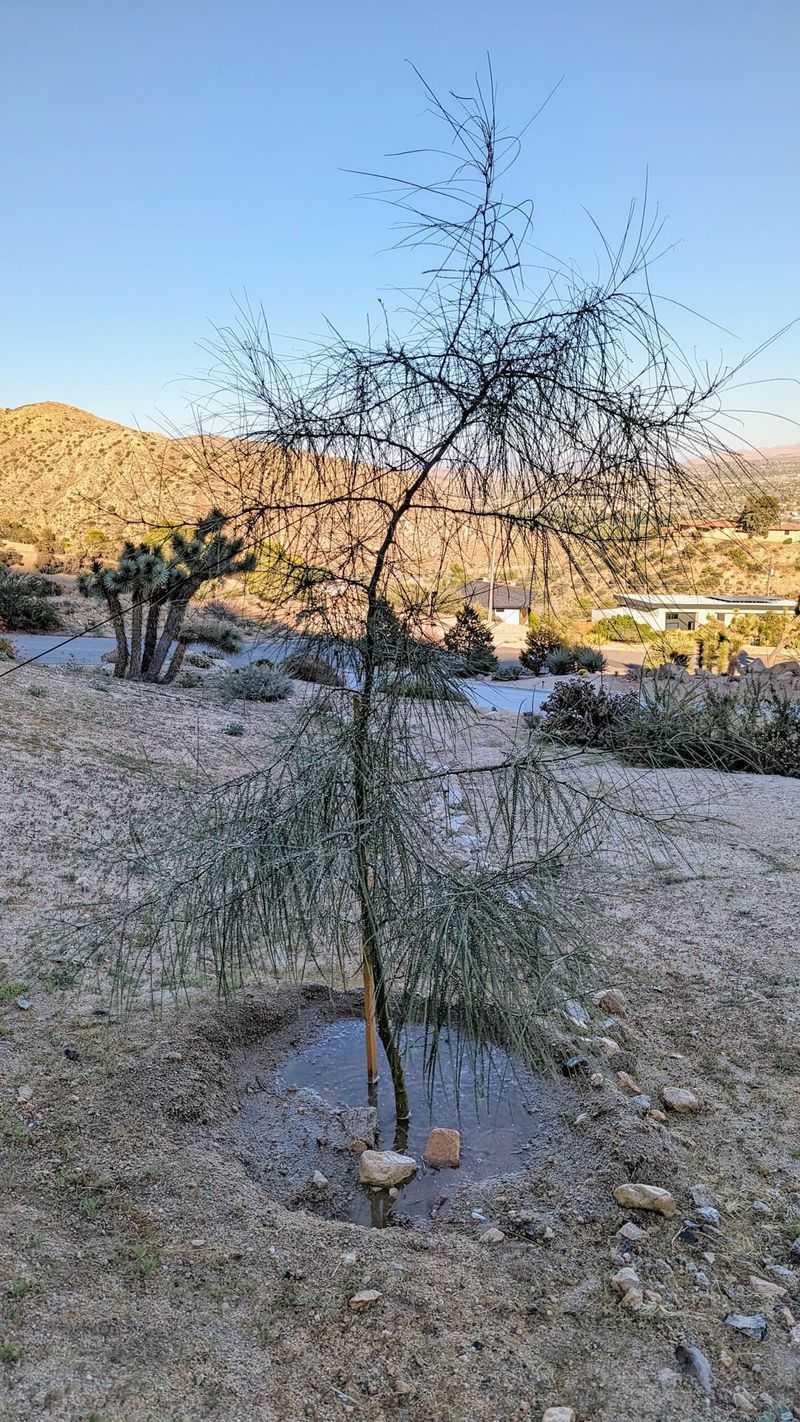
Not all palo verde stress in Arizona comes from too little water. Overwatering, or planting in a spot where water pools and drains slowly, can cause symptoms that look surprisingly similar to drought stress.
Yellowing leaves, a dull or slightly shrunken look to the green bark, and general sluggishness can all show up when roots sit in waterlogged soil for too long.
Palo verdes are desert trees, and their roots need air as much as they need moisture. When soil stays saturated, especially in Arizona clay-heavy or caliche-prone yards, root function can decline even though water is present.
This is one reason why planting location and soil drainage matter as much as the watering schedule itself.
If your palo verde sits in a low spot that collects irrigation runoff or holds water after monsoon rains, it may be experiencing periodic stress from poor drainage rather than heat alone.
Signs to watch for include leaves that yellow rather than brown, bark that looks slightly wrinkled, and soil that stays wet and dense days after watering.
Improving drainage around the root zone, adjusting irrigation timing, or consulting a landscape professional about the planting site can help a tree in this situation more than simply adding more water ever would.