What Makes Ocotillo Fences One Of Arizona’s Most Practical Landscape Features
Not every yard feature earns its place by looking beautiful alone. The best ones solve problems without asking for constant attention.
That is why certain landscape ideas keep showing up year after year, even when trends come and go.
A smart choice usually saves time, holds up well, and fits naturally into the space around it.
Those qualities matter much more than most people realize at first. Practical features often become favorites for reasons that are easy to overlook.
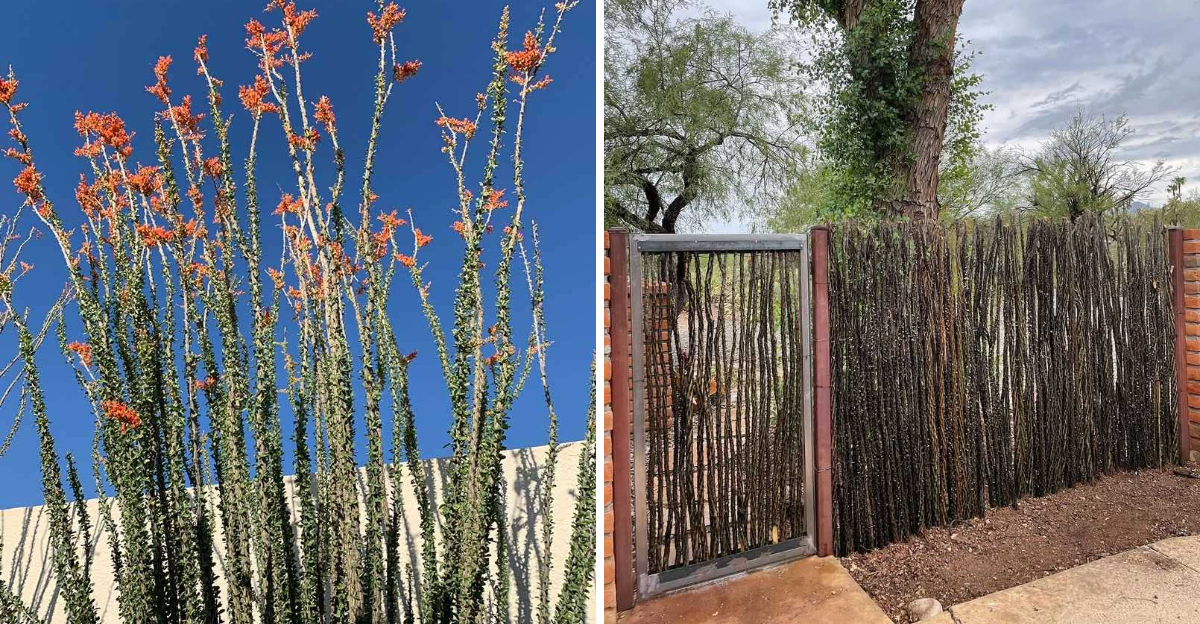
Ocotillo fences have quietly built that reputation over many years. They offer much more than a natural appearance, and that surprises many people the first time they learn how they work.
That is exactly why they remain such a practical choice in Arizona. Their long list of everyday benefits goes far beyond what most people expect from a simple fence.
1. Living Stems Create A Long-Lasting Fence
A fence that grows stronger every season is something most homeowners only dream about. Ocotillo fences can actually do that.
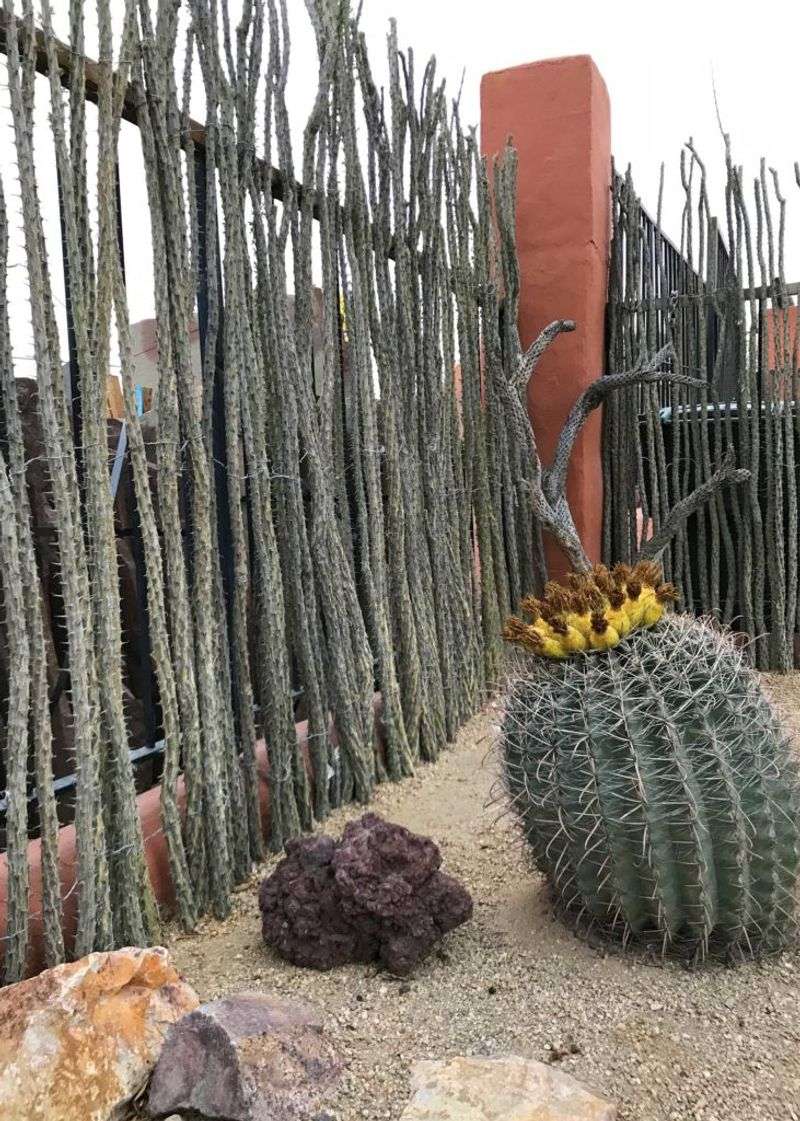
When fresh, living canes are planted in the ground, they have a real chance of taking root and becoming a permanent part of your landscape over time.
Ocotillo canes are cut from mature plants and placed directly into the soil. Under the right conditions, those canes begin to sprout roots within weeks.
New leaves appear along the stems, which is a good sign that the plant is settling in and drawing moisture from the ground.
Not every cane will root successfully. Soil type, planting depth, and seasonal timing all play a role.
Canes planted in late spring or early summer tend to have better results because warm soil encourages root development faster than cold ground does.
Once rooted, these fences can last for many years with very little upkeep. Pruning is rarely needed.
Watering becomes minimal once the roots are established. The fence essentially becomes a living part of your yard rather than a structure that needs constant repairs.
2. Thorny Branches Form A Natural Barrier
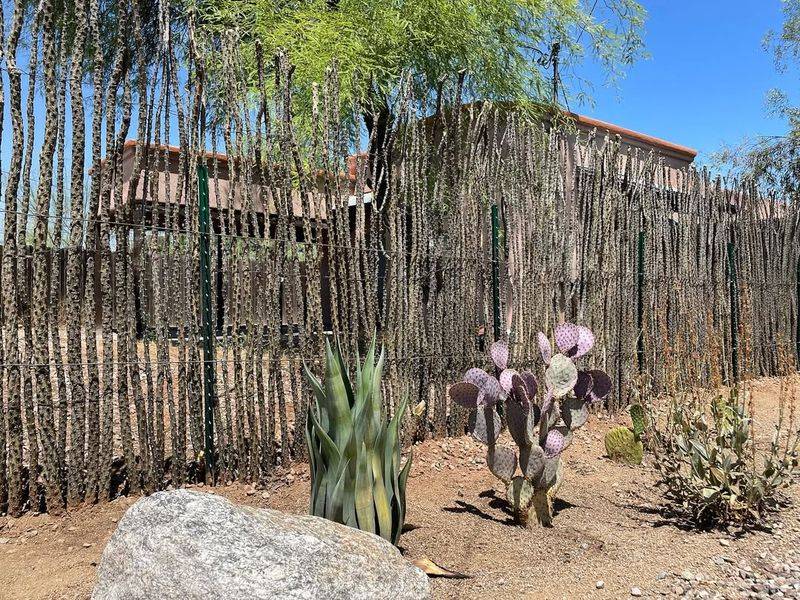
Sharp thorns make a fence work without any locks, gates, or hardware. Ocotillo canes are lined with stiff, pointed spines that grow along every stem.
Nothing about them is subtle. Anything trying to push through will feel it immediately.
Deer, javelinas, and stray dogs tend to avoid thorny barriers. Ocotillo fences create exactly that kind of deterrent.
The spines are not just decorative. They are dense, rigid, and positioned close together along each cane, making the fence genuinely difficult to pass through.
People sometimes underestimate how effective a natural barrier can be compared to a manufactured one. A well-planted ocotillo fence can be just as discouraging as chain link or block wall, depending on how thick and tight the canes are spaced.
Beyond keeping animals out, the thorny structure also adds a layer of security for home boundaries. Intruders are far less likely to attempt climbing or pushing through a wall of sharp spines.
It is a passive form of protection that requires no electricity or monitoring.
Your Arizona Garden Changes Every Week. Your Plan Should Too.
Gardening in Arizona changes quickly throughout the season. Every Friday you’ll receive a simple weekly plan showing exactly what to plant, prune, fertilize, harvest, and protect so you never miss the right timing.
The visual effect is striking too. Rows of tall, thorny canes have a dramatic desert look that fits right into the natural landscape of the Southwest.
Instead of fighting the environment with manufactured materials, ocotillo works with it.
3. Space The Stems For A Stronger Fence
Spacing is one of those details that beginners often overlook, and it can make or break the fence. Canes planted too far apart leave gaps that animals and people can slip through.
Canes planted too close together compete for water and root space, which can slow establishment.
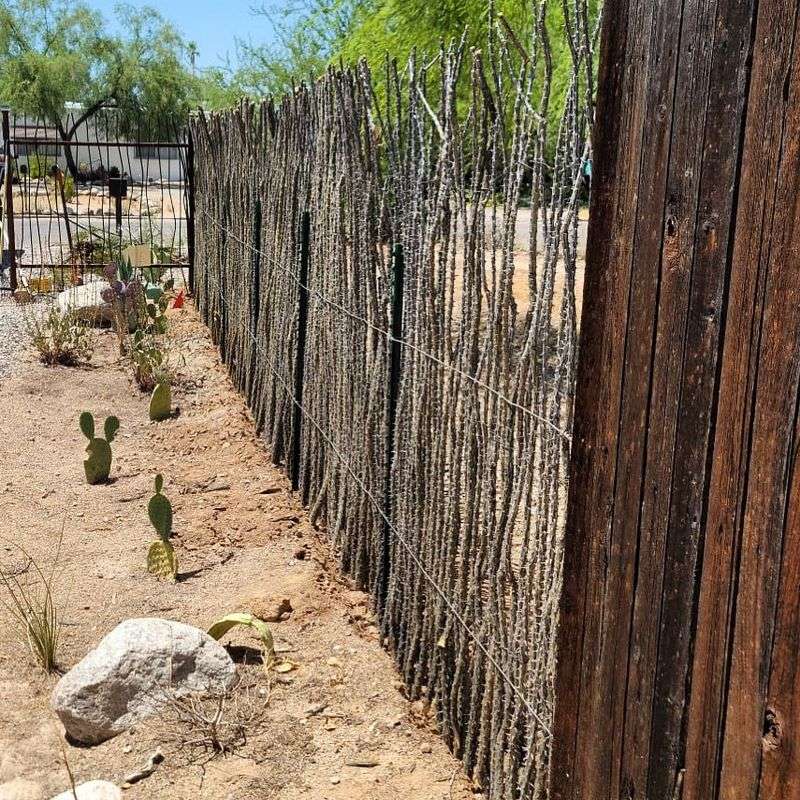
A spacing of about four to six inches between canes is a common recommendation for a dense, functional fence. At that distance, the thorny stems overlap enough to close off most gaps while still giving each cane enough room to breathe and root.
Soil conditions affect how you should adjust spacing. In sandy, loose soil, roots spread more easily and canes may need slightly wider spacing.
In harder, compacted soil, tighter spacing can help compensate for slower root development by creating a denser physical barrier right from the start.
Straight lines look clean and structured. Slightly curved or angled arrangements can follow the natural contour of your yard and feel more organic.
Either approach works as long as the spacing stays consistent throughout the row.
Mark your planting line with stakes and string before you start. That simple step keeps the row even and prevents the kind of uneven gaps that are hard to fix later.
4. Water New Plantings Until Roots Develop
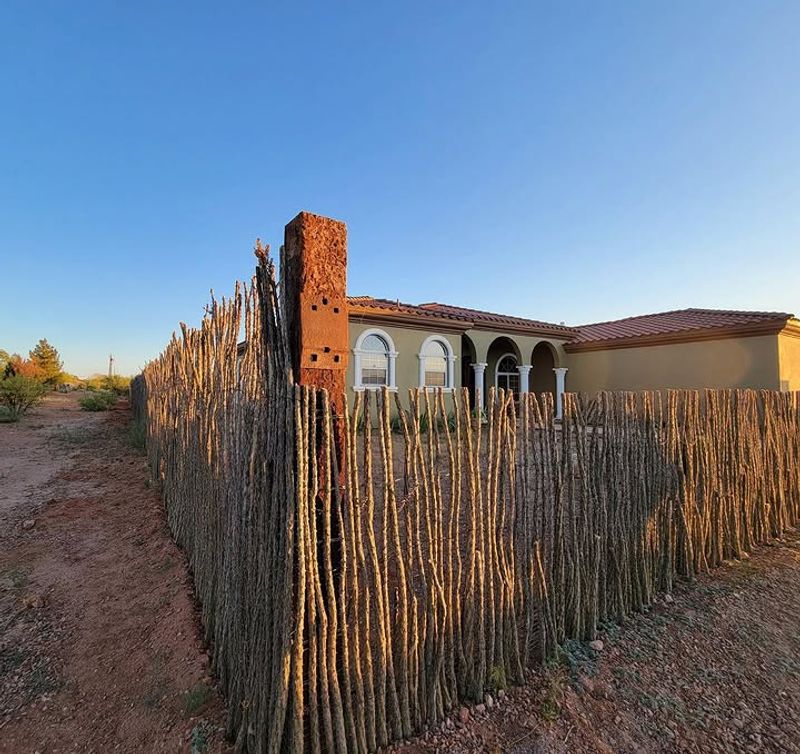
Watering an ocotillo fence in the early weeks is one of the most important things you can do. Ocotillo is drought-tolerant once established, but freshly planted canes need consistent moisture to encourage root development.
Skipping early watering is one of the most common reasons new fences struggle.
Deep, slow watering works better than frequent shallow watering. Soaking the soil around each cane to a depth of at least twelve inches encourages roots to reach downward rather than staying near the surface.
Surface roots are weaker and more vulnerable to heat stress.
Watering frequency depends on the season. In hotter months, new canes may need water every three to five days.
In cooler months, once a week may be enough. Watch the canes closely.
Wilting or leaf drop can be a sign that moisture levels are too low.
Avoid overwatering just as much as underwatering. Soggy soil around the base of the canes can lead to rot before roots ever form.
Let the soil dry out slightly between waterings. Desert soil drains quickly, so waterlogging is usually only a concern in clay-heavy ground.
After about three to four months of regular watering, most healthy canes will have developed enough roots to survive with far less irrigation.
5. Choose Healthy Canes Before Planting
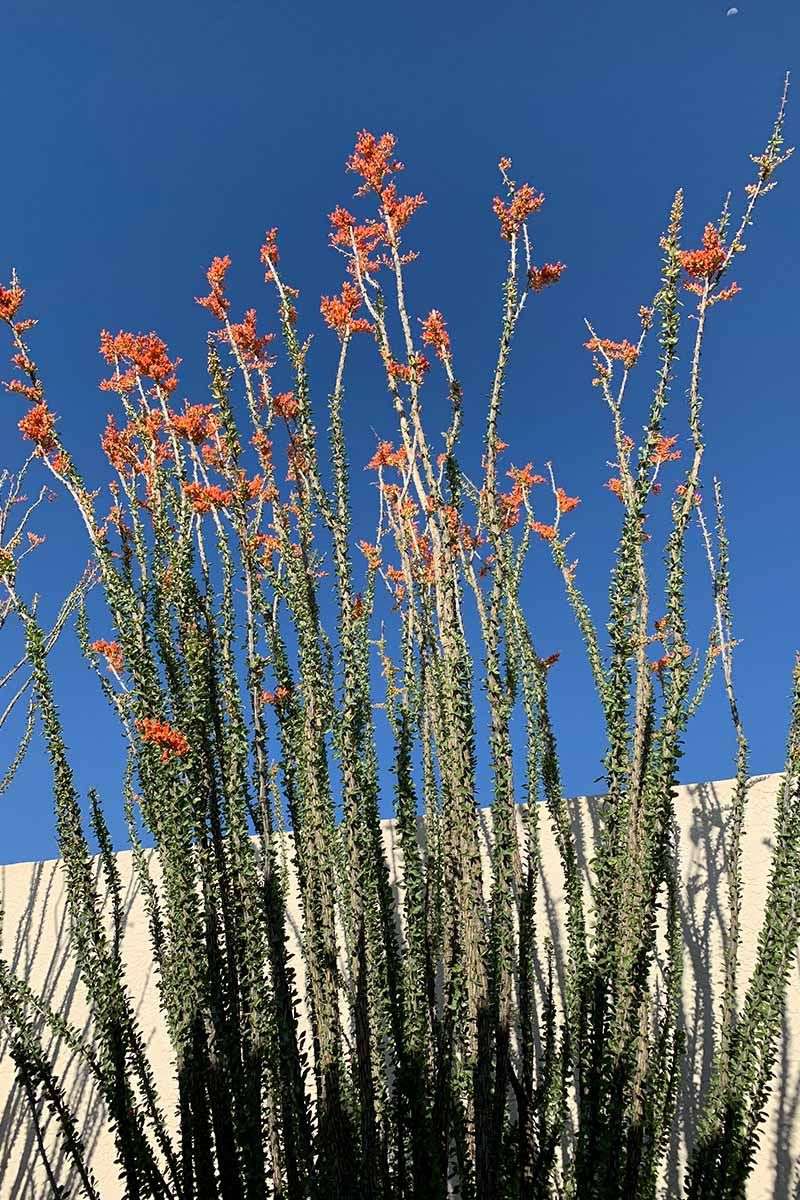
Starting with the right canes makes a huge difference in how well your fence turns out. Not all ocotillo canes are equal.
Some are fresh and viable. Others have dried out too much to root properly.
Knowing what to look for before you buy saves time and frustration.
Fresh canes feel firm when you press them. Dried-out canes feel hollow or spongy.
A healthy cane will have visible buds or small leaf clusters along the stem, which signals that the plant still has active growing potential stored inside it.
Color matters too. Look for canes that are greenish or grayish-green rather than brown and brittle.
Browning usually means the cane has lost too much moisture and may struggle to establish roots once planted.
Ask the nursery or seller how recently the canes were harvested. Freshly cut canes that have been stored in shade and kept slightly moist tend to perform better than ones that have been sitting in direct sun for weeks.
Some suppliers soak the cut ends in water before selling, which helps preserve viability.
Length matters for fence height. Longer canes create a taller, more imposing barrier.
Most people aim for canes between eight and twelve feet long.
6. Secure The Canes Until They Root
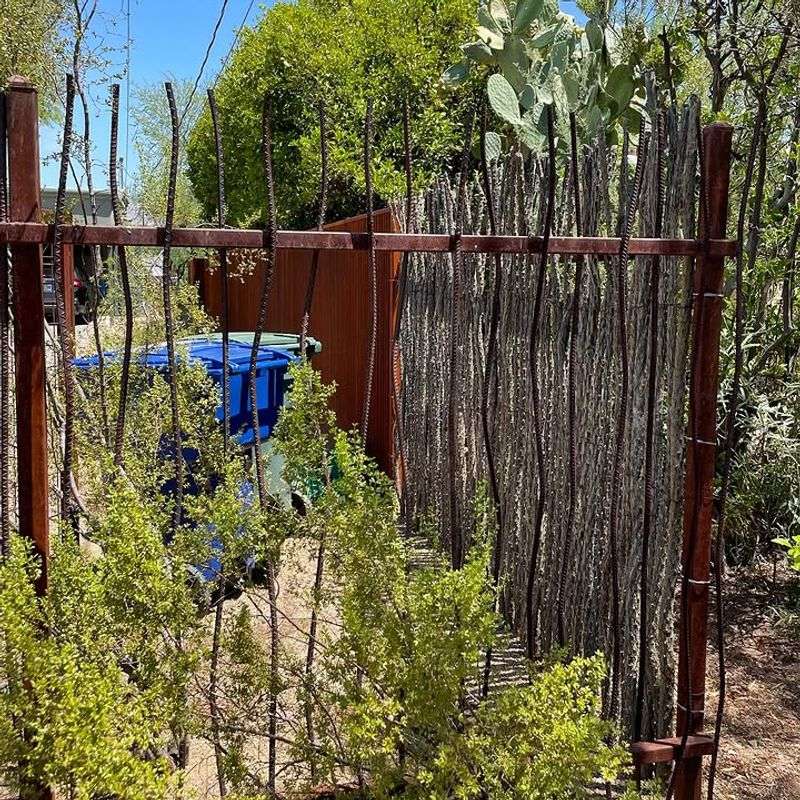
Freshly planted canes have no roots yet, which means wind can push them over easily. Securing them during the rooting period protects your work and gives the canes the stability they need to settle into the ground without shifting.
Wooden stakes work well for temporary support. Drive a stake into the ground about six inches away from each cane, then tie the cane loosely to the stake with natural twine or soft garden ties.
Avoid wire or anything that could dig into the stem over time.
Some people run a horizontal support wire or rope along the entire fence line and tie each cane to it. That approach distributes tension more evenly and keeps the whole row from leaning in one direction after a strong wind.
It is especially useful in open yards with little windbreak.
Check the ties every few weeks. As the canes begin to root and stiffen naturally, the supports become less necessary.
Ties that are too tight can restrict the cane and cause pressure damage at the contact point. Loose ties are safer and still provide enough support.
Remove the supports once the canes feel firm and resistant when you gently push them. That resistance usually means roots have anchored into the soil.
7. Add New Canes To Fill Open Spaces
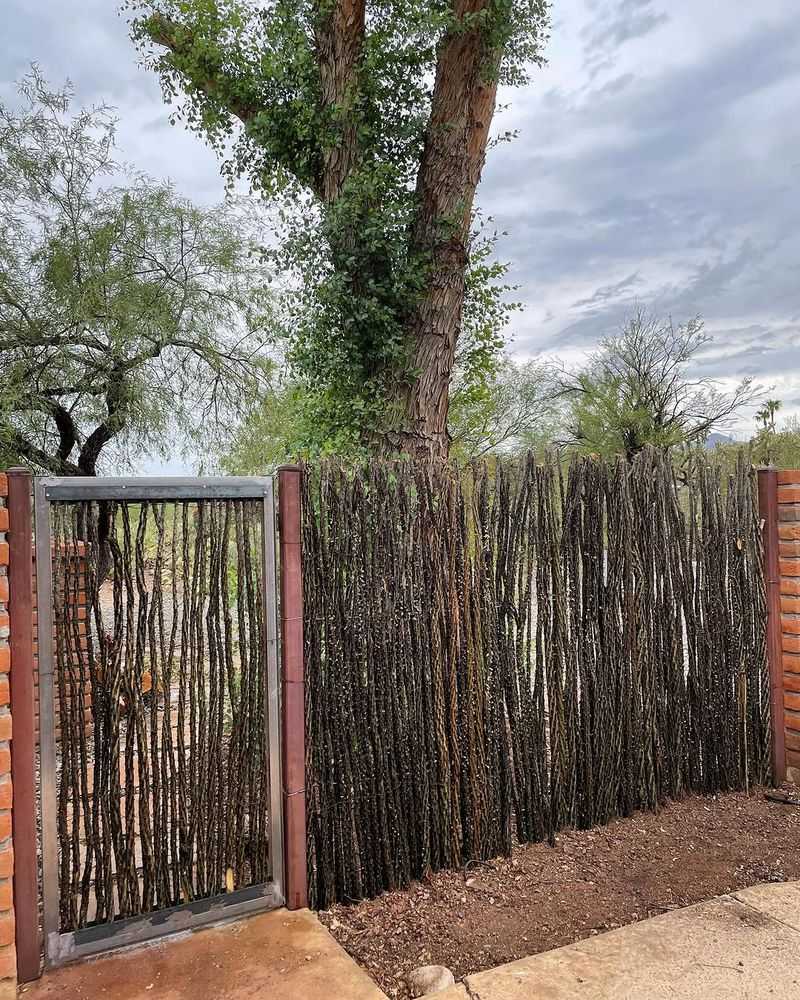
Gaps in an ocotillo fence are frustrating, but they are fixable. Even a well-planted fence can end up with open spots where a cane failed to root or where spacing was a little too wide.
Adding new canes to fill those spaces is straightforward and worth doing sooner rather than later.
Start by checking whether the gap is from a cane that never rooted or one that rooted but grew at an angle. If the cane is still loose in the ground, remove it completely before placing a fresh one.
Trying to plant around a failed cane often creates more problems.
New canes added to an established fence still need the same care as the original planting. Water them consistently, secure them with stakes if needed, and give them time to root before assuming they have settled in.
Being surrounded by established canes can actually help protect new additions from wind exposure.
Timing matters when filling gaps. Late spring through early summer is generally a good window for planting in desert climates.
Warm soil temperatures support faster rooting. Planting in the middle of a harsh summer heat wave can stress new canes before they have a chance to establish.