What Yellowing Leaves On Your North Carolina Pepper Plants In August Are Really Telling You
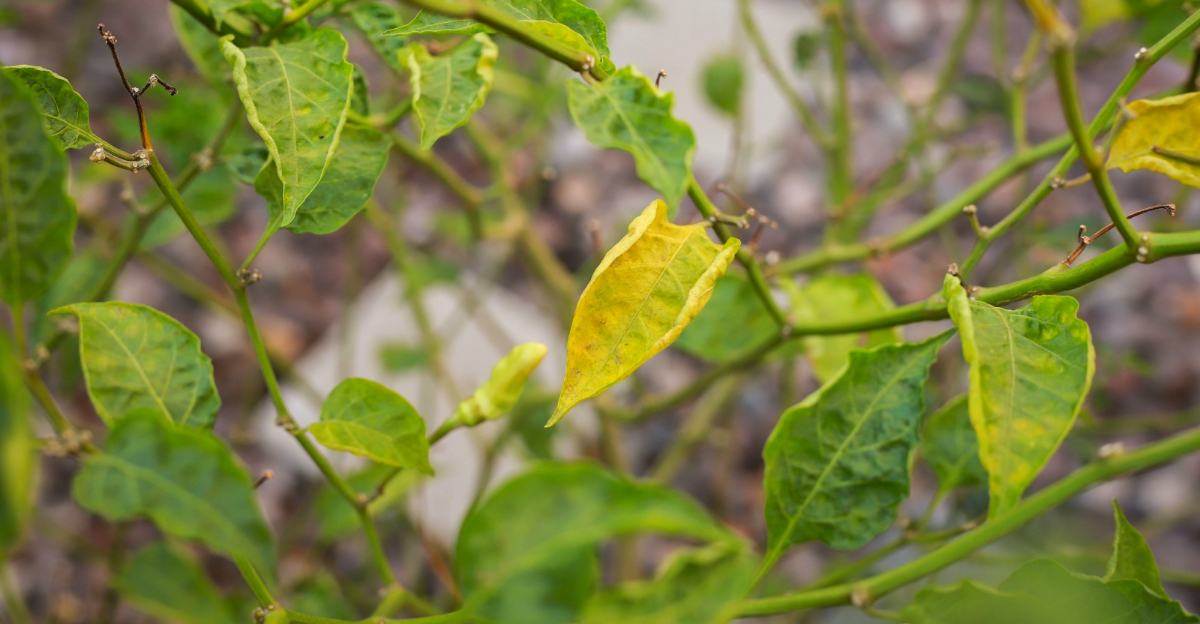
Walking out to your pepper bed on a hot August morning in North Carolina and spotting yellow leaves is the kind of thing that can ruin a perfectly good cup of coffee.
The instinct to immediately grab fertilizer or change your entire watering schedule is completely understandable, but pumping the brakes for a moment is actually the smarter move here.
North Carolina summers throw a complicated mix of intense heat, sudden heavy rain, long dry spells, high humidity, and serious pest pressure at pepper plants all at once, and yellow leaves can mean a surprising number of different things.
Nitrogen shortage, root stress, spider mites, aphids, bacterial leaf spot, or just normal late season aging are all possibilities.
Taking a moment to actually observe the whole plant before reacting tends to lead to much better decisions and a lot less wasted effort.
1. Older Leaves May Be Running Short On Nitrogen
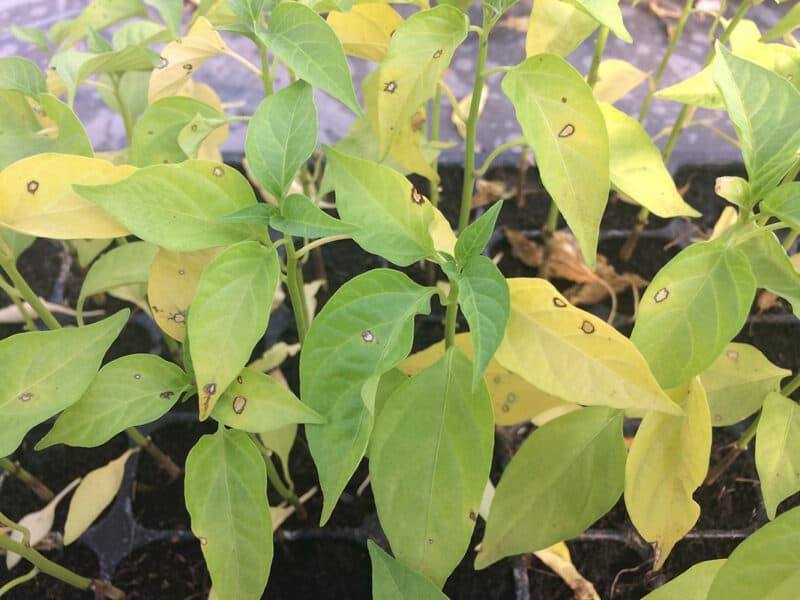
Pale lower leaves that turn uniformly yellow while the upper part of the plant stays green are one of the more recognizable signs that a pepper plant may not be getting enough nitrogen.
Nitrogen is a mobile nutrient, meaning the plant pulls it from older leaves and sends it upward to support new growth.
When the supply runs low, the bottom of the plant shows it first.
In North Carolina, this pattern tends to show up more often after a stretch of heavy summer rain. Sandy soils along the coastal plain and in the Sandhills region drain quickly and can lose nitrogen through leaching faster than clay-heavy soils in the Piedmont.
Raised beds filled with lighter potting mixes can behave similarly, especially if they have been growing vegetables since spring without any mid-season feeding.
Before adding fertilizer, take a close look at where the yellowing is concentrated. If it is mostly the older, lower leaves turning a fairly even yellow without spots, distortion, or wet soil nearby, a nitrogen shortage is a reasonable possibility to consider.
A balanced vegetable fertilizer or a light application of a nitrogen source can sometimes help, but avoid overfeeding, since too much nitrogen late in the season can push leafy growth at the expense of peppers.
Checking your watering history and recent rainfall will also help you decide whether the soil simply got flushed out.
2. Too Much Water May Be Stressing The Roots
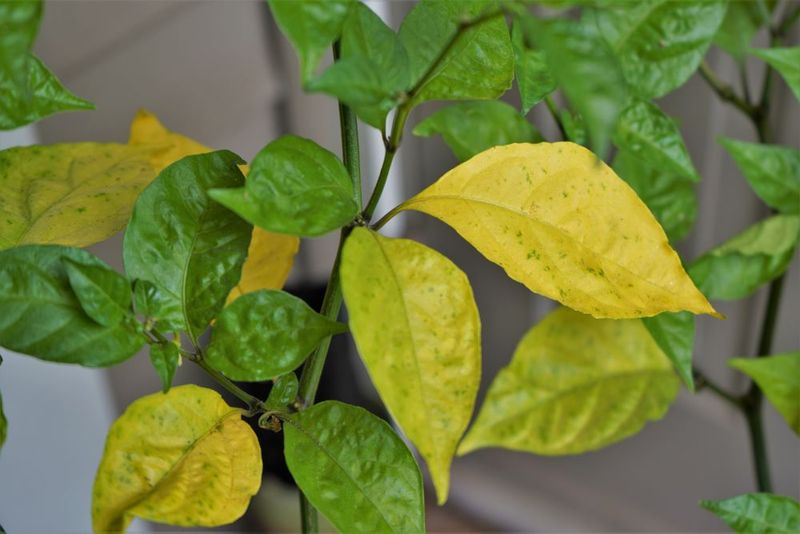
Soggy beds after a string of summer thunderstorms are something North Carolina gardeners know well.
August in North Carolina can bring back-to-back afternoon storms that leave garden soil saturated for days.
Pepper plants sitting in waterlogged ground often respond by turning yellow in a way that looks alarming but makes complete sense once you understand what is happening underground.
When roots stay wet for too long, they struggle to absorb oxygen. Without adequate oxygen at the root zone, a pepper plant cannot move nutrients efficiently through its system, and leaves begin to yellow even though the soil is technically full of water.
The yellowing from overwatering can affect both older and newer leaves, and the plant may also look slightly wilted despite the moisture surrounding its roots.
Your North Carolina Garden Changes Every Week. Your Plan Should Too.
Gardening in North Carolina changes quickly throughout the season. Every Friday you’ll receive a simple weekly plan showing exactly what to plant, prune, fertilize, harvest, and protect so you never miss the right timing.
Clay soils common in parts of the North Carolina Piedmont and foothills hold water longer than sandy soils, making drainage a real concern in low-lying spots or poorly structured beds. Containers without drainage holes create the same problem.
Before watering again, push a finger a couple of inches into the soil. If it still feels wet, hold off.
Improving drainage by adding compost to dense soil, raising bed height, or repositioning containers can make a meaningful difference.
Letting the soil dry out slightly between waterings during wet stretches gives roots a chance to recover and helps the plant regain its footing through the rest of the growing season.
3. Dry Soil May Be Slowing Nutrient Uptake
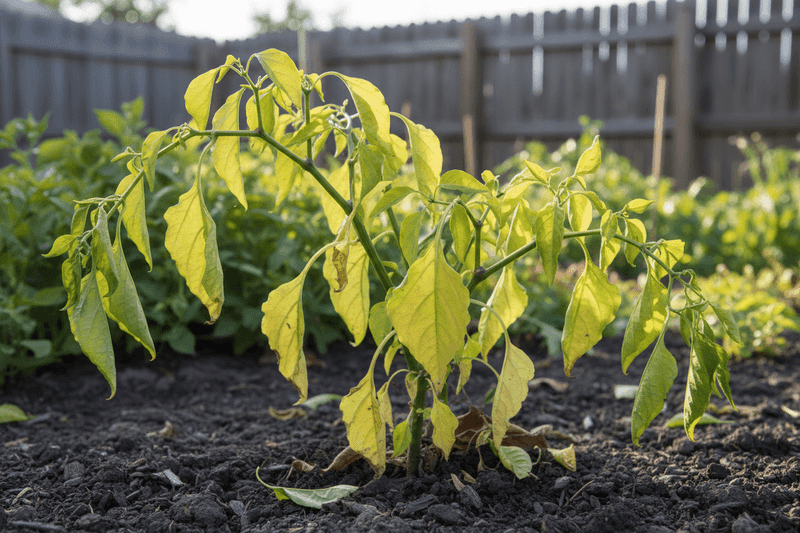
Raised beds and containers in North Carolina can dry out surprisingly fast during the hottest weeks of August, especially when afternoon temperatures climb into the upper 90s and direct sunlight beats down on dark soil or dark-colored pots.
When the soil gets too dry, roots cannot pull nutrients up through the plant even if those nutrients are present in the ground.
The result can look like a nutrient deficiency even when the soil has been fed adequately throughout the season.
Drought stress yellowing often appears alongside other symptoms. Leaves may feel slightly crispy at the edges, the plant might look droopy in the afternoon heat, and the soil surface can crack or pull away from the edges of raised beds and containers.
Pepper plants in smaller pots are especially vulnerable because the limited volume of growing medium dries out much faster than an in-ground bed.
Checking soil moisture a few inches below the surface before drawing any conclusions is a smart first step. If the soil is dry at that depth, a deep, slow watering that saturates the root zone can help the plant begin recovering within a day or two.
Mulching around pepper plants with straw or wood chips helps North Carolina gardeners retain soil moisture during dry stretches, reducing how often supplemental watering is needed.
Consistent moisture, rather than heavy irregular watering, tends to support steadier nutrient uptake and more stable leaf color through the rest of the summer.
4. Spider Mites May Be Feeding During Hot Dry Weather
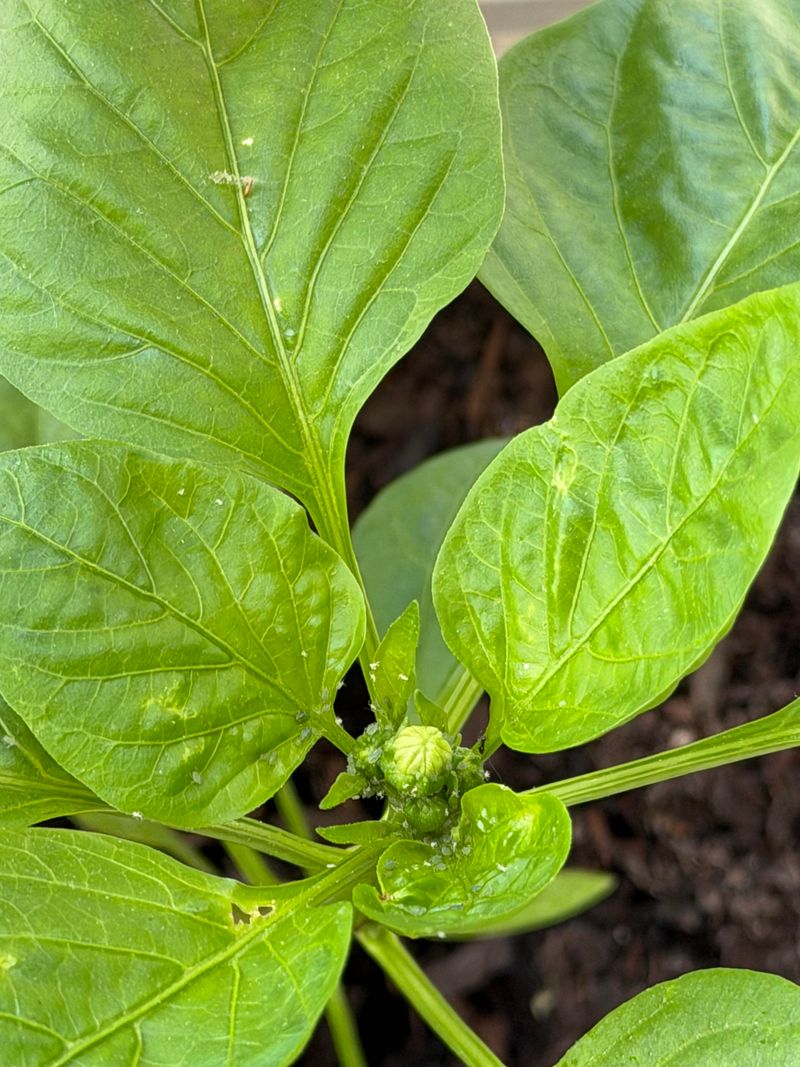
Tiny speckling across the surface of pepper leaves, almost like someone flicked a fine brush loaded with pale dots across the foliage, is one of the first things to look for when spider mites are involved.
These pests thrive in hot, dry conditions, which makes August in North Carolina close to ideal for them.
A stretch of dry weather following a rainy period can set the stage for spider mite populations to build quickly on backyard pepper plants.
Spider mites are not insects but rather tiny arachnids that feed by piercing leaf cells and extracting plant fluids. As they feed, leaves develop a stippled, bronzed, or washed-out appearance that can eventually shade into yellowing.
Flipping a suspicious leaf over and looking closely, sometimes with a magnifying glass, may reveal tiny moving specks and fine webbing along the veins or in leaf corners.
Pepper plants growing in containers on patios or in raised beds with good air circulation but limited humidity may be more susceptible during hot, dry stretches.
A strong spray of water directed at leaf undersides can knock mite populations down and is often a reasonable first response for light infestations.
Insecticidal soap or neem oil applied in the early morning or evening can also help manage mites without adding unnecessary stress to the plant during the heat of the day.
Keeping plants adequately watered during dry spells may reduce how attractive they are to spider mites in the first place.
5. Aphids Or Leafhoppers May Be Weakening New Growth
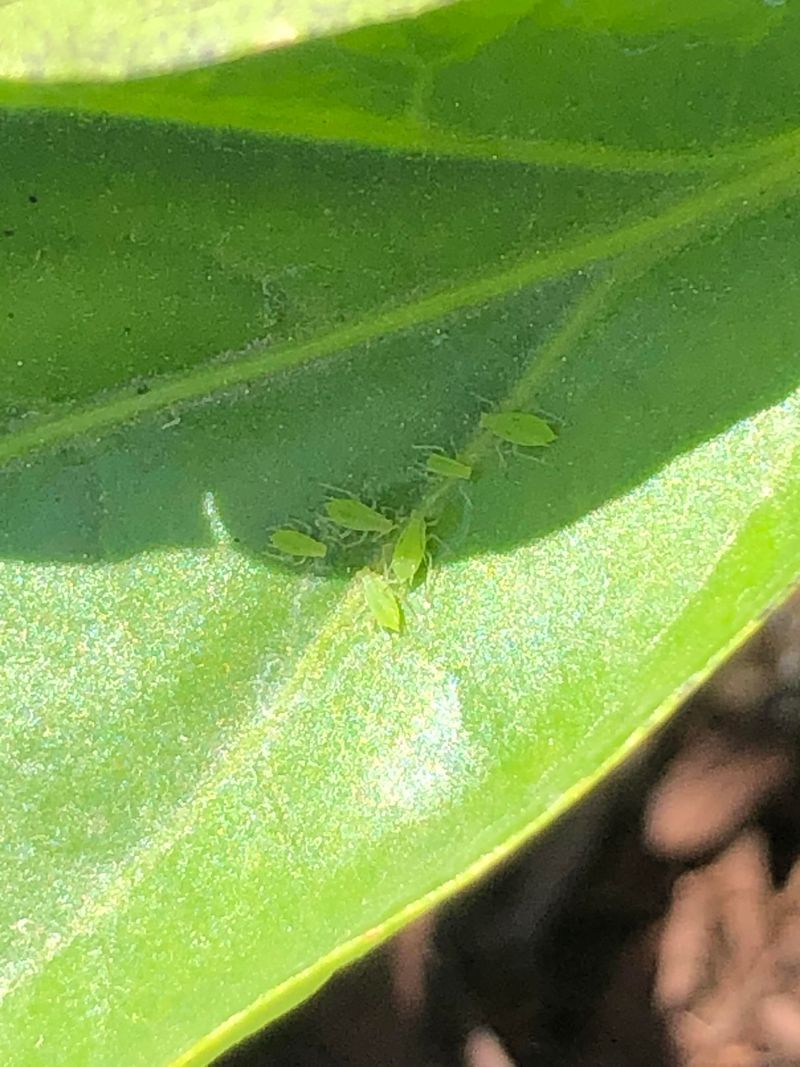
Curled new growth at the tips of pepper plants, sometimes paired with a slightly sticky feel on the leaves or stems, is worth investigating before assuming the problem is a nutrient issue.
Aphids cluster on tender new growth and feed by drawing plant sap, and as populations build, the damage can cause leaves to curl, pucker, or turn pale and yellowish in ways that look similar to other problems at first glance.
Leafhoppers are another pest worth checking for, particularly in North Carolina gardens that border open fields or areas with tall grass nearby. These fast-moving, wedge-shaped insects feed on plant sap and can transmit plant diseases in the process.
Leafhopper feeding sometimes causes a condition called hopperburn, where leaf edges turn yellow or brown from the outside in. New growth may look distorted or stunted when leafhopper pressure is high.
Both aphids and leafhoppers tend to be more active during warm, dry stretches that follow rainy periods, which fits August in many parts of North Carolina perfectly.
Checking the undersides of leaves and the growing tips of the plant regularly makes it easier to catch these pests early, before populations get large enough to cause serious leaf damage.
A strong stream of water can dislodge aphids effectively.
Reflective mulches have shown some promise in reducing leafhopper pressure in vegetable gardens, and row covers can help protect plants if pest pressure is consistently high in a particular yard or community garden plot.
6. Bacterial Leaf Spot May Be Spreading In Wet Weather
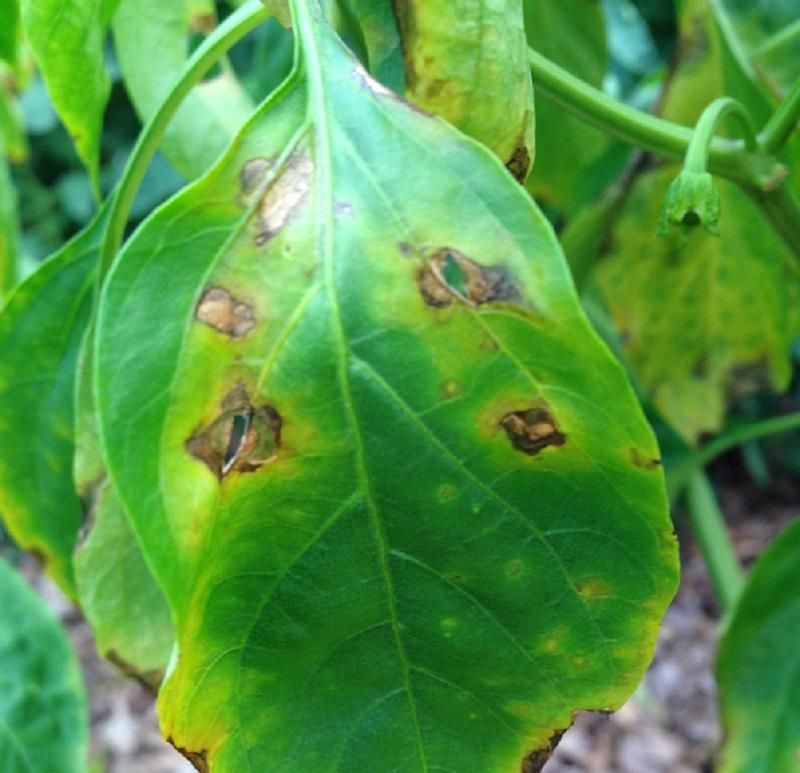
Humid August mornings in North Carolina create conditions that bacterial leaf spot finds genuinely favorable.
This disease, caused by Xanthomonas bacteria, is one of the more common pepper problems in the Southeast and tends to flare up after periods of warm, wet weather, heavy dew, or overhead irrigation that keeps foliage wet for extended periods.
Recognizing it early can help gardeners make better decisions about how to manage the rest of the season.
Bacterial leaf spot typically starts as small, water-soaked spots on leaves that develop yellow halos as they age. The centers of the spots may turn brown or black and sometimes fall out, leaving ragged holes in the leaf.
Heavily affected leaves often turn yellow and drop from the plant, which can reduce overall canopy and expose developing peppers to sunburn.
The disease spreads through splashing water, so rain and overhead watering both help move bacteria from infected tissue to healthy leaves.
Gardeners in North Carolina who have dealt with this disease before often take steps to reduce leaf wetness by watering at the base of the plant rather than overhead and spacing plants to allow better air movement.
Removing heavily infected leaves can also help reduce the spread when caught early enough.
Copper-based fungicides labeled for bacterial leaf spot on peppers can be used as a preventive or early-intervention tool, though they work best when applied before infection is widespread.
Rotating pepper crops to different beds or containers in future seasons also helps reduce the chance of bacterial problems building up in the same spot.
7. Herbicide Or Chemical Drift May Have Damaged The Leaves
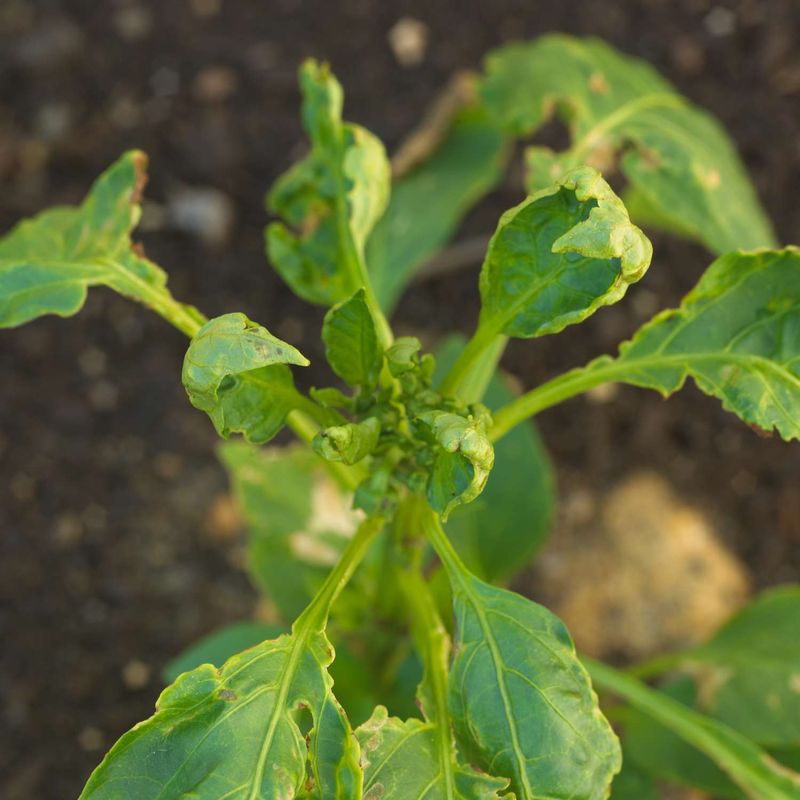
Yellow spotted or cupped foliage that appears suddenly after a nearby lawn was treated, a neighbor sprayed weeds along a fence line, or a commercial applicator worked in the area is worth thinking about carefully.
Herbicide drift is a real and underappreciated cause of pepper plant damage in residential yards, community gardens, and edible landscapes throughout North Carolina.
Peppers are particularly sensitive to certain broadleaf herbicides, and even small amounts landing on foliage can cause noticeable symptoms.
The pattern of herbicide drift damage tends to look different from nutrient deficiency or pest damage.
Affected leaves may cup downward or upward, look twisted or puckered, develop irregular yellow patches, or show a general distortion that does not match the uniform yellowing of nitrogen shortage or the stippling of spider mites.
New growth is often the most visibly affected because it was actively developing when the chemical contacted the plant.
Wind direction and timing matter a great deal when it comes to drift. Treatments applied on breezy days or with equipment that produces a fine mist can carry herbicide particles farther than expected.
If drift damage is suspected, there is not much that can be done beyond removing the most heavily damaged leaves, keeping the plant well watered, and giving it time to produce new growth.
Talking with neighbors about timing lawn treatments during calm weather, or placing a physical barrier like a row cover around the garden during nearby spray events, can help reduce the chance of this happening again in future seasons.
8. Some Lower Leaves May Simply Be Aging Out
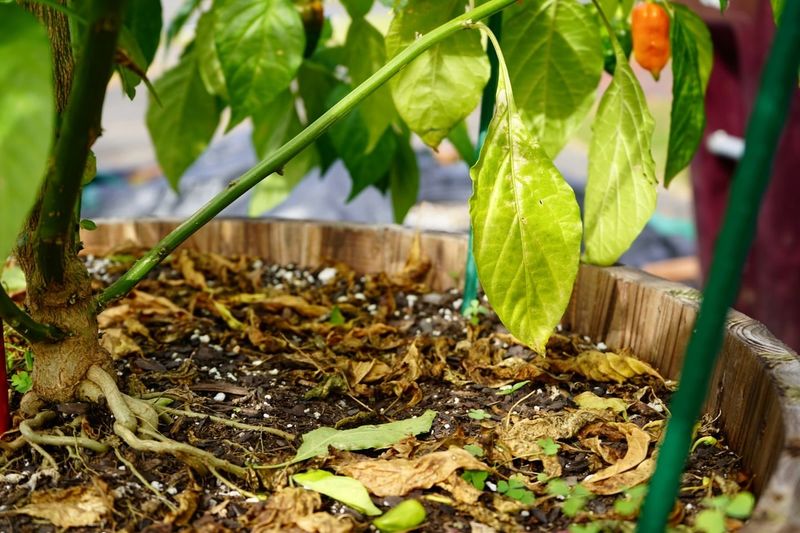
Not every yellow leaf on a pepper plant signals a problem worth worrying about.
By August, pepper plants in North Carolina have been growing through months of heat, humidity, rain, and sun, and the oldest leaves near the base of the plant naturally begin to yellow and drop.
This happens as the plant directs its energy toward fruit development rather than maintaining older foliage.
This kind of gradual, lower-leaf yellowing is a normal part of how pepper plants age through the season.
The key difference between normal aging and a more serious issue is the pattern and the pace. Aging leaves tend to yellow slowly, one or a few at a time, starting from the very bottom of the plant.
The rest of the plant looks healthy, new growth at the top looks green and strong, and there are no spots, webbing, distortion, or other symptoms accompanying the yellowing. The peppers themselves continue to develop normally.
Removing these aging lower leaves can actually benefit the plant by improving air circulation near the soil surface, which may help reduce the chance of soil-borne disease splashing up onto foliage during heavy rain.
It also keeps the garden bed looking tidy through the end of the season.
North Carolina gardeners who know what normal late-summer aging looks like tend to feel less anxious when they spot a few yellow leaves at the bottom of otherwise productive pepper plants.
Observation over time is the most useful tool any backyard gardener can develop.