What Floppy Hydrangea Stems In Michigan Mean When The Leaves Still Look Green
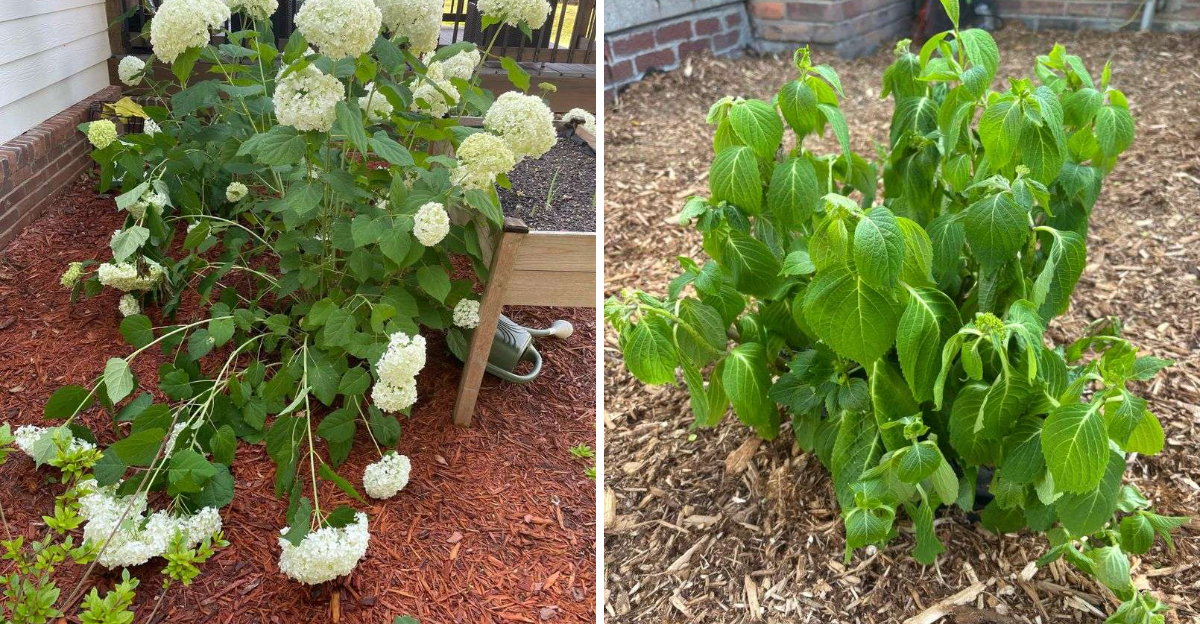
Hydrangea stems flopping over while the foliage stays green and healthy-looking is a confusing combination that most Michigan gardeners misread as a watering problem and treat accordingly.
The leaves staying green is the important detail here, because it rules out the stress responses that produce both wilting foliage and stem collapse at the same time.
Floppy stems on otherwise healthy-looking hydrangeas in Michigan point toward a specific and different set of causes that have nothing to do with soil moisture and everything to do with how the plant developed through spring and early summer.
Treating it as a drought symptom delays the real diagnosis and sometimes makes the underlying condition measurably worse through the remainder of the season.
1. Heavy Flower Heads Are Pulling The Stems Down
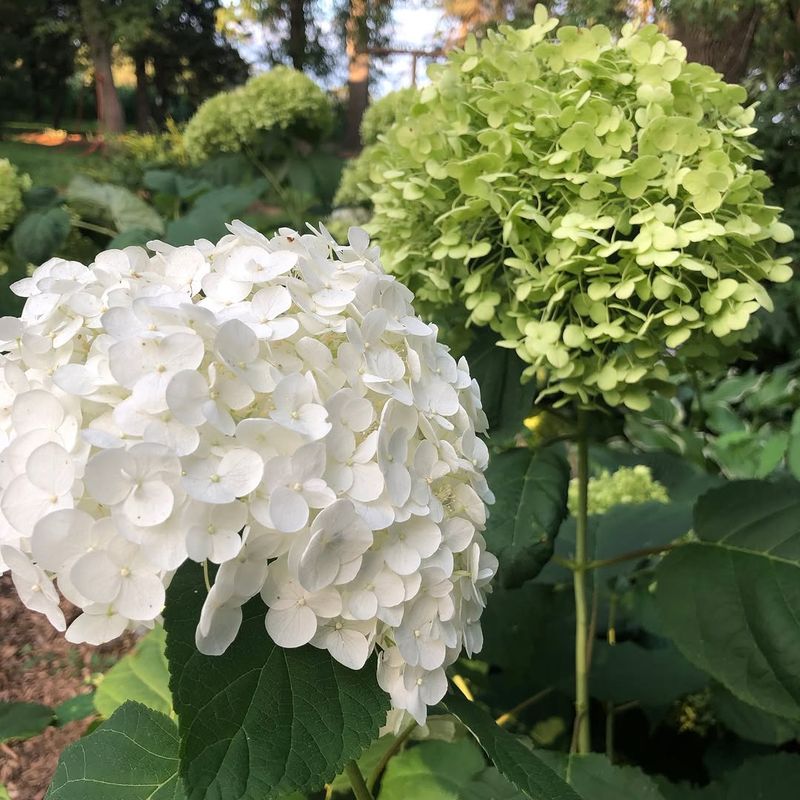
Picture a hydrangea loaded with huge, beautiful blooms after a full Michigan summer of growth. Those blooms can get surprisingly heavy, and sometimes the stems simply cannot hold them upright on their own.
The plant looks perfectly fine from a leaf standpoint, but the stems are bending sideways or drooping toward the ground.
Large-blooming varieties like Annabelle or Incrediball are especially known for this. Their flower heads can grow as wide as a dinner plate, which puts enormous pressure on the stem below.
Even a healthy, well-watered plant can struggle to keep those blooms pointed skyward when the clusters get that big.
The fix here is surprisingly simple. You can use garden stakes, tomato cages, or peony rings placed around the plant early in the season before the blooms fully open.
Getting the support in place before the weight builds up works much better than trying to prop stems after they have already bent. Think of it like putting up a fence before the storm, not after.
Giving stems that extra help early keeps your hydrangea looking upright and full all season long without harming the plant at all.
2. Summer Rain Has Added Extra Weight
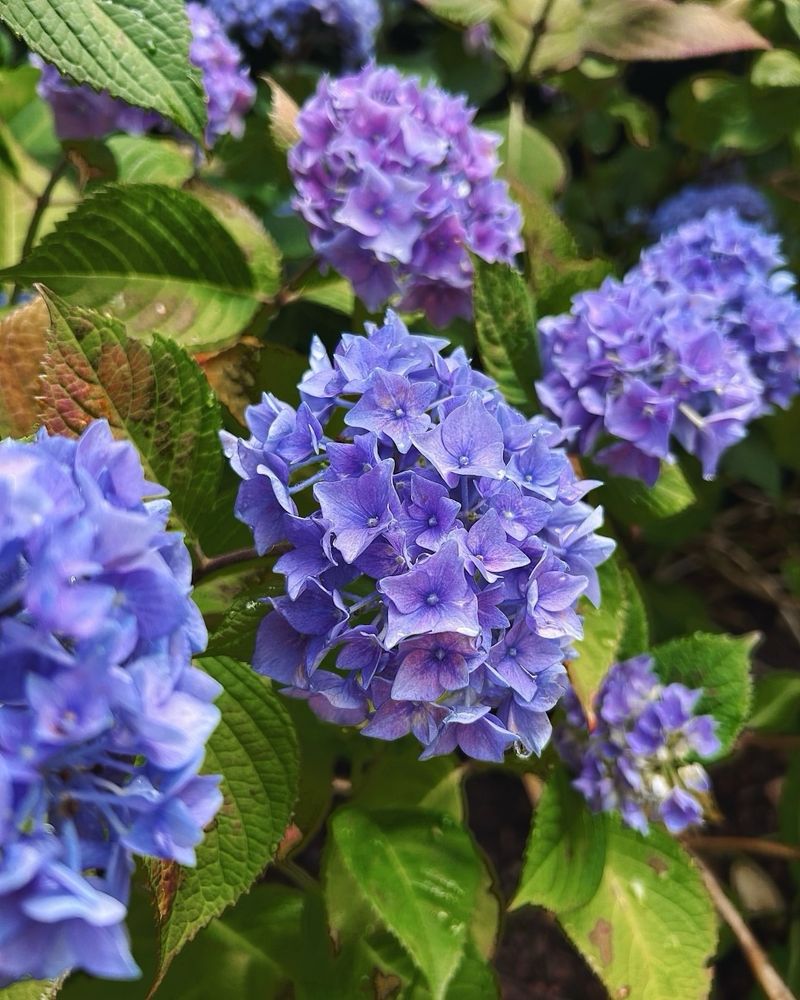
Michigan summers bring some serious rainstorms, and hydrangeas feel every drop of them. When a big cluster of blooms soaks up rain, the weight can double or even triple in a short amount of time.
Stems that were holding up fine in dry conditions suddenly start bending toward the soil.
What makes this tricky is that the leaves still look completely green and healthy. There is nothing wrong with the plant itself.
The problem is purely mechanical, meaning too much weight and not enough stem strength to match it. Panicle and bigleaf hydrangeas with large flower heads are the most common victims of this after a heavy July or August downpour.
One smart move Michigan gardeners can make is to install support structures in late spring, right around the time new growth is pushing up fast. That way, when summer rain arrives, the stems are already guided and held in place.
After a storm, you can also gently shake excess water off the blooms if they are still closed or partially open.
Once the sun comes back out and the blooms dry, lighter stems often bounce back a bit on their own. Giving them a little time after rain before panicking is always a good first step.
Your Michigan Garden Changes Every Week. Your Plan Should Too.
Gardening in Michigan changes quickly throughout the season. Every Friday you’ll receive a simple weekly plan showing exactly what to plant, prune, fertilize, harvest, and protect so you never miss the right timing.
3. The Plant Is Young And The Stems Are Still Flexible
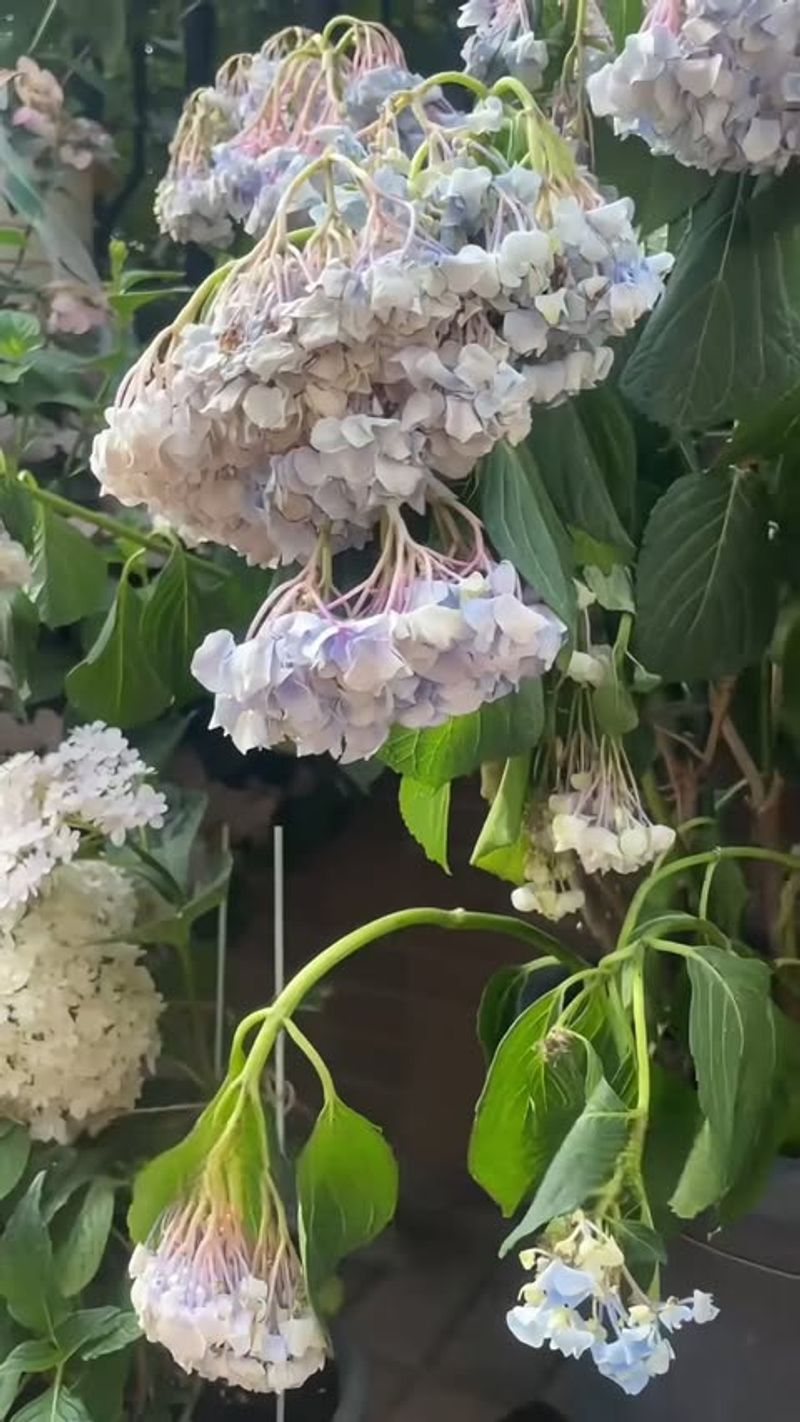
Young hydrangeas are a little like teenagers. They are growing fast, full of energy, and not quite strong enough yet to handle everything life throws at them.
A shrub in its first or second year may have gorgeous green leaves and even push out some blooms, but the stems have not had time to build real toughness.
Woody stems develop strength over multiple growing seasons. In the early years, the plant is putting most of its energy into root development and overall growth rather than building thick, rigid canes.
So when a bloom opens up on a young plant, the stem holding it may simply bend under the pressure.
The best approach with a young hydrangea is patience combined with a little support. Placing a simple stake next to the stem and tying it loosely with soft garden twine can keep things upright without harming new growth.
Avoid over-fertilizing young plants with nitrogen-heavy products, because that can push soft leafy growth even faster without building the stem strength needed to match it.
Focus on good watering habits, proper mulching, and letting the plant mature naturally. Most hydrangeas fill out beautifully by their third or fourth season, and by then, floppy stems from youth are usually a thing of the past.
4. Too Much Nitrogen Has Made Growth Soft
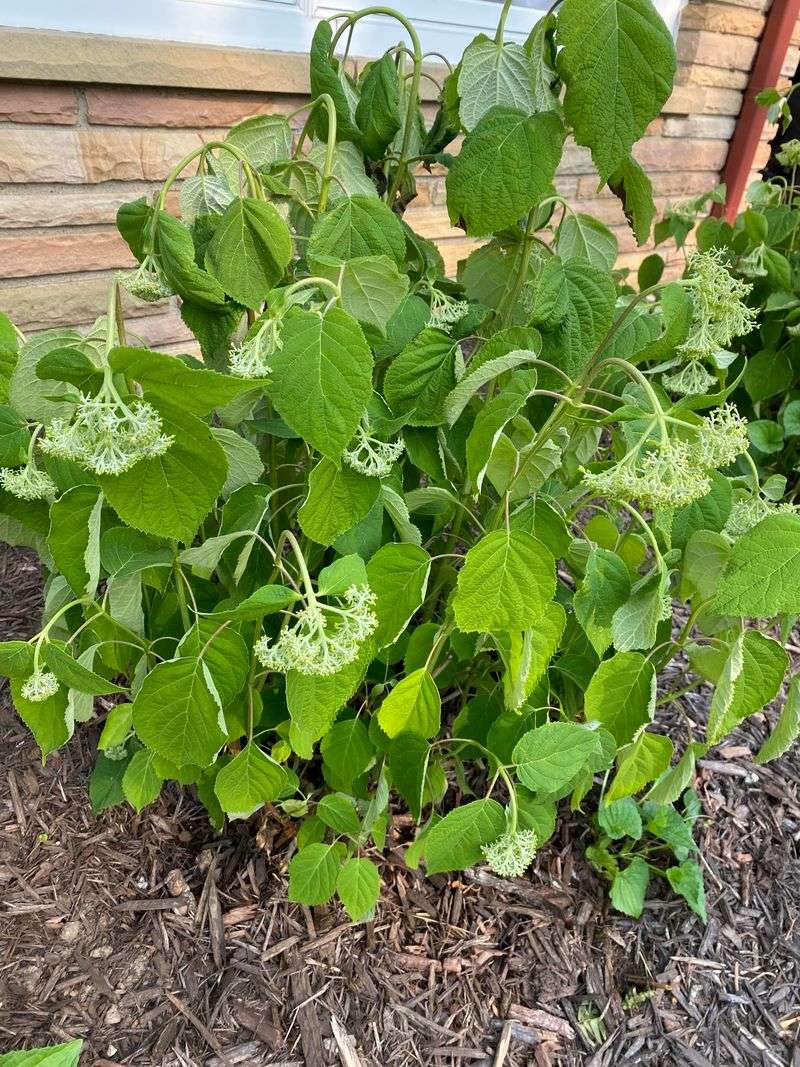
Nitrogen is the nutrient that makes plants grow big and green fast, but too much of a good thing can backfire in a real way. When hydrangeas get a heavy dose of nitrogen, they push out lots of leafy growth and large flower heads quickly.
The catch is that the stems supporting all that growth often stay soft and weak.
This is a surprisingly common issue in Michigan gardens where homeowners apply lawn fertilizer near shrubs or add extra garden fertilizer hoping to boost blooms.
The result looks impressive at first, lush green leaves and big flower clusters, but then the stems start flopping because they never built the firm, woody structure needed to stay upright.
A soil test is the smartest tool any gardener can use before adding fertilizer. Michigan State University Extension offers affordable soil testing that tells you exactly what your soil needs.
If nitrogen is already adequate, adding more only creates the soft-stem problem. Switching to a fertilizer with a balanced ratio or one that is lower in nitrogen and higher in phosphorus can encourage stronger root and stem development instead of just leafy bulk.
Feeding your hydrangea smarter rather than more generously leads to a stronger, better-shaped plant that holds its own blooms upright all summer long without needing extra propping.
5. The Shrub Is Reaching For More Light
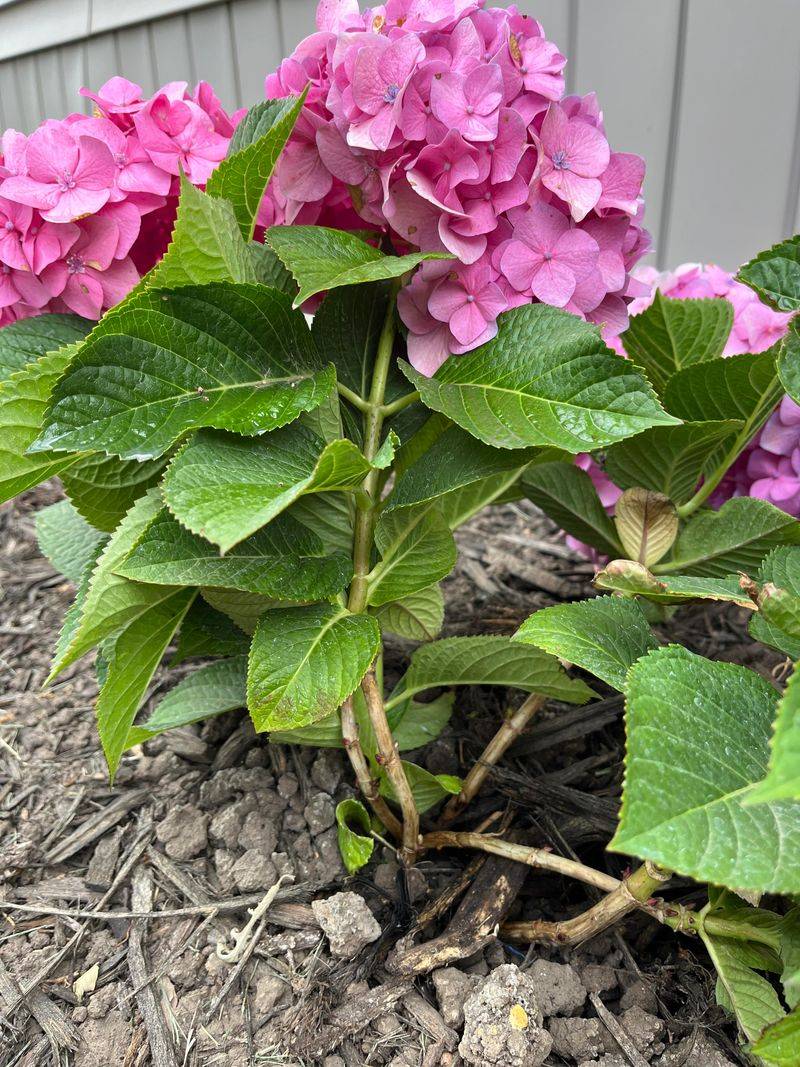
Plants are incredibly smart about chasing what they need, and light is at the top of the list. When a hydrangea does not get enough sunlight, it does something called etiolation, which is basically a fancy word for stretching.
The stems grow longer and softer as the plant reaches toward any available brightness.
In Michigan, many hydrangeas are planted under trees or along the north side of houses where shade is heavy. Some afternoon shade is actually helpful during the hottest summer weeks, especially for bigleaf varieties.
But when shade takes over for most of the day, the plant starts producing long, weak stems that cannot support the weight of blooms properly.
Checking how much direct sunlight your hydrangea gets is a worthwhile exercise. Most varieties do best with four to six hours of morning sun followed by some afternoon shade.
If your plant is getting less than that, consider whether nearby branches can be trimmed to let more light through. Transplanting to a brighter spot is also an option in early spring before growth starts.
Improving light conditions gradually leads to shorter, firmer stem growth over time, and a plant that stands upright naturally rather than leaning and flopping toward every patch of brightness it can find.
6. The Root Zone Is Dry Even Though Leaves Still Look Green
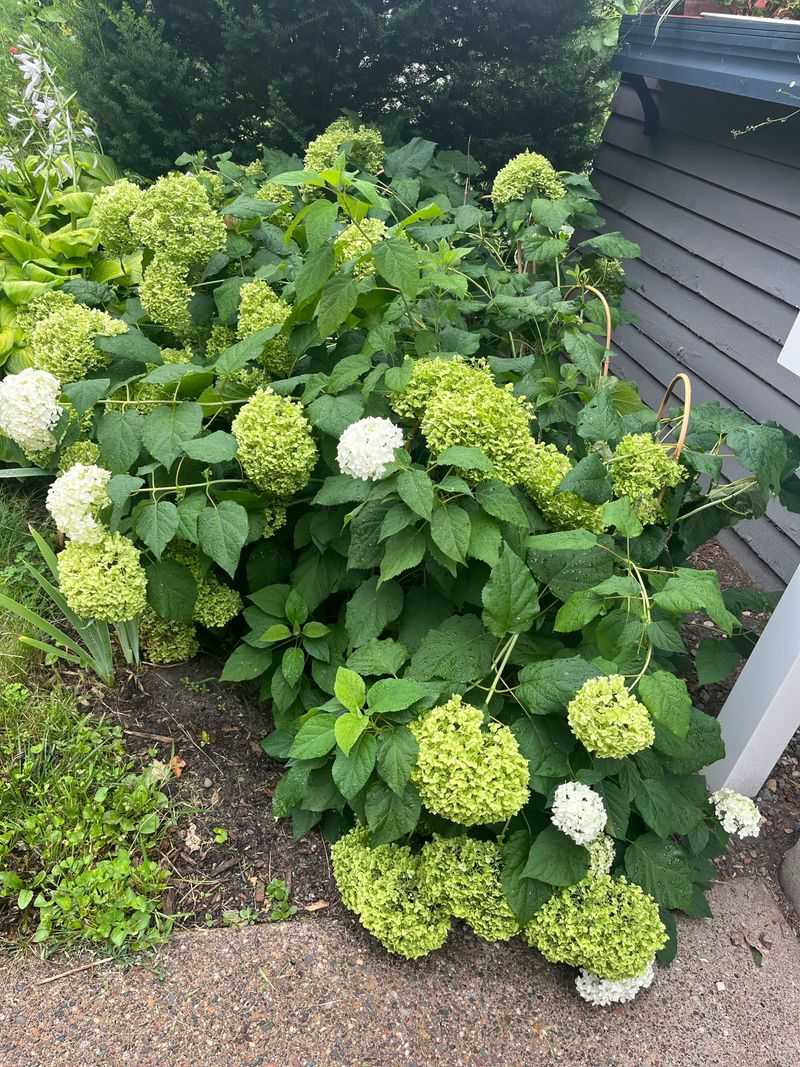
Here is something that surprises many gardeners: leaves can stay green for a while even when the roots are not getting enough water. The plant pulls moisture from its tissues first before the leaves show visible stress.
Meanwhile, the stems may start losing their firmness and begin to droop, giving you an early warning sign before things get worse.
Michigan summers can be deceptively dry, especially during July and August when heat builds up fast. Surface soil might feel slightly moist from a recent shower, but several inches deeper, where the roots actually live, the soil can be bone dry.
Sticking your finger or a moisture meter four to six inches into the soil near the base of the plant gives you a much more accurate picture than just looking at the surface.
Deep watering once or twice a week is far more effective than light daily watering. When you water deeply, roots are encouraged to grow further down into the soil where moisture stays more consistent.
Shallow watering keeps roots near the surface where they dry out quickly. Adding a two to three inch layer of wood chip mulch around the base of the plant helps hold moisture in the soil longer between watering sessions.
Keeping the root zone consistently moist, not soggy, is one of the best things you can do for stem firmness and overall plant strength.
7. The Root Zone Is Staying Too Wet
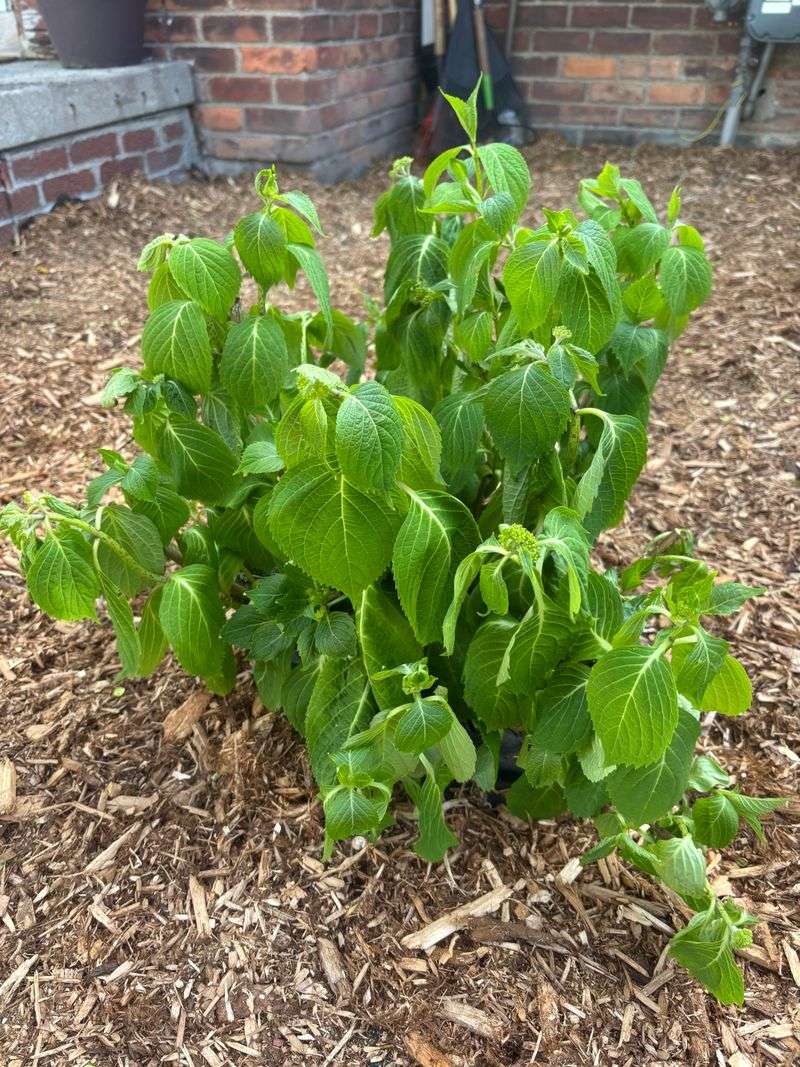
Soggy soil is just as much a problem as dry soil, and it can be harder to spot because the leaves often stay green for quite a while before showing obvious distress.
When roots sit in water-saturated soil for extended periods, they struggle to absorb oxygen properly.
Without enough oxygen, root function weakens, and the stems above start losing their structural strength.
Michigan clay soil is a major factor here. Clay holds onto water much longer than sandy or loamy soil, and after a string of rainy days, the root zone can stay saturated for days at a time.
Low spots in the yard make this worse because water naturally drains toward them and pools around the roots. Gardeners who water frequently on top of heavy rain can accidentally push the soil into an oxygen-starved state without realizing it.
Checking drainage around your hydrangea is a practical first step. Dig a small hole near the plant and see how quickly water drains out after filling it.
If water sits for more than an hour, drainage is poor. Amending the soil with compost can improve structure over time.
Raising the planting area slightly or redirecting downspout water away from the shrub also helps. Matching your watering schedule to actual rainfall rather than following a set routine keeps the root zone in a healthier, more balanced condition all season.
8. Spring Pruning Made The Stems Too Long And Top Heavy
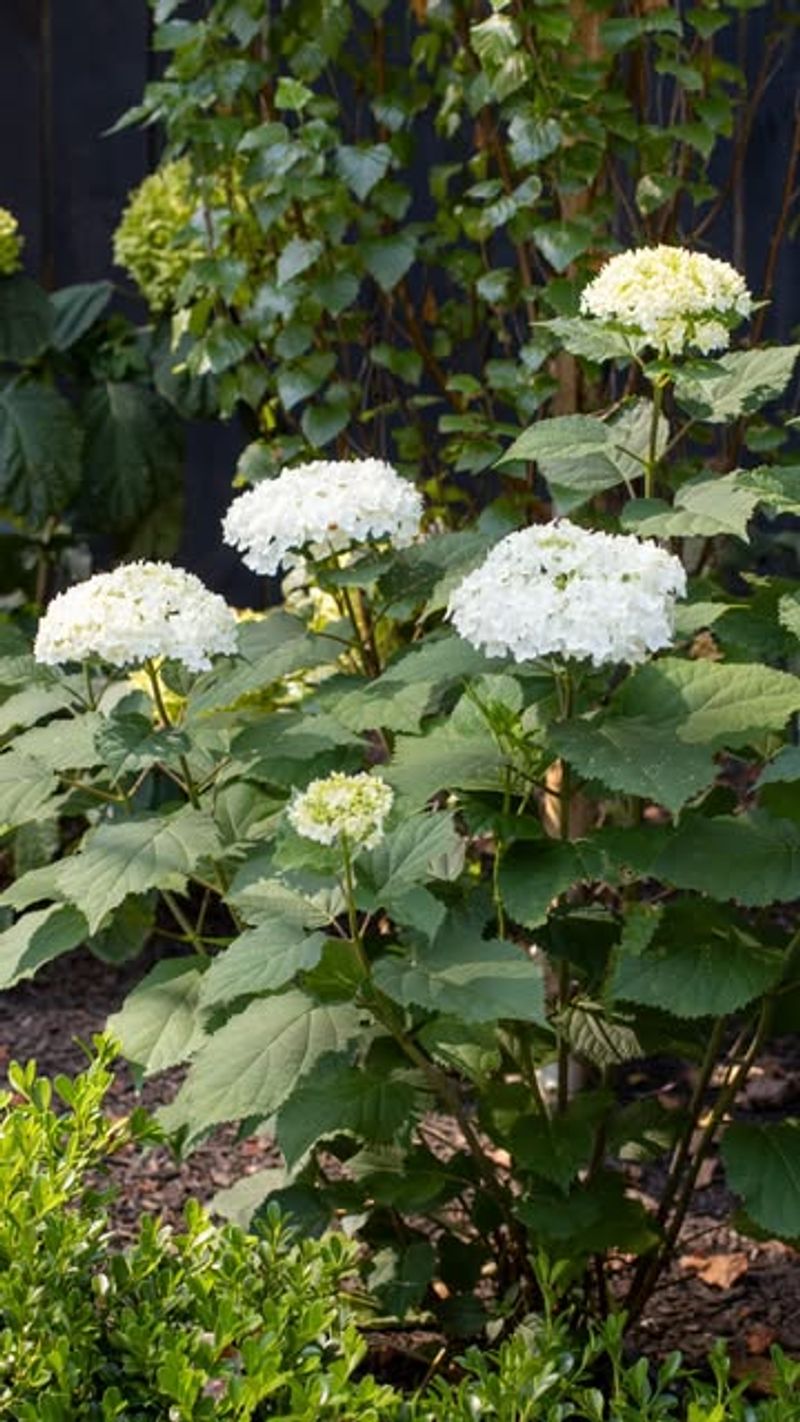
Pruning decisions made in late winter or early spring have a direct effect on how your hydrangea performs months later in summer.
Smooth hydrangeas like Annabelle and panicle hydrangeas like Limelight are the types you prune in early spring, and how hard you cut them makes a real difference in stem strength come July.
When these shrubs are cut very low to the ground, they respond by sending up vigorous new growth that can shoot up surprisingly fast. Those new stems are long and full of energy, but they are also soft and flexible.
By the time large blooms form at the top, the stems may not be sturdy enough to hold them upright, especially after rain or wind hits.
A smarter pruning approach is to cut smooth hydrangeas back by about one third rather than all the way to the ground.
Leaving more of the old woody framework in place gives new growth a shorter distance to travel before blooming, which generally results in shorter, sturdier stems.
For panicle hydrangeas, a moderate trim rather than a severe cutback tends to produce more balanced growth. Keeping notes on how your plant responds each year helps you dial in the right pruning level for your specific variety and garden conditions in Michigan.
9. The Variety Naturally Has A Looser Shape
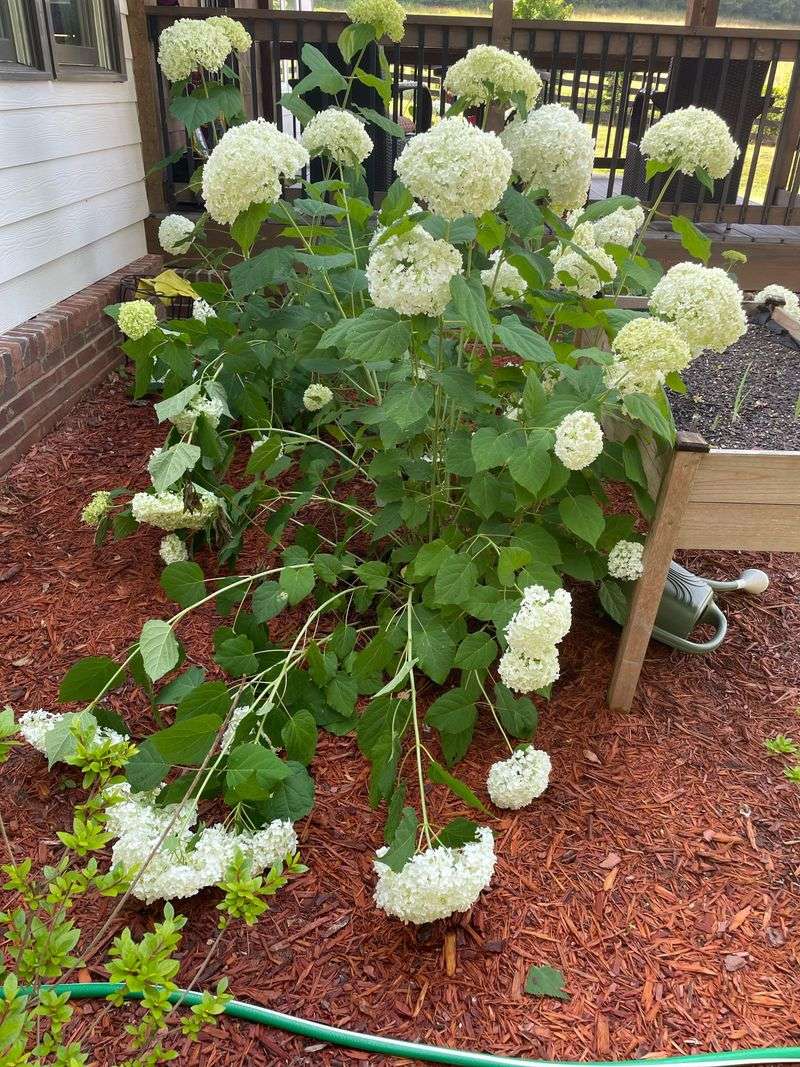
Not every hydrangea is built to stand perfectly upright, and that is completely normal. Some varieties are naturally bred or selected to have a more arching, relaxed growth habit.
If your plant has green leaves and floppy stems, it might simply be doing exactly what it was designed to do.
Annabelle hydrangeas are a classic example. They are beloved for their enormous white blooms, but those blooms come on stems that naturally arch outward rather than standing straight up.
Oakleaf hydrangeas also tend to have a spreading shape that looks full and lush rather than stiffly upright. Knowing what variety you have planted is genuinely helpful because it sets realistic expectations for what the plant will look like in full bloom.
A quick search of your plant variety name plus a photo comparison can tell you a lot about its natural growth form.
If the variety is known for arching stems, adding support structures or choosing companion plants that help hide or frame the drooping stems can turn what looks like a flaw into a design feature.
Planting lower-growing perennials around the base of a floppy hydrangea creates a layered garden look that actually draws attention to the blooms rather than the bent stems.
Working with the plant’s natural shape rather than fighting it usually leads to a more satisfying garden overall.