How To Prune Cucumbers In Michigan For The Kind Of Fruit Production That Actually Surprises You
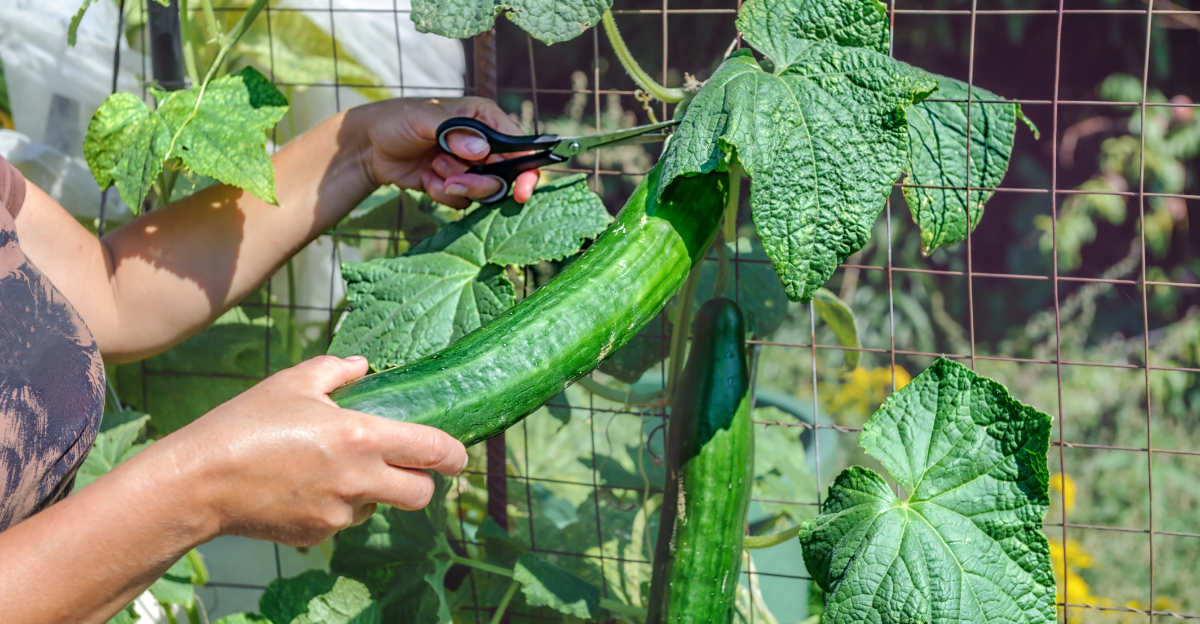
Most Michigan gardeners plant cucumbers, water them, and hope for the best. The vines take off fast, the leaves fill in thick, and everything looks promising right up until the harvest ends up smaller or shorter than expected.
What a lot of growers never find out is that what you remove from a cucumber plant matters just as much as what you let stay.
Pruning cucumbers is not something that gets talked about nearly as much as pruning tomatoes, but the impact on fruit production is just as real.
In Michigan, where the growing season has a hard stop built in, getting the most out of every plant before fall arrives is not just a nice idea, it is the whole point.
Unpruned cucumber vines put energy into leaves, side shoots, and more vine than any one plant actually needs, often at the expense of the fruit itself.
A few simple cuts made at the right time redirect that energy exactly where you want it and the difference in what you harvest tends to genuinely catch people off guard.
1. Pruning Only Matters For Vining Cucumbers
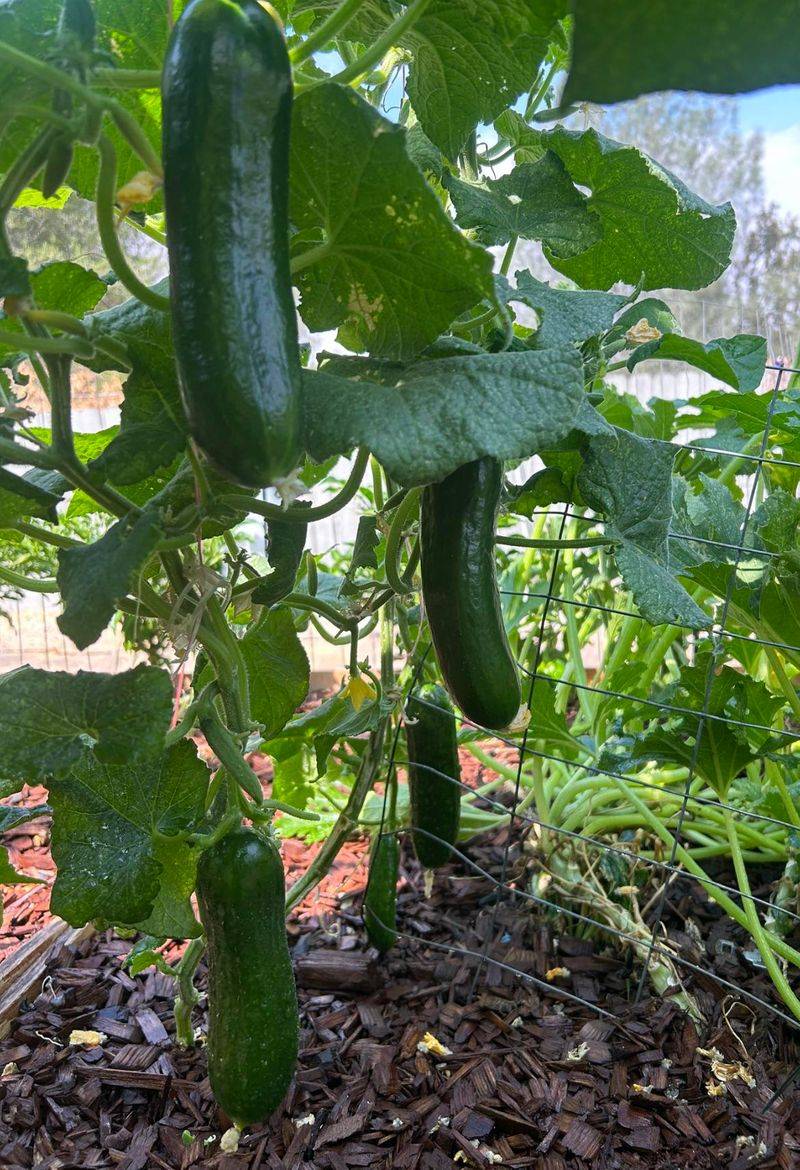
Not every cucumber plant responds the same way to pruning, and knowing this small detail can save you a lot of wasted effort. Bush-type cucumbers have a compact, self-contained growth habit, meaning they naturally stay tidy without much human intervention.
If you grow a bush variety and start aggressively cutting it back, you might actually reduce your harvest instead of improving it.
Vining cucumbers are a completely different story. These are the varieties that sprawl, climb, and reach for anything nearby.
In Michigan gardens, vining types like Marketmore or Straight Eight are popular choices because they thrive on trellises and produce abundantly when managed well.
Their long stems and numerous side shoots genuinely benefit from some thoughtful trimming throughout the season.
When you train a vining cucumber on a trellis and prune it with care, sunlight reaches more of the plant. Better light exposure means better photosynthesis, which directly supports stronger fruit development.
Michigan summers can be short, so maximizing every sunny day matters. Pruning vining cucumbers helps the plant use that precious sunlight more efficiently, which leads to bigger, better-tasting cucumbers that honestly might surprise even experienced gardeners in the region.
2. Remove Lower Leaves To Improve Airflow
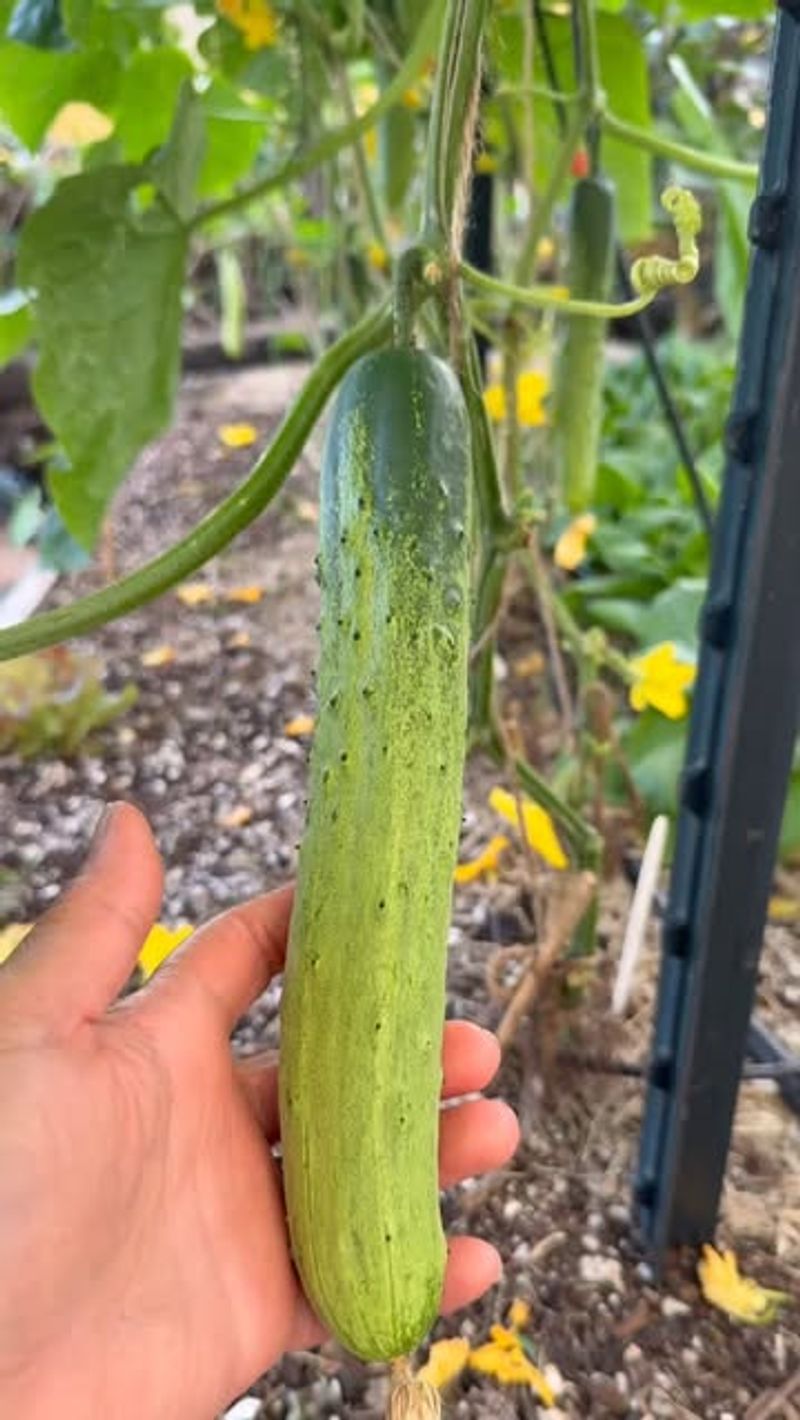
Michigan summers bring warm temperatures paired with high humidity, especially in July and August, and that combination creates a perfect environment for fungal diseases.
Powdery mildew, downy mildew, and angular leaf spot are all common problems that Michigan cucumber growers deal with every season.
One of the easiest and most effective ways to fight back is by removing the lowest leaves on your plants.
Leaves that sit close to the soil surface are the most vulnerable. Soil splashes upward during rain or watering, carrying fungal spores directly onto those bottom leaves.
Once disease gets a foothold on the lowest foliage, it spreads upward through the plant quickly. By removing leaves that touch or hang near the soil, you cut off one of the main entry points for these problems before they escalate.
Your Michigan Garden Changes Every Week. Your Plan Should Too.
Gardening in Michigan changes quickly throughout the season. Every Friday you’ll receive a simple weekly plan showing exactly what to plant, prune, fertilize, harvest, and protect so you never miss the right timing.
Improved airflow is the real reward here. When air circulates freely around the base of the plant, moisture dries faster after rain or irrigation.
Fungal spores need wet surfaces to germinate and spread, so a drier plant is a healthier plant. Aim to keep the bottom six to twelve inches of your cucumber stems clear of foliage.
This simple habit, practiced consistently throughout the Michigan growing season, makes a noticeable difference in how long your plants stay productive and green.
3. Train One Main Vine For Better Management

Picture a cucumber plant that grows wild in every direction, with dozens of side shoots scrambling over each other. It looks productive, but that tangled mess actually makes it harder for light to reach the inner leaves and fruit.
Training a single main vine is one of the smartest moves you can make for your Michigan cucumber patch, and it costs you nothing but a little time early in the season.
Start by identifying the strongest central stem when your plant is young. That becomes your main leader.
As the plant grows, gently tie this main vine to your trellis every few inches using soft garden twine or flexible plant clips. When new side shoots appear in the leaf axils, pinch or snip off the early ones, especially on the lower third of the plant.
This keeps the structure clean and organized from the start. A well-trained vine is easier to inspect for pests, easier to harvest from, and allows better air circulation throughout the canopy.
In Michigan, where the growing window runs roughly from late May through September, keeping your plants manageable means you can react quickly when problems arise.
Harvesting also becomes much more enjoyable when you can actually see and reach your cucumbers without fighting through a jungle of overlapping stems and hidden fruit hanging out of sight.
4. Limit Excess Side Shoots, But Do Not Strip The Plant
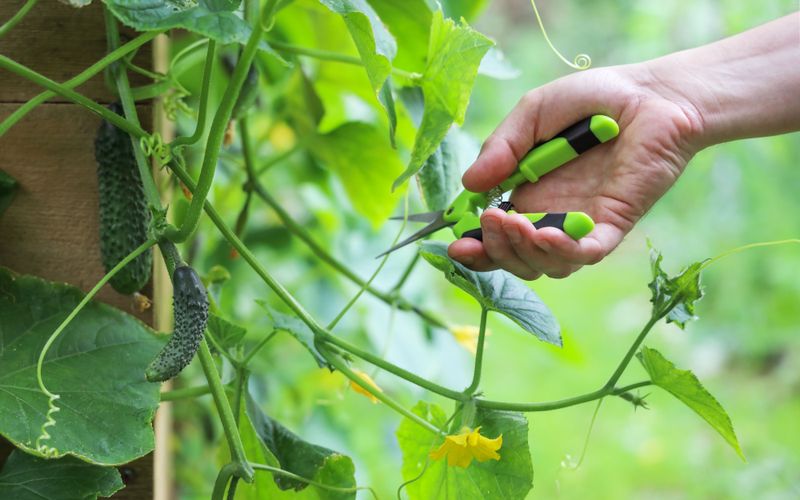
There is a temptation among new gardeners to go overboard once they learn that pruning helps cucumbers. Armed with pruning shears and enthusiasm, some growers strip away nearly every side shoot, thinking a cleaner plant is always a better plant.
That approach actually backfires, and understanding why will help you find the right balance for your Michigan garden.
Side shoots are not just extra clutter. Many cucumber varieties produce fruit directly on lateral shoots, meaning those branches you cut away might have been your biggest producers.
Removing every single side shoot essentially removes a large portion of your potential harvest before the cucumbers even have a chance to form. Light pruning to manage overcrowding is effective; aggressive stripping is counterproductive.
A smarter approach is to remove side shoots selectively. Focus on shoots that are crossing over other stems, growing inward toward the trellis structure, or creating dense patches where airflow is blocked.
Leave healthy, outward-growing laterals in place, especially once the plant reaches mid-season. In Michigan, where the productive window is precious, you want every healthy branch working for you.
Think of pruning as editing rather than erasing. You are refining the plant’s shape, not reducing it.
That mindset shift alone will lead to noticeably better cucumber yields throughout the warm Michigan summer months.
5. Remove Damaged Or Diseased Leaves Promptly
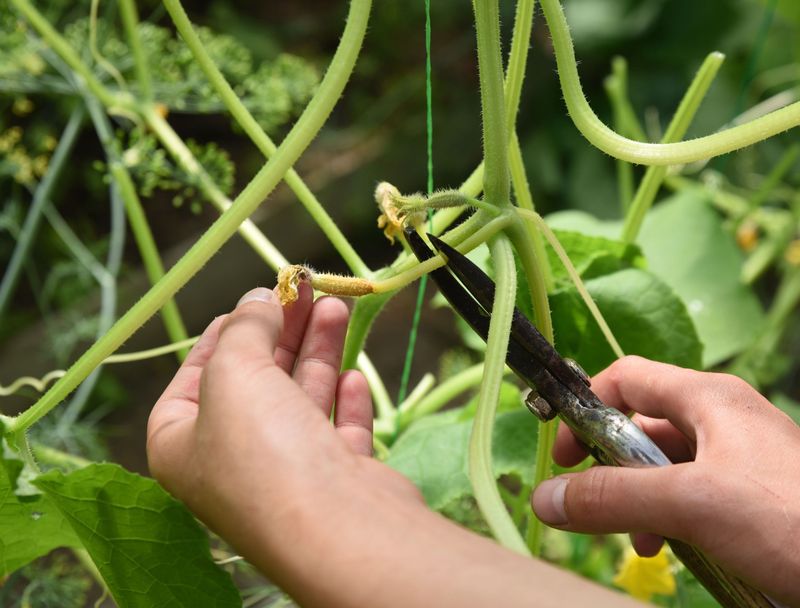
Yellowing leaves, brown spots, and fuzzy white patches are all warning signs that something is wrong with your cucumber plant.
In Michigan, where mid to late summer brings increased humidity and frequent rain, fungal diseases spread quickly from one leaf to the next.
The moment you spot a leaf that looks off, act fast instead of waiting to see if it gets worse on its own.
When you remove a diseased or damaged leaf, you slow the spread of the problem to surrounding healthy tissue. This is not a cure for the underlying issue, but it buys your plant valuable time and reduces the overall disease load.
Always use clean, sharp pruning shears when removing affected leaves, and wipe your blades with rubbing alcohol between cuts to avoid accidentally spreading spores to healthy parts of the plant.
Dispose of removed leaves carefully. Do not toss them into your compost pile, because many fungal pathogens survive the composting process and can reinfect your garden next season.
Bag them and put them in the trash instead. After pruning diseased material, wash your hands and tools thoroughly.
Michigan gardeners who stay on top of this habit during July and August consistently report healthier plants that keep producing well into September, giving them a longer and more satisfying cucumber harvest overall.
6. Support And Tie Vines As You Prune
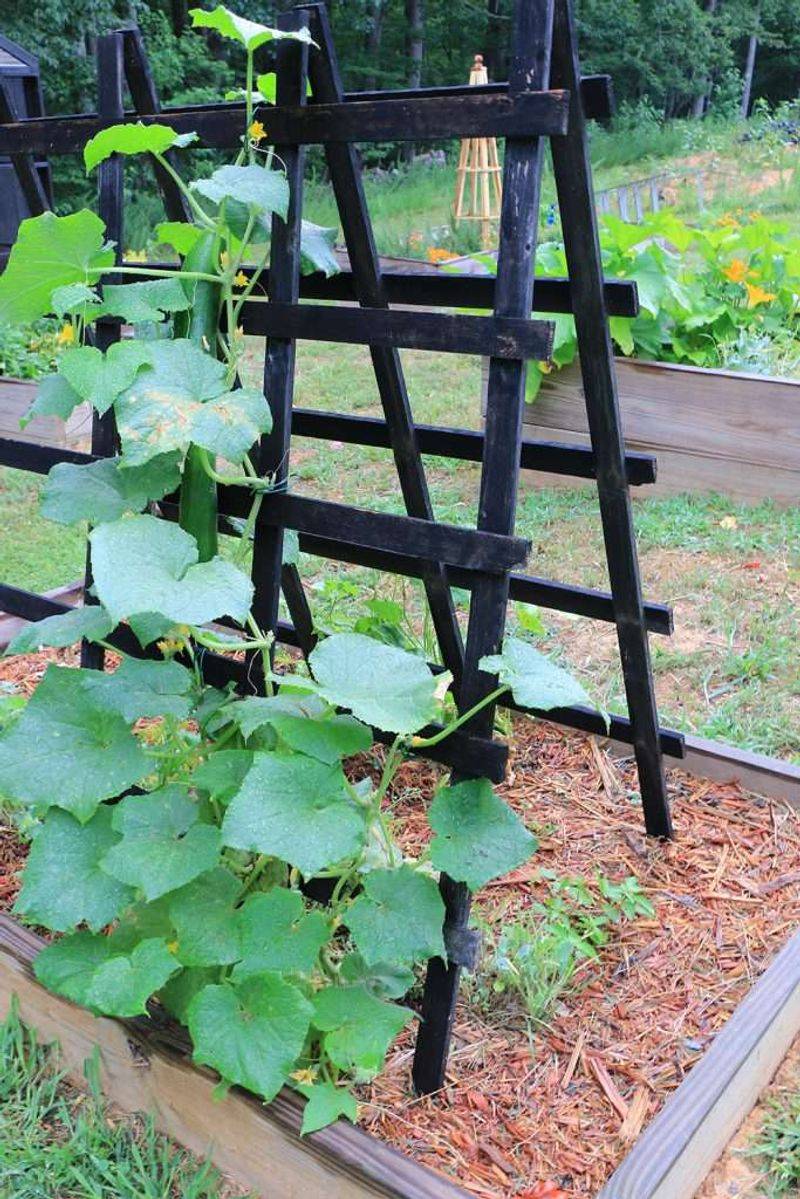
Pruning and trellising go hand in hand, and treating them as separate tasks is one of the most common mistakes home gardeners make. Every time you step in to prune your cucumber plants, take a few extra minutes to assess how the vines are positioned on the trellis.
Securing loose stems before they become tangled or weighed down by fruit prevents a lot of frustration later in the season.
Use soft materials for tying, like stretchy plant tape, old nylon stockings cut into strips, or purpose-made garden clips.
Avoid anything that cuts into the tender vine tissue, because wounds on stems create entry points for disease, which is a real concern in Michigan’s humid growing conditions.
Tie loosely enough to allow some movement but snugly enough that the vine stays in position during wind and rain.
When fruit hangs freely from a trellis rather than resting on the soil, several good things happen at once. The cucumbers grow straighter and more uniformly, which makes them easier to harvest and nicer to look at.
Air circulates around the fruit, reducing the risk of rot on the skin. The plant also bears the weight of the fruit more evenly across the trellis structure.
Michigan gardeners who combine regular tying with their pruning routine often report cleaner, better-shaped cucumbers with fewer blemishes from soil contact throughout the season.
7. Avoid Overpruning During Peak Production

Here is something that surprises a lot of gardeners once they start pruning regularly: more is not always better. Cucumber leaves are the engine of the entire plant.
Through photosynthesis, they capture sunlight and convert it into the energy your cucumbers need to grow, fill out, and develop that satisfying crunch. Remove too many leaves at once, and you essentially cut the power supply to your fruit mid-production.
During peak production, which typically runs through July and August in Michigan, your plants are working at full capacity. This is not the time for heavy pruning sessions.
Instead, limit yourself to removing only what is clearly damaged, diseased, or genuinely blocking light from reaching ripening fruit. A light cleanup pass every week or two keeps things tidy without stressing the plant during its most productive phase.
Think of it this way: a cucumber plant with full, healthy foliage during peak season is a plant that keeps producing. One that has been over-trimmed often stalls, producing fewer and smaller fruit as it struggles to recover.
Michigan’s growing season has a firm end date, so you want every week of production to count. Balance is the real goal with cucumber pruning.
Clean up what needs to go, leave everything that is healthy and contributing, and your harvest numbers will genuinely impress you by the end of the season.