Why Prickly Pear Pads Turn Reddish In Arizona Heat And How To Protect Them
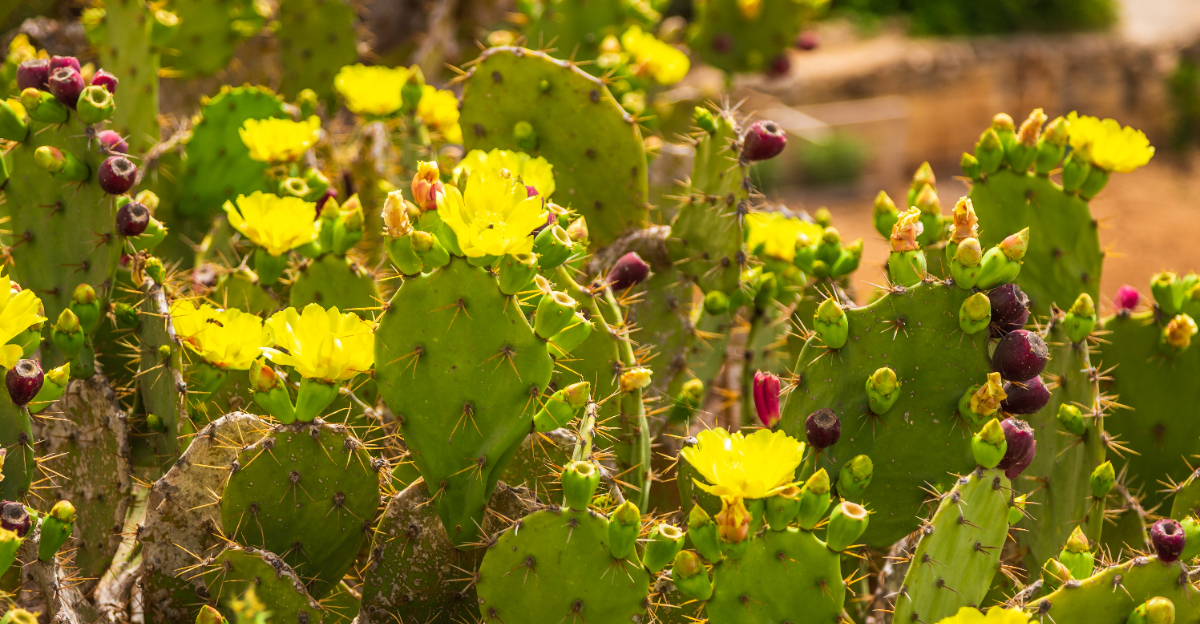
Seeing your prickly pear turn reddish can be alarming when you expect healthy pads to stay green all summer.
Before assuming the cactus is dying or reaching for extra water, take a closer look at what is happening.
That color change is often a response to intense sunlight and extreme heat rather than a sign of permanent damage. Knowing the difference can help you avoid making the problem worse.
In Arizona, prickly pear pads commonly develop reddish or purple tones as they cope with harsh summer conditions.
Some color changes are temporary, while others signal that the cactus needs a little extra attention.
Understanding what your plant is telling you makes it much easier to respond the right way. A few simple steps can help protect healthy pads until cooler weather finally returns.
1. Red Pads Are Often A Normal Response To Summer Heat
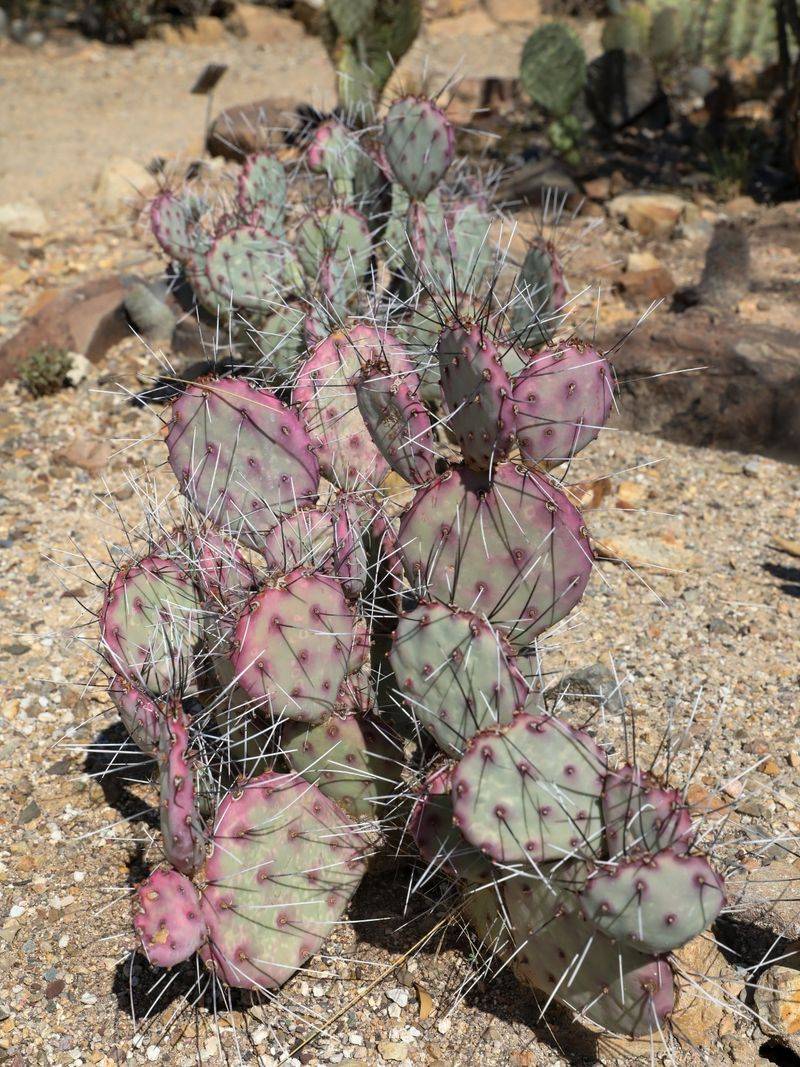
Seeing red pads on your prickly pear does not automatically mean something is wrong. When temperatures spike in summer, the cactus produces extra pigments called betalains and anthocyanins.
These pigments act almost like a built-in sunscreen for the plant.
Bright reddish or purple tones show up most often on pads that face direct afternoon sun. South and west-facing exposures catch the harshest rays, so those pads tend to shift color first.
Pads in partial shade usually stay greener longer into the season.
Color change on its own is not a reliable sign of damage. Healthy plants can turn deeply reddish and bounce back to green once temperatures drop in fall.
It is a stress response, not necessarily a warning sign.
What matters more is the texture of the pads. Firm, plump pads are generally in decent shape even when red.
Soft, shriveled, or wrinkled pads suggest the plant may need attention beyond just color monitoring.
Prickly pear cacti native to the Sonoran Desert region have adapted to handle extreme heat over thousands of years. Reddening is part of that adaptation.
Recognizing it as a normal seasonal shift helps you stay calm and make smarter care decisions throughout summer without overreacting to surface-level changes.
2. Wait Until The Soil Starts To Dry Before Watering
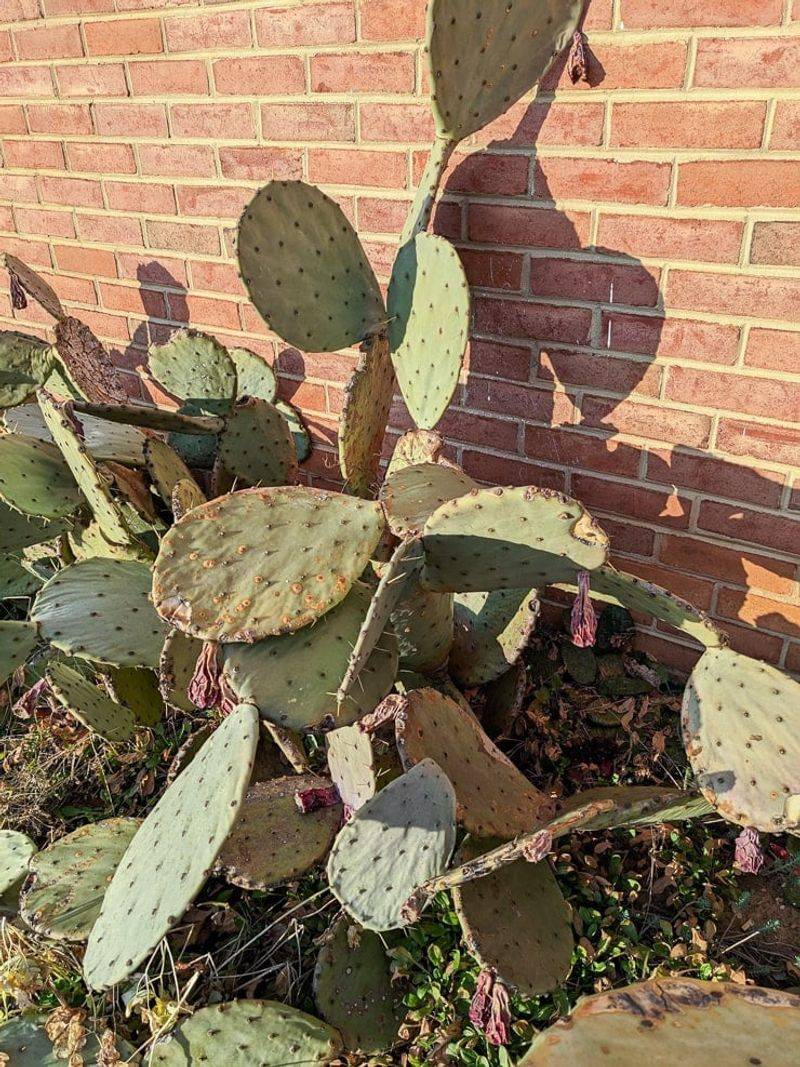
Overwatering during summer is one of the most common mistakes people make with prickly pear cacti. Hot weather makes gardeners want to water more, but these plants store moisture in their pads and roots already.
A good rule of thumb is to check the soil a few inches below the surface. If it still feels slightly damp, hold off.
Watering on top of wet soil can lead to root problems that are much harder to fix than a little extra redness.
Established prickly pear plants in the ground may need watering only once every two to three weeks during peak summer, depending on rainfall and soil type. Younger plants dry out faster and may need slightly more frequent checks.
Container-grown plants are a different story. Pots heat up quickly outdoors, and soil in containers dries faster than in-ground soil.
Check those more often, roughly every five to seven days during a heat wave, and water only when the top inch or two feels dry.
Your Arizona Garden Changes Every Week. Your Plan Should Too.
Gardening in Arizona changes quickly throughout the season. Every Friday you’ll receive a simple weekly plan showing exactly what to plant, prune, fertilize, harvest, and protect so you never miss the right timing.
Morning watering tends to work better than evening in humid monsoon conditions. Wet soil sitting overnight can encourage fungal issues near the root zone.
3. Fast-Draining Soil Keeps Roots Healthier
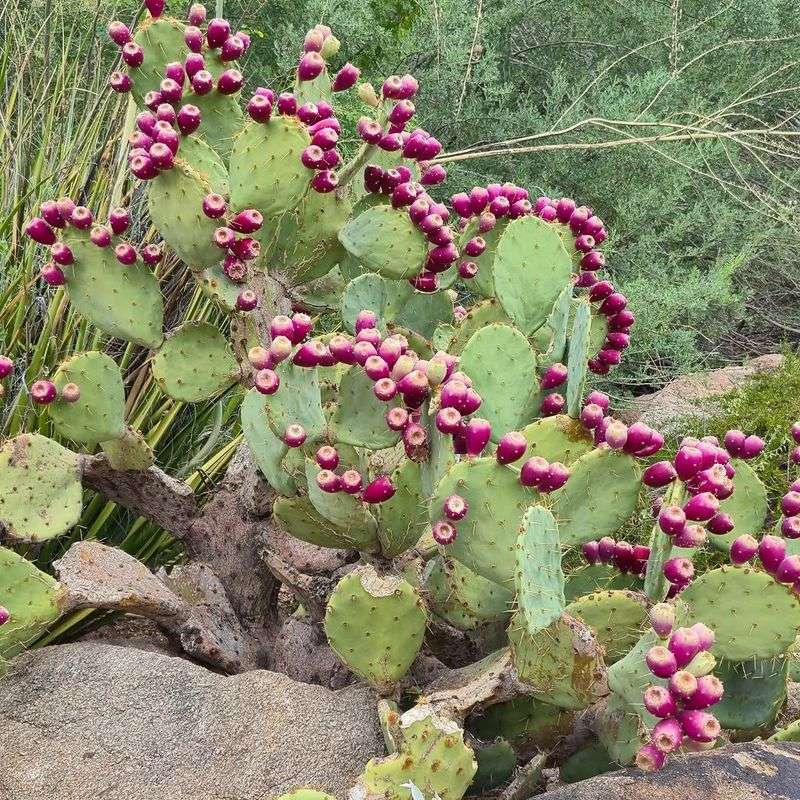
Soil drainage might be the single most important factor in prickly pear root health during summer. Roots sitting in slow-draining, compacted soil are far more vulnerable to stress than those in loose, gritty mixes.
Native desert soils in the Southwest tend to drain well naturally. But if your yard has heavy clay content or has been amended with organic material over the years, drainage can slow down significantly.
That matters most during the monsoon season when rain arrives in heavy bursts.
A simple test helps here. Dig a hole about a foot deep, fill it with water, and watch how fast it drains.
If water is still sitting there after an hour, your soil likely needs improvement before relying on it for cacti.
Mixing coarse sand, decomposed granite, or pea gravel into the planting area can improve drainage noticeably. Aim for a mix that drains within 20 to 30 minutes after a heavy watering.
Raised planting beds are another practical option for yards with poor natural drainage.
For container plants, use a commercial cactus and succulent mix rather than standard potting soil. Standard mixes hold too much moisture for prickly pear roots.
4. Temporary Shade Helps Young Plants During Heat Waves
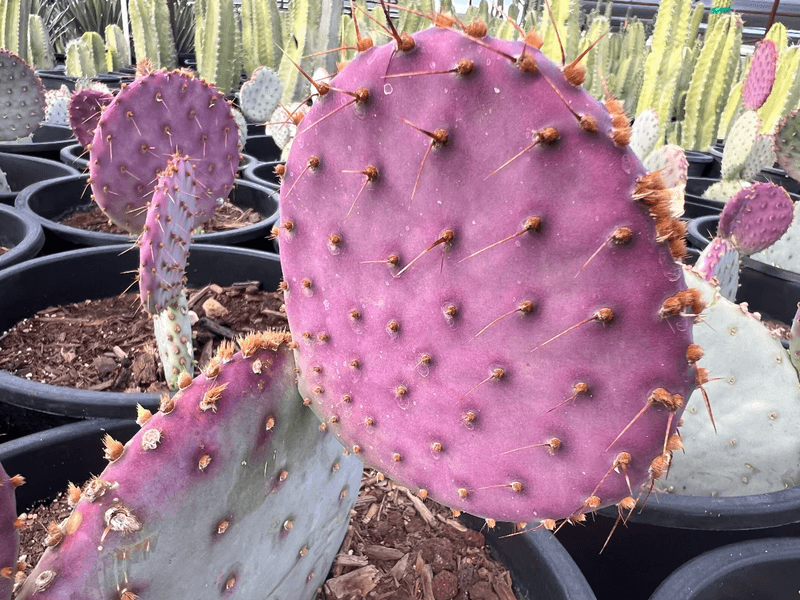
Young prickly pear plants have not yet built up the same heat tolerance as established ones. A cactus that has been in the ground for just one or two seasons can struggle during extreme heat waves in ways a five-year-old plant would handle more easily.
Shade cloth is a practical and affordable solution. A 30 to 40 percent shade cloth placed on the west or southwest side of a young plant can reduce surface temperature on the pads by several degrees.
That small reduction can make a meaningful difference during a stretch of 110-plus degree days.
Shade cloth should not sit directly on the pads. Leave some airflow between the cloth and the plant to prevent moisture buildup, which can encourage other problems.
A simple wooden stake or wire frame works fine as a support structure.
Remove shade cloth once temperatures drop back below 105 degrees consistently. Leaving it on too long can reduce the light the plant needs to build strength heading into fall.
It is a short-term tool, not a permanent fix.
Newly transplanted prickly pear pads benefit from shade even more than seedlings. Transplanting in late spring or early fall rather than midsummer gives young plants a better start.
5. Avoid Removing Healthy Pads During Summer
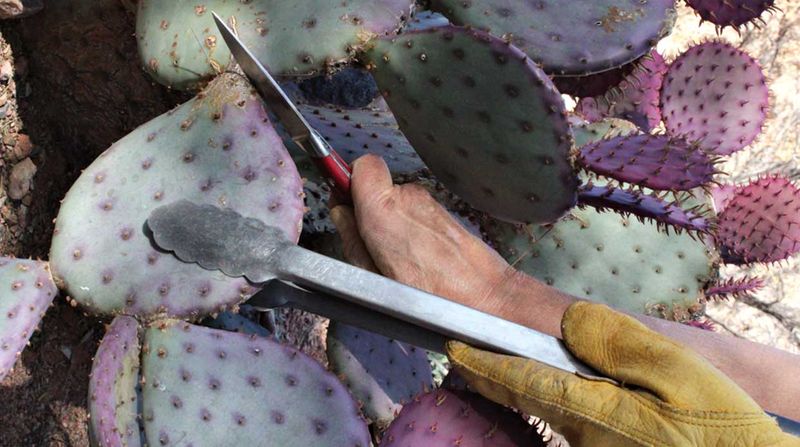
Cutting pads off a prickly pear during peak summer heat is usually not a good idea. Every time a pad is removed, the plant has to heal that wound.
Healing takes energy and moisture, both of which are already being used to manage heat stress.
Open cuts on cacti in summer can dry out faster than the plant can seal them. In very dry conditions, a cut pad base can shrivel before callusing properly.
That creates a weak point that is harder for the plant to recover from during an already demanding season.
If a pad is clearly damaged, discolored in a mushy way, or showing signs of rot, removal may still be necessary.
But healthy pads that are simply red or slightly wrinkled from heat are usually better left alone until temperatures cool down in September or October.
Fall and late winter are generally better times for routine pruning. Temperatures are milder, healing is faster, and the plant is not simultaneously managing extreme heat.
Timing pruning around the plant’s natural stress cycles tends to produce better results.
When removal is unavoidable in summer, use clean, sharp tools and let the cut surface air dry in a shaded spot for a day or two before any contact with soil or water.
6. Watch For Signs Beyond Normal Color Changes
Red or purple color alone is not cause for alarm. What deserves closer attention are changes that go beyond simple pigment shifts.
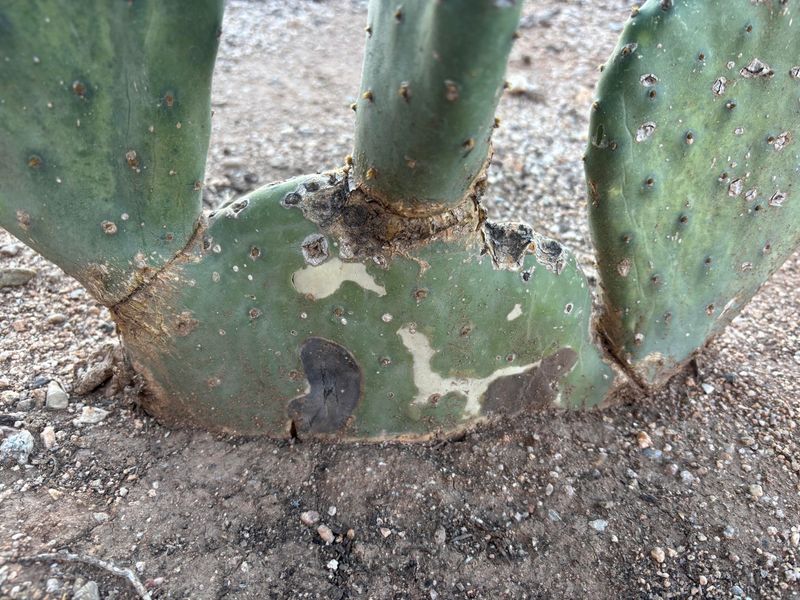
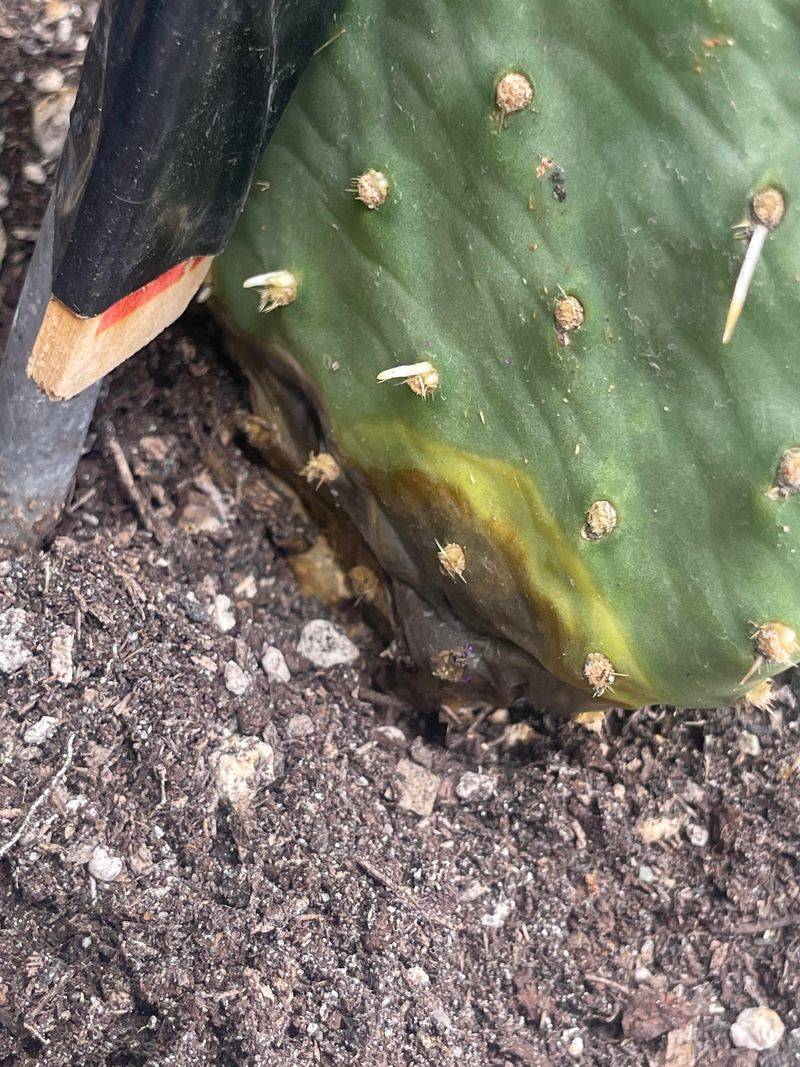
Mushy spots, black patches, unusual softness, or a foul smell near the base of the plant are different kinds of signals entirely.
Mushy pads often point to rot, which can develop when water sits around the base for too long. Root rot is harder to detect until it is already spreading, so watching for soft spots near the soil line gives you an earlier heads-up than waiting for pads to collapse.
Pale yellow or white patches on pad surfaces, especially on the side facing the sun, can indicate sunscald. Sunscald looks different from normal reddening.
It tends to appear as bleached, papery sections rather than an even reddish tone across the pad surface.
Pest activity can also mimic color change. Cochineal insects leave white cottony patches on pads.
Scale insects create small crusty bumps. Both are manageable when caught early but can spread quickly if ignored through the summer months.
Keeping a simple habit of checking your plants every week or two during summer helps catch problems before they spread.
7. Protect Roots From Standing Water After Monsoon Storms
Monsoon season brings a completely different challenge than dry summer heat.
Heavy rain can drop an inch or more of water in under an hour, and if your yard does not drain well, that water can pool around cactus roots for hours after the storm passes.
Short-term standing water is usually not a crisis for an established plant. Problems develop when water sits against the base or around the root zone for more than a few hours repeatedly across multiple storms.
Roots need air as much as moisture, and waterlogged soil cuts off that air supply.
Checking your yard after a heavy monsoon rain is a useful habit. Note where water collects and how long it takes to drain.
If the same area floods repeatedly, that spot may not be ideal for a prickly pear long-term without some drainage improvement.
Berms or small raised mounds around planting areas redirect water flow away from root zones.
Adding a layer of decomposed granite or coarse gravel around the base of the plant also helps water move away faster rather than pooling directly at the stem.
In Arizona, monsoon storms can arrive with little warning and drop significant amounts of rain in localized areas.
Having a basic drainage plan in place before storm season starts is far easier than trying to fix a waterlogged situation mid-storm.