What It Really Means When Spider Mites Take Over Your Texas Garden During Dry Heat
One week your Texas garden looks fine, and the next your plants are pale, dusty, and giving off a general vibe of quiet suffering. If that transition happened fast and you cannot quite figure out why, spider mites may have already been at work for longer than you realized.
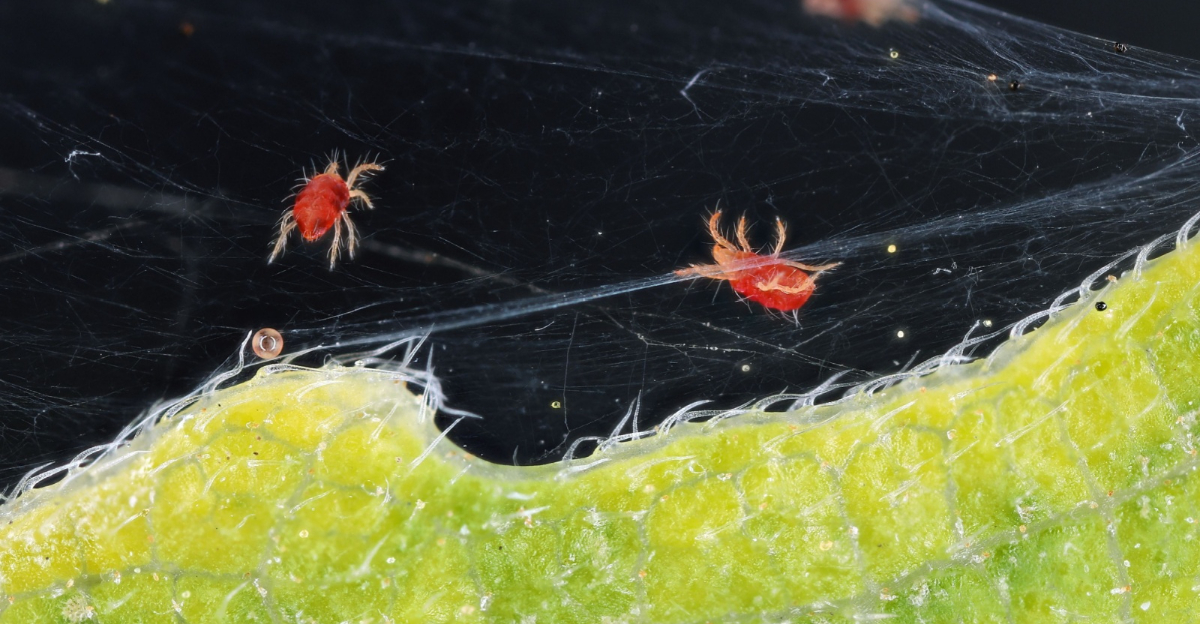
These tiny arachnids are genuinely impressive in the worst possible way.
They can multiply at a remarkable pace when summer heat sets in and moisture drops, turning a barely visible population into a widespread problem almost before you have had a chance to notice the early signs.
Stressed plants, dusty leaves, fewer natural predators, and earlier pesticide use can all stack on top of each other and make a Texas summer outbreak feel like it appeared out of absolutely nowhere.
Figuring out what is actually happening before reaching for any treatment is always the smarter first move.
1. Hot, Dry Weather Is Helping Mite Populations Increase
Prolonged stretches of hot, dry Texas summer weather can create some of the most favorable conditions imaginable for spider mite populations.
These tiny arachnids are not insects but rather eight-legged relatives of ticks and spiders, and they tend to thrive when humidity is low and temperatures stay elevated for days or weeks at a time.
When conditions stay hot and dry, spider mites may develop and reproduce at a noticeably faster pace than during cooler or more humid weather.
A population that was small enough to go unnoticed in late spring can become much more visible and damaging by midsummer.
Texas gardens, whether in the Hill Country, the Panhandle, or along the Gulf Coast, can all experience these kinds of conditions at some point during the growing season.
Gardeners should understand that heat alone does not guarantee a mite problem. Plant condition, irrigation habits, mite species, and host plant type all play a role in how quickly a population grows.
Paying attention to early warning signs rather than waiting for obvious damage gives you a better chance of responding before the infestation becomes harder to manage.
2. Your Plants May Already Be Experiencing Water Stress
Plants that are not getting enough moisture often struggle to handle additional challenges, and mite feeding is one of those challenges that can hit especially hard when a plant is already under pressure.
In a Texas summer, even plants that appear healthy on the surface may be dealing with moisture deficits in the root zone that are not immediately obvious.
Water-stressed plants and mite-damaged plants can look remarkably similar.
Wilting, browning leaf edges, and faded color can result from insufficient irrigation, compacted soil, poor drainage, or mite feeding, and sometimes from more than one of these at the same time.
Gardeners who assume a struggling plant simply needs more water without checking the soil first may not be addressing the actual problem.
Before adjusting your irrigation schedule, push a finger or a soil probe several inches into the root zone to check actual moisture levels. Saturated soil creates its own problems, so the goal is consistent, appropriate moisture rather than excess.
Your Texas Garden Changes Every Week. Your Plan Should Too.
Gardening in Texas changes quickly throughout the season. Every Friday you’ll receive a simple weekly plan showing exactly what to plant, prune, fertilize, harvest, and protect so you never miss the right timing.
If soil moisture seems adequate but symptoms persist, closer inspection of the foliage, particularly the undersides of leaves, may reveal whether mites are contributing to the plant’s decline.
3. Dust May Be Making The Outbreak Worse
Dusty foliage is something many Texas gardeners notice during dry summers, especially near unpaved paths, gravel driveways, construction sites, or heavily trafficked yard areas.
What may not be as obvious is that dust settling on plant leaves can contribute to conditions that favor spider mite outbreaks and make them harder to bring under control.
Predatory mites and certain other beneficial organisms that naturally help suppress pest mite populations tend to move around more easily on clean foliage.
When leaves are coated with fine dust, some of these natural enemies may have a harder time doing their job effectively.
This does not mean that washing leaves will resolve every infestation, but reducing dust on foliage is one reasonable step to consider alongside other management practices.
In Texas, dry soil, nearby roads, yard blowing, and routine lawn maintenance can all send dust drifting onto garden plants throughout the summer. Raised beds, containers, and plants growing near fences or walls may collect more dust than plants in open areas.
Rinsing foliage gently and paying attention to sources of ongoing dust in your garden space can be a helpful part of a broader approach to managing mite-friendly conditions.
4. Natural Predators May Not Be Keeping Up
Healthy gardens often have a natural balance of pest and predator organisms that keeps any one pest from getting completely out of hand.
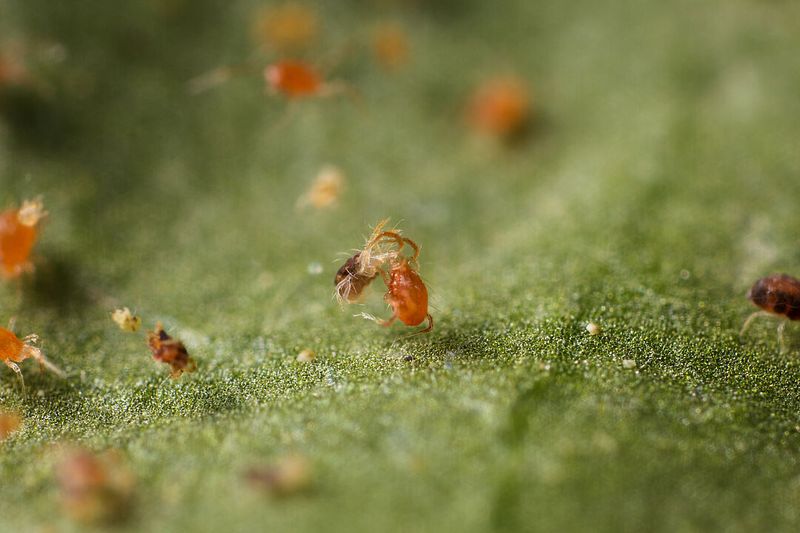
Predatory mites, certain minute pirate bugs, and other beneficial arthropods can help keep spider mite populations at manageable levels under the right conditions.
When that balance shifts, pest mite numbers may climb quickly.
During hot, dry Texas summers, predator populations may not reproduce as quickly as pest mites, or they may be present in numbers too low to keep pace with a rapidly expanding infestation.
Habitat loss, reduced plant diversity, and disrupted garden ecosystems can all reduce the number of beneficial organisms available to help.
Noticing that mites have become more numerous does not automatically mean predators are absent, but it may suggest their numbers are not sufficient to hold the population in check right now.
Supporting a garden environment that is friendly to beneficial organisms throughout the season can help.
Planting a variety of flowering plants, minimizing soil disturbance, and avoiding broad-spectrum treatments when possible may encourage predator activity over time.
Seeing a surge in pest mites is not proof that weather or pesticides caused a predator collapse, but it is a useful signal to evaluate what might have shifted in your garden recently.
5. Earlier Pesticide Use May Have Reduced Beneficial Insects
Broad-spectrum insecticides are designed to target a wide range of pest insects, but they often affect beneficial organisms at the same time.
If a pesticide application earlier in the season reduced the population of predatory mites or other helpful arthropods in your Texas garden, pest mite populations may have had less natural resistance holding them back as summer heat arrived.
Some gardeners are surprised to learn that spider mites are not insects at all. Because they are arachnids, many common insecticides provide little or no useful control against them.
Using an insecticide that does not affect mites but does reduce their natural predators can sometimes contribute to a mite flare-up rather than helping to resolve one.
This is one reason why correct pest identification matters so much before any treatment decision is made.
Not every pesticide application will lead to a spider mite problem, and the relationship between earlier treatments and current mite levels depends on many factors.
Product type, timing, application method, and what organisms were present in your garden at the time all play a role in how that dynamic plays out.
Reading product labels carefully, targeting only confirmed pests, and considering the potential effects on beneficial organisms are all worthwhile habits that can make pest management more effective and less disruptive over time.
6. The Pale Speckling Is Feeding Damage
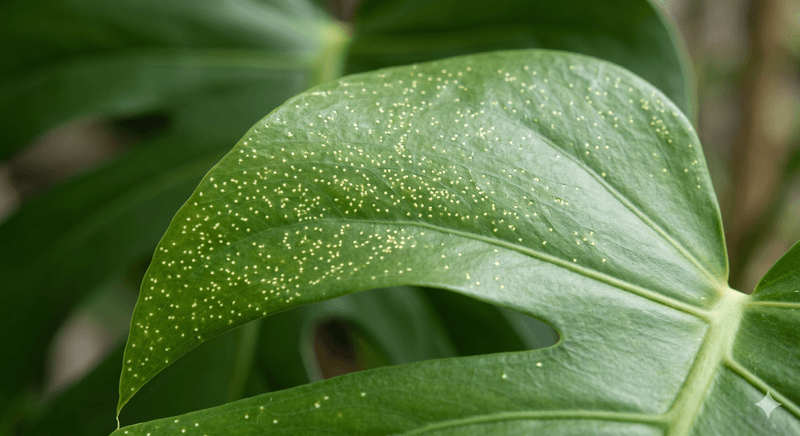
One of the earliest visible signs of spider mite activity is a subtle change in leaf color that can be easy to overlook at first.
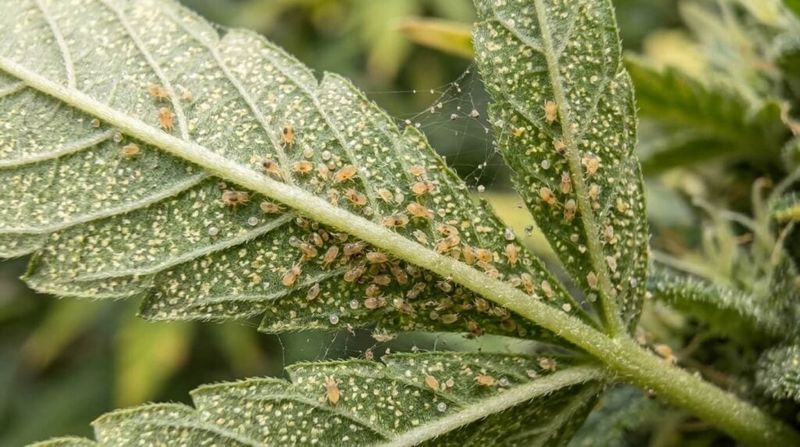
Affected leaves may develop many tiny pale, whitish, or yellowish points scattered across the surface, often appearing first on older or lower leaves before spreading upward.
This pattern is called stippling, and it results from mites feeding on the undersides of leaves by removing the contents of individual plant cells.
As feeding continues, the overall appearance of the leaf may shift toward a more uniformly yellowed, bronzed, or grayish tone. Leaves may begin to look dry or dull even when the plant has adequate water.
In more severe cases, leaf drop may occur. These symptoms can look similar to drought stress, certain nutrient deficiencies, chemical injury, or some plant diseases, so it is important not to assume mites are responsible based on leaf color alone.
Checking the undersides of affected leaves with a hand lens or magnifying glass is a more reliable way to look for mites directly.
Early stippling on just a few leaves suggests a smaller, more manageable situation than widespread discoloration across many plants.
Catching the problem at the stippling stage gives gardeners more response options before the infestation expands further.
7. Fine Webbing Usually Suggests A Larger Population
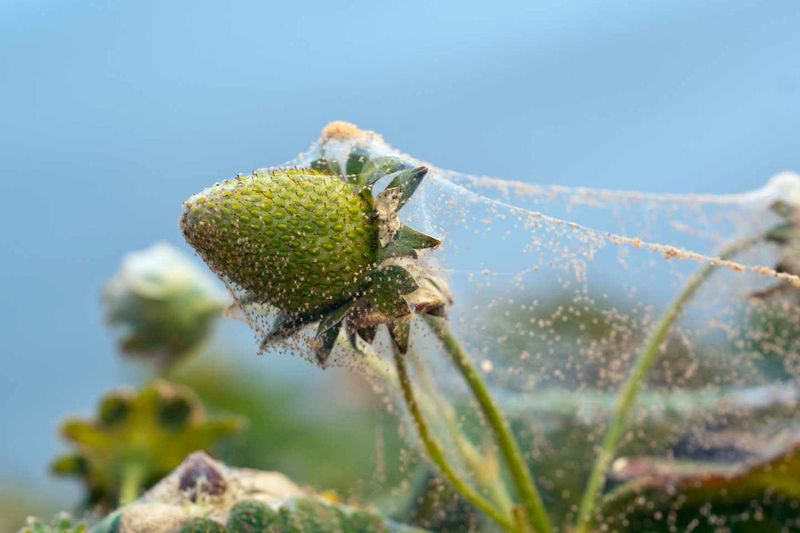
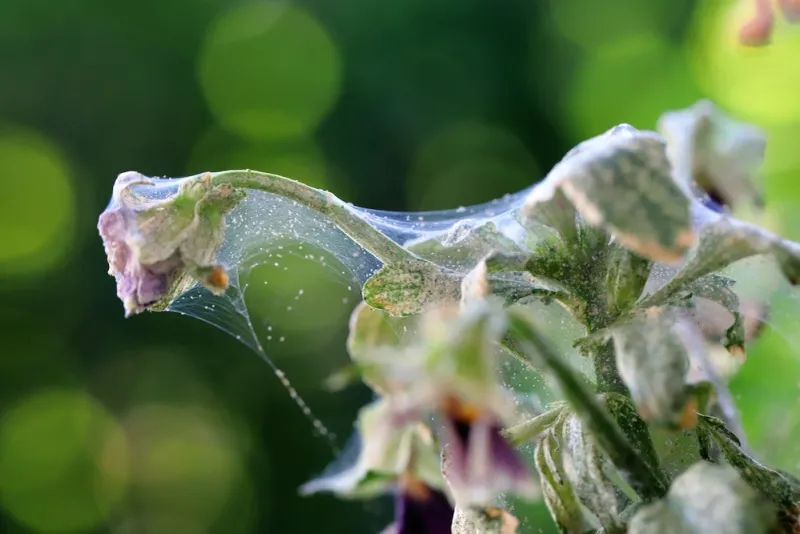
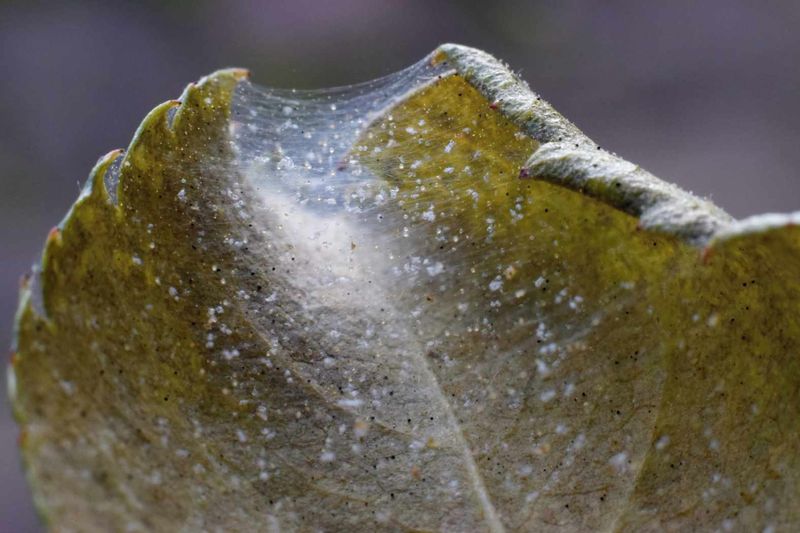
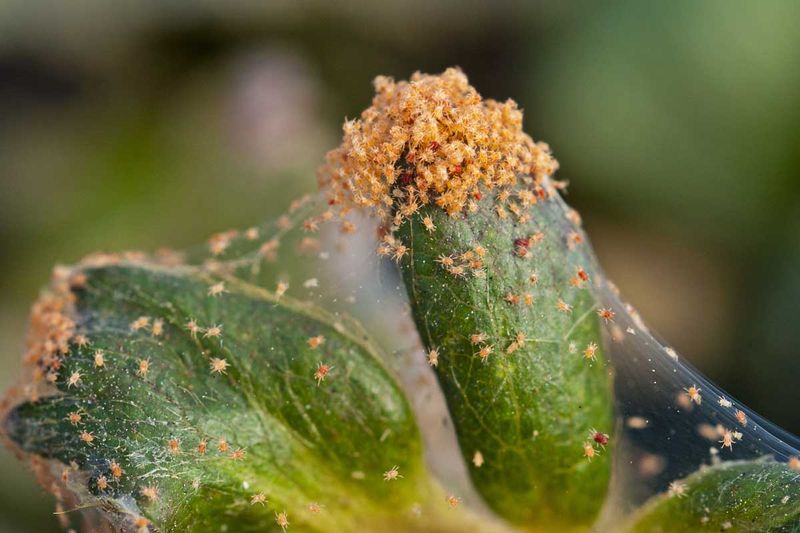
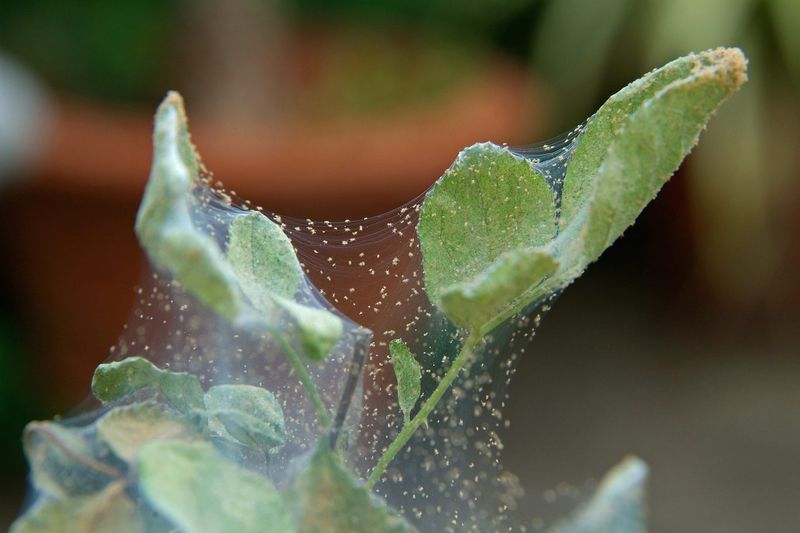
Delicate, almost filmy webbing stretched across the undersides of leaves, along stems, or near growing tips is one sign that a spider mite population may have grown substantially.
Not every spider mite species produces webbing in the same way, and some produce very little, so the absence of webbing does not rule out a mite infestation.
But when webbing is present and visible without magnification, it often suggests that a considerable number of mites have been active in that area for some time.
Mite webbing is quite different from the larger, sturdier webs made by garden spiders. Garden spiders are beneficial predators and should not be disturbed simply because webs are present in the garden.
Fine mite webbing tends to be much more delicate, dusty-looking, and closely associated with plant tissue rather than stretched between branches or structures in a more architectural way.
Webbing alone does not confirm the presence of spider mites or identify which species is involved.
Combining the observation of webbing with other signs, such as stippled leaves, visible tiny moving specks, and the results of a close inspection or paper test, gives a more complete picture of what is happening on your plants.
That fuller picture is what makes any management response more reliable and better targeted.
8. The Problem Needs Confirmation Before Treatment
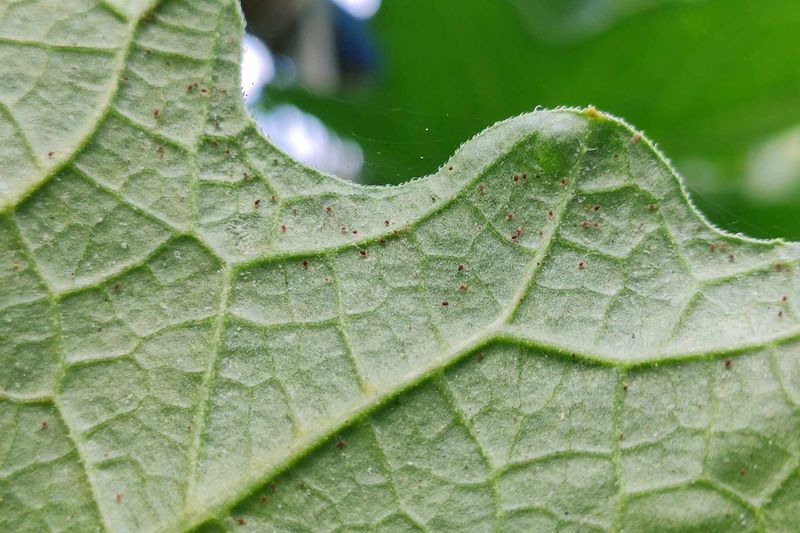
Spider mites are remarkably small, often no larger than a dot made by the tip of a pencil, and identifying them without some form of magnification can be genuinely difficult.
Jumping to a treatment plan based only on pale leaves or webbing, without confirming the actual pest, may lead to applying products that do not address the real problem and could cause additional disruption in the garden.
One practical method for checking for spider mites is the white-paper test. Hold a sheet of plain white paper beneath a branch or section of foliage that looks affected, then tap the leaf or stem gently a few times.
If tiny specks fall onto the paper and some of them begin to move, mites may be present.
Examining the specks more closely with a hand lens can help distinguish pest mites from predatory mites or other tiny organisms, though species identification may require professional assistance.
The paper test is a useful starting point rather than a definitive identification tool. Texas A&M AgriLife Extension and many county extension offices can assist with pest identification if you are uncertain about what you are seeing.
Confirming the pest before selecting any product or treatment method helps ensure that your response is both appropriate and effective for the actual situation in your garden.
9. A Strong Water Spray May Help With A Light Infestation
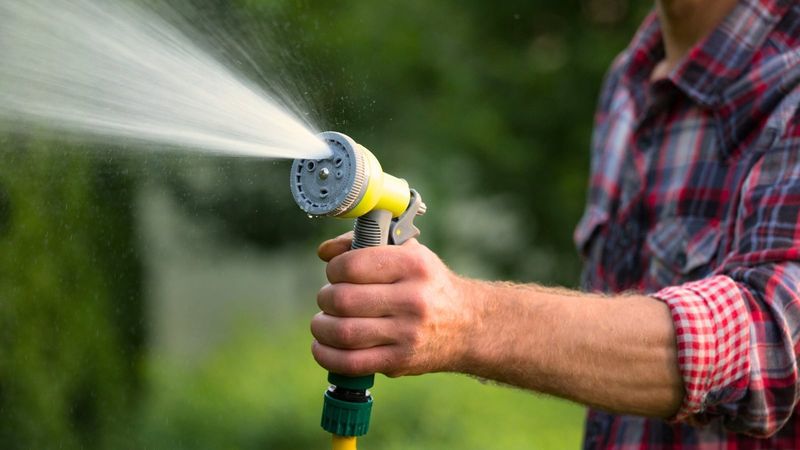
When spider mite numbers are still relatively low and the infestation has not spread widely across the garden, a firm stream of water directed at affected plants can be a useful first response.
The force of the water may dislodge mites from foliage, remove dust that has been contributing to favorable conditions, and disrupt webbing that mites have established on leaves and stems.
Paying close attention to the undersides of leaves is especially important during this process, since that is where mites tend to feed and shelter. A standard garden hose with an adjustable nozzle set to a firm but not damaging spray can work well for many plants.
Delicate flowers, tender seedlings, and plants with fragile stems should be handled with care to avoid physical damage from the water pressure.
Water spraying is unlikely to provide adequate control on its own when an infestation has already become extensive or when populations are very high.
Mites that are dislodged may also return if conditions in the garden remain favorable.
Combining water spraying with other appropriate steps, such as improving irrigation consistency, reducing dust sources, and monitoring for continued activity, gives a better overall result than relying on any single approach alone.
10. Heat Can Make Some Spray Treatments Riskier
Reaching for a spray product during a Texas heat wave feels like a logical response when mites are causing visible damage, but the timing and conditions of treatment matter as much as the product itself.
Insecticidal soaps, horticultural oils, and certain labeled miticides may be appropriate options in some situations, but each comes with specific requirements that affect both safety and effectiveness.
Oils and soaps, for example, may cause foliage injury when applied to plants that are already drought-stressed or when temperatures are high at the time of application.
A plant that is struggling under heat and moisture pressure may respond poorly to an oil or soap coating that interferes with its ability to exchange gases through the leaf surface.
Label directions for these products typically include guidance on temperature and plant condition that is worth reading carefully before application.
Miticide products labeled for spider mite control have their own sets of requirements regarding plant type, pest species, application timing, and environmental conditions.
No single temperature limit applies to every product on the market, so checking the label for the specific product you are considering is essential.
Applying any treatment during cooler parts of the day, when plants are not heat-stressed, and only after the target pest has been confirmed, gives the best chance of a useful outcome without unnecessary risk to your plants.