7 Signs Michigan Squash Plants Are In Trouble Before Fruit Growth Slows
Squash plants in a Michigan garden are excellent communicators, and the messages start arriving well before anything goes seriously wrong.
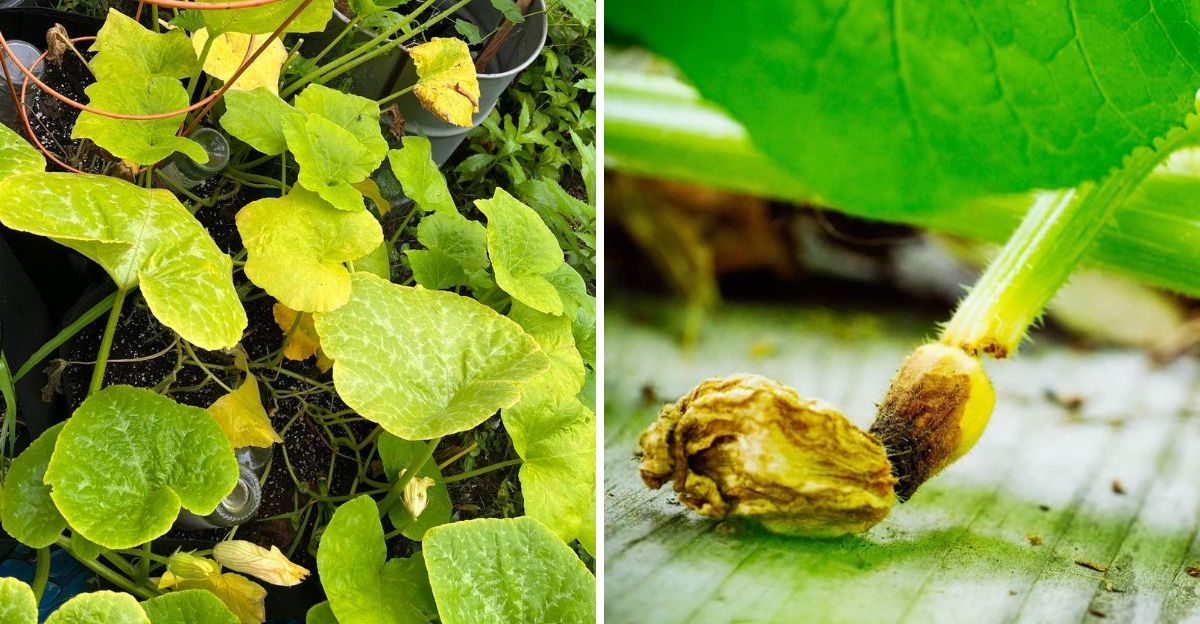
Daytime wilting that recovers by evening, white powder spreading across older leaves, yellow or speckled foliage, frass near the stem base, flowers dropping before fruit sets, baby squash shriveling before they have a chance – these are not random events.
They are the plant flagging something specific, and reading those signals correctly is what separates a gardener who course-corrects in time from one who loses half the season trying to figure out what happened.
Michigan gardens deal with heat, inconsistent rain, pest pressure, and pollination challenges all at once, which means one symptom can have several possible causes.
Checking the whole plant carefully before jumping to a fix is always the smarter starting point.
1. Leaves Start Wilting In Daytime
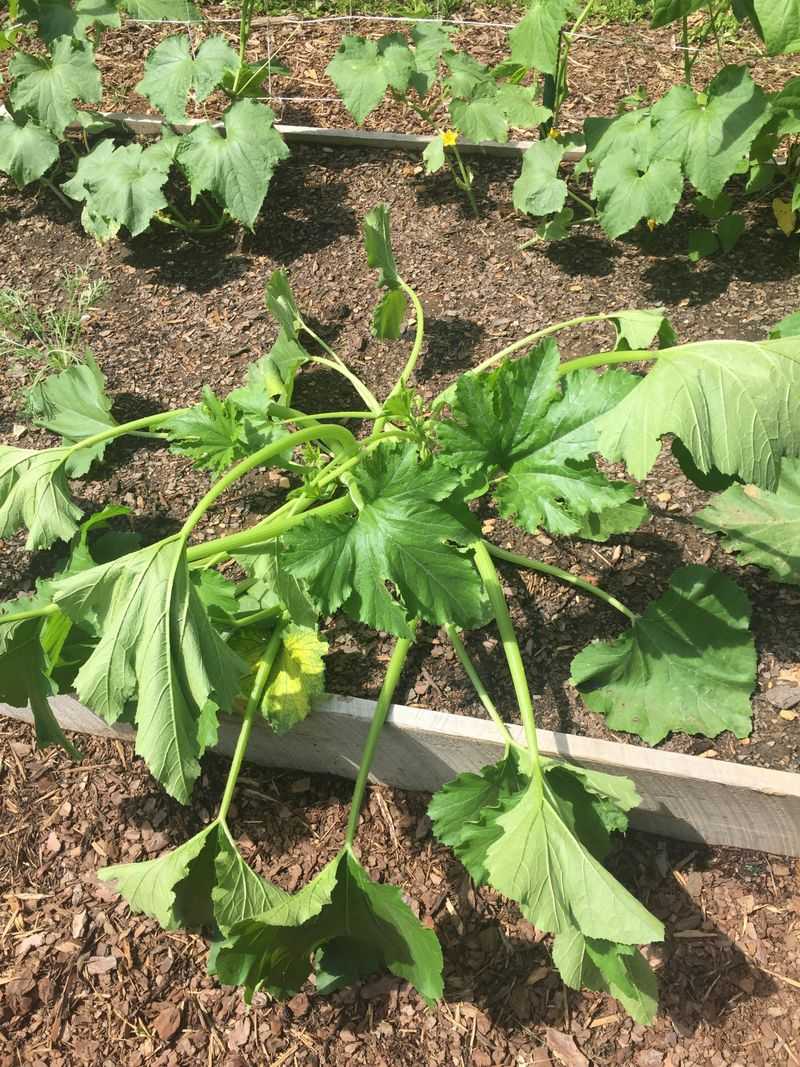
Drooping squash leaves on a warm Michigan afternoon can catch any gardener off guard, especially when the plant looked perfectly healthy that same morning. Wilting during the hottest part of the day does not automatically mean something is seriously wrong.
Squash plants sometimes wilt temporarily as a natural response to heat and high transpiration, and leaves may perk back up once temperatures drop in the evening.
The concern grows when wilting happens early in the morning or persists even after cooler evening temperatures arrive. That kind of wilting can point to something deeper, such as root stress from waterlogged soil, inconsistent watering, or damage inside the vine.
Squash vine borers are a real threat in gardens, and their feeding inside the stem can disrupt the flow of water through the plant, causing sudden and persistent collapse even when the soil is moist.
Squash bugs can also cause wilting by feeding on plant tissue and introducing a toxin that disrupts water movement. Before drawing conclusions, check the stem base carefully for entry holes, frass, or egg masses.
Look at the soil too, because both overwatering and underwatering can produce similar-looking symptoms on the surface.
Michigan gardens with heavy clay soils may stay saturated longer than expected, while sandy soils can dry out between waterings faster than you realize.
Reading wilting alongside other clues, like soil moisture, stem condition, and time of day, gives you a much better chance of responding in a way that actually helps the plant recover before fruit growth slows.
2. White Powder Appears On Older Leaves
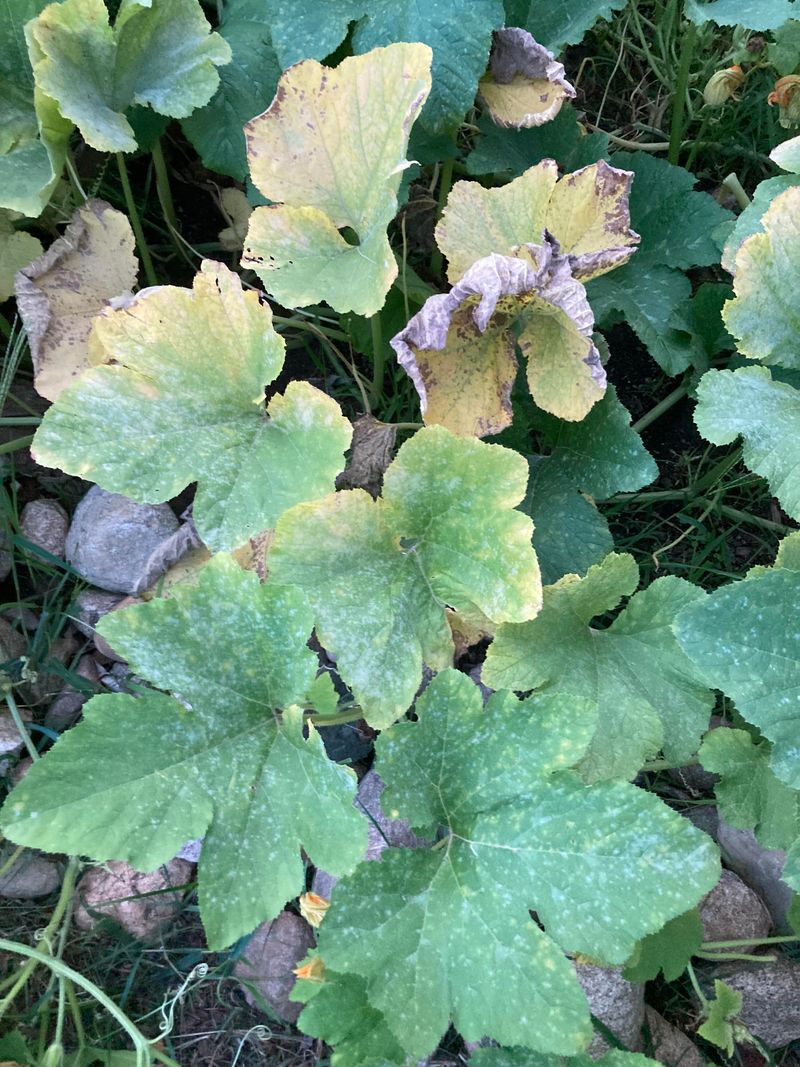
Powdery patches showing up on the older, lower leaves of a squash plant are one of the more recognizable signs that something is off.
Powdery mildew is a fungal disease that spreads through airborne spores, and it tends to show up during periods when warm days are followed by cool nights with high humidity.
Michigan summers, especially in late July and August, create exactly those kinds of conditions.
The fungus does not need wet leaf surfaces to spread the way many other diseases do. It thrives when air circulation around the plant is poor, which is why squash grown in tight spaces or against fences or walls in urban Michigan gardens can be more vulnerable.
Your Michigan Garden Changes Every Week. Your Plan Should Too.
Gardening in Michigan changes quickly throughout the season. Every Friday you’ll receive a simple weekly plan showing exactly what to plant, prune, fertilize, harvest, and protect so you never miss the right timing.
The white or grayish coating on leaves is actually fungal growth, and while it starts on older foliage, it can spread toward younger leaves if conditions stay favorable and the plant is already under stress.
Powdery mildew rarely causes sudden collapse on its own, but it does reduce the leaf’s ability to photosynthesize efficiently. Over time, affected leaves may yellow and decline, which can reduce the energy available for fruit development.
Not every white spot is powdery mildew, so look closely before acting. Some mineral deposits from hard water or spray residue can look similar at first glance.
Improving air circulation, avoiding overhead watering in the evening, and removing heavily affected leaves are reasonable first steps that many gardeners find helpful before the problem spreads further up the plant.
3. Leaves Turn Yellow Or Speckled
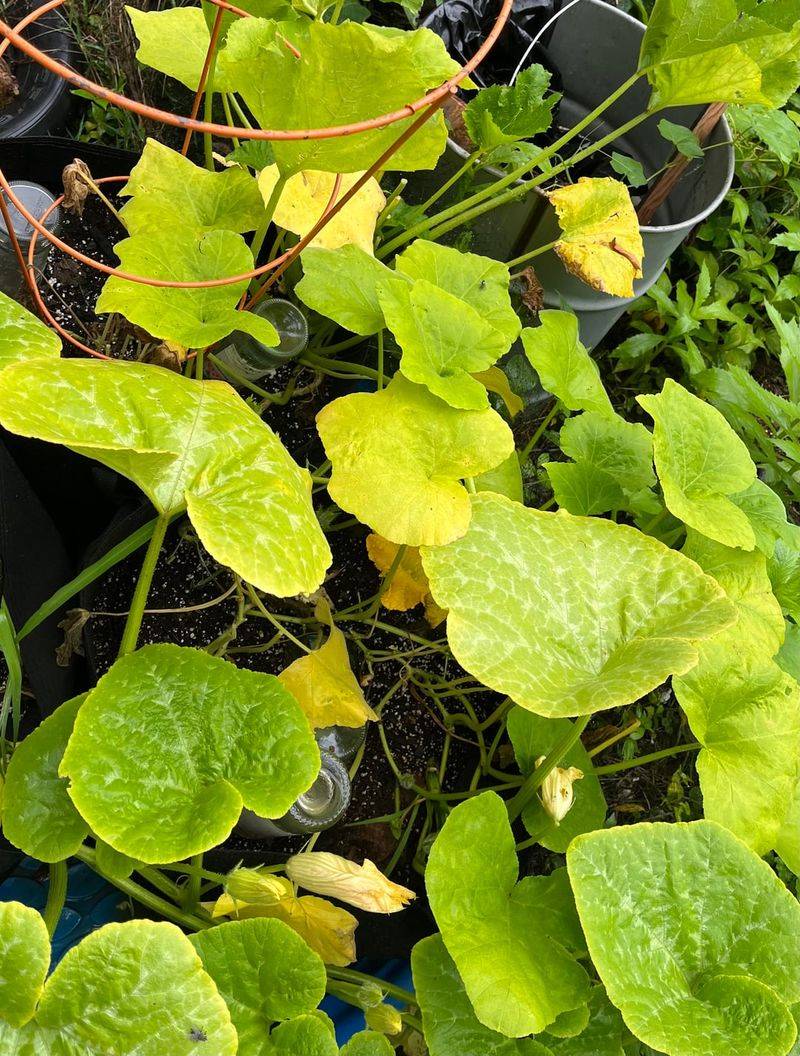
Yellow or speckled squash leaves can mean several different things, and the pattern of discoloration often matters more than the color alone.
Uniform yellowing on older leaves near the base of the plant can sometimes reflect normal aging as the plant focuses energy on newer growth.
But when yellowing spreads unevenly, shows up in patches, or comes with a stippled or bronzed appearance, that is worth investigating more carefully.
Spider mites are a common cause of stippled or speckled foliage in Michigan squash gardens, especially during hot, dry stretches in summer.
These tiny pests feed on the underside of leaves and cause a sandpaper-like texture along with pale speckling visible from above.
Turning a leaf over and looking for fine webbing or tiny moving dots can help confirm their presence. Squash bugs also cause discoloration, often creating irregular yellow patches that may eventually brown and dry out as feeding damage accumulates.
Nutrient imbalances, particularly nitrogen or magnesium deficiency, can produce yellowing patterns that look different from pest damage. Nitrogen-deficient plants often show yellowing that starts on older leaves and moves upward gradually.
Magnesium deficiency tends to cause yellowing between the leaf veins while the veins themselves stay green.
Michigan soils vary widely, and gardens in sandy areas or those relying on container or raised-bed mixes may be more prone to nutrient gaps over the course of a growing season.
Checking both the underside of leaves and recent soil or fertilization history together gives a clearer picture of what is actually happening.
4. Cucumber Beetles Feed On Flowers
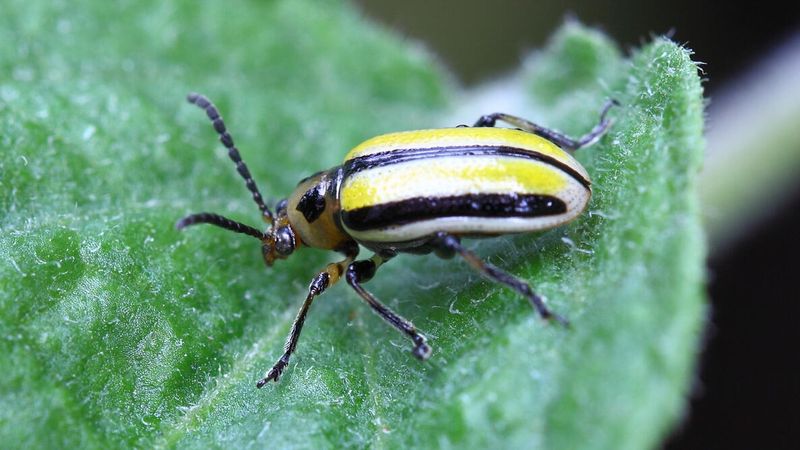
Spotting small yellow-green beetles with black spots or stripes tucked inside squash blossoms is a familiar and frustrating experience for gardeners.
Cucumber beetles, both the spotted and striped varieties, are active throughout Michigan during the summer and are drawn to squash flowers for their pollen.
While some feeding on flowers may seem minor, these insects can cause more harm than the visible chewing damage alone suggests.
Cucumber beetles are known to carry bacterial wilt, a disease caused by a bacterium that spreads through beetle feeding and can eventually affect the plant’s ability to move water through its stems.
Not every cucumber beetle encounter leads to bacterial wilt, and the disease is more of a concern in certain regions and conditions, but their presence in flowers is a signal worth taking seriously.
Repeated feeding on blossoms can also interfere with pollination by damaging or consuming pollen before bees and other pollinators have a chance to transfer it.
In Michigan gardens, cucumber beetles tend to be most active during warm, sunny mornings when squash flowers are open. Checking flowers regularly, especially during peak bloom, gives gardeners a chance to catch infestations early.
Row covers can help protect young plants, though they need to be removed or opened during flowering to allow pollinator access.
Healthy, well-watered squash plants with good root systems may tolerate some beetle feeding better than stressed plants, so maintaining overall plant health is a reasonable part of managing pressure from these insects throughout the growing season.
5. Frass Appears Near The Stem Base
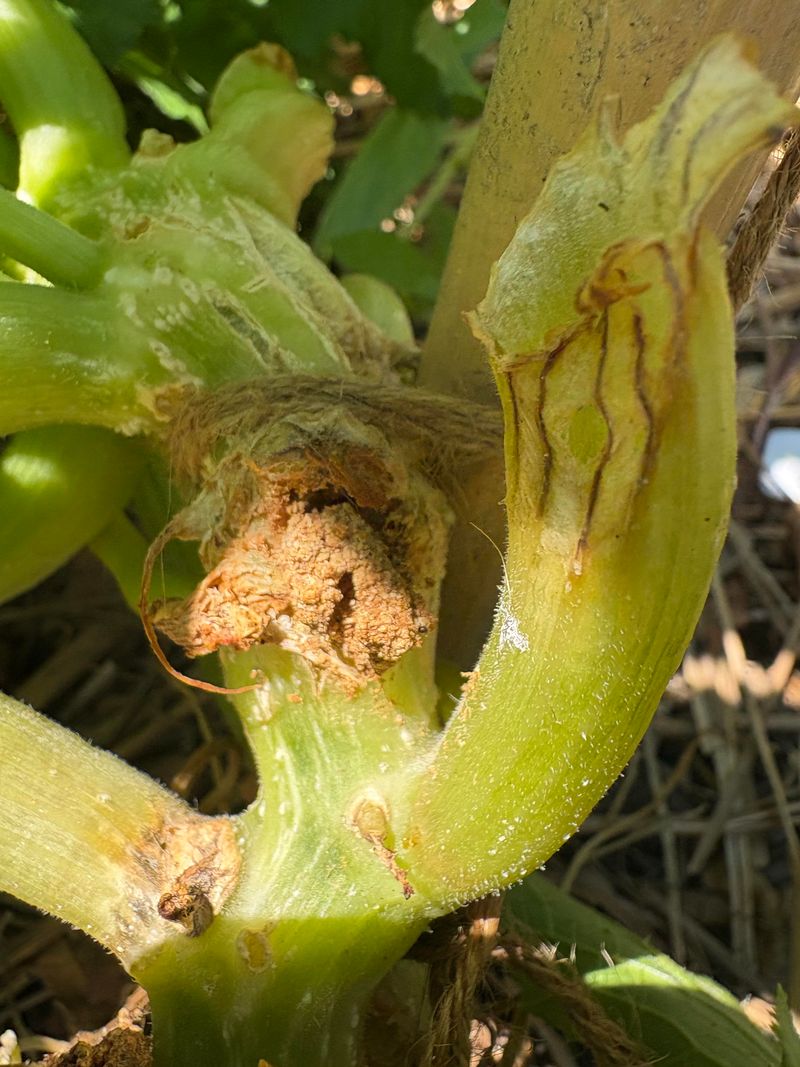
Finding a small pile of what looks like moist sawdust or coarse greenish-yellow granules near the base of a squash vine is one of the more alarming discoveries a gardener can make mid-season.
That material is frass, which is the waste left behind by a feeding larva inside the stem.
In Michigan, the squash vine borer is the most likely culprit when frass appears near the stem base of summer squash, zucchini, or pumpkins.
The squash vine borer is the larva of a moth that lays eggs near the base of squash stems in early to midsummer. Once the egg hatches, the larva burrows into the stem and begins feeding from the inside, which disrupts the flow of water and nutrients through the vine.
By the time frass appears on the outside of the stem, the larva has already been feeding for some time. Wilting that does not respond to watering, combined with frass near the base, is a strong indicator that vine borer damage is present.
Michigan gardeners sometimes find more than one entry point or more than one larva in a single vine, especially if the plant went unchecked during the egg-laying period.
Some gardeners carefully slit the stem lengthwise to remove larvae and then cover the wounded area with moist soil to encourage rooting, though results vary.
Burying a section of the vine to encourage new roots can also help the plant continue producing while it deals with stem damage. Early detection makes a meaningful difference in how much the plant can recover before fruit growth is affected.
6. Flowers Drop Or Baby Fruits Shrivel
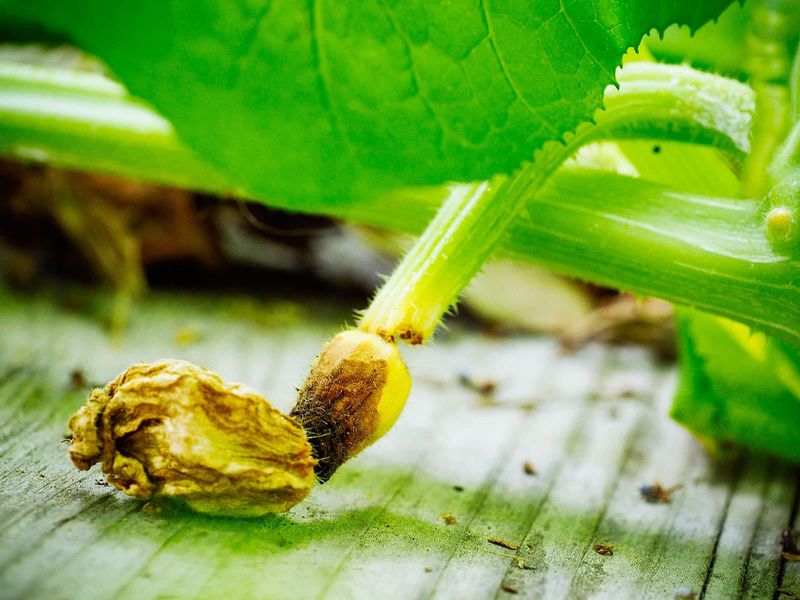
Walking out to the garden and finding dropped blossoms or tiny fruits that seemed to stop growing and shrivel up can be discouraging, especially when the plant itself looks otherwise healthy.
This is one of the signs that confuses many gardeners because it can happen for more than one reason, and the causes are not always easy to tell apart just by looking at the fruit or flower alone.
Poor pollination is one of the more common explanations. Squash plants produce separate male and female flowers, and female flowers need pollen transferred by bees or other pollinators to develop into fruit.
If pollinators are not visiting regularly, or if male and female flowers are not open at the same time, the female flower may drop without setting fruit.
Cool, rainy weather during bloom periods can reduce pollinator activity in Michigan gardens, and this kind of weather is not unusual in early summer across much of the state.
Heat stress can also cause flowers to drop or small fruits to abort, particularly during stretches of high temperatures that push beyond what the plant handles comfortably.
Inconsistent watering, where the soil swings between too wet and too dry, can stress the plant and lead to similar outcomes.
Nutrient imbalances, particularly excess nitrogen relative to phosphorus, may push the plant toward leafy growth at the expense of fruit development.
Looking at the weather pattern, pollinator activity, watering consistency, and fertilization history together gives a more complete picture than focusing on the dropped flowers or shriveled fruits alone.
7. New Growth Looks Weak Or Stunted
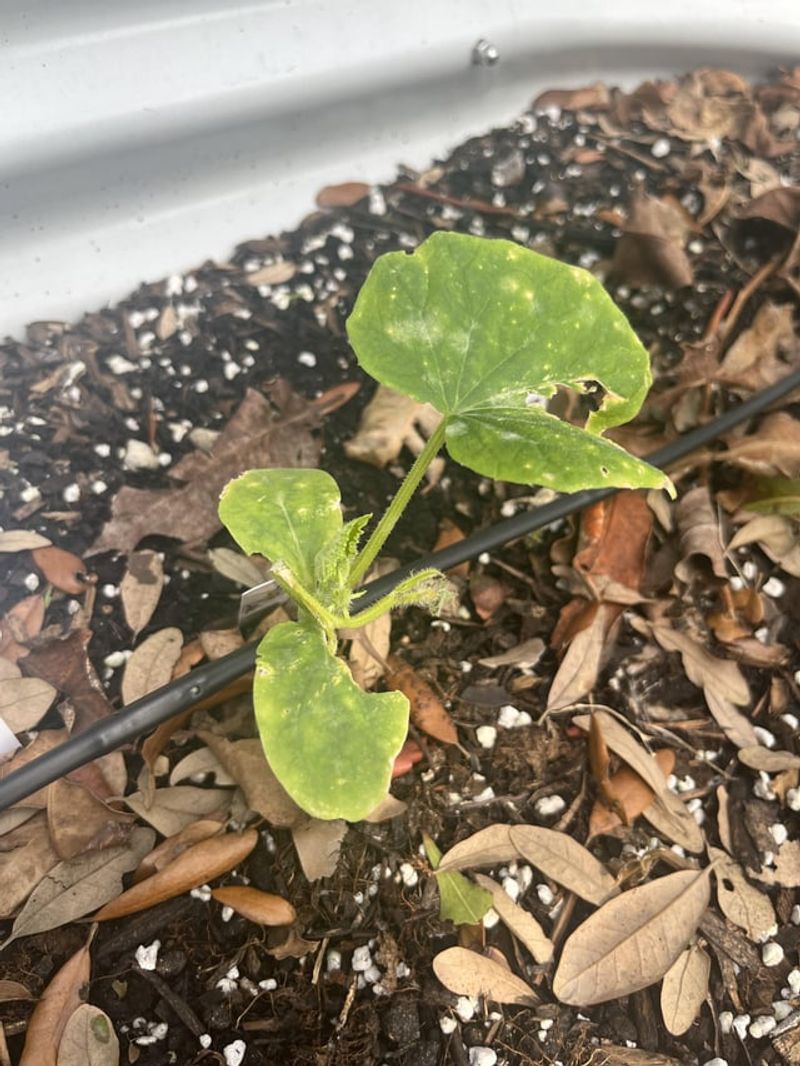
When the newest leaves on a squash vine come in looking small, pale, or twisted, that is a signal that something is limiting the plant’s ability to grow the way it should.
Strong, healthy squash plants in Michigan gardens typically push out vigorous new growth during the peak of summer, so weak or stunted new leaves stand out clearly against what a thriving vine normally looks like.
Root problems are one of the more likely explanations when new growth slows or weakens.
Roots that have been damaged by waterlogging, compacted soil, or pest feeding cannot absorb water and nutrients efficiently, and the effects show up first in the youngest, most actively growing parts of the plant.
Squash vine borer damage inside the main stem can cut off the supply of resources moving from roots to new growth, even when the rest of the vine still looks relatively intact from the outside.
Nutrient deficiencies can also stunt new growth, and Michigan soils vary enough that what works in one garden may not translate to another.
Gardens in northern Michigan with shorter seasons and cooler soils may see slower growth simply because soil temperatures affect how readily nutrients become available to roots.
Raised beds with depleted growing mix, container gardens running low on fertility, and in-ground plots that have not been amended in several seasons can all show stunted new growth as the season progresses.
Checking root health, soil moisture, and recent feeding history alongside the appearance of new leaves helps narrow down what the plant actually needs to get back on track before fruit production suffers further.