Where Cabbage Worms Damage Michigan Kale And Cabbage First Before You Spot The Caterpillars
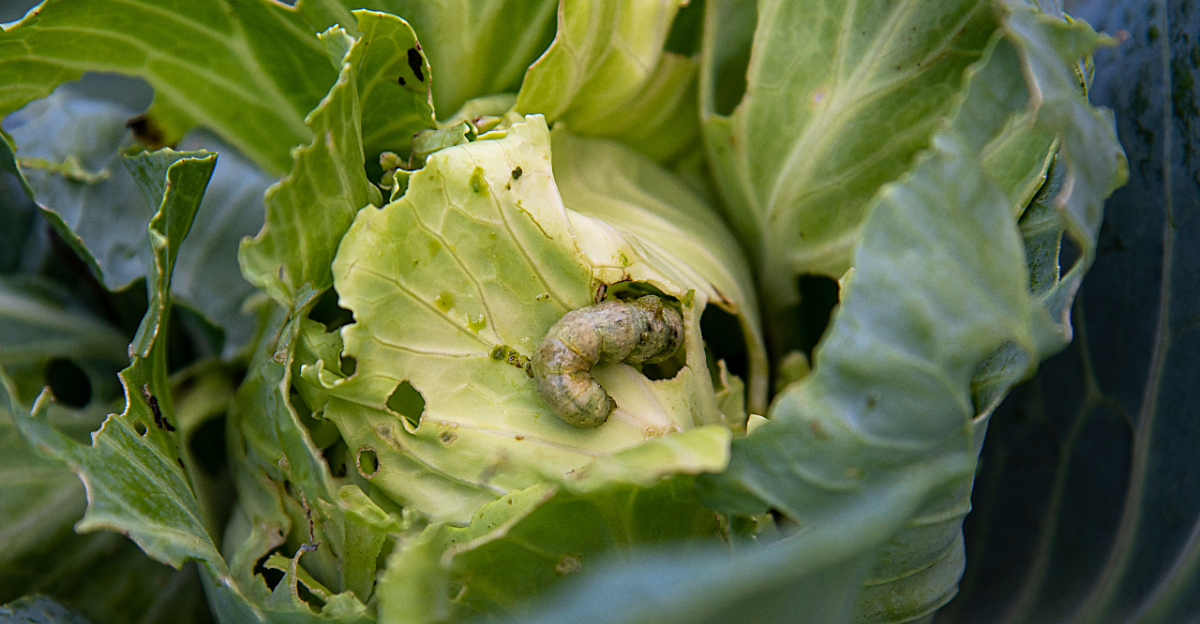
Cabbage worms are present on Michigan kale and cabbage long before most gardeners find them, feeding in locations specifically chosen to avoid easy detection while the plant’s outer appearance stays largely intact.
The caterpillars themselves blend into foliage with frustrating effectiveness, but the damage they leave behind follows a predictable pattern that shows up in specific locations first.
Inner leaves, the base of developing heads, and the undersides of lower foliage all see early feeding activity before any of it becomes visible from a standing position above the plant.
Learning to look at the right spots during routine garden checks catches cabbage worm infestations at the stage where they are still simple to manage.
1. Small Holes On Tender New Leaves Come First
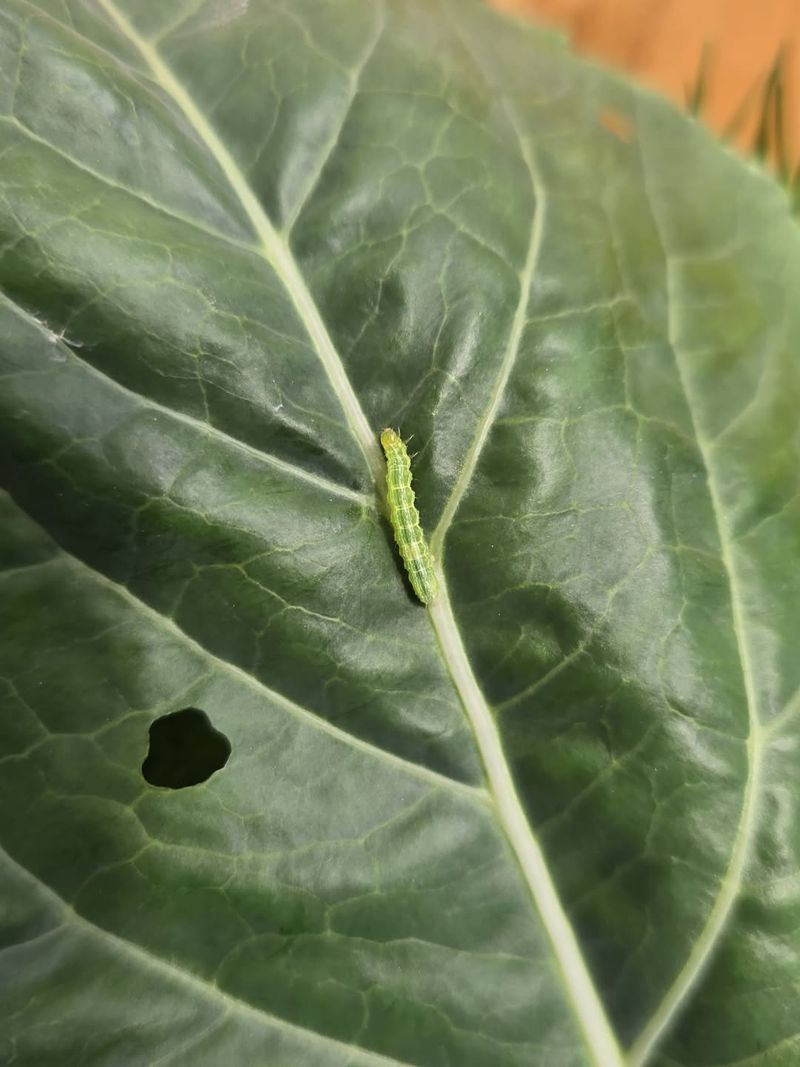
Tiny holes on fresh new leaves are one of the earliest clues your Michigan kale or cabbage has a problem. Cabbage worms target the youngest, most tender growth first because it is softer and easier to chew through.
You might spot these holes before you ever see the caterpillar responsible for making them.
New leaf growth sits right at the top or center of the plant, and that is exactly where you should start your inspection routine. The holes often look ragged around the edges, almost like someone took a small bite out of the leaf tissue.
Sometimes you will also notice thin, papery patches where the surface has been scraped rather than completely chewed through.
These scraped areas are called windowpane feeding, and they are a classic early sign of young caterpillars just starting to eat. At this stage, the caterpillars are often so small and so green that they blend right into the leaf.
You could stare directly at the plant and still miss them completely. Checking your plants every two to three days during the growing season makes a real difference.
Michigan summers bring ideal conditions for the imported cabbageworm butterfly, which lays eggs on brassica plants from late spring through early fall.
Catching the feeding damage at this very first stage means the population is still small and much easier to manage.
Look closely at every new leaf that unfurls, especially after you spot a white butterfly hovering near your garden. That butterfly is almost certainly laying eggs, and the small holes will follow within days.
2. Leaf Undersides Hide The First Feeding
Flipping a leaf over might feel like a small thing, but it can completely change what you find in your garden. Cabbage worms and other caterpillars that feed on brassicas are experts at staying out of sight, and the underside of a leaf is their favorite hiding spot.
Most gardeners walk past plants and look at them from above, which means they miss the action happening just beneath the surface.
The undersides of kale and cabbage leaves stay shaded, moist, and sheltered from wind, making them a very comfortable place for caterpillars to feed and rest.
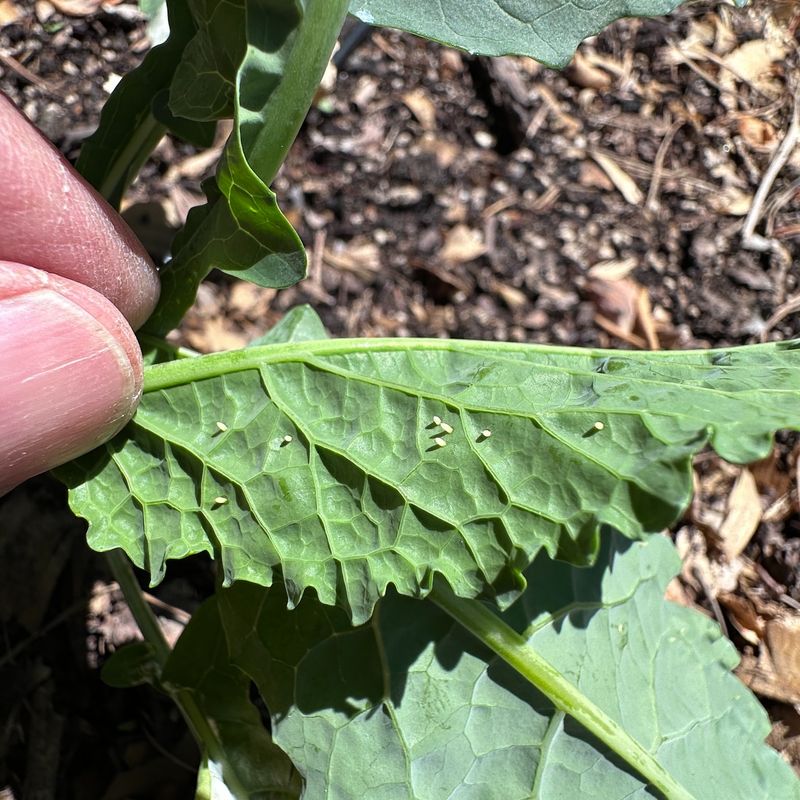
Eggs are also laid on the underside of leaves in many cases, so this is the spot where the whole problem begins. A single small egg cluster can hatch into dozens of caterpillars within a week.
Your Michigan Garden Changes Every Week. Your Plan Should Too.
Gardening in Michigan changes quickly throughout the season. Every Friday you’ll receive a simple weekly plan showing exactly what to plant, prune, fertilize, harvest, and protect so you never miss the right timing.
When you check the undersides, you are looking for more than just caterpillars. Tiny pale yellow or white eggs, small green frass pellets, and thin feeding trails in the leaf tissue are all signs that something has been active there.
Even if the insect has moved on, the evidence stays behind. Building a habit of lifting leaves while you walk through your Michigan garden takes only a few extra seconds per plant.
Do it in the morning when caterpillars tend to be more active and easier to spot. Cooler morning temperatures also slow the caterpillars down slightly, making them less likely to drop off the leaf when disturbed.
Once you start checking undersides regularly, you will be amazed at how much early activity you were missing before. Your plants will thank you for it.
3. Inner Cabbage Leaves Need Early Checks
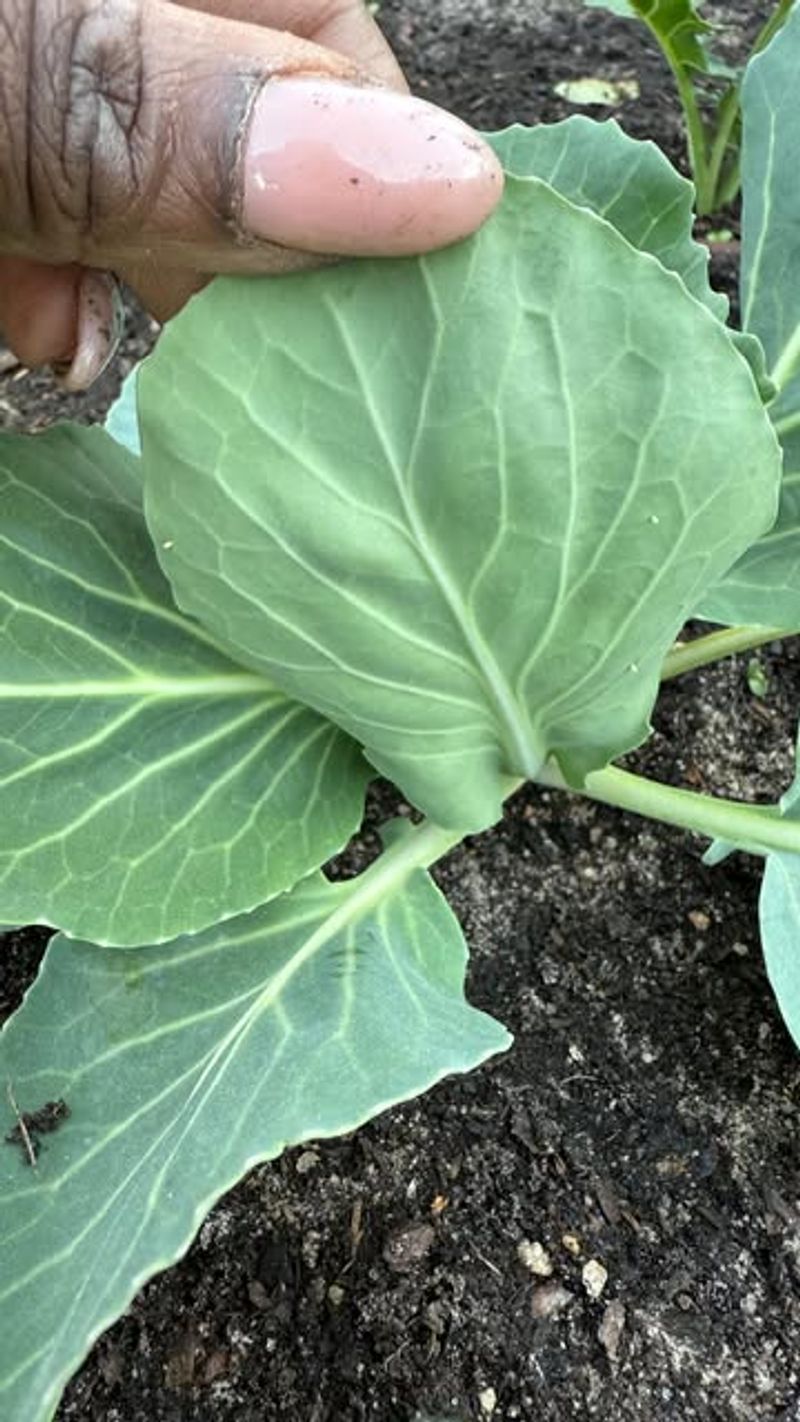
A cabbage head looks solid and protected from the outside, but cabbage worms are patient and persistent enough to work their way toward the center.
The outer leaves show the first signs of chewing, and if those early clues go unnoticed, the caterpillars gradually move inward toward the tight, folded leaves where the head is forming.
By the time you see damage in the center, the problem has already been building for a while.
Checking between the outer and inner leaves before the head fully closes is a smart move every Michigan gardener should make part of their weekly routine.
Gently pulling back a few outer leaves and looking between the folds gives you a peek at what is happening inside.
Caterpillars that have moved inward are often larger and more developed by this point, having already fed on the outer growth.
The inner leaves are more valuable to the plant because they make up the edible head that most people grow cabbage for in the first place. Damage there is harder to cut around and can affect the quality of the entire harvest.
Catching the problem at the outer leaf stage, before movement inward begins, protects what matters most.
Michigan gardeners dealing with long growing seasons have multiple generations of cabbage worms to contend with each year. A plant that looks clean in June can have a new wave of feeding activity by August.
Keeping up with inspections from transplant to harvest is the most reliable way to stay ahead of the damage.
Early and consistent checking of both inner and outer leaves gives your cabbage the best shot at forming a full, healthy head.
4. Kale Ruffles Can Hide Tiny Caterpillars
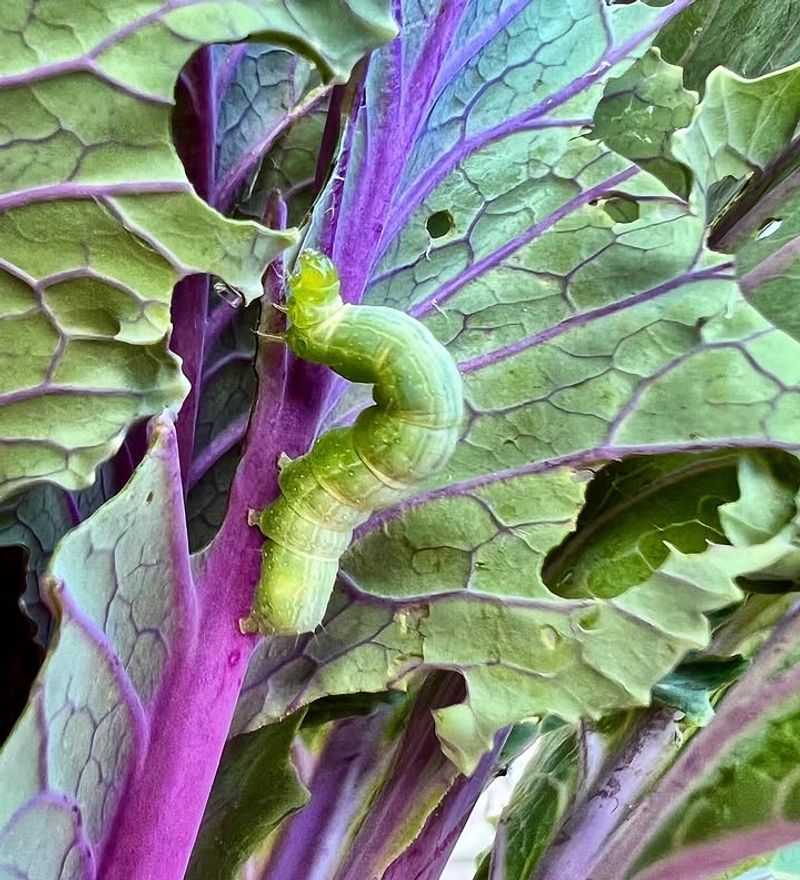
Curly kale might be one of the most popular vegetables in Michigan home gardens, but those gorgeous ruffled leaves come with a hidden downside.
All those folds, ridges, and crinkled edges create perfect little shelters for tiny caterpillars that want to stay out of sight.
A plant can look completely lush and healthy from a normal standing distance while hosting a small army of feeding insects tucked into the leaf texture.
The ruffled variety of kale, sometimes called curly kale or Scots kale, is especially tricky to inspect because the surface is never flat or smooth. Small caterpillars, especially young ones that just hatched, are nearly the same shade of green as the leaf itself.
They press flat against the surface and barely move when the plant is disturbed, which makes them incredibly easy to overlook.
Eggs are often tucked into the folds and along the main veins where they are protected from rain and wind.
A careful look with good lighting, or even a small magnifying glass, can reveal oval-shaped eggs that look like tiny white or pale yellow footballs standing upright on the leaf surface.
Finding eggs before they hatch gives you the earliest possible chance to intervene.
Running your fingers gently along the ruffled edges and lifting the leaf to check underneath both sides is the most thorough approach.
Do this at least once a week throughout the Michigan growing season, which runs from late spring through fall for kale.
Kale is a cold-hardy crop, so it often stays in the garden longer, meaning pest pressure can continue well into September and October.
5. Lower Leaves Often Show The First Scattered Holes
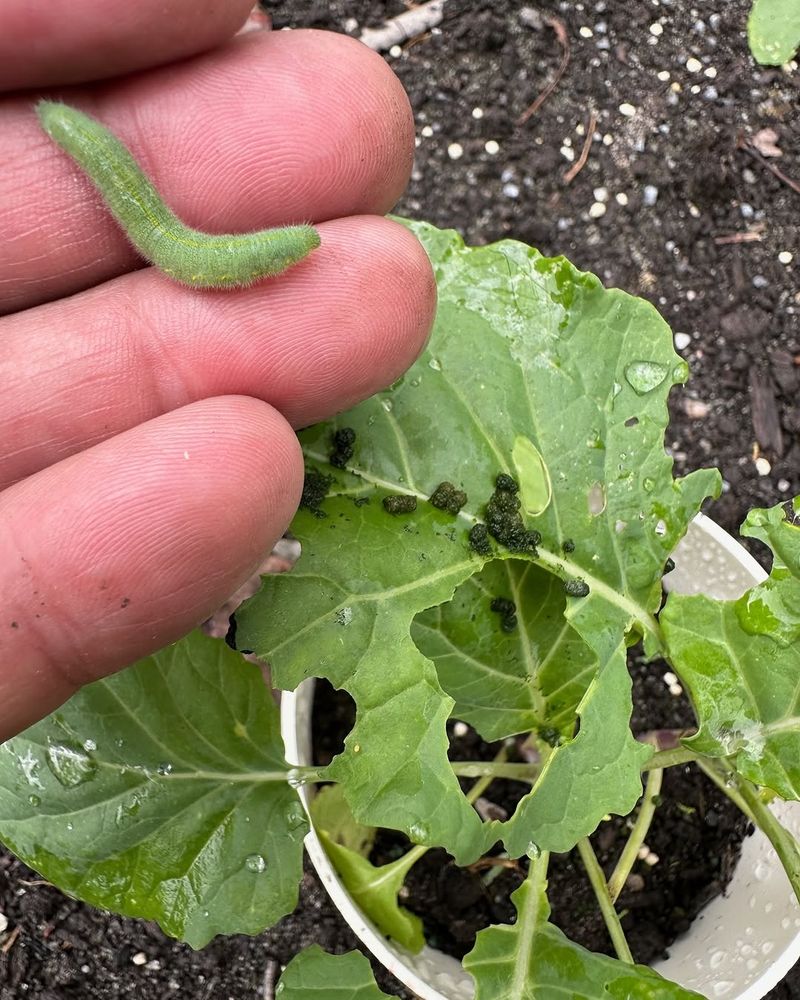
Most gardeners naturally focus their attention on the top of the plant where new growth is happening, but the lower leaves deserve just as much attention during pest season.
Lower leaves sit closer to the ground, which makes them easier for crawling insects to reach and also puts them in the shadiest, most sheltered part of the plant.
That combination of accessibility and shade makes them a common starting point for early feeding activity.
Scattered small holes across a lower leaf are often one of the first visible signs that cabbage worms have arrived in your Michigan garden.
The holes may look random and spread out, which is different from the concentrated damage you see later when caterpillars are larger and feeding more aggressively.
Early scattered holes are easy to dismiss as minor, but they deserve a closer look every single time.
Lower leaves are also the most likely place to find frass, which is the technical term for caterpillar droppings.
Because caterpillars feed from above and the droppings fall downward, they accumulate on lower leaves and on the soil surface beneath the plant.
Spotting frass on lower leaves is a strong signal that feeding is happening somewhere higher up on the plant.
Shaded leaves also stay damp longer after rain or morning dew, and that moisture can attract both caterpillars and the slugs that sometimes cause similar-looking hole damage.
Knowing the difference matters because the management approach is different for each pest. Cabbage worm holes tend to have cleaner, more chewed edges compared to the slimier, more irregular slug damage.
Check lower leaves first, and work your way up for a complete picture of what is happening across the whole plant.
6. Green Droppings Can Reveal The Pest Before You See It
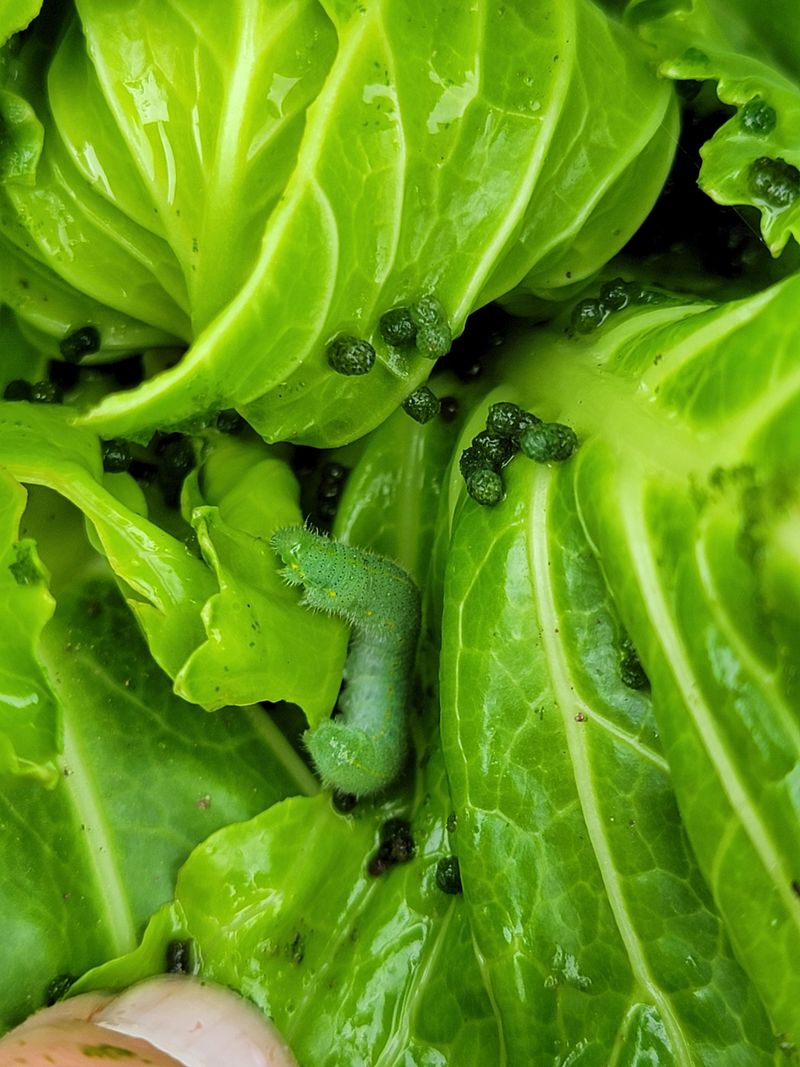
Sometimes the caterpillar itself stays completely out of sight, but it always leaves something behind.
Tiny green or dark pellets scattered across leaves or gathered in the folds of a plant are caterpillar frass, and spotting them can tip you off to a hidden feeding problem before the damage becomes severe.
Frass is easy to miss if you are not looking for it, but once you know what it looks like, you will start noticing it everywhere.
Fresh frass looks moist and bright green, almost the same color as the leaves themselves. Older frass dries out and turns darker, sometimes appearing brownish or nearly black.
The size of the pellets gives you a rough idea of how large the caterpillar is, because bigger caterpillars produce bigger droppings.
Small, fine frass points to young caterpillars just getting started, while larger pellets suggest the feeding has been going on for several days.
When you spot frass, the caterpillar is almost always nearby, usually on the same leaf, the leaf directly above, or tucked into a nearby fold or stem junction.
Look carefully and methodically around the area where you found the droppings rather than scanning the whole plant at once. A slow, focused search almost always turns up the caterpillar responsible.
Michigan gardeners who check for frass as part of their regular garden walk often catch infestations much earlier than those who only look for visible damage. Adding this one habit to your routine takes almost no extra time.
You are simply training your eye to notice a new kind of clue that was always there, just waiting to be found.
7. Fresh Transplants Need Protection Right Away
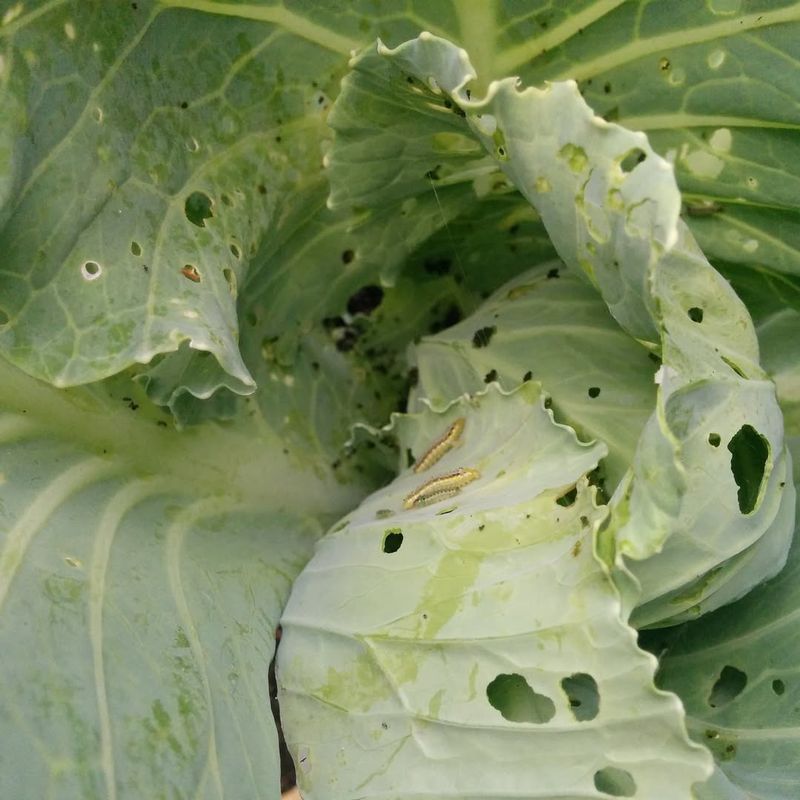
Young transplants going into a Michigan garden bed are at their most vulnerable right from the start. A small seedling with only a handful of leaves has almost no extra leaf area to spare, so even minor chewing can set the plant back significantly.
What might look like a small amount of damage on a mature plant can be genuinely serious for a transplant that has not yet established itself in the soil.
The imported cabbageworm butterfly is active throughout Michigan summers and wastes no time finding fresh brassica transplants.
It can locate newly planted kale and cabbage within days of transplanting, laying individual eggs on leaves that hatch into feeding caterpillars within a week.
Starting protection from day one of transplanting is far more effective than waiting until you see the first holes appear.
Floating row covers made of lightweight fabric are one of the most reliable tools available to Michigan home gardeners for this exact situation.
The fabric lets in sunlight, rain, and air while physically blocking butterflies and moths from reaching the plants to lay eggs. No eggs means no caterpillars, which means no feeding damage at all.
The key to making row covers work is placing them immediately after transplanting and securing the edges tightly to the ground so there are no gaps. Even a small opening can allow a butterfly to squeeze through and lay eggs inside the cover.
Checking the edges after heavy rain or wind is a good habit because covers can shift and create accidental openings.
Row covers can stay in place until harvest for kale or until cabbage heads are nearly formed, giving your plants strong, uninterrupted protection all season long.