The Real Reason Ants Cover Your Michigan Peony Stems Each Summer
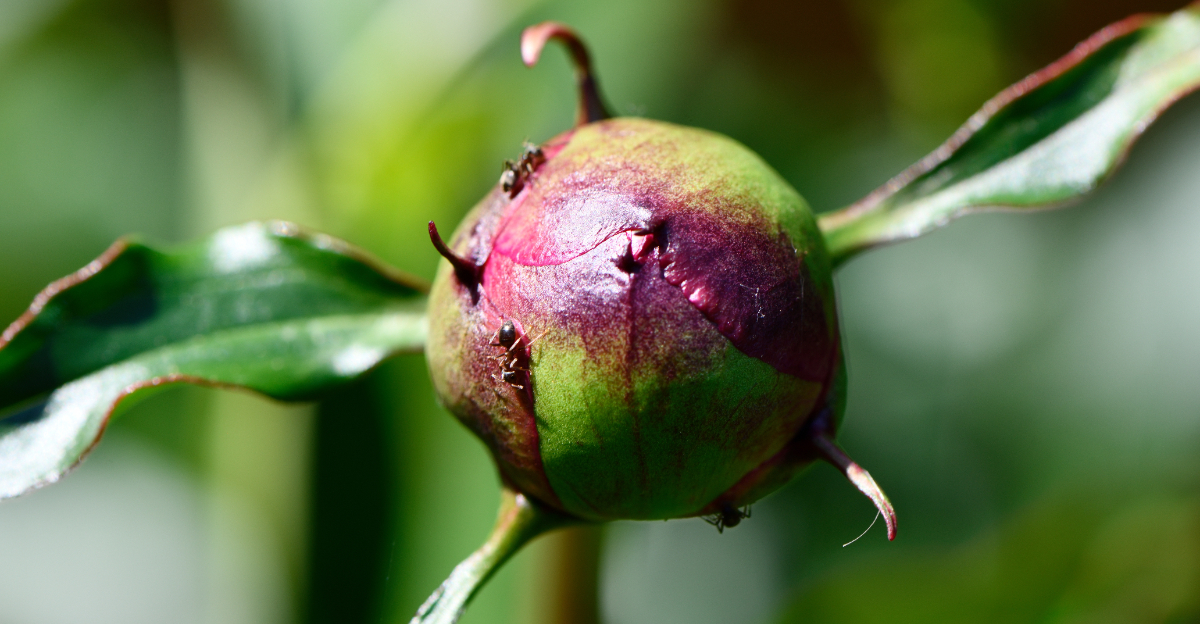
Peony buds in Michigan gardens draw a crowd every June, and that crowd has six legs. Ants cover the swollen buds by the dozen, tracing paths up and down the stems like they’re following a map only they can see.
A first glance suggests something is wrong, maybe a hidden pest chewing through the plant from the inside. The buds are fine. Better than fine, actually.
As peonies swell, they coat their buds in sugar, and ants can’t resist the offer. Longtime gardeners often watch for this behavior as a sign the blooms are close.
The ants take their sugar and leave without touching a single petal. What looks like a threat on the surface turns out to be one of the more overlooked partnerships happening quietly in the garden.
Ants Are Drawn To Sweet Nectar On Peony Buds
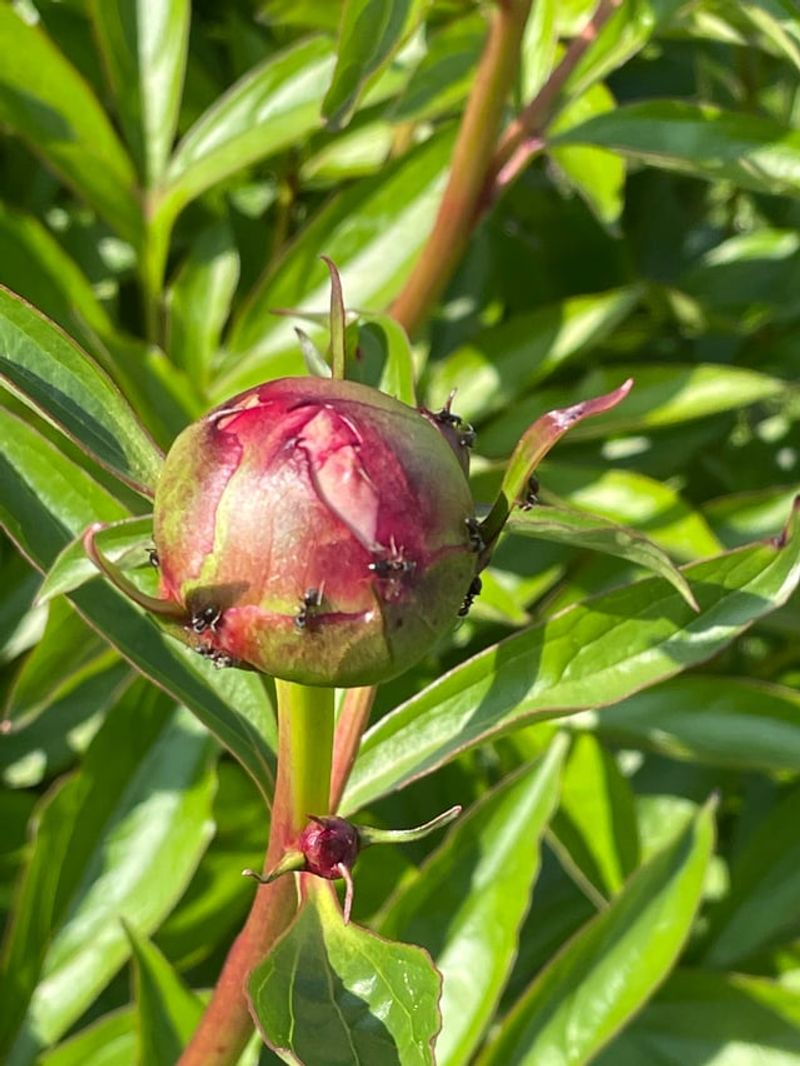
Tiny ants on your peony buds are not random. Peony buds produce a sugary liquid called extrafloral nectar right on their outer surface.
This nectar sits in small glands along the bud’s green sepals. Ants can smell that sweetness from several feet away.
Think of it like a free buffet that opens every morning. The ants show up, eat, and go back to their colony loaded with energy.
The nectar is not a sign of disease or rot. It is a natural process, produced by healthy plants.
This nectar-producing trait has been part of peony biology for a very long time. Scientists believe the relationship between ants and peonies is a classic example of mutualism.
Mutualism means both creatures benefit from the arrangement. The ants get food, and the peonies get something valuable in return.
The nectar is secreted most heavily before the bud opens. Once blooms are fully open, nectar production slows down significantly.
That timing is not a coincidence. The plant essentially invites ants during its most vulnerable growth stage.
Some Michigan gardeners try to wash the nectar off with water. That does not stop the ants for long because the plant keeps producing more.
The reason ants cover peonies starts right here: free sugar is the ultimate invitation.
This Behavior Peaks During Early Summer Bloom Season
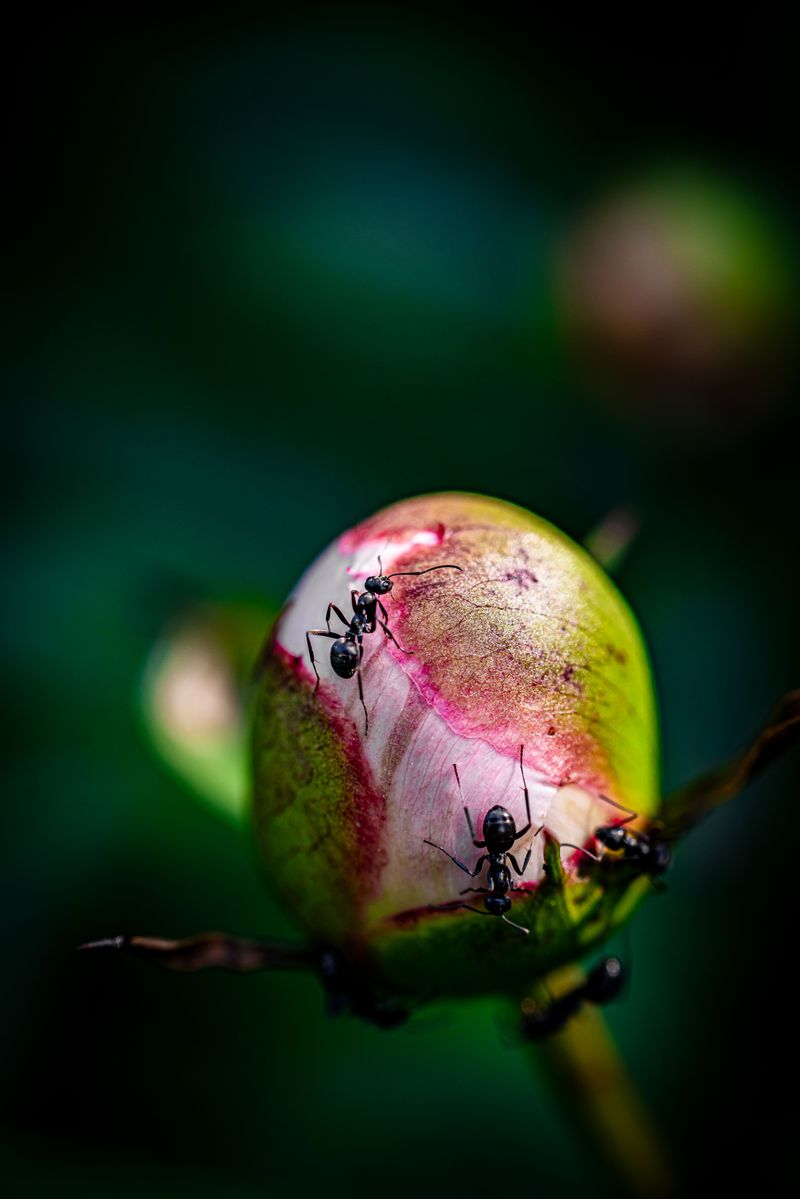
June hits and suddenly your garden feels alive with tiny movement. Ant activity on peonies spikes hard during the weeks just before full bloom.
That timing lines up perfectly with peak nectar production. The plant cranks out the most sugar when buds are swollen and about to open.
Michigan summers bring warm, humid mornings that make nectar even more attractive to foraging ants. Scout ants find the source first, then recruit the whole crew.
Ant colonies send out scouts constantly looking for food. Once a scout finds nectar, it lays a chemical trail back to the nest.
That trail works like a GPS signal for the rest of the colony. Within hours, you can have dozens of ants marching up a single stem.
Peak ant season and peak peony season overlap almost perfectly. Both tend to hit hardest between late May and early July across most of Michigan.
Your Michigan Garden Changes Every Week. Your Plan Should Too.
Gardening in Michigan changes quickly throughout the season. Every Friday you’ll receive a simple weekly plan showing exactly what to plant, prune, fertilize, harvest, and protect so you never miss the right timing.
Gardeners often panic during this window, thinking the ants appeared overnight. In reality, the population builds gradually as nectar output increases.
Cooler mornings slow ant movement, while warm afternoons speed it up. You will notice more ants on hot days than cloudy ones.
The bloom season is short, usually just two to three weeks per plant. Once the flowers open fully, ant numbers drop on their own.
Watching this seasonal rhythm play out is one of the quiet joys of tending a summer garden.
The Myth That Peonies Need Ants To Open Explained
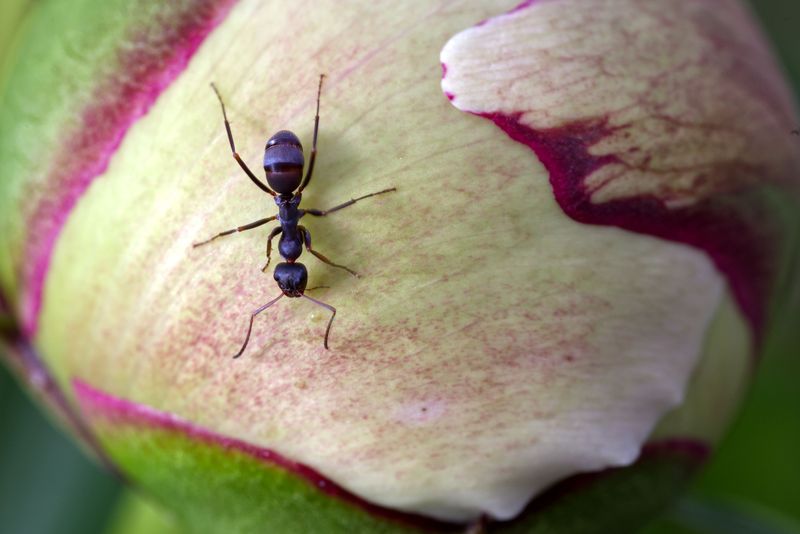
Somewhere along the way, a popular garden myth took root. Many people believe peonies cannot open without ants chewing through the outer bud layers.
That story gets passed down from grandparent to grandchild every season. It sounds believable, which is exactly why it has survived so long.
The truth is that peonies open entirely on their own. No ant assistance is needed for the petals to unfurl.
Peonies grown indoors or in greenhouses, completely isolated from ants, open just as fully as those outdoors. That alone should put the myth to rest.
What ants do is consume the nectar on the surface of the bud. They are not breaking anything open or triggering any biological process inside the flower.
The bud opens due to internal water pressure and cell expansion. That is a plant process, not an insect one.
So where did the myth come from? Likely from observation without full understanding.
People kept seeing ants whenever buds opened and assumed one caused the other. That is a classic case of correlation being mistaken for causation.
Old garden myths rarely fade just because science catches up with them. This one has simply stuck around longer than most, passed on more out of habit than evidence.
Knowing the truth does not make the ant-peony relationship less fascinating. It actually makes it more interesting because the real story involves a smarter kind of partnership.
These Ants Rarely Cause Real Damage To Your Peonies
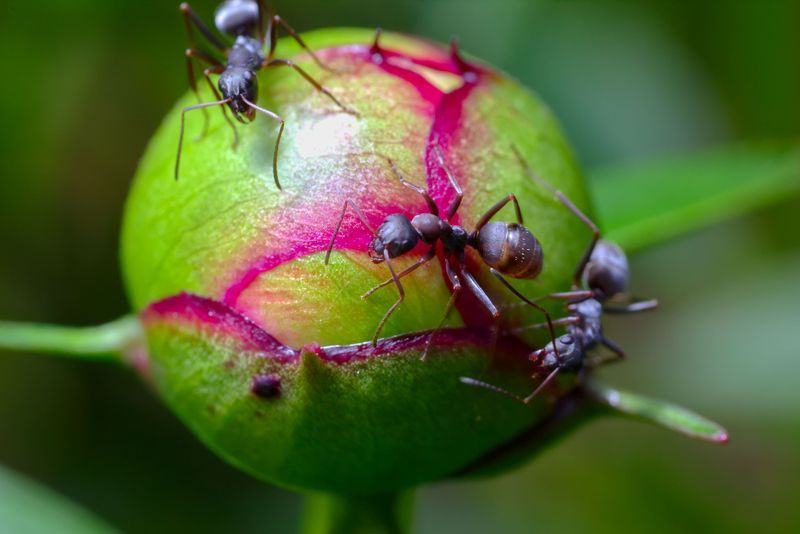
Seeing bugs on your plants usually triggers concern. With peonies and ants, that worry is almost always unnecessary.
Ants that feed on peony nectar are not eating the plant itself. They are sipping a surface secretion that the plant produces specifically to attract them.
Ants have no interest in the stems, petals, or roots themselves. Their business begins and ends with the sugar on the surface, leaving the plant’s structure untouched.
Think of the ants as tiny guests who eat the appetizer and leave without touching the furniture. They are using the plant without harming it.
Some Michigan gardeners worry ants signal a bigger pest problem. In most cases on peonies, the ants are only after nectar and have no reason to linger once it runs out.
What looks like a nuisance is really mutual benefit, not destruction. Both species walk away with something useful.
Occasionally, ants may farm aphids near peonies, which is a different situation worth monitoring. But that is a separate behavior, not caused by the peonies themselves.
Most seasons, the ant-peony interaction stays clean and harmless. You can enjoy your blooms without treating the ants as a threat.
Your garden isn’t suffering. It’s simply doing what peonies and ants have done together for generations.
Bringing Cut Peonies Indoors Without Bringing Ants Too
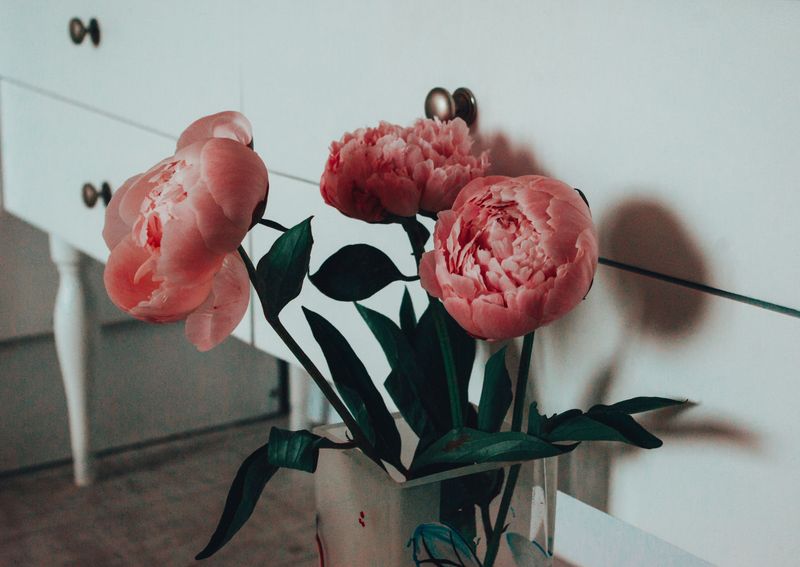
Cut peony season is one of summer’s best rewards. But nobody wants a surprise ant parade marching across their kitchen counter.
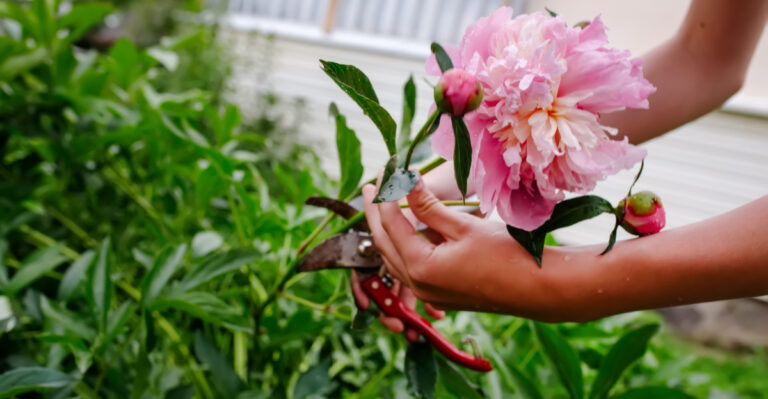
Getting blooms inside without hitchhikers takes just a few simple steps. Start by cutting stems early in the morning when ant activity is lower.
Choose buds that are just starting to show color but are not yet fully open. At that stage, nectar levels are already tapering off.
After cutting, hold the stems upside down outdoors and give them a gentle shake. Most ants will drop off on their own without any fuss.
Next, fill a bucket with cool water and submerge the stems immediately. Any remaining ants will float to the surface quickly.
Let the stems soak for five to ten minutes before bringing them inside. A quick rinse under a garden hose also works well before the soak.
Avoid using insecticide sprays on cut flowers. Chemicals can harm the blooms and simply aren’t necessary here.
Some gardeners lay stems on a towel in the shade for a few minutes. Ants dislike open, exposed spaces and tend to scatter fast.
Once inside, place your peonies in a clean vase with fresh water. Change the water every two days to keep blooms lasting longer.
A little prep goes a long way toward enjoying your Michigan peonies indoors without any uninvited guests joining the arrangement.
Signs Ant Activity Points To A Different Problem
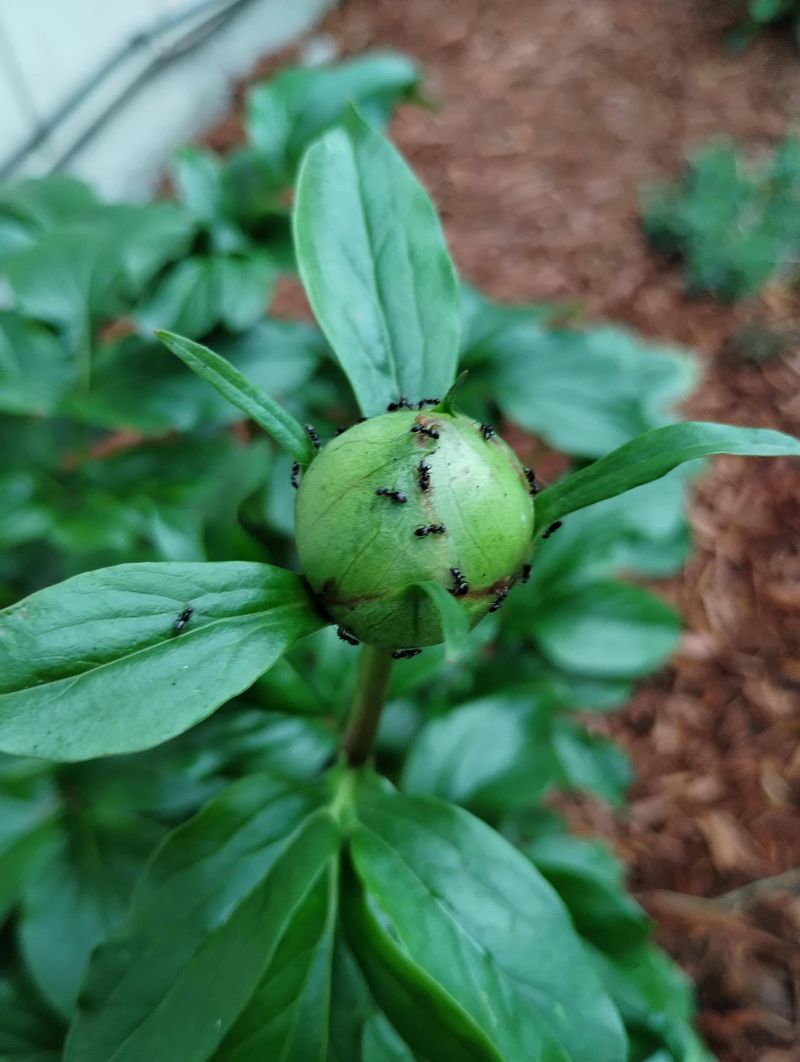
Most of the time, ants on peonies are entirely harmless. But there are a few situations where heavy ant presence signals something worth investigating.
If you notice ants clustering near the base of stems rather than on buds, look closer. That location is more typical of aphid farming than nectar feeding.
Aphids are tiny, soft-bodied insects that suck plant sap. Ants herd and protect them in exchange for a sweet liquid called honeydew.
If aphids are present, you may see sticky residue on leaves or distorted, curling foliage. Those are clear signs the situation has shifted beyond simple nectar feeding.
Check the undersides of leaves carefully if ant numbers seem unusually high. A flashlight helps you spot small aphid colonies hiding in shaded spots.
Another red flag is sooty mold, a black fungal coating that grows on honeydew residue. It looks like someone dusted the plant with charcoal powder.
Sooty mold does not directly harm peonies but it blocks sunlight from reaching leaves. Over time, that can weaken the plant’s overall energy production.
To address aphids, a strong spray of water from a garden hose usually works well. Repeat every few days until the population drops.
The real reason ants cover your Michigan peony stems is almost always harmless nectar feeding. But staying observant keeps small issues from becoming bigger ones later in the season.