Why North Carolina Sunflower Leaves Turn Yellow From The Bottom Up In Late Summer
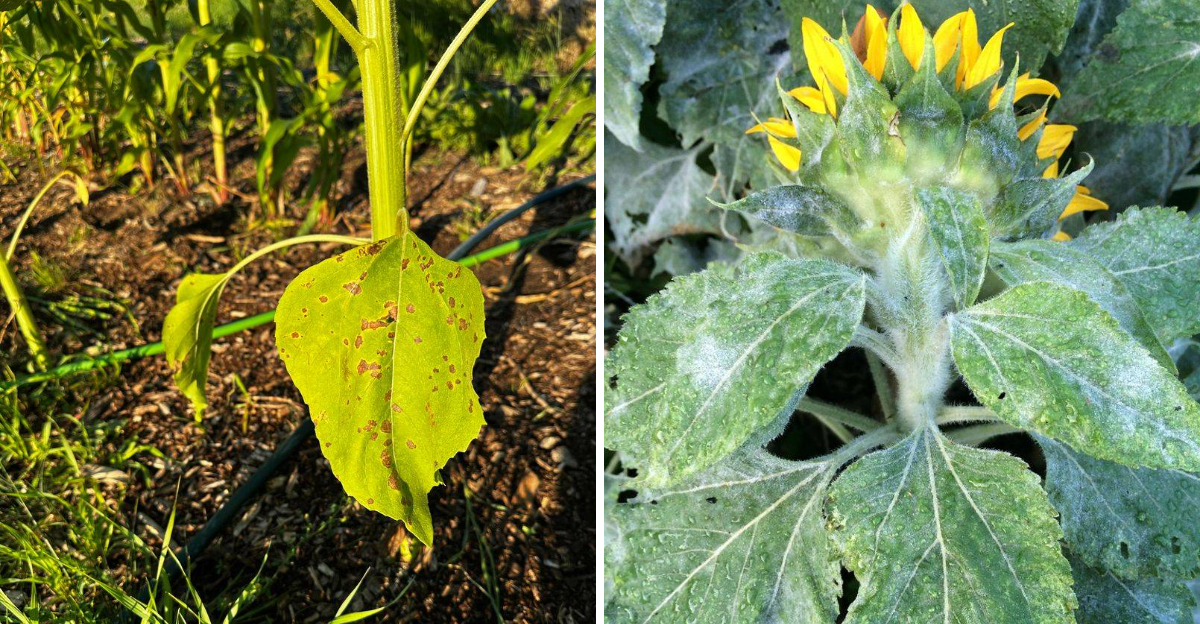
Sunflowers naturally shift energy away from their lower leaves as the plant matures, which explains that bottom up yellowing so many North Carolina gardeners notice in late summer.
As the plant focuses on producing seeds, older leaves become less important and are gradually sacrificed for the sake of the flower head.
Heat stress can speed up this process, especially during long stretches of dry, humid weather typical of late summer here.
Nitrogen deficiency is another common cause, since sunflowers are heavy feeders that can deplete soil nutrients quickly.
Checking whether yellowing spreads upward or stays isolated to the bottom helps tell the difference between normal aging and a nutrient problem.
Consistent watering during dry spells supports overall plant health through this stage. In most cases, this yellowing is simply part of the sunflower’s natural life cycle. Watching the pattern closely puts your mind at ease.
1. Older Lower Leaves Are Reaching Natural Maturity
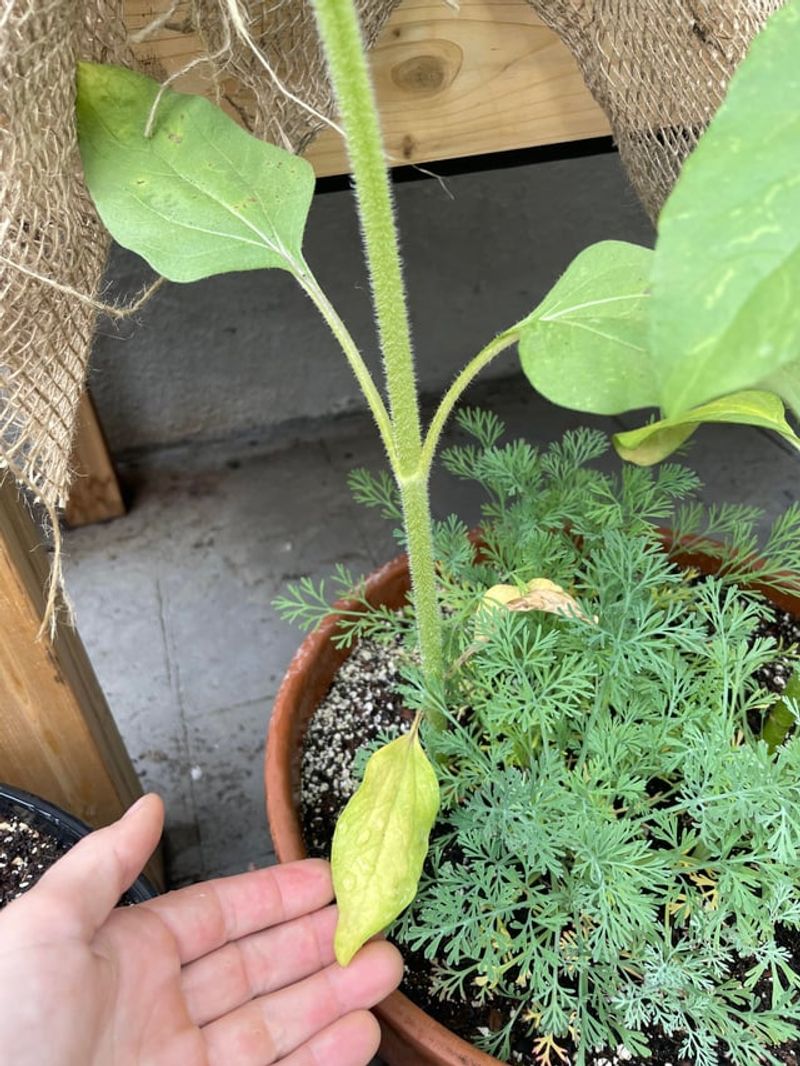
Not every yellow leaf is a problem waiting to be solved.
On annual sunflowers, the oldest leaves are always found at the bottom of the plant, and as summer stretches into August and September, those lower leaves naturally begin to yellow and fade.
This is simply part of how sunflowers grow and mature over a single season. Think about it this way: those bottom leaves were the first to unfold back in spring or early summer.
By late summer, they have been working hard for months. The upper canopy of the plant grows taller and fuller over time, casting shade over those older lower leaves and reducing the sunlight they can actually absorb.
With less light reaching them, they contribute less energy to the plant overall, and the sunflower gradually redirects its resources toward seed development instead.
North Carolina summers are long, hot, and intense, which means sunflowers often reach this mature stage faster than gardeners expect.
The key thing to watch for is whether the yellowing stays limited to just a few of the oldest, lowest leaves.
If the upper foliage stays a healthy deep green, the main stem feels firm and strong, and the flower head continues filling out normally, there is very little reason for concern.
That gradual yellowing from the bottom up, when confined to older leaves, is the plant doing exactly what it is supposed to do as it puts energy into producing seeds.
No fertilizer, no treatment, and no intervention is needed in this case.
2. Mobile Nutrient Shortages Begin In Older Foliage
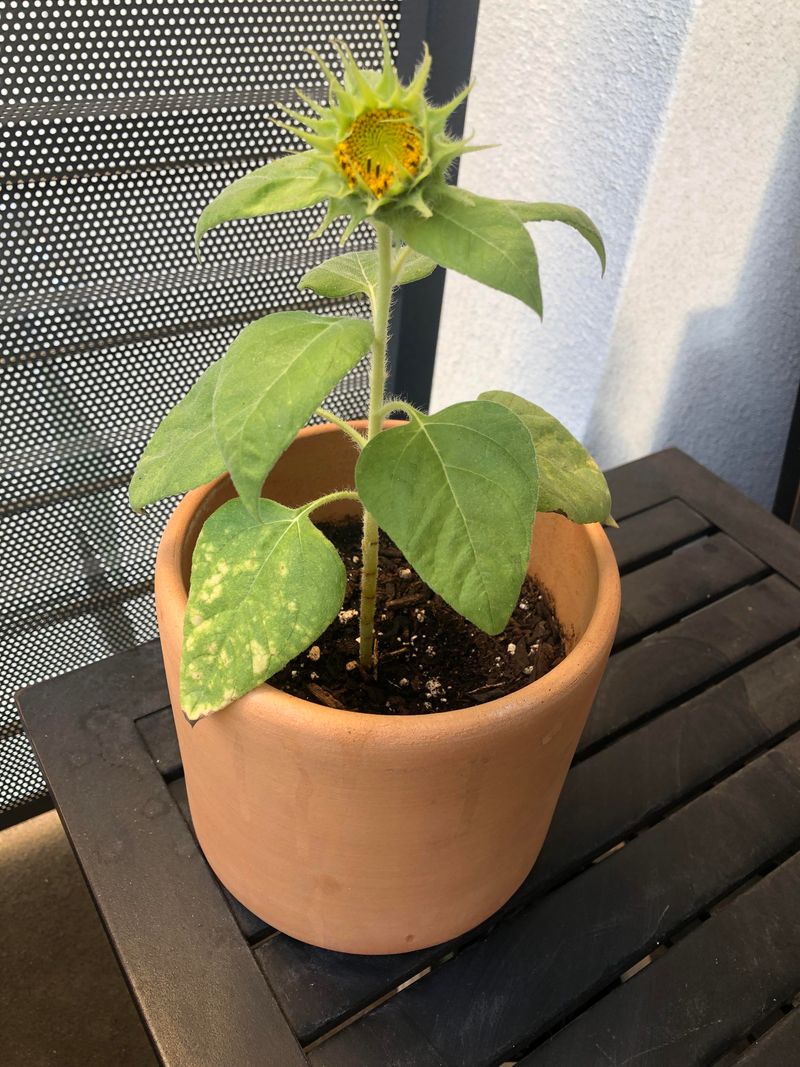
Sunflowers are heavy feeders, and when certain nutrients run low in the soil, the plant has a clever but visible way of handling the shortage.
Mobile nutrients like nitrogen, potassium, and magnesium can actually move from older tissues to newer, actively growing parts of the plant.
That means the oldest lower leaves are always the first to show signs when something is missing underground.
Nitrogen shortage tends to show up as a general, uniform yellowing or paling of the lower leaves, starting from the tip and spreading inward.
Your North Carolina Garden Changes Every Week. Your Plan Should Too.
Gardening in North Carolina changes quickly throughout the season. Every Friday you’ll receive a simple weekly plan showing exactly what to plant, prune, fertilize, harvest, and protect so you never miss the right timing.
Potassium shortage looks a bit different: the leaf edges and margins begin to yellow or brown first, giving the leaf a scorched look around the outside while the center stays greener a little longer.
Magnesium shortage creates a distinctive pattern where the tissue between the leaf veins turns yellow while the veins themselves stay green, a pattern called interveinal chlorosis.
North Carolina soils vary a lot depending on where you garden, and heavy summer rainfall can leach nutrients out of sandy soils faster than many people realize.
Before reaching for a fertilizer bag, take a moment to consider the full picture. Has the plant been growing quickly and using up available nutrients?
Has there been a lot of rain lately? Has any fertilizer been applied this season?
A simple soil test through your local North Carolina Cooperative Extension office gives you real answers instead of guesses, and that information helps you choose the right solution without overloading your soil with something the plant does not actually need.
3. Late Summer Heat Is Drying The Root Zone
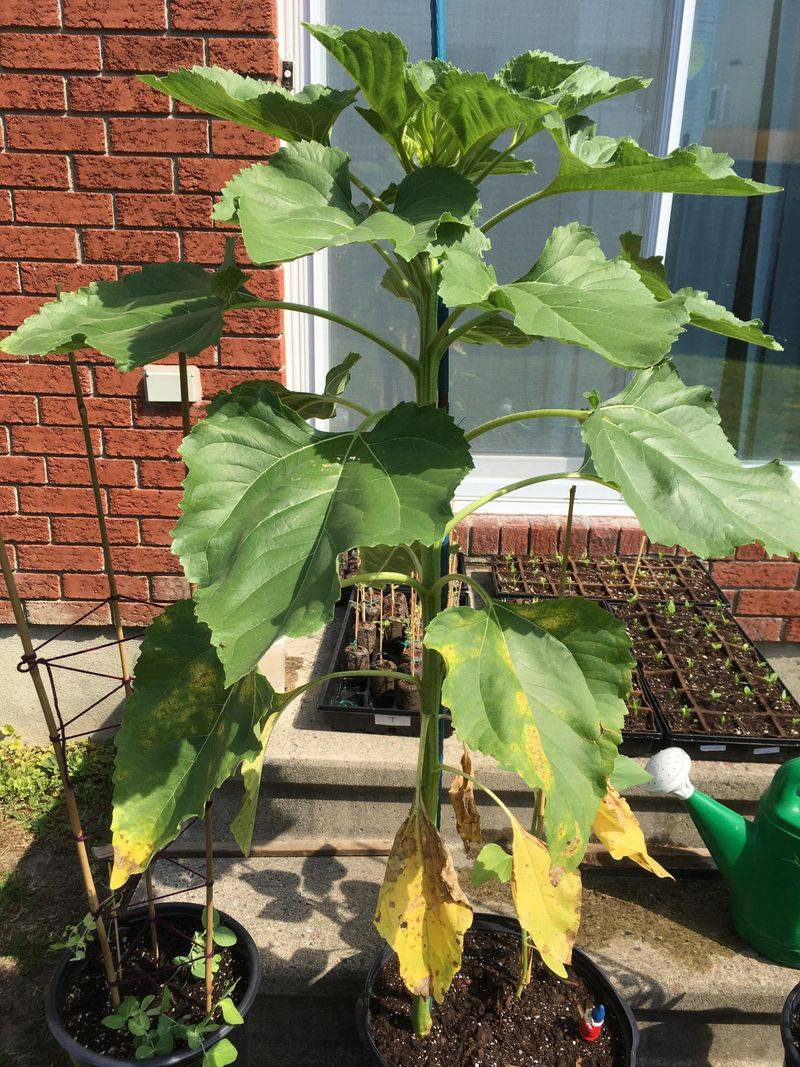
North Carolina summers are no joke. By August, temperatures regularly climb into the upper 90s, and even when rain falls regularly, the intense heat can pull moisture out of the upper soil faster than most gardeners expect.
The tricky part is that the soil surface might feel slightly damp to the touch while the deeper root zone where sunflowers actually drink from stays surprisingly dry.
When sunflower roots cannot access enough moisture, the plant starts showing stress in predictable ways.
Lower leaves are usually the first to yellow, and you might also notice the leaf edges beginning to curl inward slightly, almost like the plant is trying to protect itself from the heat.
Afternoon drooping is another clue, especially if the plant seems to perk back up in the cooler morning hours.
That pattern of wilting in the heat of the day and recovering overnight suggests moisture stress rather than disease.
Before watering, push a finger or a wooden dowel several inches into the soil near the base of the plant. If it feels dry four to six inches down, the plant genuinely needs water.
Deep, slow morning irrigation works far better than frequent shallow watering because it encourages roots to grow downward toward more stable moisture.
Spreading a two to three inch layer of organic mulch around the base of the plant helps the soil hold onto moisture between watering sessions.
Also, removing any weeds or crowded nearby plants reduces competition for water in the root zone during the hottest stretch of the season.
4. Saturated Soil Is Restricting Root Function
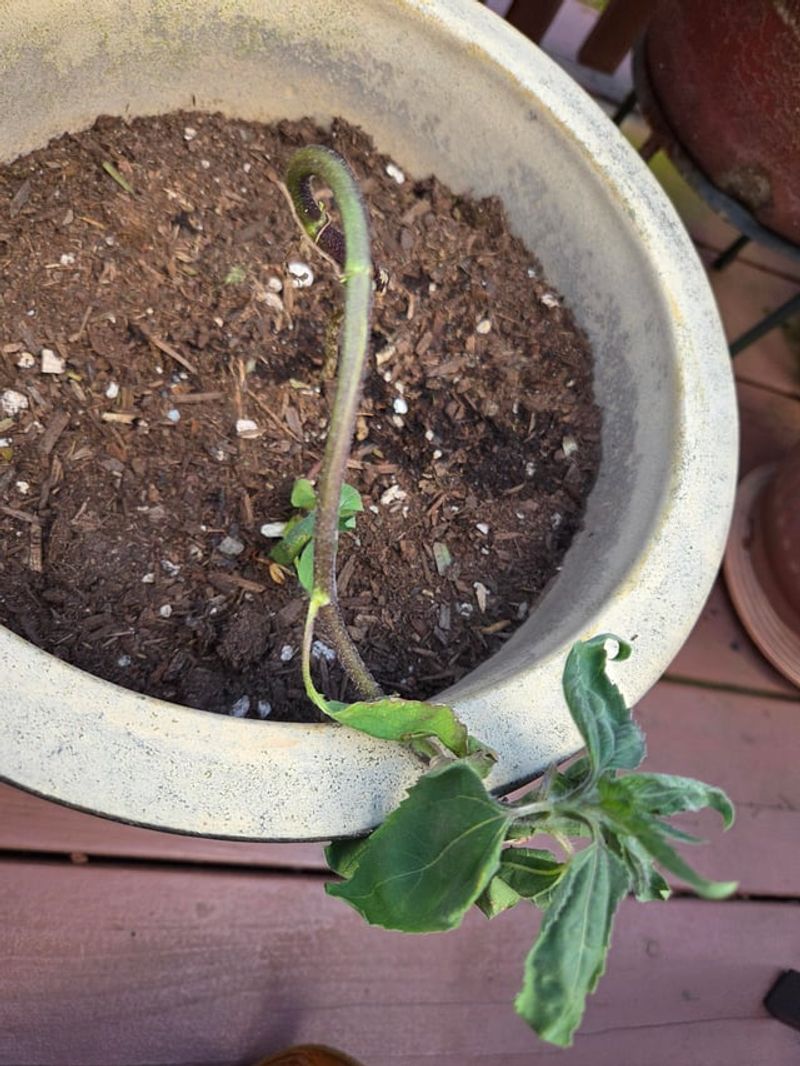
Here is something that surprises a lot of gardeners: too much water can cause the exact same yellowing symptoms as too little.
North Carolina is well known for its late summer thunderstorms, and when those storms roll through repeatedly over just a few days, even well-maintained garden beds can become waterlogged.
Compacted clay soil, low-lying areas, and containers without proper drainage are especially vulnerable to holding excess water for long periods.
When roots sit in saturated soil, they lose access to the oxygen they need to function. Without oxygen, roots struggle to absorb water and nutrients even though both are technically available in the surrounding soil.
The result is lower leaves that start turning yellow and looking stressed, even though the ground feels soaking wet.
Slow overall growth, persistent drooping that does not improve in the morning, and soil that stays squishy days after rain are all warning signs worth paying attention to.
The most important first step is simply pausing any irrigation immediately. Let the soil dry out naturally before adding any more water to the root zone.
If your garden bed sits in a low area that collects runoff from other parts of the yard, try redirecting that flow with a simple soil berm or channel so future storms drain away from the planting area.
Avoid digging around the roots while the soil is still saturated, as this can cause more harm than good.
Improving drainage before the next planting season by working compost into heavy clay soil will make a meaningful long-term difference for future sunflower crops.
5. Leaf Spot Is Moving Up From The Lower Canopy
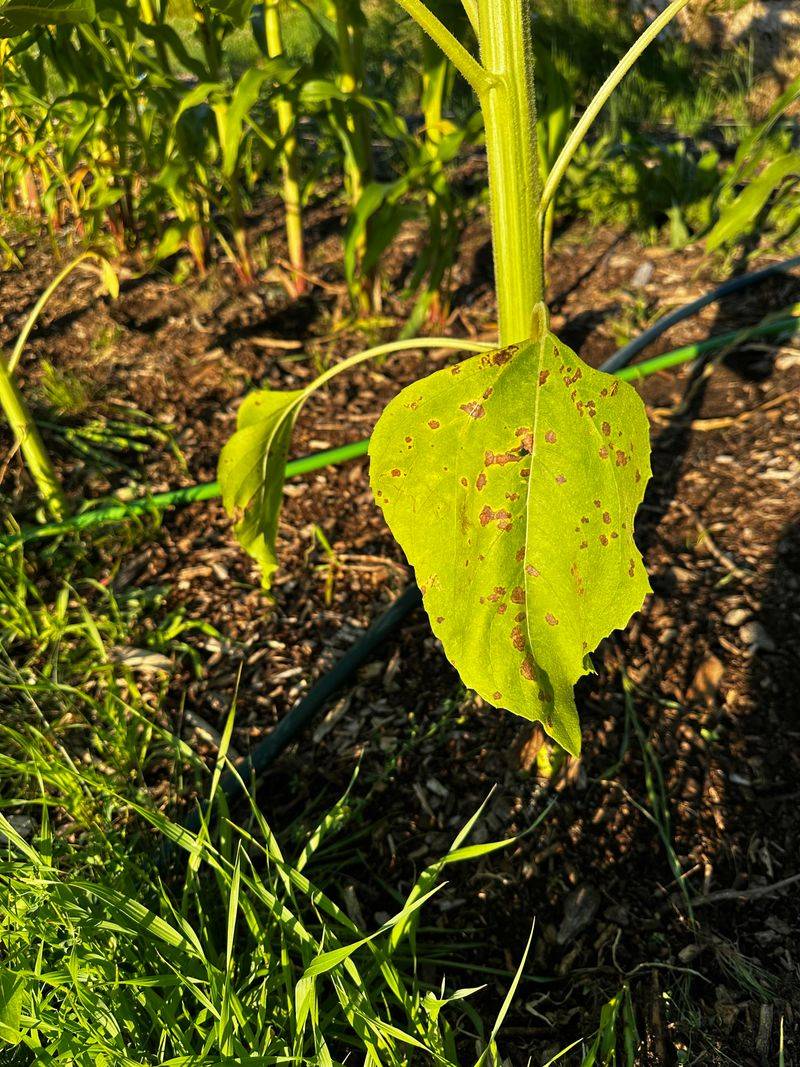
Fungal and bacterial leaf spot diseases love North Carolina summers almost as much as gardeners do.
The combination of heat, humidity, frequent afternoon thunderstorms, and dense planting creates near-perfect conditions for leaf spot pathogens to get established on lower foliage and gradually work their way up the plant.
Catching these symptoms early makes a real difference in how much of the plant is eventually affected.
Septoria leaf spot is one of the most common fungal problems on sunflowers in the Southeast.
It produces small circular lesions that have darker brown or purple margins and tan or grayish centers.
As the spots mature, tiny dark specks may become visible inside them, and a pale yellow halo often surrounds the affected area.
Bacterial leaf spot looks somewhat different: the lesions tend to be more angular or irregular in shape because they are limited by the leaf veins, and yellow tissue often surrounds the damaged spots.
Both types can spread through water splashing up from the soil onto lower leaves during heavy rain or overhead watering.
Crowded planting makes both problems worse because poor airflow keeps leaf surfaces wet longer after rain or irrigation.
Watering at the soil level rather than overhead is one of the simplest ways to slow the spread of both fungal and bacterial leaf spots.
Improving spacing between plants so air can circulate freely also helps foliage dry faster after rain.
If spots appear suddenly, spread rapidly, or you are unsure what you are dealing with, reaching out to your local North Carolina Cooperative Extension office for a proper identification is always a smart move before taking any further action.
6. Sunflower Rust Is Beginning On Lower Leaves
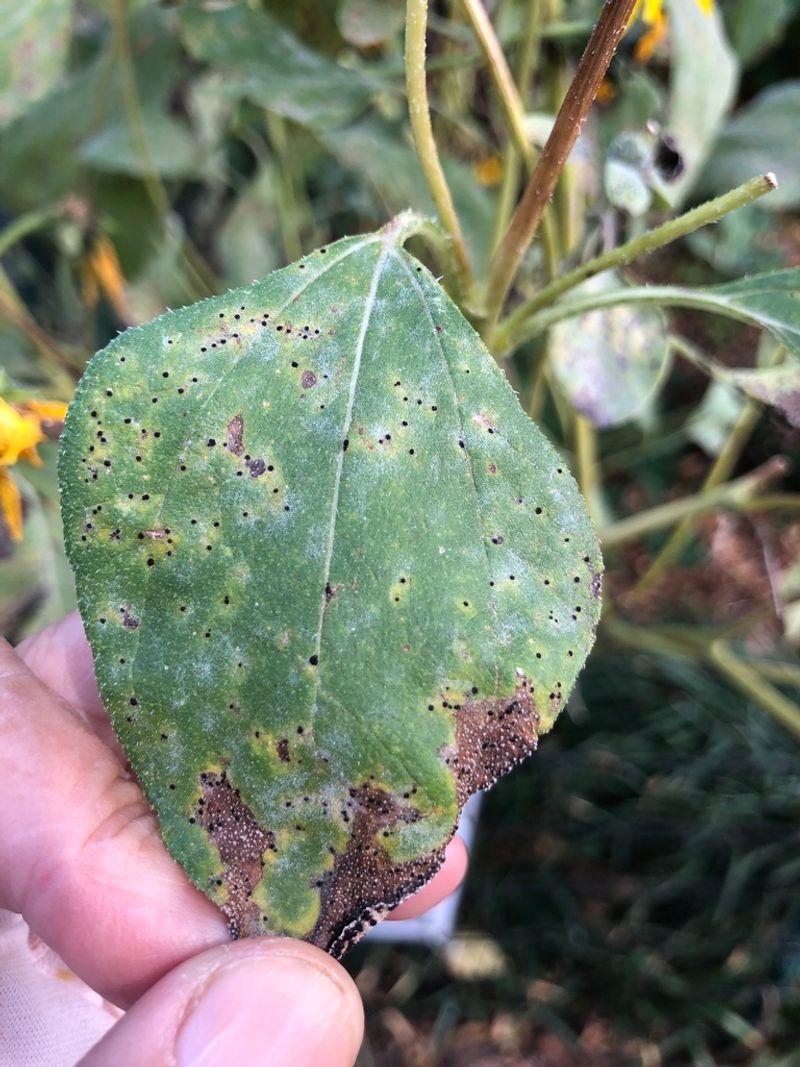
Rust is one of those garden problems that sneaks up on you. On sunflowers, it often starts quietly on the lower leaves, producing small symptoms that are easy to overlook until the infection becomes more widespread.
Knowing what to look for early gives you a real advantage in managing it before it climbs higher on the plant.
Sunflower rust is caused by a fungal pathogen, and its most recognizable feature is the dusty, cinnamon-brown or orange-brown pustules it produces on leaf surfaces.
These pustules may appear on both the upper and lower sides of leaves, and if you gently rub one with a light-colored tissue or cloth, a rusty orange or brown smear will transfer onto the fabric.
That simple test can help you quickly tell rust apart from ordinary soil splash or other discoloration.
Yellow halos often form around the pustules, which is why infected lower leaves can look generally yellowish from a distance before you notice the individual spots up close. North Carolina’s late summer weather is practically a welcome mat for rust.
Frequent morning dew, occasional fog in lower-lying areas, light rain events, and long periods of humid overnight air all support the development and spread of rust spores from leaf to leaf.
The spores travel easily through the air and spread through moisture on leaf surfaces. Make a habit of inspecting both sides of the lower leaves regularly, especially during stretches of warm, humid, dewy weather.
If you suspect rust on your sunflowers, contact your county Extension office before selecting any garden product, since proper identification ensures you choose the most appropriate and effective response.
7. Powdery Mildew Is Covering Mature Lower Foliage
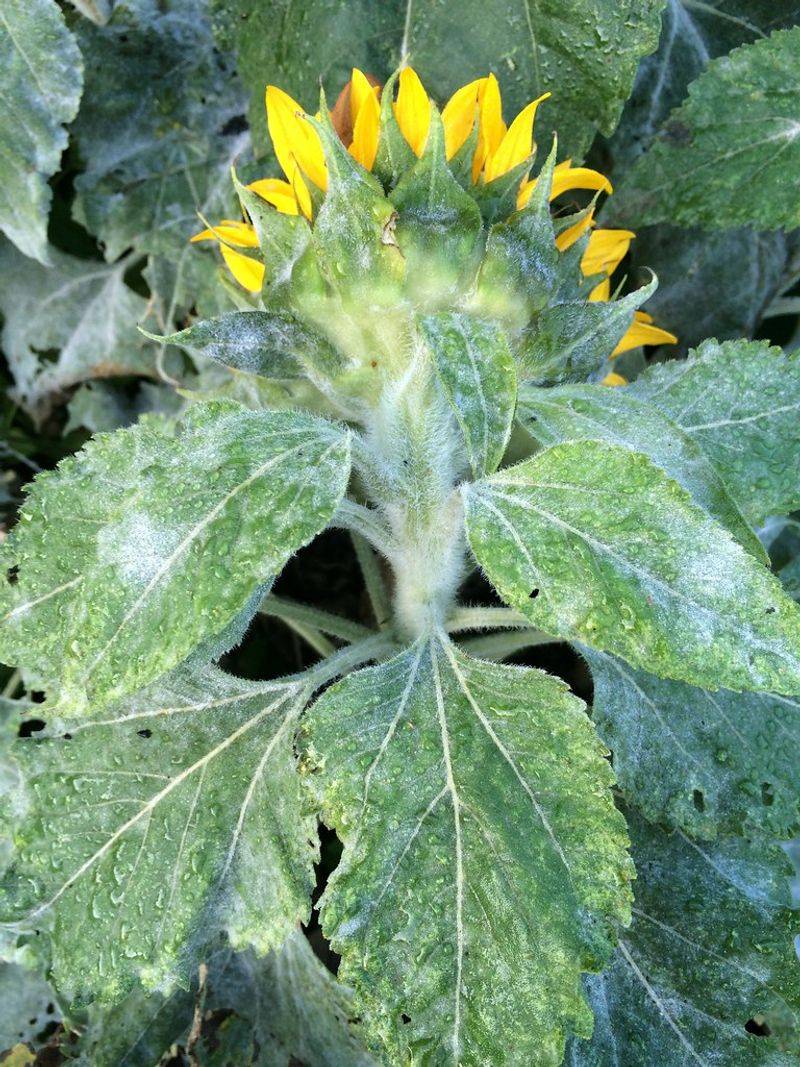
By the time sunflowers reach full bloom in North Carolina, powdery mildew has often been quietly building up on the lower foliage for weeks.
It tends to become far more noticeable after peak flowering, when the plant is putting most of its energy into seed development and the older lower leaves receive less direct sunlight under the growing canopy above.
Powdery mildew is hard to miss once you know what you are looking for. It produces distinctive white or grayish powdery patches on the upper surface of leaves, almost like someone dusted them with a light coating of flour.
Unlike many other fungal problems, these patches can actually be rubbed off the leaf surface with a finger.
Beneath or around those white patches, the leaf tissue often turns yellow, giving infected lower leaves a patchy, uneven appearance.
Later in the season, tiny dark round specks may appear within the white patches, which are the fungal structures that allow the pathogen to survive into the following year.
Many gardeners assume powdery mildew needs wet conditions to spread, but it actually thrives in warm days combined with cool nights and moderate humidity, which describes North Carolina late summers almost perfectly.
Older, mature leaves are more susceptible than young growth, which is why symptoms concentrate on the lower canopy first.
Wider spacing between plants at planting time improves airflow significantly and reduces how long leaves stay damp. Watering at the soil level rather than overhead keeps foliage drier.
Removing heavily affected lower leaves and disposing of them away from the garden can also help slow the spread before it reaches the upper plant.
8. Spider Mites Are Feeding During Hot Dry Weather
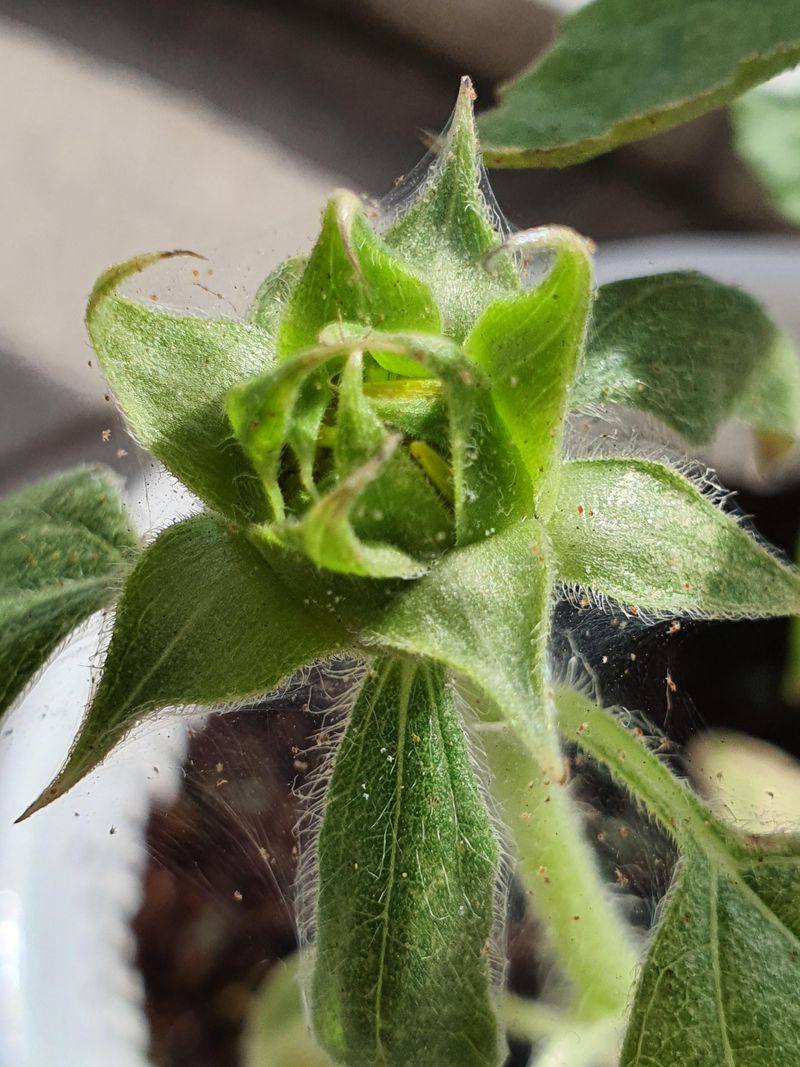
Hot, dry stretches in late summer are practically an open invitation for twospotted spider mites, and sunflowers are one of their favorite targets.
These tiny pests are barely visible to the naked eye, but the damage they leave behind is easy to recognize once you know the pattern.
They feed by piercing individual leaf cells and draining the contents, leaving behind clusters of tiny pale yellow or whitish specks called stippling.
At first, the stippling appears scattered and subtle, mostly on the lower leaves where mite populations tend to build up first.
As the infestation grows and mites continue feeding, those individual specks gradually merge together into broader yellow, bronze, or bleached-looking areas.
The affected leaves can eventually look almost dusty or washed out from a distance. Flipping a leaf over and looking at the underside is the fastest way to check for mites.
You might spot extremely small moving specks, or you may notice fine silky webbing stretched across the leaf surface, which is a strong sign that a mite population has become well established.
Another reliable detection method is to hold a piece of white paper under a lower leaf and give the leaf a firm tap. If tiny specks fall onto the paper and begin moving around, mites are present.
A strong stream of water directed at the undersides of leaves can dislodge and reduce mite populations without harming the plant.
Protecting beneficial insects like predatory mites and ladybugs by avoiding broad-spectrum treatments is also a smart early strategy. Always confirm mite activity before selecting any specific treatment approach.