This Hydrangea Type Needs To Be Cut Back After Severe Michigan Storms
Smooth hydrangeas often take a beating during severe Michigan storms, with their large, heavy blooms bending or snapping under wind and rain.
The good news is that this variety blooms on new growth each year, so cutting back storm damaged stems won’t cost you next season’s flowers.
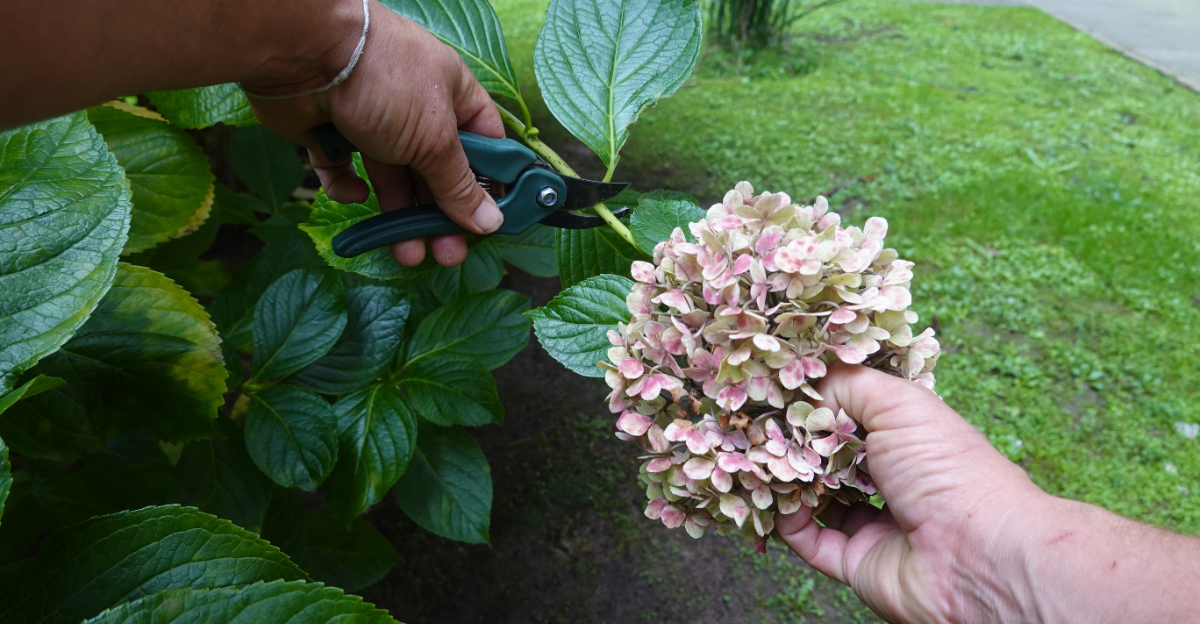
Removing broken or split branches quickly helps prevent disease from settling into open wounds left by the storm. It also allows the plant to focus its energy on producing healthy new growth instead of trying to repair what’s already damaged.
Late summer cleanup should target only the affected stems rather than a full seasonal cutback. Make clean cuts just above a healthy set of buds to encourage strong regrowth.
Leaving torn branches in place too long can invite pests looking for an easy entry point. A quick trim now sets smooth hydrangeas up for a strong comeback next year.
1. Smooth Hydrangea Is The Right Type For Corrective Cutting
Not every hydrangea in your garden responds the same way to pruning, and that distinction really matters after a storm.
The smooth hydrangea, known botanically as Hydrangea arborescens, is the type most suited to corrective cutting following severe storm damage.
If you have an Annabelle hydrangea growing in your yard, you already have one of the most recognizable smooth hydrangea cultivars around.
Annabelle produces those large, rounded, cream-white flower clusters that practically glow in a summer garden.
When a major Michigan storm rolls through, the stems on this shrub can end up split, snapped, crushed, or permanently flattened in ways that make recovery on their own unlikely.
That is exactly when corrective pruning steps in as a practical and helpful solution. Because of how smooth hydrangeas grow and produce flowers, they can handle this kind of targeted cutting far better than most other hydrangea types.
Worth mentioning here is that corrective cutting after a storm does not mean chopping the entire shrub to the ground every single time bad weather hits. That approach can do more harm than good, especially if most of the plant is still standing strong.
The goal is to focus only on stems that are clearly compromised. Healthy stems should stay right where they are, continuing to support the shrub through the rest of the growing season.
Knowing your hydrangea type before you reach for the pruners is always the smartest first step.
2. Storm Pruning Means Removing Broken Stems, Not Reshaping The Whole Shrub
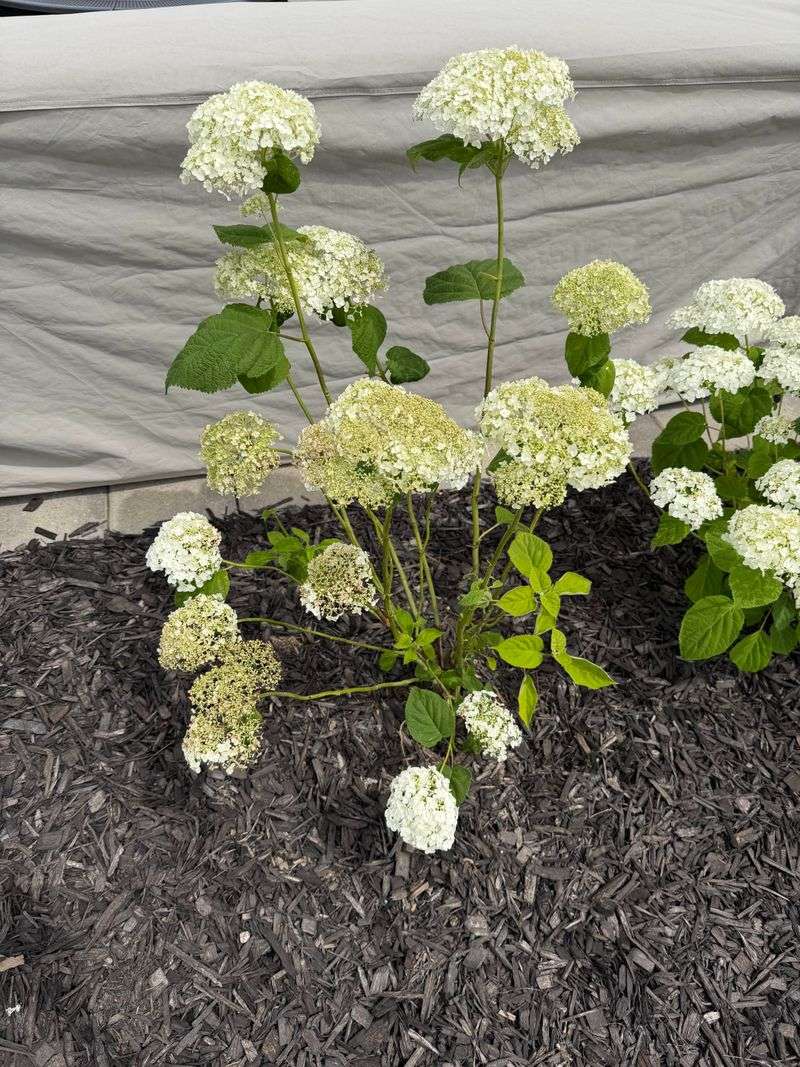
Right after a storm passes, the first instinct some gardeners have is to grab the pruners and start shaping everything up.
That urge is understandable, but storm care for smooth hydrangeas should focus entirely on damaged stems rather than general reshaping.
Randomly cutting through healthy stems helps nothing and can actually set the plant back during a time when it needs all the energy it can get. Look closely at each stem before making any cuts.
The ones that need to come off are the stems showing clear splits running along their length, severe cracks near the base, crushed sections from fallen debris, or breaks that leave the stem unable to stand or support its flower head.
Your Michigan Garden Changes Every Week. Your Plan Should Too.
Gardening in Michigan changes quickly throughout the season. Every Friday you’ll receive a simple weekly plan showing exactly what to plant, prune, fertilize, harvest, and protect so you never miss the right timing.
A stem that snapped halfway up but still has a healthy lower portion does not need to be removed entirely.
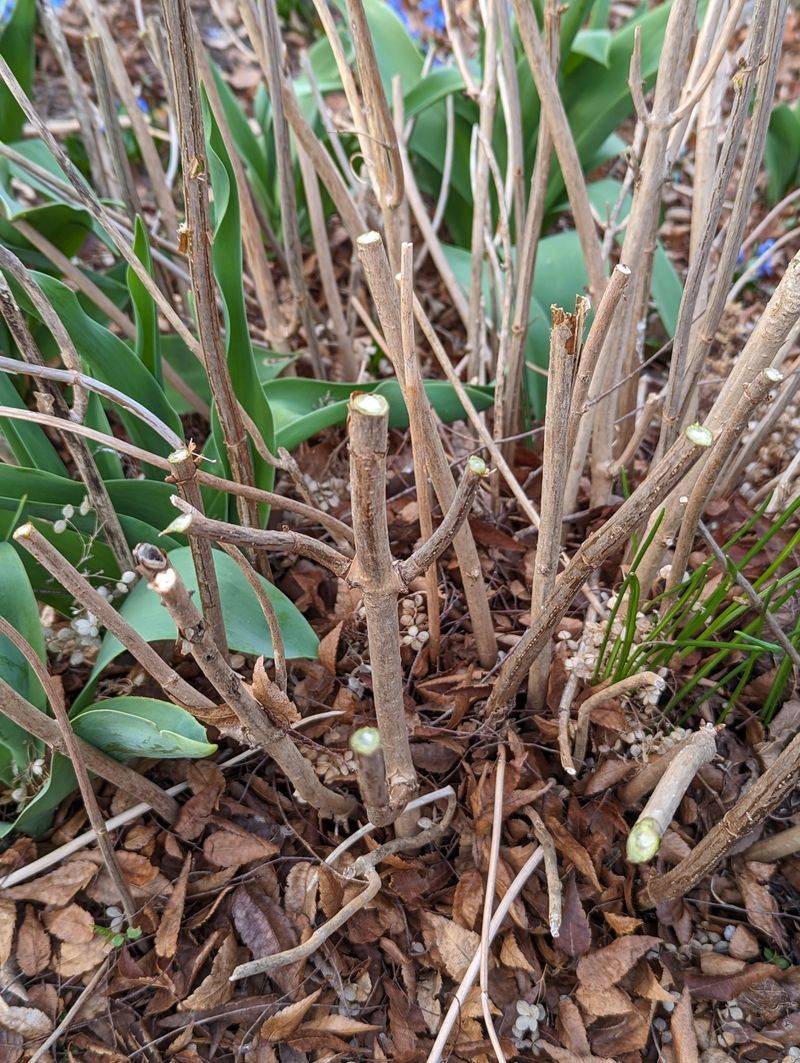
Follow the damage downward and make your cut just above a healthy bud, at a suitable side branch, or near the base only when the entire stem is too far gone to support new growth.
Tool choice matters more than people often realize. Clean, sharp pruners make a smooth, precise cut that heals more efficiently than a ragged edge left by dull blades.
Wipe your blades with a disinfectant between cuts if you are concerned about spreading any issues from one stem to the next. The entire process should feel deliberate and careful, not rushed.
Take your time, assess each stem individually, and only remove what truly cannot recover on its own.
3. Smooth Hydrangea Flowers On Current Season Growth
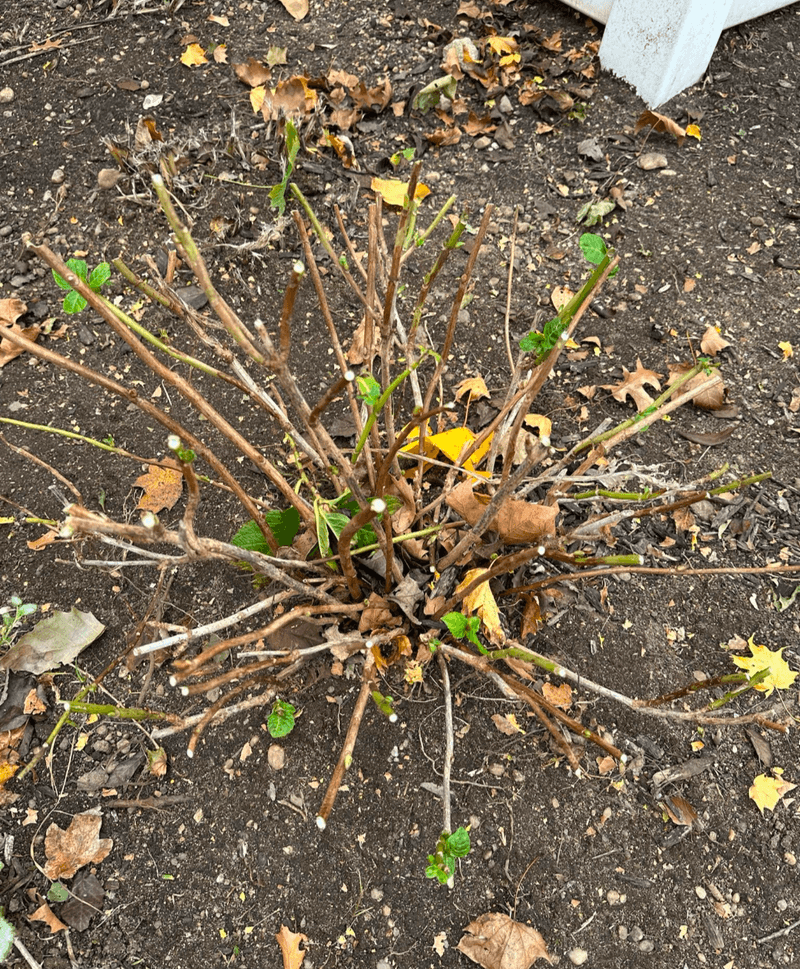
One of the most important things to understand about smooth hydrangeas is how they produce their flowers.
Unlike some hydrangea types that rely heavily on stems that grew the previous year, smooth hydrangeas form their flower buds on growth produced during the current season.
This single fact is what makes them so much more forgiving after storm damage or corrective pruning than many other flowering shrubs in the garden.
Annabelle hydrangea follows this same flowering pattern. An established Annabelle shrub that gets properly pruned in spring will push out new stems, grow fresh leaves, and produce flower buds all within the same growing season.
That ability to essentially start fresh each year is a genuine advantage when storm damage forces you to remove a significant number of stems. The plant does not lose its entire flower potential just because some stems had to go.
There is an important limit to keep in mind, though. Cutting the shrub heavily during the summer growing season, especially when buds are already forming or flowers are already open, will still remove the blooms present that year.
Current-season flowering does not mean the plant is immune to the timing of cuts made mid-season.
After a summer storm, the right approach is selective removal of broken material only, leaving as many healthy, budded stems as possible intact.
Saving those stems saves the flowers you have been looking forward to all spring, which is a very good reason to cut carefully rather than aggressively.
4. Large Annabelle Blooms Can Pull Stems Down During Heavy Rain
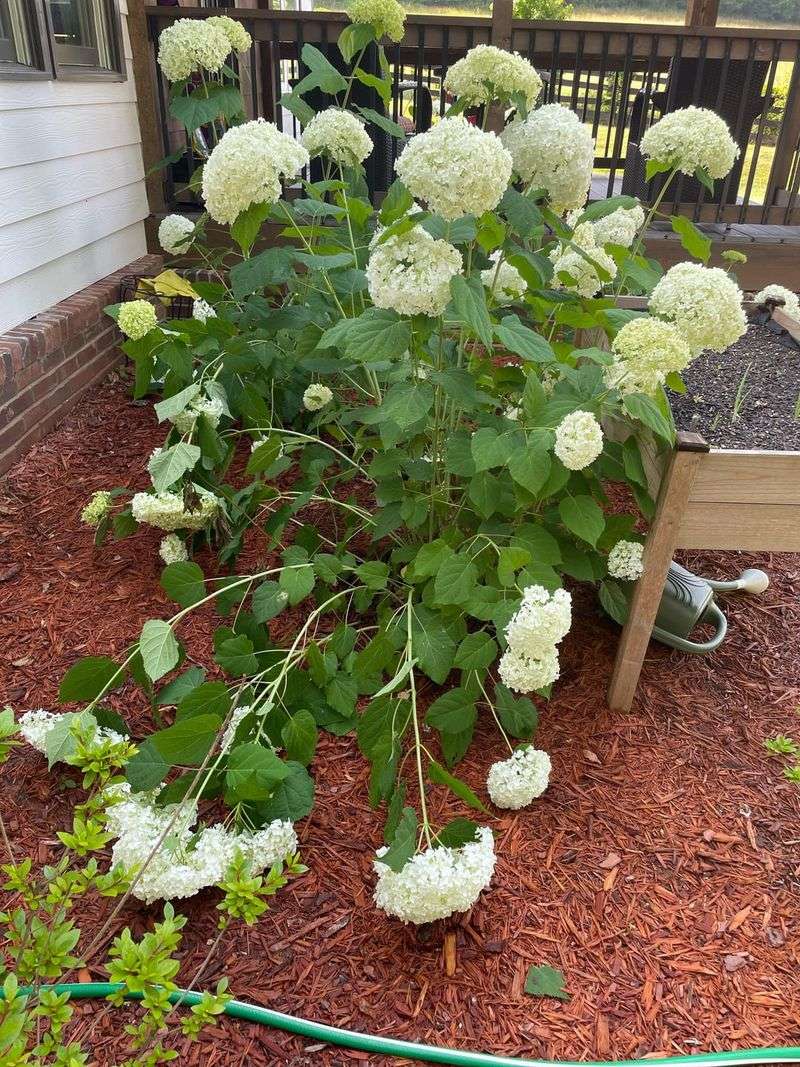
Anyone who has grown Annabelle hydrangea for a season or two knows that those impressively large flower heads come with a trade-off.
During heavy Michigan storms, the rounded clusters collect rainwater like small bowls, and that added weight can pull even fairly sturdy stems toward the ground.
Watching a whole row of Annabelle blooms flop after a downpour can feel alarming, but not every drooping stem is a stem in trouble. The key is learning to read what you are actually seeing.
A stem that is bending under the weight of a waterlogged flower head but remains flexible and unbroken is very different from a stem that has split at the base or folded sharply at a weak point.
Flexible, unbroken stems will often rise back on their own as the flower clusters dry out over the following day or two. Cutting them off prematurely removes perfectly healthy growth that the plant genuinely needs.
Only stems that have clearly split, snapped, or folded at a hard crease with no flexibility remaining need immediate removal. If you are not sure whether a stem will recover, give it a day or two after the storm before making your decision.
Pushing a stake gently into the ground near a leaning stem and loosely tying it upright can also help it recover without requiring any cuts at all.
Patience after a storm is often the best pruning tool a Michigan gardener can have when it comes to this particular shrub.
5. A Full July Cutback Removes This Season’s Flowers
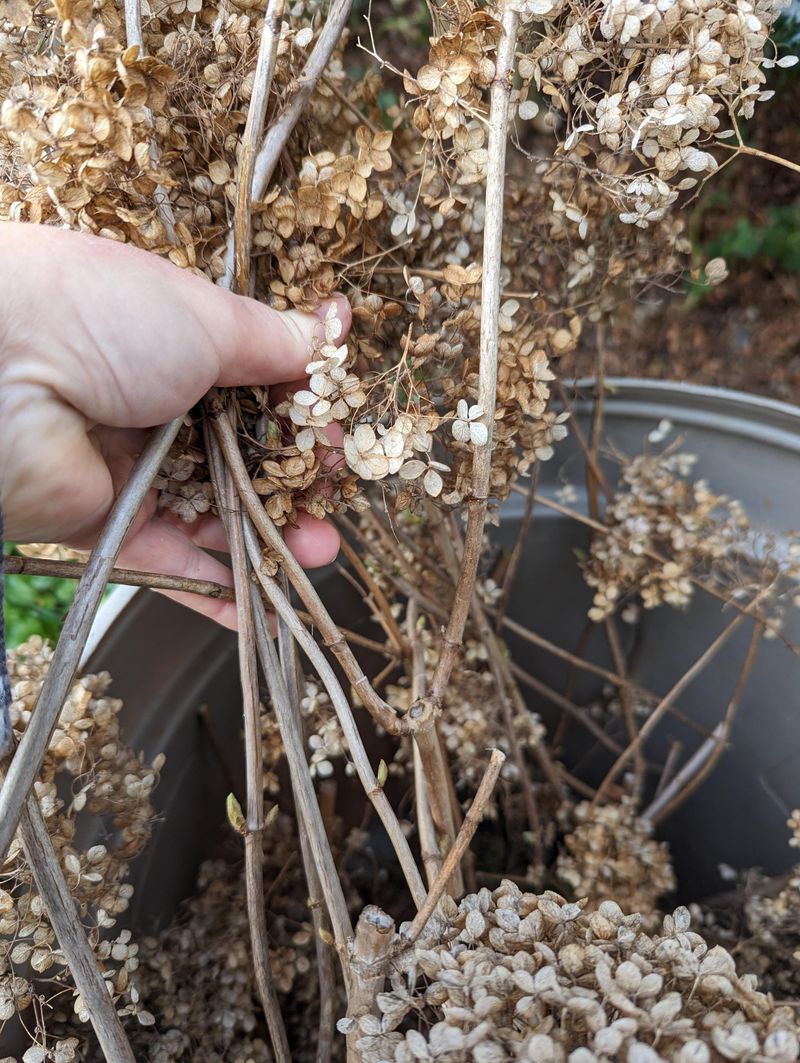
Imagine your smooth hydrangea is covered in beautiful blooms in July, and then a serious storm comes through and flattens several stems.
The temptation to cut the whole thing back and start fresh is real, especially when the plant looks messy and battered.
Cutting the entire shrub to the ground in July, though, means removing its current flowers, all developing buds, and a large portion of the leaf surface the plant depends on for energy production.
A July storm calls for selective corrective pruning rather than a full reset. Go through the shrub carefully and remove only the stems that are clearly broken, split, or crushed beyond recovery.
Every healthy stem you leave in place continues doing important work for the plant, capturing sunlight and sending energy down to the root system.
That ongoing energy production helps the whole shrub stay strong and supports whatever new growth may push out before the season ends.
Postponing any optional size reduction or complete renewal pruning until the appropriate seasonal window is always the smarter choice.
Full renewal pruning for smooth hydrangeas belongs in late winter or early spring, not in the middle of summer when the plant is actively growing and flowering.
If the storm damage is so extensive that the majority of stems are compromised, then a more significant cut may be necessary, but that should be considered a last resort rather than a routine response.
Protect what is healthy, remove what is not, and let the plant do the rest.
6. Late Winter Or Early Spring Is Better For Major Renewal Pruning
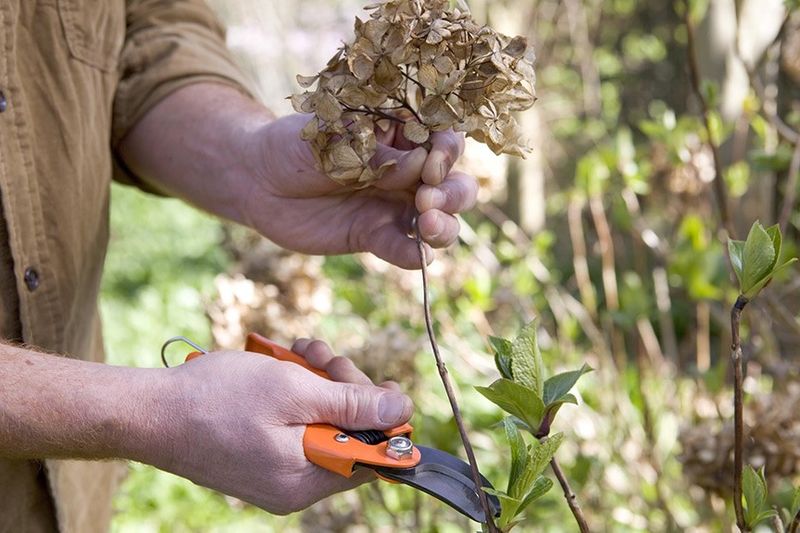
Michigan State University Extension points to late winter or early spring as the preferred pruning window for summer-flowering shrubs like Annabelle hydrangea.
Pruning during this period, before new growth has begun pushing out, allows the plant to put all of its early-season energy directly into producing strong new stems and healthy flower buds.
Timing your major pruning here gives the shrub the best possible setup for a full, vigorous growing season ahead.
Established smooth hydrangeas can handle substantial renewal pruning during this window without much fuss.
Some gardeners prefer to cut the plant close to the ground each year to encourage a more compact, tidy form with stems sturdy enough to hold up the large flower clusters.
Others choose to leave more stem height, which results in a larger overall shrub but can sometimes mean longer, more flexible stems that struggle in storms. Both approaches work well when done at the right time of year.
Young plants deserve a little more patience before you put them through serious renewal pruning.
Allowing a newly planted smooth hydrangea one or two full growing seasons to establish its root system before cutting it hard gives it a much stronger foundation to draw from.
A well-rooted plant bounces back from renewal pruning with noticeably more vigor than one that is still getting settled in the soil.
Mark your calendar each year for late winter pruning, keep your tools clean and sharp, and your Annabelle hydrangea will reward you with a beautiful, full flush of blooms every summer season.
7. Bigleaf And Oakleaf Hydrangeas Need Completely Different Treatment
Smooth hydrangea pruning rules should never be applied automatically to every hydrangea in your yard.
Michigan gardens are full of different hydrangea species, and two of the most common ones, bigleaf and oakleaf hydrangeas, follow a completely different flowering pattern that changes everything about how they should be handled after storm damage.
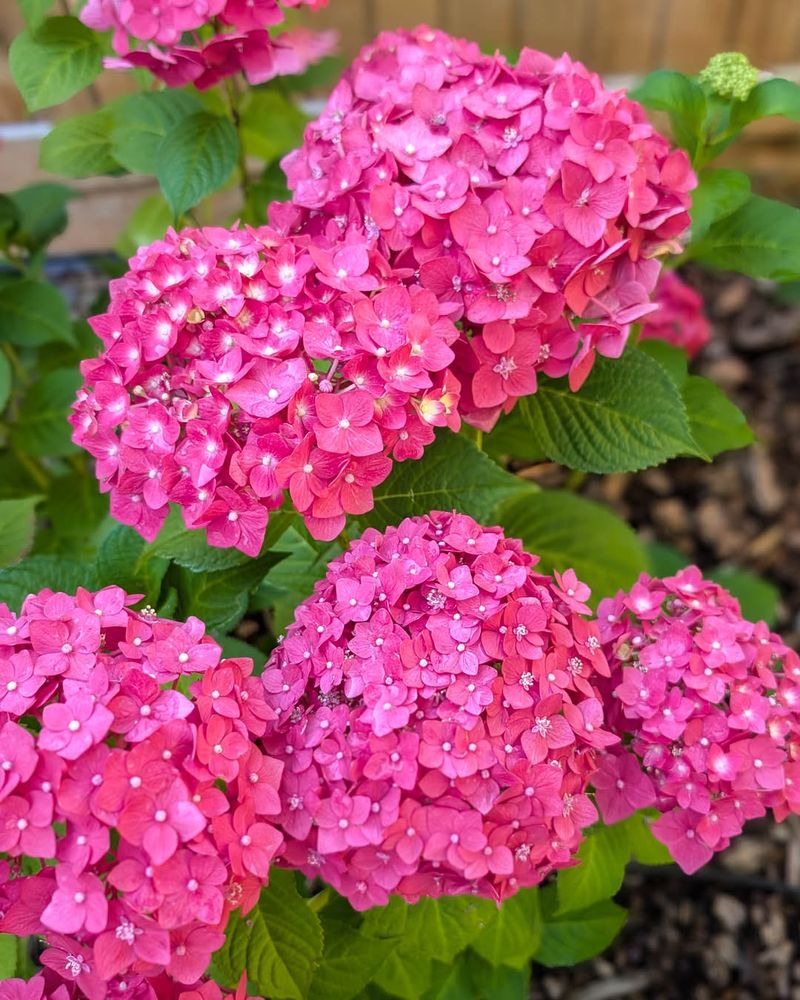
Bigleaf hydrangeas, which include the popular mophead and lacecap types with their blue and pink flower clusters, form most of their flower buds on growth produced during the previous season.
Oakleaf hydrangeas follow a similar pattern. Cutting either of these types back hard after a storm does not just tidy them up; it removes the buds that were already developing for the next flowering period.
You could end up with a green, leafy shrub and no flowers the following season simply because the pruning was done without understanding the plant.
After a storm, the safest approach for bigleaf and oakleaf hydrangeas is the same selective removal that applies to smooth hydrangeas: take off only what is clearly broken, snapped, or unable to recover on its own.
Anything beyond that targeted removal requires knowing exactly which hydrangea species you are working with before making a single extra cut.
If you are unsure of your hydrangea variety, check a plant tag or consult a reliable resource before pruning. Confirming the type with your local Michigan State University Extension office prevents accidental cuts that could ruin a full season of blooms.
8. Better Support Can Reduce Future Storm Damage To Your Hydrangeas
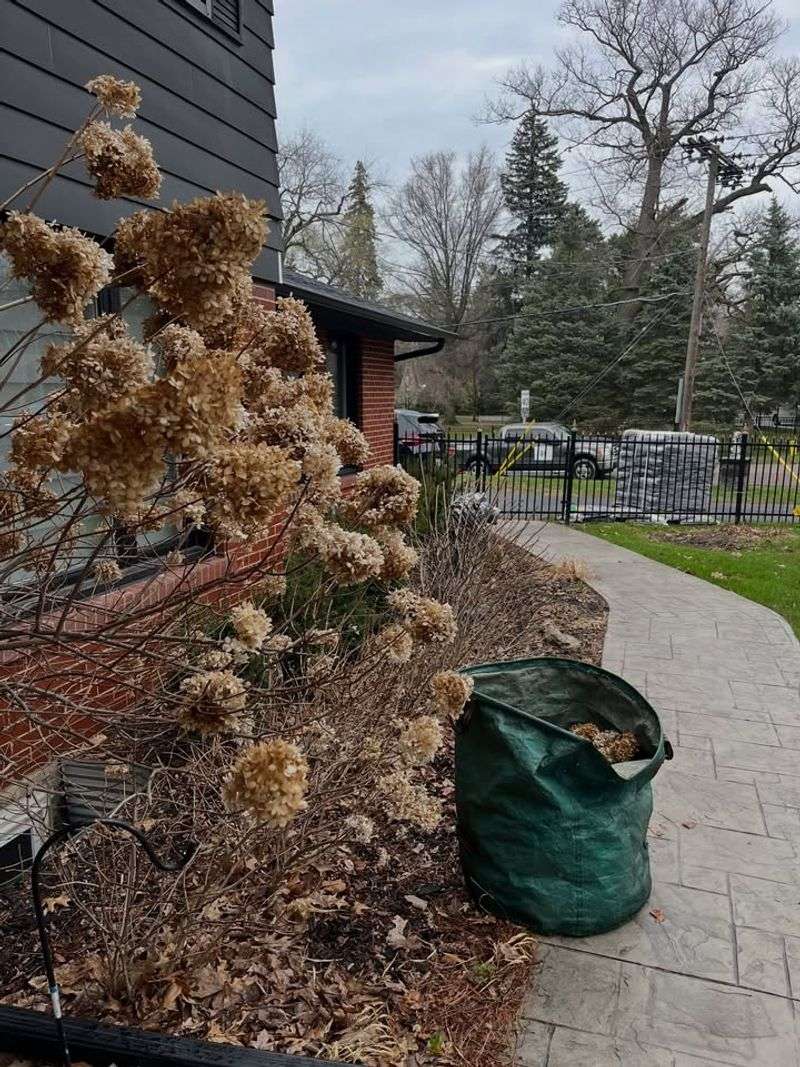
After dealing with storm damage once, most gardeners start thinking about how to prevent it from happening again.
Smooth hydrangeas are tough, resilient plants, but a few smart habits can make a real difference in how well they hold up when the next big Michigan storm arrives.
Getting ahead of the problem is always easier than reacting to it after the fact.
Consistent, even watering without saturating the soil encourages steady, strong root development that anchors the shrub more firmly.
A proper mulch layer around the base helps regulate soil moisture and temperature, supporting the kind of balanced growth that produces sturdy stems rather than thin, floppy ones.
Avoiding excessive nitrogen fertilizer is also worth paying attention to, since too much nitrogen pushes rapid, soft growth that bends and breaks far more easily under wind and rain than slower, firmer growth does.
Discreet plant support rings or grow-through grids placed around cultivars with especially large flower clusters can provide a practical safety net during storms without looking out of place in the garden.
Leaving a modest amount of established stem framework during spring pruning, rather than cutting every stem extremely low each year, can also provide a sturdier base for new growth to build on.
After every major storm, take a walk through the garden and inspect your smooth hydrangeas carefully.
Remove only the material that clearly cannot recover, leave everything else alone, and trust the plant to do what it does best: grow back strong, full, and ready to bloom again.