What Speckled Leaves On North Carolina Green Beans Are Signaling Before The Plants Wind Down
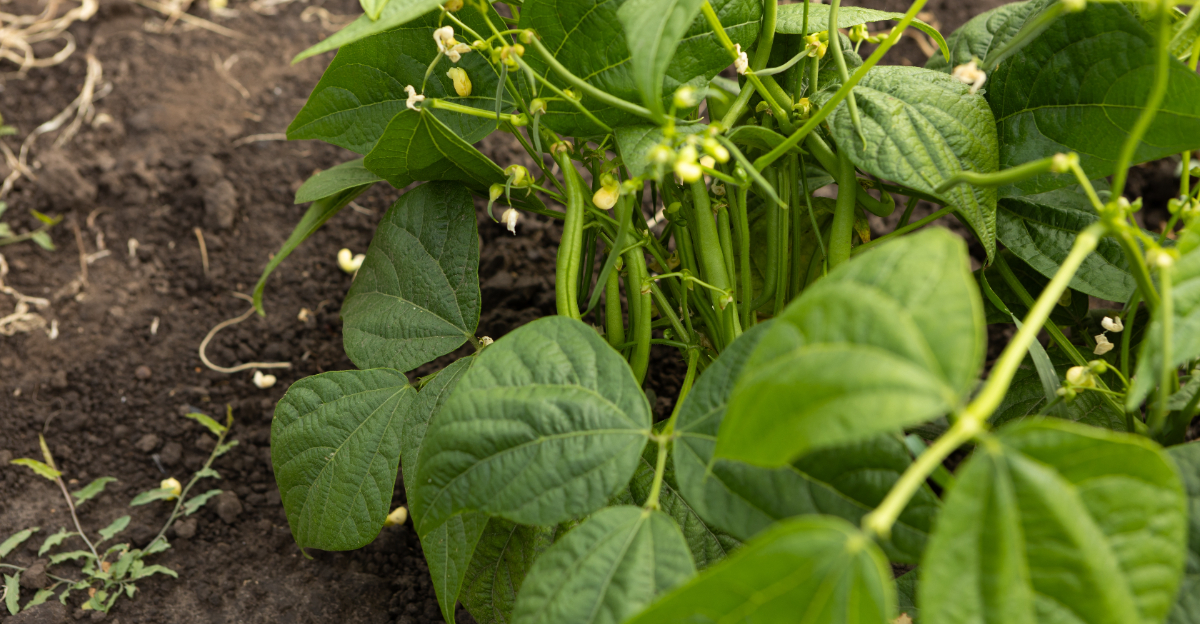
North Carolina bean leaves can turn into tiny warning flags by late summer.
One day the row looks productive. The next, pale speckles scatter across the leaves, edges look chewed, and a dusty gray cast shows up right when the afternoon heat gets smug.
It is easy to blame age and move on.
But those marks usually mean something more specific.
Spider mites leave one kind of clue. Beetles leave another. Drought stress, fungal spots, tired roots, and plain end-of-season slowdown all have their own leaf language.
That is where the garden gets interesting.
A bean plant may be telling you it needs water, airflow, pest checks, cleaner leaves, or simply one last harvest before the row fades out.
So what are those speckled leaves really trying to say before the season winds down?
Start with the pattern, not the panic. The faster you read the leaves, the better chance you have of saving a few more crisp, green pickings.
1. Spider Mites Are Stippling Leaves
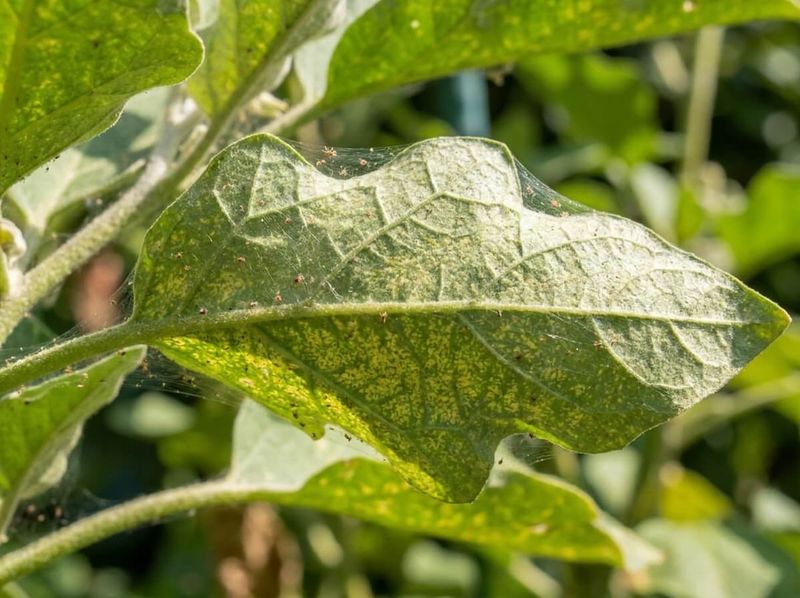
Hold a speckled leaf up to the afternoon sun and look closely.
If you see hundreds of tiny pale dots scattered evenly across the surface, almost like someone flicked a fine paintbrush full of white paint, spider mites are almost certainly the cause.
These pests are barely visible without a hand lens, but their damage is hard to miss once a population gets going.
Spider mites thrive in hot, dry conditions, which makes late-summer North Carolina bean rows practically a five-star resort for them.
They pierce individual leaf cells and suck out the contents, leaving behind those pale stipple marks. A heavily infested leaf will look silvery or bronze, and the whole plant can look dusty from a few feet away.
Flip the leaf over. That is where the mites live, feed, and lay eggs.
You may also see fine silky webbing stretched between leaf veins, especially near the stem end of the leaf. That webbing is a sure sign the population has grown large enough to worry about.
A quick scouting trick is to tap a leaf over a white piece of paper and watch for tiny moving specks. Spider mites move slowly but they do move, which separates them from dirt or pollen.
Dry, dusty rows see the worst outbreaks. Keeping plants watered during dry spells helps slow mite buildup before it gets out of hand.
2. Beetles Are Making Ragged Marks
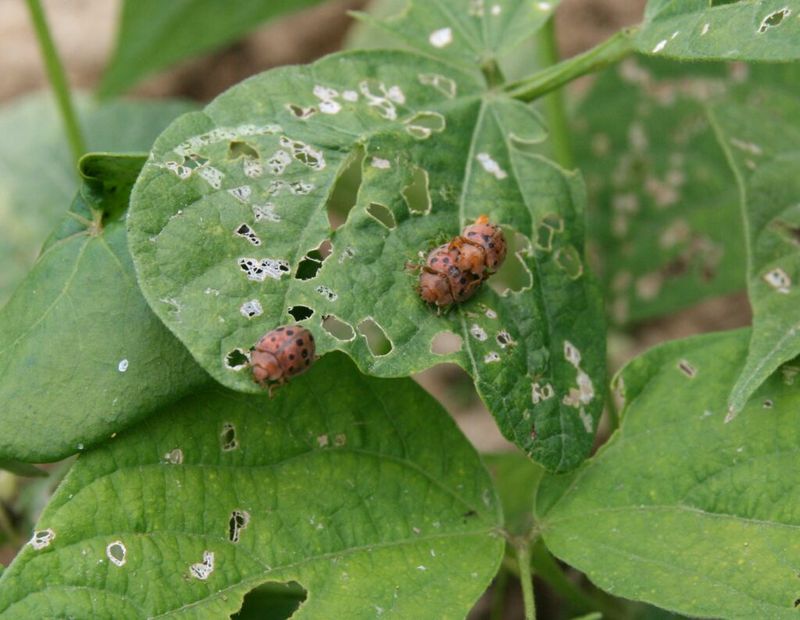
A hot row after lunch can feel pretty quiet, but look close at the leaves and you might catch a bean leaf beetle or Mexican bean beetle making a meal out of your crop.
These two insects create damage that looks different from spider mite stippling.
Instead of tiny dots, you get ragged holes, chewed edges, and in the case of Mexican bean beetles, a lacy skeletonized look where only the leaf veins remain.
Bean leaf beetles are small, rounded, and usually reddish or tan with black spots. They chew round holes right through the leaf.
Your North Carolina Garden Changes Every Week. Your Plan Should Too.
Gardening in North Carolina changes quickly throughout the season. Every Friday you’ll receive a simple weekly plan showing exactly what to plant, prune, fertilize, harvest, and protect so you never miss the right timing.
Mexican bean beetles are larger, yellowish-orange, and look a bit like a ladybug that took a wrong turn. Their larvae are spiny yellow grubs that feed on the underside of leaves, scraping away tissue and leaving that distinctive skeleton pattern.
Both beetles can show up from early summer through late season in North Carolina.
Populations tend to build as the summer goes on, so a row that looked fine in June might be heavily damaged by August.
Scouting regularly is the best defense.
Walk the row every few days and check both leaf surfaces. If you find beetles or larvae on more than about ten percent of plants, it is worth taking action.
Hand-picking works well in small gardens, and row covers early in the season can prevent initial infestations entirely.
3. Tiny Eggs Need A Close Look
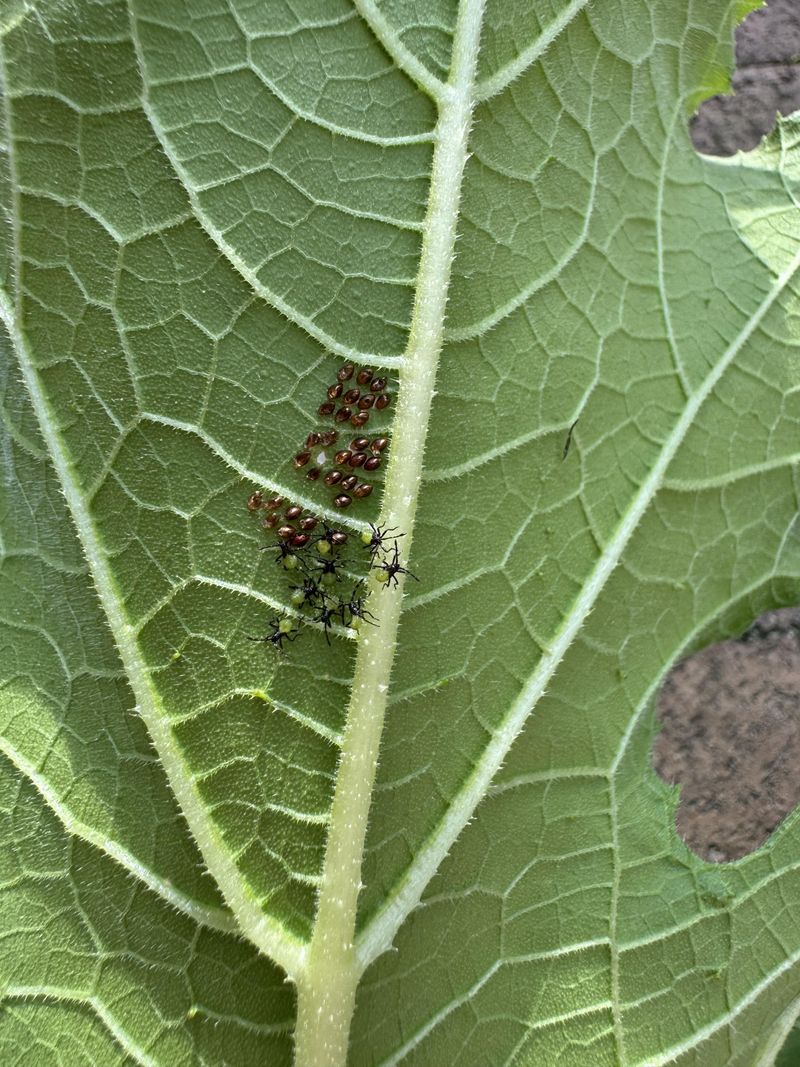
Spotting the damage is one thing, but catching the eggs before they hatch puts you ahead of the problem entirely.
Flipping leaves to check the undersides is one of the most valuable habits a bean gardener can build, especially in mid to late summer when pest pressure peaks across North Carolina.
Mexican bean beetle eggs are bright yellow and laid in tight clusters, usually on the underside of leaves near the main veins.
They hatch into spiny yellow larvae that feed in groups, so a single egg cluster can turn into a whole crew of leaf-scrapers within a week or two.
Spider mite eggs are much harder to see without magnification. They are round, pale, and scattered loosely near the webbing on leaf undersides.
Taking five minutes to flip leaves and check undersides during each scouting walk changes everything.
You catch problems at the smallest stage, before populations explode.
Use a hand lens if you have one. Even a cheap ten-power loupe from a hardware store makes egg identification much easier.
Early detection means smaller, more targeted responses and less disruption to the beneficial insects that are already working your garden for free.
4. Dry Heat Is Speeding Trouble
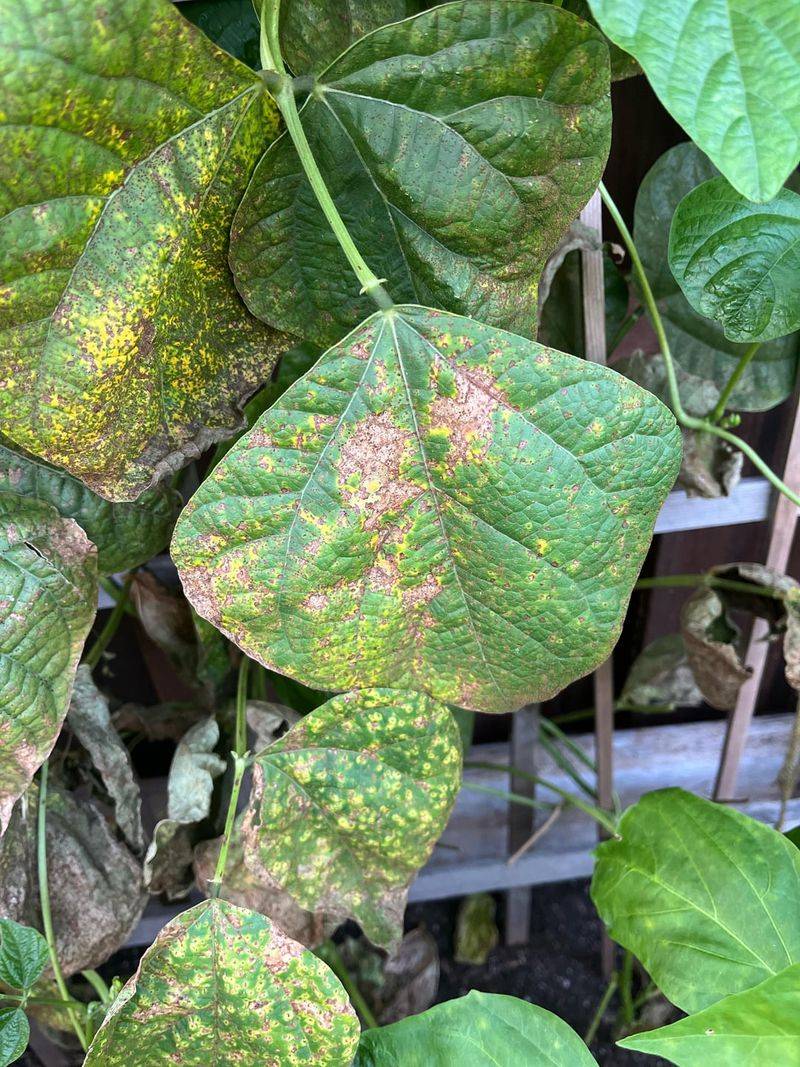
North Carolina summers do not ease up in August.
Temperatures push into the nineties, rain becomes unreliable, and the soil in bean rows can go from moist to bone dry in just a few days without irrigation.
That combination of heat and drought does not just slow the plants down. It makes every pest problem worse at the same time.
Drought-stressed plants have less ability to push back against feeding damage.
Their leaves may already look pale or slightly yellowish from water stress, which makes it harder to spot the early pale stippling of spider mites against an already off-color background.
Heat also speeds up the life cycle of mites and some beetles, meaning populations that would normally take weeks to build can explode in days during a dry stretch.
Soil moisture matters more than most gardeners realize during late season.
A plant that is well-watered is physically stronger and better able to handle some pest pressure without collapsing production.
Mulching around the base of bean rows helps hold soil moisture longer between waterings and keeps the root zone a little cooler on the hottest days.
Watch your weather forecast and scout more frequently during dry spells.
A five-day stretch without rain in July or August in North Carolina is enough to push a borderline situation into a serious one.
5. Old Leaves Tell The Story First
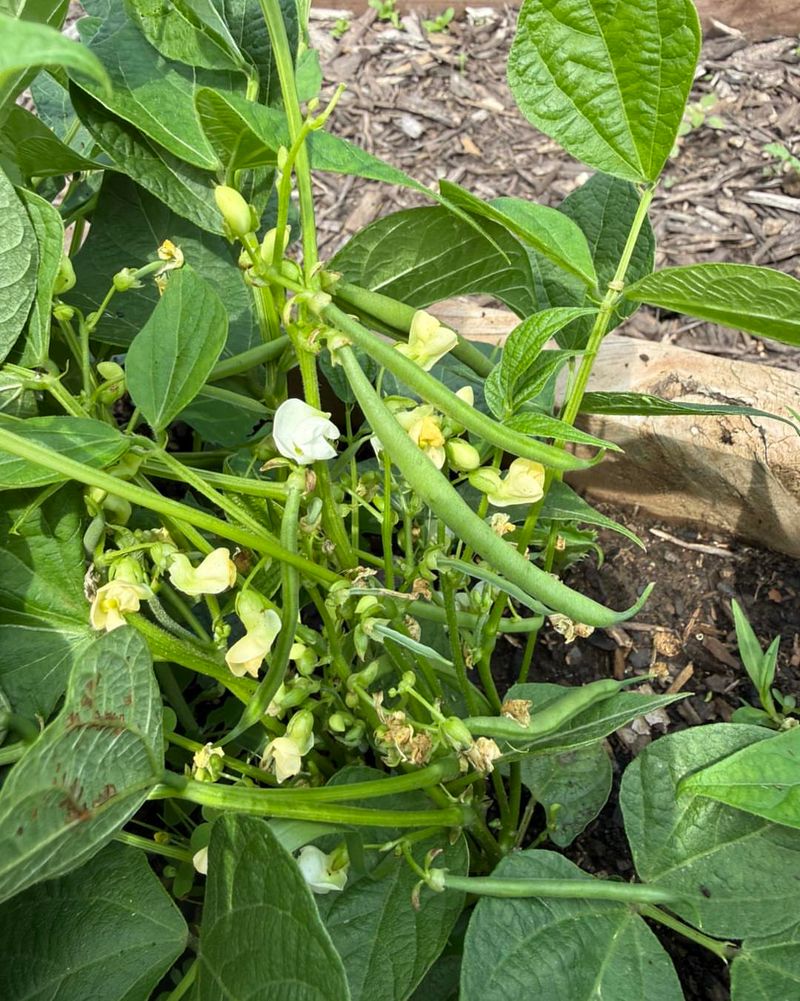
A gardener who knows where to look saves a lot of guesswork.
On a green bean plant, the oldest leaves are always at the bottom of the stem, closest to the soil.
Those leaves are the first to show signs of stress, disease, or pest pressure, and checking them regularly gives you an early warning before problems climb higher on the plant.
Nitrogen deficiency shows up first in older leaves as a general yellowing that moves from the bottom up.
Fungal diseases like angular leaf spot and bacterial brown spot often appear on lower leaves first because they spread in splashing water and humid conditions near the soil surface.
Spider mite damage tends to start on the oldest, most exposed leaves in the row before spreading inward and upward.
Seeing yellowing or speckling only on the lower third of the plant is actually somewhat reassuring.
It suggests the problem has not yet spread throughout the whole plant, which means you still have time to respond.
If the newest growth at the top of the plant looks healthy and green, the plant is likely still producing and still worth tending.
Make it a habit to crouch down during your scouting walks and look at the bottom leaves first.
Most gardeners look at mid-plant leaves because that is eye level. Bending down to check the lowest leaves takes an extra thirty seconds but gives you a much more complete picture of what the plant is actually dealing with.
6. Crowded Rows Hold Too Much Heat
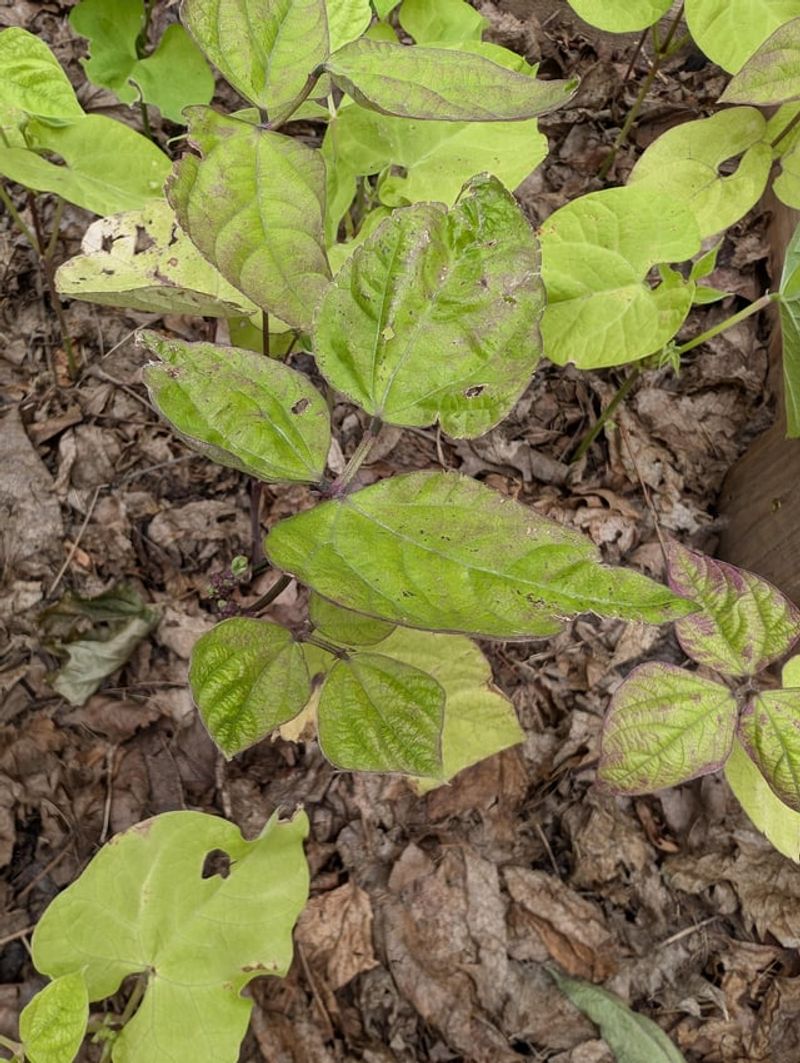
Spacing might seem like a planting-day concern, but it pays dividends all the way through harvest.
Bean rows planted too close together trap heat and humidity between plants, creating exactly the conditions that fungal diseases and some pests love most.
By late summer, a crowded row can feel like a small sauna when you push your hand between the plants.
Poor airflow means leaves stay wet longer after rain or dew, giving fungal spores more time to germinate and infect.
Angular leaf spot, one of the most common late-season leaf diseases on North Carolina green beans, spreads much faster in dense plantings where humidity stays high.
The speckled or water-soaked angular spots it creates can look similar to pest damage at first glance, which makes accurate diagnosis even harder in crowded rows.
NC State Extension recommends spacing green bean rows far enough apart to allow good air circulation.
For bush beans, that typically means rows about eighteen to twenty-four inches apart with plants thinned to about four to six inches within the row.
If your plants are already in the ground and crowded, removing some plants or trimming lower leaves to open up airflow can still help.
A crowded row is also harder to scout properly.
You cannot see the undersides of leaves easily, you miss egg clusters, and you are more likely to brush past early pest infestations.
Giving your beans a little breathing room is one of those simple moves that pays off in fewer problems and easier management all season long.
7. Sprays May Miss The Real Cause
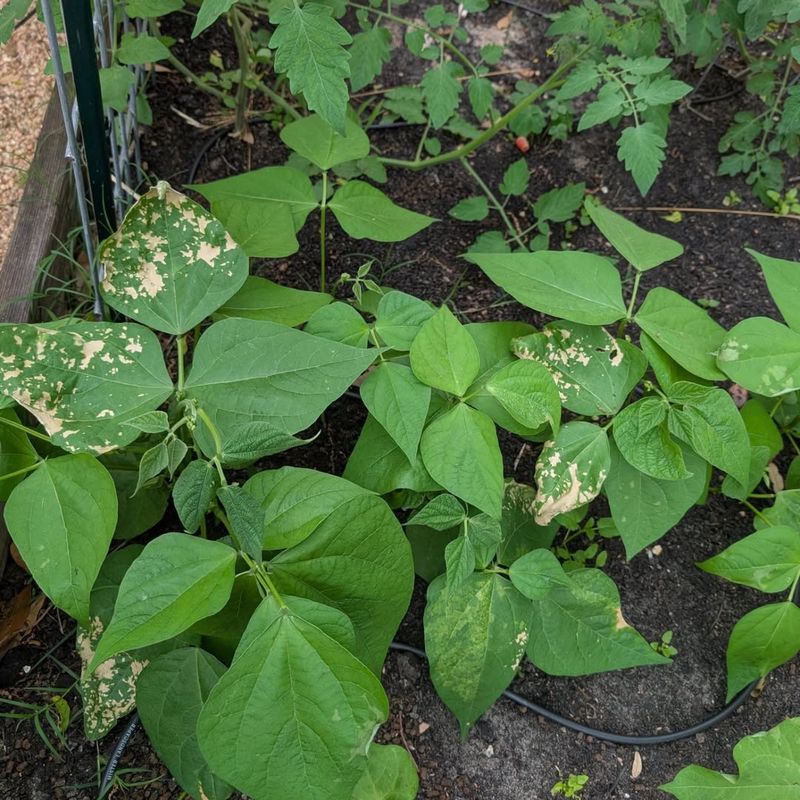
Reaching for a spray bottle the moment you see speckled leaves is a tempting move, but it can make things worse if you have not figured out what is actually causing the problem.
Broad-spectrum insecticides applied without a clear target often harm beneficial insects, including predatory mites, parasitic wasps, and lady beetles that were already working to keep your pest populations in check.
Spider mite outbreaks, for example, often get worse after certain insecticide applications because those sprays remove the natural predators that were keeping mite numbers down.
Suddenly the mites have no competition, and their population rebounds faster than before.
Scout first. Identify the pest or problem before you spray anything.
Check multiple plants across the row, not just one or two, to get a realistic picture of how widespread the issue actually is.
If you find only a handful of beetles or mites on a small percentage of plants, natural controls and physical removal may be all you need.
If treatment is clearly necessary, targeted options like insecticidal soap or neem oil applied directly to leaf undersides are much less disruptive to beneficial insects than broad pyrethroid sprays.
Always follow label directions and spray in the early morning or evening to reduce exposure to pollinators.
Scouting before spraying is not just good practice. It is the smartest move you can make in a late-season bean row.
8. Production Is Starting To Slow
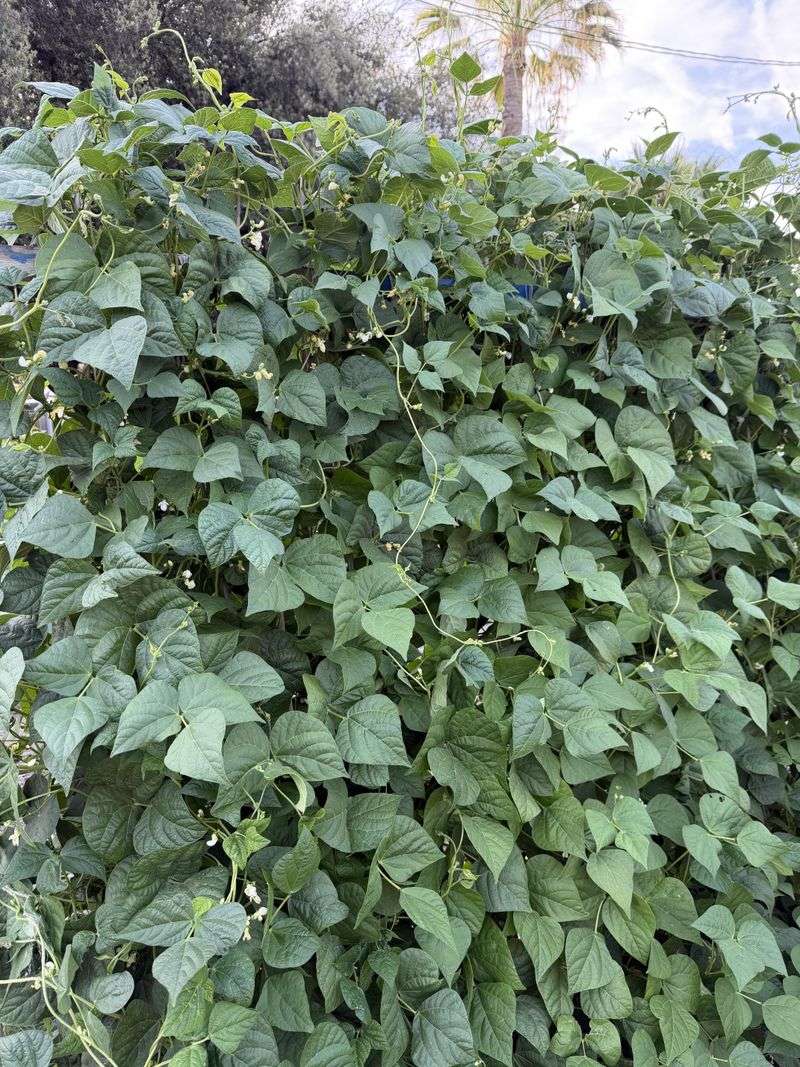
Every bean plant has a natural arc.
It sprouts, sets leaves, flowers, produces pods, and then gradually slows down as the season progresses.
By late summer in North Carolina, most green bean plantings are approaching the end of that arc, and speckled or yellowing leaves are often just one part of a bigger picture of natural plant aging.
Fewer flowers and smaller pods forming are the clearest indicators that production is genuinely winding down.
If you are still seeing flowers and young pods forming alongside the speckled leaves, the plant has more to give and management still makes sense.
If flowering has stopped and the remaining pods are small and slow to fill, the plant is likely past its peak production window.
At this point, you have a few practical choices.
Harvest every remaining pod, even the small ones, to avoid wasting what is left. Clear the row and give the soil a rest before fall planting.
In many parts of North Carolina, a late July or early August planting of a fast-maturing bush bean variety can produce a second harvest before frost arrives.
Reading the speckled leaves correctly means knowing whether you are looking at a treatable problem or just a plant that has done its job well and is ready to step aside.
Both situations deserve a thoughtful response, and neither one means the season was a failure.