The Fruit Tree Mulch Ring Mistake California Gardeners Should Fix Now
California gardeners spend hours choosing the right fruit tree, testing soil, tracking sun exposure, then quietly undo all that effort at the base of the trunk. One small habit sets fruit trees up for stress that can take a full season to reverse.
The signs show up slowly. A tree that should be thriving starts producing less fruit, its bark looks off, and no one connects the dots back to something sitting right at ground level.
California’s climate makes this an easy trap to fall into, and an even easier one to correct once gardeners know what to look for. The fix costs nothing and takes less time than a trip to the nursery.
Mulch Piled Against The Trunk
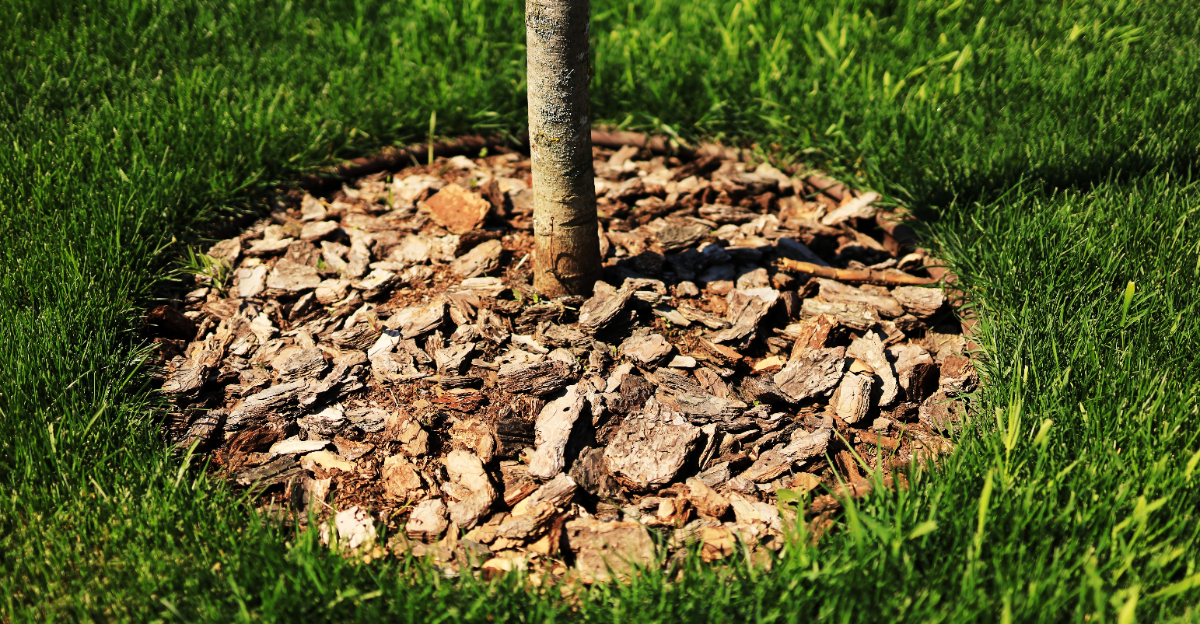
Picture a thick cone of wood chips packed right up against a fruit tree trunk. That image is familiar to almost every home gardener, and it looks like good care on the surface.
Many California gardeners pile mulch high thinking more is better. The logic seems sound: mulch holds moisture, so the closer it is to the roots, the more the tree benefits.
That thinking leads to the most common fruit tree mulch ring mistake seen across backyard orchards. The trunk is not a root, and it does not want to stay wet.
Wood chips pressed against bark create a dark, damp environment that rarely dries out between waterings. That constant moisture softens the outer layer of bark over weeks and months.
Softened bark breaks down faster than healthy bark, weakening the tree from its base upward. You might not notice the damage until the tree starts looking stressed or dropping fruit early.
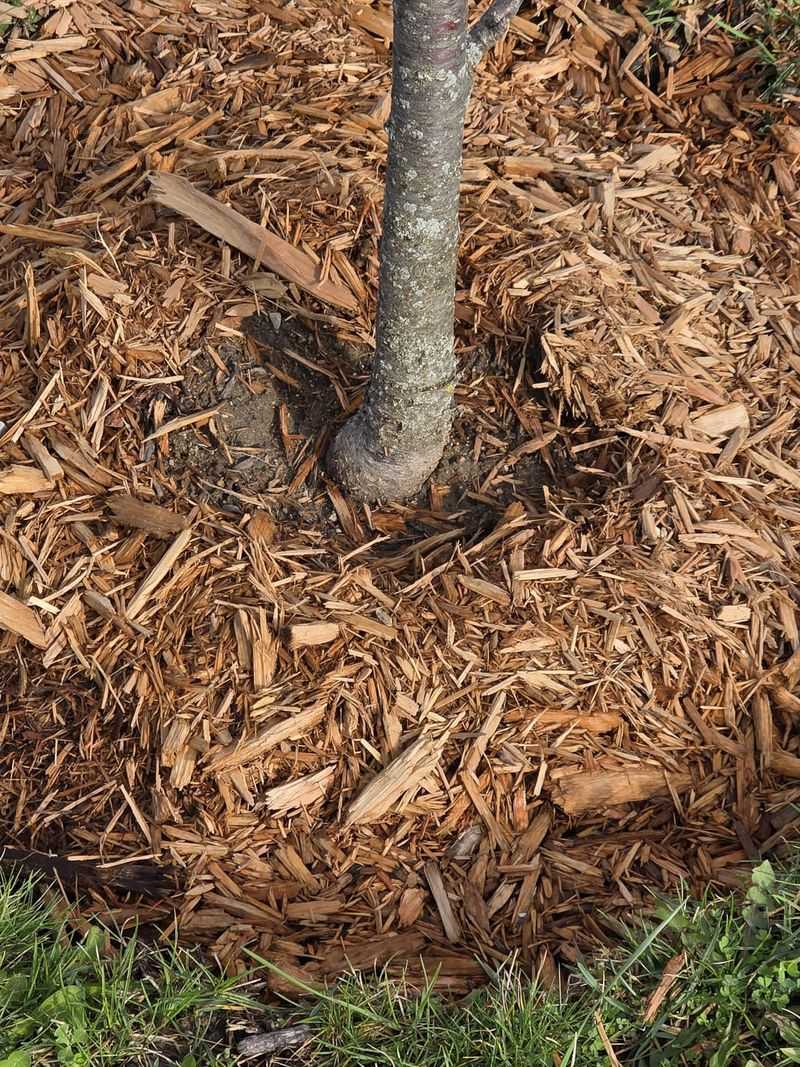
The fix is straightforward: pull the mulch back several inches from the base of the trunk. Leave a clear gap so the root flare, the spot where trunk meets soil, stays exposed to open air.
Aim for a gap of at least three to four inches around the trunk. This small adjustment takes under five minutes and begins improving conditions at the trunk right away.
Good mulching is about placement, not just quantity. Getting the distance right is the first step toward a healthier, longer-lived fruit tree.
Trunk Contact Traps Moisture And Invites Rot
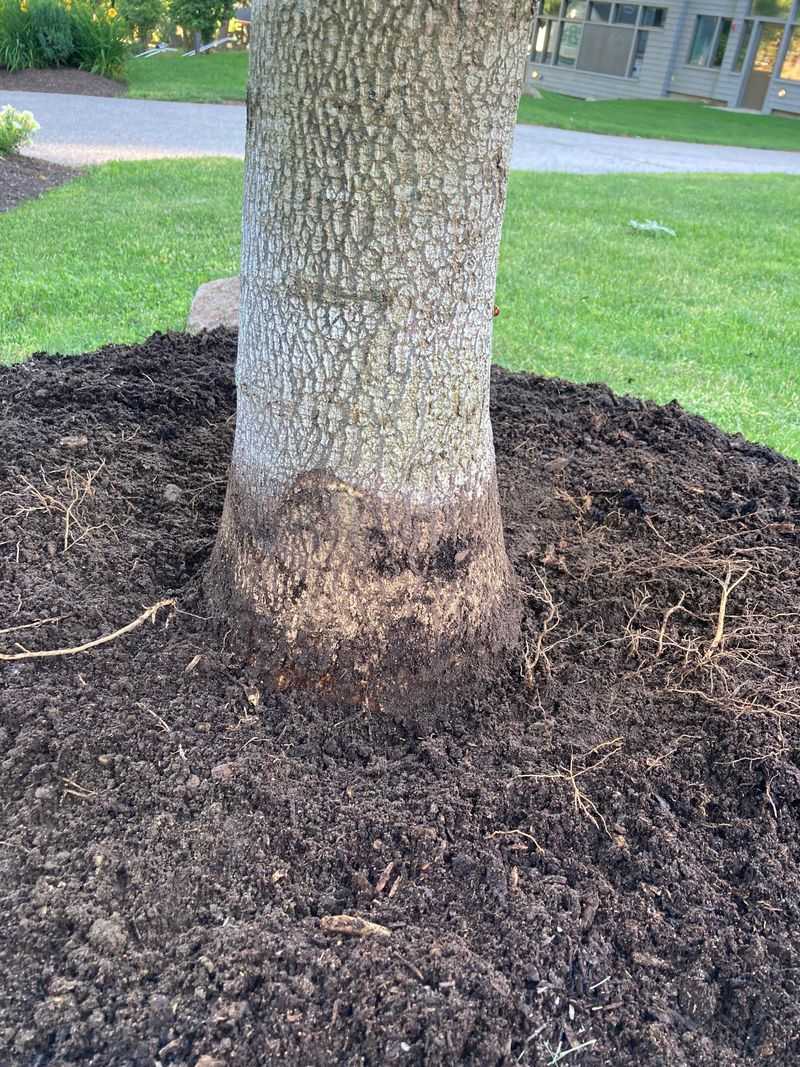
Rotting bark does not happen overnight, but the risk begins as soon as mulch stays pressed against the trunk. Consistent moisture against living bark is a slow, silent problem.
Fruit tree bark evolved to handle rain and morning dew, not prolonged contact with wet organic material. When mulch stays pressed against the trunk, it acts like a wet sponge that rarely gets a chance to dry out.
The outer bark begins to soften and separate from the inner layers beneath it. Once that protective layer breaks down, the cambium, the living tissue just under the bark, becomes exposed.
Exposed cambium is vulnerable to fungal growth, bacterial infections, and physical breakdown. Rot sets in gradually, and by the time it becomes visible, the damage is already significant.
California gardeners often mistake early rot for natural bark texture or harmless discoloration. Pressing a fingernail gently into the base of the trunk can reveal soft, spongy tissue that should feel firm.
Your California Garden Changes Every Week. Your Plan Should Too.
Gardening in California changes quickly throughout the season. Every Friday you’ll receive a simple weekly plan showing exactly what to plant, prune, fertilize, harvest, and protect so you never miss the right timing.
Firm, healthy bark resists light pressure and has a consistent color. Rotting bark gives slightly under pressure and may show dark streaking or a musty smell.
Pulling mulch away from the trunk gives the bark a chance to dry out and recover. In early stages, bark can sometimes heal once the moisture source is removed.
Keeping the trunk base dry is one of the simplest ways to extend the life of any fruit tree. Moisture management starts at ground level, not at the canopy.
Bark Damage Opens The Door To Pests And Disease
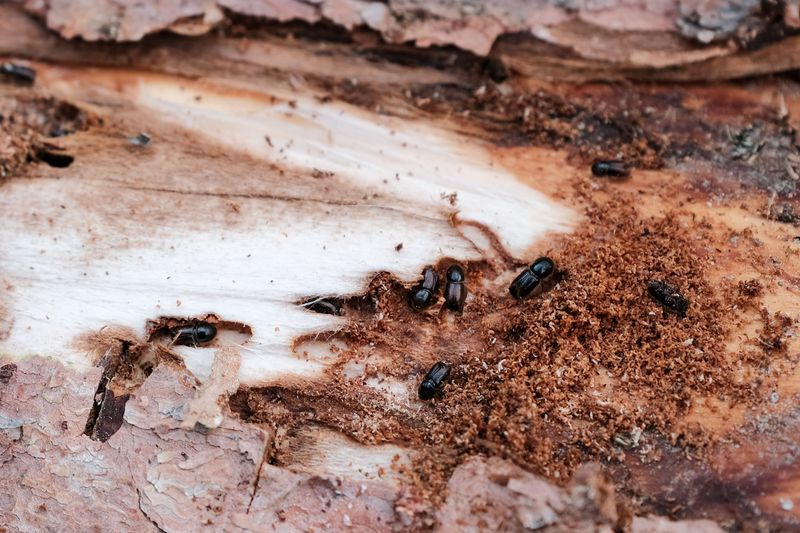
Healthy bark is a fruit tree’s first defense against the outside world. Once that barrier weakens, pests and pathogens find an easy way in.
California orchards deal with their own share of wood-boring insects, and bark beetles are among the most common visitors to a stressed tree.
A tree dealing with moisture damage at its base sends out chemical stress signals. Certain insects can actually detect those signals and move toward the tree as a result.
Fungal spores are commonly present in garden soil and organic mulch. Under normal conditions, healthy bark keeps them from establishing inside the tree’s vascular system.
Damaged bark creates small cracks and soft spots where fungal spores can settle in. Once inside, fungal infections spread through the wood and disrupt the flow of water and nutrients.
Crown rot and collar rot are two fungal diseases commonly linked to improper mulching. Both are difficult to reverse once they take hold in the lower trunk and root zone.
Pest infestations add another layer of stress on top of disease pressure. A tree dealing with both at once burns through its energy reserves quickly and begins to decline visibly.
Removing mulch from direct trunk contact reduces the conditions that attract pests and support fungal growth. Less moisture at the base means fewer entry points and less stress overall.
Protecting bark is protecting the whole tree. One simple habit change at planting time can prevent years of compounding problems down the road.
A Proper Mulch Ring Keeps Moisture Away From The Trunk
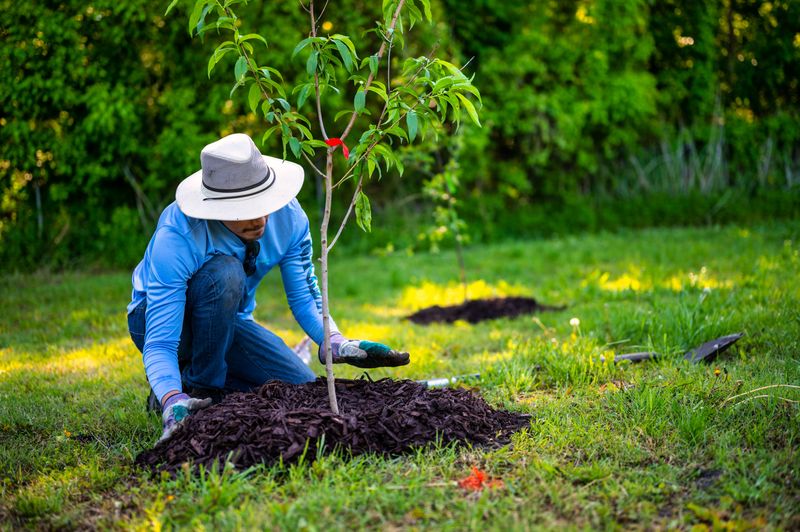
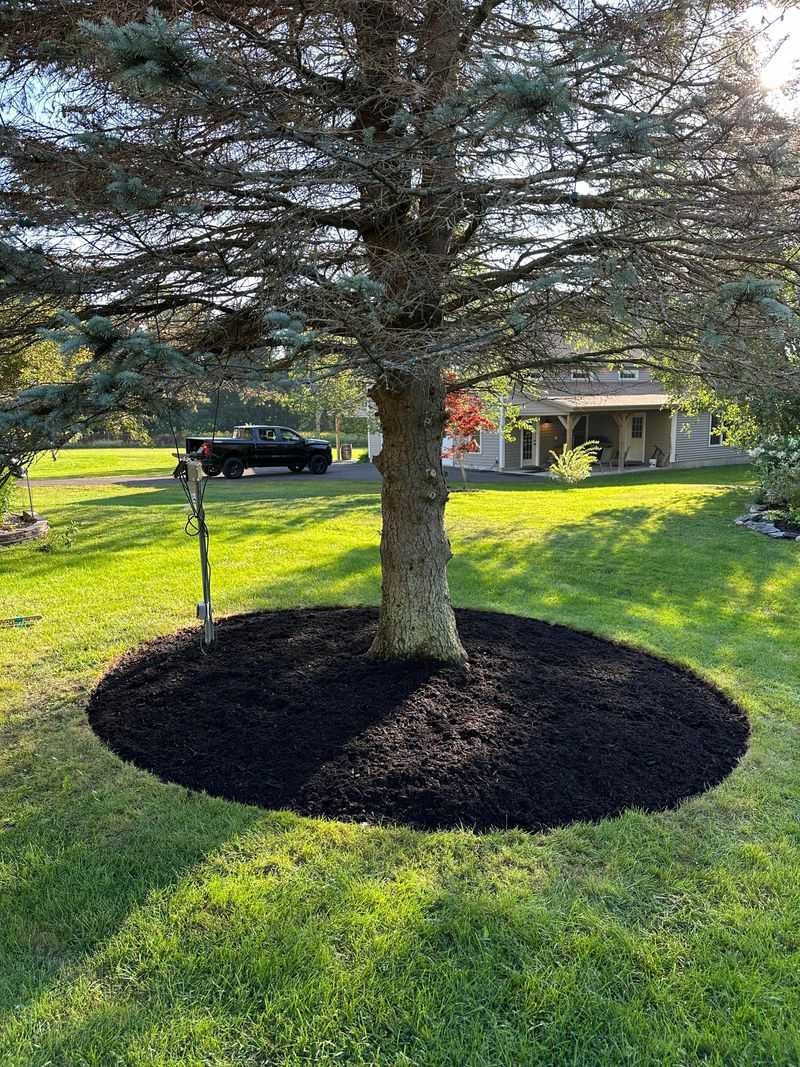
A well-placed mulch ring looks like a donut, not a volcano. The center is open, the trunk is visible, and the mulch fans outward in a wide, even layer.
That donut shape is not just for looks. It directs moisture outward toward the feeder roots, where the tree actually absorbs water and nutrients.
Feeder roots grow near the drip line, the outer edge of the tree’s canopy. Placing mulch in that zone encourages roots to spread and strengthens the tree’s foundation over time.
A proper fruit tree mulch ring typically extends two to three feet out from the trunk in young trees. For mature trees, pushing the mulch ring even wider brings more benefit to the root zone.
Keeping the inner edge of the mulch ring at least three inches from the trunk prevents moisture buildup at the bark. That gap allows air to circulate freely around the base of the tree.
Air circulation is just as important as moisture retention when it comes to tree health. Bark that can breathe stays firm and far less prone to the problems that show up in improperly mulched trees.
Spreading mulch in a thin, even layer also prevents it from compacting into a dense mat. Compacted mulch blocks oxygen from reaching the soil and roots below.
Getting the shape and spacing right takes only a few extra minutes during application. The payoff is a stronger, more productive tree that handles heat and drought with far more ease.
Depth And Material Choice Matter As Much As Placement
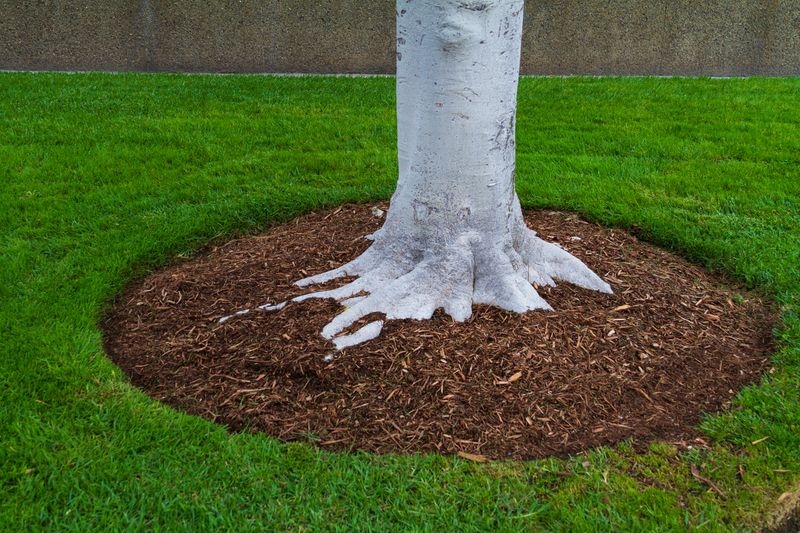
Not all mulch performs the same way, and not every depth works for every situation. Getting both right makes a real difference in how the tree responds over a full growing season.
Wood chips made from arborist trimmings are widely considered the best option for fruit trees. They break down slowly, feed soil microbes, and allow water to pass through without pooling.
Straw and grass clippings are lighter options that decompose faster. They work well as a short-term mulch but need to be refreshed more often to maintain their benefits.
Avoid rubber mulch, dyed wood products, and fresh wood chips from diseased trees. These materials either introduce toxins, alter soil chemistry, or bring pathogens directly into the root zone.
Depth matters just as much as material selection. A layer between two and four inches thick strikes the right balance between moisture retention and airflow.
Going deeper than four inches can starve roots of oxygen and create the same soggy conditions that volcano mulching produces. Thinner than two inches dries out too fast to offer meaningful protection, especially during California’s hot, dry summers.
Aged or composted wood chips are preferable to fresh ones for most fruit trees. Fresh chips can temporarily tie up nitrogen in the soil as they break down, competing with the tree for nutrients.
Mixing a thin layer of compost beneath the wood chips adds nutrients while the chips handle weed suppression and moisture regulation. Layering smartly gives the tree multiple benefits from a single application.
Seasonal Timing Affects How Mulch Performs
Timing a mulch application is not just a detail, it shapes how much benefit the tree actually receives. Apply at the wrong moment and the mulch works against the tree instead of for it.
Late winter or early spring is the ideal window for refreshing a fruit tree mulch ring. The soil has warmed slightly, roots are becoming active, and the tree is ready to absorb moisture and nutrients.
Applying mulch too early in winter can insulate cold soil and delay the warming that signals roots to wake up. That delay can push back flowering and fruiting later into the season.
Summer application is still beneficial but requires extra attention to moisture levels beneath the mulch. Hot, dry conditions in many parts of the state can cause the top layer to form a crust that repels water.
Breaking up that crust occasionally with a rake allows irrigation to penetrate and reach the roots. A quick check every few weeks during peak summer heat keeps the mulch ring functioning as intended.
Fall is a good time to add a light top-up layer before cooler temperatures arrive. That extra inch helps insulate roots against temperature swings without creating the excessive depth that causes problems.
Avoid mulching directly after heavy rain when the soil is already saturated. Adding more material on top of soaked ground traps excess moisture and raises the risk of root and crown diseases.
Seasonal awareness turns a simple task into a lasting habit that keeps the tree healthy year-round.