9 Native Ohio Plants That Hold Their Color Longest Into Fall
Ohio fall color peaks fast and fades faster than anyone wants. A hard frost arrives.
What was full of color a week earlier starts the long slide toward bare and dormant. Some Ohio natives play by different rules.
They hold color into fall with a stubbornness that makes the rest of the garden look like it gave up early. Foliage that deepens rather than drops.
Seed heads that carry visual weight through November. Berries that outlast the leaves and make a garden worth looking at long after the obvious performers have checked out.
Nine natives earn that description honestly. A garden built around even a few of them looks intentional and alive at a point in the season when most yards have already surrendered to the calendar.
1. Let Little Bluestem Glow Copper Into Cold Weather
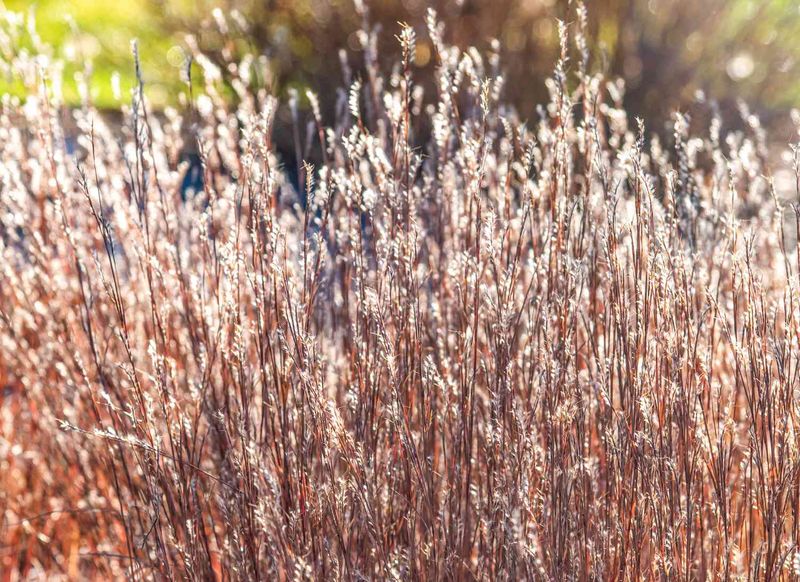
After a hard frost settles in, few sights in the native garden beat a clump of little bluestem catching the low afternoon sun.
This warm-season grass, Schizachyrium scoparium, is native across Ohio and widely recognized by OSU Extension as a reliable choice for sunny, well-drained sites.
Its summer blue-green blades shift to copper, tawny bronze, and red as temperatures drop. That warm color often holds deep into late fall and early winter.
Planting little bluestem in full sun gives it the best chance to develop strong seasonal color. It actually performs better in lean, well-drained soils than in rich, fertilized beds.
Overly fertile or wet ground can cause it to flop and lose its upright structure. Planting it in drifts rather than as a single clump creates a more dramatic visual effect, especially when winter light hits the seed heads.
Leave the stems standing after frost. The fluffy white seed heads attract birds like juncos and sparrows through the colder months, adding wildlife value alongside visual interest.
Color intensity can vary with weather, rainfall, and plant health, so results will differ by site. Look for nursery-propagated plants from reputable native nurseries rather than wild-collected stock.
2. Use Switchgrass For Golden Red Fall Structure
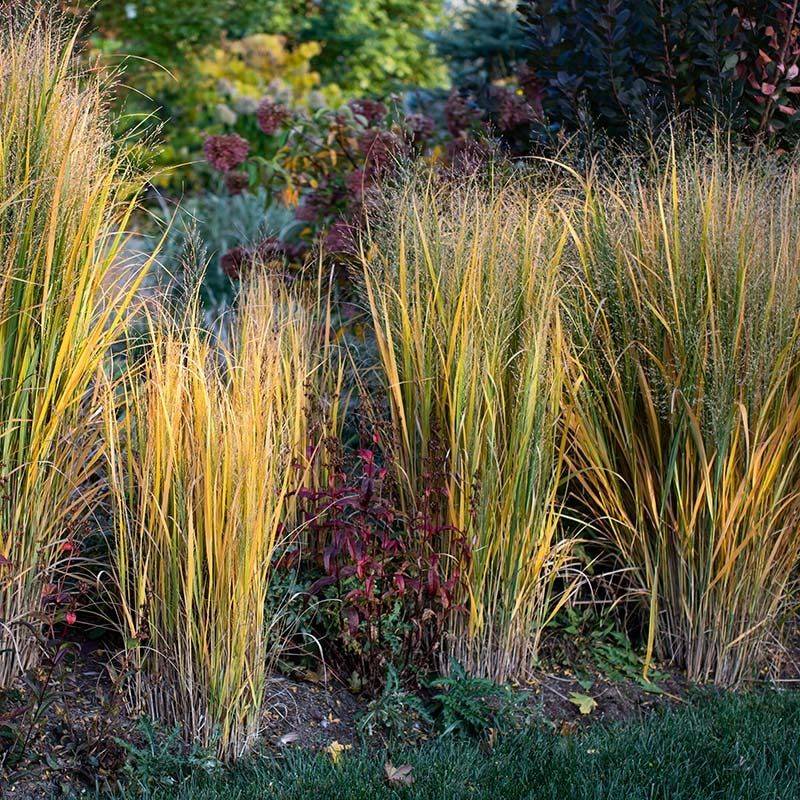
Bold, upright, and surprisingly graceful, switchgrass earns its place in fall gardens across the Buckeye State. Panicum virgatum is native to Ohio and thrives in a wide range of conditions, from moist low spots to average garden beds.
University extension sources describe it as a tall, structural grass that adds vertical interest when most other plants have finished for the season.
Fall color on switchgrass can range from golden yellow to warm reddish tones depending on the cultivar and growing conditions. Some garden cultivars may show deeper burgundy fall color.
Named cultivars can differ from straight native ecotypes in their ecological profile. For the strongest seasonal color, plant switchgrass in full sun.
Partial shade tends to reduce both color intensity and the upright form that makes this grass so appealing.
Give switchgrass enough room to develop its full size, which can reach four to six feet or more depending on the selection. It works well as a meadow anchor, a screen along a fence, or a bold backdrop in a mixed border.
Your Ohio Garden Changes Every Week. Your Plan Should Too.
Gardening in Ohio changes quickly throughout the season. Every Friday you’ll receive a simple weekly plan showing exactly what to plant, prune, fertilize, harvest, and protect so you never miss the right timing.
Cut it back in late winter rather than fall to preserve its structure and seed heads for birds through the colder months. Color and height can vary by site and weather.
3. Plant Prairie Dropseed For Orange Autumn Texture
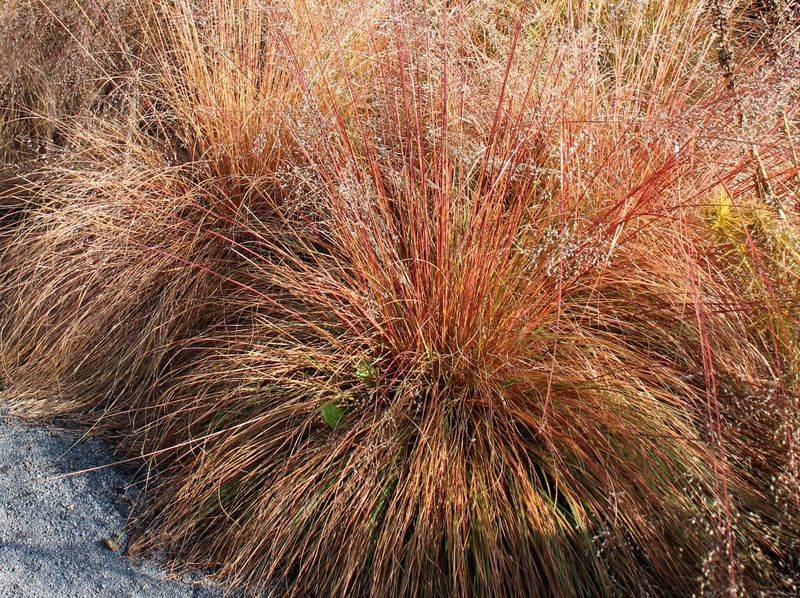
Refined, tidy, and quietly beautiful, prairie dropseed brings a texture to the fall garden that few other native grasses can match. Sporobolus heterolepis is native to Ohio and is valued by native plant resources for its fine, hair-like blades and graceful arching form.
As temperatures cool in autumn, the foliage can shift to orange, gold, and light bronze. That soft glow looks especially good along paths or at the front of a sunny border.
Unlike the tall prairie grasses, prairie dropseed stays relatively compact, typically reaching about two feet in height. That smaller scale makes it easier to place in residential gardens where switchgrass or big bluestem might feel too large.
It is also slower to establish than many native grasses, so patience pays off. Once settled in, it tends to be long-lived and low-maintenance in the right site.
Full sun and well-drained soil suit it best, and it handles dry conditions better than wet, poorly drained spots. Planting it in repeated clumps along a path or border helps its delicate texture read clearly from a distance.
Leave the plants standing through winter for seed head interest. Nursery-grown plants are widely available and the best choice for home gardens.
4. Choose Winterberry For Red Fruit After Leaves Fall
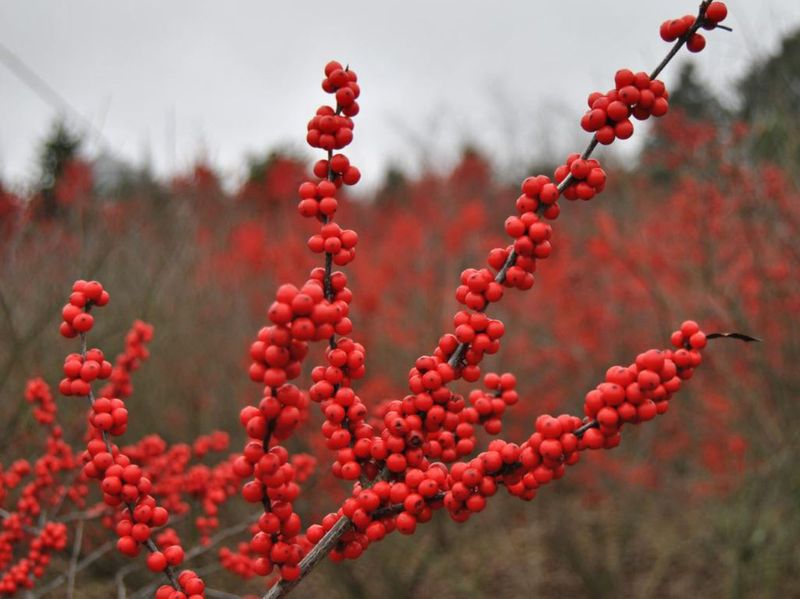
Few plants create a more striking late-fall display than winterberry loaded with bright red fruit on bare stems. Ilex verticillata is a native shrub found naturally in wet areas across Ohio.
The Ohio Department of Natural Resources recognizes it as valuable for moist garden sites. Its berries can remain visible and colorful long after the leaves have dropped, making it one of the most reliable sources of late-season color in local gardens.
Getting fruit requires both a female and a male plant. A single male plant can pollinate several nearby females, but the two must bloom at the same time.
When purchasing winterberry, ask the nursery which male cultivar is recommended to match the flowering time of the female plants you choose. Without a compatible male, female plants will produce little to no fruit.
Winterberry grows well in moist to wet, acidic soils and can handle periodic flooding. It works beautifully near rain gardens, pond edges, or low spots where other shrubs struggle.
Birds, including robins and cedar waxwings, may strip the berries during winter, so enjoy the display while it lasts. Always choose nursery-propagated plants.
Wild collection of native shrubs is harmful to natural populations and should be avoided.
5. Add Black Chokeberry For Deep Red Fall Foliage
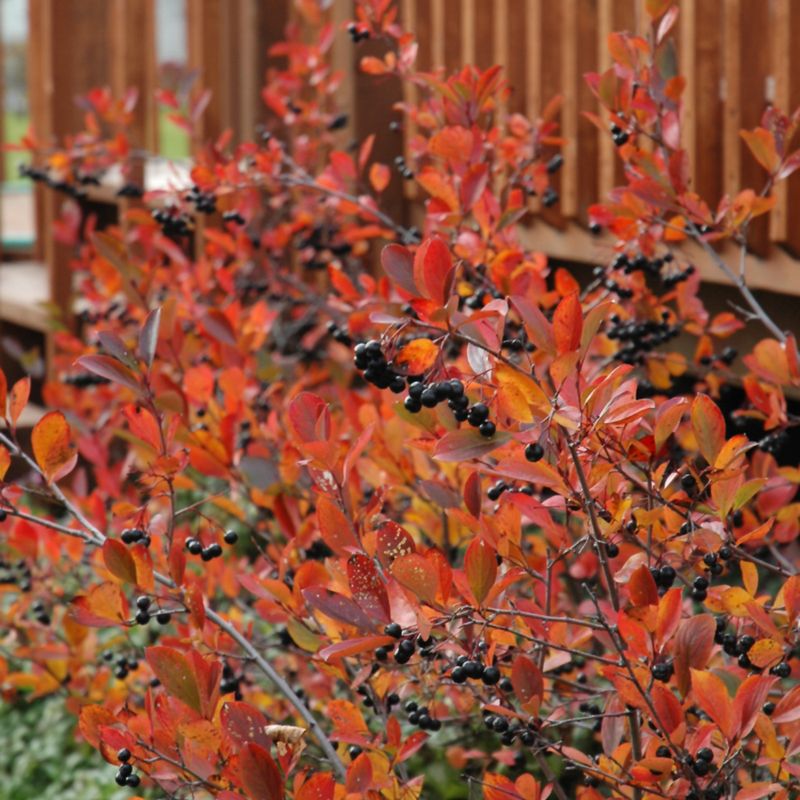
Rich crimson leaves and clusters of deep, dark fruit make black chokeberry one of the most underused native shrubs for fall interest.
Aronia melanocarpa is native to Ohio and is noted by native plant and extension resources as a tough, adaptable shrub that earns its space across multiple seasons.
Its fall foliage can turn deep red to burgundy. The dark berries that develop by late summer often persist well into fall and provide food for wildlife.
Black chokeberry is sometimes confused with chokecherry, but the two are different plants. Chokecherry is Prunus virginiana, while black chokeberry belongs to the Aronia genus.
Keeping that distinction clear matters when shopping at nurseries or searching for plant information online.
This shrub adapts to a fairly wide range of soil conditions, tolerating both moist and average soils, and it grows in full sun to partial shade. It works well in shrub borders, rain gardens, or naturalized areas where its spreading habit has room to develop.
Wildlife gardening resources note that the dark fruit is eaten by many bird species, so the berries may not last all season in yards with heavy bird traffic. Nursery-grown plants are easy to find and the right choice for home gardens.
6. Grow Virginia Sweetspire For Long Lasting Burgundy Leaves
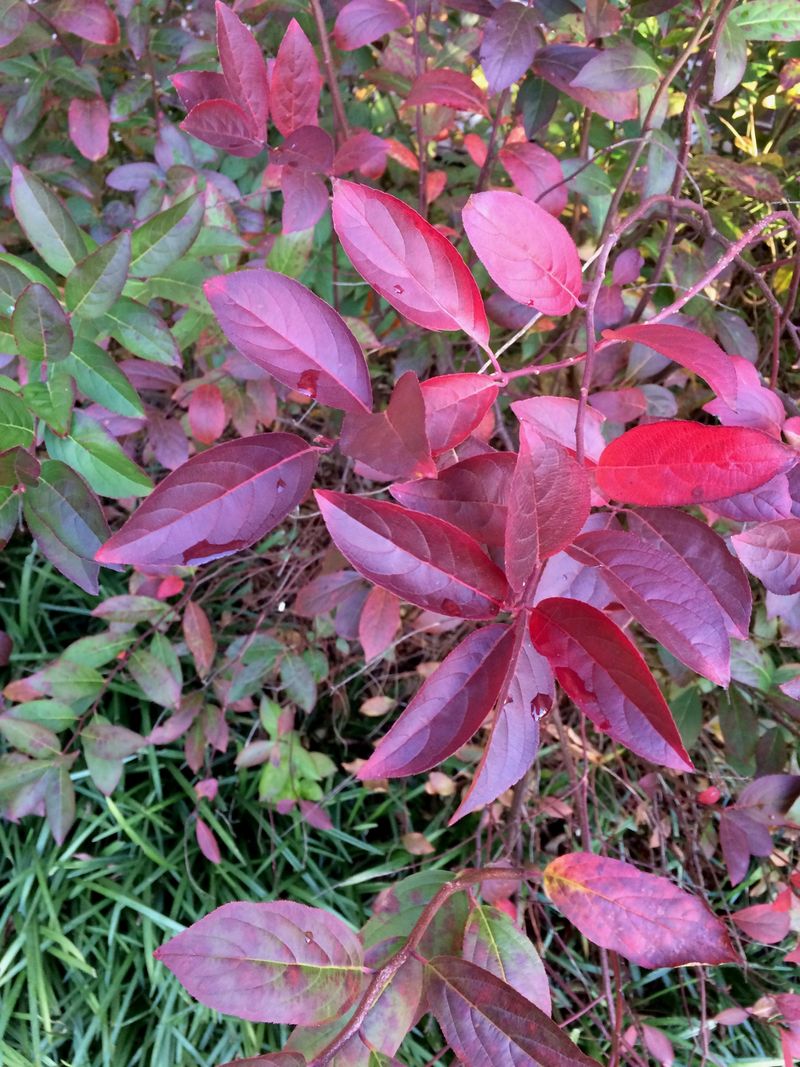
Walk past a Virginia sweetspire in October and the foliage will stop you in your tracks. Itea virginica is a native shrub recognized by botanical garden sources and native plant guidance.
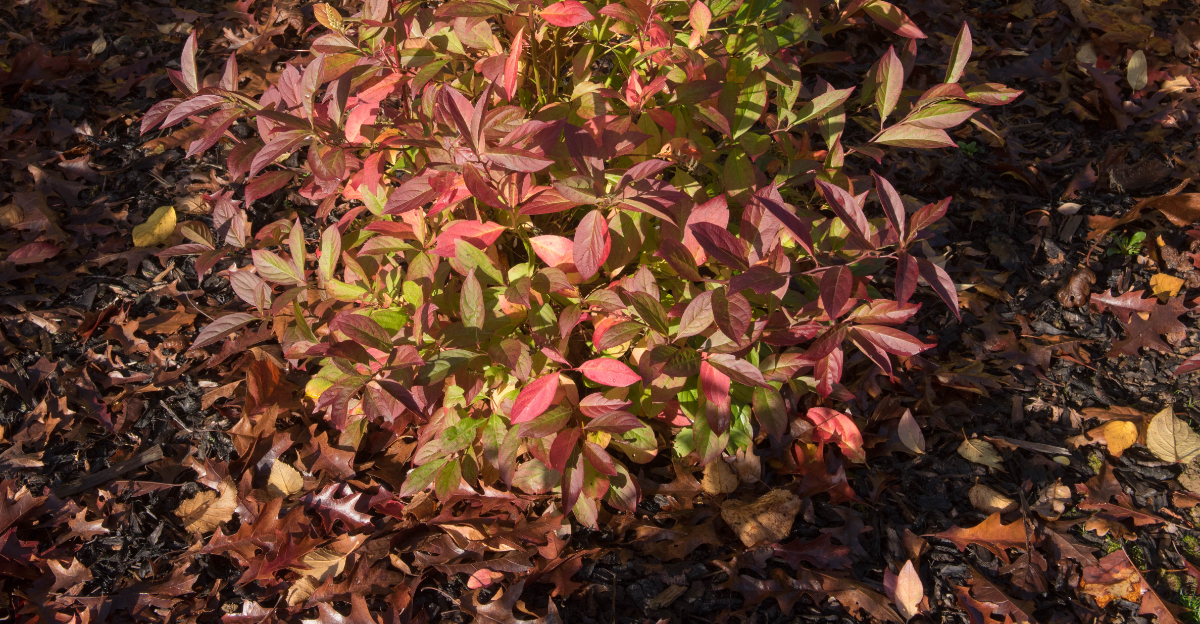
It is one of the best options for long-lasting fall color in part shade to sun. Its leaves can turn red, burgundy, orange, and purple.
Unlike many shrubs that drop quickly, sweetspire often holds that color for several weeks before leaf drop.
Moist, well-drained to moist soils suit it best, and it handles part shade better than most fall-color shrubs.
That makes it especially useful along the shaded edge of a rain garden, near a downspout garden, or in a shrub border that gets morning sun and afternoon shade.
It spreads gradually by suckers, forming a colony over time, so give it room to do that naturally rather than fighting its habit.
Virginia sweetspire also blooms in early summer with fragrant white flower spikes, so it contributes to the garden across more than one season.
Named cultivars are available and may stay more compact, but cultivar traits can vary and may differ from the straight species in ecological value.
For native wildlife support, straight species plants from reputable nurseries are a strong choice. Color intensity may vary with site conditions and seasonal weather.
7. Keep Asters Blooming Until Frost Ends The Show
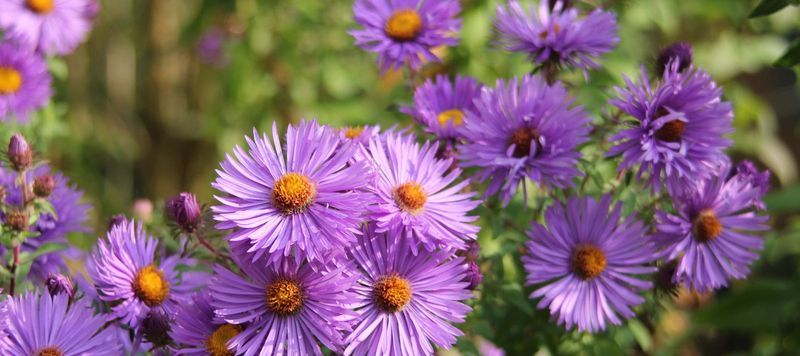
Purple, violet, and pink flowers still opening in October feel almost defiant, and native asters deliver exactly that kind of stubborn, late-season beauty. New England aster, Symphyotrichum novae-angliae, is one of the state’s most recognized native asters.
OSU Extension and native plant resources note that it blooms strongly in sunny garden sites. It can carry color from late summer into fall, often blooming right up to a destroying frost.
Full sun helps New England aster produce the most flowers and keeps the plant more compact. In shadier spots, stems can get leggy and flop.
Pinching the stems back by about one-third in late spring or early June can help create a bushier, more self-supporting plant with more bloom points. That tip, supported by extension guidance, makes a real difference in how the plant performs come fall.
Asters are also incredibly important for pollinators. Bees, butterflies, and other late-season insects depend on them when few other flowers remain.
After blooming, leaving some seed heads standing supports birds through the colder months. Not every aster species blooms at the same time or holds color equally well in every garden.
Choose species that match your site conditions, and source plants from reputable native nurseries rather than collecting from the wild.
8. Let Goldenrod Carry Yellow Color Into Fall
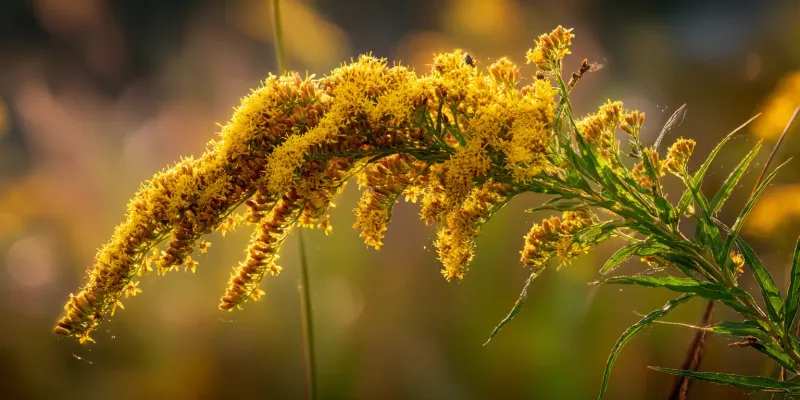
Goldenrod gets blamed for a lot it did not do. Many people assume it causes hay fever, but the real culprit is ragweed, which blooms at the same time but releases wind-borne pollen.
Goldenrod pollen is heavy and sticky, carried by insects rather than wind. Native plant and extension sources are clear on this point.
It is worth setting the record straight because goldenrod is one of the most valuable native fall plants available.
Several goldenrod species are native to Ohio, and they vary quite a bit in size and garden behavior. Stiff goldenrod, Solidago rigida, and showy goldenrod, Solidago speciosa, are often recommended for garden use.
They tend to be clump-forming and less aggressive than some spreading types. For smaller beds, choosing a well-behaved species matters.
Some goldenrods spread by rhizomes and can take over a border if not managed, so knowing your species before planting helps.
All goldenrods need full sun to perform their best and produce the richest yellow bloom color. They support an impressive number of native bee species during fall, making them a wildlife powerhouse.
After blooming, the seed heads attract birds and add soft texture to the fall garden. Buy nursery-propagated plants from reputable sources and skip wild-collected stock entirely.
9. Use Red Twig Dogwood For Color After Everything Fades
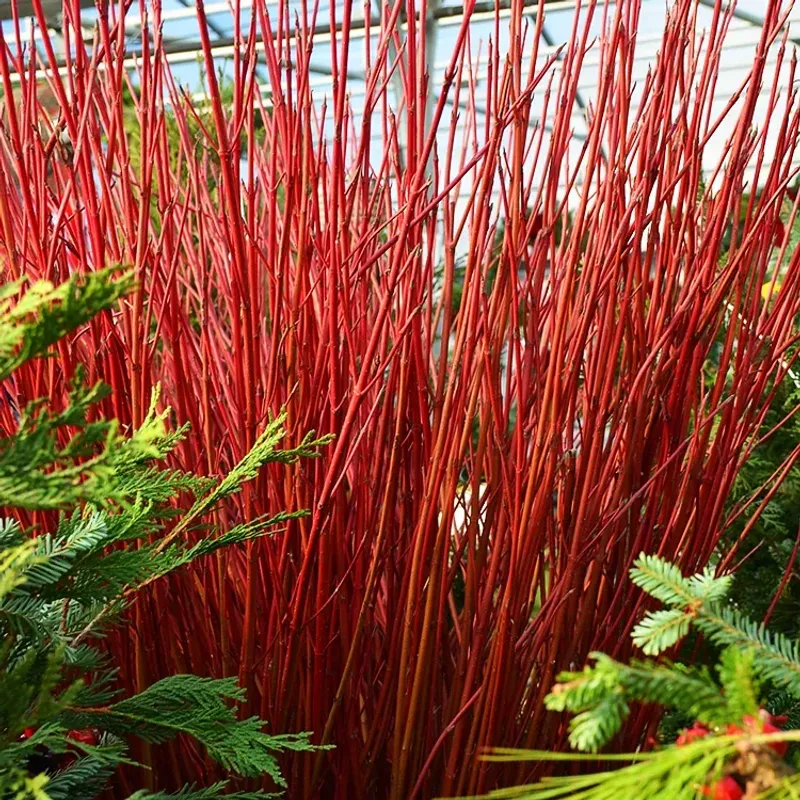
By November, most shrubs have gone quiet and brown, but red twig dogwood is just getting started. Cornus sericea is a native shrub in Ohio and across much of the Midwest, and its value in the late-fall and winter garden comes almost entirely from its stems.
After the leaves drop, the young branches reveal a vivid red that can range from coral to deep crimson depending on the plant, the site, and how much sun it receives.
The brightest stem color comes from the youngest growth. Older stems tend to fade to a dull brownish-gray over time, so selective pruning is the key to keeping the display fresh.
Native plant and extension guidance recommends cutting about one-third of the oldest stems back to the ground each late winter or early spring. That encourages vigorous new growth, which will develop the strongest color the following fall and winter.
Moist soils suit red twig dogwood well, and it can handle wet, low-lying spots where other shrubs fail. Plant it where the stems are visible from a window, a path, or a spot where early snow might set off the red color.
It also provides fruit for birds and nesting cover, making it useful across multiple seasons. Choosing the right plants for more than one kind of seasonal show is exactly what keeps a garden interesting long after summer is over.