Why Ants Cover Kentucky Peonies Every Spring, And What It Means For Your Blooms
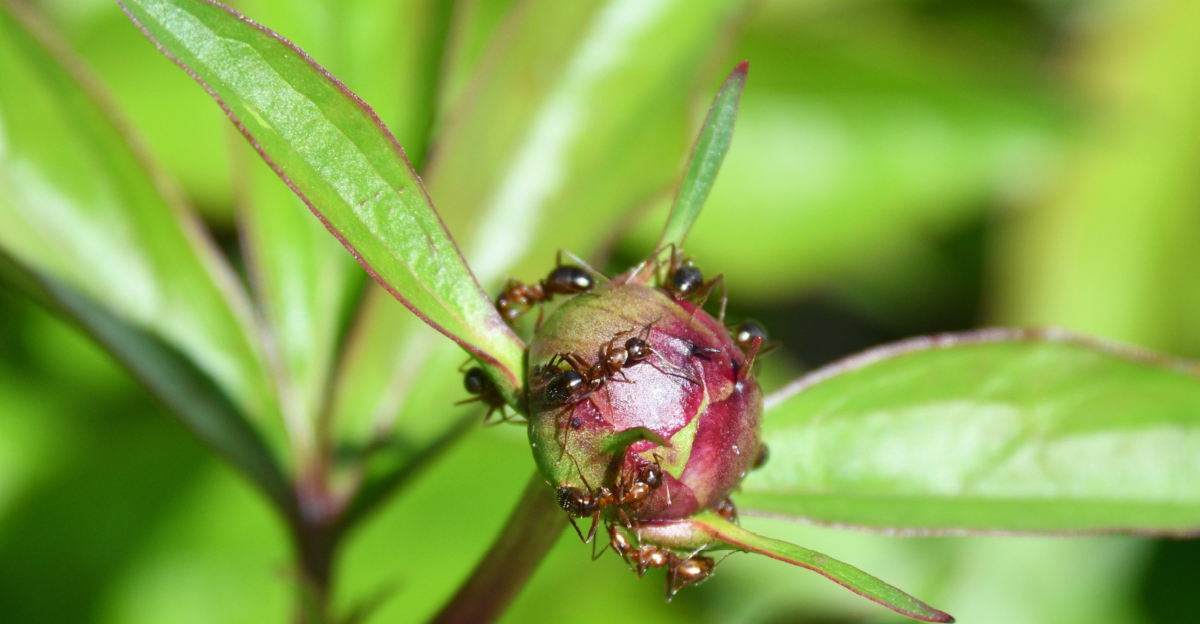
Tiny ants cover your unopened peony buds each spring. Surprise feels like the only truly natural response at first glance. Gardeners across Kentucky see this exact scene every single year.
Sticky nectar coats every bud, pulling scouts from nearby colonies. Ants arrive because sugar simply outweighs any imagined concern completely. Nothing troubling ever happens beneath those crawling legs and antennae.
Peonies produce that sticky sweetness deliberately, attracting loyal allies against harmful pests. Soil and climate across Kentucky make this exchange nearly guaranteed.
Understanding this small partnership actually stops you from reaching for sprays. Curiosity quickly replaces worry once you grasp the mechanics behind it.
Science actually explains behavior that looks surprising but runs with real precision. Confidence grows when you understand exactly what these insects intend.
Blooms depend heavily on this alliance more than most people ever realize. You will never look at peony season the same way again.
Buds Secrete Sweet Nectar While Opening
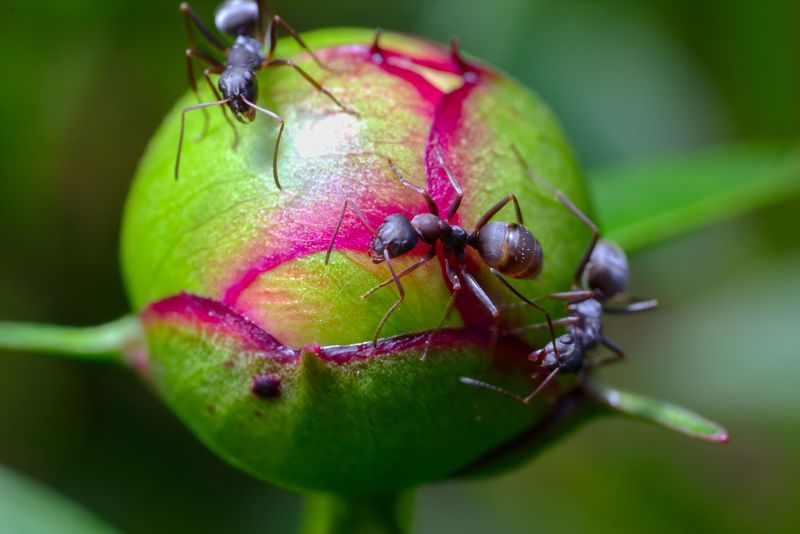
Peony buds are basically tiny nectar factories. Long before those gorgeous petals unfurl, the buds start producing a sweet, sugary liquid that coats their outer surface.
This nectar is not an accident of nature. Peonies have specialized glands called extrafloral nectaries, which sit right on the bud scales.
These glands pump out nectar as the bud swells and prepares to open. The secretion is rich in sugars and amino acids, making it a high-value snack for any foraging insect nearby.
Think of it like a free buffet sign posted right in your garden. The plant essentially broadcasts a chemical invitation that says, “Come eat here.”
Gardeners sometimes feel concerned seeing this many insects on one plant. The sticky, shiny coating on a closed bud is completely natural and healthy.
It has nothing to do with aphids, fungus, or any kind of plant stress. The bud is simply doing what evolution designed it to do.
Warm, humid spring conditions like those in Kentucky often support strong nectar production in peonies. This climate encourages robust bud development in turn.
More bud development means more nectar output, which explains why ant activity on Kentucky peonies can look so dramatic. The relationship between ants and peonies starts right here, with that irresistible sugary coating.
Once you know this, those crawling ants start to look less like a warning sign. They look exactly like what they are: hungry guests at a very well-stocked table.
Ants Seek Out This Nectar Source
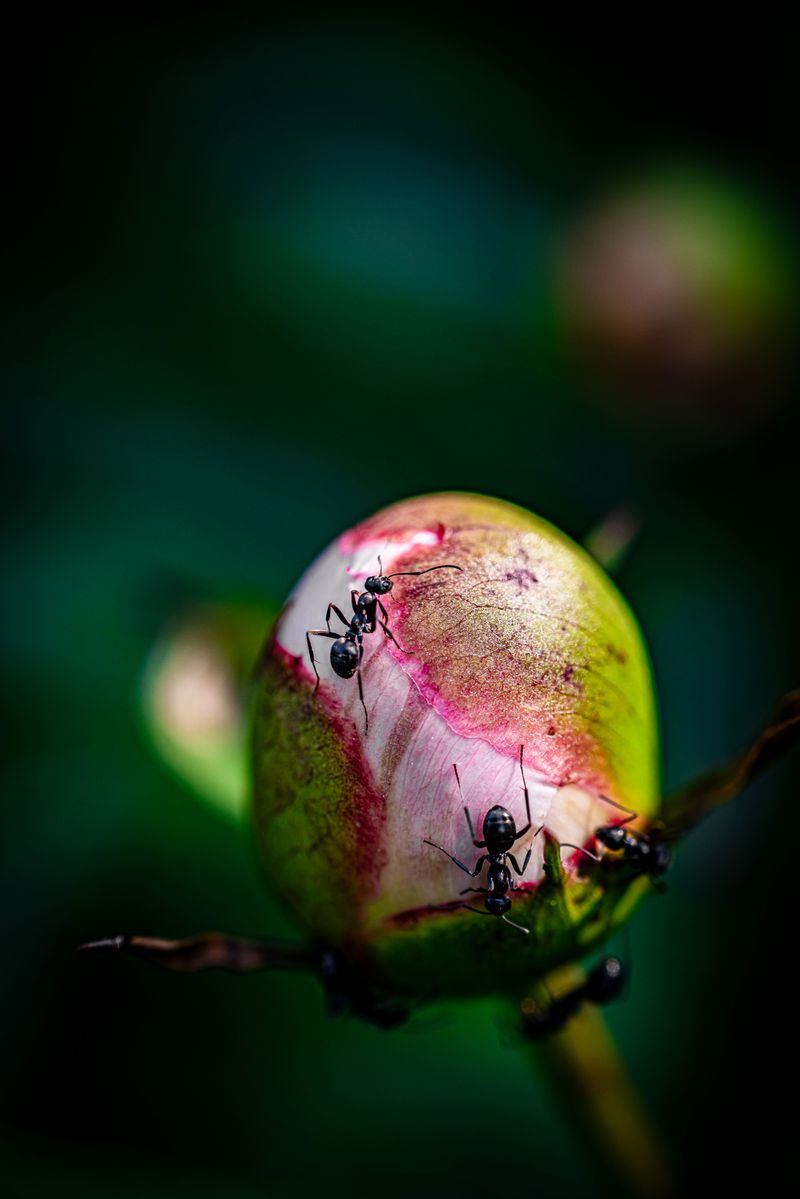
Ants are efficient foragers, wired to locate food quickly and reliably. When a peony bud starts secreting nectar, ants pick up the scent fast.
Scout ants wander far from their colonies searching for energy sources. The moment one scout detects that sweet peony nectar, it heads back to the colony and lays down a chemical trail.
That trail is called a pheromone path, and it is like a GPS signal for the rest of the colony. Within minutes, worker ants follow the trail in a steady line.
This is why you often see ants marching single-file up a peony stem. They are not randomly wandering. They are following a precise chemical map left by their scout.
Your Kentucky Garden Changes Every Week. Your Plan Should Too.
Gardening in Kentucky changes quickly throughout the season. Every Friday you’ll receive a simple weekly plan showing exactly what to plant, prune, fertilize, harvest, and protect so you never miss the right timing.
The nectar is a serious reward for the colony. It provides carbohydrates that fuel all the physical work ants do each day.
A single peony bud can attract dozens of ants at once. Multiple buds on one plant can draw hundreds of workers from nearby colonies.
Gardeners sometimes feel concerned seeing this many insects on one plant. The instinct to grab a spray bottle is completely understandable but totally unnecessary.
These ants on Kentucky peonies are simply responding to biology. They found food, they recruited help, and they are harvesting it as efficiently as any creature on Earth.
Watching this process up close is actually pretty incredible. Nature built a whole communication system just to enjoy a peony bud.
Nectar Peaks During Bud Development
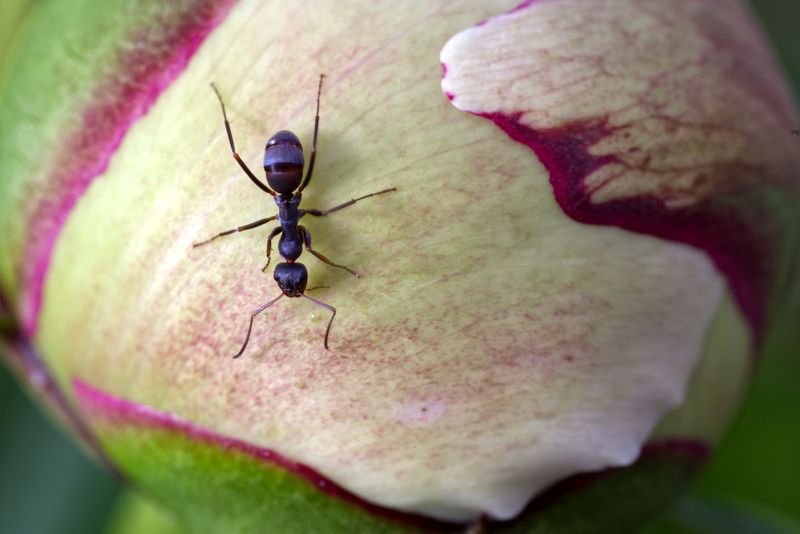
Timing matters in the ant-peony relationship. Nectar production is not constant. It follows a specific schedule tied to bud growth.
Output is highest when the bud is still tightly closed and actively swelling. This is the phase when the plant is pushing the most energy into bloom preparation.
As the bud grows larger and begins to crack open, nectar levels start to taper off. By the time the flower is fully open and showing its petals, secretion has slowed significantly.
This explains a pattern many gardeners notice but never quite understand. Ants are thick on tight buds but seem to disappear once the flower opens wide.
The plant is essentially using nectar as a tool during its most vulnerable phase. A closed bud is soft, tender, and full of nutrients that pests might want to eat.
Having ants around during this window offers some incidental protection. Ants are territorial and will chase off or deter other insects that wander too close.
Once the flower opens, it no longer needs that same level of defense. The petals are tough, the bloom is complete, and nectar production naturally winds down.
Kentucky springs can be unpredictable, with late frosts and sudden warm spells. These temperature swings can speed up or slow down the nectar cycle on any given plant.
Paying attention to this timing helps you understand your garden better. When ants thin out, your blooms are probably right on schedule for full opening.
Sap Attracts Foraging Ants Naturally
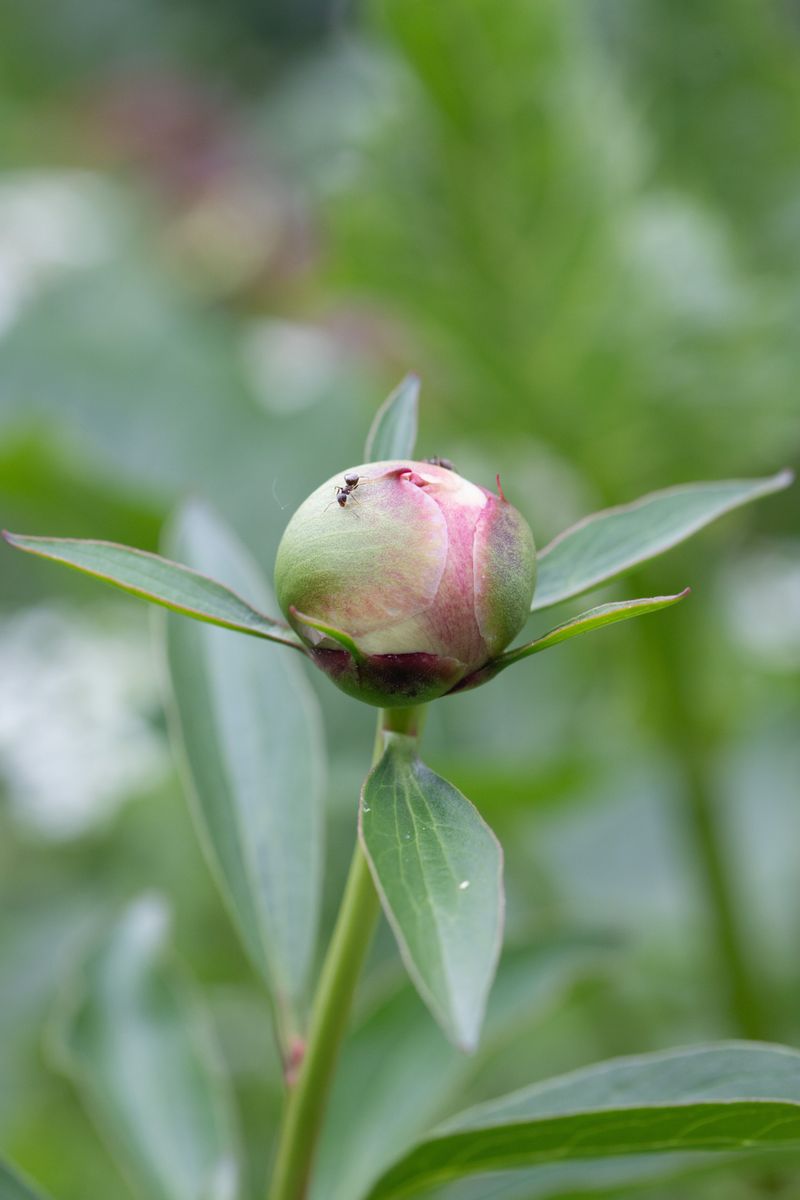
Beyond nectar, peonies also produce a sap-like residue along their stems and bud seams. This sticky substance adds another layer of attraction for foraging ants.
Plant sap is loaded with dissolved sugars and nutrients. For an ant colony burning through energy all day, it is a calorie-dense snack worth traveling for.
The sap seeps from natural seams in the bud as internal pressure builds during growth. It is not a sign of damage or disease. It is just the plant expanding under its own momentum.
Ants have highly sensitive antennae that can detect these chemical signals from impressive distances. Once they locate the source, they work quickly and efficiently.
Some gardeners confuse this sap with honeydew, which is a secretion produced by aphids. The two look similar, but the source is completely different.
Peony sap comes from the plant itself, not from any pest. If you see ants but no aphids, the sap is the likely draw, not an insect infestation.
Checking for aphids is still a smart habit for any gardener. Look for small, soft-bodied insects clustered on stems or under leaves.
On Kentucky peonies, aphids are less common than the ants themselves. Most of the time, those crawling insects are simply after the plant’s own natural secretions.
Knowing the difference between sap and honeydew keeps you from treating a problem that does not exist. Save your energy for actual garden challenges.
Peonies Experience No Harm From Ants
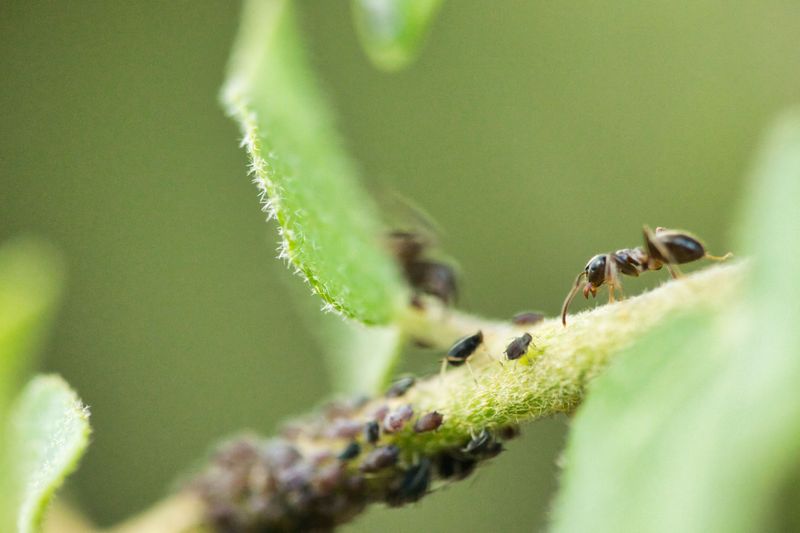
Here is the part that surprises most gardeners: ants do not hurt peonies at all. Not even a little.
They do not eat the petals, chew the stems, or bore into the plant tissue. Their entire interest is in the surface-level nectar and sap.
The plant structure stays completely intact throughout the ant feeding period. Leaves, stems, roots, and developing buds are all left untouched by the visiting insects.
This is a mutualistic situation, meaning both sides benefit or at least neither one is harmed. The ants get food, and the plant gets some incidental pest deterrence.
Gardeners and horticulturists generally observe no negative effects on bloom quality or plant health when ants are present. The flowers open just as beautifully whether ants were present or not.
Some gardeners worry that ants might spread disease between plants. In reality, ants are not known vectors for common peony diseases like botrytis blight.
Botrytis is caused by a fungus that spreads through moisture and spores, not insect activity. Treating an ant problem to prevent disease is solving the wrong equation.
Kentucky peony growers who leave ants alone typically see no difference in bloom size, color, or fragrance. The flowers do their thing regardless of how many ants show up.
Letting go of the worry about ants is genuinely freeing. Your peonies are tougher and more self-sufficient than they might appear.
Ants Pose No Real Threat To Your Garden
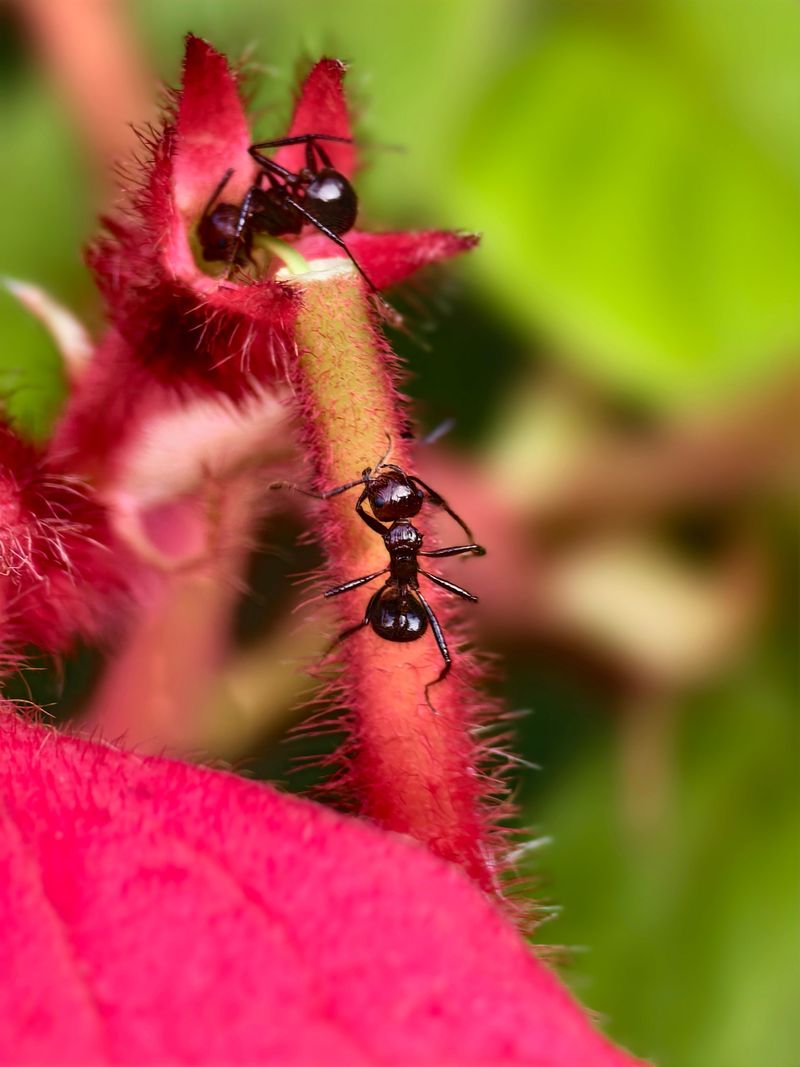
Here’s an important clarification. Ants on your peonies are not a threat to your garden, your blooms, or your family.
Common garden ants do not sting or bite humans unless they feel directly threatened. A casual gardening session around ant-covered peonies carries no real risk.
These are not fire ants, and they are not aggressive species. The black and brown ants you typically see on peonies are docile foragers focused entirely on food.
Children and pets can move around peony plants without concern. The ants are far too busy harvesting nectar to pay attention to anything else nearby.
From a plant health standpoint, ants actually provide a low-level security benefit. Their presence discourages softer, slower insects from settling on the buds.
Aphids, mites, and small caterpillars tend to avoid plants where ants are actively patrolling. The ants are not on guard duty, but the side effect is similar.
This incidental protection is a quiet bonus that most gardeners never think about. Your ant visitors are pulling double duty without even trying.
Spraying pesticides to remove ants would likely cause more harm than good. Broad-spectrum sprays can wipe out beneficial pollinators and soil organisms in the surrounding area.
The ants on Kentucky peonies are working with your garden, not against it. There’s no need for pesticide intervention here.
Blooms Open Normally Either Way
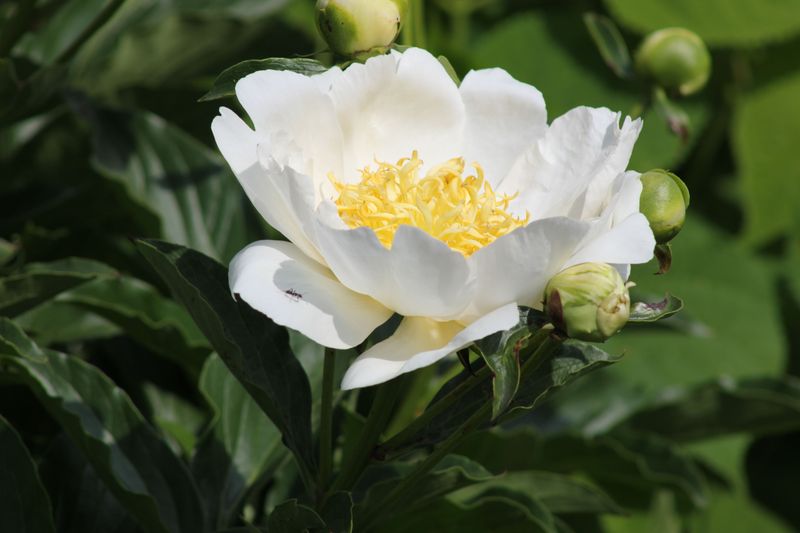
One of the most common myths in home gardening is that ants help peonies open. You have probably heard it from a neighbor or read it online.
The story goes that peonies need ants to chew through their outer bud scales so the petals can emerge. It sounds logical, but it is simply not true.
Peonies open entirely on their own through internal hydraulic pressure. As the flower develops, fluid pressure inside the bud pushes the petals outward and breaks the bud open naturally.
No outside help is needed, and no ant chewing is required. The bloom would open on the same schedule with or without a single ant present.
When ants are absent from peony plants, bloom timing generally stays the same. The flowers opened at the same rate as ant-covered plants nearby.
This myth likely started because ants and open blooms always appear together. People assumed cause and effect when it was really just coincidence and timing.
The ants arrive because of the nectar, and the nectar peaks right before opening. So naturally, ants and blooms seem linked, but one does not cause the other.
Kentucky peony growers can feel confident planting and tending their flowers without managing ant populations. The blooms will do exactly what they are supposed to do.
Your peonies are not waiting on the ants to open. They are already on their own schedule, and it is a beautiful one.
Removing Ants Before Cutting Is Not Necessary
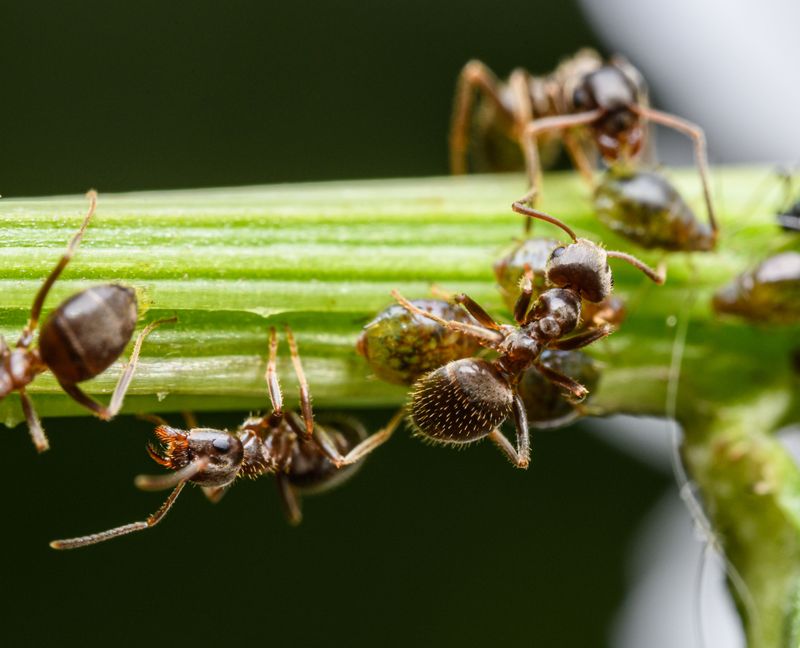
Cutting peonies for a vase is one of the great joys of late spring. But many gardeners hesitate because of all those ants crawling on the buds.
The good news is that you do not need to do anything special before bringing cut stems inside. A simple shake of the stem outdoors sends most ants dropping to the ground instantly.
Hold the cut stem over the garden bed and give it two or three firm but gentle shakes. The ants will fall off and return to their colony without any drama.
You do not need pesticide sprays, ant traps, or any special treatment before cutting. The process is quick, clean, and completely non-toxic.
If a stray ant or two makes it inside on a stem, it will not survive long indoors. Ants away from their colony and food source do not establish themselves in homes.
Placing cut peonies in water immediately also discourages any lingering insects. They prefer dry surfaces and will exit the stem quickly once it is submerged.
For the best vase life, cut stems in the early morning when buds are still cool and tight. This gives you the longest display time once they open indoors.
Ants on Kentucky peonies are truly a non-issue from garden to vase. A quick shake, a clean cut, and fresh water are all you need for stunning blooms on your table.
Understanding the full story of ants and Kentucky peonies makes you a more relaxed and informed gardener. This process runs on its own, without any help needed.