The Porch Plant That Handles 104° Texas Afternoons Without Wilting
Finding a porch plant that genuinely holds up through a Texas summer is harder than most people expect. Beautiful in April, struggling by July, done entirely by August.
The brutal combination of direct afternoon sun, reflected heat from concrete and walls, and temperatures that regularly push past one hundred degrees eliminates most candidates before they prove themselves. But this one is different.
There is a porch plant that sits through a hundred and four degree Texas afternoon looking completely unbothered. No wilting, no crispy edges, no dramatic collapse by midday that requires emergency shade and extra watering.
Just steady, striking presence through the kind of heat that defeats almost everything else on the market.
And beyond simply surviving, it thrives visually. Bold, tropical looking, with blooms that draw the eye and hold attention from the street. It looks like something that should be fragile, and yet the Texas summer heat seems to agree with it completely.
If your porch plant situation has been one of constant replacement and disappointment, this is the plant worth knowing about.
Meet The Heat-Loving Firecracker Jatropha
Picture a plant that looks like it belongs in a tropical garden but thrives right on your Texas porch. That is exactly what firecracker jatropha delivers.
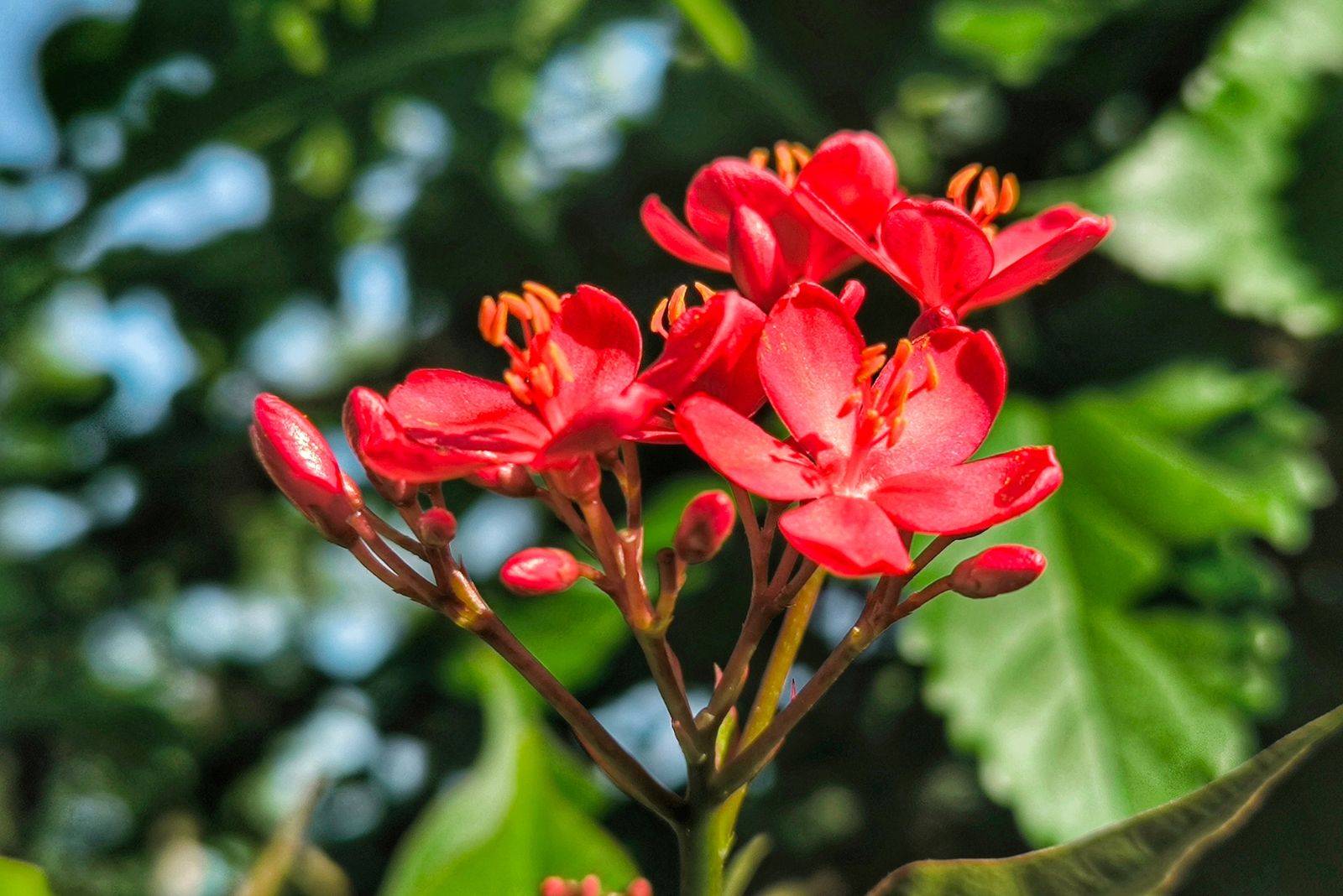
Known scientifically as Jatropha integerrima, this subtropical evergreen shrub has earned a loyal following among Texas gardeners who refuse to give up on colorful container plants during the hottest months of the year.
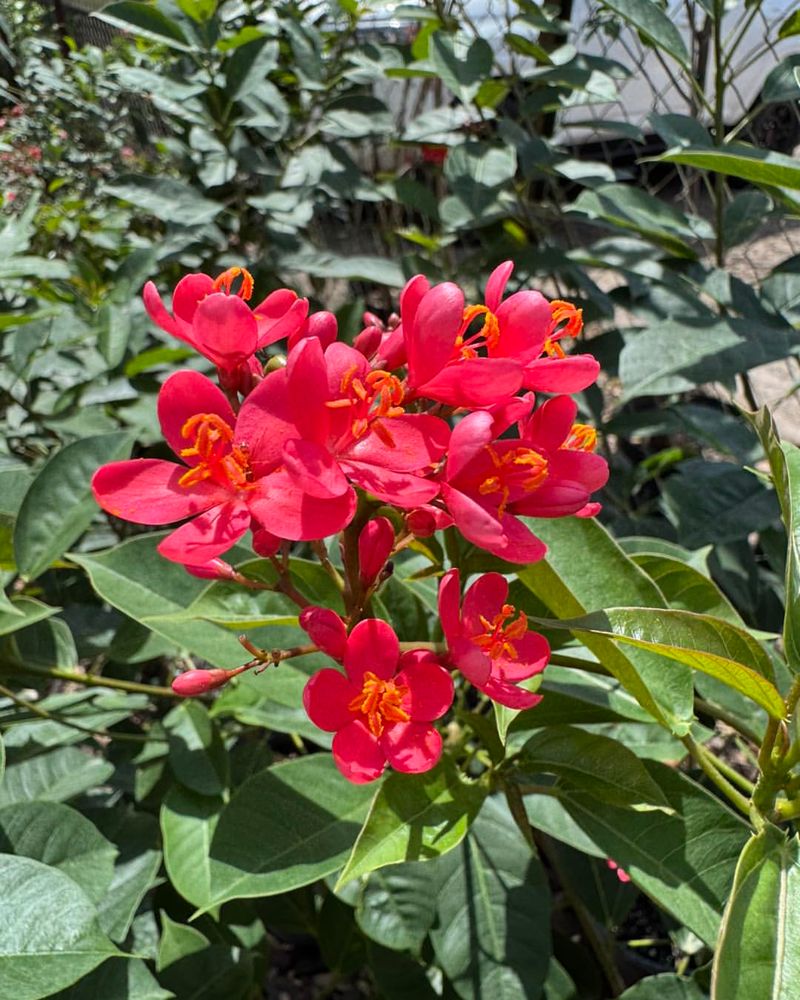
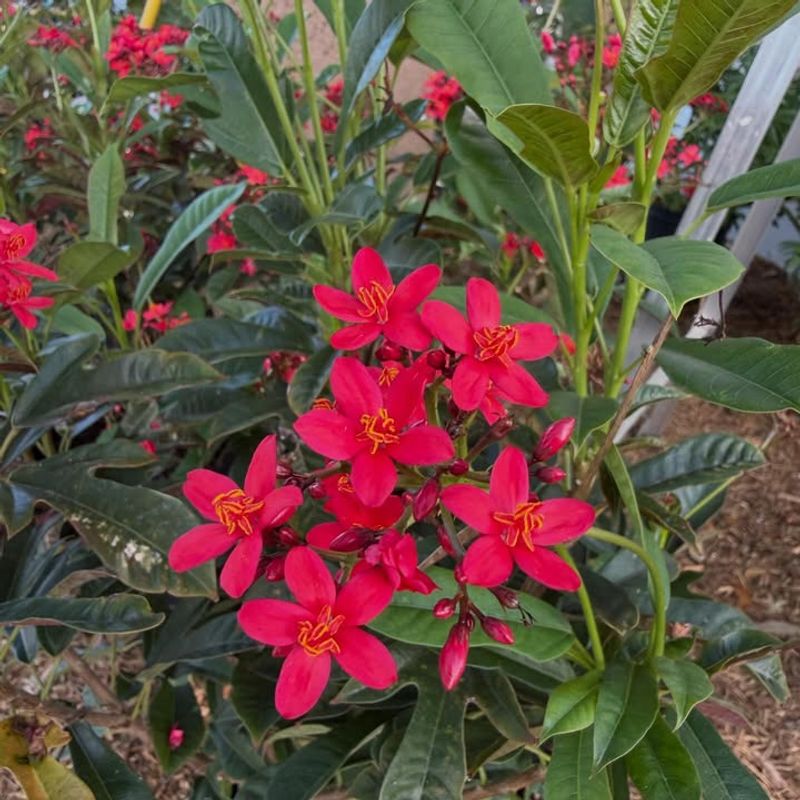
The foliage alone makes a strong first impression. Deep, glossy green leaves cover the plant from base to tip, giving it a lush, full appearance even before a single flower opens.
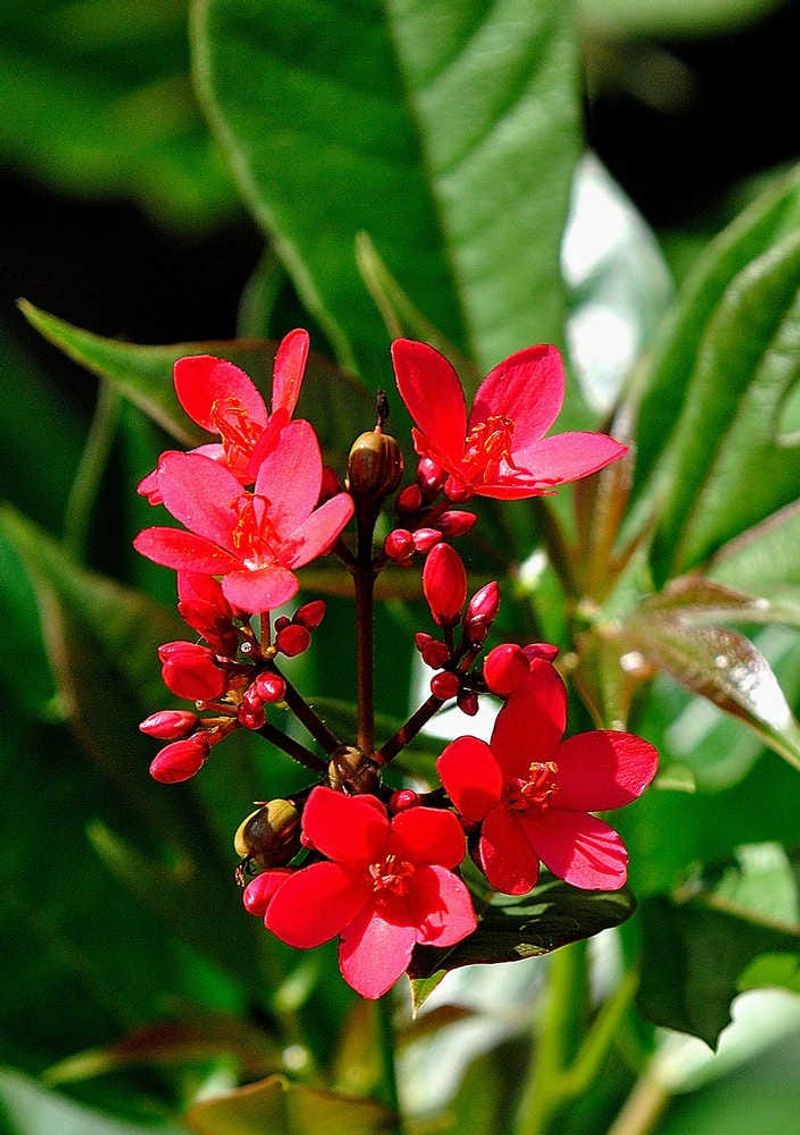
Then come the blooms. Clusters of small, star-shaped flowers in vivid shades of red and pink appear almost continuously throughout the warm season, creating a striking contrast against all that green.
When grown in a container, firecracker jatropha typically reaches about three to five feet tall. That size makes it perfect for anchoring a porch corner, flanking a front door, or adding vertical interest to a patio arrangement.
It has enough presence to stand alone as a focal point but also pairs beautifully with lower-growing plants around it.
Originally from Cuba and the Caribbean, this plant was practically made for humid, sun-drenched climates. Texas gardeners along the Gulf Coast and in South Texas have embraced it for years.
Even newer gardeners quickly discover that firecracker jatropha is forgiving, low-fuss, and consistently rewarding.
It asks for sunshine, decent drainage, and occasional water, and in return it delivers months of tropical color that holds up even when the thermometer pushes past 100 degrees.
Why It Performs So Well On Hot Texas Porches
Most gardeners have watched a beloved plant completely collapse on a July afternoon in Texas. The leaves droop, the flowers shrivel, and no amount of watering seems to bring it back fast enough.
Firecracker jatropha just does not behave that way, and understanding why helps explain why so many Texas homeowners keep coming back to it season after season.
Your Texas Garden Changes Every Week. Your Plan Should Too.
Gardening in Texas changes quickly throughout the season. Every Friday you’ll receive a simple weekly plan showing exactly what to plant, prune, fertilize, harvest, and protect so you never miss the right timing.
Heat tolerance is baked into this plant at a fundamental level. It evolved in tropical regions where intense sun, high humidity, and warm temperatures are the norm rather than the exception.
Texas summers, as brutal as they feel to people, are actually a pretty comfortable environment for firecracker jatropha. It genuinely thrives in conditions that stress out most other flowering plants.
Porches and patios create an even more challenging environment than open garden beds. Concrete, brick, and stone surfaces absorb heat all day and then radiate it back out in waves during the afternoon.
Walls reflect sunlight and trap warmth. Temperatures near a south-facing porch wall can run significantly hotter than the official air temperature. Firecracker jatropha handles this reflected and radiated heat without complaint.
Humidity is another factor that works in this plant’s favor during Texas summers. While dry heat can stress some tropical species, the humid conditions typical of Houston, Corpus Christi, and other Gulf Coast cities feel very natural to a plant with Caribbean roots.
Even during the sticky, relentless heat of August, firecracker jatropha keeps producing flowers and maintaining that attractive, full appearance that makes it such a popular choice for difficult porch locations across the state.
The Trait That Keeps It Looking Fresh
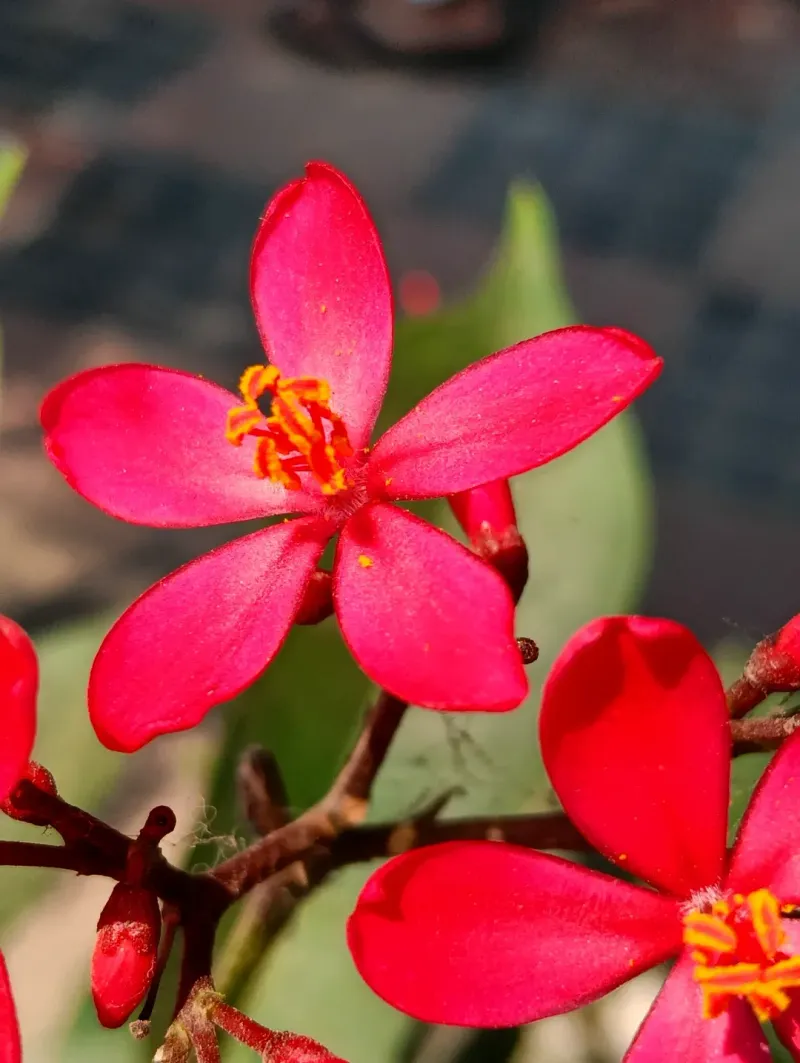
Here is something that surprises a lot of first-time firecracker jatropha growers. Even after a week of temperatures above 100 degrees with no rain in sight, this plant can still look remarkably put-together.
While neighboring container plants are wilting dramatically by noon, firecracker jatropha just keeps standing tall and looking good.
Part of that staying power comes from its dense, glossy foliage. The waxy coating on the leaves helps slow moisture loss, which means the plant holds onto its water reserves longer than many other flowering shrubs.
That glossy surface also reflects some of the intense sunlight rather than absorbing all of it, which helps keep the leaf temperature from climbing too high during peak afternoon heat.
When drought stress does eventually occur, the recovery is impressively fast. A good, thorough watering brings the plant back to full form relatively quickly.
You will not be staring at a sad, shriveled mess for days after a dry spell. That bounce-back ability makes it much less stressful to grow, especially for gardeners who travel during summer or occasionally forget to water on schedule.
The continuous flowering habit also contributes to that fresh appearance. Because new flower clusters keep forming throughout the warm season, the plant rarely looks spent or past its prime.
Old blooms drop cleanly and new ones take their place without much fuss. That steady rhythm of fresh color keeps a container planting looking intentional and well-maintained even during the most grueling stretch of a Texas summer, when every other plant on the porch is struggling just to survive the afternoon heat.
How To Grow It Successfully In A Container
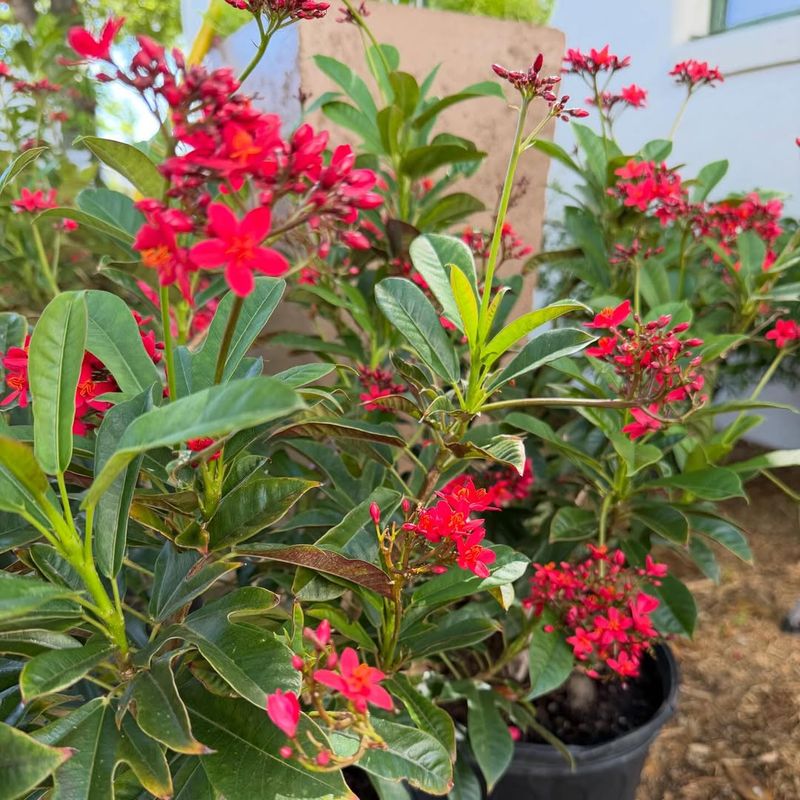
Getting firecracker jatropha off to a strong start in a container comes down to a few straightforward decisions made right at the beginning. The most important one is sun exposure.
Full sun produces the heaviest, most consistent flowering. A south-facing or west-facing porch location that receives at least six hours of direct sunlight daily is ideal. The plant can tolerate partial shade, but expect fewer blooms when light is limited.
Container selection matters more than many gardeners realize. Choose a pot that is large enough to accommodate a plant that may eventually reach four or five feet tall.
A container that is too small will restrict root growth and dry out far too quickly in summer heat. Stability matters too.
A tall, top-heavy plant in a lightweight pot can tip over in wind, so heavier ceramic or concrete containers are often a better choice than thin plastic ones.
Drainage is non-negotiable. The pot must have drainage holes, and the potting mix should be well-draining rather than moisture-retaining.
A standard quality potting mix works well. Some gardeners mix in a small amount of coarse perlite to improve drainage even further.
Avoid heavy garden soil in containers because it compacts over time and creates poor drainage conditions that stress the roots.
Positioning the container thoughtfully from the start saves a lot of trouble later. Firecracker jatropha can get heavy as it grows, making it difficult to move.
Pick a permanent spot that gets plenty of sun, stays protected from strong wind if possible, and is easily accessible for regular watering. A good start leads to a strong, beautiful plant that rewards you all season long.
Watering And Care During Extreme Heat
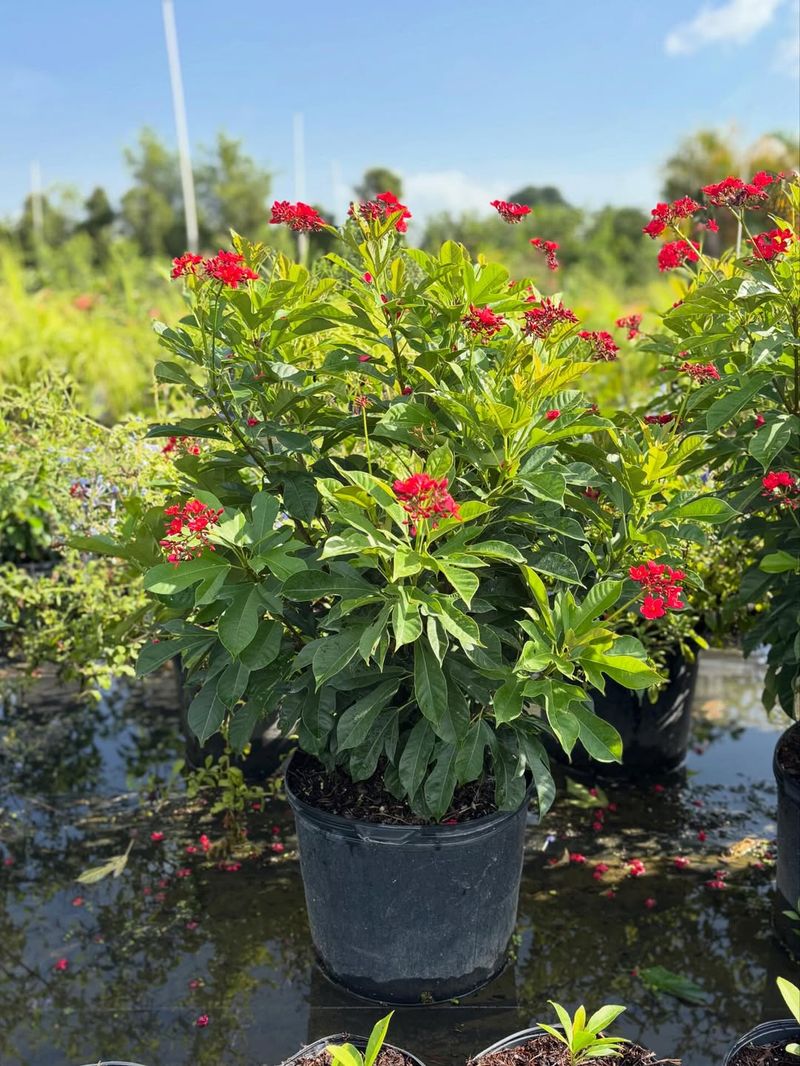
Watering a container plant during a Texas summer is genuinely different from watering one in a garden bed. Containers heat up fast, dry out fast, and leave plant roots with nowhere else to go if the potting mix gets too dry or too wet.
Getting the watering routine right for firecracker jatropha is probably the single most important part of keeping it healthy through the hottest months.
Always water thoroughly. When you water, keep going until excess water drains freely from the bottom of the pot.
That ensures the entire root zone gets moisture, not just the top layer of soil. Shallow watering encourages shallow roots and leaves the plant more vulnerable to heat stress between waterings.
A deep, thorough soak every time is much better than a quick splash every day. Check the potting mix regularly rather than watering on a fixed schedule. Stick your finger about an inch into the soil.
If it feels dry, water thoroughly. If it still feels slightly moist, wait another day and check again.
During the peak of summer, containers may need watering every day or every other day depending on pot size, sun exposure, and temperature.
One common mistake is assuming that heat tolerance means the plant can go without water indefinitely. Firecracker jatropha has moderate drought tolerance, not unlimited drought tolerance.
Established plants can handle a missed watering here and there, but prolonged dry spells will weaken the plant over time. Avoid letting roots sit in waterlogged soil after heavy rain or overwatering.
Consistent, attentive watering is the single best thing you can do for this plant all summer long.
What Texas Homeowners Should Know Before Buying
Before you head to the nursery, a few practical details about firecracker jatropha are worth knowing. Where you live in Texas makes a big difference in how you will grow and care for this plant long-term.
South Texas and the Gulf Coast are the sweet spots. In those regions, firecracker jatropha can behave as a true woody shrub, staying in its container year-round and developing a sturdy, established structure over multiple seasons.
Colder parts of Texas tell a different story. In areas that experience hard freezes, firecracker jatropha is typically treated as a summer annual or brought indoors before freezing weather arrives.
It does not handle frost well, and prolonged cold temperatures will damage or completely destroy the above-ground growth. If you live in North Texas or the Panhandle, plan to either protect the plant during cold snaps or replace it each spring.
Safety is something every homeowner with children or pets should take seriously before placing this plant on a porch. The plant’s tissues and seeds contain toxic compounds and can cause serious illness if eaten.
Position containers in spots that are out of reach of curious toddlers and pets. This one precaution makes it a perfectly responsible choice for most households.
On a cheerful note, the bright red and pink flowers are magnets for butterflies and hummingbirds. Watching a ruby-throated hummingbird dart between blooms on a hot July afternoon is one of the genuine pleasures of growing this plant.
Did you know hummingbirds can visit up to 1,000 flowers per day? With firecracker jatropha blooming all summer, your porch becomes a regular stop on their daily route.