What It Means When You See An Armadillo Digging In Your Georgia Yard
Waking up to a yard full of fresh holes is one of those Georgia morning experiences that starts with confusion and ends with a very specific kind of frustration.
The damage looks deliberate, the culprit is nowhere in sight, and the lawn that looked perfectly fine yesterday is now dotted with shallow pits, scattered mulch, and uprooted seedlings that suggest something was extremely busy after dark.
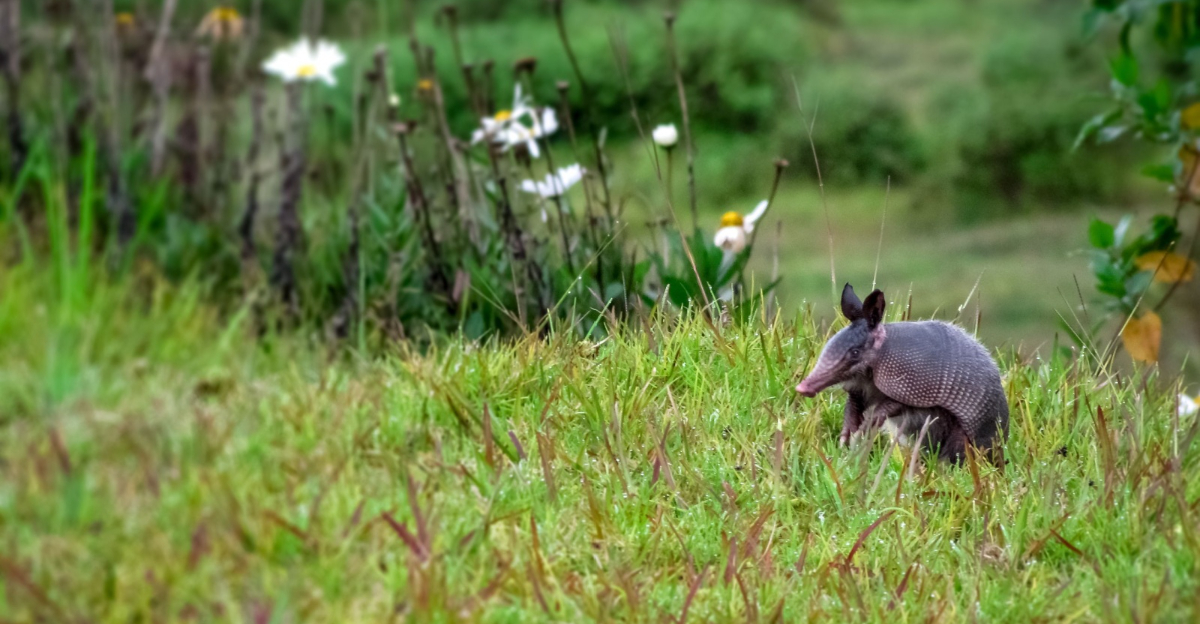
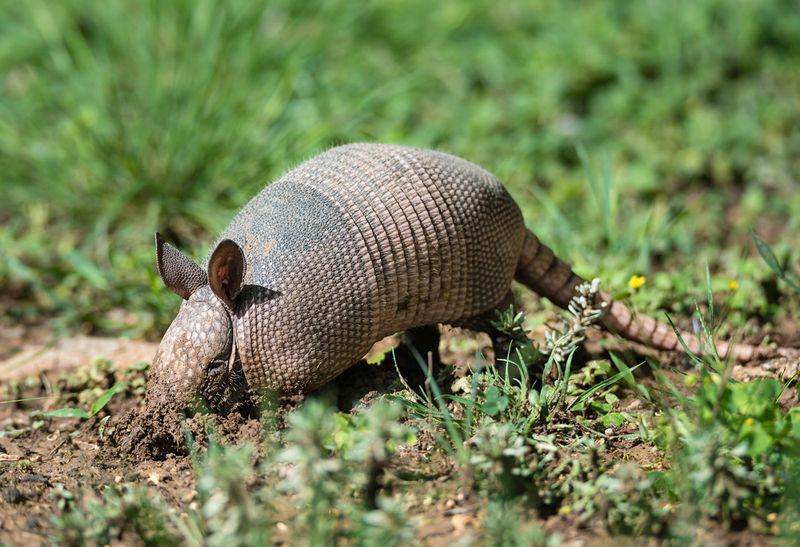
Nine-banded armadillos are behind a lot of this activity, and while they are not exactly subtle about their work, what they leave behind actually tells an interesting story about what’s living beneath your soil.
These animals are following food, specifically grubs, beetles, ants, and worms, and their digging patterns can reveal useful information about moisture levels and invertebrate activity underground.
Understanding what armadillo damage actually indicates helps Georgia homeowners respond with the right approach rather than a hasty one.
1. The Armadillo Is Usually Searching For Soil-Dwelling Food
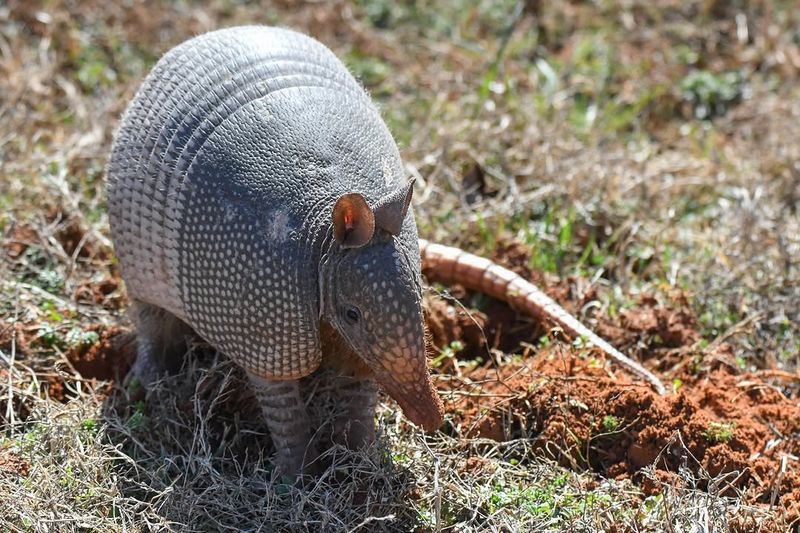
Most of the time, when an armadillo shows up in a Georgia yard, it is on a mission to find something to eat beneath the surface of the soil.
Nine-banded armadillos rely heavily on their strong sense of smell to locate invertebrates hiding just below the ground, and they use their sturdy claws to dig down and reach them.
Their diet may include beetles, beetle larvae, ants, earthworms, millipedes, centipedes, snails, and other small organisms depending on what is available in the soil at the time.
Georgia’s warm, humid climate supports a wide variety of soil-dwelling insects and invertebrates throughout much of the year, which makes the state a comfortable habitat for armadillos looking for reliable food sources.
The animal does not target a single type of prey but instead investigates different spots across a yard, digging wherever its nose suggests something edible may be waiting underground.
This behavior explains why homeowners often find multiple small holes spread across a lawn rather than one concentrated area of disturbance.
Armadillos are generally most active from evening through early morning, though weather, season, and temperature can influence when they choose to move through a landscape. Spotting evidence of this foraging behavior does not mean a yard is in poor condition.
Soil organisms are a normal part of a healthy Georgia landscape, and an armadillo may simply be taking advantage of an accessible food supply that was already there.
2. Cone-Shaped Holes Are A Common Sign Of Armadillo Foraging
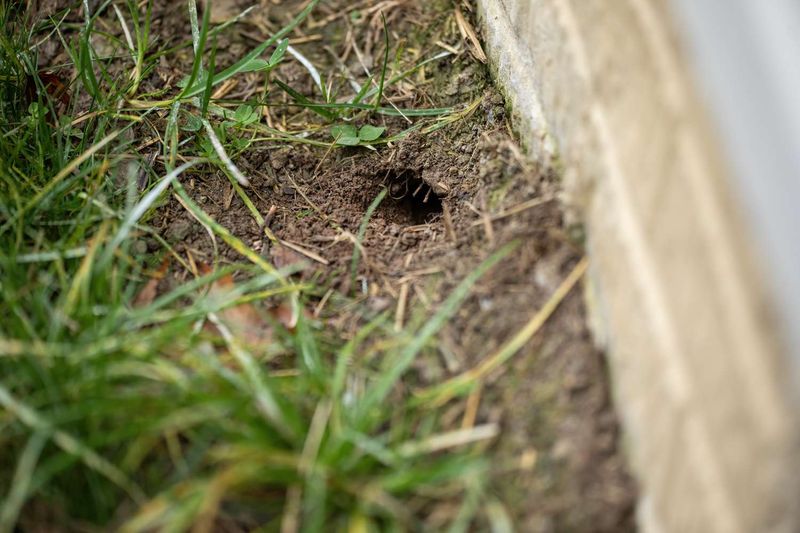
Fresh holes scattered across a lawn or garden bed are often the first thing homeowners notice after an armadillo passes through.
When the digging is done by an armadillo searching for food, the holes tend to be relatively shallow and often have a cone-like or funnel shape, with loose soil pushed up or scattered around the edges.
The exact size and appearance of these holes can vary depending on the soil texture, moisture level, and the behavior of the individual animal at the time of digging.
In Georgia, where soils range from sandy coastal plains to clay-heavy Piedmont ground, the look of an armadillo hole may differ from yard to yard.
Your Georgia Garden Changes Every Week. Your Plan Should Too.
Gardening in Georgia changes quickly throughout the season. Every Friday you’ll receive a simple weekly plan showing exactly what to plant, prune, fertilize, harvest, and protect so you never miss the right timing.
Sandy or well-amended garden soil tends to produce cleaner cone shapes, while compacted clay soil may result in rougher or more irregular openings.
The depth of each hole is generally shallow since the animal is probing for food near the surface rather than excavating deeply.
Homeowners who notice these cone-shaped disturbances should look for additional clues that can help confirm what made them. Armadillo tracks, which show distinct claw marks and a pattern of four toes on each foot, may be visible in soft soil nearby.
A trail of connected holes moving across the yard in a somewhat erratic path is also a recognizable pattern associated with armadillo foraging rather than other forms of yard disturbance caused by different animals or mechanical issues.
3. Several New Holes Can Appear In A Single Night
One of the most surprising things about armadillo activity is just how much ground a single animal can cover in one night.
While moving through a yard in search of food, an armadillo may stop repeatedly to probe and dig, leaving behind a scattering of holes that can make it look as though a much larger disturbance took place.
The widespread overnight damage is typically the result of one animal moving along a feeding route rather than a group of animals working together.
Georgia homeowners who go to bed with a tidy lawn and wake up to what looks like a small excavation site are often dealing with a single armadillo that spent several hours foraging through the property. Because armadillos investigate multiple spots before finding food or moving on, the holes they leave tend to be spread across a wide area rather than clustered in one location.
This pattern of scattered digging is one of the behavioral traits that helps distinguish armadillo activity from the work of other yard pests.
The number of holes visible after a single night can vary based on how long the animal spent in the yard, how productive the foraging was, and how easily the soil could be penetrated.
Soft, moist ground after a Georgia rainstorm may make digging easier and faster, potentially resulting in more visible disturbance by morning.
Recognizing this overnight pattern can help homeowners understand what they are dealing with before deciding how to respond.
4. The Digging May Point To Grubs But Does Not Confirm An Infestation
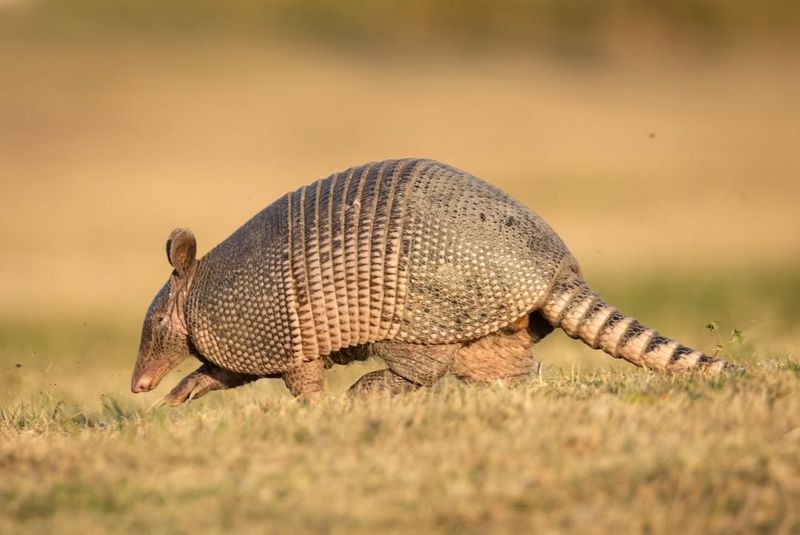
Seeing armadillo holes across a lawn naturally leads many Georgia homeowners to wonder whether a serious grub infestation is hiding beneath the surface.
It is reasonable to make that connection since armadillos do eat beetle larvae and other soil-dwelling organisms, and their digging may indicate that invertebrates are present in or near the lawn.
However, armadillo activity alone does not confirm that a damaging grub population exists in the soil.
Armadillos consume a wide variety of prey and may be investigating a yard for many different reasons. They may be finding earthworms, ants, millipedes, or other organisms that are completely harmless or even beneficial to the lawn.
Treating a yard with insecticide based solely on the presence of armadillo holes could mean applying a product unnecessarily, which may affect beneficial soil organisms without solving the underlying issue.
Before drawing conclusions about a grub problem, Georgia homeowners should examine the lawn more carefully for additional signs of turf damage.
Spongy or sod-like patches of grass that pull away from the soil easily, irregular brown areas, or visible larvae found during a manual soil inspection are more reliable indicators of a damaging grub population.
Research-based pest identification guidance from sources such as UGA Cooperative Extension can help homeowners assess whether a real problem exists before choosing any treatment.
Taking time to properly identify the issue is always a more practical approach than reacting quickly to a single sign.
5. Soft Moist Soil Can Make A Yard More Attractive
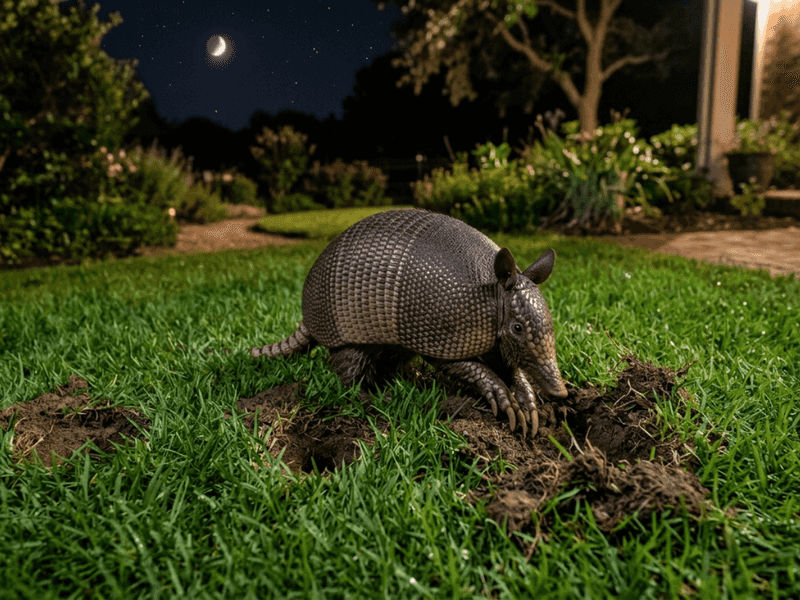
After a good Georgia rainstorm, the ground softens and becomes noticeably easier to dig through, and that change in soil condition can attract an armadillo that might otherwise pass a yard by.
Soft, moist soil not only allows the animal to probe and dig with less effort but may also bring soil-dwelling organisms closer to the surface, making them easier to detect and reach.
Irrigated lawns, low-lying areas that collect moisture, and recently watered garden beds can all share these characteristics.
Yards with heavy clay soils may receive more armadillo attention after rainfall simply because the ground becomes workable in a way it is not during dry periods.
Sandy soils that drain quickly may be less consistently attractive unless they stay moist from irrigation or are located near a water source.
Georgia’s seasonal rainfall patterns mean that armadillo activity in some yards tends to increase during wetter stretches of the year when soil conditions are favorable for foraging.
Moisture alone is not enough to draw an armadillo onto a property. The animal also needs to detect a food source and have a reason to move through the area.
However, a yard that combines accessible soil organisms with soft, moist ground is more likely to become a regular stop along an armadillo’s foraging route.
Homeowners who notice increased digging activity after periods of rain or heavy irrigation may find that this timing is not a coincidence but rather a reflection of changing soil conditions that make their yard more accessible.
6. Uprooted Plants May Be Accidental Foraging Damage
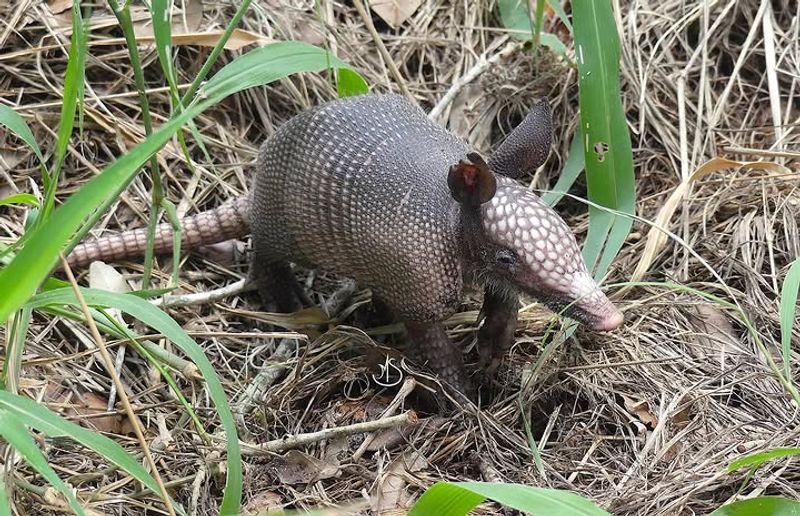
Finding a freshly uprooted seedling or a clump of mulch scattered across a garden path can feel discouraging, especially when the planting was carefully arranged.
When armadillos move through a flower bed or vegetable garden, they are generally not targeting the plants themselves but rather searching for invertebrates living in the soil beneath or around them.
Roots, seedlings, turf edges, and ornamental ground covers may be disturbed or displaced as a side effect of the animal digging for food rather than as a deliberate act of plant consumption.
This distinction matters when deciding how to respond. Armadillos are not browsing on garden foliage or chewing through stems the way some other wildlife might.
The damage to plants is typically incidental, meaning it happens because the animal was focused on what was underground.
Shallow-rooted seedlings, loosely planted annuals, and freshly laid sod are particularly vulnerable to being dislodged during foraging because they have limited grip on the soil.
Georgia gardeners who grow vegetables, herbs, or ornamental flowers in raised beds or ground-level plots may find this kind of damage especially frustrating during the growing season.
Covering vulnerable beds with wire mesh or hardware cloth laid just below the soil surface can help protect plantings without harming the animal.
Understanding that plant disturbance is a byproduct of foraging rather than intentional feeding can also help homeowners choose a more targeted and effective response rather than one based on a misreading of the animal’s behavior.
7. A Large Opening May Be A Burrow Rather Than A Feeding Hole
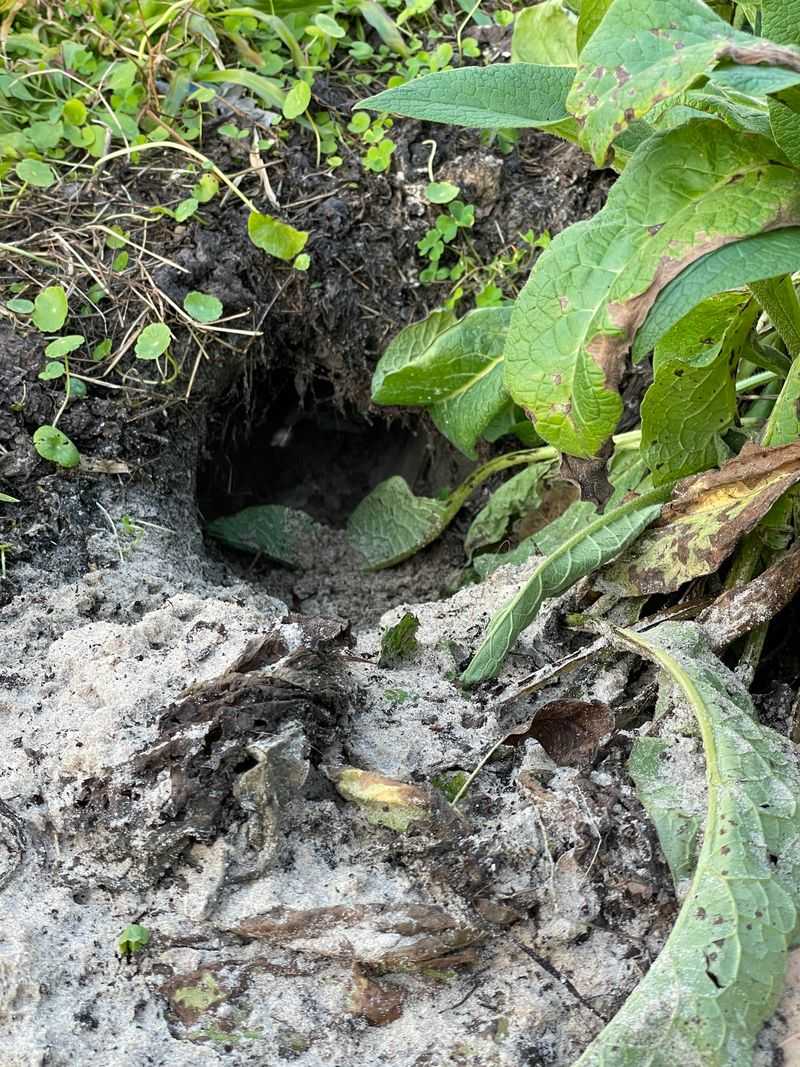
Not every hole found in a Georgia yard is a foraging pit left behind during a night of feeding.
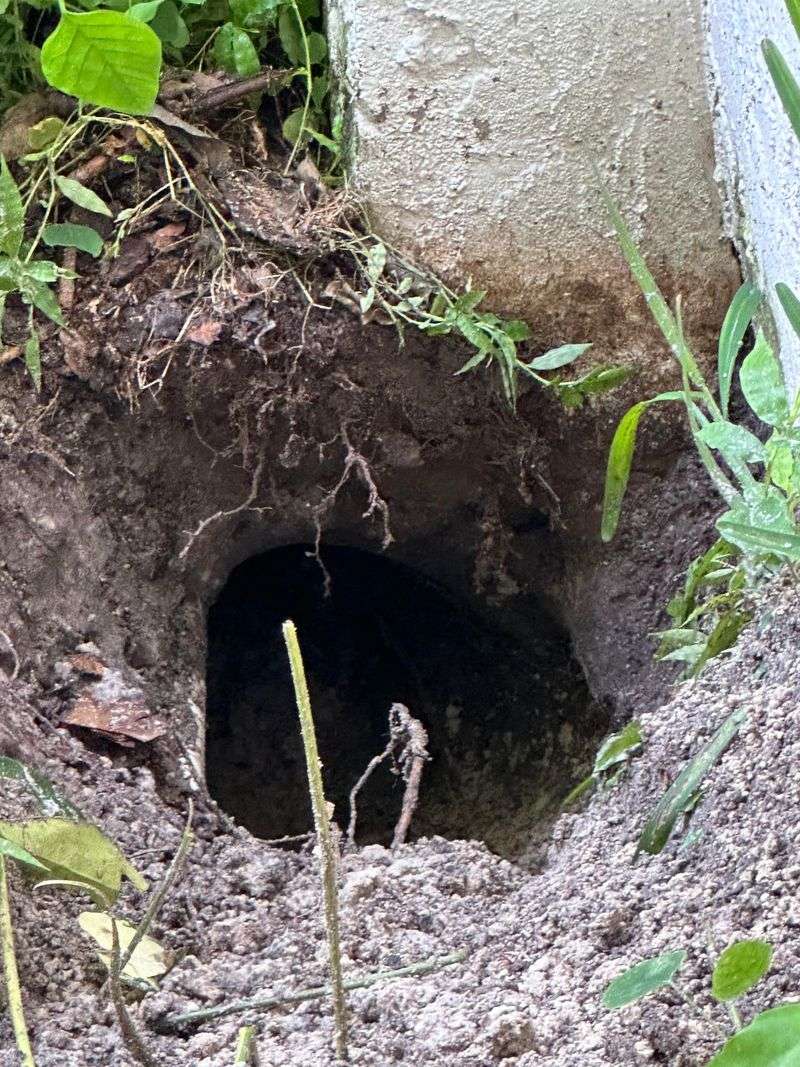
A noticeably larger opening, particularly one found near the base of a tree, along a fence line, beneath a deck, or close to a building foundation, may be the entrance to a burrow rather than a shallow feeding hole.
Armadillos use burrows for shelter and rest, and a burrow entrance tends to be wider and deeper than the cone-shaped holes associated with food-searching activity.
Identifying a burrow correctly matters because it suggests the animal may be spending extended time on or near the property rather than simply passing through during a feeding run.
Other wildlife species can also create similar ground openings, so the presence of a large hole alone is not proof that an armadillo has established a burrow.
Looking for additional signs such as claw tracks, armadillo-specific footprint patterns, or repeated disturbance in the same location can help with a more confident identification.
Georgia homeowners who discover what appears to be a burrow entrance should avoid reaching into or disturbing the opening.
If the burrow is located in a problematic spot such as beneath a foundation or near utility lines, contacting a licensed wildlife control professional familiar with Georgia regulations is a practical step.
Attempting to seal an active burrow without proper guidance can create other problems and may not be permitted depending on local and state wildlife rules.
8. Repeated Activity Suggests The Yard Offers Reliable Food Or Cover
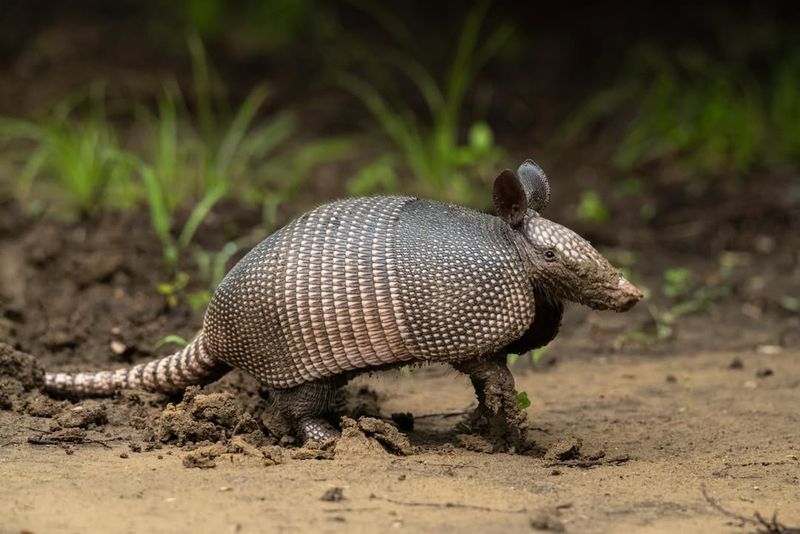
When an armadillo passes through a Georgia yard just once, the resulting holes may be the only evidence left behind.
But when fresh digging continues to appear night after night in the same general area, it is a signal that the animal has found something worth returning for.
Repeated visits often mean the yard is offering a dependable combination of accessible food, suitable soil conditions, available cover, or a convenient travel corridor between two locations.
Wooded edges, brush piles, dense shrub borders, fallen logs, and low-growing vegetation can all provide the kind of shelter and concealment that armadillos favor when resting or moving between feeding areas.
Georgia properties that border natural areas, creek banks, or undeveloped land are more likely to see consistent armadillo activity because the animals can move easily between wild habitat and landscaped yards.
Once an armadillo establishes a reliable route, it may return repeatedly as long as conditions remain favorable.
Reducing the attractiveness of a yard can sometimes discourage repeat visits. Removing brush piles, trimming overgrown vegetation near the ground, and addressing areas of dense leaf litter may reduce the cover available to a traveling armadillo.
These modifications work best when combined with other habitat management strategies rather than used alone.
Understanding why an armadillo keeps returning is more useful than simply reacting to each new round of holes, and it allows homeowners to make changes that address the actual conditions drawing the animal back.
9. Treating The Lawn With Insecticide May Not Stop The Digging
Reaching for a bag of lawn insecticide is a common first reaction when homeowners connect armadillo holes to the possibility of grubs or other soil insects. The reasoning seems straightforward enough: remove the food source and the animal will move on.
In practice, however, this approach may not produce the expected result because armadillos eat a varied diet that includes many different soil organisms, and reducing one type of invertebrate does not necessarily make a yard unattractive to a foraging animal.
Applying a broad insecticide treatment without first confirming a pest problem also carries other considerations. Pesticides that target soil insects can affect earthworms and other beneficial organisms that contribute to healthy soil structure and nutrient cycling.
Georgia Extension guidance generally recommends identifying a confirmed pest issue before selecting and applying any lawn treatment, and following product label instructions carefully when a treatment is warranted.
Using a pesticide as a wildlife deterrent without a verified pest problem is generally not considered a sound approach.
Repellents, both commercial and homemade, are sometimes suggested as a way to discourage armadillos, but their effectiveness is not reliably supported by research.
Exclusion methods such as burying hardware cloth along garden borders or using fencing installed at an angle may offer more consistent results for protecting specific areas.
Consulting with a UGA Extension office or a licensed wildlife professional in Georgia can help homeowners find a practical, research-supported plan for managing armadillo activity without unnecessary treatments.