The Common Mulch Mistake That Can Stress Georgia Trees During Summer
Tree trouble does not always begin in the branches. The first warning signs often start much closer to the ground, where most homeowners rarely think to look.
Leaves lose color, growth slows down, and summer heat seems to hit harder every year. In many cases, one common mulching habit is quietly making everything worse.
Keeping roots comfortable during a Georgia summer takes more than spreading fresh mulch around the base of a tree. How it is applied matters just as much as having it there in the first place.
One simple mistake can trap moisture, reduce airflow, and add stress when trees are already working hard to handle the heat.
Once you know what to look for, it is easy to avoid.
1. Pull Wood Chips Away From The Tree Trunk
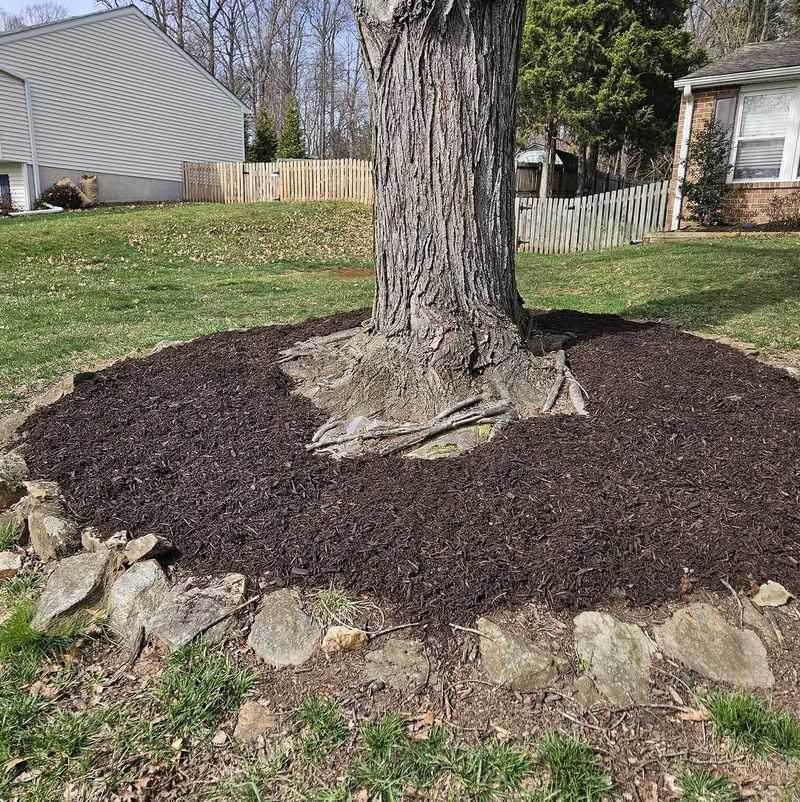
Volcano mulching is one of the most common mistakes homeowners make. Piling mulch directly against the trunk traps moisture against the bark and creates conditions where rot and pests can take hold.
Bark is not designed to stay wet. When mulch presses against it for weeks at a time, the outer layer breaks down.
Insects and fungal problems tend to move in when that happens.
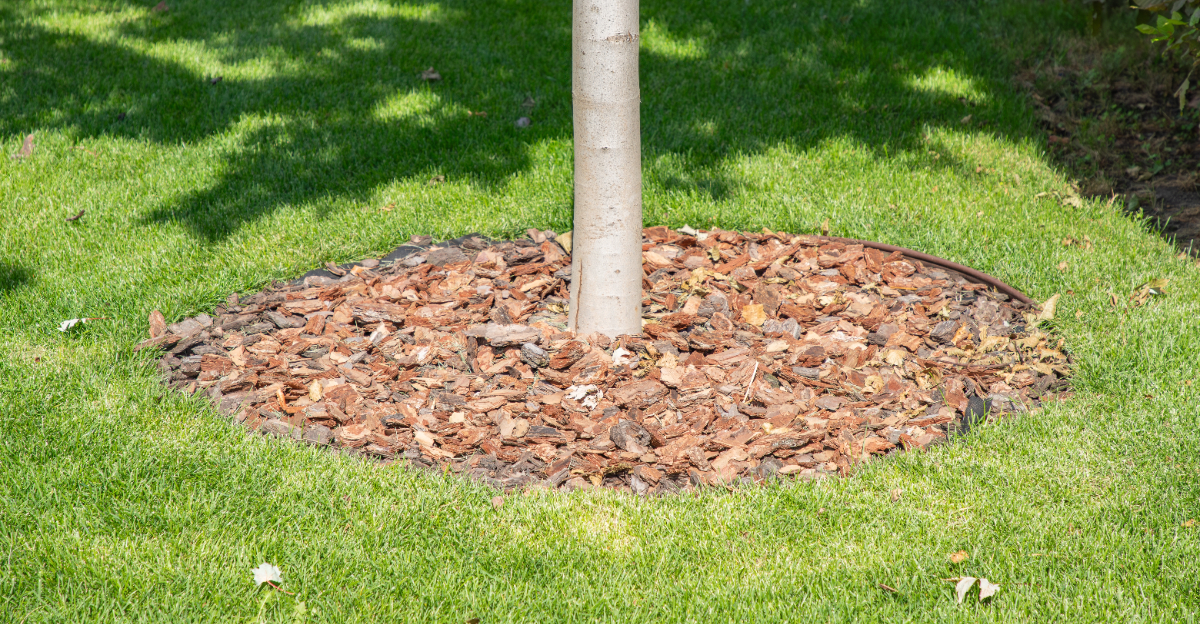
Pull mulch back at least three to four inches from the base of the trunk. You want to see a clear gap between the mulch and the bark.
In humid Southern summers, that gap matters even more. Heat and moisture together accelerate bark breakdown faster than in cooler climates.
Some people worry the exposed base looks unfinished or bare. It does not.
A clean gap around the trunk actually signals good tree care to anyone who knows what they are looking at.
Roots near the surface also breathe better when mulch is not packed tightly against the trunk. Oxygen exchange at the root collar supports the tree from the ground up.
Check your mulch placement a few times each season.
2. Create A Wide Ring Around Each Tree
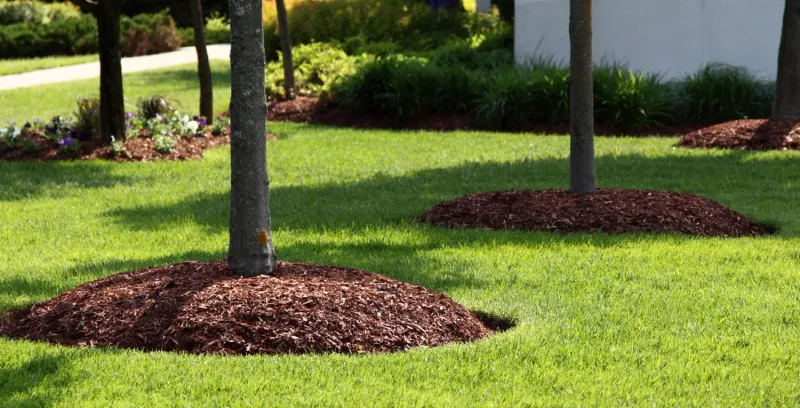
Wider is better when it comes to mulch rings. A small circle of mulch close to the trunk does not do much for root health or moisture retention.
Tree roots spread far beyond what most people expect. Extending the mulch ring outward gives a larger portion of the root zone the benefits of reduced soil temperature and retained moisture.
Aim for a ring that reaches at least three to four feet out from the trunk. On larger, more established trees, going even wider is worth the effort.
Wide rings also reduce competition from grass. Turf grass pulls water and nutrients from the same soil zone as shallow tree roots.
Keeping grass out of that area removes one source of stress during dry summer stretches.
Georgia summers get hot and dry fast. A broad mulch ring acts like a buffer, slowing soil moisture loss during stretches when rain does not come for days at a time.
Mowing near tree trunks with a narrow mulch ring also puts the bark at risk. Wider rings keep mowers and string trimmers farther away, reducing accidental trunk wounds.
Your Georgia Garden Changes Every Week. Your Plan Should Too.
Gardening in Georgia changes quickly throughout the season. Every Friday you’ll receive a simple weekly plan showing exactly what to plant, prune, fertilize, harvest, and protect so you never miss the right timing.
3. Limit The Layer To Three Inches
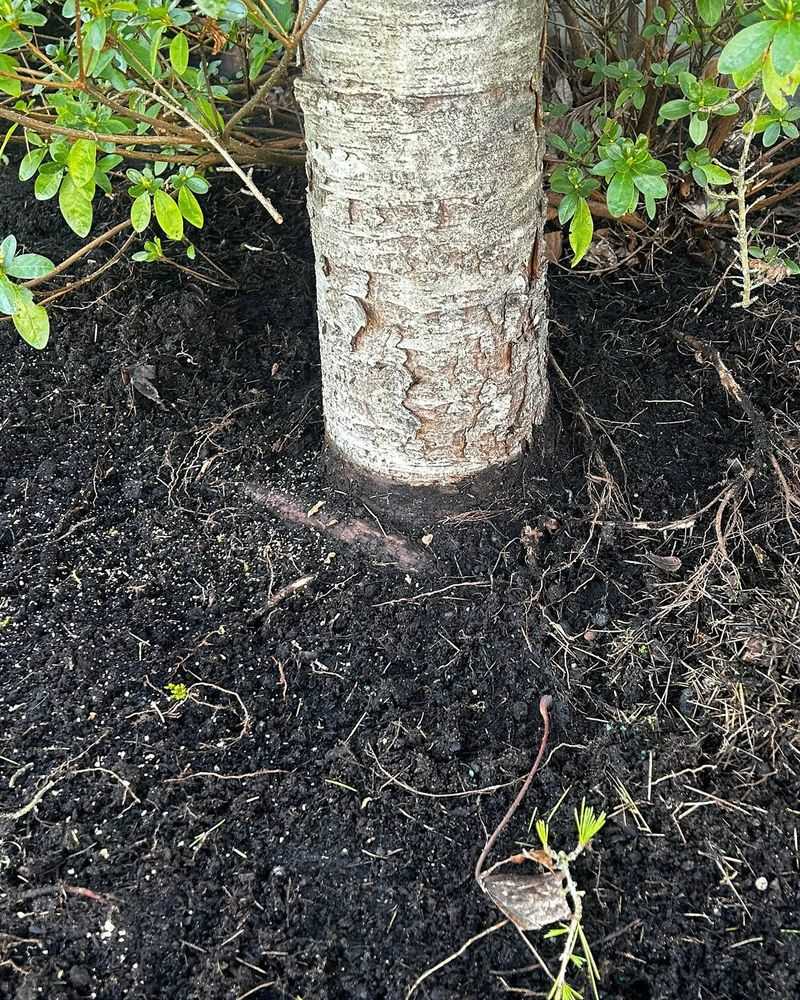
Too much mulch causes just as many problems as too little. Thick layers block oxygen from reaching the roots and can hold so much moisture that soil stays soggy long after rain stops.
Three inches is the practical sweet spot. Enough to hold moisture and regulate soil temperature, but not so thick that roots suffocate or fungal problems take hold underneath.
Some homeowners add fresh mulch on top of old mulch each season without removing what is already there. Layers stack up fast.
Before long, you have six or eight inches of material sitting over the root zone.
Dig into your mulch ring before adding more. If the existing layer is still two inches or deeper, skip adding more until it breaks down further.
Overly thick mulch also creates habitat for rodents. Mice and voles tunnel through deep mulch layers and sometimes gnaw on root bark, which weakens trees over time.
In Georgia, summer heat speeds up decomposition. Mulch breaks down faster here than in cooler states.
Checking depth in spring and mid-summer keeps you from going too thin or too thick at the wrong time.
A consistent three-inch layer across the whole ring gives the most reliable results. Uneven spots leave some roots exposed while others sit under a smothering pile.
4. Leave The Root Flare Exposed
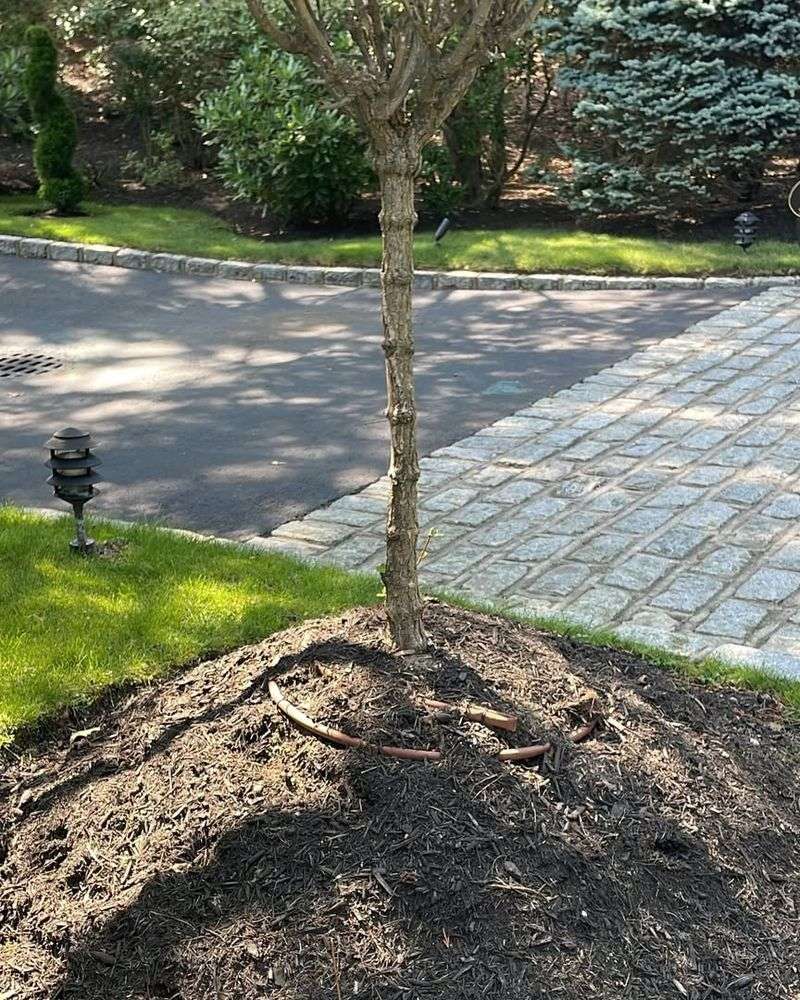
Root flare is the widening zone where the trunk transitions into the root system at ground level. Covering it with mulch or soil is one of the most overlooked mistakes in tree care.
When the root flare stays buried, the bark in that zone softens and breaks down over time.
Girdling roots can also form when the flare is covered, wrapping around the trunk and slowly restricting the tree’s vascular system.
You should see the flare flaring outward when you look at the base of a healthy tree. If the trunk goes straight into the ground like a telephone pole, it is likely buried too deep.
Carefully rake mulch and soil away from the base until the flare is visible. On some trees that have been mulched heavily for years, you may need to remove several inches of built-up material.
Arborists across the South consistently flag buried root flares as a leading cause of long-term tree stress. It is a slow process, but the damage adds up season after season.
Once the flare is exposed, keep it that way. Mulch should taper down as it approaches the trunk, not pile up against it.
5. Remove Grass From The Base
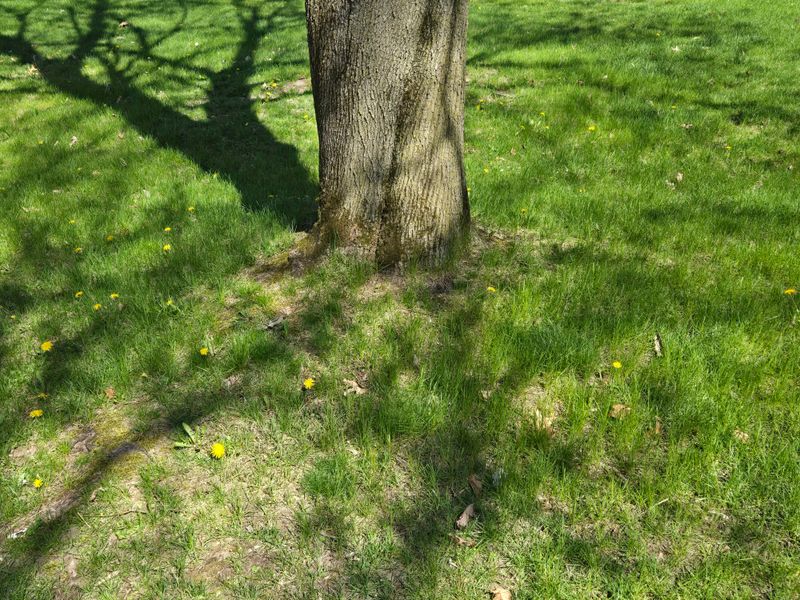
Grass growing right up to a tree trunk creates more competition than most people realize. Turf pulls water, nutrients, and oxygen from the same shallow soil layer that tree roots depend on.
Removing a ring of grass before mulching gives the tree a cleaner start. Roots in that zone get full access to whatever water and nutrients the soil holds.
Use a flat spade or an edging tool to cut a clean border. Cut just deep enough to remove the root mat of the grass without slicing into surface tree roots.
Avoid using string trimmers or mowers to clear grass at the base. Both tools frequently nick the lower trunk or surface roots, leaving wounds that invite problems over time.
Herbicides are an option some people use, but they require careful application near tree roots. Any product that moves through the soil can potentially reach feeder roots.
Read labels carefully and follow directions.
Once the grass is removed, lay down the mulch ring promptly. Bare soil in summer heats up quickly and loses moisture fast.
Mulch right after clearing keeps the soil stable.
Keeping that grass-free zone maintained through the season takes occasional attention. Grass edges creep back in, especially after rain.
A quick pass with an edger a few times a year handles it.
6. Spread Material Evenly Around The Tree
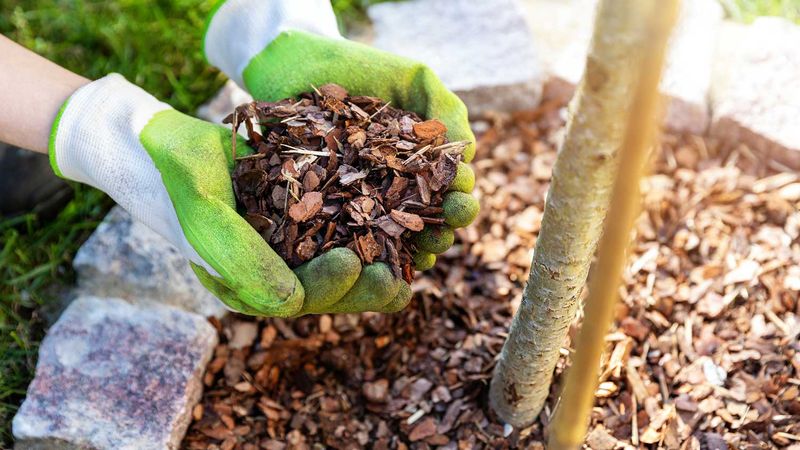
Uneven mulch creates uneven results. Thick spots hold too much moisture while thin spots dry out fast, leaving parts of the root zone without consistent protection.
Grab a rake and work mulch out from the center in smooth, even passes. Take your time spreading it so no area ends up noticeably higher or lower than the rest.
Piles and clumps are common when mulch is dumped straight from a bag or wheelbarrow. Breaking them apart before spreading prevents air pockets and uneven layers beneath the surface.
Smooth, even coverage also looks better from the yard. A well-raked mulch ring signals that the tree is cared for and the landscape is maintained.
Pay attention to the edges of the ring. Mulch tends to get kicked or scattered by foot traffic, kids, and pets.
Edges often end up thinner than the center over time.
Walk around the tree after spreading and check the ring from multiple angles. Low spots show up easily when you take a second look from different directions.
After a heavy rain, mulch can shift and pile in one direction. A quick re-raking after major storms keeps the layer even and protects the root zone consistently through the season.
7. Use Organic Mulch Around Trees
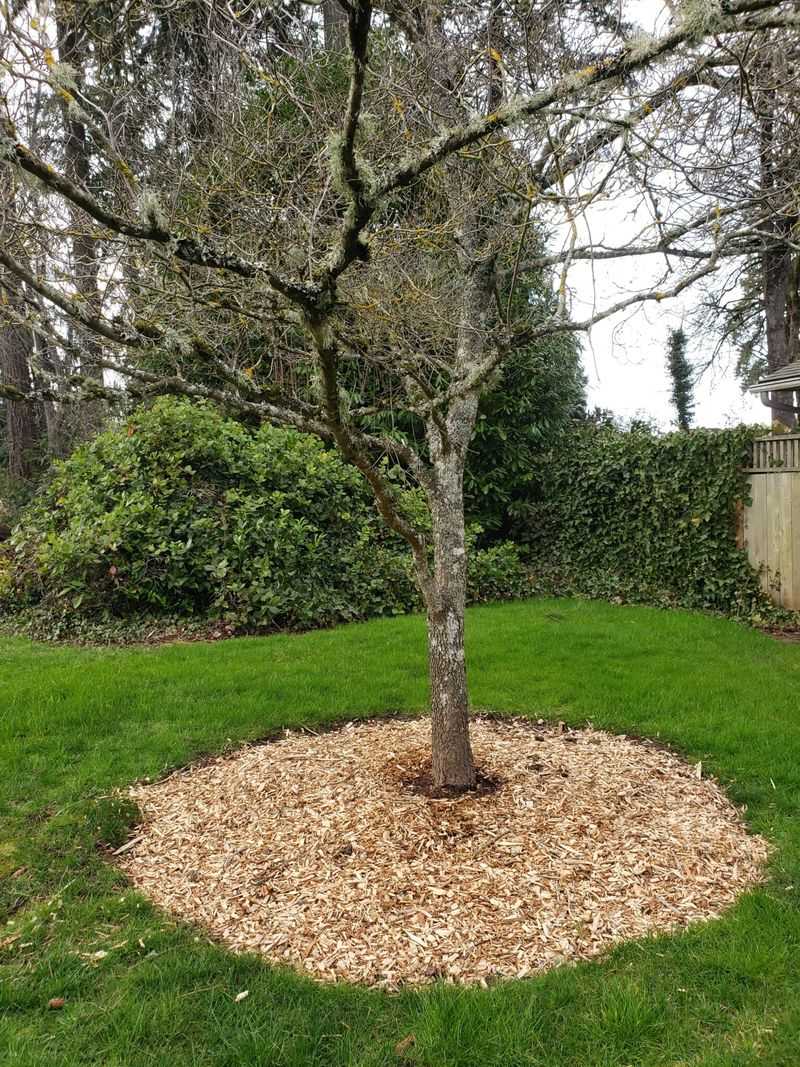
Not all mulch is equal. Organic options like shredded hardwood, pine bark, or wood chips break down over time and feed soil biology as they decompose.
That process adds real value below the surface.
Inorganic options like rubber mulch or rocks do not break down. Rubber can hold heat in ways that raise soil temperatures during summer.
Rocks can do the same, which is the opposite of what tree roots need in hot weather.
Shredded hardwood bark is one of the most widely available and practical choices in Georgia. It stays in place reasonably well, breaks down at a moderate rate, and looks natural in most yard settings.
Pine bark nuggets work well too, though larger chunks can shift in heavy rain. Smaller pine bark stays put better and breaks down into the soil more consistently over a season.
Fresh wood chips from a tree service are a budget-friendly option. Let them age a few weeks before applying directly around trees.
Fresh chips can temporarily tie up nitrogen in the soil as they break down.
Avoid using dyed mulch if you can. Colorants are generally considered low-risk, but the base wood in some dyed products is lower quality and may break down unevenly.
Organic mulch works with the tree rather than just covering the ground.