The California Native Vine That Keeps Hummingbirds Coming Back Long After Feeders Run Dry
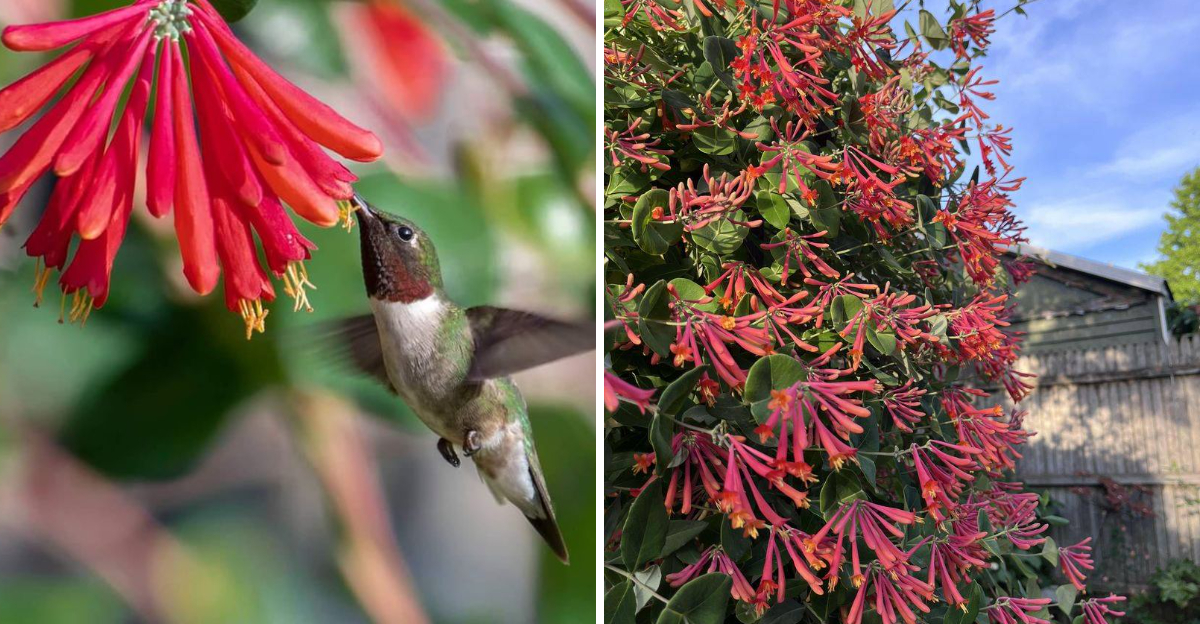
An empty feeder does not have to mean an empty yard.
Hummingbirds may pause at a window feeder, find nothing waiting, then zip toward the next bright flower.
That is where a living nectar source can make a real difference, especially one already rooted in California’s own landscape.
California honeysuckle brings that native advantage.
This twining vine produces pink tubular flowers shaped beautifully for hummingbird beaks, followed by berries that add more wildlife value later in the season.
It can climb a trellis, soften a fence, weave through a native garden, or sprawl naturally where space allows.
It is not a flashy annual that needs constant replacement.
It is a regional plant with a role to play: nectar for hummingbirds, habitat value for local wildlife, and a softer way to bring movement and color into the garden.
So why does California honeysuckle keep hummingbirds coming back long after feeders run dry?
Because it offers real flowers, local habitat, and a nectar stop that fits the birds far better than a forgotten plastic feeder ever could.
California Honeysuckle Is The Vine
California honeysuckle belongs to the landscape it grows in.
Known botanically as Lonicera hispidula, this native vine grows through parts of California’s coastal scrub, oak woodland, chaparral, and riparian edges.
In gardens, it brings that same loose, natural habit to fences, trellises, slopes, and shrub borders.
It climbs by twining. The stems wrap around nearby support rather than clinging with sticky pads or aerial roots.
Without support, it can sprawl. That makes it useful along banks, through open shrubs, or across informal native plantings where a softer shape fits better than a rigid vine.
Mature size depends on the site. Many plants reach about six to fifteen feet, with growth shaped by water, light, soil, and the strength of the support nearby.
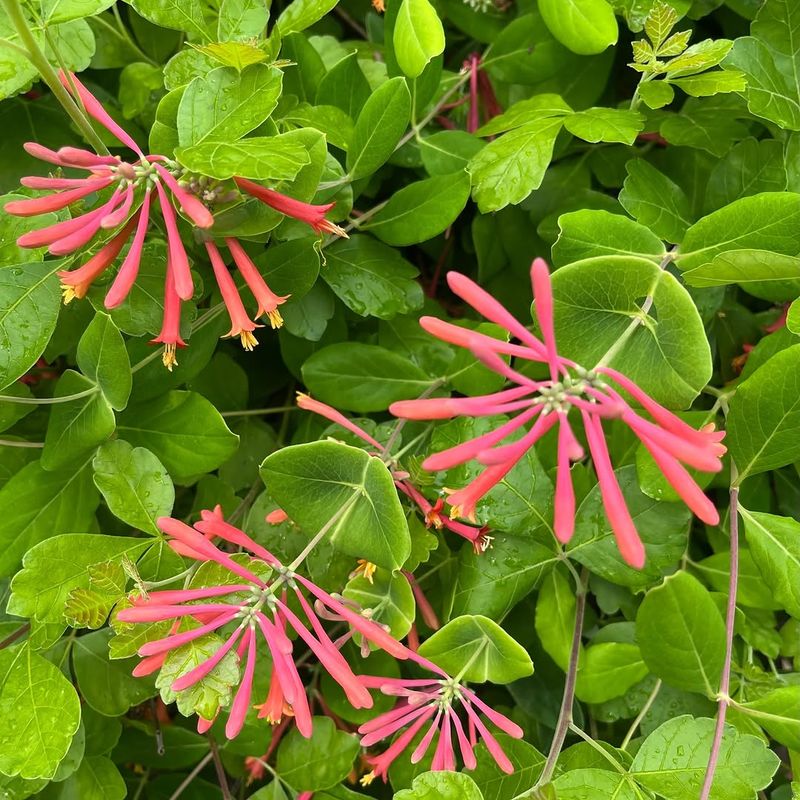
The foliage has a quiet charm. Leaves are oval, slightly fuzzy, and paired along the stems, with the uppermost leaves often joined into a small cup-like shape.
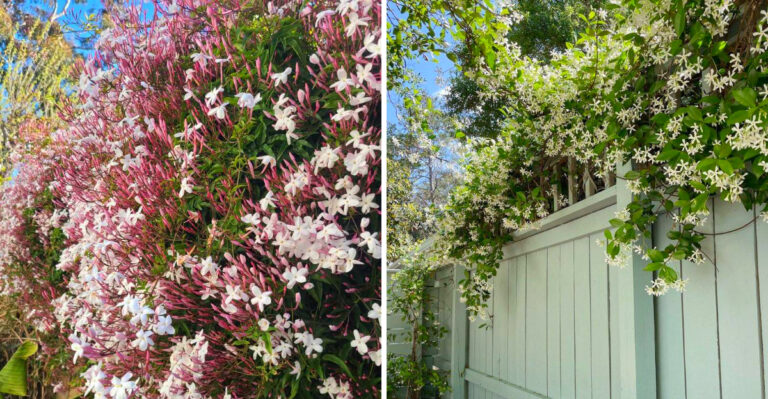
The flowers are the real draw. Pink to rose-colored tubular blooms appear in clusters near the stem tips, where hummingbirds can spot and reach them easily.
Berries follow after pollination. Small red fruits add another layer of wildlife value, especially for birds that use native shrubs and vines for seasonal food.
Local sourcing matters. A plant grown from regional nursery stock usually has a better chance of settling into your specific climate than one with unknown origins.
This is not just any flowering vine.
It is a California native that already speaks the language of the birds visiting your yard.
Native Flowers Fit Local Birds
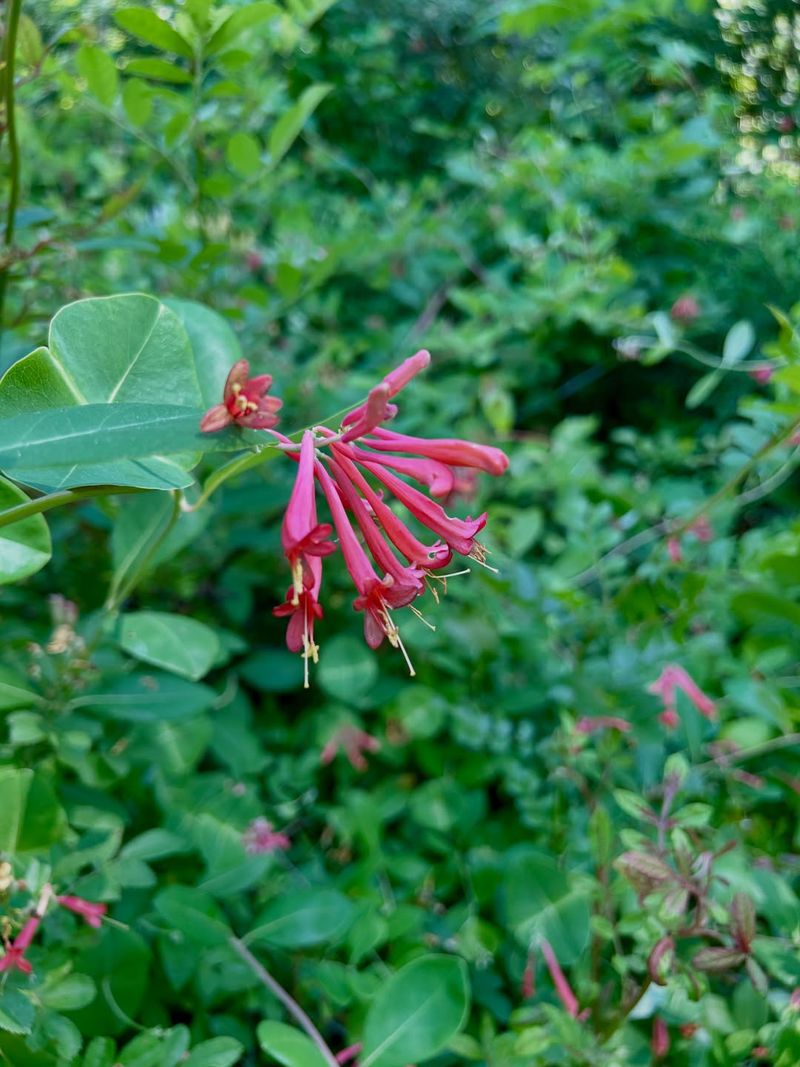
Native plants offer more than color.
California honeysuckle shares a long history with the birds, insects, and plant communities around it. That connection shows up in flower shape, bloom timing, nectar access, and habitat value.
Hummingbirds recognize the signal. Pink tubular flowers stand out as a natural feeding cue, especially to birds already moving through native plantings.
Anna’s hummingbirds may use it. These year-round California residents visit many nectar flowers, and native vines can help support their daily feeding routes.
Your California Garden Changes Every Week. Your Plan Should Too.
Gardening in California changes quickly throughout the season. Every Friday you’ll receive a simple weekly plan showing exactly what to plant, prune, fertilize, harvest, and protect so you never miss the right timing.
Allen’s hummingbirds may benefit too. In suitable areas, spring and seasonal movement can line up with native bloom periods.
The plant supports more than nectar. Native vines also host small insects, spiders, and other tiny prey that hummingbirds need for protein, especially during nesting season.
Avoid pesticides around it. Sprays can reduce the insect life that hummingbirds depend on and may make the habitat less useful overall.
Local genetics matter. Nursery plants sourced from your region are often better matched to local rainfall, heat, soils, and seasonal timing.
One vine is a start, not a complete habitat. Pairing it with native shrubs, trees, and perennials creates more food, shelter, and nesting support across the year.
California honeysuckle works best as part of a living system.
That is what keeps birds returning after the feeder has stopped being interesting.
Tubular Blooms Hold Nectar
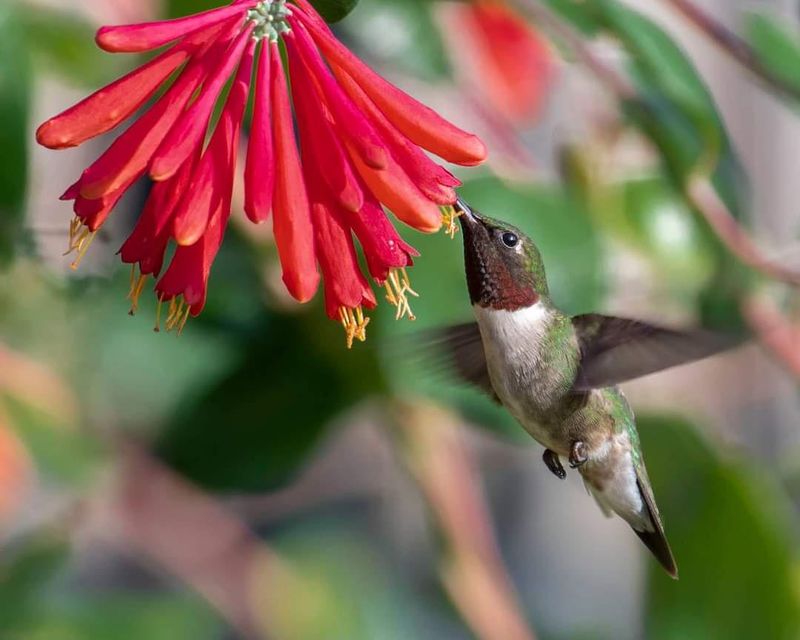
Flower shape is doing the work here.
California honeysuckle blooms are narrow, curved, and tubular, which makes them especially useful for hummingbirds. A hovering bird can reach the nectar with its long bill while many other visitors cannot reach as deeply.
That gives hummingbirds an advantage. The flower and bird fit together in a way that feels almost designed, with the bird feeding while brushing against the flower’s reproductive parts.
Bloom time usually starts in spring. Depending on the region, rainfall, elevation, and garden conditions, flowers may continue into early summer or appear again lightly later.
Coastal gardens may get a longer show. Mild temperatures and steadier moisture can keep the vine more comfortable than a hot inland site.
Inland gardens may need more patience. Summer heat can shorten the bloom window, especially once the soil dries and the vine shifts into survival mode.
A new vine may take time. First-year plants often focus on roots and stems before becoming heavy bloomers. Hummingbirds may notice it more once it gains size.
Plant visibility helps. A sunny trellis or open edge makes flowers easier for birds to spot during quick feeding routes.
After pollination, berries begin to form. That keeps the plant valuable even after the pink flowers finish.
A feeder runs out when the sugar water is gone.
A vine keeps working through roots, flowers, fruit, and seasons.
Late Growth Extends The Route
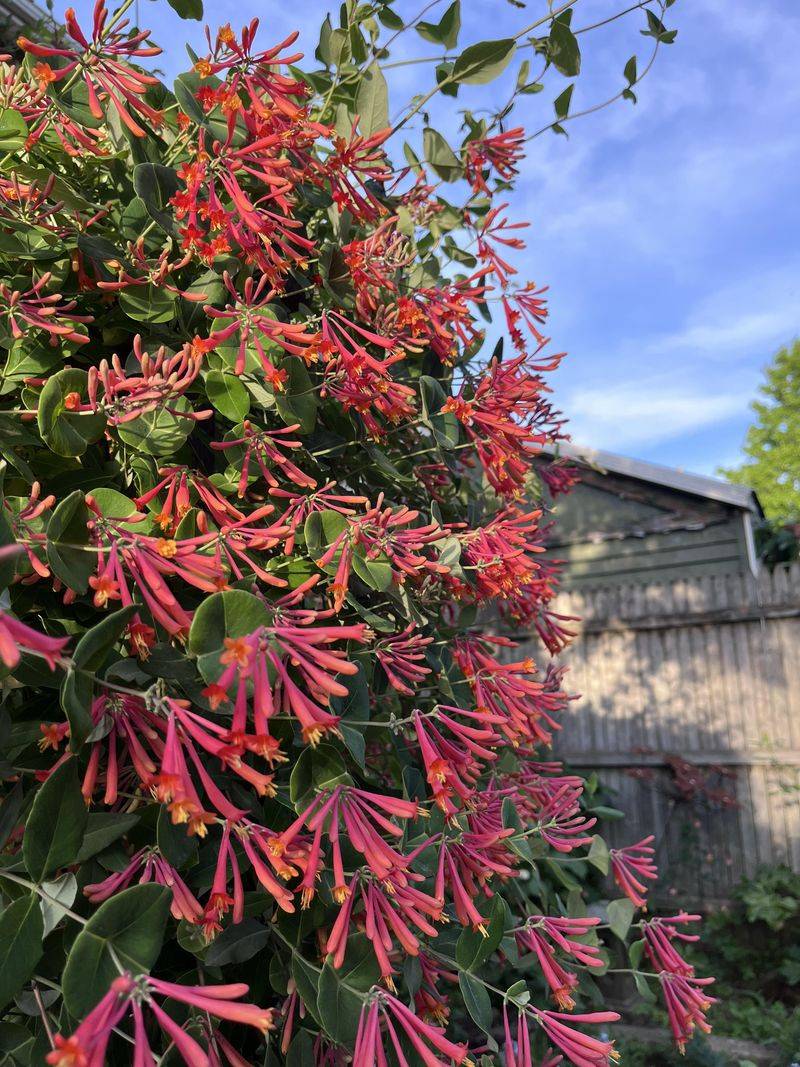
A few late flowers can matter more than they look.
Hummingbirds move through California gardens at different times depending on species, region, weather, and available food. A vine that keeps producing some fresh growth can become a useful stop during seasonal shifts.
Late bloom depends on conditions. Moisture, temperature, elevation, pruning, and plant age all affect how long California honeysuckle keeps flowering.
Light summer water can help. Once established, the vine does not need pampering, but deep occasional watering during dry stretches may support a longer bloom period.
Do not push soft growth with heavy feeding. Too much fertilizer can create weak, leafy growth instead of the sturdy stems and flowers the vine needs.
A light trim can refresh it. After the main bloom, gentle pruning may encourage new side growth in some gardens.
Heavy late pruning works against the birds. Cutting hard in late summer can remove possible late flowers and the berries that follow.
Elevation changes timing. Higher-elevation plants may bloom later than coastal or lowland plants, which can line up with hummingbirds moving through the area.
Expect contribution, not perfection. One vine will not feed every hummingbird all season, but it can become one important stop in the route.
The goal is not to replace every feeder.
It is to give hummingbirds something real to come back to.
Trellises Put Blooms In View
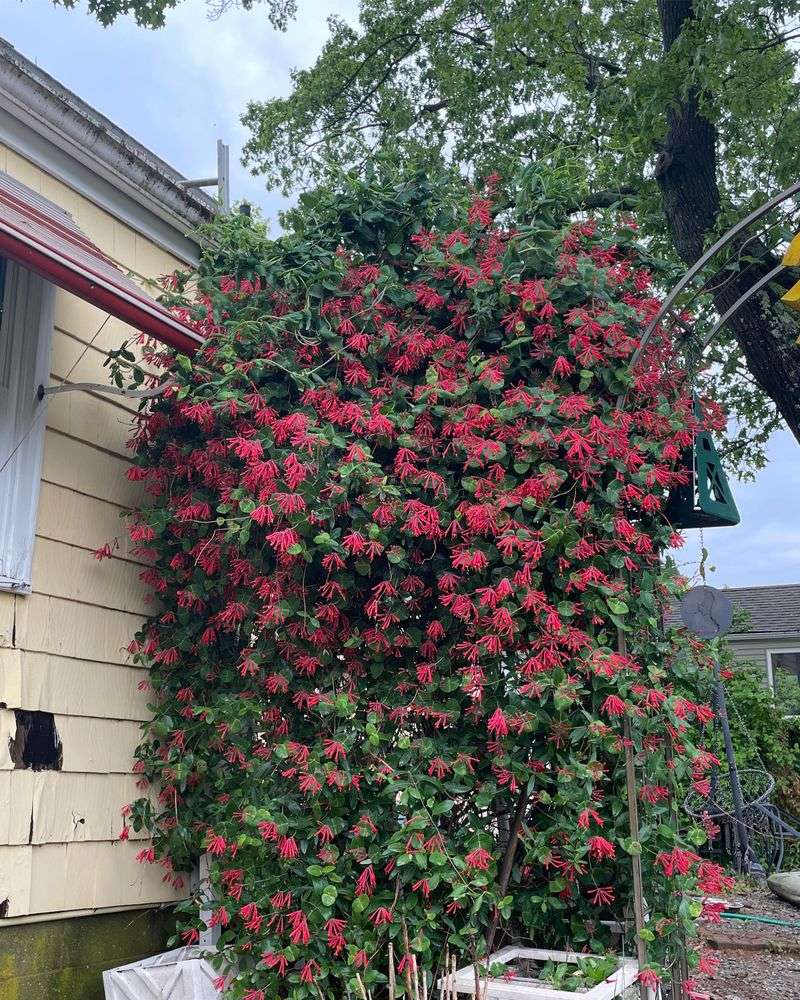
A well-placed trellis makes the vine easier to enjoy.
California honeysuckle can disappear into shrubs when left on its own. Give it a simple structure, and the flowers rise into view for both gardeners and hummingbirds.
Use a sturdy support. Wood trellises, wire panels, cedar arbors, and strong fence sections can all work well.
Leave space for airflow. A trellis set a few inches away from a wall or fence keeps foliage from pressing flat and helps reduce trapped humidity.
Guide young stems early. The vine twines naturally, but first-season training helps it find the support and grow in the direction you want.
Keep flowers at eye level. A support that lets blooms sit four to six feet high makes them easy to watch from a porch, path, or window.
Avoid weak structures. Mature vines gain weight over time, especially after rain or heavy growth. Delicate lattice, gutters, and flimsy frames are not good long-term supports.
Place it near open air. Hummingbirds need room to hover and approach flowers, so avoid burying the vine in a cramped corner.
Keep the base reachable. Watering, mulching, and occasional pruning are much easier when the bottom of the plant is not blocked.
A trellis does more than hold stems.
It turns the vine into a visible nectar station that hummingbirds can find quickly.
Light Pruning Keeps It Manageable
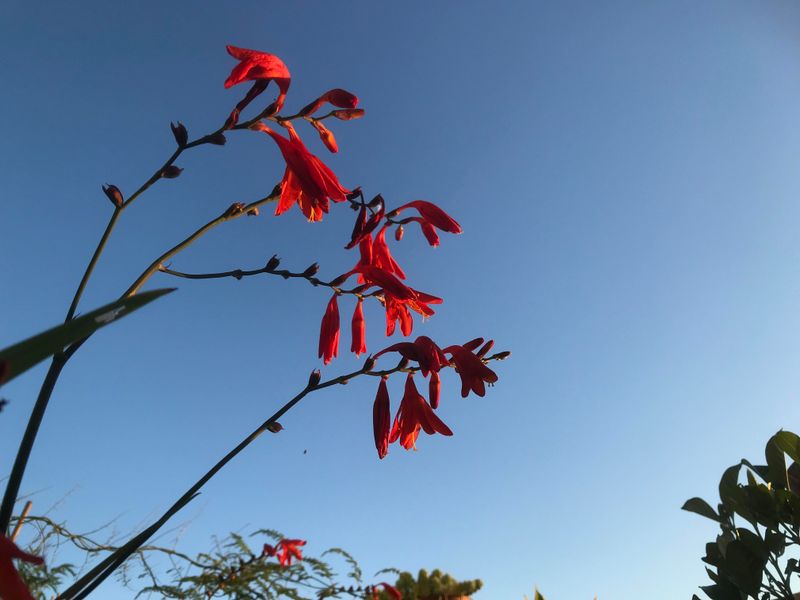
California honeysuckle grows best with guidance, not constant control.
This vine can become tangled when left alone for years, but heavy cutting can remove the same stems that would have carried flowers. Light, thoughtful pruning keeps it productive without stripping away its natural shape.
Prune after the main bloom. Late spring to early summer is often the best window, once the heaviest flowering has finished.
Remove crowded interior stems. Opening the center lets light and air reach more of the vine, which helps new growth stay healthier.
Shorten wandering stems. Growth reaching into paths, gutters, or neighboring plants can be redirected or trimmed without cutting the whole vine back.
Keep some new growth. Fresh stems often become the source of future blooms, so do not shear everything into a flat shape.
Skip major pruning in late summer. That can remove late flowers and developing berries that birds may use.
Clean up lightly in early spring. Remove damaged, weak, or awkward stems before the season gets moving.
Mulch the root zone. A light layer of organic mulch helps keep soil cooler and more even, especially in inland heat. Keep mulch away from the crown.
The best pruning almost looks invisible.
The vine still looks like itself, only easier to see, healthier to grow, and better placed for hummingbirds to visit.