The Invasive Tree Feeding Spotted Lanternfly Into North Carolina Yards, And Why Cutting It Now Matters
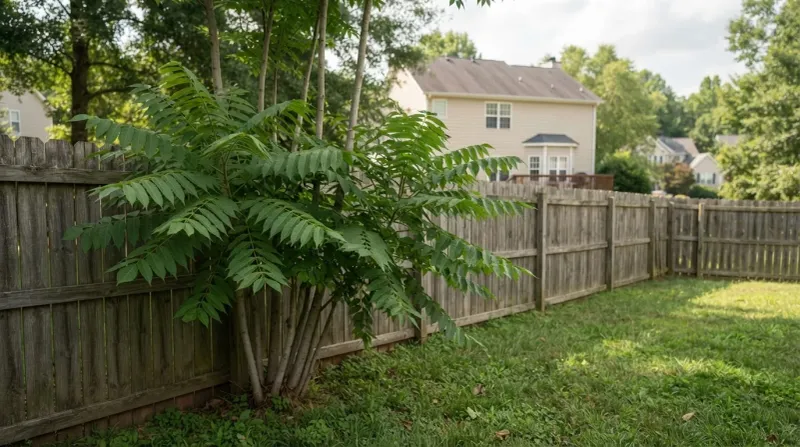
A fast-growing tree with fern-like leaves is quietly making spotted lanternfly feel right at home in North Carolina yards, and most homeowners walk past it every day without a second glance. That tree is tree-of-heaven, and understanding what it offers the pest, and how to handle it safely, matters more than grabbing a chainsaw. As of February 2026, established spotted lanternfly populations have been confirmed in seven North Carolina counties, and the insect is still on the move.
Tree-of-Heaven Is One Preferred Host, Not the Cause of Every Infestation
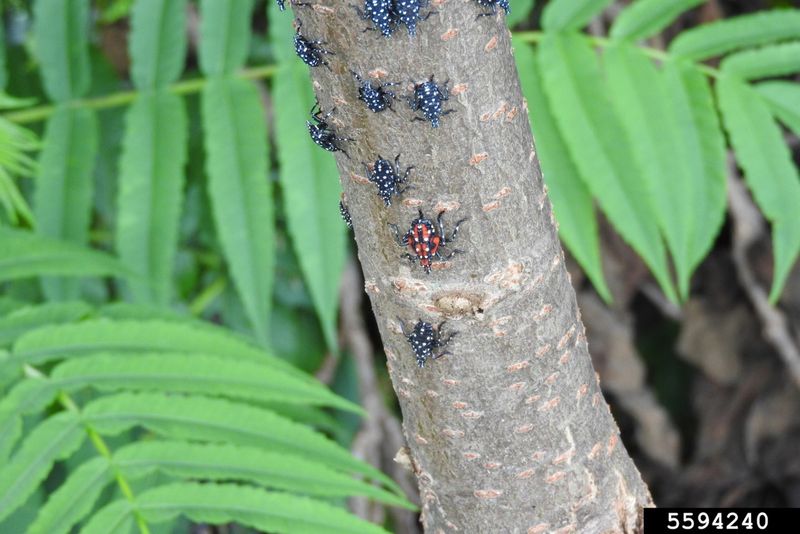
On February 10, 2026, the North Carolina Department of Agriculture and Consumer Services reported established spotted lanternfly populations in seven counties, including Forsyth, Guilford, Davidson, Rowan, Caswell, Rockingham, and Caldwell. Breeding populations were found along the I-85 and I-285 corridors, and the agency encouraged residents statewide to report any suspected insects or egg masses outside those known areas.
Right in the middle of that picture is tree-of-heaven, Ailanthus altissima, a fast-spreading invasive that shows up wherever the ground gets disturbed. You will find it along roadsides, fence rows, field edges, vacant lots, and construction sites, often growing so quietly that neighbors assume it has always been there. NC State Extension notes that the tree can reach roughly 80 feet tall and carries compound leaves up to 2 to 4 feet long.
Here is the part worth understanding clearly before you reach for any tools. Tree-of-heaven gives late-stage spotted lanternfly nymphs and adults a place they genuinely prefer to feed and gather, which makes it a useful monitoring target on your property. But it does not send lanternflies into your yard, and removing one tree will not guarantee a lanternfly-free season.
Spotted lanternflies use dozens of host plants, can complete their entire life cycle without tree-of-heaven, and can walk or fly in from a neighboring property at any time. NC State Extension is clear that the pest feeds on grapes, stone fruits, maples, walnuts, and many other plants common in North Carolina yards. The practical plan here is identification, safe management, monitoring, and reporting, not an impulsive cut.
Confirm the Tree Before You Remove It
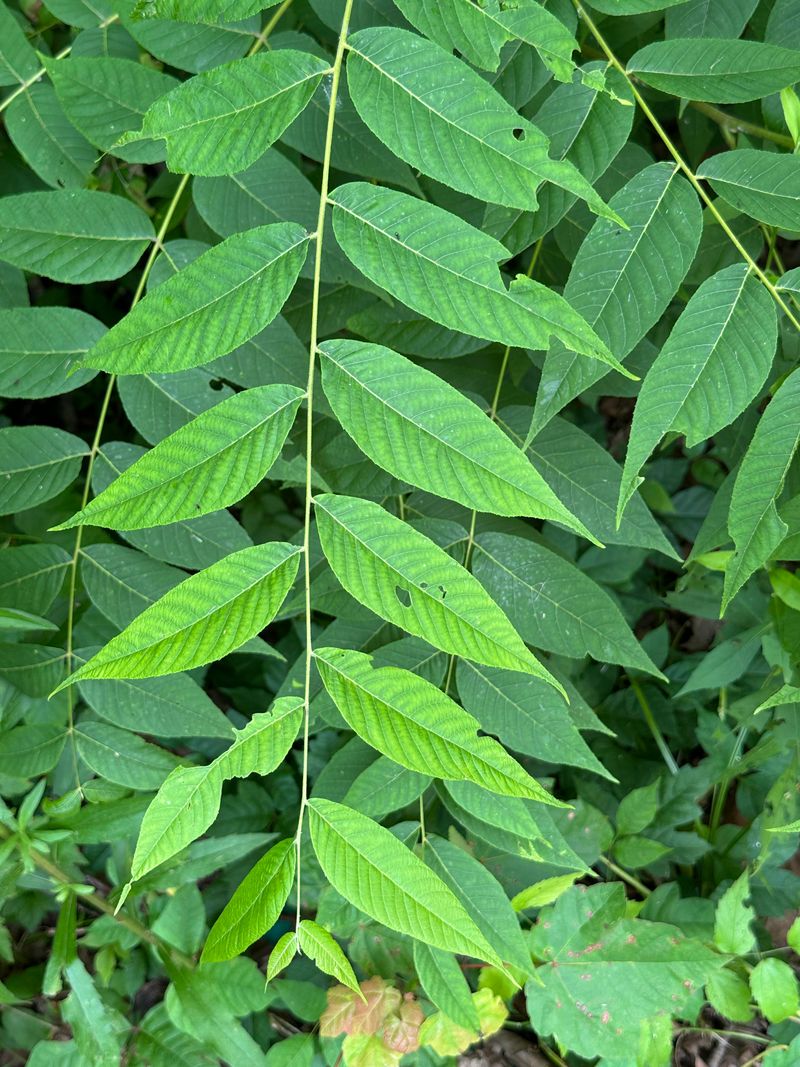
Many North Carolina yards have at least one compound-leaved tree growing somewhere near the fence or back corner, and not all of them are tree-of-heaven. Getting the identification right before you remove anything is genuinely important, because native black walnut and several sumac species look similar at a quick glance but deserve to stay in your yard.
Tree-of-heaven has a few reliable tells. According to NC State Extension, its leaflets have mostly smooth edges with just one or two gland-tipped teeth near the base of each leaflet, not along the whole edge. Crush a leaf or twig and you will get a strong, unpleasant odor that many people compare to burnt peanut butter or something worse. That smell alone is one of the most reliable field checks available.
Compare that to native black walnut, which has leaflets with more clearly toothed edges and a distinctly different, pleasant nutty scent when crushed. Sumac species common in the Piedmont and mountains also carry noticeably toothed leaflet edges all the way around, not just near the base. Penn State Extension’s identification guide and their native look-alikes resource walk through these differences with photos that are worth bookmarking on your phone before you head outside.
Your North Carolina Garden Changes Every Week. Your Plan Should Too.
Gardening in North Carolina changes quickly throughout the season. Every Friday you’ll receive a simple weekly plan showing exactly what to plant, prune, fertilize, harvest, and protect so you never miss the right timing.
Size and location matter just as much as leaf shape. A seedling a few inches tall in a garden bed is a very different situation from a 40-foot tree leaning over your roofline. If the identification is not certain after checking those features, contact your county Cooperative Extension office before doing anything else. Removing the wrong tree is a mistake that cannot be undone.
Why Lanternflies Favor Tree-of-Heaven
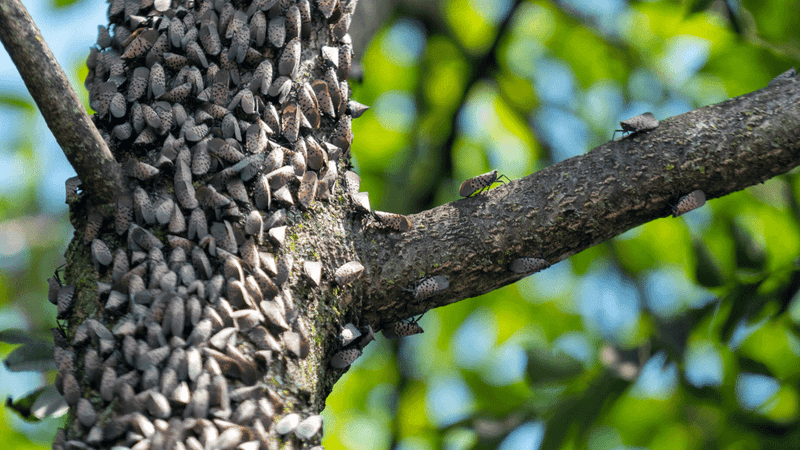
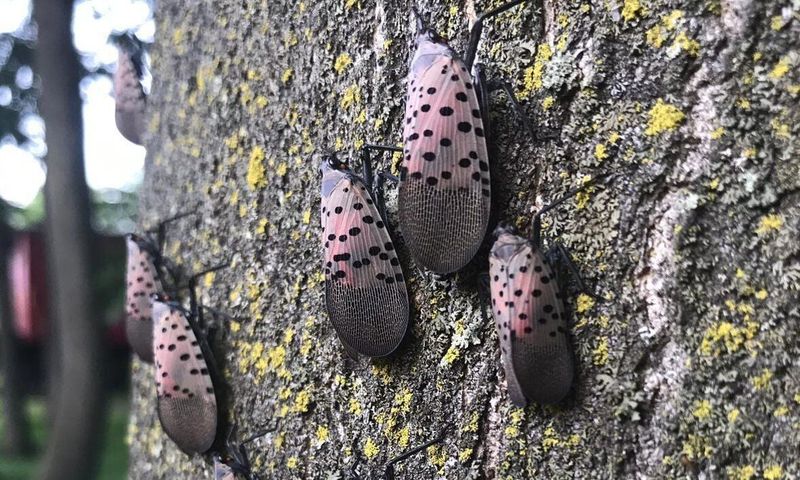
Spotted lanternfly does not need tree-of-heaven to survive, but late-stage nymphs and adults treat it like a favorite restaurant. The tree produces compounds in its sap that the insect actively seeks out, which is why you can sometimes find dozens of lanternflies crowded on a single trunk while nearby plants look untouched. That congregation habit actually makes tree-of-heaven a useful monitoring location, and some management programs use it deliberately to concentrate adults for treatment.
Earlier nymphs, the small black-spotted ones that appear in spring, are far less picky. NC State Extension reports that spotted lanternfly feeds on more than 70 plant species, and the younger nymphs move freely among many of them. Grapes, apples, peaches, plums, cherries, maples, walnuts, willows, oaks, dogwoods, and sycamores are all on the list, along with ornamentals common in Piedmont and Coastal Plain yards.
Penn State Extension’s management supplement notes that lanternflies can complete their life cycle without tree-of-heaven and can arrive from neighboring properties regardless of what you grow. An overview from Utah State University Extension puts the host plant count even higher, depending on which research source is used.
Removing tree-of-heaven from your property takes away one preferred feeding and congregation site, which is worth doing because the tree is invasive on its own merits. But your grapevine, peach tree, and silver maple are still attractive to spotted lanternfly, and insects from a neighbor’s untreated property can move in any time. Managing tree-of-heaven is one layer of a response, not the whole answer.
NC State’s integrated pest management guidance frames it the same way.Cutting the Trunk Can Trigger More Trees
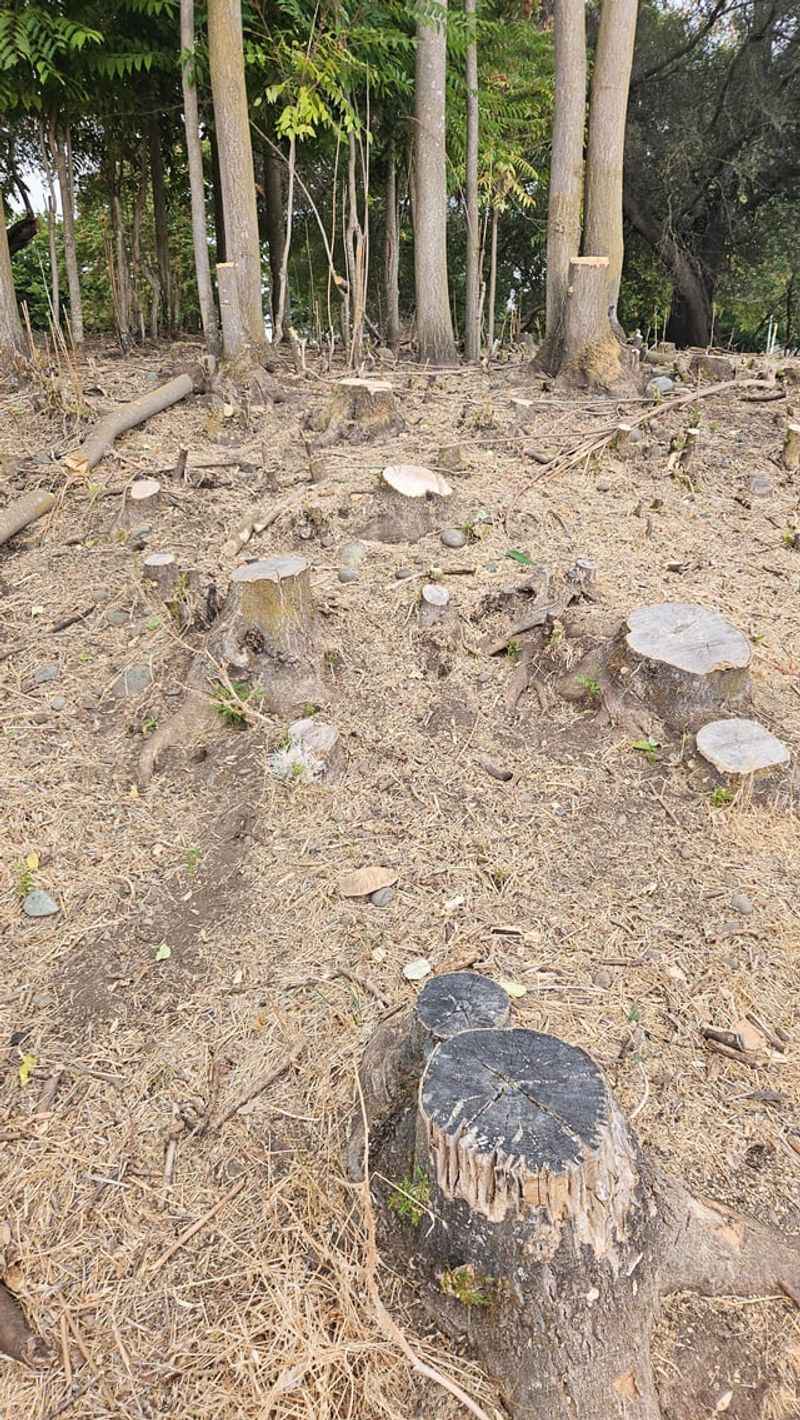
Grab a chainsaw and drop a tree-of-heaven without a plan, and you may end up with five trees where one stood before. This is the part that surprises most homeowners, and it is worth understanding before any cutting starts.
Tree-of-heaven spreads two ways: by seeds and by root suckers. U.S. Forest Service research found that killing the aboveground stem may leave connected lateral roots very much alive. Those roots can send up vigorous new shoots around the original stump and in a wide radius across the yard, sometimes appearing 10 or 15 feet away from where the trunk stood.
Girdling the bark, frilling with a hatchet, or making an untreated chainsaw cut are not complete control methods. Each of those actions injures the tree enough to trigger a stress response, and that response is more sprouts. Penn State Extension describes the species as one of the most difficult invasive trees to fully eliminate for exactly this reason.
A U.S. Forest Service management guide explains that effective control almost always requires addressing the root system, not just the visible trunk. The real urgency here is not to cut immediately but to plan carefully. That means deciding on a management approach that accounts for the roots, scheduling follow-up treatment when appropriate, and committing to monitoring the site for new growth over the following months and seasons.
Match the Management Plan to the Tree and Site
Not every tree-of-heaven calls for the same response, and matching the approach to the actual tree in front of you keeps the situation from getting worse. The first question is simple: how big is it, and what is around it?
A seedling under knee height with a thin stem is a reasonable hand-pull job, but only when the soil is workable and moist enough to get the whole root system out cleanly. U.S. Forest Service research is consistent on this point: partial root removal on established plants tends to stimulate regrowth rather than stop it. If any root breaks off and stays in the ground, expect a new sprout.
For anything larger than a sapling, or for any tree near a home, power line, road, septic system, stream, or neighboring structure, a qualified arborist or invasive-plant professional is the right call. A professional plan may include targeted herbicide treatment applied before or after cutting to kill the root system. The Forest Service’s management guide outlines several treatment approaches used by professionals, but no generic product name, rate, or concentration belongs in a homeowner’s hands without site-specific guidance.
Every herbicide application must follow the current EPA-approved label exactly. The EPA explains that the label is a legal document covering the permitted site, application method, protective equipment, weather restrictions, and required precautions. Pollinator protection is part of that picture too, and EPA pollinator protection guidance outlines the considerations any applicator must account for. When in doubt, hire someone whose license depends on getting it right.
Use the Seasons for Monitoring, Not Panic Cutting
Summer feels like the moment to act, and that urgency is not entirely wrong, but the season matters more for what you observe than for whether you grab a saw. Here is where it gets tricky: cutting tree-of-heaven in summer without a treatment plan is one of the faster ways to multiply your problem.
According to the NCDA&CS life-cycle chart, adult spotted lanternflies in North Carolina are generally present from July into December. That window is worth knowing because adults are the ones most attracted to tree-of-heaven, and seeing them clustered on a trunk in August is one of the clearest signs you have both a host tree and an active infestation nearby.
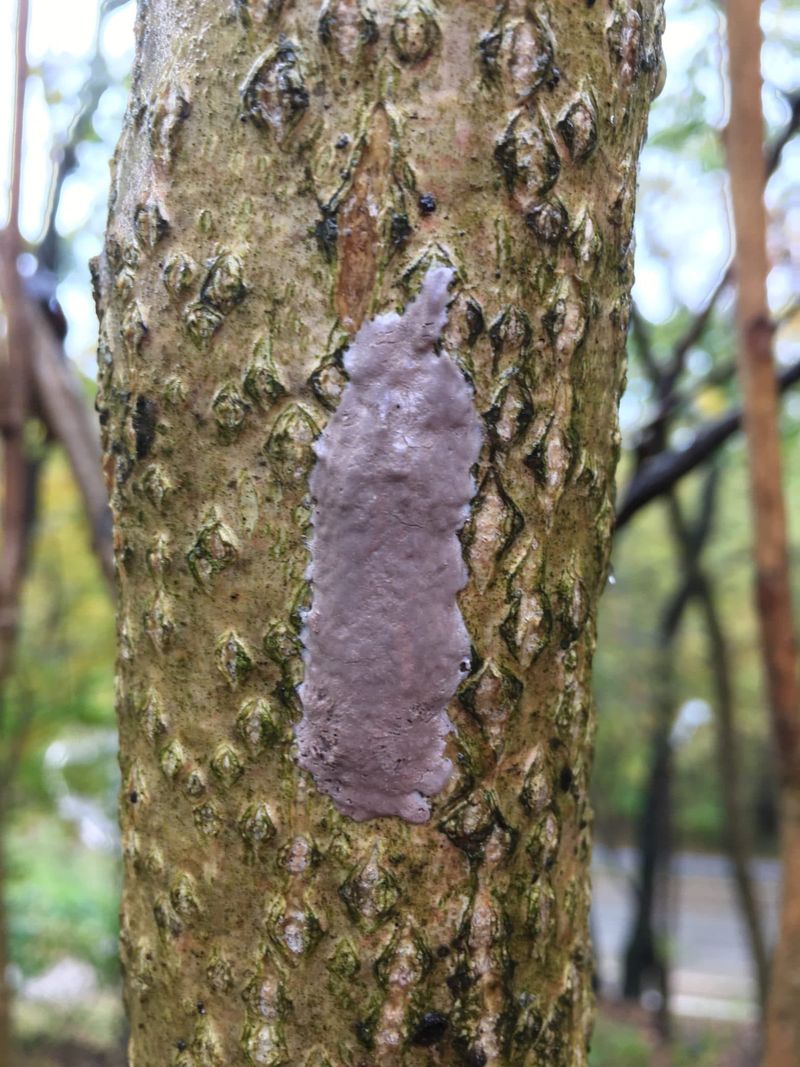
Egg masses are typically laid in late summer or fall, and they stay visible on tree bark and hard surfaces through the winter and into spring. USDA APHIS confirms that masses hatch in spring, so a winter walk around your yard can reveal exactly where insects congregated the previous fall. Check tree trunks, fence posts, stone walls, and any outdoor equipment that sat outside through the season.
If you treat a tree-of-heaven site, monitoring for regrowth becomes a seasonal job. Forest Service research and Penn State Extension’s management supplement both recommend checking treated sites repeatedly, because root sprouts can emerge months after the original work. Photograph anything unusual and report suspected lanternflies or egg masses to NCDA&CS, especially if you are outside the seven known counties.
Remove Egg Masses and Use Wildlife-Safe Traps
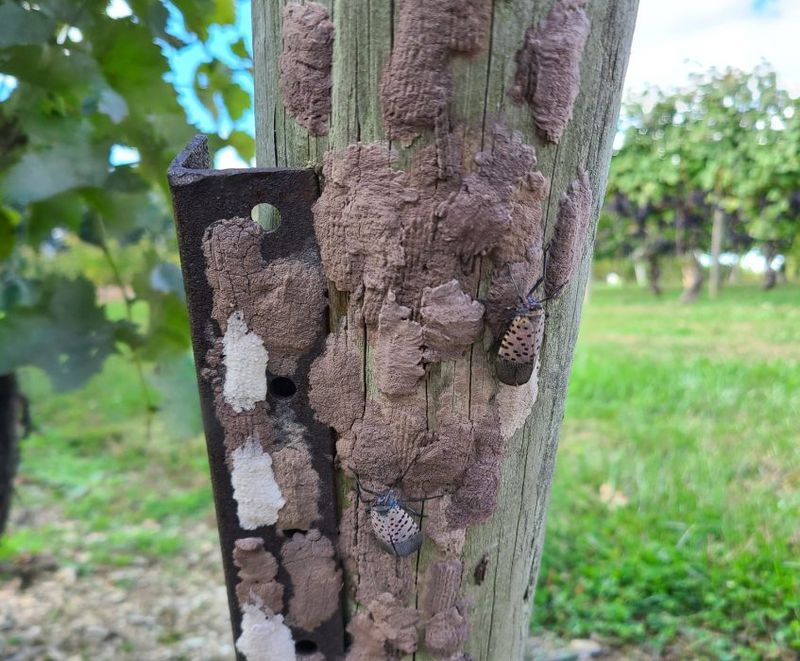
Egg masses are easy to overlook because they genuinely look like a smear of dried mud or cracked gray putty on bark or wood. Each mass is roughly 1 inch long and may hold 30 to 50 eggs under that waxy coating. Finding and destroying them is one of the most direct things a homeowner can do, and the method is straightforward.
USDA APHIS recommends smashing the mass and scraping it into a sealed plastic bag that already contains hand sanitizer or rubbing alcohol, then placing the sealed bag in the trash. Check tree trunks, fence rails, stone walls, patio furniture, grills, trailers, vehicles, and any equipment that sat outdoors through fall and winter, because lanternflies lay eggs on almost any firm surface.
Sticky band traps placed around tree trunks can catch nymphs climbing upward, but unprotected sticky material is genuinely dangerous to wildlife. Birds, lizards, butterflies, bees, and small mammals can all get trapped. Penn State Extension’s management guide recommends using a wildlife barrier around any sticky trap and checking it daily. Their wildlife barrier guide explains how to build one properly.
Circle traps, which funnel insects into a collection container rather than a sticky surface, are a safer option in most yard situations.
Skip the home remedies entirely. Penn State Extension advises against dish soap, vinegar, salt, essential oils, gasoline, bleach, and similar sprays because they lack approved directions, can injure plants or people, and do not have evidence behind them. Milkweed is a wonderful pollinator plant for North Carolina yards, but it has no documented effect as a lanternfly repellent or pesticide, despite claims circulating online.
Build a Whole-Yard Response Around One Tree
Properly managing tree-of-heaven accomplishes two real things at once. You remove an invasive plant that was already causing problems on its own merits, and you take away one strongly preferred feeding and congregation site for spotted lanternfly. That combination is genuinely worth the effort, as long as you go in with clear expectations about what it does and does not fix.
Removing the tree does not clear your yard of all egg-laying surfaces, does not eliminate the many other host plants lanternflies use, and does not stop insects from walking over from a neighbor’s property. NC State Extension and Penn State Extension’s landscape professional guide both frame host-plant removal as one layer of management rather than a standalone solution. Walk your yard and check grapes, peach trees, walnuts, maples, dogwoods, and ornamentals for feeding damage or egg masses, and remember that a plant visited by lanternflies may show some stress without necessarily dying. Direct plant death from spotted lanternfly has been documented mainly in grapevines, tree-of-heaven, and black walnut saplings, not in every ornamental the insect visits.
After any tree-of-heaven removal, monitoring for root sprouts becomes a regular task through at least the next full growing season. Penn State Extension is direct about this: new shoots from surviving lateral roots can appear for months, and catching them early keeps the problem manageable. NCDA&CS and your county Cooperative Extension office are the right contacts for site-specific recommendations and for reporting new suspected sightings. Penn State’s management supplement puts it plainly: accurate identification, a planned removal when appropriate, egg-mass handling, wildlife-safe monitoring, and steady follow-up build a response that actually holds, and a homeowner who knows what they are looking at is already ahead of the curve.