The Native Oregon Berry Bush That Outcompetes Himalayan Blackberry Without Any Spray
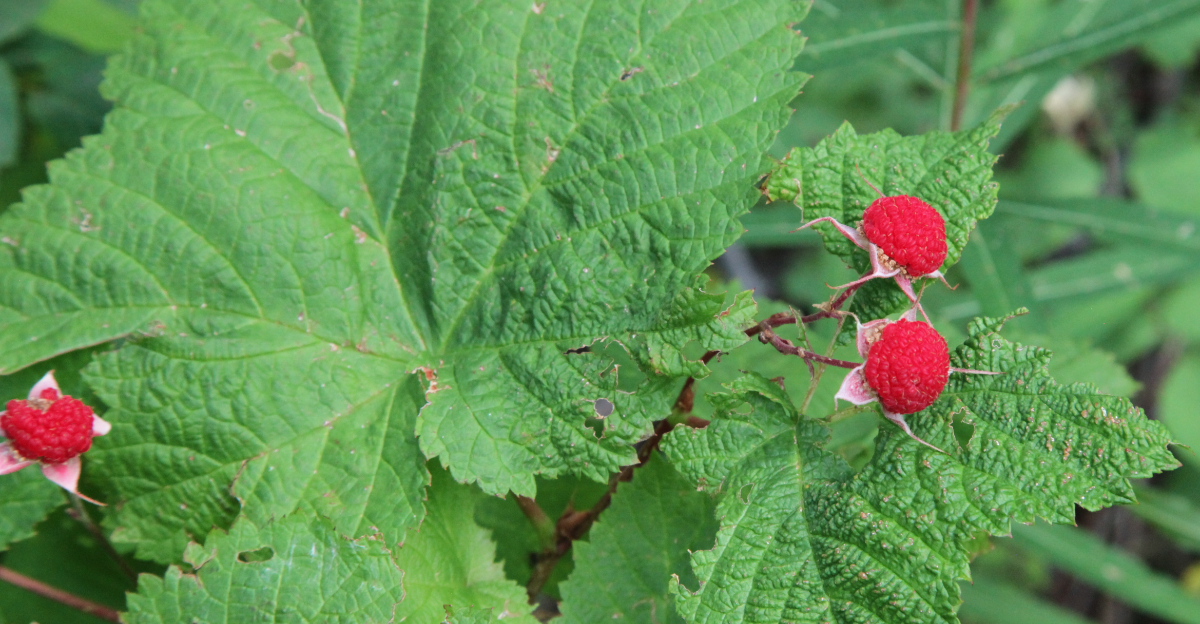
Himalayan blackberry has a reputation for taking over any patch of Oregon soil it can reach.
Cut it back, and it often returns with fresh canes as if the whole battle never happened. Rude, persistent, and armed with thorns.
One native berry bush can push back without help from chemical sprays. It forms a strong presence of its own and fits naturally into the local landscape.
Better yet, it offers something useful instead of another season of frustration.
The real advantage comes after removal. Bare ground gives blackberry an easy path back, while the right replacement can claim that space first.
This is not a quick fix or a magical plant showdown. Good site care still matters.
Yet a well-chosen native bush can shift the balance and make repeat invasions much harder. It may also turn a problem corner into one of the most rewarding spots in the yard.
1. The Native Berry Bush To Try
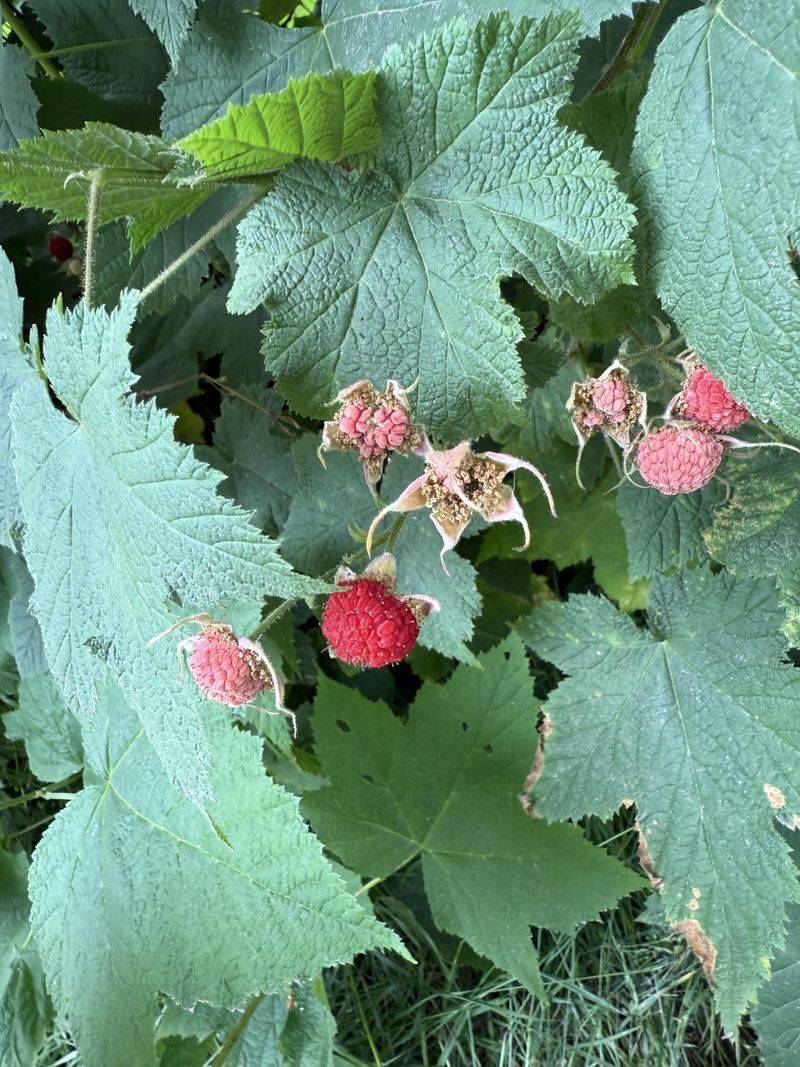
Not every plant gets to be a hero, but thimbleberry comes pretty close when it comes to native restoration in the Pacific Northwest.
Known scientifically as Rubus parviflorus, it belongs to the same family as blackberries and raspberries.
That shared family background gives it a competitive edge that most other native shrubs simply do not have.
Thimbleberry grows quickly and spreads through underground rhizomes, which means it fills in bare or disturbed ground without much help from you. It can reach heights of three to six feet in a single growing season under the right conditions.
That kind of growth rate matters a lot when you are trying to outpace a fast-spreading invasive like Himalayan blackberry.
People who have used thimbleberry for restoration work often say the same thing: once it gets going, it really gets going.
The shrub forms dense colonies that make it hard for competing plants to move in. It does not need fertilizer, irrigation, or special soil prep to perform well.
Native to forests and woodland edges across the western part of Oregon and into other western regions, thimbleberry is perfectly suited to our climate. It handles both sun and partial shade without skipping a beat.
If you want a native plant that pulls its own weight from day one, thimbleberry is the one to start with.
2. This Native Rubus Fills Cleared Blackberry Ground
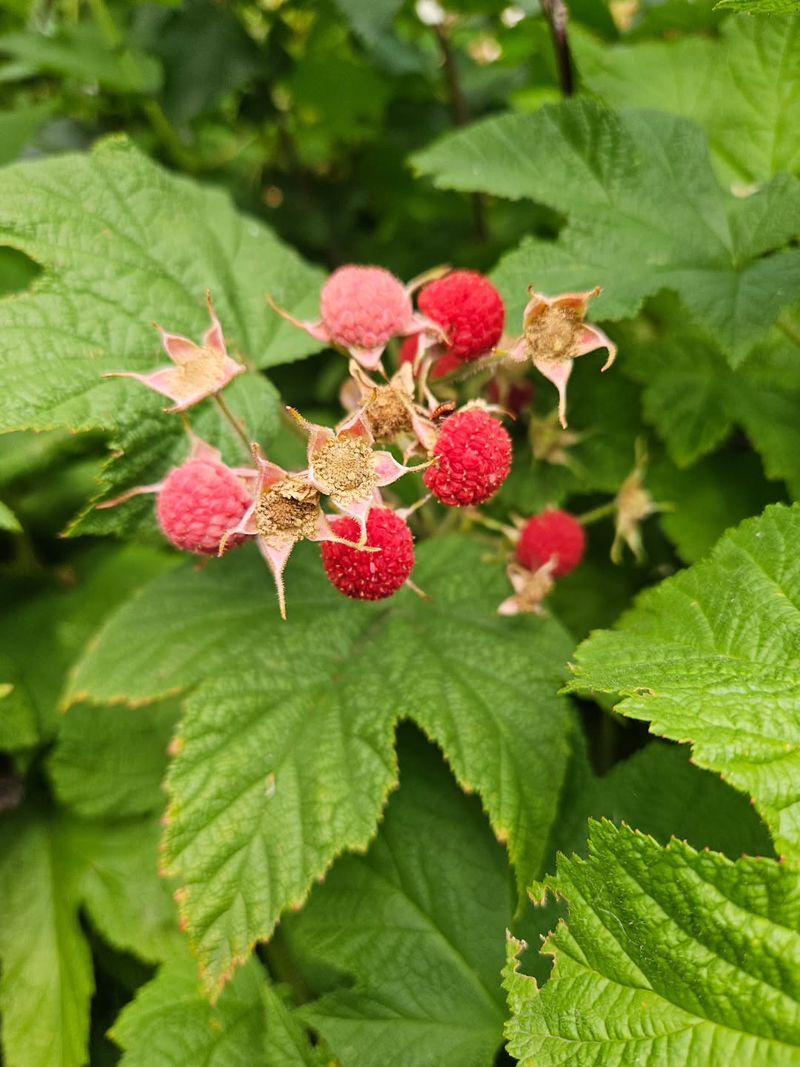
One of the biggest challenges after removing Himalayan blackberry is what happens next. Bare ground does not stay bare for long.
Invasive seeds blow in, weeds sprout up fast, and before you know it, the blackberry starts creeping back from the edges.
Thimbleberry is one of the best native plants for filling that cleared space before anything else can move in. Its rhizomes spread underground and send up new shoots across a wide area.
You do not have to plant it in every single spot because it does the spreading work on its own.
Planting a few established thimbleberry starts along the edges of a cleared area can be enough to get the process going. Within one to two growing seasons, the colony will begin to expand noticeably.
Your Oregon Garden Changes Every Week. Your Plan Should Too.
Gardening in Oregon changes quickly throughout the season. Every Friday you’ll receive a simple weekly plan showing exactly what to plant, prune, fertilize, harvest, and protect so you never miss the right timing.
The dense root system also helps stabilize soil, which is especially helpful on slopes or near stream banks.
What makes this so useful is that thimbleberry actually prefers the same kind of disturbed, moist ground that Himalayan blackberry targets. It is not fighting against its environment.
It is working with it. That gives it a natural advantage over plants that need perfect conditions to thrive.
Restoration experts across the Pacific Northwest region often use thimbleberry as a first-response plant after blackberry removal. Getting it in the ground fast is the key to keeping that cleared space from being reclaimed.
3. Soft Canes Make It Easier To Manage
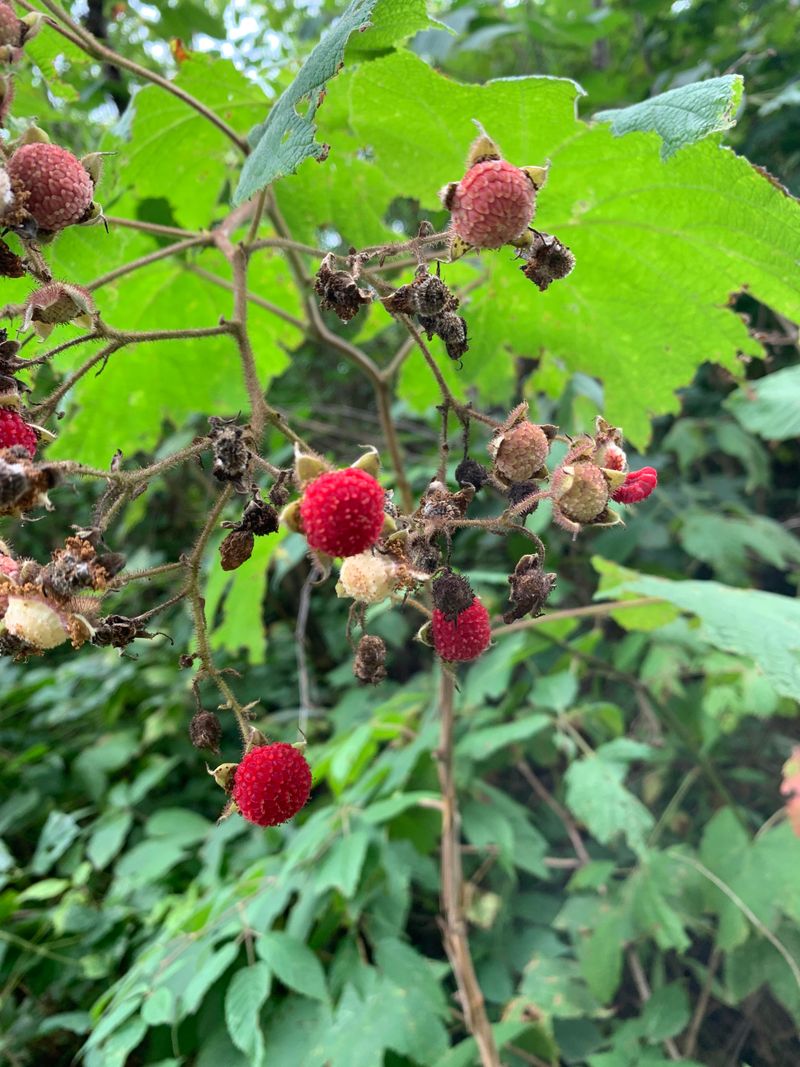
Anyone who has ever tangled with Himalayan blackberry knows the pain that comes with it, literally. Those stiff, arching canes are covered in sharp thorns that tear through clothing and skin.
Managing that plant without heavy gloves and long sleeves is not a good idea.
Thimbleberry plays by completely different rules. Its canes are soft, flexible, and free of the harsh thorns that make blackberry such a miserable plant to work around.
You can trim it, transplant it, or clear around it without needing a full set of protective gear.
That ease of handling makes a real difference when you are doing ongoing maintenance. Seasonal pruning is simple with a pair of basic garden shears.
The canes do not snap back aggressively or hook into your clothes when you brush past them on a trail or garden path.
Beyond the comfort factor, soft canes also make thimbleberry a much safer plant around kids and pets.
Families who want native plants along walkways or near play areas do not have to worry about accidental scrapes or punctures.
That is a meaningful advantage in residential settings.
The plant does have small, fine hairs on its stems, which can cause minor skin irritation for very sensitive people.
But compared to the aggressive armor of Himalayan blackberry, thimbleberry is practically a gentle neighbor.
Managing it feels less like a battle and more like routine garden care.
4. Big Leaves Shade Out New Weed Seedlings
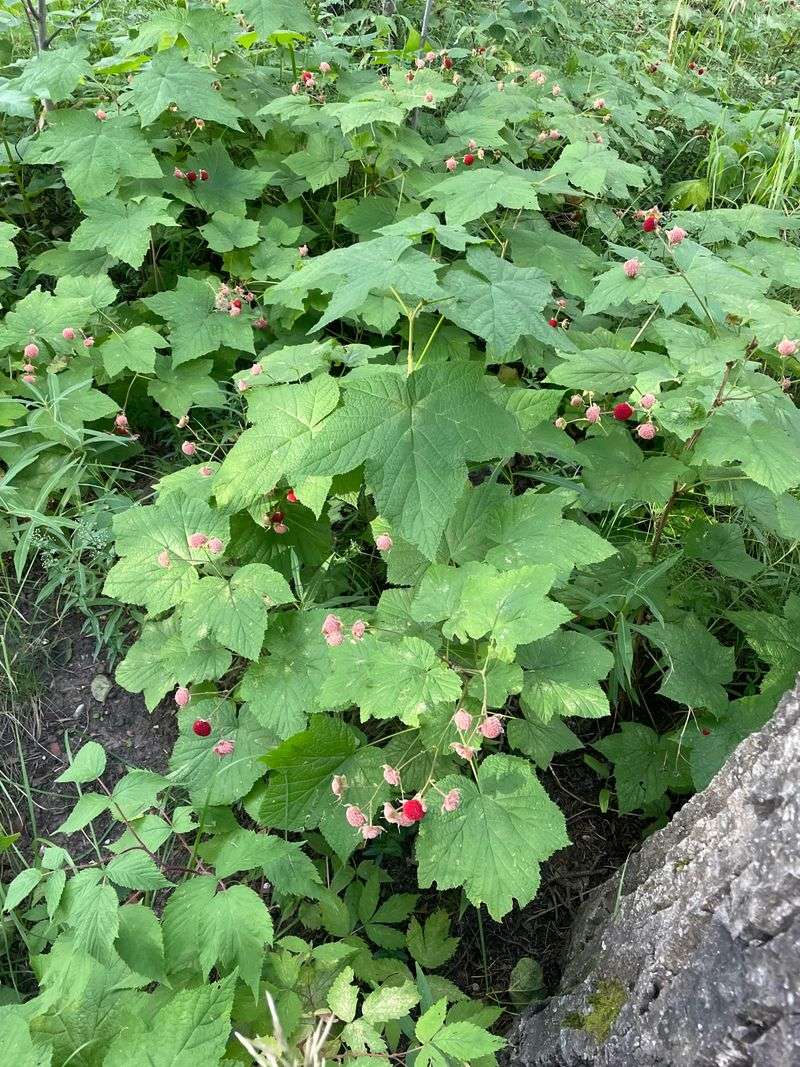
Few things in the plant world are as satisfying as watching a native shrub do your weeding for you.
Thimbleberry has some of the largest leaves of any native shrub in the region, and those big leaves serve a very practical purpose beyond just looking impressive.
When thimbleberry leafs out fully in spring, its wide, maple-shaped leaves create a canopy close to the ground. That canopy blocks sunlight from reaching the soil below.
Without light, weed seedlings cannot germinate and establish themselves. It is a natural, chemical-free form of weed suppression that works season after season.
This leaf canopy is especially valuable in the first few years after Himalayan blackberry removal. That is when the soil is most exposed and vulnerable to new weed invasion.
Thimbleberry fills that window quickly and keeps the ground shaded before other plants can move in.
Each individual leaf can measure six to eight inches across, sometimes even larger in shaded spots with rich soil. That size means a single mature plant covers a surprisingly large area of ground.
A colony of thimbleberry can shade out an entire patch of formerly bare earth within one full growing season.
Gardeners and land managers who have used it for ground cover consistently note how clean the area underneath looks by midsummer.
The combination of dense growth and large leaf coverage makes thimbleberry one of the most effective natural mulching plants available in Oregon.
5. White Flowers Feed Spring Pollinators
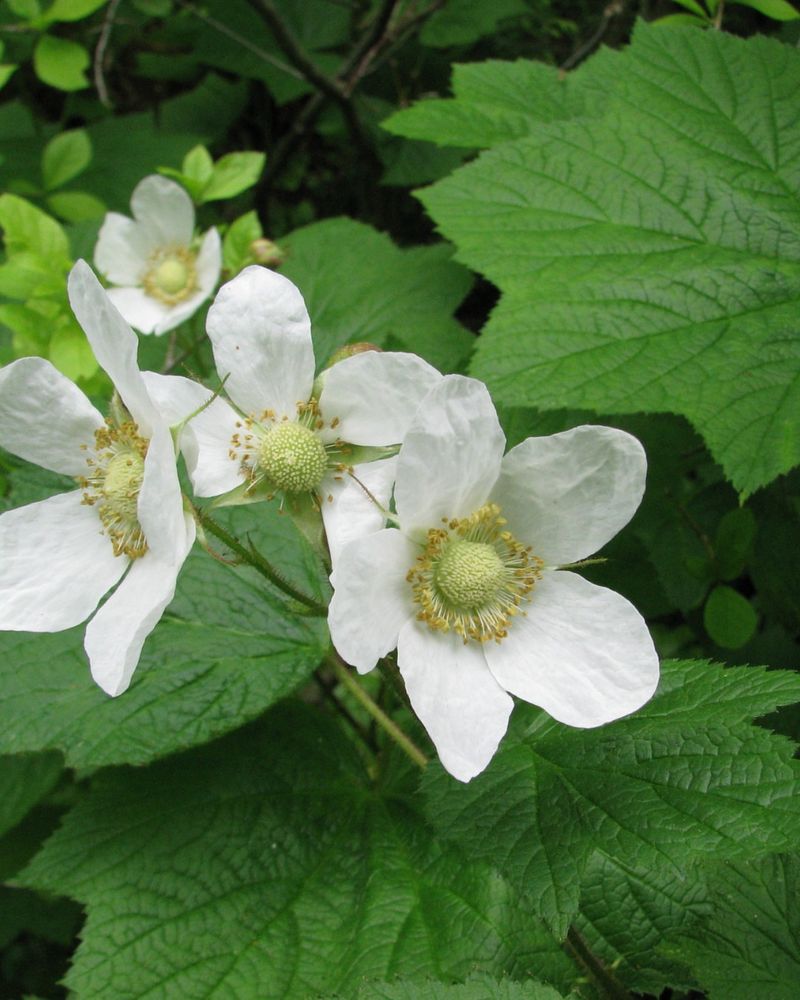
Spring in the Pacific Northwest brings a rush of pollinator activity, and native plants play a huge role in supporting that annual surge.
Thimbleberry blooms early in the season, often before many other native shrubs have even leafed out fully.
That early timing makes it especially valuable for bees and other pollinators coming out of winter.
The flowers are white, wide, and open-faced, which makes them easy for a wide variety of insects to access. Native bees, bumble bees, butterflies, and even some hoverflies are drawn to the blooms.
Unlike flowers with deep, tubular structures, thimbleberry flowers do not require specialized mouthparts to feed from.
Each flower is about an inch across and looks a bit like a small wild rose. They appear in loose clusters at the tips of the canes, making them easy to spot from a distance.
A mature colony in full bloom is genuinely beautiful and adds real visual appeal to any naturalized area or garden edge.
Supporting spring pollinators is not just good for the environment in a general sense. It directly benefits nearby fruit trees, vegetable gardens, and other flowering plants that depend on pollination.
Planting thimbleberry near a food garden can actually improve your overall harvest.
Choosing plants that give back to the ecosystem is always a smart move. Thimbleberry delivers that benefit reliably every spring without any extra effort on your part.
It blooms, the pollinators show up, and the whole garden benefits from the visit.
6. Red Berries Bring Wildlife Value
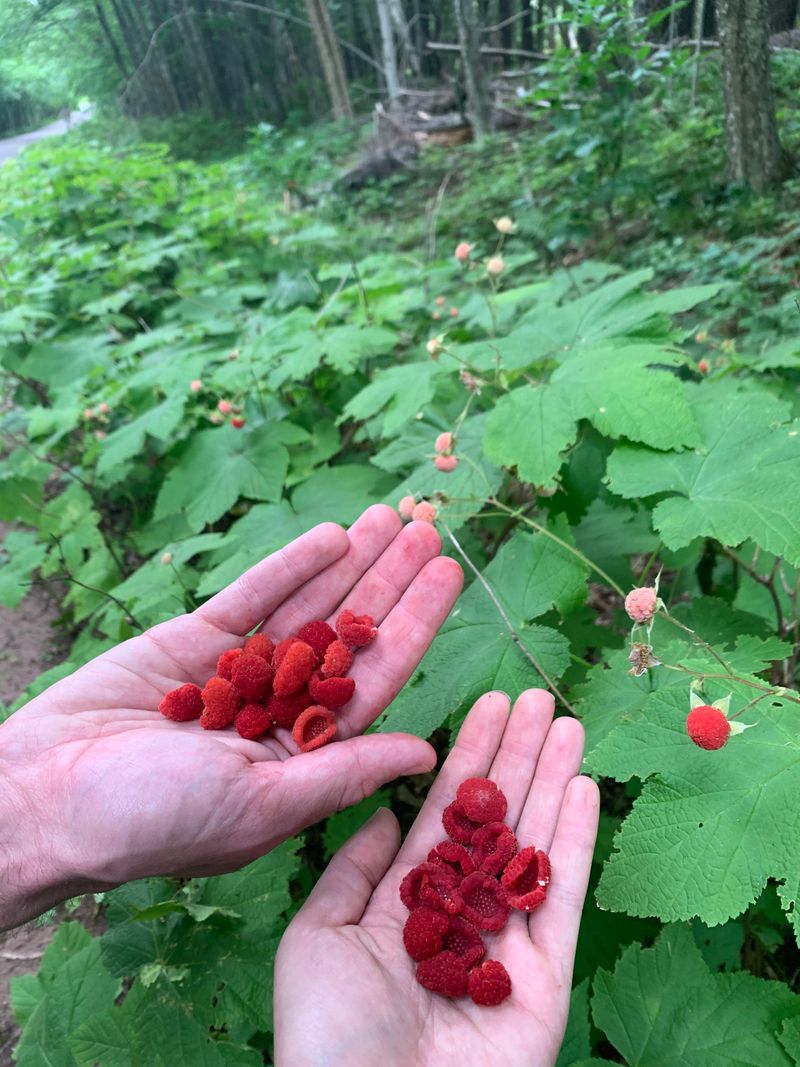
By midsummer, thimbleberry shifts from a pollinator magnet into a full-on wildlife buffet. The soft red berries ripen in Oregon from July through August depending on elevation and local conditions.
Birds, mammals, and insects all take advantage of the seasonal harvest.
Robins, cedar waxwings, and thrushes are among the most frequent bird visitors. They are drawn to the bright red color and the soft texture of the fruit, which is easy to eat whole.
A healthy colony of thimbleberry can support a surprising amount of bird activity throughout the fruiting season.
Black bears, deer, and small mammals like chipmunks and squirrels also feed on thimbleberries when they are available.
In areas where natural food sources are limited, a patch of thimbleberry can be a meaningful addition to the local wildlife habitat.
That kind of ecological contribution is hard to put a price on.
You can eat thimbleberries too. The flavor is sweet and slightly tart, often described as a cross between a raspberry and a strawberry.
They are fragile and do not ship or store well, which is why you rarely see them in grocery stores.
But eaten fresh off the bush, they are genuinely delicious. Having a plant that feeds both wildlife and people is a rare and practical bonus.
Thimbleberry earns its place in the landscape not just through its restoration value but through the real, tangible food it provides to every creature that passes through.
7. Moist Woodland Edges Are Its Sweet Spot
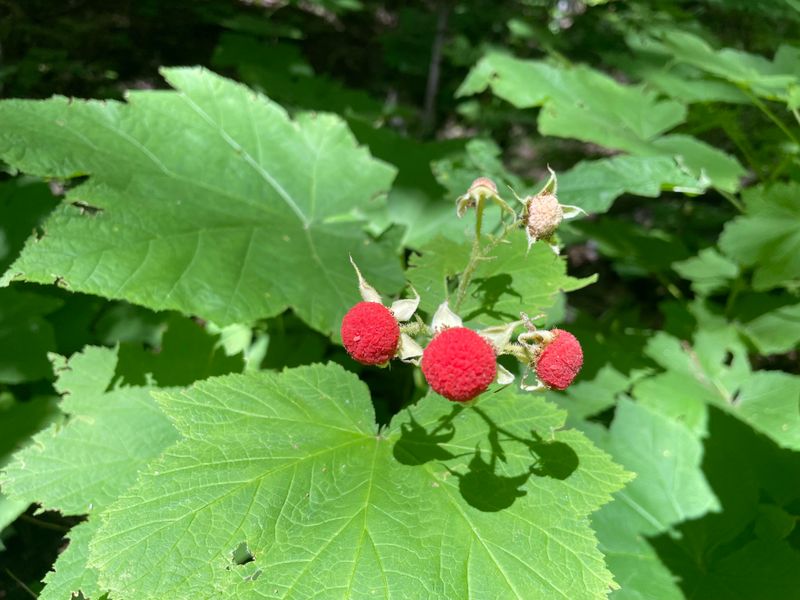
Every plant has a place where it truly thrives, and for thimbleberry, that place is the moist, shaded edge where forest meets open ground.
Stream banks, trail margins, the north-facing sides of slopes, and the borders of wooded areas are all prime thimbleberry territory.
These are also exactly the kinds of spots where Himalayan blackberry tends to establish itself.
Both plants compete for the same real estate, which is part of what makes thimbleberry such a smart choice for restoration work.
You are not introducing a plant to a foreign environment. You are bringing back one that already belongs there.
Thimbleberry handles moisture well without needing standing water or boggy conditions. It prefers consistently moist soil with good drainage.
In the Pacific Northwest, that description fits a wide range of natural and semi-natural landscapes, from backyard rain gardens to restored riparian buffers along streams.
In drier summers, established colonies hold up reasonably well once their root systems are deep. Young plants benefit from supplemental watering during the first dry season after planting.
After that, most established plants manage on their own through the typical dry periods common to this region.
Shade tolerance is another key strength. Thimbleberry grows well under a partial canopy, which means it can fill in under existing trees where other shrubs might struggle.
That flexibility makes it useful in a wider range of site conditions than many other native restoration plants.
8. It Works Best After Blackberry Crowns Are Removed
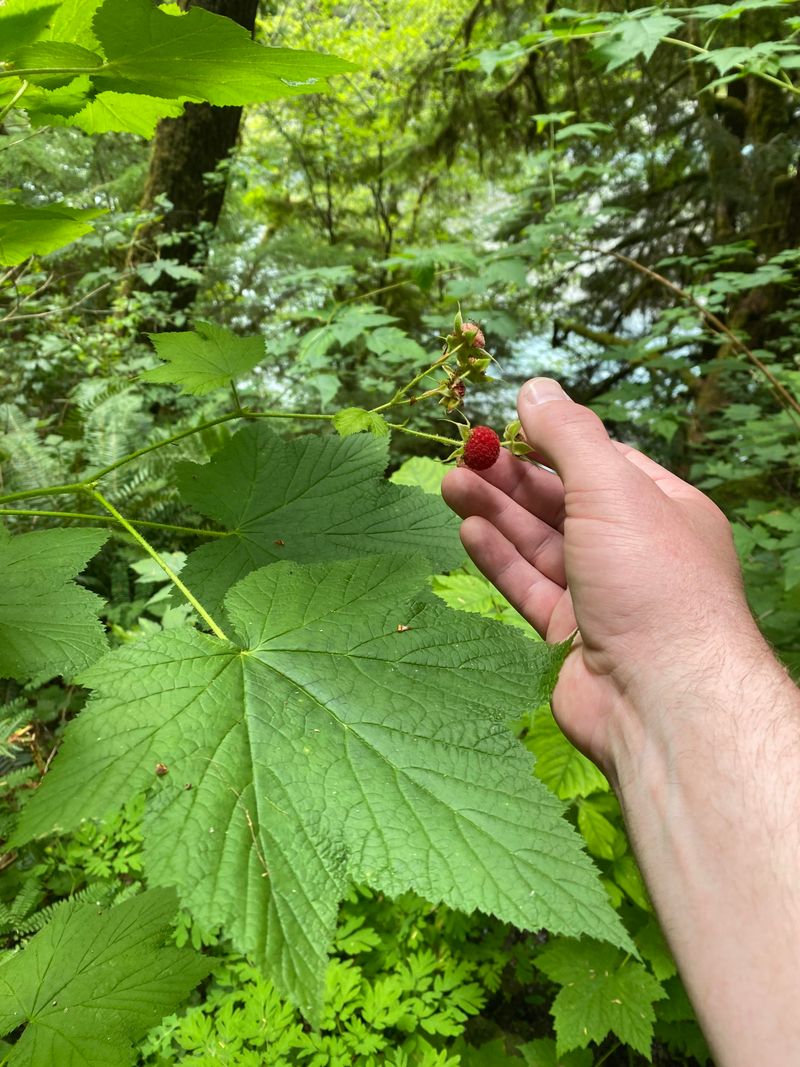
Thimbleberry is tough, but it is not magic. Expecting it to push through an actively growing Himalayan blackberry thicket on its own is not realistic.
The best results come when the blackberry crowns are removed first, giving thimbleberry a fair start in cleared ground.
Removing blackberry crowns does not have to mean using chemical herbicides. A heavy-duty mattock or root puller can take out the crown and the top portion of the root system.
Getting the crown out is the most important step because that is where the plant stores most of its energy for regrowth.
After crown removal, the area will likely still see some blackberry regrowth from remaining root fragments.
Consistent follow-up, pulling or cutting new shoots as they appear, is important for the first one to two years.
During that same period, newly planted thimbleberry can begin spreading and filling the space.
Timing your thimbleberry planting right after initial blackberry removal gives it the best possible window.
Early spring planting, before the first dry season, allows roots to establish while soil moisture is still high.
A well-timed planting can make the difference between a struggling start and a strong first season.
Over time, the goal is to let thimbleberry density work in your favor. As the colony fills in and the leaf canopy closes, remaining blackberry regrowth has less light and space to work with.
Persistence in the early stages pays off with a much lower maintenance burden down the road.