These Hydrangea Alternatives Handle Oregon Dry Spells Better
Hydrangeas can look stunning in Oregon, but summer dry spells can make them wilt fast. That thirsty look gets old when every hot afternoon turns into a rescue mission with the hose.
Luckily, plenty of shrubs can bring color, shape, and charm without needing the same level of attention. The right hydrangea alternative can handle drier stretches once it settles in.
It can also fit better in sunny borders, mixed beds, and lower water landscapes. This is not about giving up bold blooms.
It is about choosing plants that stay attractive when the weather gets stingy with rain. Some offer bright flowers.
Others bring texture, berries, or strong foliage that carries the garden through summer. Pick shrubs that match Oregon’s dry season better, and your yard can stay beautiful without feeling like a full time watering job.
1. Crape Myrtle Brings Big Summer Color Without Hydrangea Drama
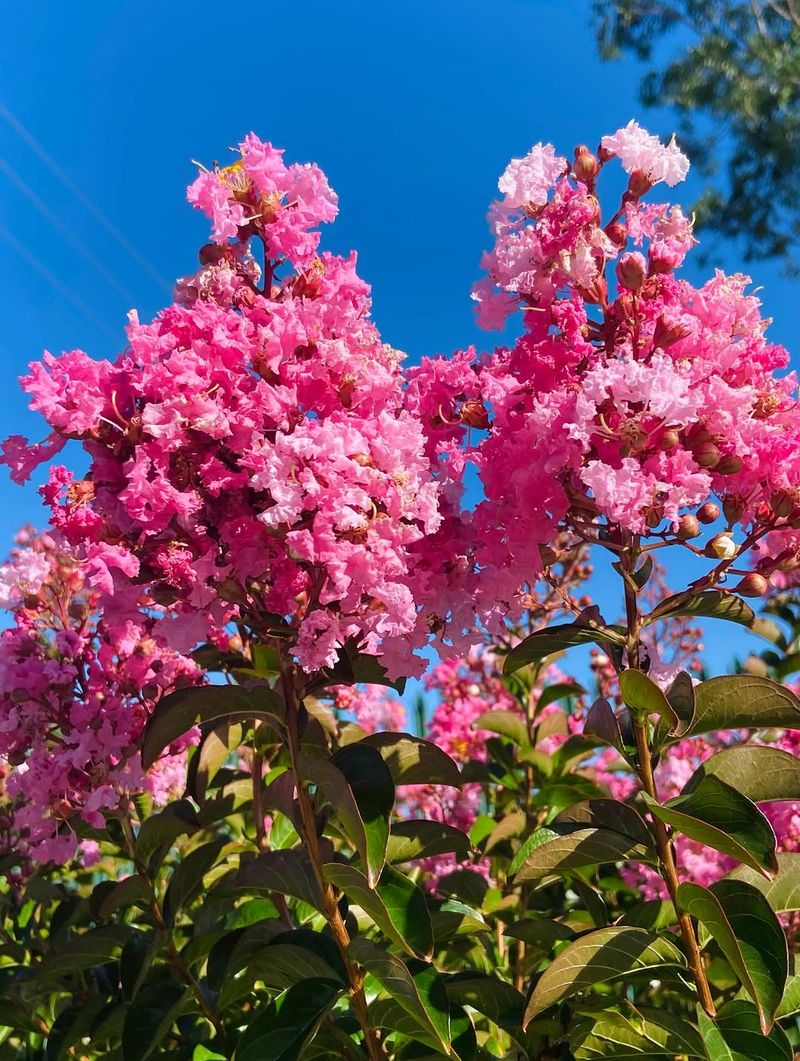
Few shrubs put on a summer show quite like crape myrtle. While hydrangeas beg for water every few days during a dry spell, crape myrtle just keeps blooming.
It thrives in full sun and actually performs better when the weather is hot and dry.
Crape myrtle comes in many sizes, from compact shrubs to small trees. You can find varieties with white, pink, red, or purple blooms.
The flowers last from midsummer all the way into fall, giving your yard weeks of color without much effort on your part.
Plant it in a sunny spot with well-drained soil and it will reward you with showy clusters of ruffled flowers. Once it is established, it needs very little extra watering.
It also has beautiful peeling bark that adds winter interest when the blooms are gone.
In our state’s Willamette Valley and southern regions, crape myrtle does especially well. In cooler northern areas, choose a hardier variety to be safe.
Give it a bit of room to grow, and avoid heavy pruning, which can ruin its natural shape.
Crape myrtle is also surprisingly low-maintenance. It resists most pests and diseases without much help from you.
If you want a shrub that fills your yard with color all summer long and barely asks for anything in return, crape myrtle is hard to beat.
2. Rose Of Sharon Handles Dry Spells Better Than Thirsty Hydrangeas
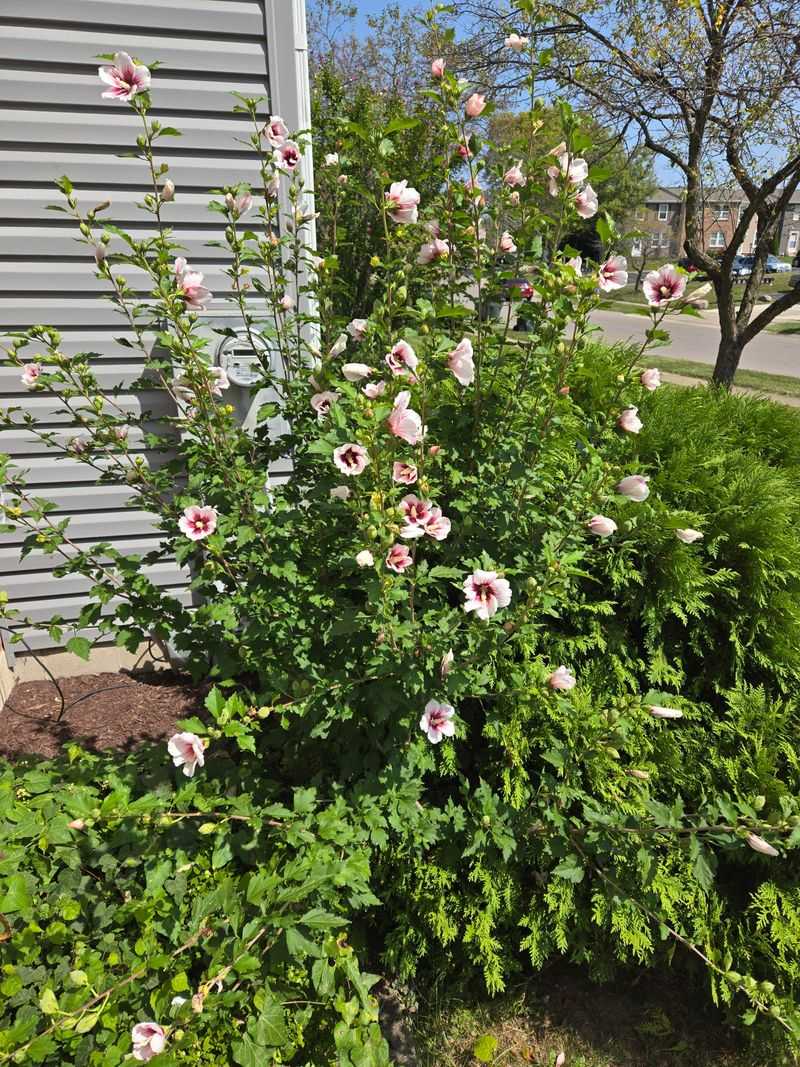
Rose of Sharon is the kind of shrub that surprises people. It blooms in late summer, right when most other plants are struggling with heat and dry soil.
While hydrangeas are wilting and begging for water, Rose of Sharon is just getting started.
This shrub belongs to the hibiscus family, and you can see it in the flowers. Each bloom is large, open, and beautiful, with colors ranging from white and pink to deep purple and bicolor varieties.
Some flowers even have a contrasting eye in the center that makes them look extra fancy.
It grows tall and upright, making it a great choice for a privacy screen or a back-of-border plant. It can reach six to twelve feet tall depending on the variety.
Your Oregon Garden Changes Every Week. Your Plan Should Too.
Gardening in Oregon changes quickly throughout the season. Every Friday you’ll receive a simple weekly plan showing exactly what to plant, prune, fertilize, harvest, and protect so you never miss the right timing.
Compact versions are also available if your space is limited.
Rose of Sharon does best in full sun but tolerates partial shade. It is not picky about soil as long as drainage is decent.
Once established, it handles dry summers with ease and rarely needs extra watering in our climate.
One thing to keep in mind is that it can self-seed freely. Deadheading the spent flowers helps control unwanted seedlings.
Sterile varieties are also available if you want the blooms without the cleanup. It is a tough, adaptable shrub that earns its place in any water-smart garden.
3. Spirea Gives Soft Blooms With Less Fuss
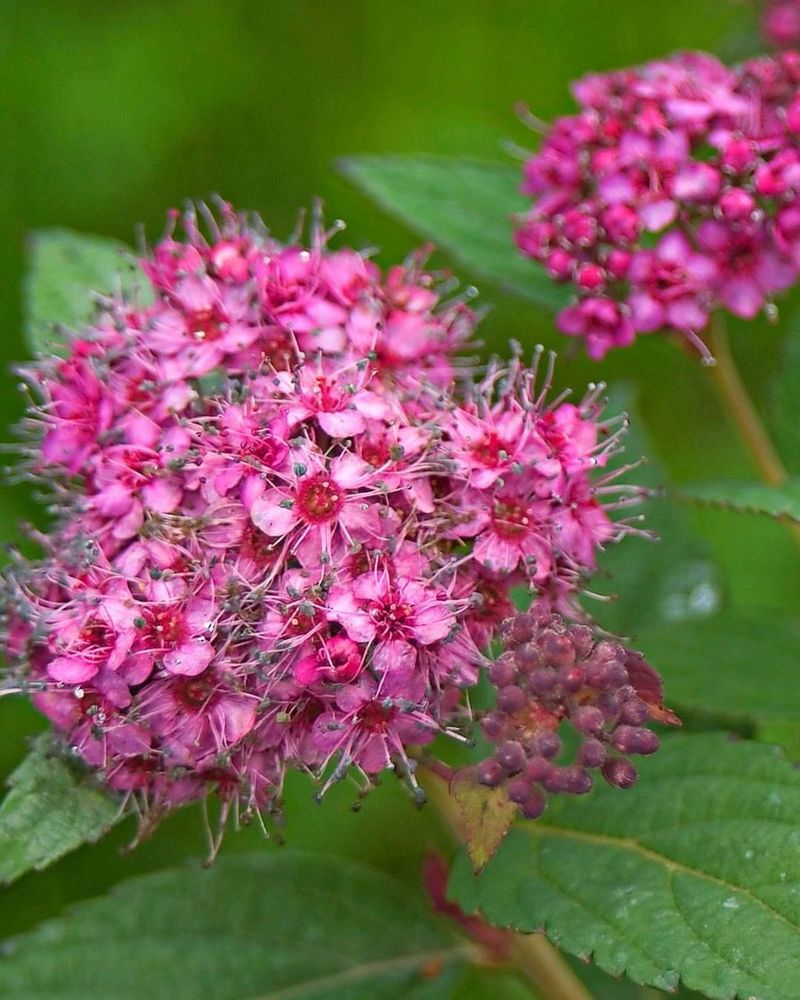
Spirea has a soft, cheerful look that fits almost any garden style. The blooms come in white, pink, or rosy red, and they appear in fluffy clusters that cover the entire shrub.
It looks delicate, but do not let that fool you. Spirea is one tough plant.
Unlike hydrangeas, spirea does not need rich, moist soil to look great. It adapts well to average or even poor soil conditions.
Once it settles in, it handles dry spells without missing a beat. That makes it a smart swap for water-hungry shrubs in our state’s dry summers.
There are two main types worth knowing. Spring-blooming spirea, like Bridal Wreath, drapes gracefully with arching white flower clusters.
Summer-blooming types, like Japanese spirea, stay compact and produce pink or red flowers with colorful foliage throughout the season.
Both types are easy to care for. A light trim after flowering keeps them tidy and can encourage a second flush of blooms.
They grow well in full sun to partial shade and are not fussy about soil pH.
Spirea also plays well with other plants. Its soft texture and mounded shape contrast nicely with bold foliage plants or ornamental grasses.
It attracts butterflies and bees without requiring any special care. For gardeners who want reliable seasonal color with very little maintenance, spirea is a fantastic choice that rarely disappoints.
4. Shrubby Cinquefoil Keeps Flowering Through Dry Weather
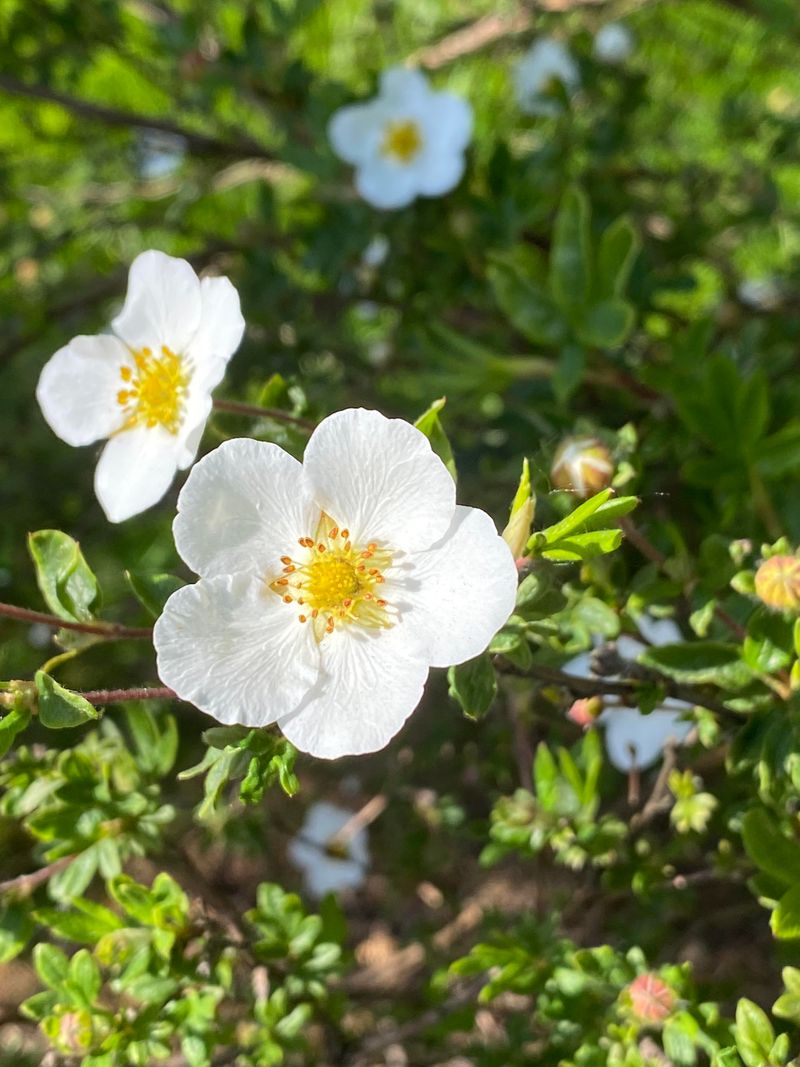
Not every plant can bloom cheerfully through weeks of dry, hot weather. Shrubby cinquefoil, also known as Potentilla fruticosa, is one of the few that actually can.
It keeps producing small, bright flowers from late spring all the way through fall, even when rain is nowhere in sight.
The flowers are usually yellow, but you can also find varieties in white, orange, pink, and cream. Each bloom is small and rose-like, and the plant produces so many of them that it always looks full and lively.
It is a shrub that earns its keep every single month of the growing season. Shrubby cinquefoil stays relatively small, usually growing two to four feet tall and wide.
That compact size makes it a great fit for borders, rock gardens, or foundation plantings. It works well as a low hedge too.
Full sun brings out the best blooms, but it tolerates light shade. It is not picky about soil and actually prefers lean, well-drained conditions over rich, moist soil.
In fact, too much water or fertilizer can reduce flowering.
This plant is also cold-hardy enough to handle our northern regions without complaint. It is disease-resistant, pest-resistant, and requires almost no pruning to stay attractive.
For a low-effort, high-reward shrub that keeps going through summer dry spells, shrubby cinquefoil is one of the most reliable options available to home gardeners.
5. Ceanothus Covers Dry Slopes With Blue Blooms
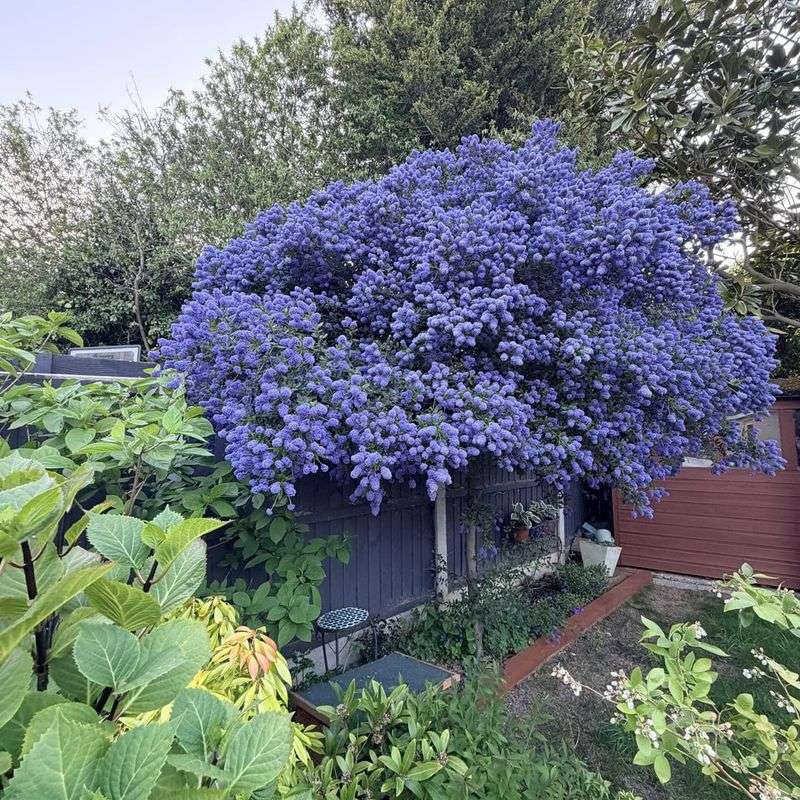
Few native shrubs are as jaw-dropping as ceanothus in full bloom. Sometimes called California lilac, this plant erupts in dense clusters of blue, violet, or white flowers in spring.
The color is so intense it almost looks unreal, and the fragrance is a bonus that fills the whole yard.
What makes ceanothus especially appealing for our state is how well it handles dry conditions.
Many species are native to the western part of North America, so they are naturally adapted to summers with little to no rainfall. Once established, they rarely need supplemental watering at all.
Ceanothus works beautifully on slopes, hillsides, or any area where erosion is a concern. The roots hold soil firmly in place, and the plant spreads to cover ground efficiently.
It also fixes nitrogen in the soil, which can benefit nearby plants.
There are many varieties to choose from. Some stay low and spreading, while others grow into large, upright shrubs.
Check the mature size before you plant, because some varieties can get quite large. Most prefer full sun and excellent drainage.
One thing to keep in mind is that ceanothus does not like wet feet in summer. Avoid planting it in areas that stay moist after irrigation.
With the right placement, though, it is one of the most rewarding shrubs you can grow. It is tough, beautiful, and practically takes care of itself once it is settled in.
6. Oceanspray Handles Oregon Summer Dryness Naturally
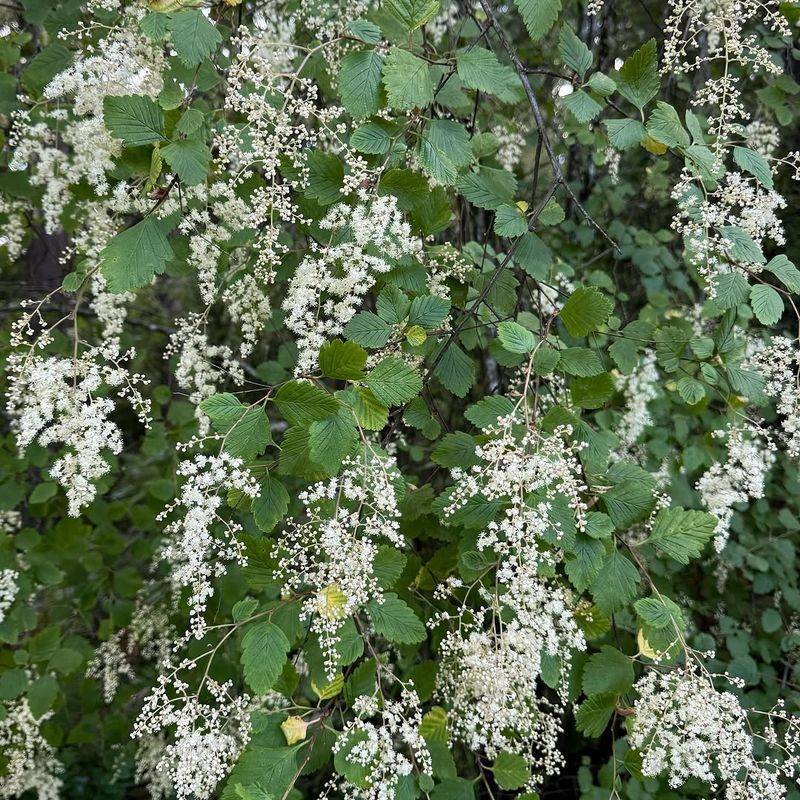
There is something genuinely special about growing a plant that belongs here.
Oceanspray, known as Holodiscus discolor, is native to the Pacific Northwest and has spent thousands of years adapting to exactly the kind of dry summers our state delivers.
It does not need help handling the heat. In late spring and early summer, oceanspray puts on a stunning display of creamy white flower plumes that droop gracefully from arching branches.
The flowers look almost like sea spray, which is how the plant got its poetic name. Bees and butterflies love them.
After the blooms fade, the dried flower clusters stay on the plant and add texture through fall and winter. Birds also appreciate the seeds, so it doubles as wildlife habitat.
That kind of multi-season value is hard to find in a single plant.
Oceanspray grows best in full sun to partial shade. It tolerates a wide range of soils, including rocky, dry, and nutrient-poor conditions.
Once it is established, you can basically leave it alone and it will thrive.
It can grow quite large, up to fifteen feet tall in ideal conditions, so give it space. Smaller forms exist that are better suited to average home gardens.
For gardeners who want a native, wildlife-friendly, drought-adapted shrub that looks beautiful without constant care, oceanspray is an outstanding choice.
7. Mock Orange Gives Fragrant Flowers Without Constant Water
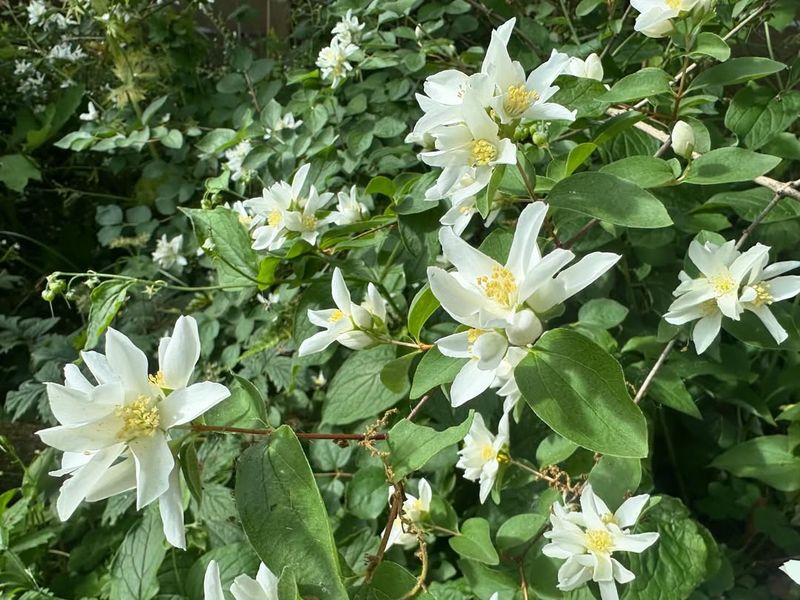
The scent of mock orange in bloom is something you never forget. It smells strongly of fresh oranges, even though the plant has nothing to do with citrus.
That fragrance alone is reason enough to find a spot for it in your yard, but the flowers are just as impressive as the smell.
Mock orange, or Philadelphus, blooms in late spring to early summer with clusters of pure white, four-petaled flowers. They look clean and classic against the dark green leaves.
The whole shrub lights up when it is in full bloom, and the fragrance carries a surprising distance across the garden.
Compared to hydrangeas, mock orange is much more forgiving during dry summers. It has deeper roots and tougher wood that help it get through weeks without rain.
Once established, it rarely needs watering beyond what nature provides in our climate.
It grows well in full sun to partial shade and tolerates most soil types as long as drainage is adequate. Sizes range from compact three-foot varieties to larger shrubs that reach eight feet or more.
Pruning right after flowering keeps the shape tidy and encourages better blooms the following year.
Mock orange also works well as a privacy screen or informal hedge. Its dense growth provides good structure, and the fragrant blooms make it a standout in any yard.
It is a reliable, low-demand shrub that rewards you generously every spring without requiring much in return.
8. Red-Flowering Currant Blooms Early And Coasts Through Summer
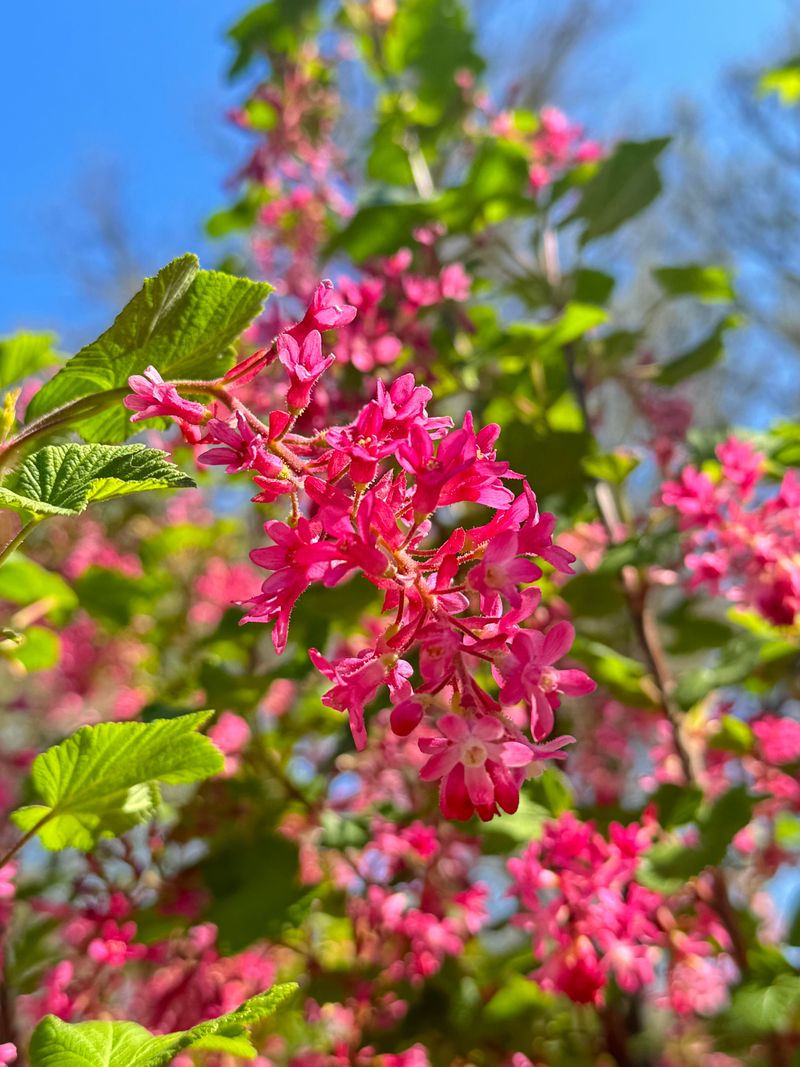
When most of the garden is still waking up, red-flowering currant is already putting on a show. This native shrub blooms in early spring, often before its leaves even fully open.
The dangling clusters of deep pink to red flowers are one of the first real signs that winter is finally over.
Ribes sanguineum, its scientific name, is a Pacific Northwest native that evolved right alongside our climate. It knows exactly how to handle long, dry summers because it has been doing it for centuries.
After blooming in spring, it goes semi-dormant and coasts through the dry months without complaint.
Hummingbirds absolutely love the early flowers. Planting one near a window means you get a front-row seat to the hummingbird action every spring.
Later in the season, small dark berries attract other birds, making it a valuable wildlife plant year-round.
It grows well in full sun to deep shade, which makes it one of the most versatile shrubs for challenging spots. Dry shade under a tree canopy is no problem for this plant.
It reaches about six to ten feet tall and has a loose, open form that looks natural in any setting.
Almost no maintenance is needed once it gets established. It does not need fertilizer, rarely needs pruning, and handles drought without any special treatment.
For a native shrub that earns its spot from the very first week of spring, red-flowering currant is a standout performer in our state’s gardens.
9. Ninebark Brings Colorful Foliage And Tougher Roots
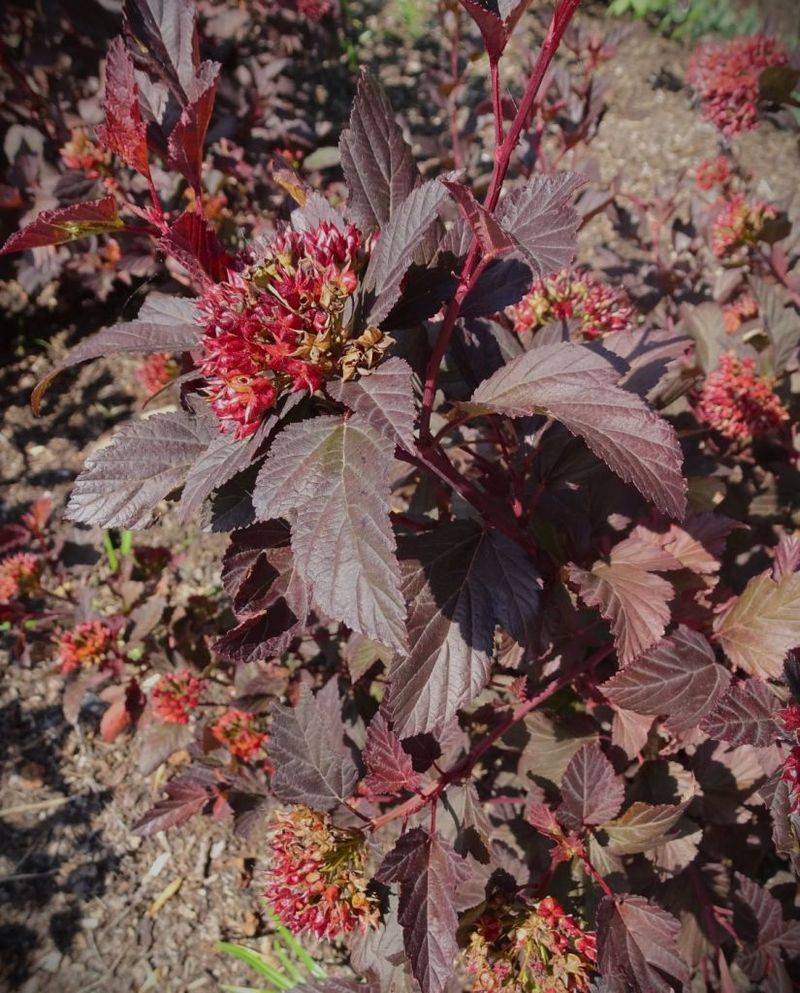
Bold foliage is ninebark’s biggest selling point. While most shrubs offer green leaves and colorful flowers, ninebark flips the script.
The leaves come in deep burgundy, copper, gold, and even near-black depending on the variety. The color stays rich all season long, not just in fall.
Physocarpus opulifolius, as it is formally known, is native to North America and built for tough conditions.
Its roots go deep, allowing it to access moisture that shallower-rooted plants like hydrangeas simply cannot reach.
That gives it a real advantage during our long, dry summers.
The flowers are a bonus rather than the main attraction. Clusters of small white or pink blooms appear in late spring and attract pollinators.
After the flowers fade, reddish seed capsules develop and add another layer of visual interest through summer and into fall.
Ninebark grows vigorously and can reach six to ten feet tall and wide. It handles full sun to partial shade and adapts to a wide range of soils.
It is also resistant to most pests and diseases, which means less work for you throughout the growing season.
Pruning once a year right after flowering keeps it from getting too large. Remove the oldest stems at the base to encourage fresh, colorful new growth.
For gardeners who want year-round visual impact with very little maintenance, ninebark is one of the smartest shrubs you can plant in a water-conscious Pacific Northwest garden.
10. Smoke Bush Adds Drama Without The Wilt
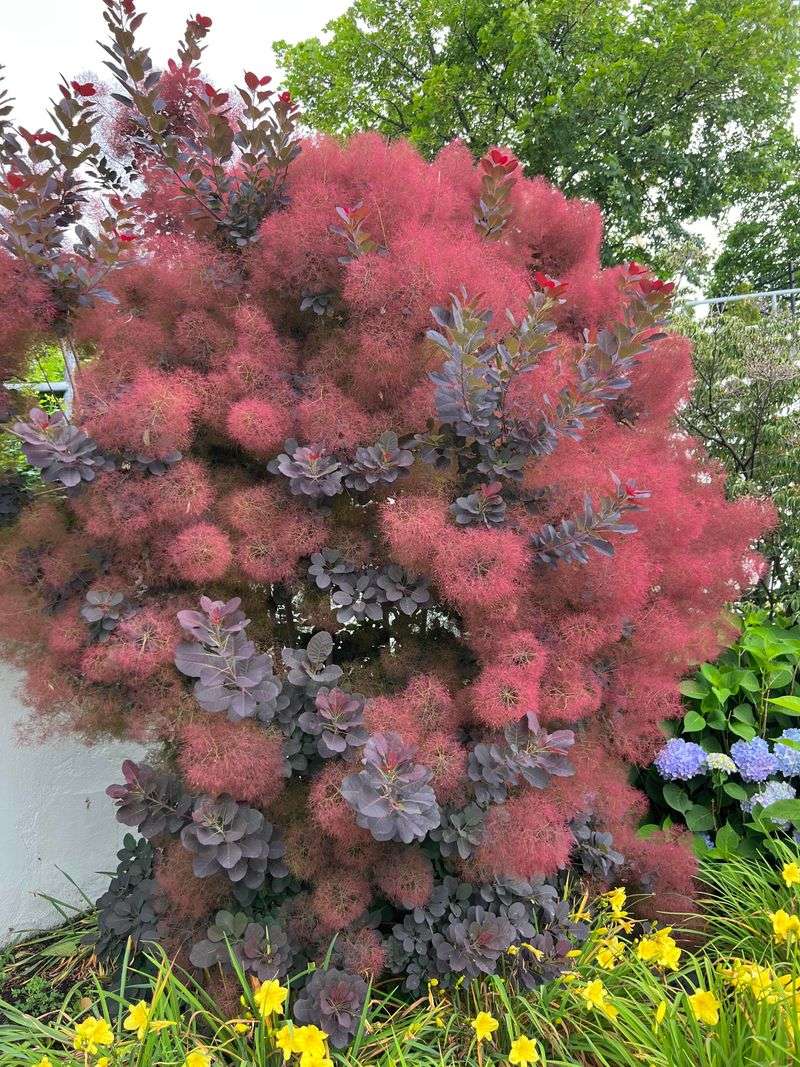
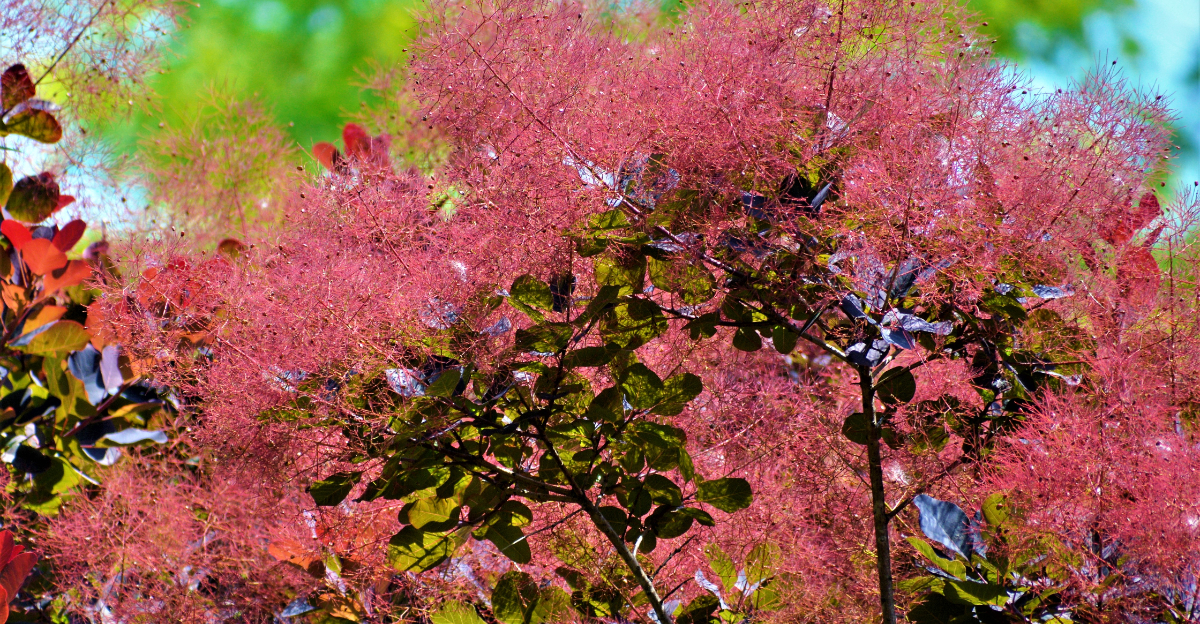
Some plants are subtle. Smoke bush is not one of them. This shrub turns heads with its billowing, smoke-like plumes of tiny flowers that seem to float above the foliage like a soft, colorful cloud.
It is one of the most visually dramatic shrubs you can grow, and it handles drought with ease.
Cotinus coggygria, the botanical name, produces those famous smoky plumes in shades of pink, purple, and beige. The effect peaks in midsummer and lasts for weeks.
Combined with the rich burgundy, purple, or green foliage, the plant looks stunning from a distance and up close.
What makes it especially valuable in our climate is its deep root system and natural drought tolerance. Once established, smoke bush rarely needs watering during dry spells.
It actually prefers lean, well-drained soil over rich, moist conditions. Too much water or fertilizer can reduce the dramatic plume display.
It grows best in full sun, which also intensifies the foliage color on purple-leafed varieties. Sizes range from compact cultivars under six feet to large specimens reaching fifteen feet or more.
Pruning in late winter keeps it manageable and encourages fresh colorful growth.
Smoke bush also pairs beautifully with other drought-tolerant plants like ornamental grasses, lavender, and ceanothus. The contrast of textures and colors creates a garden that looks intentional and designed.
If you want a showstopper shrub that thrives on neglect, smoke bush delivers every single summer without fail.