What Katydids Calling From Your North Carolina Trees Every Night Are Telling You About Fall
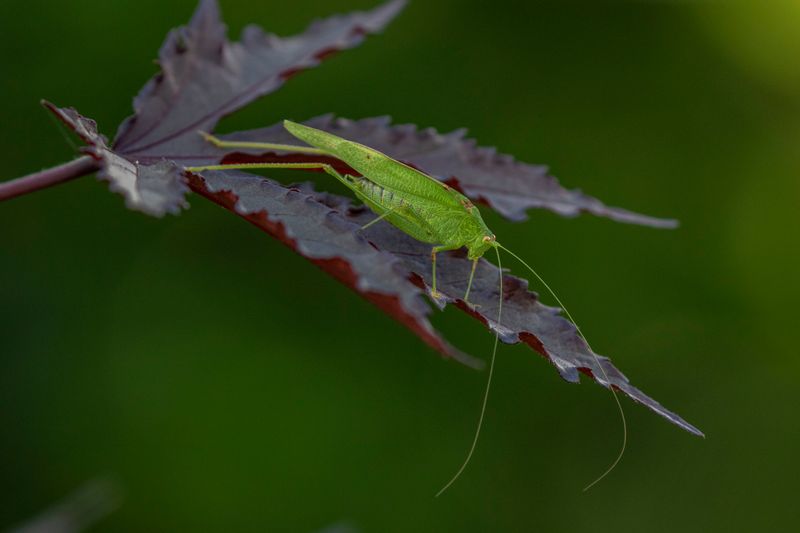
Step onto your porch after dark in late summer and the trees above you are absolutely roaring. That pulsing, rasping chorus rolling out of the canopy is one of North Carolina’s most reliable signs that the season is shifting. It may well be katydids up there, and what they are doing tells a genuinely interesting story about temperature, reproduction, and the slow turn toward fall. Understanding that story will help you know what to watch for in your yard and what to leave well enough alone.
A Nighttime Tree Chorus May Be A True Katydid
Around dusk in late summer, a sound builds in the hardwood canopy above a North Carolina yard. It rises fast, fills the air, and by full dark it can drown out a conversation on the porch. The source is almost certainly something in the trees, but naming it with confidence takes more than a good ear.
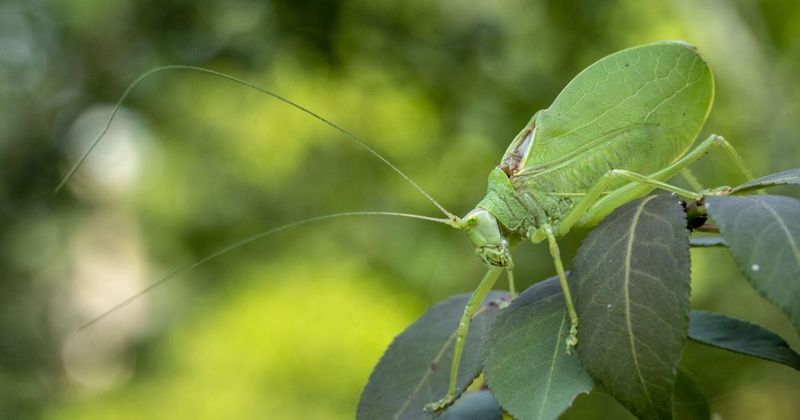
A strong candidate is the common true katydid, Pterophylla camellifolia, one of the loudest and most widespread insects in eastern hardwood forests. Field guide accounts of the common true katydid describe a stocky, bright-green insect with wings shaped and veined so much like a leaf that it practically disappears against summer foliage. It lives high in the canopy, calls after dark, and rarely comes down where you can spot it easily.
Here is where it gets tricky. The familiar two-syllable “katy-did” call that gave the group its name is not what every katydid actually sounds like. In the Carolinas and across the Southeast, the common true katydid often produces a rougher, multi-syllable rasping phrase rather than a clean two-beat call. Singing Insects of North America resources on katydids make clear that sound alone may not be enough for a reliable species identification, especially when you are listening from the ground.
North Carolina also hosts cicadas, tree crickets, coneheaded katydids, meadow katydids, and plain field crickets, all of which can fill a summer night with noise. A confident identification really does benefit from seeing the insect or comparing the call to a verified audio recording. Until then, treating the chorus as a likely katydid sound is reasonable, and it is a perfectly good place to start.
The Sound Carries A Message, Not A Forecast
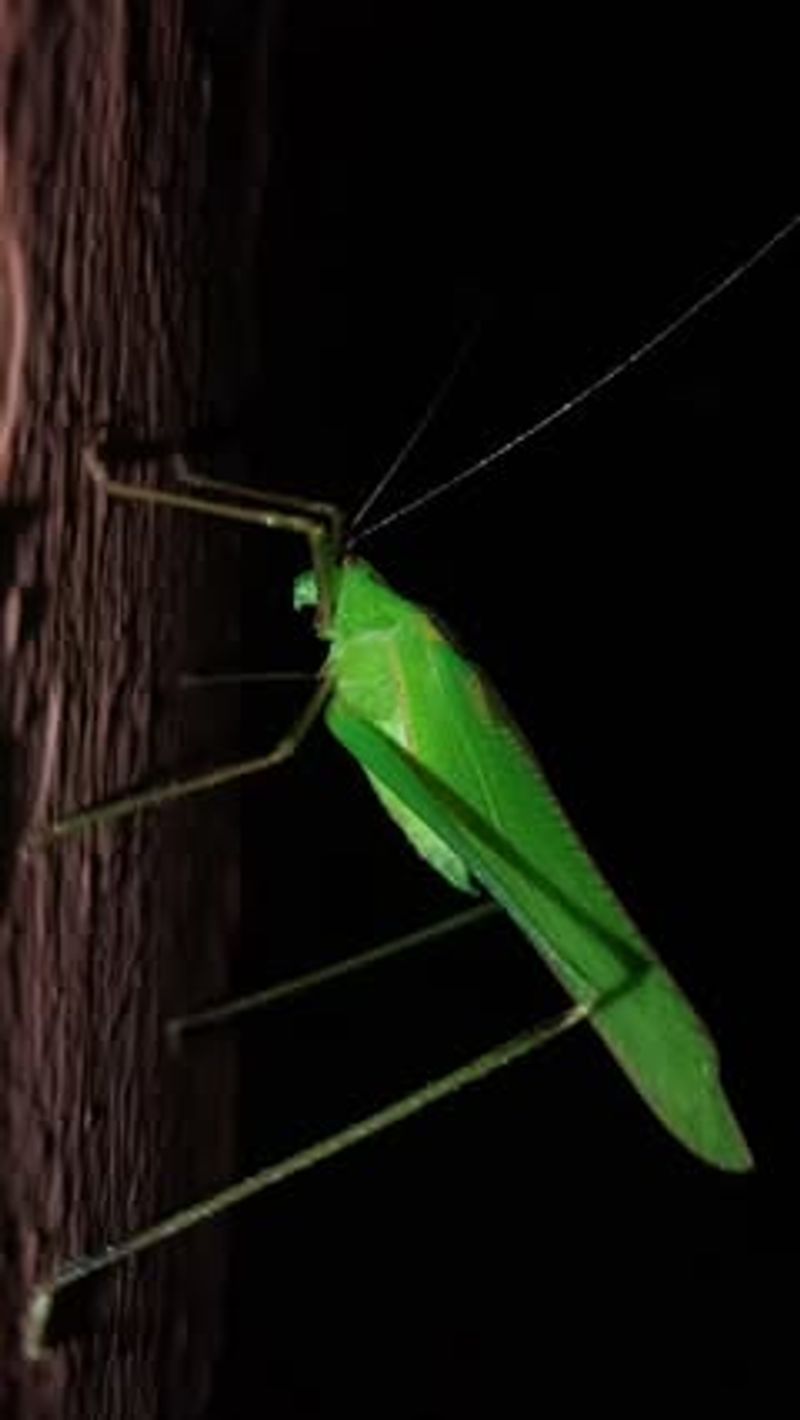
All that noise has a purpose, and it is not about you or the weather. Katydids call primarily to communicate with each other, and the driving force behind the late-summer chorus is reproduction. Males of most species call to attract females, and the common true katydid adds an interesting wrinkle: documented accounts of the common true katydid note that both sexes can produce nighttime rasping sounds, so not every caller up in the canopy is necessarily male.
The sound itself is made by stridulation, which means rubbing parts of the forewings together. One wing carries a file-like ridge, the other a scraper edge, and the rapid contact produces that distinctive clicking or rasping phrase. Think of it as a built-in instrument played at the speed the insect’s muscles allow.
Your North Carolina Garden Changes Every Week. Your Plan Should Too.
Gardening in North Carolina changes quickly throughout the season. Every Friday you’ll receive a simple weekly plan showing exactly what to plant, prune, fertilize, harvest, and protect so you never miss the right timing.
Temperature controls that speed directly. Research on temperature and insect pulse rates shows that calling slows and the texture of the sound changes as nights cool. On a warm August night in the Piedmont, the chorus can be almost frantic. By late September, when overnight lows drop toward 55 or 60 degrees Fahrenheit, the same insects may produce slower, rougher, more grinding phrases.
That shift tells you the air is cooling, and it is a real-time response to current conditions rather than a forecast of what comes next. Katydids are not reading a weather calendar. They are reacting to the temperature around them right now, which is genuinely useful information but not a prediction of frost dates, rainfall, or anything else specific about the weeks ahead.
Late-Season Calls Fit The Overwintering Life Cycle
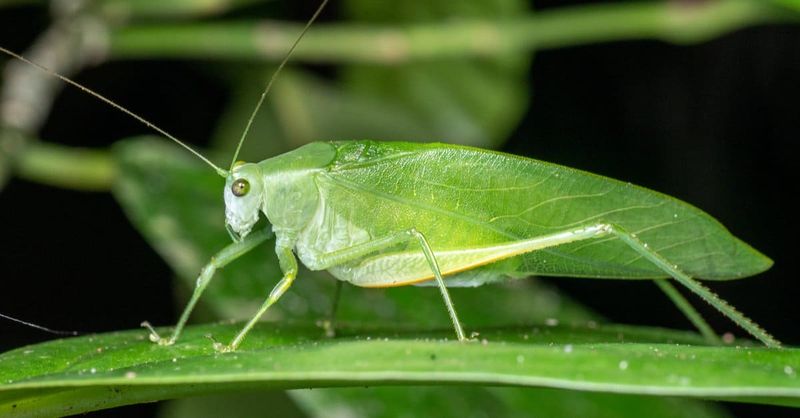
Adult katydids calling in August and September are not lost or out of place. They are right on schedule. The late-season chorus fits almost perfectly with where these insects are in their annual life cycle, and understanding that cycle makes the whole thing easier to read.
Katydids spend most of the year as eggs. Nymphs hatch in spring, go through a series of molts across the summer, and reach adulthood by mid to late summer. Adults then have a limited window to find mates, and that urgency is part of what makes the late-summer chorus so loud and persistent.
As mating wraps up, female common true katydids begin laying eggs. Life cycle details for the common true katydid describe females inserting eggs into bark crevices or plant tissue late in the season. Those eggs stay put through fall and winter, surviving cold that would kill an adult outright, and then hatch when spring temperatures rise again. It is a tidy solution to a hard problem.
Other katydid species follow variations on the same broad pattern, though egg placement and exact timing shift by species and location. Extension guidance on katydids in the home landscape confirms that overwintering eggs are the norm across many species, so the chorus you hear is essentially the last act of this year’s generation before the next one takes shape in bark and stems across your yard.
Timing varies across North Carolina. A warm autumn along the Coastal Plain can keep adults calling into October, while a sharp cold snap in the mountains may silence the chorus weeks earlier. Treat the chorus as a broad seasonal marker, not a precise regional countdown.
Check The Caller Before Naming The Insect
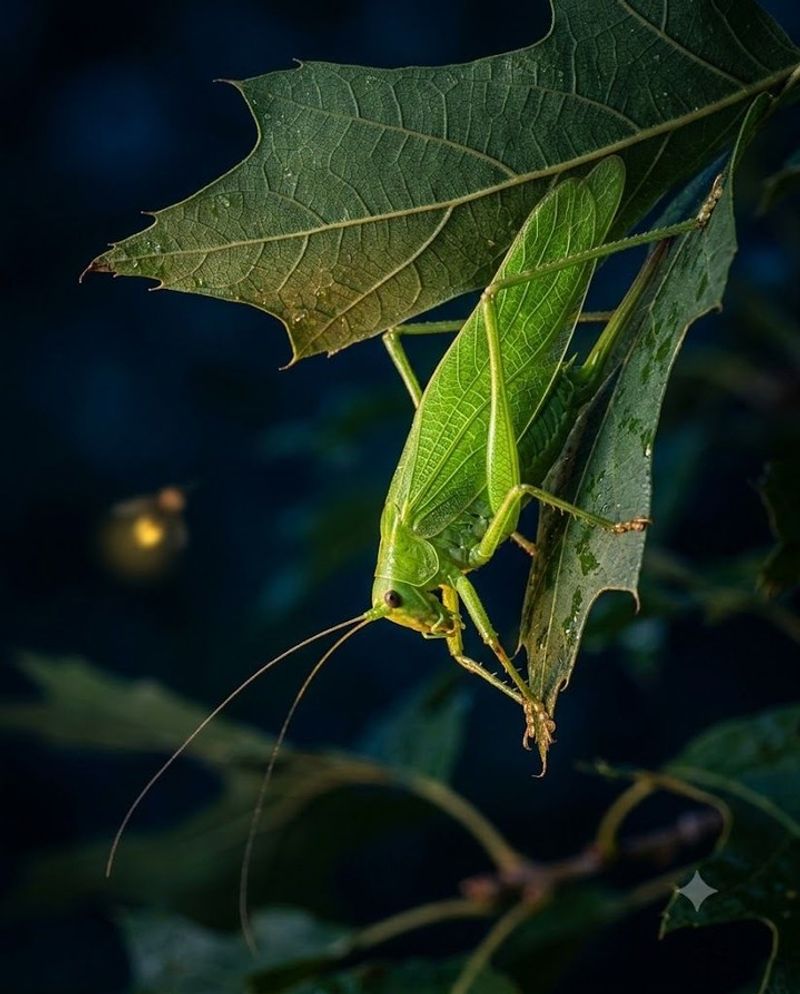
Not every loud tree at night belongs to a katydid, and getting the caller right matters before you decide what, if anything, to do about it. North Carolina has a genuinely rich community of singing insects, and several of them can produce a chorus loud enough to rattle the windows.
Cicadas are the most common source of confusion. NC State Extension information on cicadas describes a sustained, high-pitched buzz or whine that typically peaks during the day or around dusk, produced by tymbals on the abdomen rather than wings. Katydids tend to call after full dark, and their sound has a clicking, rasping, or rhythmic phrase quality that differs from the cicada’s continuous electric hum.
Tree crickets add a high, clear trill from shrubs and lower branches. Field crickets chirp from the ground. Coneheaded katydids and meadow katydids call from tall grasses and weedy edges rather than from the canopy. Guidance on using singing insect audio resources recommends comparing what you hear to verified recordings rather than relying on a general description.
The katydid section of Singing Insects of North America is a free, well-organized starting point for audio comparisons. Listen from the ground, let your eyes adjust, and look for movement in the canopy. Do not climb trees, shake branches over people, or try to handle unfamiliar insects bare-handed. Katydids are not dangerous in any meaningful sense, but some can deliver a mild bite if grabbed, and misidentification is easy in low light.
Patience and a phone flashlight will tell you more than a ladder will.
A Full Canopy Does Not Automatically Mean A Sick Tree
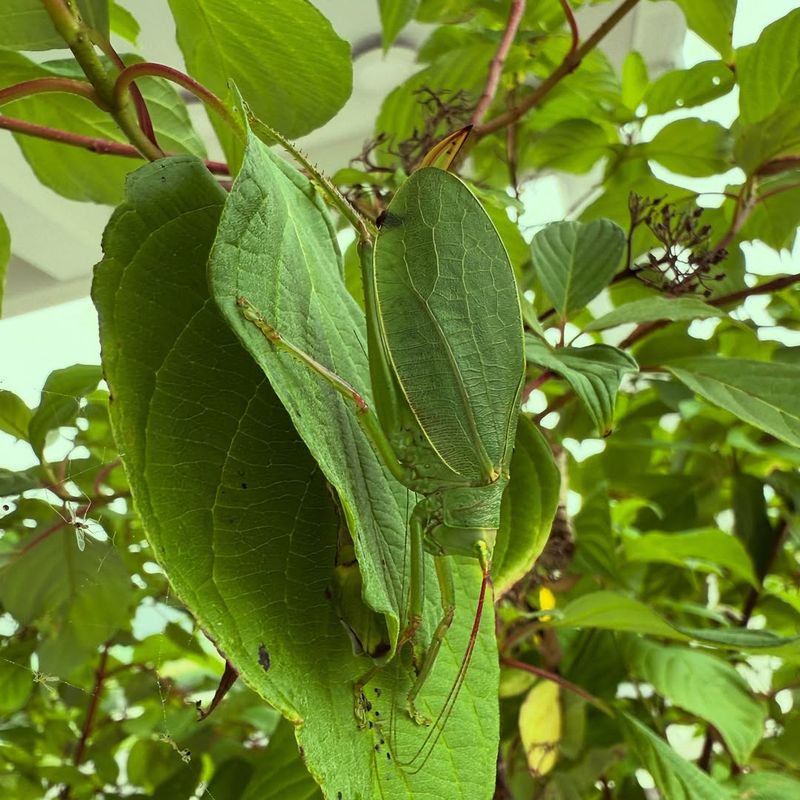
A tree that sounds like it is vibrating with insect life can feel alarming, especially if you have spent years tending it. The instinct to worry is understandable, but a loud chorus in the canopy is not by itself evidence that something is wrong.
Katydids feed on foliage, flowers, and occasionally fruit, and a large population can leave visible chewing marks on leaves. Integrated pest management guidance on katydids is clear that significant landscape damage is uncommon in most home situations. A healthy, established hardwood can lose a modest percentage of its leaf area late in the season and come through without any lasting harm.
Young trees, container plants, fruiting trees, and recently transplanted shrubs deserve closer attention because they have less reserve to draw on. Walk the yard in daylight and look at the actual leaves rather than listening to the sound. Fresh, irregular holes punched through leaf tissue, leaves stripped back to the midrib, or feeding concentrated heavily on one branch or one small plant are the signs that warrant a second look.
Tree health resources on katydids note that a calling insect in the canopy and a damaged plant are two separate observations. One does not automatically explain the other. Many other insects, diseases, and environmental stresses produce leaf damage, so the presence of katydids in the neighborhood does not mean they are the culprit on a particular plant.
When feeding is minor and the plant is established, the most practical response is to leave things alone. The chorus will quiet on its own as temperatures drop.
Inspect The Plant Before You Reach For Spray
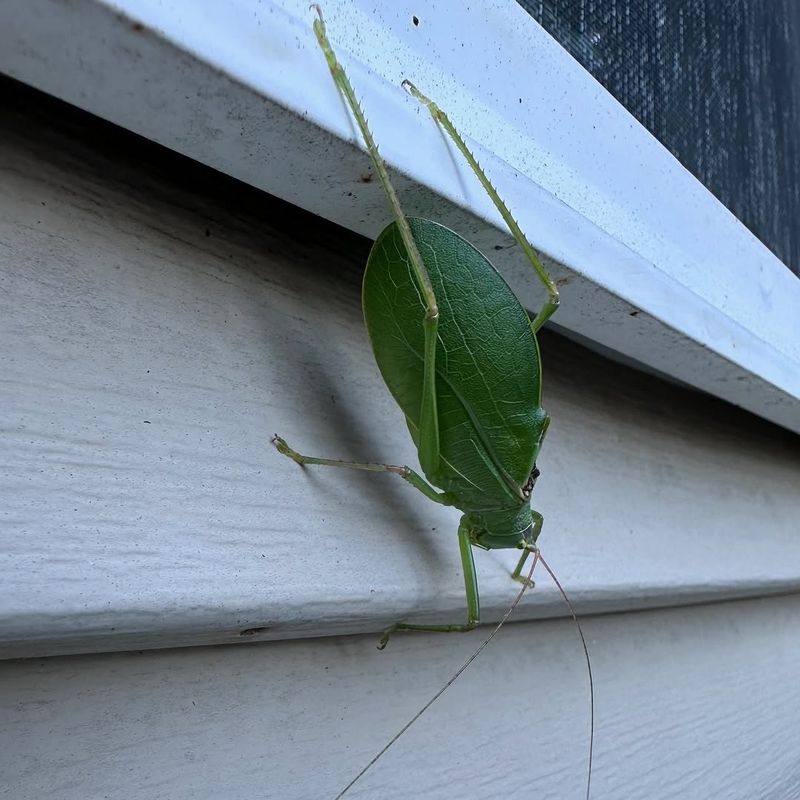
Finding genuine katydid feeding on a plant you care about calls for a proportionate response, not an automatic trip to the garden center. Most backyard situations can be handled without reaching for a spray bottle at all.
Start with the simplest options. Hand-pick visible insects from the plant in the evening when they are active and easier to spot. Drop them into soapy water or relocate them away from a vulnerable seedling. Extension office guidance on katydid management recommends physical removal and row covers or fabric barriers over young plants as practical first steps before any chemical treatment is considered.
If damage is genuinely severe and concentrated on a plant that matters, and if hand-picking is not keeping up, a pesticide may be appropriate. The key word is appropriate, meaning matched to an identified insect and a documented problem on a specific plant. EPA guidance on pesticide labels is plain: the label is a legally enforceable document. It controls which plants can be treated, what rates to use, when to apply, how long to stay out of the treated area, and what environmental protections apply.
Read it fully before opening the container.
Pollinators deserve specific attention. EPA pollinator protection guidance recommends avoiding applications to blooming plants when bees and other pollinators are active, and minimizing drift into surrounding habitat. Nighttime calling does not justify automatic nighttime spraying. Many beneficial insects are active after dark, and the label controls the timing, not the insect’s schedule.
A chorus in the canopy is not a pest emergency. Treat it as background information until your eyes find actual damage on a plant that cannot absorb it.
Use The Chorus As A Seasonal Clue, Not A Prediction
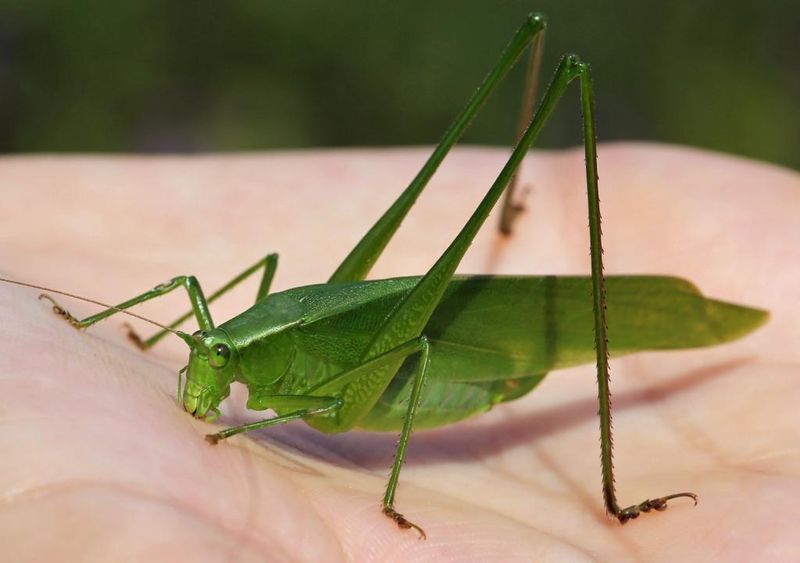
By now the chorus outside makes a little more sense. What you are hearing on a warm North Carolina night in August or September is most likely a group of adult insects, possibly common true katydids, doing exactly what their biology calls for: calling to find mates, responding to the temperature around them, and moving toward the end of a season that began as an egg in a bark crevice last fall.
That chorus can tell you a few real things. Temperatures are still warm enough to support calling, adults are active and reproductively motivated, and the life cycle is moving toward the overwintering egg stage. Practical katydid guidance frames this plainly: the insects are responding to current conditions, not broadcasting future ones.
What the chorus cannot tell you is worth naming directly. Call volume does not predict the first frost date, winter severity, rainfall totals, or hurricane activity. A louder night means more adults are calling nearby, the air is warm enough for activity, or the sound is carrying well on a still evening. That is all.
Weather folklore connecting insect abundance to winter forecasts is not supported by the biology.
Katydids fit into the food web in a straightforward way. Birds, tree frogs, and other predators eat them, and that relationship is real. Singing Insects of North America background on katydids places them squarely in the broader insect community without overstating their role. Their presence suggests the yard supports insect life, which is genuinely good, but it does not prove the yard is healthy or that other pests are being controlled.
The practical rule is simple: identify cautiously, inspect plants only when you see actual damage, and let a normal chorus run its course. By the time the first cold front pushes through, the canopy will go quiet on its own, and the next generation will already be waiting in the bark.