This Is Why Every Arizona Garden Needs A Mesquite Tree For Deep Shade
Nothing changes an outdoor space faster than real shade during a desert summer. You notice it the moment you leave the blazing sun and stand beneath a mature mesquite tree.
That cooler feeling is not your imagination. Mesquite creates a broad canopy while thriving in conditions that challenge many other trees.
Its value goes beyond comfort. Birds find shelter in the branches, pollinators visit the flowers, and nearby plants benefit from protection during the hottest hours.
A mature mesquite has earned its place in Arizona landscapes because it delivers dependable shade without demanding constant attention or excessive watering.
Once you experience the difference on a scorching afternoon, the empty corner of your garden will never look quite the same again.
You will appreciate every cooler afternoon long after summer ends.
1. Mesquite Trees Cast Broad Natural Shade
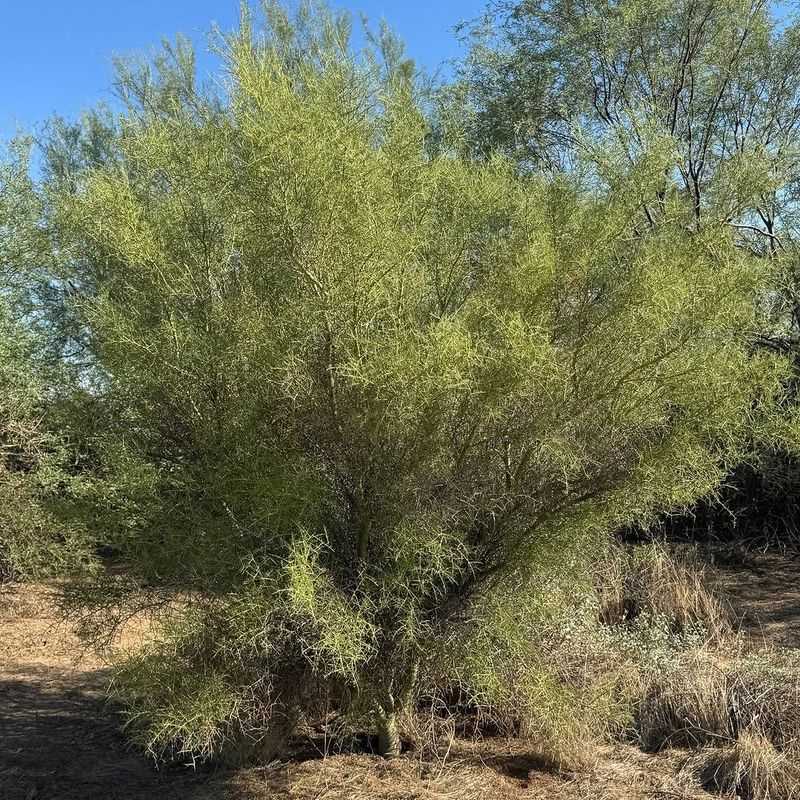
Standing under a full-grown mesquite tree feels like stepping into a different world. Branches spread outward in wide, sweeping arcs, creating a canopy that can stretch 30 feet or more across in ideal conditions.
Unlike palm trees or other tall desert plants, mesquites grow low and wide. That shape is exactly what a garden needs for practical, walkable shade rather than just height.
Native to the Sonoran Desert region, velvet and honey mesquite varieties are particularly well-suited for hot, dry landscapes. Their feathery, compound leaves create a light-filtering effect that feels softer than solid shade structures.
One thing worth knowing: shade size depends on age, water access, and species. Younger trees may take several years to develop a full canopy.
Consistent, deep watering during establishment can help speed that process along.
Placement matters a lot. Positioning a mesquite on the south or west side of a home or patio gives the most sun protection during peak afternoon heat.
Even a moderately sized tree can significantly reduce radiant heat in those spots.
Over time, a mesquite becomes the anchor of an entire outdoor space, organizing the garden naturally around its spreading form. Few plants earn that role as reliably in a dry-climate yard.
2. Outdoor Spaces Stay Cooler During Summer
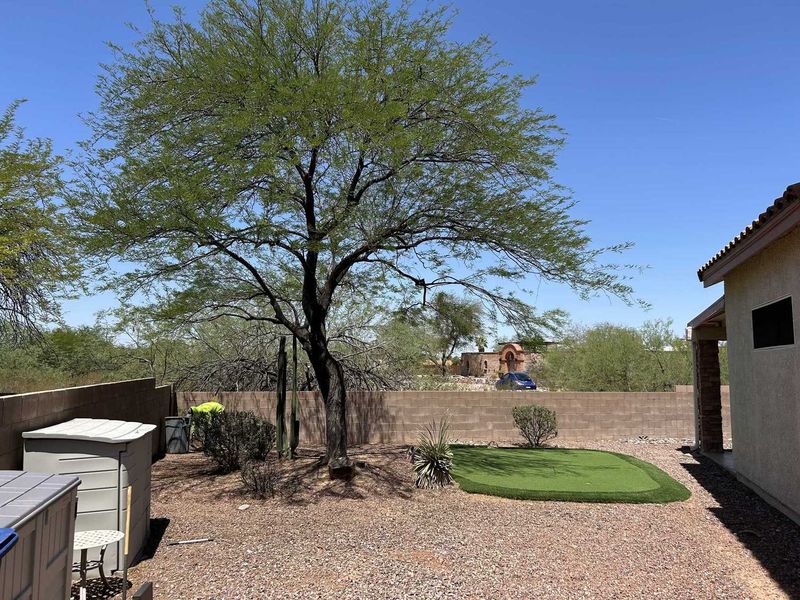
Summer heat in the desert is serious. Patio furniture gets too hot to touch.
Concrete stays warm well into the night. A single mesquite tree can shift all of that noticeably.
Shade from a tree works differently than shade from a roof or umbrella. Tree canopies block direct sun while still allowing airflow beneath.
That combination tends to feel cooler than enclosed covered spaces.
Ground temperatures under a mesquite canopy can run significantly lower than exposed surfaces nearby. Bare soil and gravel absorb heat fast and radiate it back upward.
Shaded ground simply does not heat up as much during the day.
Patios, seating areas, and play spaces benefit most when positioned beneath or near the tree. Families who plant mesquites close to gathering spots often find those areas usable even during mid-afternoon hours in summer.
Evapotranspiration also plays a role. Trees release moisture through their leaves, which adds a small but real cooling effect to the surrounding air.
Your Arizona Garden Changes Every Week. Your Plan Should Too.
Gardening in Arizona changes quickly throughout the season. Every Friday you’ll receive a simple weekly plan showing exactly what to plant, prune, fertilize, harvest, and protect so you never miss the right timing.
It is subtle, but in a dry climate, every bit helps.
No tree eliminates heat entirely in a desert environment. However, a well-placed mesquite can make outdoor living genuinely comfortable for more hours each day.
That kind of practical benefit is hard to match with hardscape alone.
3. Filtered Light Helps Understory Plants Thrive
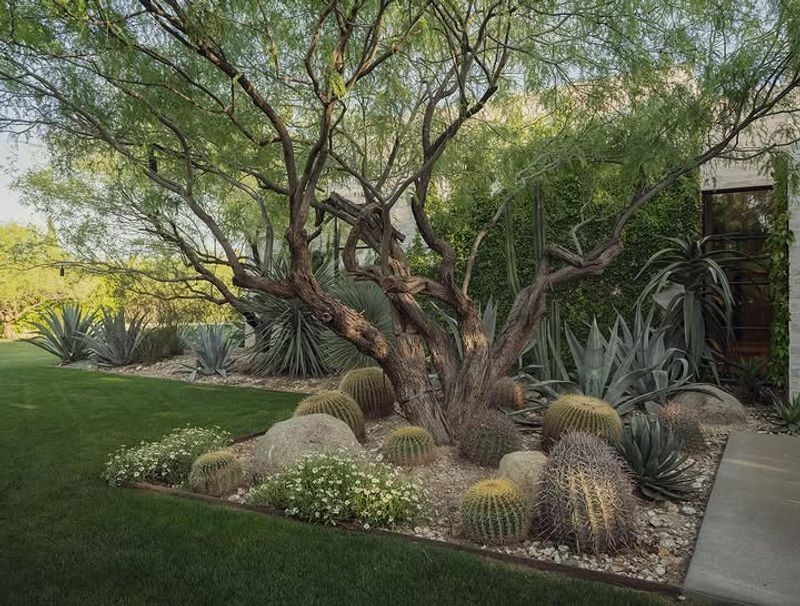
Not every plant wants full desert sun beating down all day. Plenty of beautiful native species actually prefer a break from intense midday light.
Mesquite trees create exactly that kind of in-between environment.
The feathery leaf structure of a mesquite filters sunlight rather than blocking it completely. Plants growing underneath receive bright, dappled light that changes throughout the day as the sun moves.
Autumn sage, desert fern, and various native wildflowers often perform better under a mesquite canopy than in open sun. Reduced leaf scorch and slower soil moisture loss are two practical reasons why.
Gardeners in hot desert regions frequently struggle to keep understory plants alive through summer. Planting beneath a mesquite gives those plants a fighting chance by moderating temperature and slowing evaporation from the soil surface.
Root competition is worth considering. Mesquite roots can spread widely and may compete with shallow-rooted companions for moisture.
Choosing plants with different root depths, or watering more intentionally, can help manage that dynamic.
With thoughtful plant selection, the area beneath a mesquite can become one of the most productive and visually interesting parts of a garden.
Layered planting under a canopy creates depth and variety that flat, open desert plantings rarely achieve on their own.
4. Fallen Leaves Enrich Desert Soil Naturally
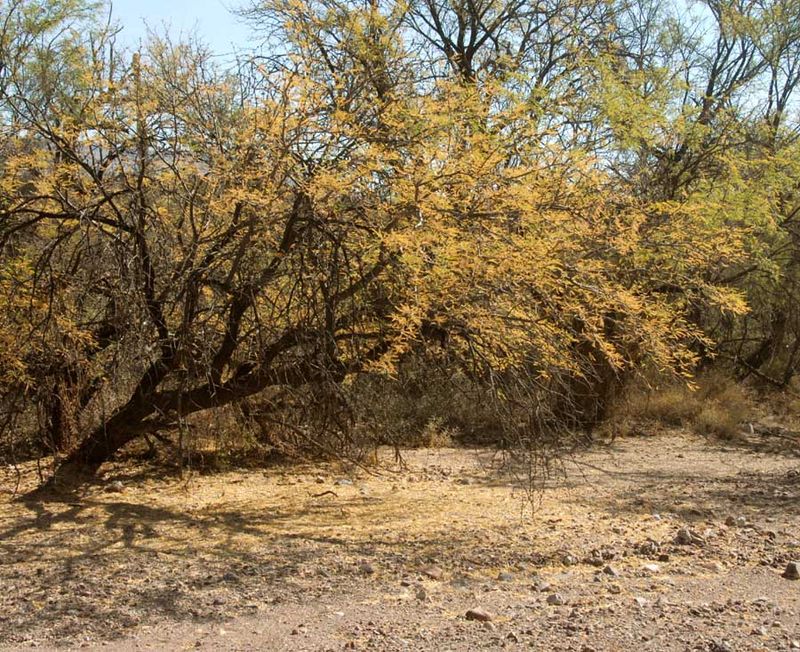
Mesquite trees are semi-deciduous, meaning they drop leaves at certain times of year, particularly in late winter or during dry stress periods. That leaf drop is actually useful for the garden.
Fallen mesquite leaves break down and add organic matter to desert soil over time. Desert soils tend to be low in organic content, so any natural input helps improve texture and nutrient availability.
Leaving fallen leaves in place beneath the tree creates a natural mulch layer. That layer slows moisture evaporation from the soil surface and moderates ground temperature.
Both benefits are significant in a hot, dry climate.
Mesquite pods that fall also contribute. As they break down, they return nutrients to the soil.
Pods left on the ground can be raked lightly into the surface layer rather than bagged and removed.
One practical note: decomposition in desert climates can be slow due to low humidity. Chopping or shredding fallen material before leaving it in place helps it break down faster and integrate into the soil more effectively.
Over several years, consistent leaf and pod drop beneath a mesquite can noticeably improve the soil in that immediate area. Gardeners in Arizona and across the broader Southwest have observed this effect in long-established plantings.
It is a quiet, steady process that costs nothing and asks nothing.
5. Branches Give Birds Safe Shelter
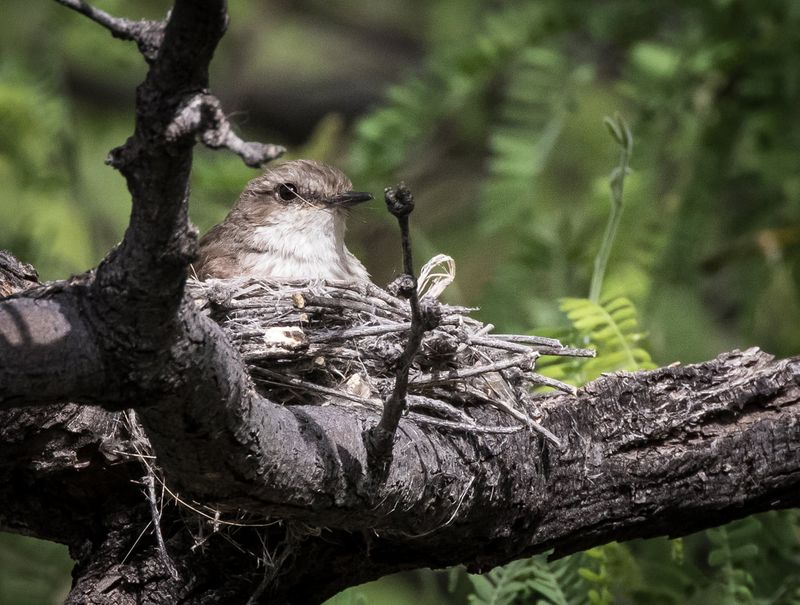
Walk past a mesquite tree at dawn and listen. Chances are, something is living in it.
Mesquite trees are genuinely popular with desert birds, and not just for a quick perch.
Curved-bill thrashers, verdins, and cactus wrens frequently nest in mesquite branches. The thorny structure offers real protection from ground-level predators.
Dense branching gives nesting birds cover and stability that open trees cannot provide.
Seed-eating birds also visit mesquites for the pods that develop after flowering. Mesquite pods are a food source for quail, doves, and other species that forage on or near the ground beneath the canopy.
Shade from the canopy keeps the ground beneath cooler, which often attracts insects. Where insects gather, insect-eating birds follow.
A single mesquite can support multiple layers of bird activity across different feeding habits and behaviors.
Providing bird habitat is one of the quieter benefits of planting a native tree. No feeders, no maintenance, no ongoing cost.
Birds find the tree on their own once it matures enough to offer useful structure and resources.
Gardeners who enjoy watching wildlife from a window or patio will find a mesquite tree delivers steady activity across seasons. Spring brings nesting.
Summer brings fledglings. Fall and winter bring foragers.
It stays interesting year-round.
6. Deep Roots Handle Long Dry Periods
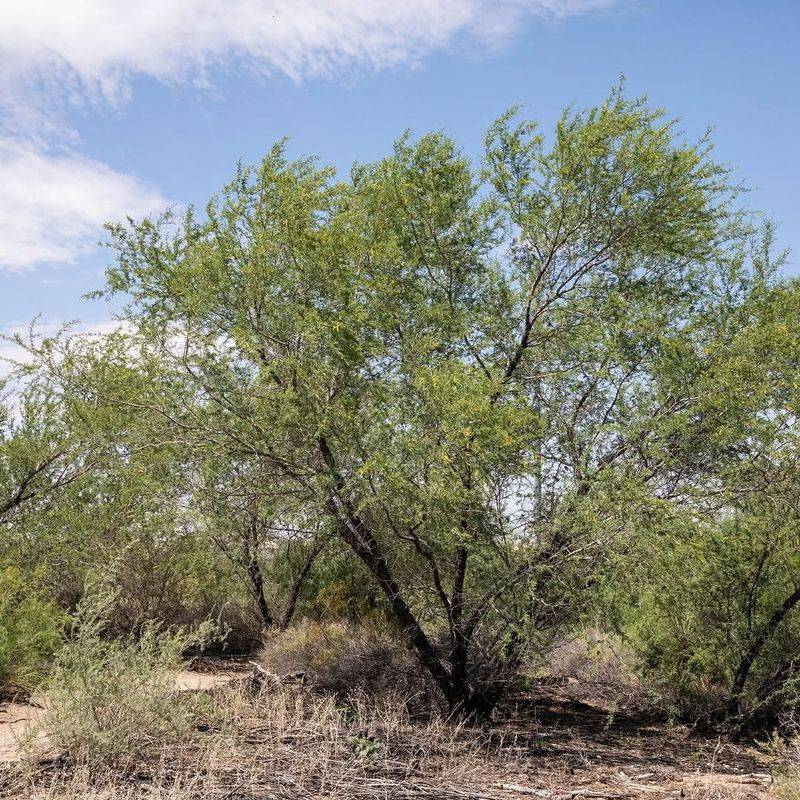
Mesquite trees have a reputation for surviving where other trees struggle. Much of that toughness comes from underground, not from anything visible above the surface.
Taproots on mature mesquites can reach impressive depths, sometimes penetrating 50 feet or more into the ground in search of water. That depth gives the tree access to moisture that surface-level plants simply cannot reach.
During prolonged dry spells, shallow-rooted trees often show stress through wilting, leaf drop, or drying branches.
Mesquites, by contrast, tend to hold steady because their root systems tap into deeper soil moisture reserves.
Established mesquites in typical desert landscapes can generally go long stretches without supplemental irrigation. That said, young trees benefit from regular watering during their first two to three years while their root systems develop.
Overwatering a mesquite can actually cause problems. Roots that stay too wet may become vulnerable to rot, and the tree may grow too fast in ways that weaken its structure.
Infrequent but deep watering tends to work better than frequent shallow watering.
For gardeners who travel, work long hours, or simply want lower-maintenance plants, a well-established mesquite is genuinely forgiving.
Its deep root system is one of the main reasons it has thrived in harsh desert conditions across the Southwest for so long.
7. Spring Blooms Feed Native Pollinators
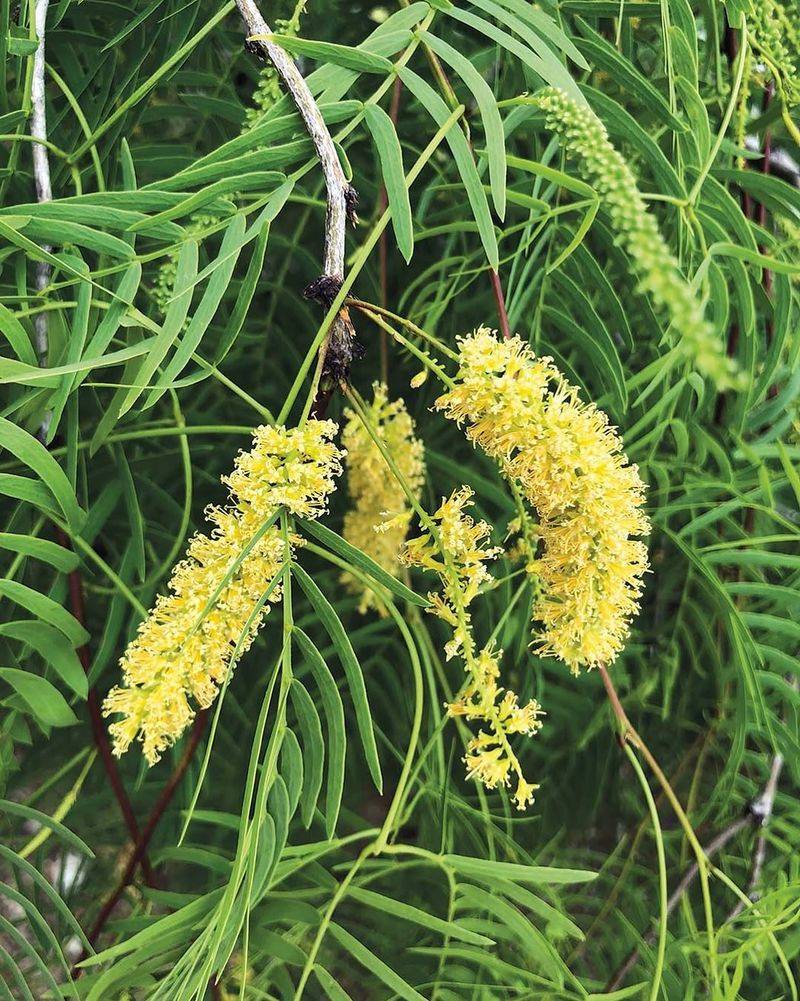
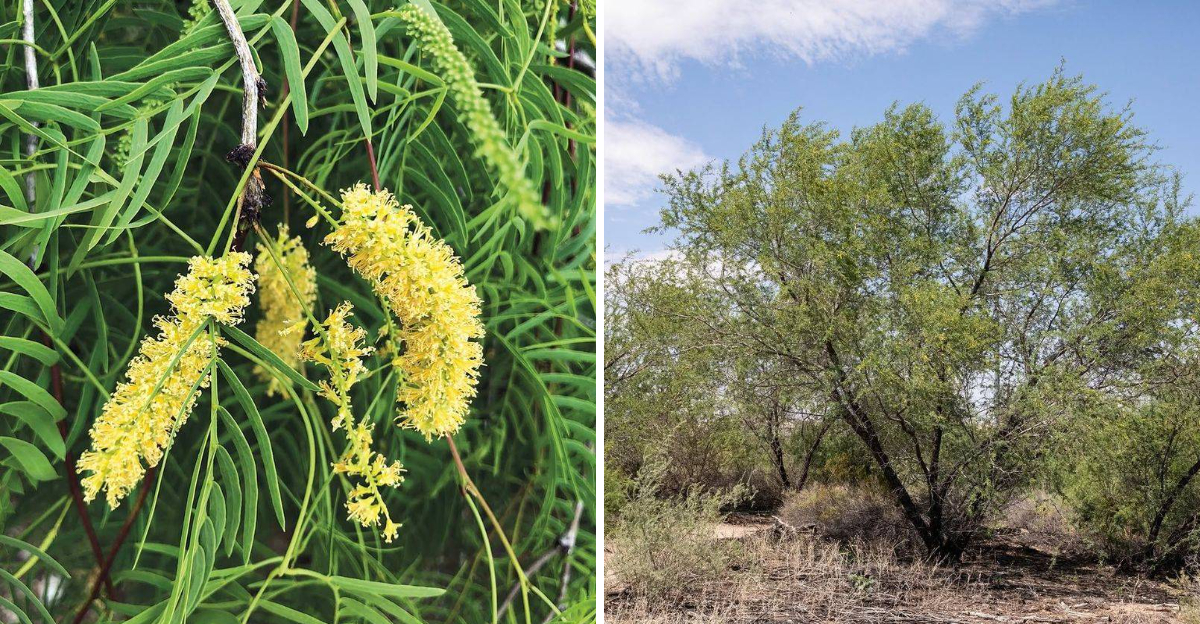
Few trees put on a spring show quite like a mesquite in full bloom. Clusters of small, yellow, fragrant flowers appear in late spring, and the activity they attract is remarkable.
Honeybees, native bees, and other pollinators flock to mesquite blossoms. Mesquite honey is actually a well-known regional product, prized for its mild, slightly sweet flavor.
That tells you something about how much nectar these flowers produce.
Beyond bees, butterflies and other beneficial insects visit mesquite blooms regularly. A flowering mesquite can become a buzzing center of pollinator activity in a neighborhood that otherwise has limited native plant resources.
Bloom timing varies somewhat by location and elevation, but late April through June is a common window in lower desert areas. Warmer microclimates may see blooms earlier; cooler spots may push them slightly later.
Supporting pollinators is not just about aesthetics. Vegetable gardens, fruit trees, and flowering plants nearby can benefit when pollinator populations are healthy and active.
A mesquite tree contributes to that ecosystem in a practical way.
Planting even one mesquite in a yard creates a reliable seasonal food source for native insects. That small action connects a private garden to a much larger web of desert wildlife.
It is a simple contribution with real ecological value.