Why North Carolina Squash Plants Set Flowers But Never Fruit In The July Heat
You walk out to your squash bed on a sticky July morning, expecting to find young zucchini swelling up overnight, and instead you find a vine absolutely loaded with golden blooms and not a single squash worth picking. It is one of the more frustrating sights in a North Carolina summer garden, especially after all those weeks of watering and weeding. The good news is that a plant covered in flowers is not a sick plant, and understanding what is actually happening inside those blossoms can help you turn the season around. Prolonged July heat is a leading reason squash may produce little fruit, but it is not the only one, and a few early-morning checks will tell you a lot.
When July Heat Disrupts Squash Fruit Set
Pull up a chair near your squash bed around seven in the morning and count the open blooms. If you see flower after flower but no tiny squash forming behind any of them, the plant is telling you something worth paying attention to. Daytime temperatures climbing past 90 degrees Fahrenheit paired with nights that stay at or above 70 degrees create what extension researchers describe as a practical warning range for cucurbit fruit set, not a hard biological switch that shuts the plant off completely, but a zone where problems become much more likely.
According to University of Minnesota Extension research on heat and vegetable yield, prolonged high temperatures can push squash plants toward more male flowers, fewer female flowers, and higher rates of flower or young-fruit abortion. Duration matters more than a single hot afternoon. A brief spike is unlikely to shut down your harvest, but a week or two of relentless heat, especially when combined with water stress or heavy rain that keeps bees grounded, raises the odds considerably.
North Carolina’s July climate adds real pressure here. Across much of the Coastal Plain and Piedmont, afternoon highs routinely land in the low 90s, and the NC State Climate Office notes that inland locations often run hotter than the immediate coast. Mountain gardens above 2,500 feet may stay cooler, while a Sandhills bed baking against a south-facing cinderblock wall can push well past what the thermometer reads in the open air.
Heat is a strong candidate when blooms are plentiful and fruit is absent, but it is a hypothesis, not a certainty. Poor pollination, uneven watering, insect damage, viruses, and disease can produce the same picture. The sections ahead will show you how to read your flowers, test pollination, stabilize soil moisture, protect your pollinators, and know when to look for a different explanation entirely.
A Blossom Is Not Always a Future Squash
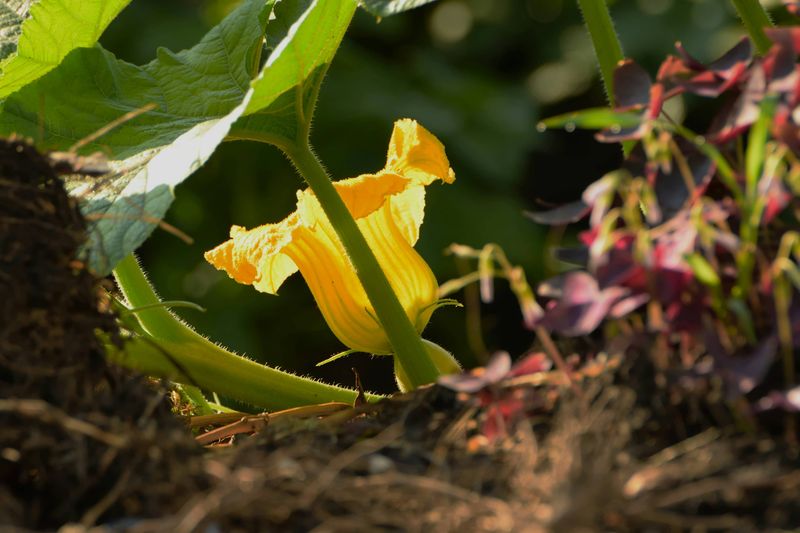
Here is where a lot of gardeners lose a season of sleep worrying about the wrong thing. Squash plants, including summer squash and zucchini (Cucurbita pepo), are what botanists call monoecious, meaning one plant carries both male and female flowers. University of Minnesota Extension’s guide to growing summer squash explains that only female flowers can develop into fruit, and every one of those female flowers needs insect-delivered pollen from a male blossom to do it.
Your North Carolina Garden Changes Every Week. Your Plan Should Too.
Gardening in North Carolina changes quickly throughout the season. Every Friday you’ll receive a simple weekly plan showing exactly what to plant, prune, fertilize, harvest, and protect so you never miss the right timing.
The plant does not open both types at the same time or in equal numbers, especially early in the season. NC State’s Extension Gardener Handbook confirms that the first flowers a squash plant produces are commonly male. Watching those early blooms drop without producing fruit is normal and not a sign that anything has gone wrong. The concern grows when a mature plant, well past its first few weeks of flowering, keeps sending out almost nothing but male blossoms during a stretch of extreme heat.
Prolonged heat can tip that balance further. Extension research on heat stress in cucurbits describes the general pattern: high temperatures can favor male flower production, reduce the number of female flowers opening on a given day, and increase the rate at which young fruit aborts after pollination. The response varies with cultivar, plant age, water status, and site conditions, so it is not an all-or-nothing failure across every plant in the garden.
Think of the plant as a thermostat making calculated choices. Under stress, it invests in pollen production and pulls back on the expensive work of developing fruit. A garden full of gorgeous golden blooms with almost no fruit behind them is the plant doing math, not giving up entirely.
Inspect Flowers Before the Morning Closes
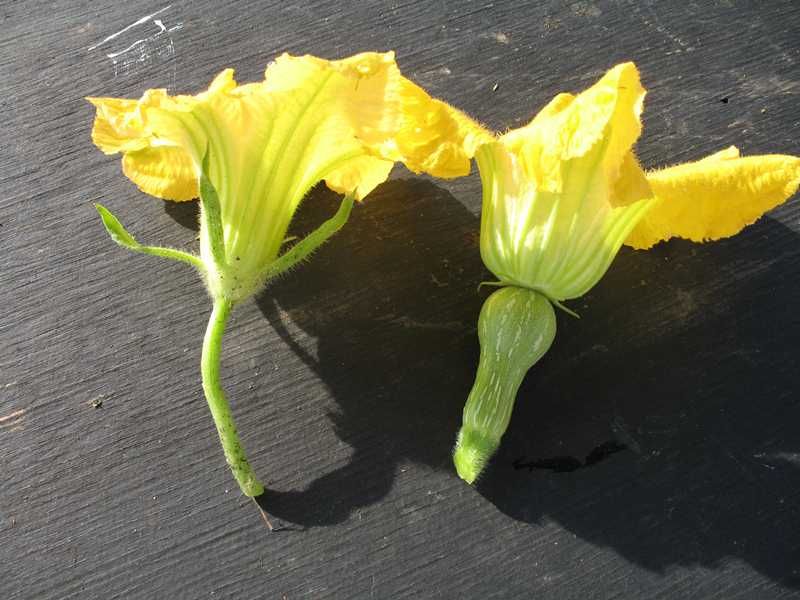
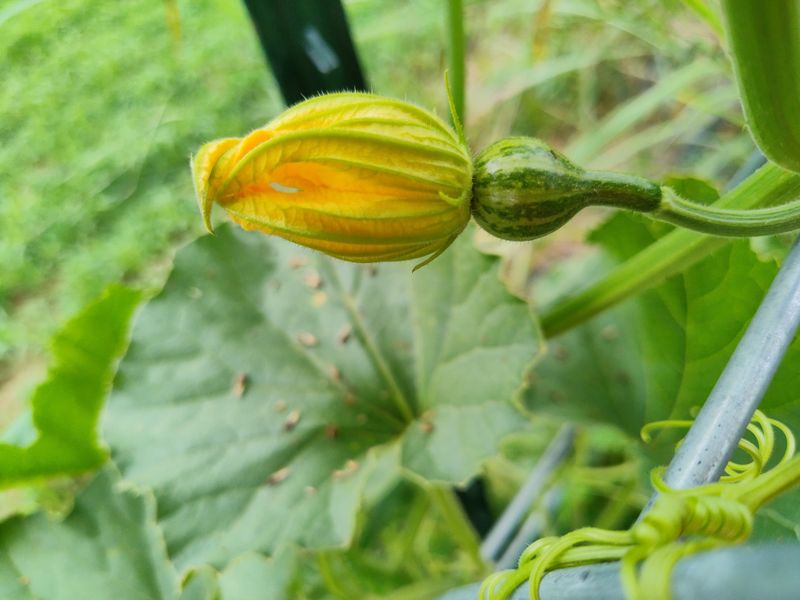
Squash flowers open with the sun and close well before noon, so the diagnostic window is genuinely short. Step outside by 7 or 8 a.m. on several consecutive mornings and look at every open bloom on the vine. University of Minnesota Extension’s squash guide offers a clear way to tell the two flower types apart: a male flower sits on a narrow, straight stem with nothing behind it, while a female flower has a small, rounded swelling between the base of the blossom and the vine. That swelling is the immature squash, and it is the only place fruit can come from.
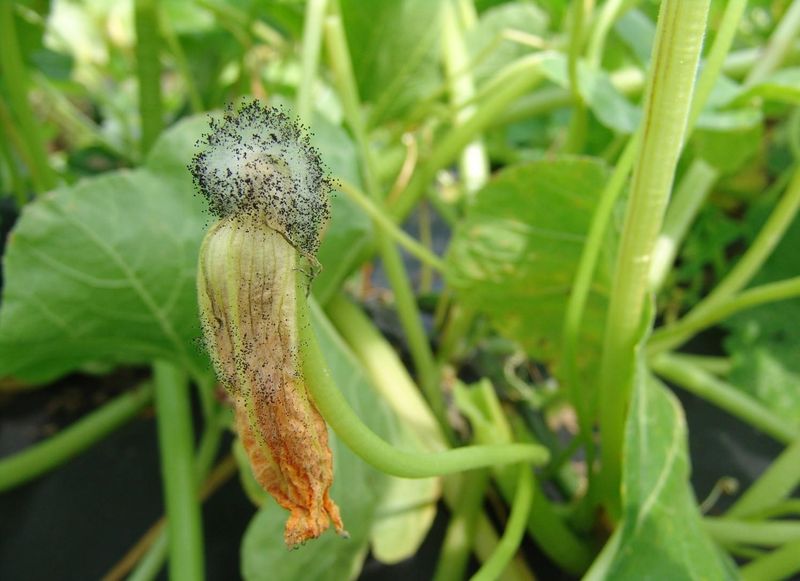
If nearly every open flower you find is sitting on a bare stem, the plant is currently offering very few opportunities for fruit set. That pattern over three or four mornings during a hot spell is meaningful evidence of heat-related flower imbalance. Female flowers that open, receive pollen, and then yellow, shrivel, or drop within a day or two often reflect inadequate pollination, which extension guidance on cucurbit fruit set links to heat, water stress, heavy rain, and low bee activity.
Those symptoms overlap with other problems, though, and the University of Minnesota’s squash diagnostic tool notes that deformed, rotting, or aborting fruit can also signal viruses, insect feeding, physical damage, or disease. While you are checking flowers, scan the leaves for mosaic patterns, unusual puckering or distortion, severe wilting that does not recover after sundown, stem injuries, or widespread decay. Any of those signs calls for a broader investigation beyond heat stress.
The morning inspection is genuinely simple and takes about five minutes. Run it four or five days in a row before drawing conclusions, because flower ratios can shift as temperatures rise and fall.
Use Hand-Pollination as a Morning Test
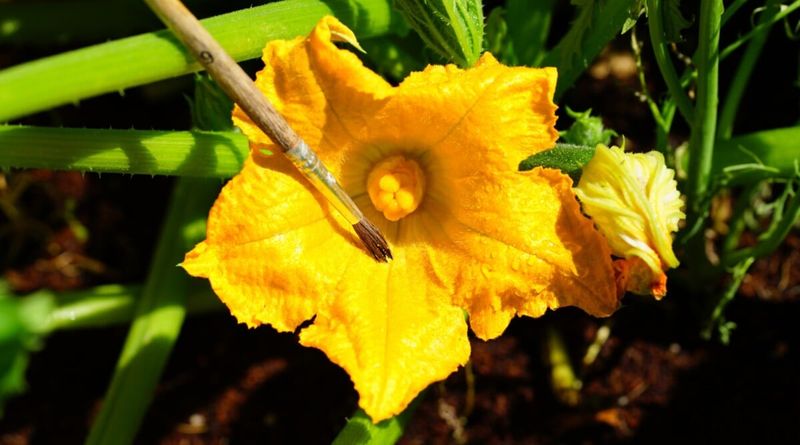
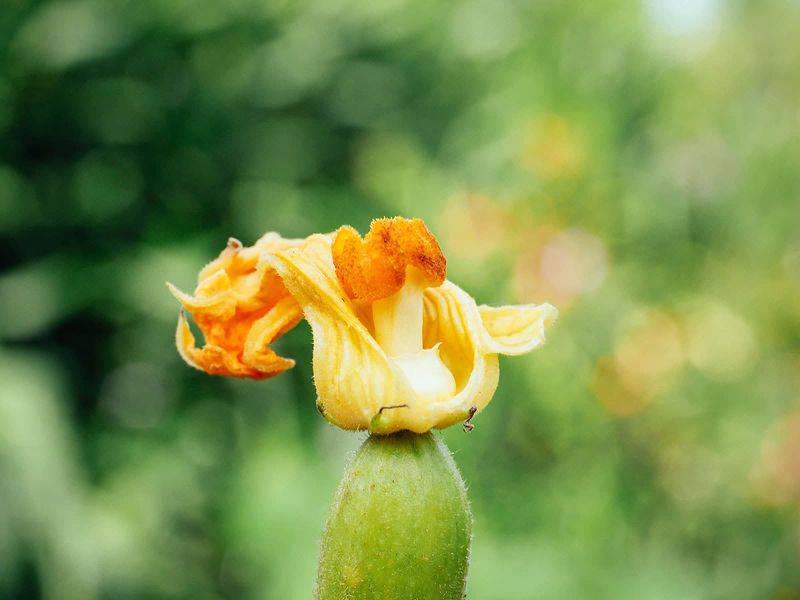
When female flowers are actually present but conditions are working against the bees, hand-pollination gives you a way to test whether pollination is the missing piece. Oregon State University Extension’s guide to growing great squash describes the technique clearly: pick a freshly opened male flower, peel back or remove its petals so the central anther is exposed, and gently brush that anther against the sticky center of a freshly opened female flower. One male flower can typically serve two or three females.
Timing is everything here. Squash flowers may close by midday, and pollen from older blooms loses its effectiveness as the flower ages. Get outside before 9 a.m. on days when you see both male and female flowers open at the same time. Hot, rainy, or overcast mornings when bees are scarce are exactly when the technique is most worth trying.
Over the next two or three days, watch the tiny ovary behind each hand-pollinated female flower. If pollination worked, that small swelling will begin to grow and darken. If it yellows and drops, either the pollen did not take, the plant is under enough stress to abort even successfully pollinated fruit, or something else is at work. Extension guidance on cucurbit fruit set is clear that hand-pollination cannot compensate for a plant producing almost no female flowers, and it does not rule out disease, virus, or persistent heat stress as underlying causes.
Frame this as one informative morning experiment, not a guaranteed rescue. If treated flowers consistently fail to develop even when the technique is done correctly and female flowers are available, broaden your diagnosis rather than repeating the same step.
Keep the Root Zone Evenly Moist
Water stress can quietly double the damage that heat is already doing. Both drought and saturated soil can cause flowers or young fruit to abort, even on days when female flowers are open and bees are working. University of Minnesota Extension’s cucurbit fruit-set guide identifies uneven moisture as a genuine contributor to flower and fruit failure in squash, separate from and compounding the effects of heat.
The challenge in North Carolina is that “steady moisture” means different things depending on where you garden. Piedmont red clay holds water longer than it releases it, so the surface can look dry while the root zone stays saturated for days after a storm. Sandy Coastal Plain soil drains fast and can go from wet to bone dry between watering sessions. Check soil moisture a few inches below the surface rather than judging by the top layer or following a fixed calendar.
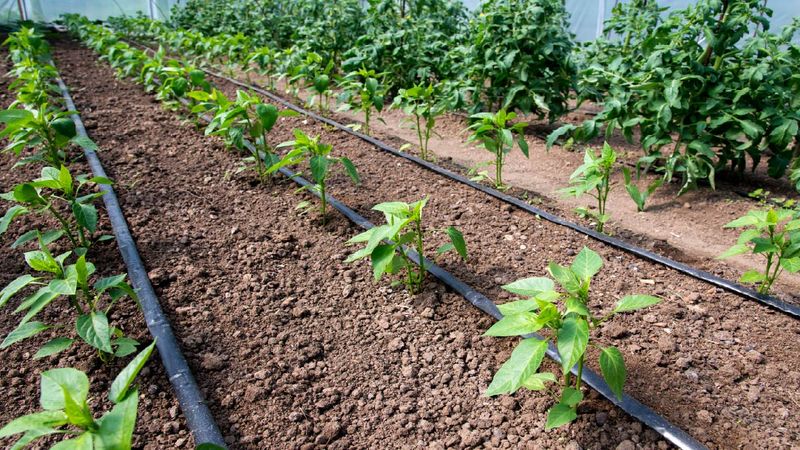
Drip irrigation or a soaker hose delivers water directly to the root zone without repeatedly soaking flowers and leaves, which can reduce the chance of fungal problems and keeps the soil surface from crusting. Mulch is a useful companion: NC State Extension’s guide to plastic mulches and drip irrigation notes that mulched plants can actually grow larger and therefore require more water, so mulch reduces evaporation but does not replace consistent irrigation. A 2-to-3-inch layer of straw or shredded leaves over bare soil is a practical starting point for most home gardens.
Consistent moisture will not overcome a severe heat-related flower imbalance on its own, but removing water stress from the equation gives the plant one less reason to abort the fruit it does attempt to set.
Protect the Bees That Reach Dawn Flowers
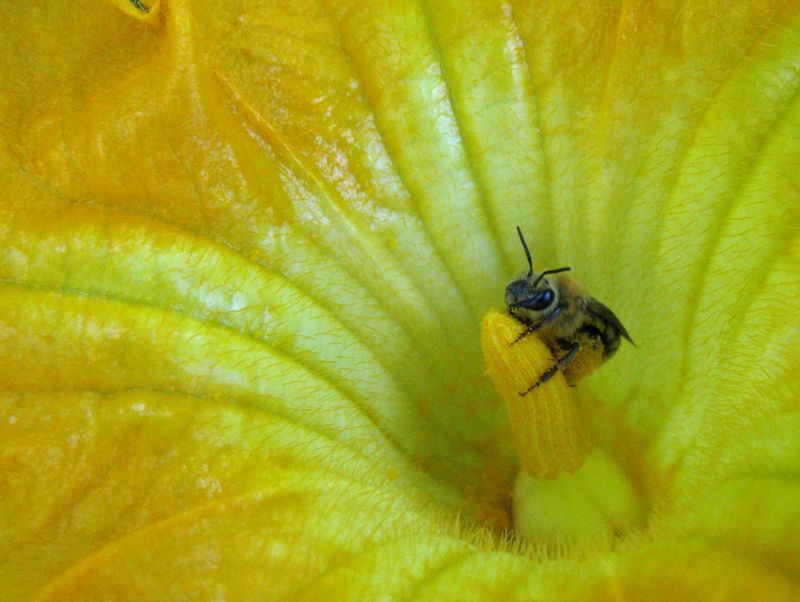
Most people picture honeybees when they think about squash pollination, but North Carolina has a native specialist that often does the heavy lifting. Squash bees (Peponapis pruinosa) are active from June through August, forage near dawn right when squash flowers are open, and nest directly in the soil around squash plants. NC State Extension’s guide to squash bees explains that these solitary bees can be present in large numbers without being obvious, since they are often done foraging before most gardeners step outside.
Two habits can accidentally eliminate your squash bee help. First, row covers protect young plants from insects, but leaving them in place once flowering begins creates a physical barrier that prevents any bee from reaching the blossoms. Remove covers as soon as you see the first flowers opening. Second, casual insecticide use on or near flowering squash can harm squash bees through direct contact, residues on petals, soil exposure near nesting sites, or systemic movement into pollen.
Extension guidance on growing summer squash recommends avoiding sprays on open flowers or during times when bees are active.
If a pest problem genuinely requires treatment, identify the pest before reaching for any product. Use only a product with a label that specifically covers both the crop and the pest, follow the label completely, and avoid spraying open flowers or active bees. EPA guidance on neonicotinoid labeling and EPA pollinator protection tools both support evening application when pollinators are less active, but the product label controls that decision.
Undisturbed soil near the squash bed, free of heavy foot traffic and tillage, gives squash bees a place to nest season after season. That is genuinely one of the lower-effort investments a North Carolina gardener can make for summer fruit set.
Avoid Quick Fixes That Can Backfire
Some of the most common squash remedies that circulate online can actually make things worse, and a few are based on assumptions the evidence does not support. Start with sunlight: squash needs substantial direct sun to flower and fruit, and NC State Extension site-selection guidance places fruiting vegetables like squash among crops that generally need around 8 hours of sunlight daily. Temporary afternoon shade for a severely heat-stressed plant in a Sandhills garden may offer some relief, but deep or persistent shade reduces the light the plant needs to set fruit in the first place. Those are two very different situations.
Fertilizer is another area where gardeners sometimes guess wrong. A plant already producing abundant leaves and vines is not obviously short on nitrogen, and University of Minnesota Extension’s squash guide does not support potassium or heavy nitrogen as a rescue for heat-related flower failure. Adding nutrients without a soil test can feed the foliage further while doing nothing for fruit set. NC State Extension offers low-cost soil testing through county cooperative extension offices, and that result is a much safer starting point than guessing.
Planting more squash is often suggested as a way to improve flower overlap between male and female blossoms, and it can genuinely help when the problem is timing. Extension guidance on cucurbit fruit set notes, though, that more plants will not reliably overcome persistent heat, poor bee activity, water problems, or disease.
When symptoms go beyond a male-heavy bloom pattern, check the University of Minnesota squash diagnostic tool and consider contacting your county extension office. The most reliable path forward is a short checklist run over several mornings: inspect flowers early, hand-pollinate any available female blossoms, stabilize root-zone moisture, protect your pollinators, and widen the investigation if you see mosaic leaves, wilting that does not recover, stem injury, or spreading decay. A squash plant that actually wants to feed you is doing its best, and most of the time, a few targeted adjustments are all it needs to get there.