What It Really Means When Robins Keep Visiting Your Texas Yard This Summer
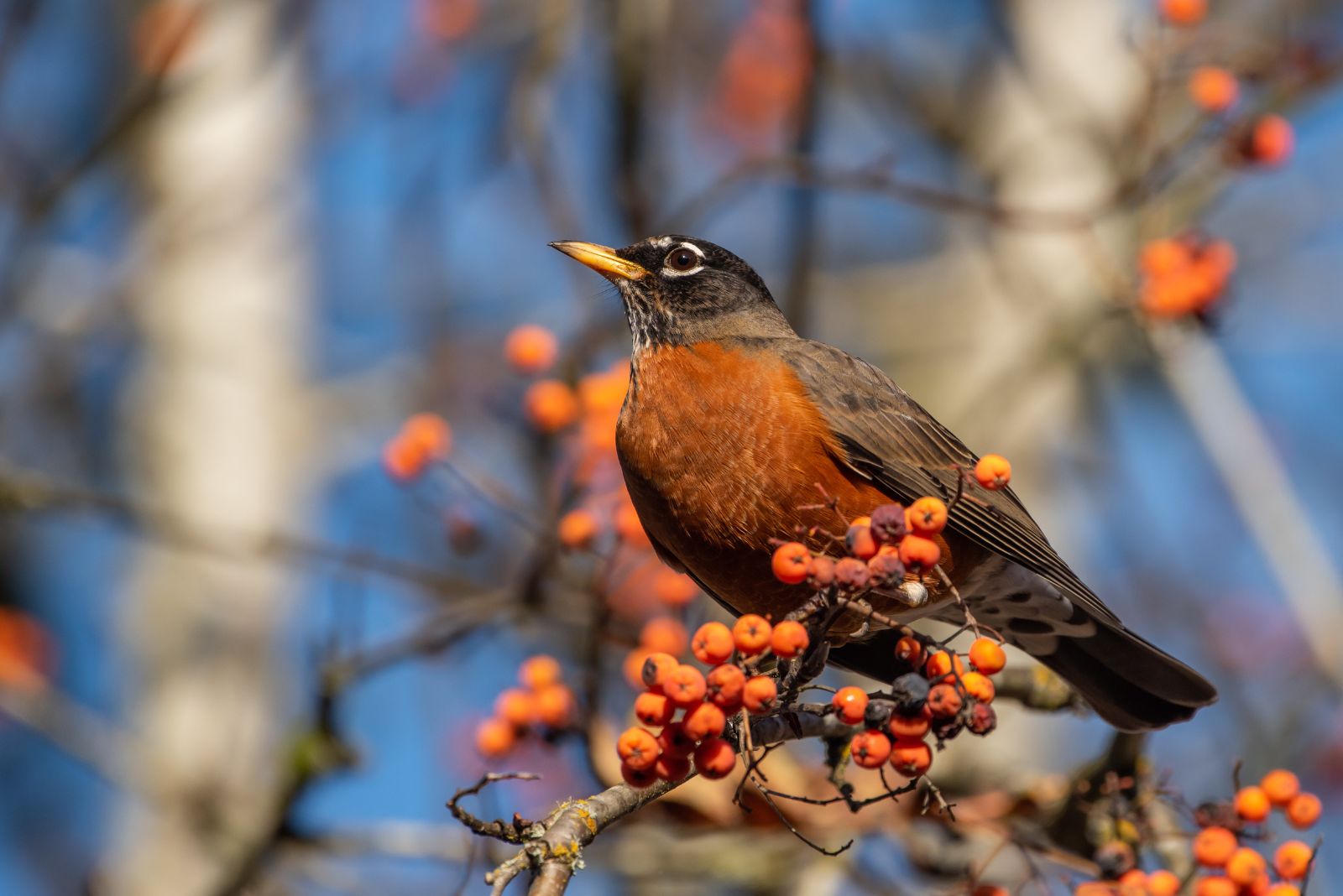
Robins are familiar enough birds that most people see them and move on without much thought.
But if robins have been showing up in your Texas yard repeatedly this summer, especially in numbers or in patterns that feel more deliberate than a casual passing visit, there’s more to pay attention to than most people realize.
Robins visiting a Texas yard in summer are responding to something specific. These are highly intelligent foragers that move through an area with purpose, and the yards they keep returning to are offering something that meets their needs consistently.
What that is tells you something real about your soil health, your lawn conditions, and the broader ecosystem activity happening just below the surface of your property.
For a lot of Texas homeowners, the robin is also a bird with personal meaning. They show up in moments that feel significant, and across many cultural traditions they carry symbolic weight that goes well beyond their role as an everyday garden visitor.
Here’s what robins repeatedly visiting your Texas yard this summer are really telling you.
1. They May Be Part Of Texas’s Local Breeding Population
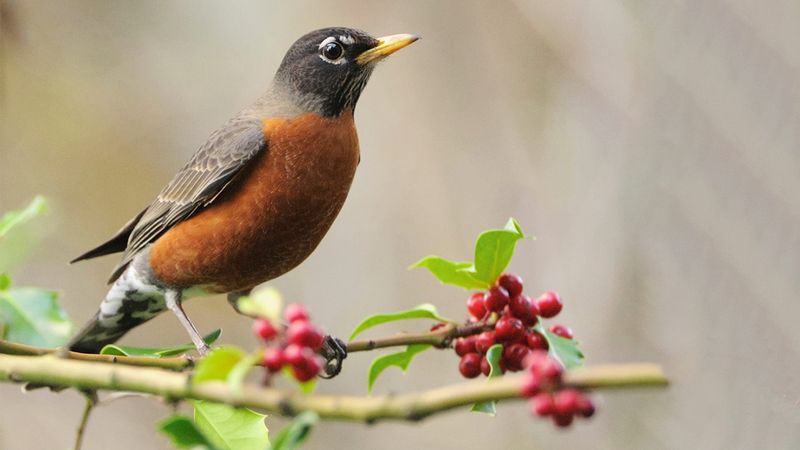
Not every robin you see in summer is a lost or confused bird. American Robins actually live in Texas year-round, and many of them breed right here in the Lone Star State.
While large flocks of northern migrants pour into Texas from November through March, a smaller but steady population sticks around to nest and raise young during the warmer months.
Summer-breeding robins are most common in the northern half of Texas. You are more likely to spot nesting pairs in areas like the Pineywoods, Post Oak Savannah, Blackland Prairies, and the Panhandle.
These regions offer the mix of trees, open ground, and water sources that robins need to set up a successful home.
So if you live in one of those areas and robins keep showing up in your yard, there is a good chance they are local residents. They are not just passing through.
They have chosen your neighborhood as their home base for the season. That is actually a pretty cool thing to think about.
Your yard may be sitting right in the heart of prime robin territory, and these birds have decided it is worth sticking around for.
Knowing that Texas has a resident robin population changes how you might think about summer sightings.
Instead of wondering if something unusual is happening, you can feel good knowing your yard fits right into the natural landscape these birds depend on all year long.
2. A Nest Or Recently Fledged Young May Be Nearby
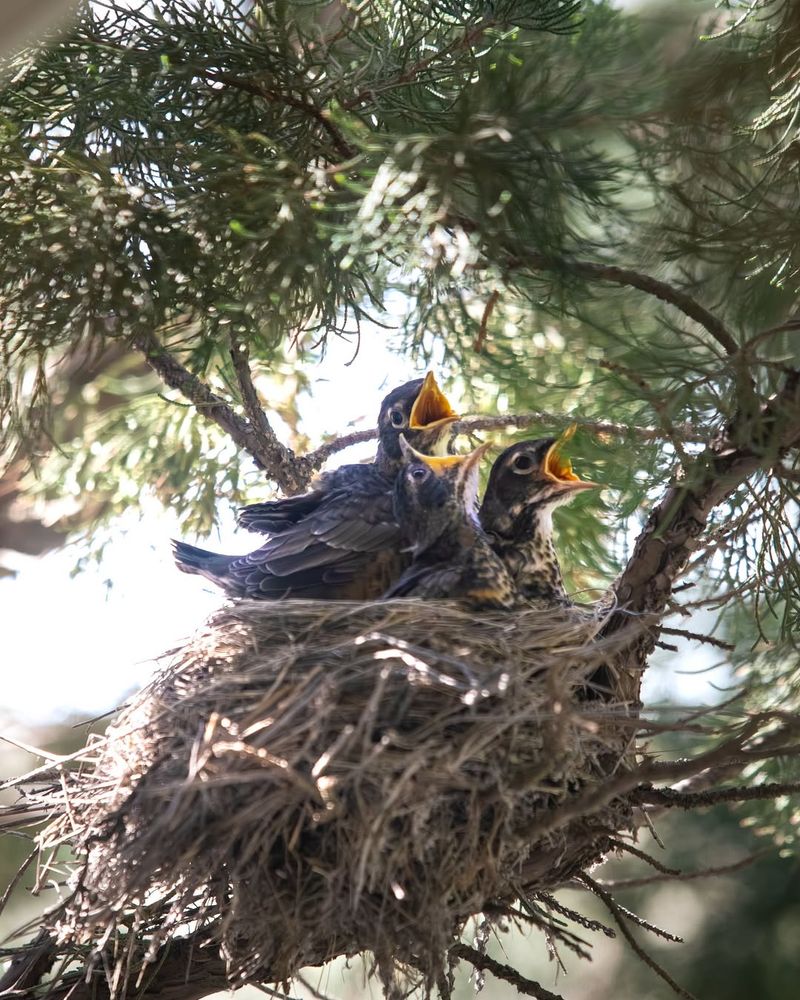
Watching a robin make trip after trip across your yard is one of the most entertaining things you can see on a summer morning.
If you notice an adult robin repeatedly picking up worms or insects and flying off in the same direction, there is a strong chance it is feeding babies nearby.
Texas robins can breed from early March all the way into August, which means nesting activity can stretch across a long stretch of the summer season.
Your Texas Garden Changes Every Week. Your Plan Should Too.
Gardening in Texas changes quickly throughout the season. Every Friday you’ll receive a simple weekly plan showing exactly what to plant, prune, fertilize, harvest, and protect so you never miss the right timing.
Nestlings stay in the nest for about two weeks after hatching. Once they leave, called fledging, they still cannot fly very well and depend heavily on their parents for food.
These young birds, called fledglings, often spend several weeks hiding in low shrubs or on the ground while mom and dad keep bringing meals.
If you spot a fluffy, spotted young robin that looks a little awkward, that is likely a fledgling doing its best to figure out the world.
Many people worry when they see a young robin on the ground, thinking something is wrong. Most of the time, the parents are close by and watching carefully. The best thing you can do is keep pets indoors and give the bird some space.
Your yard may be serving as a nursery for a new generation of robins without you even realizing it.
Watching the whole process unfold, from nest building to fledgling adventures, is one of the most rewarding experiences a backyard wildlife watcher can have during a Texas summer.
3. Your Lawn Is Providing Accessible Insects And Earthworms
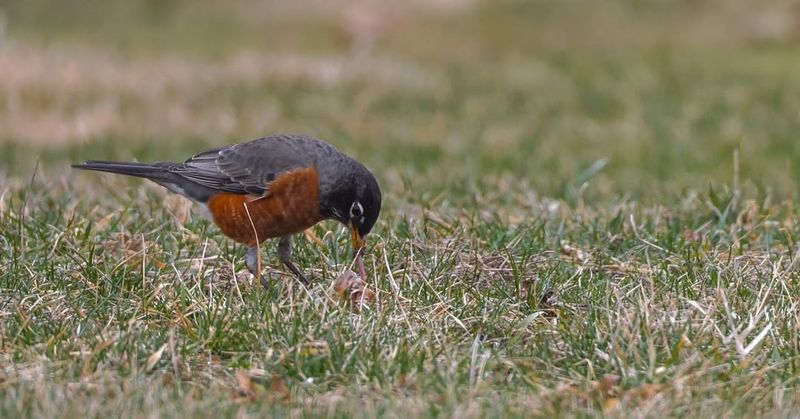
Robins are expert hunters, and your lawn might be their favorite hunting ground. These birds forage by running across open grass in short bursts, then stopping suddenly and tilting their head to one side.
Many people think they are listening for worms underground, but scientists believe they are actually using their eyes to spot movement in the soil. Either way, they are remarkably good at it.
During spring and summer, robins consume large numbers of earthworms, beetles, caterpillars, grasshoppers, spiders, snails, and other small invertebrates. A well-maintained lawn with moist soil is basically an all-you-can-eat buffet for a hungry robin.
If you water your yard regularly or if summer rains have kept the ground soft, earthworms tend to stay closer to the surface, making them much easier for robins to grab.
Lawns that are kept free of heavy pesticide use tend to attract more robins because the bug population stays healthy. If you want to keep robins coming back, consider reducing or eliminating chemical treatments on your grass.
Organic lawn care practices not only benefit birds but also improve soil health over time. There is something almost meditative about watching a robin work a lawn. The quick run, the sharp stop, the confident tug on a worm.
It looks effortless, but it takes real skill and sharp senses. Every time a robin visits your yard, it is putting on a small but impressive show of natural hunting ability that most people walk right past without noticing.
4. Ripening Fruit May Be Drawing Them Back
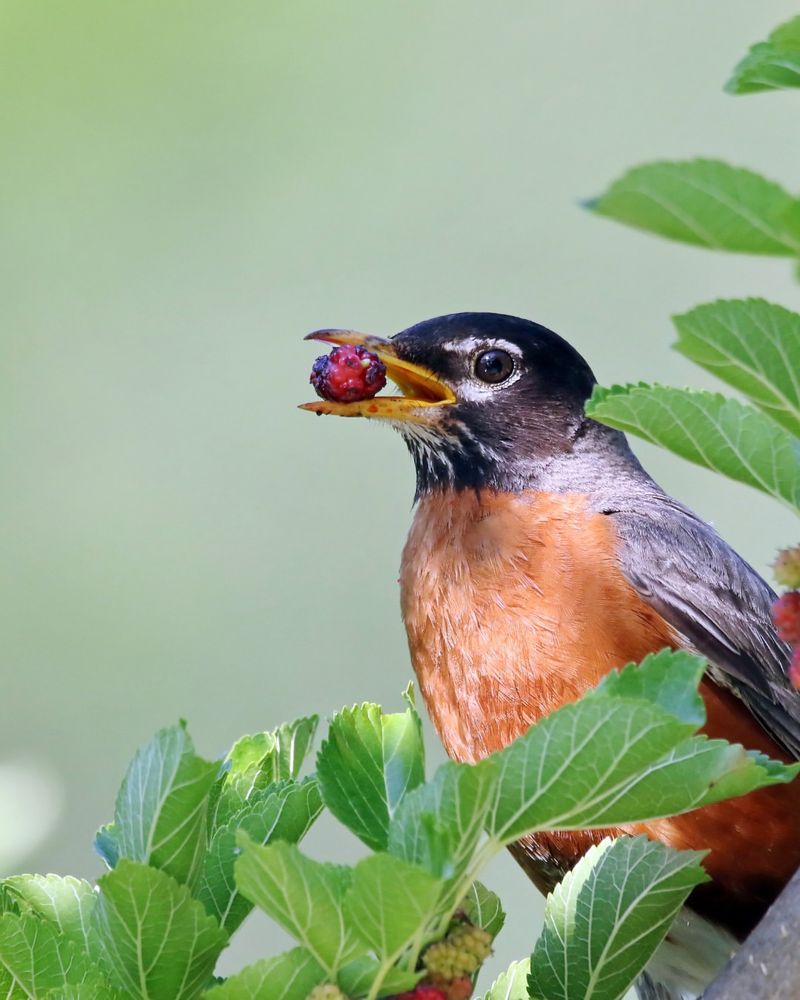
Worms get most of the credit when people think about what robins eat, but fruit is just as important to these birds. Robins love berries and soft fruits, and they will return to the same yard again and again if a reliable food source is available.
During summer in Texas, many native plants are producing ripe fruit, and robins know exactly where to find it.
Plants like dogwoods, sumacs, eastern red cedars, and yaupon hollies are among the favorites. When a shrub or small tree is loaded with ripe berries, it can attract robins and a whole crowd of other birds in a short amount of time.
If you have any of these plants in your yard, that could easily explain why robins keep stopping by. They have essentially bookmarked your property as a great place to grab a meal.
Adding native fruiting plants to your landscape is one of the best things you can do to support local birds. Not only do these plants provide food during the breeding season, but they also offer shelter and nesting spots.
Many native plants are also drought-tolerant, which makes them practical choices for Texas gardens that deal with long stretches of hot, dry weather.
Watching robins perch in a berry-laden shrub and pick fruit one at a time is a genuine treat. They are not shy about it either.
Once they find a good food source, they tend to stick around and eat their fill before moving on. Your fruiting plants might just be the reason your yard has become a regular stop on their daily route.
5. Your Yard May Offer Relief From Extreme Summer Heat
Texas summers are no joke. When temperatures climb into the upper 90s or beyond, every living creature is looking for a way to stay cool.
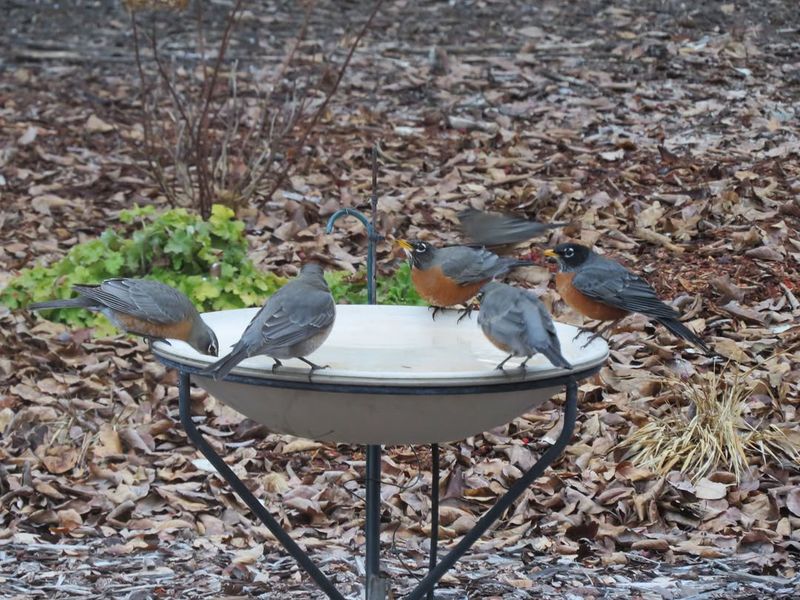
Robins are no different. If your yard has mature trees, dense shrubs, irrigated soil, or a clean birdbath, it may be offering something robins genuinely need during the hottest parts of the day: shade and water.
Birds lose water quickly in extreme heat, and staying hydrated is critical for their survival. A birdbath gives robins a place to drink and bathe, which helps them regulate their body temperature.
Robins tend to splash enthusiastically when they bathe, so if you have a birdbath, you may have already noticed how much they enjoy it. Keeping the water fresh and clean is important because stale water can harbor bacteria that harm birds.
Shaded areas under large trees or near thick shrubs also provide a cool resting spot during peak afternoon heat. Robins may not always be actively foraging when you see them in your yard.
Sometimes they are simply resting in the shade and waiting for the day to cool down a bit before moving on.
If you want to make your yard more attractive to robins and other birds during summer, consider placing a birdbath in a shaded spot and refilling it every day or two. Adding a small dripper or mister can make the water even more appealing.
Small changes like these can turn your yard into a genuine refuge for local wildlife when the Texas heat is at its most intense and unforgiving.
6. A Group May Be A Family Or An Early Post-Breeding Gathering
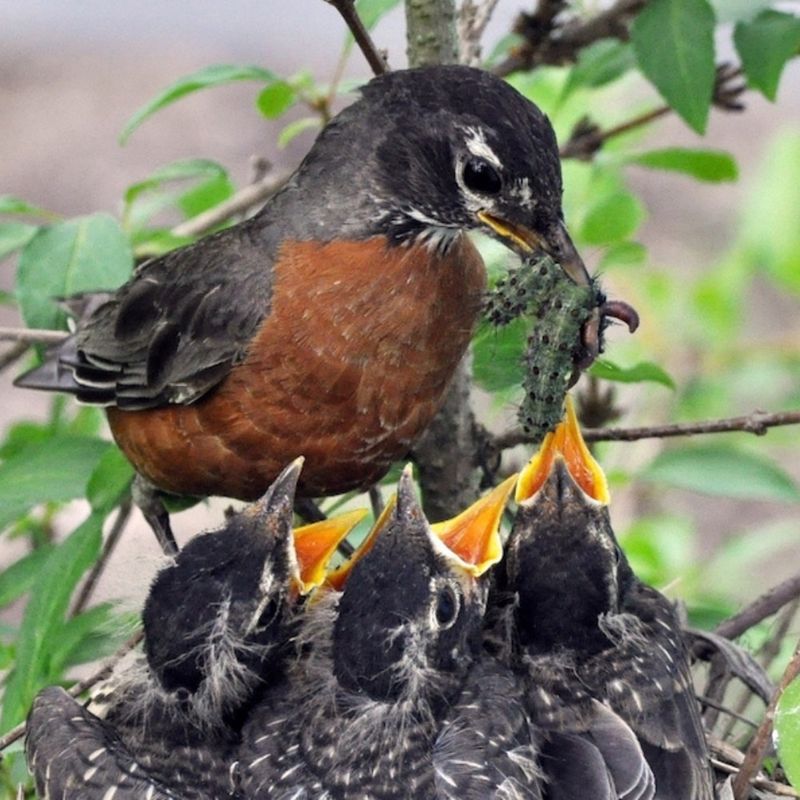
Seeing more than one robin at a time might make you think migration is already starting, but there is usually a simpler explanation during late summer. As nesting winds down in July and August, robins become much less territorial.
During the breeding season, males work hard to defend their patch of ground. Once the last chicks have fledged, that drive fades, and robins start tolerating each other again.
Small groups of robins feeding together in late summer are often family units. Parents and their most recent batch of fledglings may move around together as the young birds learn to find food on their own.
You might notice that some birds in the group look spotted on the chest, which is the telltale look of a juvenile robin. Adults have the classic solid orange-red breast, while young birds have a more speckled pattern that fades as they mature.
These post-breeding gatherings are a natural part of the robin life cycle. They are not a sign that winter is coming early or that something unusual is happening in your neighborhood.
It is simply robins doing what robins do when the pressure of raising babies has eased up for the season.
Watching a mixed group of adult and juvenile robins work through a yard together is a fun way to see how quickly young birds develop. Within a few weeks, those spotted youngsters will look nearly identical to their parents.
If you have a yard that offers food, water, and shelter, you may get to watch that whole transformation play out right outside your window this summer.