The California Pool Plants That Never Attract Bees Or Wasps
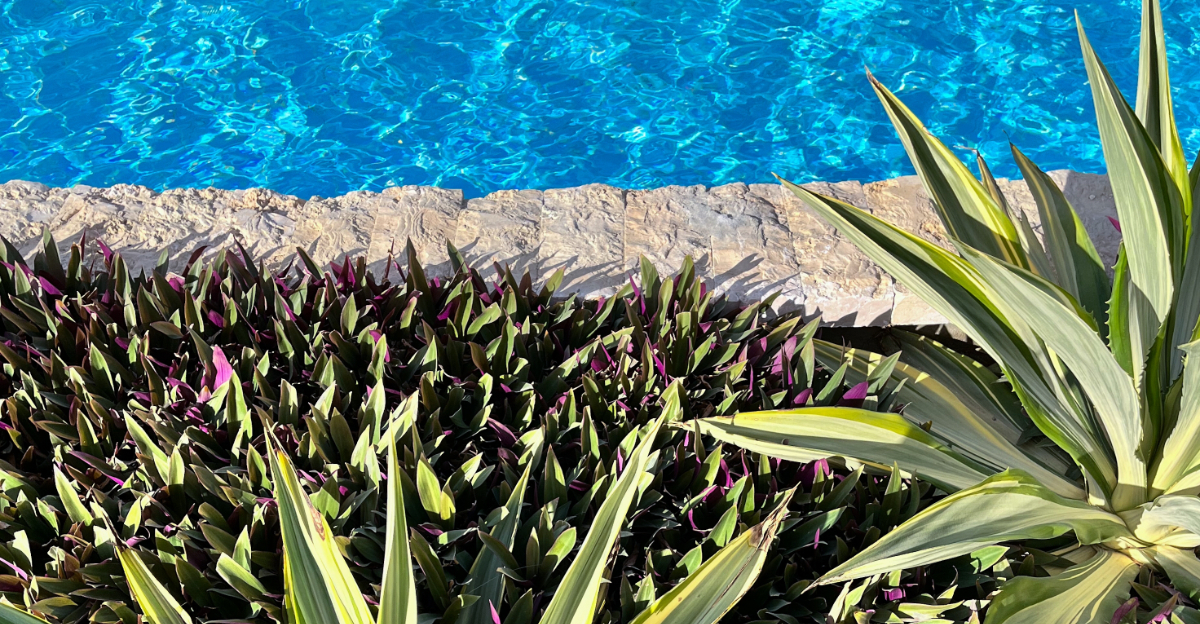
A poolside garden should feel calm, not like the busiest table at an insect café. The wrong flowers can bring far more winged traffic than anyone wants near bare feet or cold drinks.
That does not mean the area has to rely on plain concrete and plastic décor. Some plants offer color without the features that usually pull bees or wasps toward a patio.
Pool conditions create their own challenge, too. Strong sun can test delicate foliage.
Splashing water may leave salt or chemicals on nearby leaves. The plant choices need to suit the space without turning every swim into a cautious wildlife encounter.
No garden can guarantee zero insect visits, since bees and wasps may pass through for many reasons. Still, smart selections can reduce the attraction around the water.
A few thoughtful choices can keep the pool area lush, relaxed, and much less interesting to anything with a stinger.
1. Foliage Plants Are The Safer Pool Choice
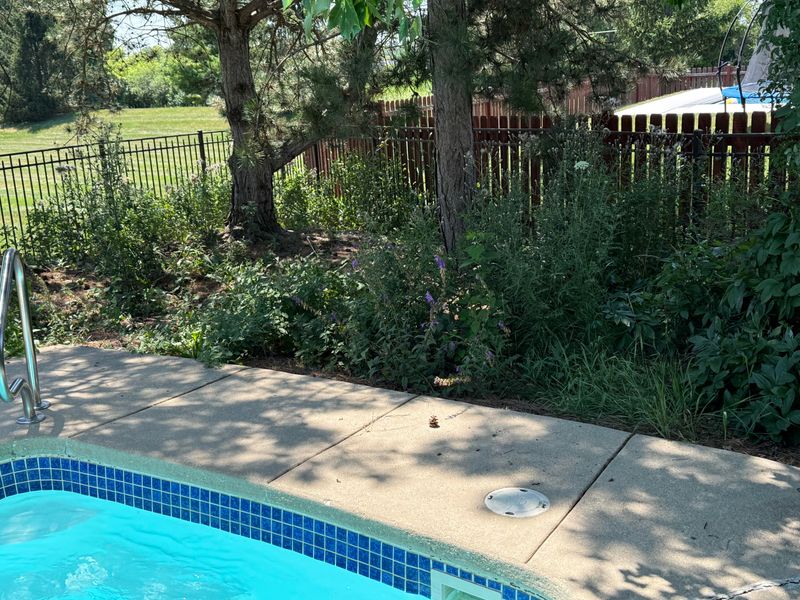
Not every beautiful backyard needs flowers to look stunning. Around a pool, foliage plants are often the smarter and safer choice.
They bring color, texture, and structure without producing the nectar that draws bees and wasps in the first place.
Most stinging insects are attracted to blooms. Remove the blooms, and you remove the invitation.
Foliage plants like caladiums, elephant ears, and cast iron plants offer rich visual interest without a single flower in sight. They work beautifully in California’s warmer climate zones.
Another big advantage is that foliage plants tend to be low-maintenance. You do not need to deadhead spent blooms or worry about pollen falling into the water.
That means less pool cleaning and fewer chemicals needed to keep things balanced.
For poolside use, choose plants with wide, bold leaves to create a lush, tropical feel. Or go with fine-textured foliage for a sleeker, more modern look.
Either way, you get privacy, shade, and beauty without the buzzing.
Some foliage plants may need a little extra water during dry spells. Southern areas often have an easier time keeping these plants thriving year-round.
No matter where you live, the right foliage plant can transform your pool area into a peaceful retreat that stinging insects simply have no reason to visit.
2. Agave Adds Structure Without Showy Blooms
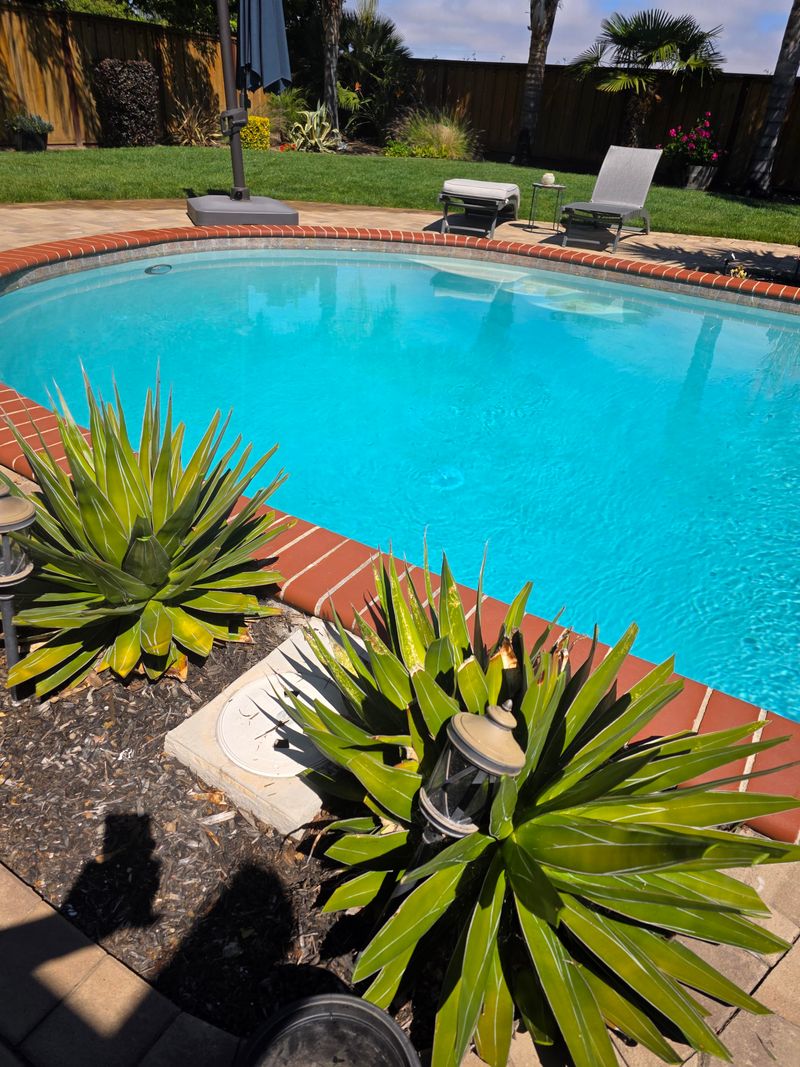
Few plants command attention the way agave does. Its bold, architectural rosette shape makes a serious statement near any pool, and it does it without producing the kind of showy, nectar-rich blooms that attract stinging insects during peak swimming season.
Agave is a native of dry, arid regions and feels right at home in California’s desert and coastal climates. It stores water in its thick leaves, which means it needs very little irrigation once established.
That makes it one of the most water-smart choices for a California poolside garden.
One thing to keep in mind is that agave does produce a tall flower spike late in its life cycle. However, this happens rarely, often only once every ten to thirty years.
Your California Garden Changes Every Week. Your Plan Should Too.
Gardening in California changes quickly throughout the season. Every Friday you’ll receive a simple weekly plan showing exactly what to plant, prune, fertilize, harvest, and protect so you never miss the right timing.
Most homeowners never see it bloom at all, making it a reliable low-flower option for the long term.
Agave comes in many sizes. Smaller varieties like Agave parryi work well in tight spaces near pool edges.
Larger types like Agave americana make a bold focal point at the end of a pool deck. Both bring that clean, sculptural look that works especially well with modern or desert-style landscaping.
Just be sure to plant agave away from high-traffic areas. Its leaf tips are sharp and pointed.
A little smart placement goes a long way toward keeping everyone safe and comfortable around the pool.
3. Aloe Keeps The Pool Edge Clean
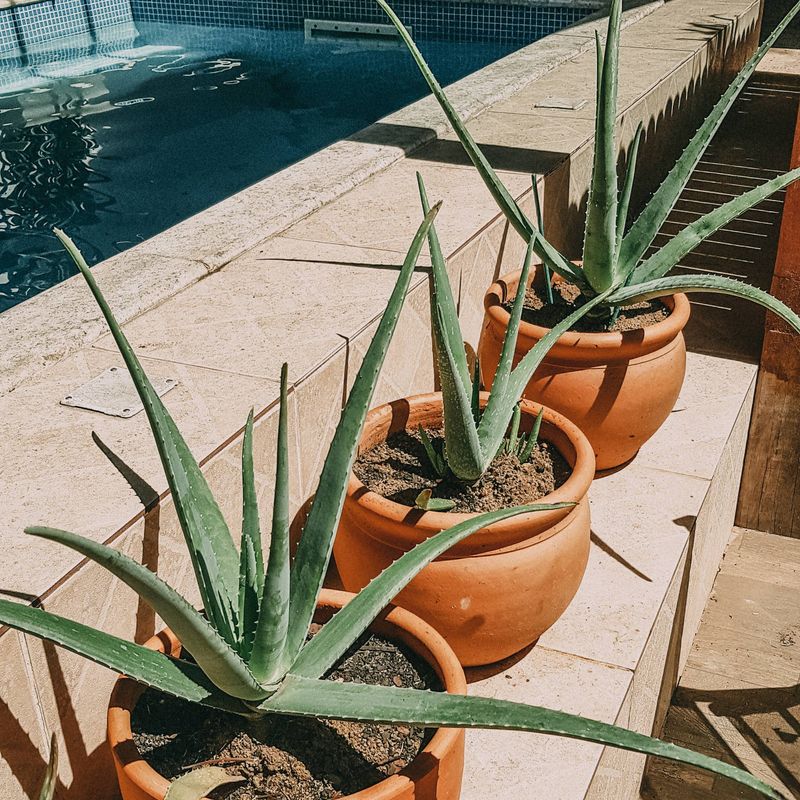
Aloe is one of those plants that earns its place in any garden without much effort. Around the pool, it brings a clean, organized look that pairs well with concrete, tile, and natural stone.
Its thick, upright leaves stay tidy and never drop much debris into the water.
Most aloe species do produce flowers, but they bloom seasonally and the flowers tend to be tubular and orange or red. These bloom shapes are actually less attractive to bees than flat, open flowers.
That makes aloe a much safer poolside choice compared to many other flowering plants.
In California, aloe thrives in both coastal and inland climates. It handles heat well and does not need much water once the roots are settled in.
For busy families who want a low-effort yard, aloe is a smart pick that delivers year-round without constant attention.
One fun detail: aloe gel has real first-aid value. If anyone gets a minor scrape or sunburn by the pool, a fresh aloe leaf can provide quick, natural relief.
Having it nearby is both practical and pretty.
When planting aloe near the pool, give each plant enough space to spread its leaves naturally. Overcrowding causes the outer leaves to break and look messy.
With just a little room to grow, aloe stays neat, attractive, and completely stress-free for the whole swim season.
4. Foxtail Fern Brings Soft Texture Without Fuss
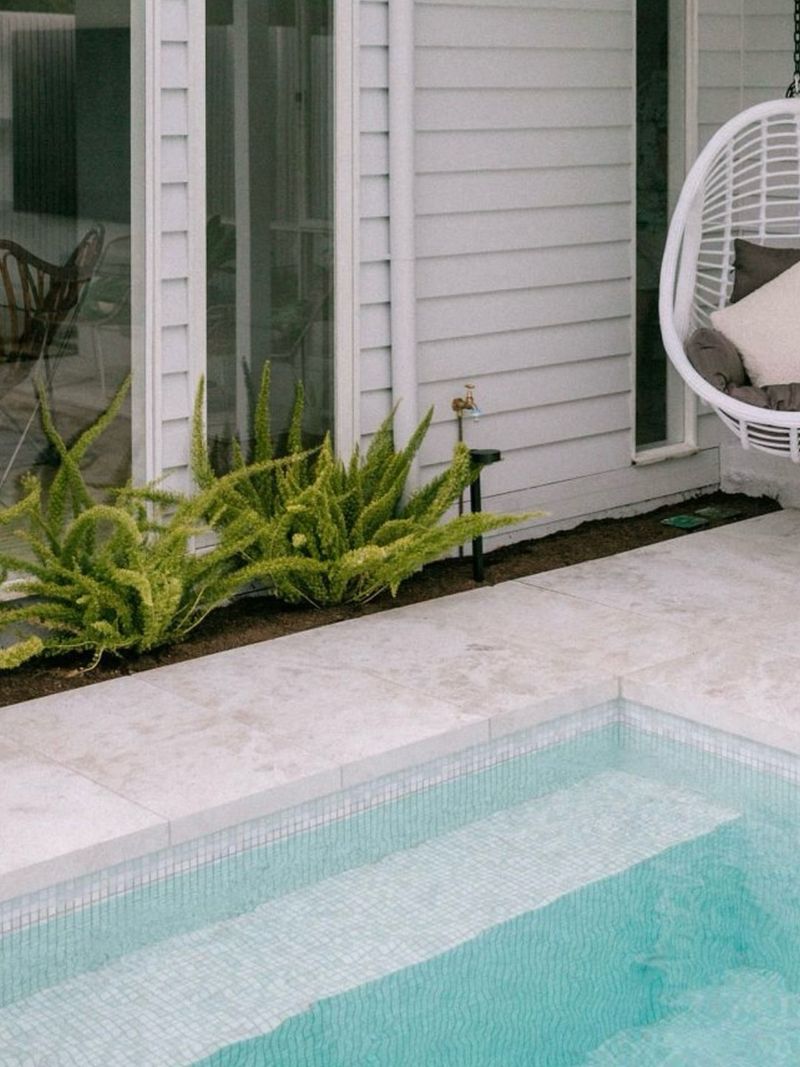
Soft, fluffy, and surprisingly tough, the foxtail fern is one of the most underrated poolside plants available in California. Its arching, plume-like stems create a gentle, airy texture that softens hard pool edges and concrete decking without making a mess.
Despite its delicate appearance, foxtail fern handles heat, drought, and partial shade with ease. It is not a true fern, which means it does not need the consistently moist soil that most ferns require.
That makes it far more adaptable to the warm, dry conditions common in southern parts of California.
One of the best things about foxtail fern near a pool is how clean it stays. The needle-like leaves are small and rarely blow into the water in large amounts.
Compared to broad-leaf plants or anything that drops petals, foxtail fern is a much tidier neighbor for your pool filter.
It does produce small white flowers and red berries occasionally, but these are tiny and not particularly attractive to bees or wasps. The plant is primarily grown for its lush, green foliage, and that is exactly what it delivers season after season.
Foxtail fern works great in containers too. Placing a few pots of it near lounge chairs or along a pool fence creates a layered, resort-style look that feels both relaxed and polished.
It is a simple upgrade that makes a real visual difference.
5. Dwarf Palms Give Shade Without Flower Drama
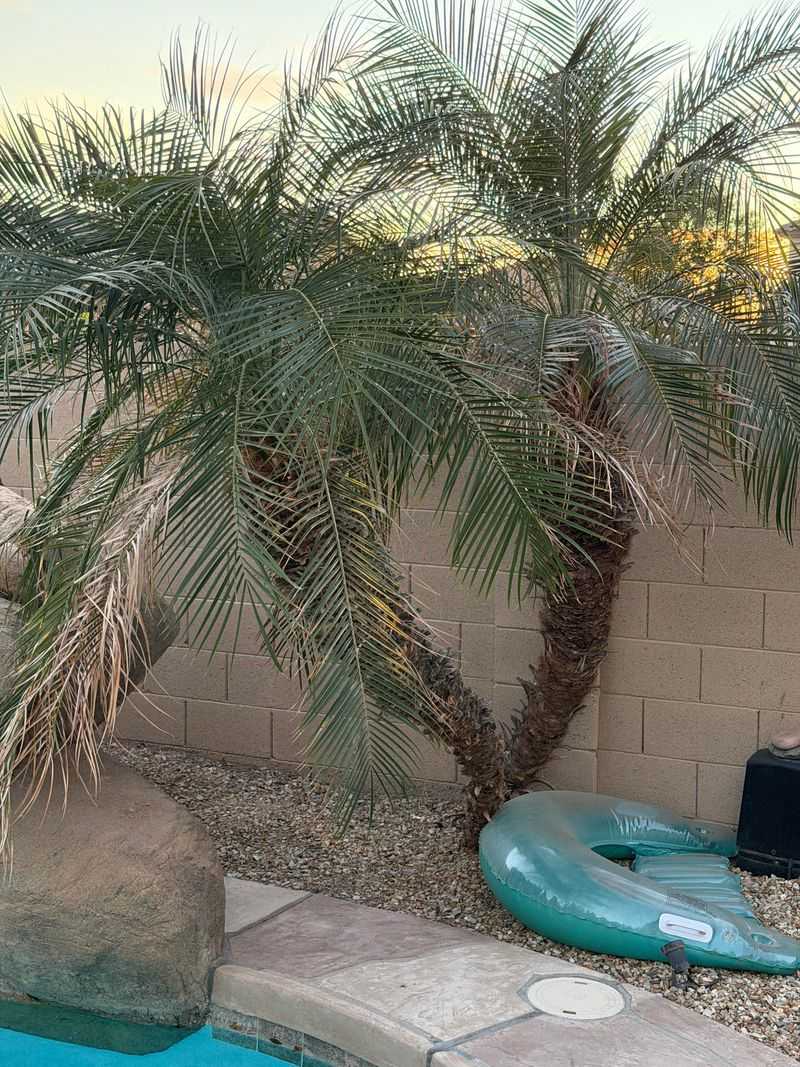
Palms and pools go together like sunshine and summer. Dwarf palms in particular are a fantastic poolside choice because they bring that tropical, vacation-style vibe without growing so large that they become a maintenance headache.
Their compact size keeps things manageable and neat. Most dwarf palm varieties, like the Mediterranean fan palm or the pygmy date palm, produce very small, inconspicuous flowers.
These flowers do not have the nectar-heavy profile that bees and wasps look for. As a result, you can enjoy the lush tropical look without worrying about stinging insects crashing your swim day.
In the warmer regions of California, dwarf palms are incredibly easy to maintain. They are drought-tolerant once established and can handle reflected heat from pool decking and walls.
That resilience makes them a go-to choice for low-water landscaping near hardscape areas.
One practical benefit of dwarf palms is the shade they provide. A well-placed palm can block harsh afternoon sun from hitting the pool deck directly.
That keeps the surface cooler underfoot and makes lounging outside far more comfortable during peak heat hours.
When planting near a pool, choose varieties that do not drop large fronds too frequently. Cleaner palm types mean less debris in the water and less time skimming.
A little research before you buy goes a long way toward keeping your pool looking pristine all season long.
6. Flax Lily Handles Heat Near Hardscape
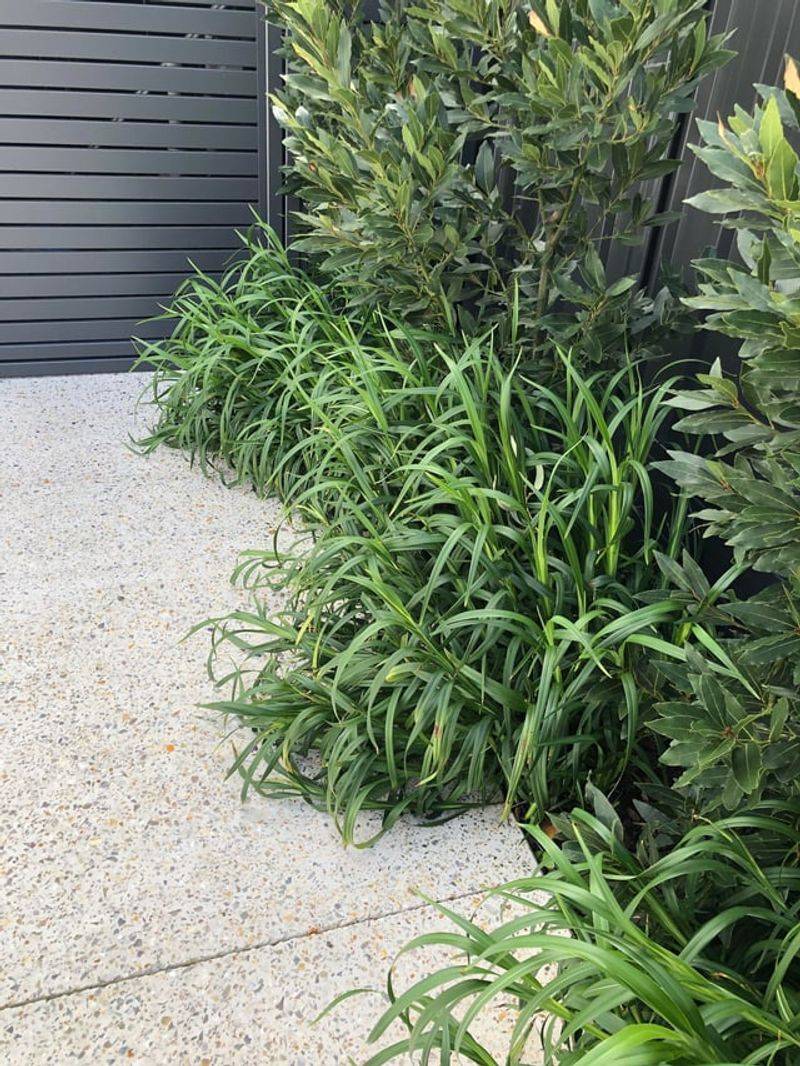
There is something effortlessly stylish about flax lily. Its long, strap-like leaves fan out in graceful arches that look great against pool decking, stone walls, and concrete borders.
It has a clean, modern look that fits right into contemporary outdoor design.
Flax lily, also known as Dianella, is a tough little plant that handles reflected heat from hardscape surfaces remarkably well.
Pool decks can get extremely hot in the summer, and many plants wilt or struggle near all that hard surface. Flax lily shrugs it off and keeps looking sharp.
While it does produce small blue or purple flowers on thin stems, these blooms are minimal and not the type that draws heavy bee or wasp traffic. The plant is primarily foliage-driven, which keeps it firmly in the safe zone for poolside planting throughout the warm season.
In the central and southern parts of our state, flax lily performs exceptionally well with minimal watering. Once established, it can go long stretches without irrigation.
That kind of reliability is exactly what busy homeowners need when managing a yard alongside a pool.
Flax lily also works well as a border plant. Lining a pool fence or pathway with it creates a tidy, finished look that requires almost no upkeep.
Trim back the leaves occasionally to keep things looking fresh, and this plant will reward you with years of low-stress beauty right by the water.
7. Horsetail Reed Gives A Modern Pool Look
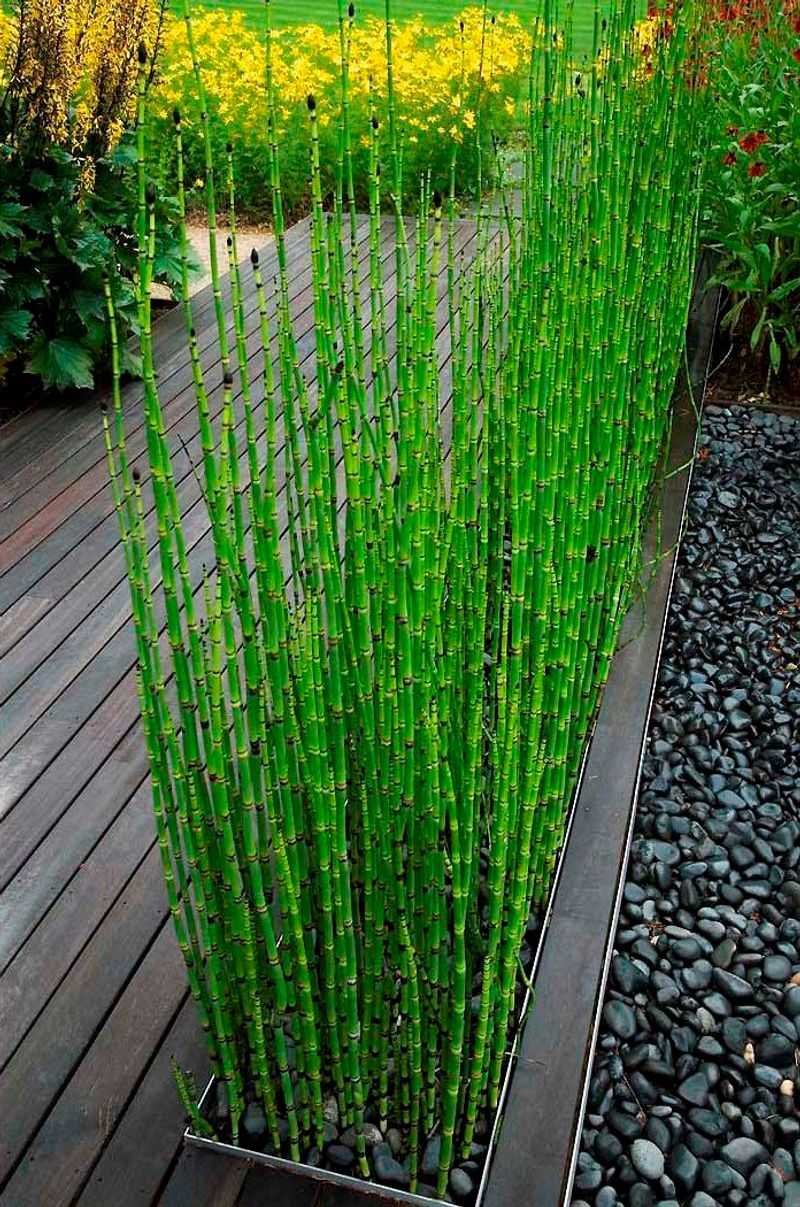
Clean lines and a striking vertical profile make horsetail reed one of the most popular choices for modern pool designs across California.
Its hollow, jointed stalks shoot straight up like natural columns, giving any poolside area a sleek, architectural quality that is hard to match.
Horsetail reed, known botanically as Equisetum hyemale, is an ancient plant. It has been around since before the dinosaurs, which is a genuinely wild fact to think about while lounging poolside.
It produces no real flowers at all, which means zero nectar and zero reason for bees or wasps to visit.
Because it grows in dense, upright clumps, horsetail reed also doubles as a natural privacy screen.
Planted along a pool fence or in a raised planter, it blocks sightlines from neighbors without making the space feel closed off or heavy.
The result is both functional and visually interesting.
One thing to watch with horsetail reed is its spreading habit. It can be aggressive in open ground.
Planting it in containers or surrounded by solid borders keeps it from taking over nearby areas. Many designers actually prefer it in pots for this exact reason.
In the wetter, northern parts, horsetail reed practically grows itself. In drier inland regions, it needs consistent moisture to stay lush and upright.
Near a pool, where splashing and humidity are naturally higher, it often finds exactly the conditions it loves most.
8. Ornamental Grasses Move Without Attracting Swarms
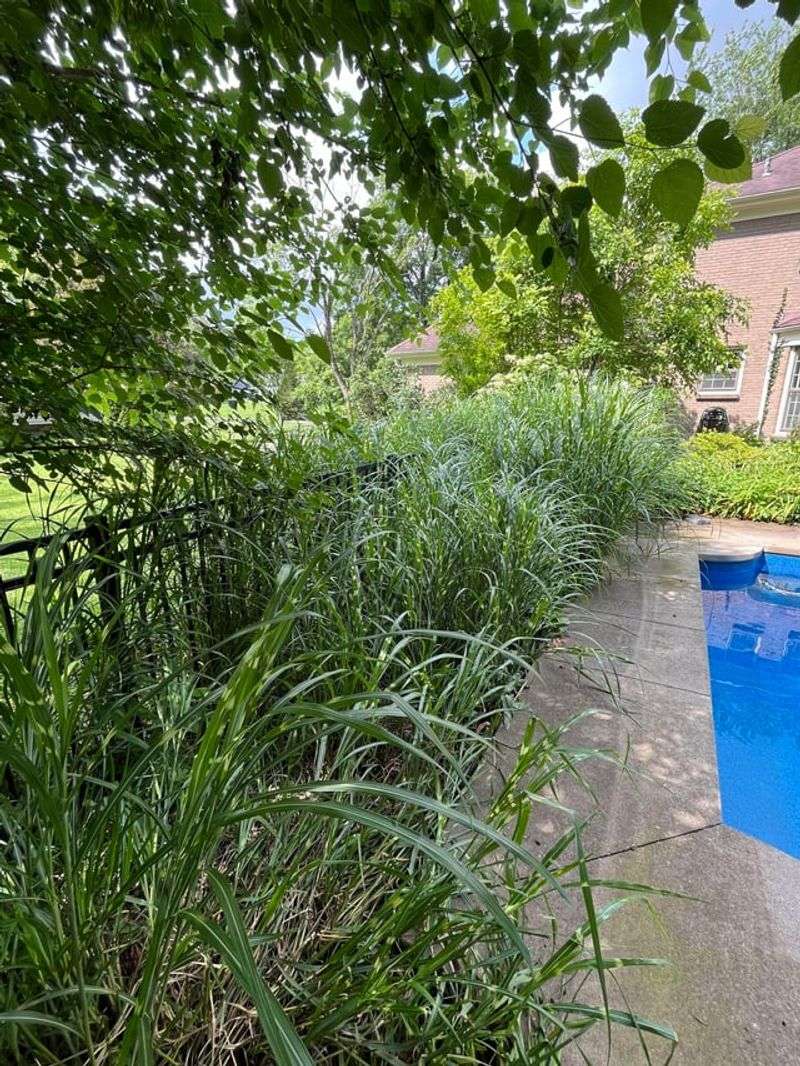
Watching ornamental grasses sway in a warm afternoon breeze is one of those simple pleasures that makes a backyard feel alive.
Near a pool, that gentle movement adds a dynamic, natural energy without any of the risks that come with flowering plants that attract stinging insects.
Most ornamental grasses used in California, like blue fescue, deer grass, and purple fountain grass, are grown almost entirely for their foliage and texture. Even when they do produce seed heads, those structures do not contain nectar.
Bees and wasps have no real reason to investigate them, which keeps your pool area calm and safe.
Blue fescue is a standout choice for smaller pool spaces. Its compact, blue-gray tufts look crisp against light-colored decking and require very little water.
In the drier parts of the state, it is one of the most reliable low-maintenance options available for poolside planting.
Purple fountain grass adds drama with its deep burgundy color and arching, feathery plumes. It moves beautifully in the breeze and creates a resort-like atmosphere that feels both luxurious and effortless.
Just note that it can reseed aggressively in some regions, so check local guidelines before planting.
Deer grass is native to our state and incredibly drought-tolerant. It forms tidy, rounded mounds that look polished year-round.
For homeowners who want a water-wise yard that still feels lush and inviting beside the pool, deer grass is a dependable and stylish answer.