This Yellow Growth On Coneflowers Could Mean Trouble For Minnesota Gardens
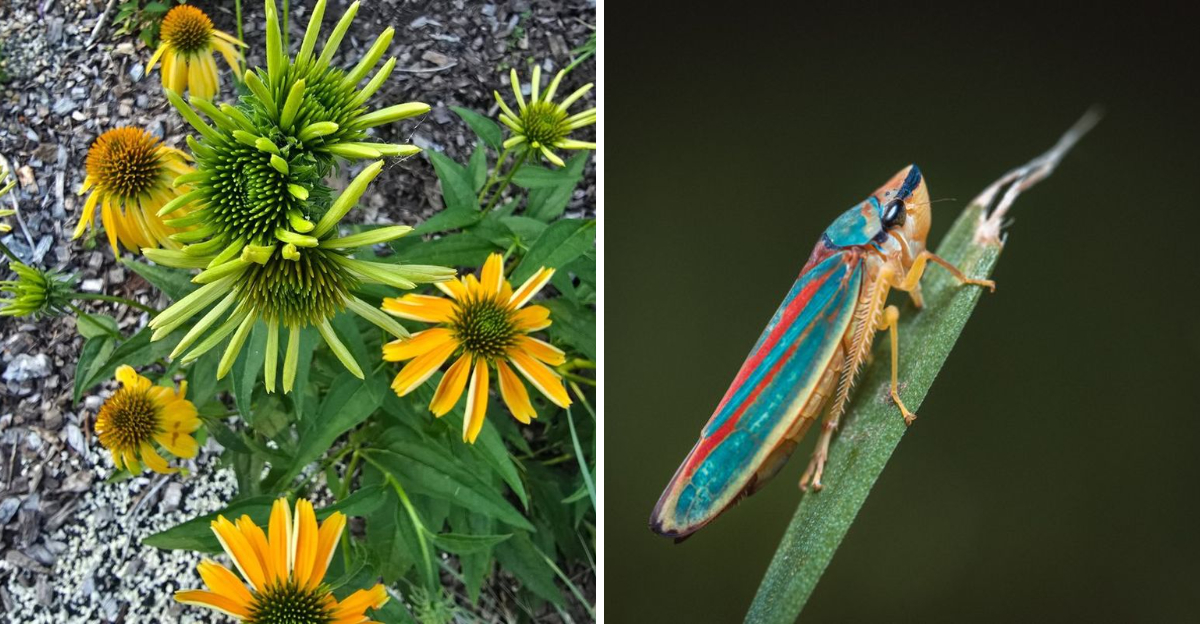
You might notice something strange twisting across your coneflowers this summer. Petals curl inward while greenish-yellow tufts erupt from healthy stems. Every gardener in Minnesota is asking the same curious question.
Nothing about this growth looks ordinary or random. Echinacea affected this way rarely clears up on its own. Left alone, this condition moves through insects, tools, and infected plant material.
Minnesota’s warm, dry summers give it exactly the conditions it favors. Distorted blooms mean far more than a simple blemish. Microscopic organisms like this one target weakened plants quickly.
Healthy neighbors become impacted within just days afterward. Waiting hands the problem more room to grow. Acting now protects everything still thriving in your garden.
Recognizing this issue determines whether your plants stay healthy this season. Ignoring it allows the spread to reach further than expected.
Something like this rarely stays confined to a plant. Turning back now means missing what helps you.
Spotting The Strange Yellow Growth On Your Coneflowers
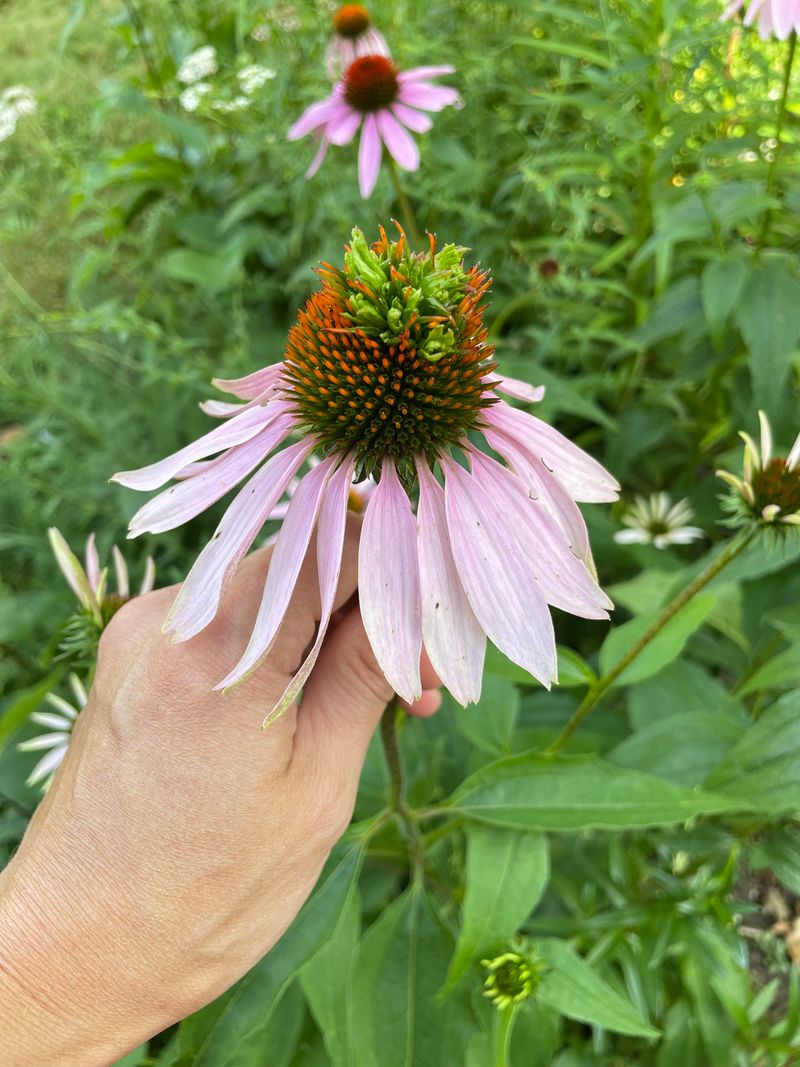
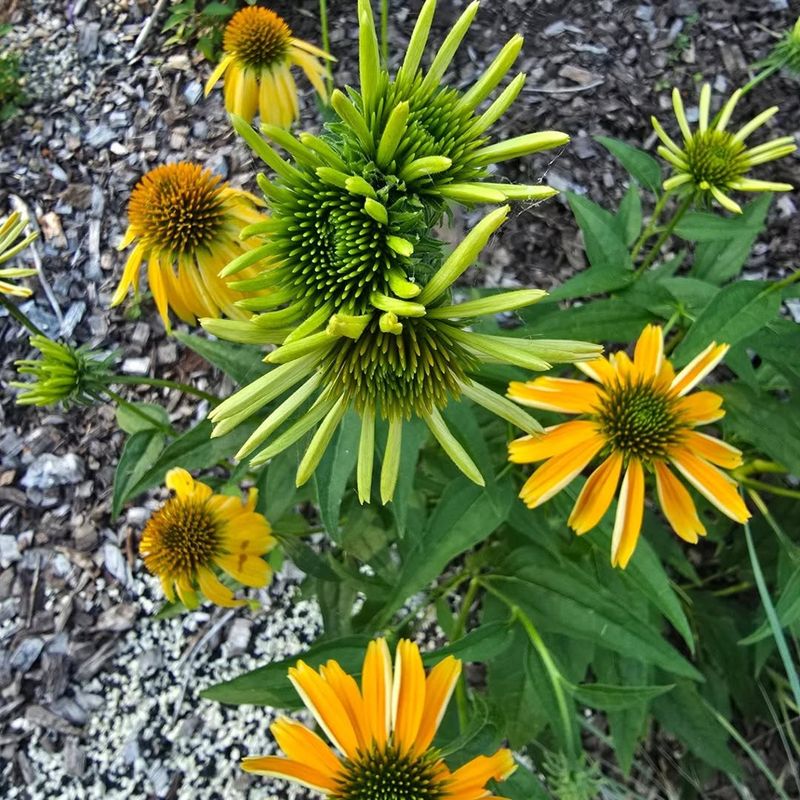
Something looks wrong with your coneflower, and your gut is right to notice. The yellow growth on coneflowers often appears as strange, leafy, or hair-like structures sprouting from the flower’s center cone.
Gardeners sometimes mistake this for a second bloom forming beneath the first. Instead, it is a sign that something has gone deeply wrong inside the plant’s tissue.
The cone may look enlarged, bumpy, or covered in a greenish-yellow fuzz that spreads outward. Petals might grow twisted, pale, or curled in odd directions that look nothing like a healthy bloom.
Some flowers never fully open, while others develop extra leaf-like growths right from the center. These symptoms are easy to miss in early stages, especially in a full, crowded garden bed.
Check your coneflowers regularly, particularly during mid to late summer when symptoms tend to peak. Get close and examine each bloom carefully from multiple angles before moving on.
Healthy coneflowers have firm, spiky orange-brown cones with smooth, downward-drooping petals. Anything that deviates from that pattern deserves a closer, more careful look.
Early detection makes a real difference in protecting nearby, still-healthy plants. Once you spot these warning signs, act quickly and do not wait to see if the plant recovers on its own.
Aster Yellows Is The Disease Behind This Symptom
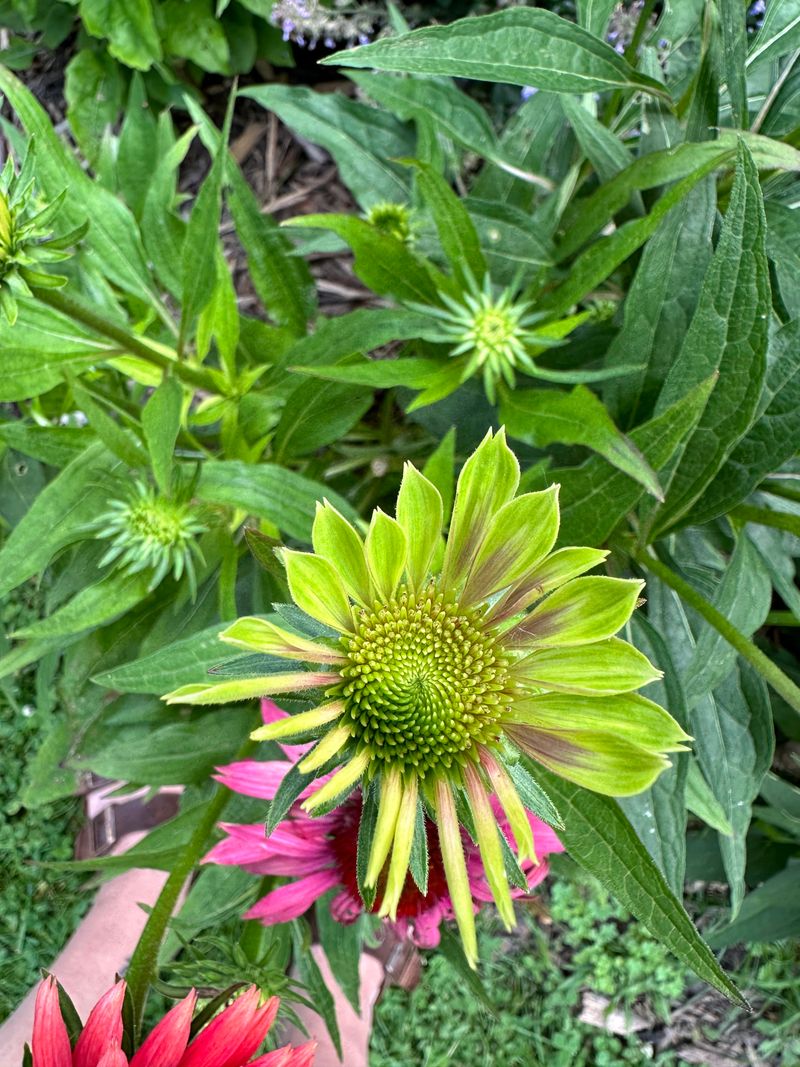
Aster yellows may seem minor, but it is one of the hardest plant diseases to detect early. It is caused not by a fungus or a virus, but by a phytoplasma, a microscopic organism living quietly inside plant tissue.
Phytoplasmas are bacteria-like organisms that interfere with a plant’s internal systems completely. They travel through the phloem, which is the plant’s food-delivery network, moving steadily from root to bloom.
Once inside, the phytoplasma disrupts the plant’s growth hormone signaling almost immediately. The plant starts producing abnormal structures like those bizarre yellow growths you spotted on your coneflowers this season.
Aster yellows affects hundreds of plant species beyond echinacea alone, which makes it especially concerning. Carrots, marigolds, zinnias, and even some common vegetables can fall victim to this same persistent disease.
Your Minnesota Garden Changes Every Week. Your Plan Should Too.
Gardening in Minnesota changes quickly throughout the season. Every Friday you’ll receive a simple weekly plan showing exactly what to plant, prune, fertilize, harvest, and protect so you never miss the right timing.
The name comes from asters, one of the first plants where the disease was widely studied by botanists. Researchers noticed the telltale yellowing and distortion in aster flowers many decades ago, long before phytoplasmas were even understood.
In Minnesota, aster yellows is a well-documented problem linked to seasonal leafhopper activity. Warm summers create ideal conditions for the insects that carry this disease from plant to plant.
Knowing the cause helps you respond with the right strategy right away, rather than guessing blindly. There is no spray or fertilizer that fixes a phytoplasma infection, which makes early identification even more critical for every gardener tending a vulnerable bed.
How Leafhoppers Spread This Problem Between Plants
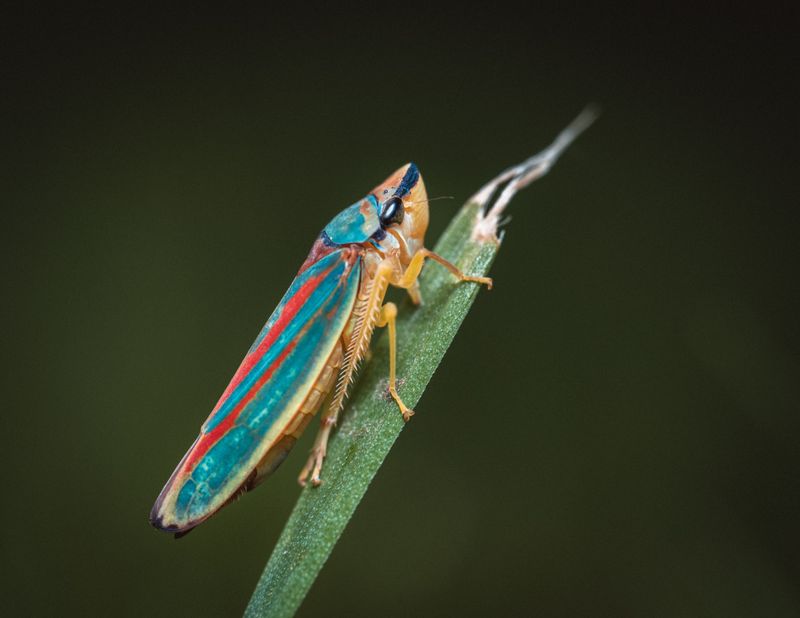
Leafhoppers are tiny, wedge-shaped insects that most Minnesota gardeners barely notice. They move fast, jump at the slightest touch, and blend in surprisingly well with green foliage.
These small bugs are the main carriers of aster yellows phytoplasma. When a leafhopper feeds on an infected plant, it picks up the phytoplasma along with the plant’s sap.
After a short feeding period, typically one to three weeks, the leafhopper becomes infectious. From that point on, every plant it feeds on has a chance of getting infected too.
Leafhoppers do not stay in one spot for long. They migrate across large distances, which is why aster yellows can spread through an entire neighborhood garden in a single season.
In Minnesota, leafhopper populations peak during warm, dry summers. These conditions push them to feed more aggressively and move between plants at a faster rate.
You might spot leafhoppers by gently shaking a plant stem and watching for tiny insects jumping away. They are usually pale green, yellow, or brown and measure about an eighth of an inch long.
Controlling leafhoppers with row covers or reflective mulch can reduce transmission. Insecticides can reduce their numbers, but they will not cure a plant that is already infected with the yellow growth on coneflowers.
Why Infected Coneflowers Can’t Be Cured
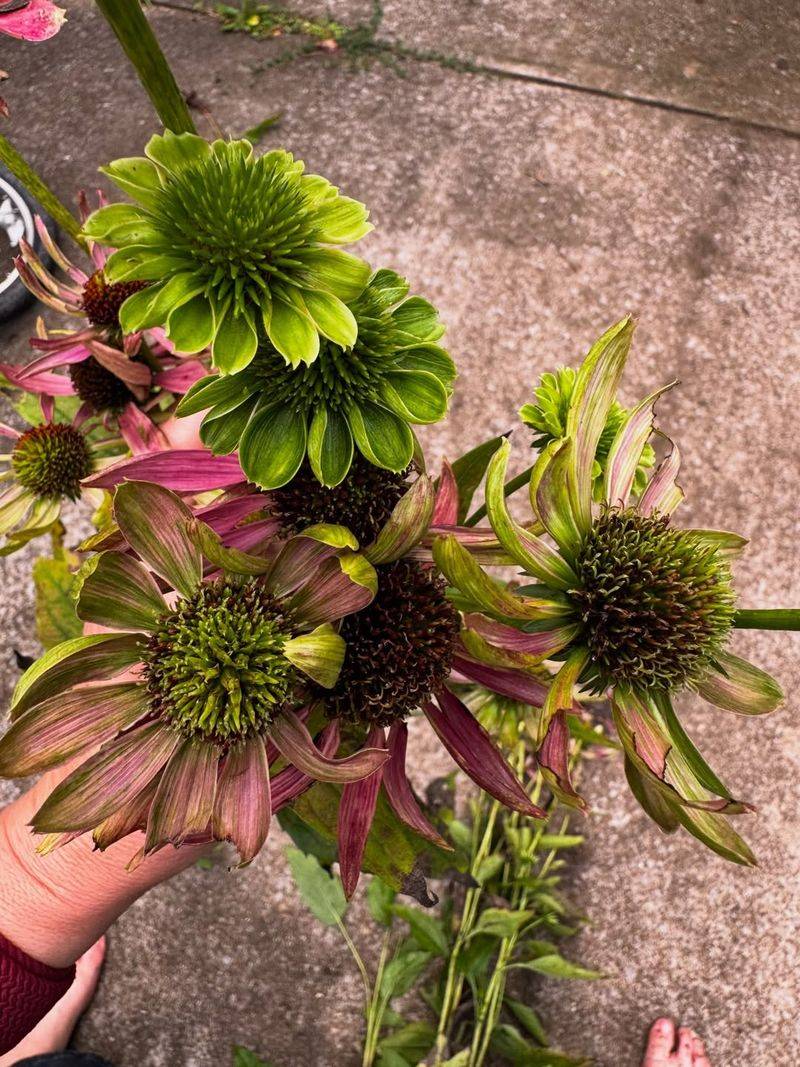
Learning there is no cure can be disappointing, but understanding why helps you make better decisions. Once the aster yellows phytoplasma enters a plant’s vascular system, it spreads through every part of the plant.
No pesticide, home remedy, or organic treatment can reach phytoplasma inside plant tissue. The organism lives too deep within the plant’s cells for any surface treatment to touch.
Some gardeners try cutting off the infected blooms hoping the plant recovers. Sadly, the phytoplasma remains in the roots, stems, and leaves regardless of what you remove above ground.
The infected plant will continue to look worse over time, not better. Symptoms tend to multiply and intensify as the growing season progresses.
An infected plant also becomes a permanent reservoir for the disease. Any leafhopper that feeds on it can carry aster yellows to healthy plants nearby.
Leaving a sick coneflower in the ground increases the risk to nearby plants. The longer it stays, the higher the chance that leafhoppers spread the phytoplasma to your other flowers and vegetables.
Removing an infected plant is difficult, but it is the most responsible gardening decision you can make. Protecting the rest of your garden starts with removing what cannot be saved, including every plant showing the yellow growth on coneflowers.
Steps To Remove And Contain Infected Plants
Removing a sick plant may seem like a big step, but the process is straightforward when you follow the right steps. Start by gathering thick gardening gloves, a trowel, and a sealed plastic bag before you even touch the plant.
Do not compost any part of an infected coneflower. Discarding it in sealed trash instead of compost avoids any risk of attracting leafhoppers to the debris before it fully breaks down.
Bag the plant completely and toss it in the trash, not your yard waste bin. Sealing it tightly keeps any lingering leafhoppers from escaping and feeding on nearby plants.
Dig out the entire root system, not just what you see above the soil. Roots left behind can resprout and bring the infection right back up through the ground.
After removal, wash your gloves and tools with soapy water before using them elsewhere. Cross-contamination is a real risk when dealing with plant diseases.
Avoid working with your other plants immediately after handling infected material. Give yourself time to clean up properly so you do not accidentally transfer anything.
Mark the spot where the infected plant was growing, and monitor nearby leafhopper activity before replanting susceptible species.
Taking these steps seriously gives your Minnesota garden the best shot at staying healthy. A little extra effort during removal goes a long way toward keeping aster yellows from spreading further.
Protecting The Rest Of Your Garden Going Forward
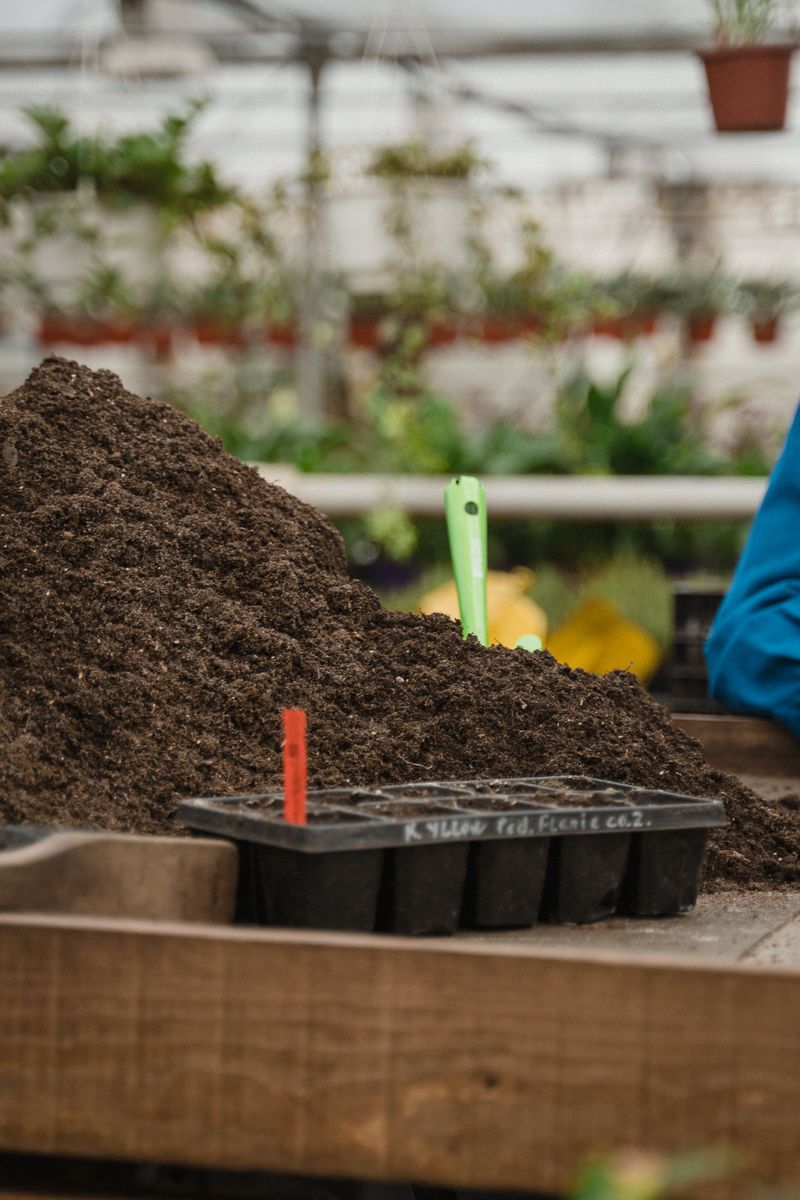
After dealing with one infected plant, your focus naturally shifts to prevention. Keeping aster yellows out of your Minnesota garden going forward takes a combination of smart planting and regular monitoring.
Start by choosing plant varieties that are less attractive to leafhoppers. Native grasses and certain herbs can act as natural buffers around your coneflower beds.
Reflective silver mulch laid around garden beds confuses leafhoppers and reduces how often they land on your plants. It is a low-cost tool that many Minnesota gardeners overlook.
Row covers made from lightweight fabric can protect vulnerable plants during peak leafhopper season. Remove them when plants need pollinator access for flowering.
Inspect your garden at least once a week during summer months. Catching early symptoms of the yellow growth on coneflowers means faster action and less overall damage.
Avoid over-fertilizing with nitrogen, which produces lush, soft growth that leafhoppers find irresistible. A balanced fertilizer approach keeps your plants strong without making them a target.
Encourage natural predators like spiders, lacewings, and parasitic wasps by planting diverse species nearby. These helpful insects feed on leafhoppers and keep populations in check naturally.
A healthy garden is a resilient one, and every proactive step you take adds another layer of defense. Stay observant, stay consistent, and your coneflowers will have a much better chance of thriving season after season.