Skip The Barberry By Your North Carolina Foundation And Plant This Tick-Cutting Native Instead
That spiny shrub crowding your front walkway might be Japanese barberry, and if it is, you have a good reason to pull it out this season. It forms a dense, thorny thicket right where kids and dogs brush past every single day, and research from Connecticut found more infected blacklegged ticks in intact barberry stands than in areas without it. The native replacement worth knowing is New Jersey tea, a rounded, manageable shrub that fits a foundation bed without creating a hidden, humid tangle. Swap the plant, open up the bed, and pair that change with solid yard habits for the best shot at keeping tick encounters low.
Choose New Jersey Tea For Its Form, Not A Tick Claim
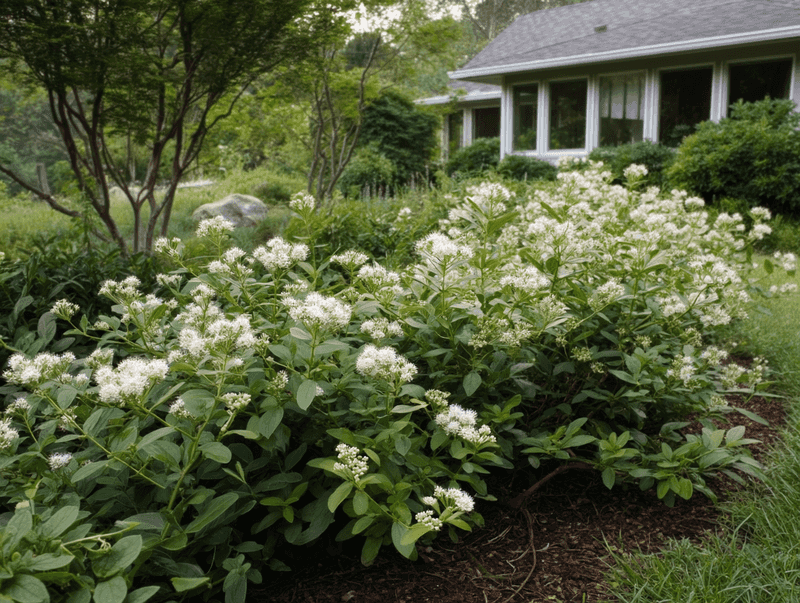
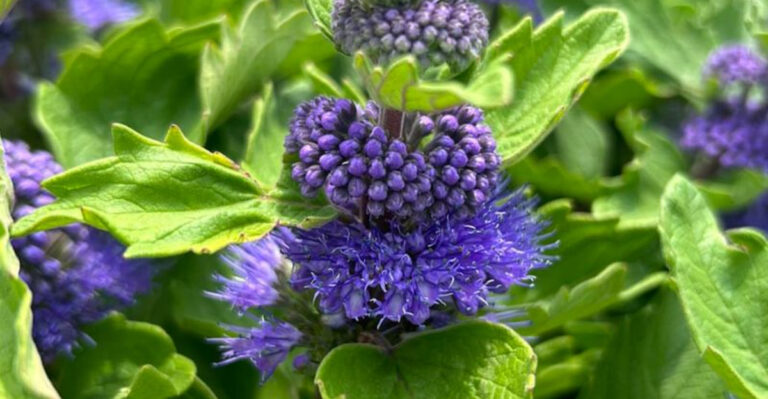
New Jersey tea, Ceanothus americanus, earns its spot near a North Carolina foundation for practical reasons that have nothing to do with magic. NC State Extension’s Plant Toolbox describes it as a deciduous native shrub that typically reaches about 3 feet tall and spreads roughly 5 feet wide, with a rounded, open form and fragrant creamy-white flower clusters that appear in early summer. It is native across all of North Carolina, from the Coastal Plain to the mountains, and NC State recommends it for foundation plantings, shrub borders, and native landscapes.
The real appeal here is what you are replacing. Japanese barberry grows into a tight, thorny mass that sits low to the ground and blocks sunlight, inspection access, and airflow along your siding. New Jersey tea, by contrast, can be given genuine breathing room, kept visible, and checked easily. That open, inspectable design is where the practical benefit actually lives.
To be plain about the evidence: no supplied study directly tested New Jersey tea as a tick-reduction plant, and this article will not claim otherwise. The swap is a design and maintenance choice, not a proven tick repellent. Replacing a dense barberry thicket with a native shrub that you can actually see into, combined with the broader yard habits covered later, may reduce one favorable habitat feature near your home. That is a reasonable goal, and it is genuinely achievable without overpromising what one plant can do.
Japanese Barberry Can Create Favorable Tick Cover
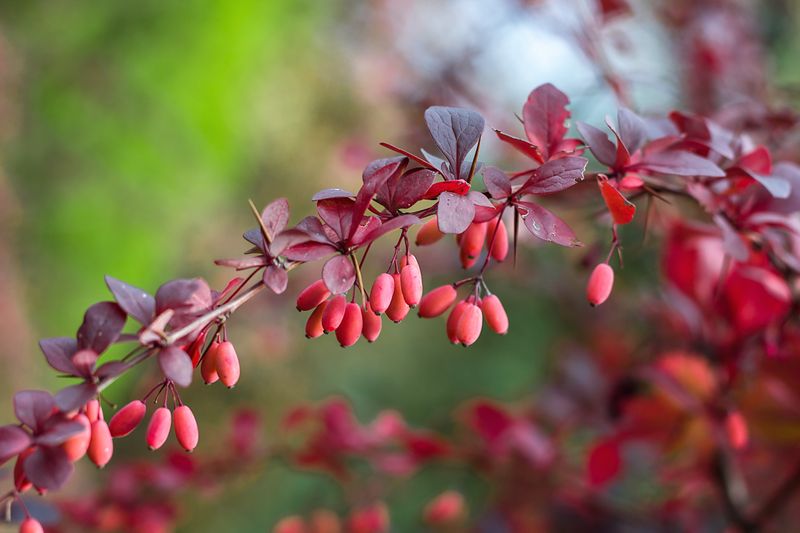
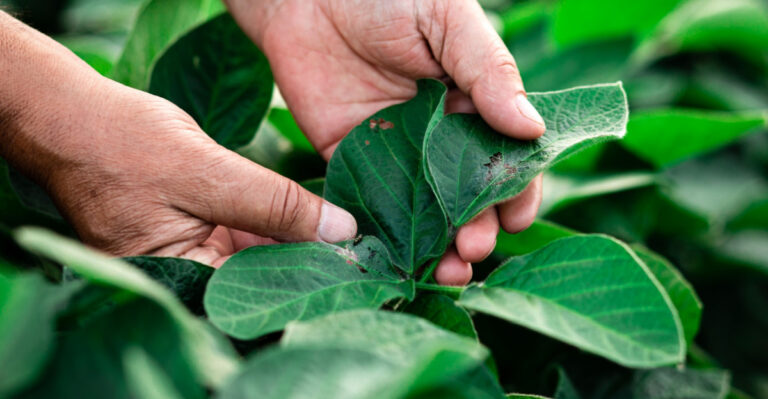
Walk up to a Japanese barberry and run a gloved hand along a branch. You will feel single spines at each node, and you will find small paddle-shaped leaves, yellow flowers in spring, and red berries that can hang on well into winter. The plant can reach anywhere from 3 to 8 feet depending on the cultivar and conditions, but the feature that matters most near a foundation is not its height. It is the dense, ground-level architecture that closes off airflow and holds moisture close to the soil.
Pennsylvania State Extension points out that barberry’s low, compact structure differs from many taller native shrubs that let light and air move through. That difference matters because the dark, humid understory it creates can provide shelter for white-footed mice, which are important hosts in blacklegged tick disease cycles. The concern is about structure and microclimate, not about the plant releasing any scent, berry, or chemical that pulls ticks in.
Your North Carolina Garden Changes Every Week. Your Plan Should Too.
Gardening in North Carolina changes quickly throughout the season. Every Friday you’ll receive a simple weekly plan showing exactly what to plant, prune, fertilize, harvest, and protect so you never miss the right timing.
NC State Extension lists Japanese barberry as invasive or problematic in North Carolina, and the NC Native Plant Society includes it on its invasive species list. That said, its documented spread and impact vary across the state, and it has not caused the same uniform regional damage in every NC county that it has in parts of the Northeast. Whether the tick-habitat concern applies to your specific yard depends on your local conditions, the tick species present, deer pressure, and how the plant sits in relation to where people and pets actually spend time.
Read The Tick Evidence With Its Regional Limits
Here is where it gets tricky. The research connecting Japanese barberry to blacklegged ticks is real, but it comes with clear geographic and methodological limits that matter before you apply it to a Piedmont backyard.
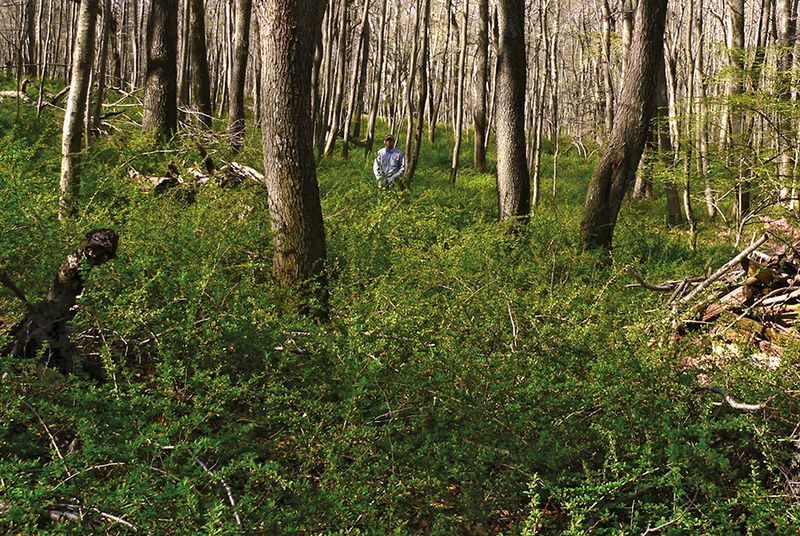
Connecticut studies published in peer-reviewed literature found higher numbers of infected blacklegged ticks in intact barberry stands compared to areas without the plant, and long-term barberry management reduced infected adult tick abundance under those study conditions. That is meaningful evidence. But those studies were conducted in Connecticut, where the climate, tick species mix, deer populations, soil, and surrounding vegetation differ from what you find in the North Carolina Piedmont or Coastal Plain.
The contrast with a more recent study is worth knowing. A 2024 research project in Maine tested partial roadside barberry removal and found no reduction in tick abundance after the treatment. That result does not cancel the Connecticut findings, but it does show that incomplete removal in a different landscape did not produce the expected outcome. Two studies, two regions, two different results.
North Carolina adds another layer of complexity. The state has multiple tick species, and conditions here, including muggy summers, mild winters, sandy Coastal Plain soils, and different rodent communities, do not map perfectly onto either study site. Removing barberry near a high-use area is still a reasonable action. But the honest version of this story is that removing dense barberry is more defensible than claiming any replacement plant cuts tick populations, and neither study guarantees a specific outcome in your yard.
Remove The Thorny Plant Instead Of Just Shearing It

Pruning barberry into a tidy mound does not fix the problem. The dense understory stays, the plant keeps spreading seed, and you are back with the same thorny mass in a season or two. Actual removal is the goal, and the method depends on how established the plant is.
Young barberry plants with smaller root systems can often be dug or pulled by hand. Wear thick gloves, long sleeves, and eye protection, because those spines find gaps in light clothing fast. Bag the plant material carefully and dispose of it according to your county’s guidelines rather than composting it, since barberry can resprout from stem fragments. Check the spot regularly for regrowth, because established plants are stubborn and often send up new shoots from root tissue left in the ground.
For larger, well-rooted plants, Pennsylvania Extension notes that repeated mowing may require three to six cuts per year to exhaust a plant over time, while cut-stump or basal-bark herbicide treatments are another option when the timing and site conditions fit the product label. The label is not optional reading. EPA states that pesticide labels are legally enforceable and govern where, when, how, and how much product may be used. Do not apply any herbicide without identifying the specific product, reading its label fully, and confirming that your site, including proximity to water, children, pets, and desirable plants, matches the permitted uses.
One more thing to skip entirely: do not burn out the roots or use any open-flame method near your foundation. North Carolina’s dry stretches, mulched beds, wood siding, and surrounding vegetation make that genuinely dangerous, and no credible source supports it as a homeowner removal method.
Plan The Replacement Around Mature Space And Drainage
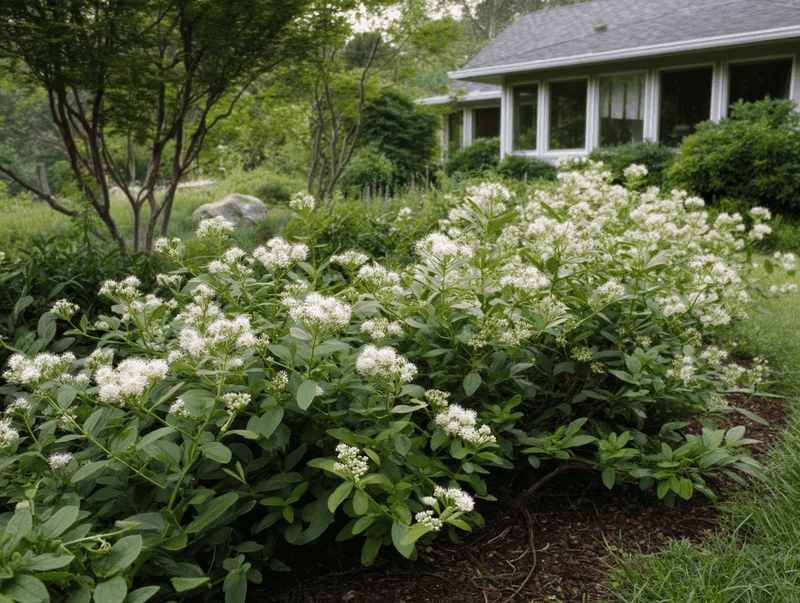
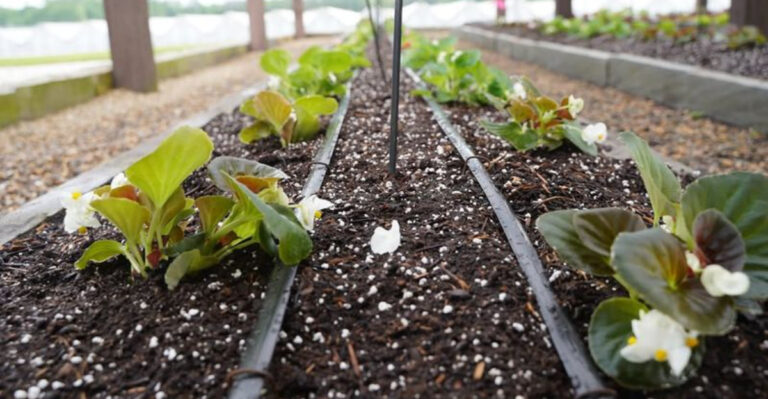
Nursery pots are deceptive. A New Jersey tea in a one-gallon container looks modest on the shelf, but NC State’s Plant Toolbox gives a typical mature width of about 5 feet, so plan your spacing around that number rather than the size of what you bring home from the nursery. Crowding it against the siding recreates the same hidden, airless edge you just removed. Leave enough horizontal room for mature width, airflow along the foundation, and enough clearance to walk in and inspect the siding or run a pruning saw when needed.
Light matters too. New Jersey tea does best in full sun to partial shade. A bed that gets at least four to six hours of direct sun each day gives it the best chance to stay healthy and open rather than stretching toward the light. Shaded, crowded spots tend to produce leggy plants that need more corrective pruning and provide less of the open structure you are aiming for.
Drainage is the other variable to sort out before you plant. New Jersey tea prefers well-drained sandy or rocky soil, which suits the Sandhills and much of the Coastal Plain well. Piedmont red clay is a different situation. Heavy, poorly draining clay holds water around the roots and can stress or kill the plant over time.
Improving drainage before planting is a better approach than hoping the plant adapts. A slightly raised or mounded planting area is one option some homeowners use in clay-heavy spots, but treat it as a conditional, site-specific decision. Assess your yard’s actual water movement, erosion patterns, irrigation habits, and foundation conditions before committing to any grade change near the house.
Establish The Shrub Without Calling It Maintenance-Free
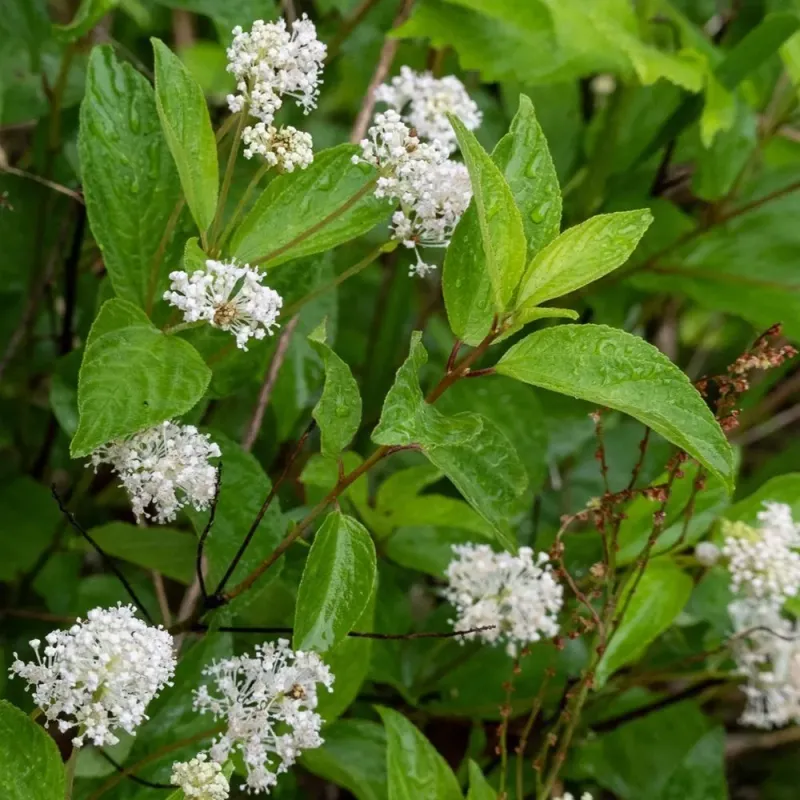
New Jersey tea has a reputation for toughness, and after a full growing season or two in the ground, that reputation holds. The plant becomes genuinely drought tolerant once its root system is established, which is part of why it suits North Carolina’s muggy summers followed by dry stretches. But the establishment window is when things can go wrong, and it deserves real attention.
Water consistently during the first growing season, particularly during hot, dry spells. North Carolina Piedmont summers can run weeks without meaningful rain, and a newly planted shrub does not yet have the deep roots to find moisture on its own. A slow, thorough soak two or three times per week during dry periods is more useful than a quick daily sprinkle. Once you see strong new growth and the plant has clearly rooted in, you can scale back and let it manage more on its own.
The deep root system that makes New Jersey tea drought tolerant also makes it genuinely difficult to transplant once established. NC State’s Plant Toolbox notes this directly, so choose your location carefully before you plant, use a nursery-grown specimen rather than trying to move a wild or established plant, and commit to that spot. Moving it a year later because the spacing felt off is not a realistic option.
Keep the bed around the shrub open and clean. Leaf litter, tall grass, and piled brush around the base undermine the open, inspectable design you planted for. A light layer of mulch to retain moisture during establishment is fine, but do not let organic material build up into a dense mat that becomes its own sheltered microclimate.
Manage The Whole Yard, Not Just One Shrub
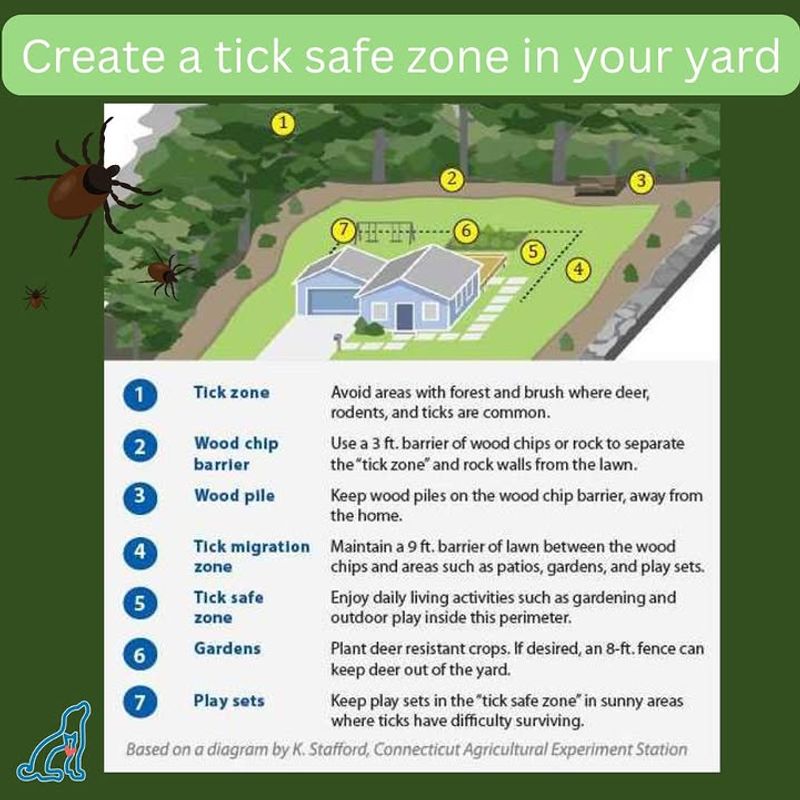
Replacing one shrub near the front walk is a solid move, but ticks do not stop at the foundation bed. If the rest of your yard still has dense leaf litter, tall grass, brush piles, stacked firewood against the fence, or a wooded edge that touches your patio, the overall exposure picture does not change much from one plant swap.
CDC guidance on tick prevention recommends removing leaf litter, clearing tall grass and brush around the home, and mowing regularly to keep the lawn short and dry. It also recommends placing a 3-foot-wide wood-chip or gravel strip between your lawn and any wooded or brushy edge. That boundary is a practical design layer, not a wall. The CDC Tick Management Handbook is clear that results vary depending on shade, woodland density, initial tick numbers, and how consistently the barrier is maintained.
Think of it as one piece of a larger approach rather than a guaranteed solution.
Keep patios, decks, and play equipment away from brushy or wooded edges. That means positioning a swing set in the open lawn rather than tucked against the tree line where your kids are most likely to brush through vegetation and pick up a hitchhiker.
After any time outside, check yourself, your children, and your pets. CDC guidance on Lyme disease prevention advises asking a veterinarian about tick prevention products for dogs, and it specifically notes that cats require separate veterinary guidance because some tick treatments safe for dogs can be toxic to cats. A tick check takes two minutes and catches problems before they become medical ones.
Match North Carolina Precautions To The Tick You Find
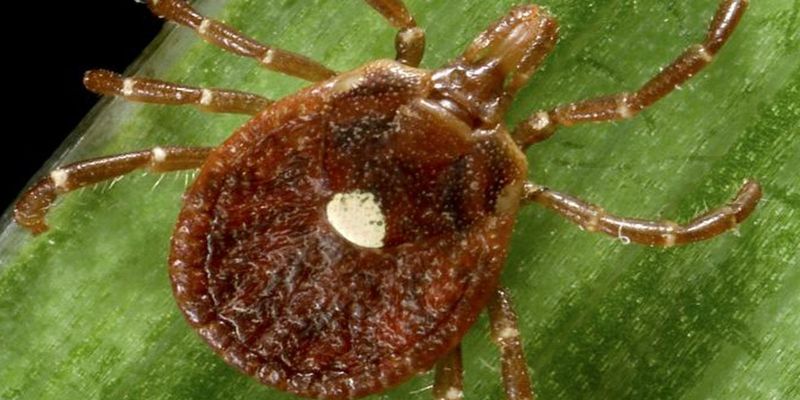
Not every tick that crawls across your patio is a blacklegged tick, and not every bite carries the same disease risk. North Carolina is home to several tick species, and knowing the difference shapes how you respond.
NC State identifies the lone star tick as a major nuisance species in the state, and it is genuinely common in yards, parks, and wooded edges across the Piedmont and Coastal Plain. Blacklegged ticks, sometimes called deer ticks, are the eastern vector associated with Lyme disease, but they are not the only tick you will encounter, and lone star ticks carry their own set of concerns. Treating every small tick as a blacklegged tick leads to either unnecessary alarm or misplaced reassurance, depending on which direction you guess wrong.
If you find a tick, remove it promptly with fine-tipped tweezers, pulling straight out without twisting, and save it in a sealed bag if you want to have it identified. Your county health department or NC State Extension office can point you toward identification resources.
The accurate takeaway from everything covered here is this: removing a dense, thorny barberry planting near a high-use area opens up a spot that may have provided favorable cover under the right conditions. Replacing it with an open, well-placed native shrub and pairing that change with regular mowing, litter removal, boundary management, and tick checks gives you a yard that is genuinely easier to manage and inspect. No single plant or single action guarantees fewer ticks or zero disease risk, but a well-maintained, open yard design is actually the strongest tool you have.