Why North Carolina Gardeners Never Move A Box Turtle They Find, And What It Costs The Turtle When They Do
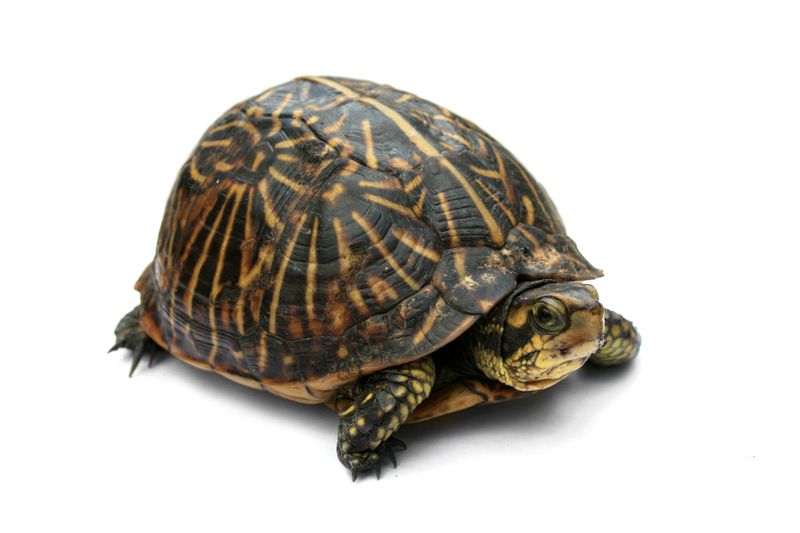
You are out pulling weeds near the back fence when something moves under the begonias, and there it is: a domed shell, roughly the size of your fist, rocking slowly through your flower bed like it owns the place. Your first instinct is to pick it up and carry it somewhere safer, maybe the woods down the street or the pond in the next neighborhood. That instinct comes from a good place, but for an eastern box turtle in North Carolina, being carried away from your yard can be far more dangerous than staying put. Knowing the difference between a turtle that needs help and one that simply needs you to step back is the most useful thing you can learn today.
A Turtle in the Flower Bed May Already Be Home
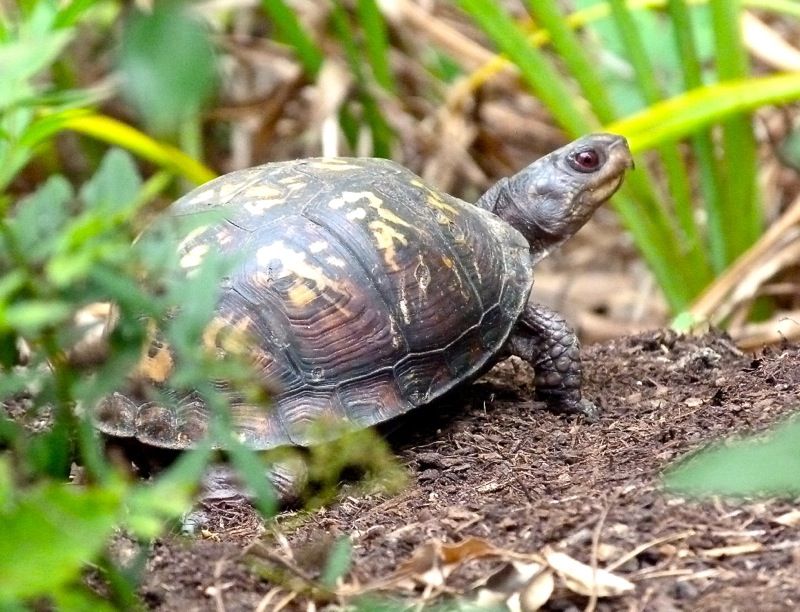
Spotting a turtle in your flower bed feels like a puzzle. Where did it come from, and does it need help getting somewhere? For an eastern box turtle, Terrapene carolina carolina, the honest answer is almost always the same: it probably came from about thirty feet away, and the best help you can offer is to leave it alone.
The eastern box turtle is the turtle most North Carolina gardeners will find on land. Its high-domed upper shell and hinged lower shell, one that closes so tightly the animal can seal itself almost completely shut, set it apart from the flatter, more aquatic turtles you might see near a pond or creek. North Carolina Wildlife Resources Commission guidance describes the species as terrestrial and common across the state in fields, forests, and neighborhoods. A turtle crossing a lawn or resting under a shrub fits naturally into that picture.
The title of this article says “never move” a box turtle, and that framing captures the spirit of the advice. But there is one real exception worth naming right away: if a turtle is in immediate danger, like sitting in the road or directly under a mower, moving it is the right call. Outside of that kind of urgent situation, a healthy turtle in your garden bed is most likely traveling within its own familiar ground, not wandering lost and in need of rescue.
Watch it from a few feet back. Give it a minute. The species profile from NC Wildlife confirms that the default action is observation, not intervention. Most of the time, the turtle will move on by itself, headed exactly where it intended to go.
Its Home Range Is Familiar, Not Fixed
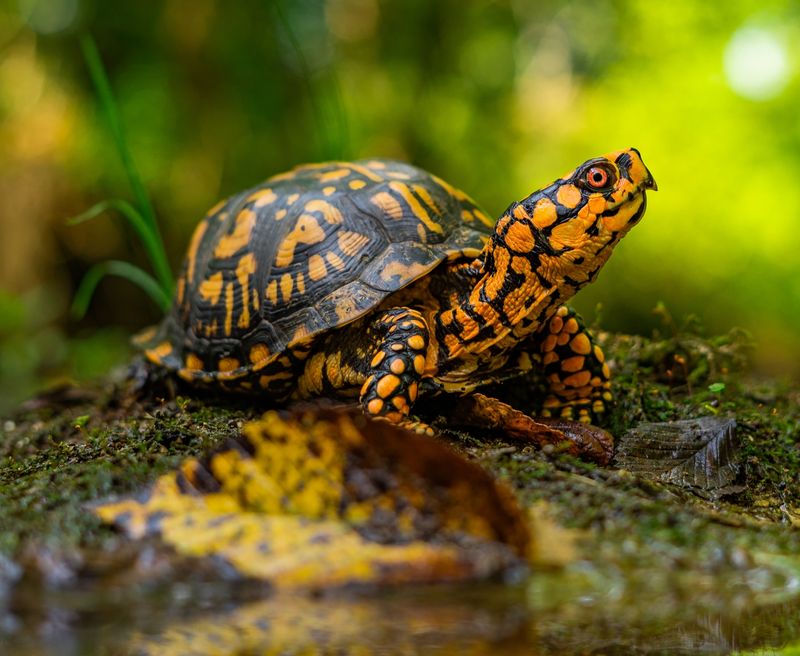
Here is where people often get the wrong picture. A box turtle’s home range is not a tiny fenced circle it never leaves. Think of it less like a yard and more like a neighborhood the turtle has learned over many years, with reliable spots for food, shade, water, and shelter scattered across it.
NC Wildlife describes the typical home range as usually under 2 acres, which is a useful starting point for understanding how local these animals tend to be. But that number is a practical guideline, not a hard biological rule. A U.S. Forest Service species review shows that documented home ranges vary considerably depending on habitat, geography, sex, season, and the methods researchers used to track the animals.
Your North Carolina Garden Changes Every Week. Your Plan Should Too.
Gardening in North Carolina changes quickly throughout the season. Every Friday you’ll receive a simple weekly plan showing exactly what to plant, prune, fertilize, harvest, and protect so you never miss the right timing.
Some ranges are several acres or larger. A U.S. Geological Survey study on home range behavior in box turtles adds that movement patterns shift across seasons and terrain types, so no single number applies everywhere.
What does stay consistent is something researchers call site fidelity. Eastern box turtles tend to return to the same general area year after year. Many Piedmont gardeners who have lived in one house for a decade or more will recognize the same turtle showing up near the same corner of the yard each summer, and they are probably right. These animals can occupy the same territory for decades.
When you see one in your garden, it may be moving toward a ripe berry patch, a damp hollow under a log, a seasonal resting spot, or a nesting site. You cannot tell from one glance which of those it is headed toward. The safest assumption is that it already knows the way.
Relocation Can Disrupt the Turtle’s Routine
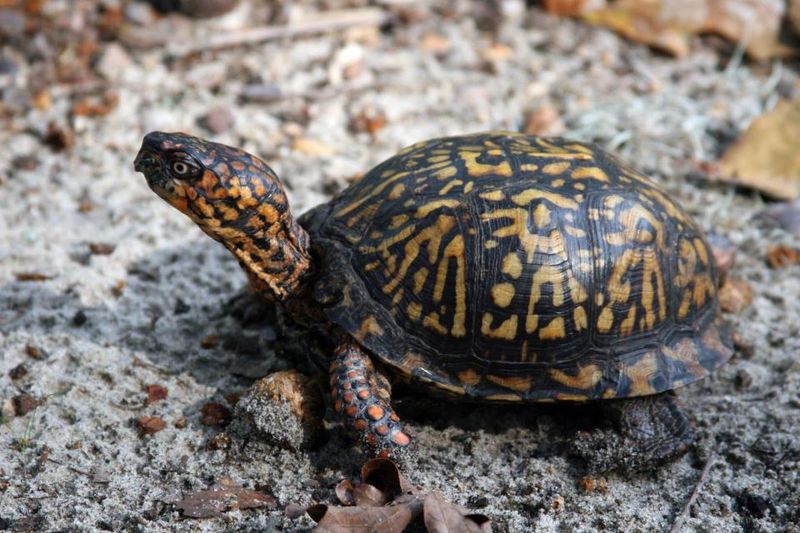
Picking up a box turtle and carrying it somewhere that looks nicer to you is not a neutral act. A small but carefully watched North Carolina study gives a clear picture of what can go wrong.
Researchers in Davidson, North Carolina compared 10 resident eastern box turtles with 10 that had been relocated to a new site. That relocation study, published in the Journal of Wildlife Management, found that relocated turtles had home ranges roughly three to 7.5 times larger than the resident turtles and traveled farther each day. Five of the 10 relocated turtles died or disappeared during the study period, compared with none of the 10 residents.
Those are striking numbers from a small sample. The study does not prove that every relocated turtle will die, and disappearance could not always be confirmed as death. The researchers also could not pinpoint exactly why each turtle fared poorly. But the pattern they documented lines up with what biologists have long suspected: a turtle dropped into unfamiliar ground tends to wander more, and wandering more raises the chances of crossing a road it does not know, encountering a predator in an area with no cover it recognizes, or burning through energy it would otherwise spend on feeding and shelter.
Think of it this way. A turtle that has spent 20 years learning every berry patch, muddy hollow, and shady log in a half-acre stretch of Piedmont woods does not carry that map with it when you set it down in a park two miles away. Increased movement and unfamiliar hazards are plausible explanations for what the study observed, even if the study itself cannot confirm them as the cause. The practical takeaway is real: casual relocation carries risks that a well-meaning gardener is unlikely to anticipate.
Move It Only When Immediate Danger Requires It
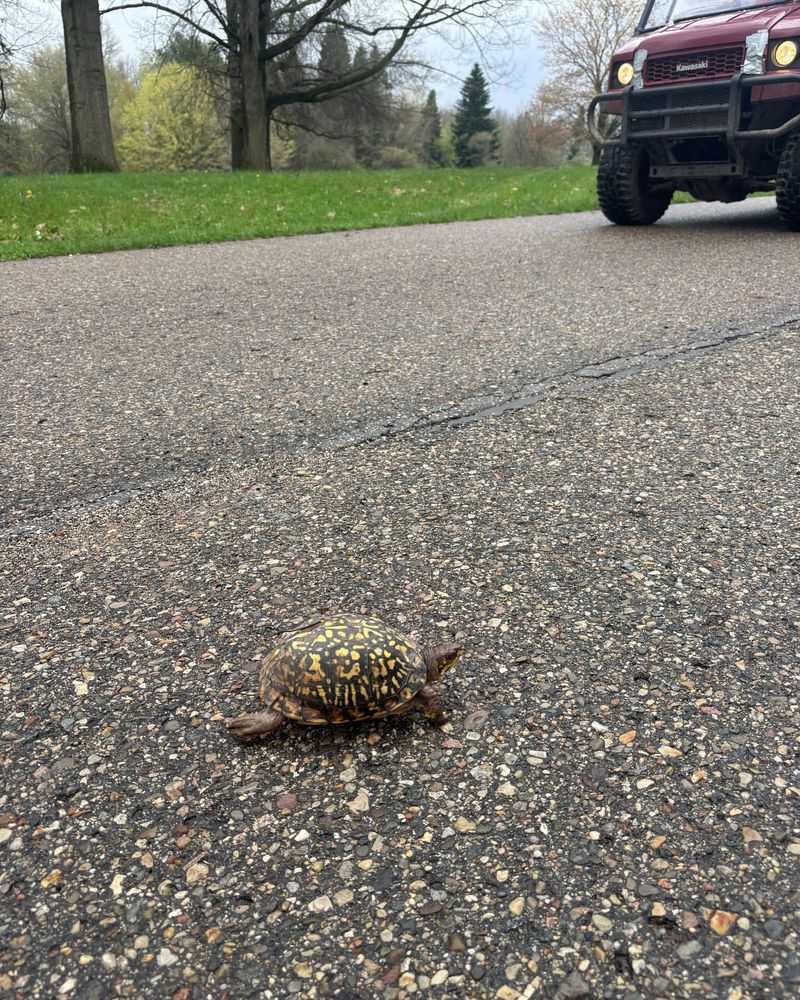
Leaving a turtle alone is the right call most of the time, but not every situation allows for stepping back and watching. When a turtle is sitting in an active road, idling in a driveway where a car is about to back out, or sitting directly in the path of a running mower, moving it is the right thing to do. The key is doing it correctly so you do not create a second problem.
For a turtle in a roadway, carry it straight across to the other side in the direction it was already heading. NC Wildlife specifically advises moving a turtle in the direction it was already traveling, not toward whatever spot looks safest or most natural to you. If you turn it around or carry it back to the side it came from, it will often just try to cross again, putting it right back in danger. Your job is to complete the crossing it already started, not to redirect its journey.
For a turtle in a driveway, mower path, pet area, or active work zone, the same agency recommends moving it only as far as necessary, ideally less than 50 feet. That 50-foot figure is a practical limit for emergency movement, not a general gardening recommendation. It is not permission to carry the turtle across the yard to a spot that seems better to you. The goal is to remove one immediate hazard while keeping the animal as close to its current route as possible.
Use both hands and support the turtle from underneath, the way you would lift a flat, fragile object. Do not drag it by the shell or grip it by a leg. Set it down gently on the far side of whatever danger was present, then walk away and let it continue. That is the whole job.
Protect the Passing Turtle Without Taking It Away
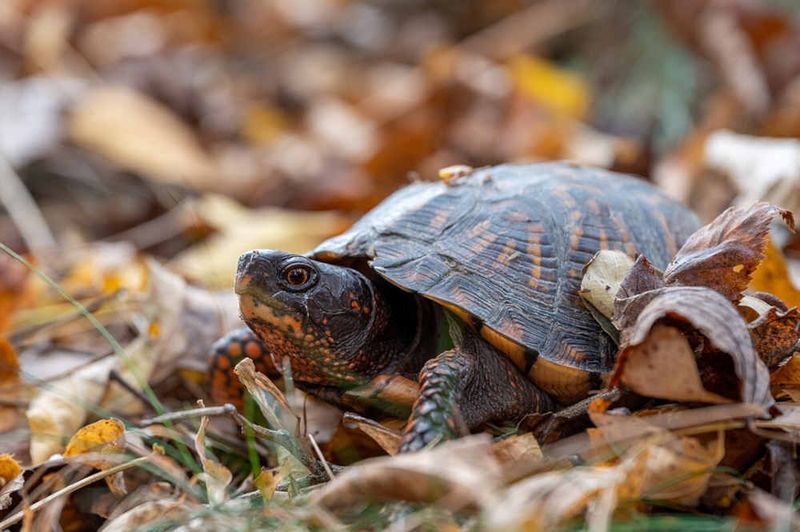
Many Piedmont gardeners feel the urge to do something when they spot a turtle, and the good news is there is plenty you can do without touching the animal or changing its location. Practical yard stewardship turns out to be far more helpful than any well-intentioned carry across the neighborhood.
Start with pets. Dogs and cats are among the most common sources of injury for box turtles passing through residential yards, and NC Wildlife’s suburban backyard habitat guidance specifically identifies preventing wildlife mortality from dogs and cats as a real landscape consideration. Call your dog inside, leash it, or keep it occupied elsewhere while the turtle moves through. A few minutes of inconvenience on your part can prevent a serious injury to the turtle.
If you are in the middle of a digging project or running heavy equipment nearby, pause. Check leaf piles, brush heaps, and low ground cover before disturbing them, especially in summer when turtles seek shade and moisture during the Coastal Plain’s hottest afternoons. Box turtles sometimes tuck in under debris and can be injured or killed by tools before anyone realizes they are there.
Do not put out food for the turtle. NC Wildlife advises against feeding wildlife because human-provided food can cause nutritional imbalances and raise disease risks around artificial feeding spots. A native yard with a variety of plants, leaf litter, and minimal pesticide use is genuinely more useful to a passing turtle than a dish of fruit left by the fence. And do not carry the turtle to a pond.
Eastern box turtles are terrestrial, and a pond edge is not automatically good habitat for them, no matter how lush it looks.
Injury Turns a Sighting Into a Rehabilitation Case
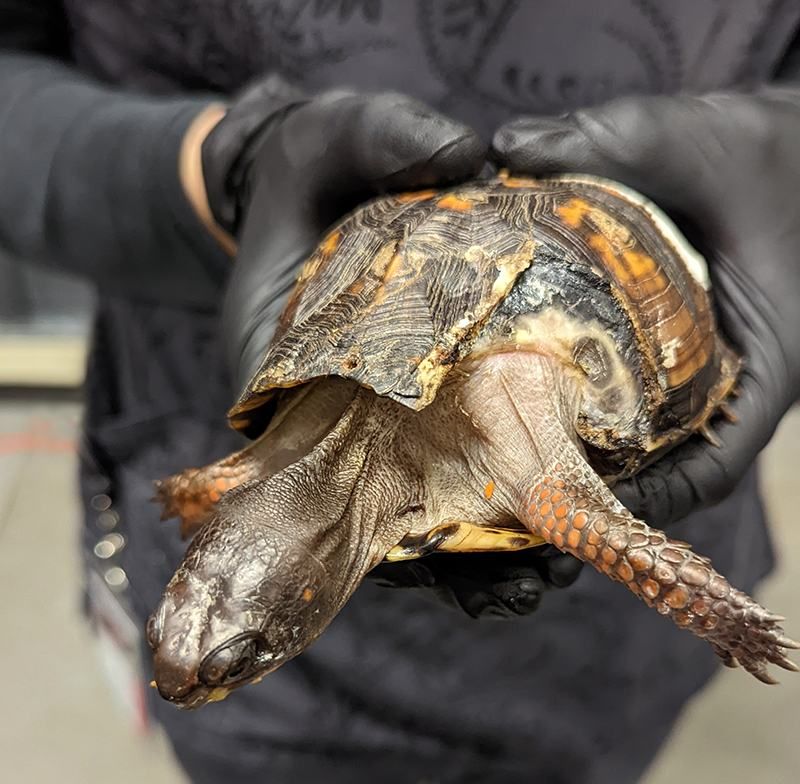
Most box turtle sightings in a North Carolina garden are routine. The animal is healthy, moving on its own, and needs nothing from you except a clear path. But occasionally a turtle shows up with real damage, and that changes the situation entirely.
A cracked shell, visible bleeding, a limb that hangs at a wrong angle, or obvious trauma from a mower or car are signs that the turtle needs professional care.
NC Wildlife directs people with injured native wildlife to licensed rehabilitators, who are the appropriate people to possess, treat, and eventually release these animals. Do not attempt prolonged home care, and do not decide on your own to release an injured turtle somewhere else once it seems better. That kind of improvised treatment can delay real care and sometimes makes things worse.If you need to move an injured turtle to contain it safely before a rehabilitator can be reached, use both hands and support it from underneath. A University of Georgia Extension guide on southeastern turtles recommends lifting a turtle like a flat object, with firm support under the belly rather than gripping the shell edges or legs. Place it in a ventilated container with a damp cloth, keep it in a quiet, shaded spot, and contact a licensed rehabilitator as soon as possible.
Keeping a healthy turtle at home temporarily is not a solution either. NC Wildlife says never take an eastern box turtle home as a pet, and possession of native reptiles in North Carolina is regulated by permit. A turtle that looks fine does not need temporary housing, feeding, or a new address. It needs the yard it already knows.
Professional Translocation Is Not a Backyard Favor
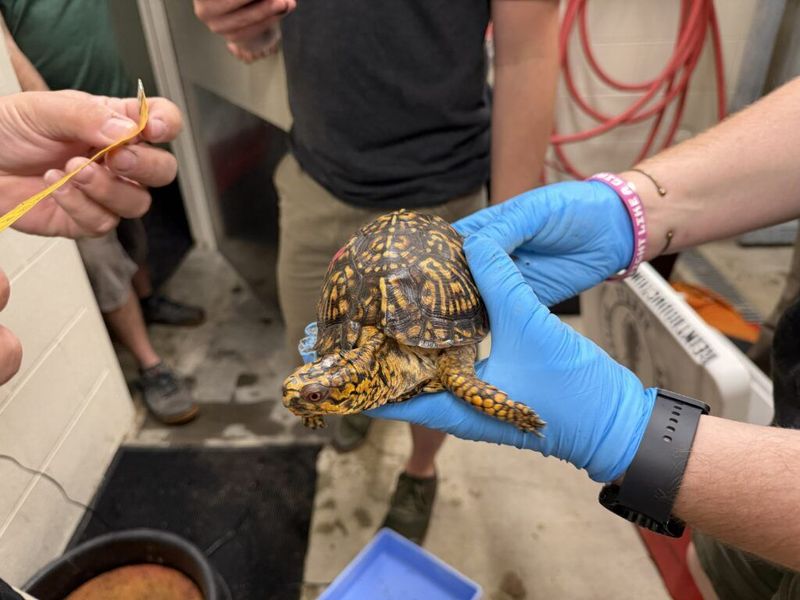
You might have heard that conservation programs move box turtles successfully, and that is true. But the way those programs work is so different from carrying a turtle across your neighborhood that comparing the two is like comparing a hospital transfer to dropping a patient off at a random address because the building looks clean.
Managed construction and conservation translocations can involve carefully selected release sites that match the turtle’s habitat needs, disease screening, radio tracking, and long-term monitoring that continues for years after the move. Research on turtle responses during highway construction projects shows that even professionally managed relocations require specific site conditions and follow-up to give turtles a reasonable chance. A 2024 study on post-translocation reproduction among eastern box turtles at the Savannah River Site in South Carolina documented survival and genetic integration in some animals, which is genuinely encouraging. But that program involved long-term management of a specific, monitored landscape, not a one-time carry to a nearby park.
An ad hoc urban translocation study similarly found that outcomes depended heavily on site quality and follow-up conditions. None of those findings translate into reassurance that a well-meaning homeowner can replicate the result by setting a turtle loose in a wooded lot down the road.
The practical conclusion for a North Carolina gardener is straightforward. Leave a healthy turtle on its route. If immediate danger requires movement, carry it as short a distance as possible in the direction it was already going. Then turn your energy toward the yard itself: fewer pesticides, more native plants, pets kept in check, and a little patience when a domed shell appears under the begonias.
NC Wildlife puts it plainly: the best thing most people can do for an eastern box turtle is stay out of its way. A turtle that has kept the same home range for 30 years does not need a better neighborhood. It needs the one it already has.