8 Reasons Massachusetts Yards Are Suddenly Full Of Spider Webs In August
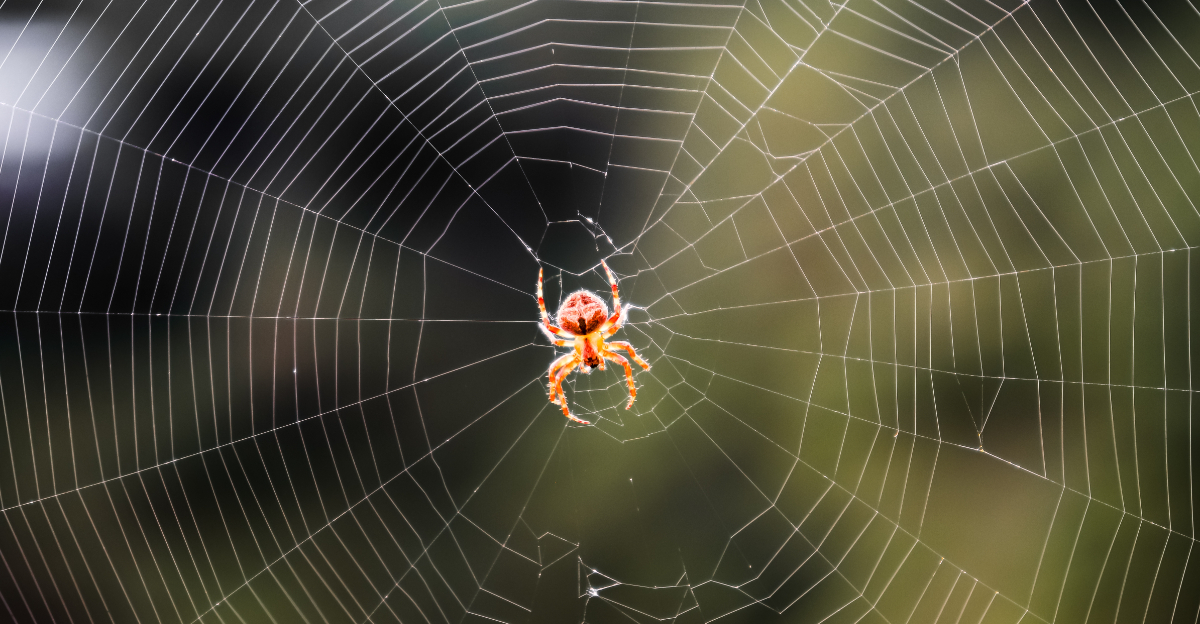
Silk appears out of nowhere across Massachusetts porches every August. Spiders aren’t sneaking in overnight; they’ve spent the summer growing. Warmth pushes their bodies into rapid growth as summer peaks.
Bigger spiders need bigger webs, and those bigger webs demand space. Insects gather near your porch light, drawn by heat and moisture.
Hungry spiders follow that traffic, stringing silk exactly where prey cluster. Humidity across Massachusetts keeps every thread sticky and visible.
You walk face first into engineering you never noticed forming. Nothing about this sudden surge feels accidental once you understand why.
Every strand you brush aside took weeks of patient labor. Appetite, timing, and unpredictable weather collide in a quiet rush.
Your porch becomes the stage for a sudden late summer shift. Grasping why it happens clearly changes how you see that porch. What happens next inside these webs will change how you walk outside forever.
1. Spiders Reach Full Size By August
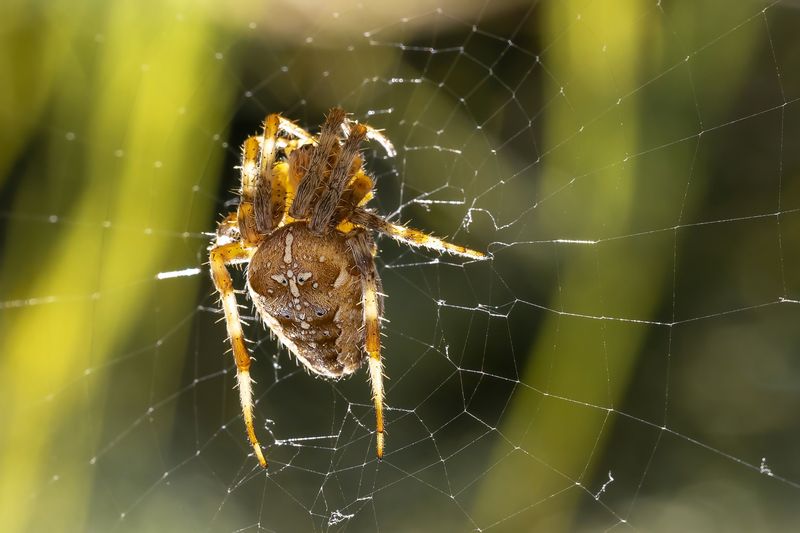
By the time August rolls around, the spiders in your yard have been quietly growing all spring and summer. They hatched in late spring as tiny spiderlings, nearly invisible to the naked eye.
Month after month, they fed on gnats, mosquitoes, and small flies hiding in your garden. All that eating adds up to one thing: a noticeably bigger spider.
Full-grown spiders spin much larger webs than juveniles do. A mature orb weaver can spin webs ranging from several inches to over a foot across, depending on the species.
Bigger webs are simply easier for humans to spot. A web the size of a dinner plate is hard to miss when morning dew makes it sparkle in the sun.
This size factor is one of the most overlooked reasons Massachusetts yards are suddenly full of spider webs in August. The spiders were always there, just smaller and sneakier.
Think of it like watching a puppy grow into a full-sized dog. You stop noticing the gradual change until one day the animal is enormous and impossible to ignore.
Adult spiders also tend to move into more open, visible spots to maximize their hunting range. That means webs across doorways, between shrubs, and right at face level on garden paths.
The good news is that a fat, healthy spider means your yard has a thriving food chain. A robust web signals a productive backyard ecosystem working exactly as nature intended.
2. Cooler Nights Bring Dew On Webs
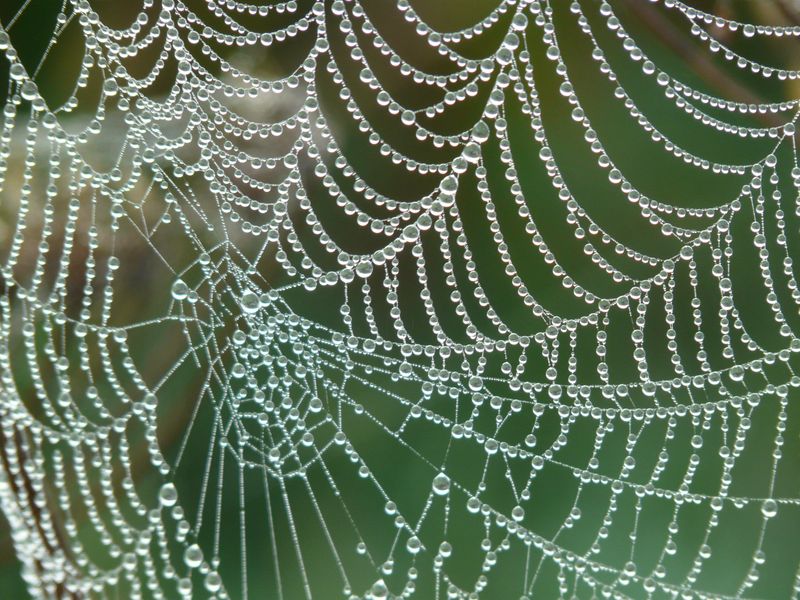
August nights in New England start to cool off noticeably compared to the scorching days. That temperature drop is the key factor behind the dew-covered webs you see at sunrise.
When warm, humid air meets cooler surfaces overnight, condensation forms on everything it touches. Spider silk happens to be one of the best natural surfaces for collecting tiny water droplets.
Each strand of silk traps moisture along its entire length, turning an invisible web into a sparkling string of tiny beads. One web can hold hundreds of droplets by the time the sun comes up.
Your Massachusetts Garden Changes Every Week. Your Plan Should Too.
Gardening in Massachusetts changes quickly throughout the season. Every Friday you’ll receive a simple weekly plan showing exactly what to plant, prune, fertilize, harvest, and protect so you never miss the right timing.
This is actually a survival trick for some spider species. Certain spiders drink the dew right off their own webs when other water sources are scarce during dry August stretches.
For humans, the dew effect is what makes late summer webs so noticeable. A dry web might blend into the background, but a wet one glows like a chandelier in the morning light.
Photographers and nature lovers often head outside in early August mornings just to capture these dewy scenes. The combination of golden light and silver droplets creates a visually striking scene.
The cooler nights also encourage spiders to rebuild or reinforce their webs before sunrise. A fresh web catches dew more efficiently than an older, damaged one would.
So that stunning web you spotted before your first cup of coffee was basically a spider pulling an all-nighter. Respect the hustle.
3. Orb Weavers Spin Webs For Mating
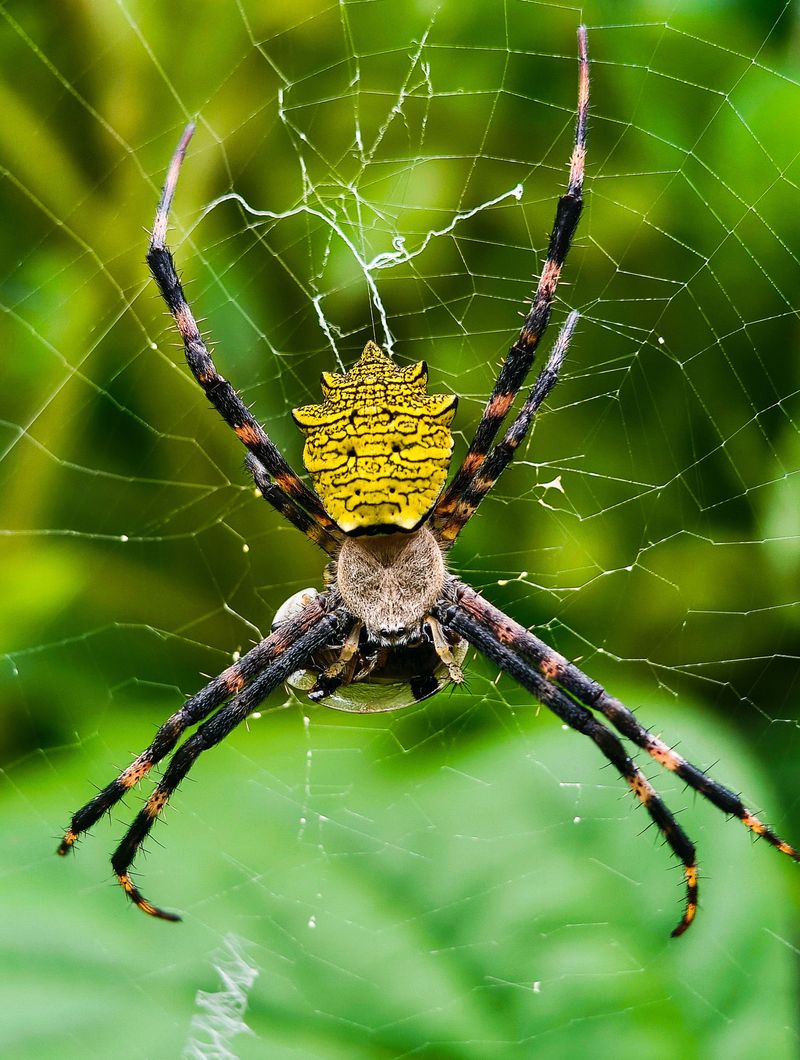
August is basically peak dating season for orb weavers, the classic round-web spiders that dominate New England yards every late summer. These spiders spin their most elaborate webs specifically to attract a mate.
Female orb weavers build the biggest, most well-maintained structures because they need to be visible and well-fed before mating begins. A large, well-maintained web reflects how much energy she has stored for egg production.
Males, which are much smaller than females, wander from web to web during August looking for a receptive female. You might notice tiny spiders creeping along the edges of a large web, and that is likely a male suitor.
The female’s web also needs to catch plenty of prey so she can build up energy reserves for egg production. Mating takes a serious physical toll, so she needs all the calories she can get.
Orb weavers often rebuild their webs every single night, consuming the old silk and spinning fresh threads before dawn. This nightly construction project ensures the web stays sticky and structurally sound for catching insects.
Watching this cycle play out in your yard is genuinely interesting once you know what is happening. That spider is actively working to secure enough resources for reproduction.
The mating frenzy of orb weavers is a major driver behind why Massachusetts yards are suddenly full of spider webs in August.
More webs mean more chances to find a partner and pass on genes. Nature, it turns out, runs on the same competitive instincts you’d expect anywhere else.
4. Insect Populations Peak, Drawing Spiders
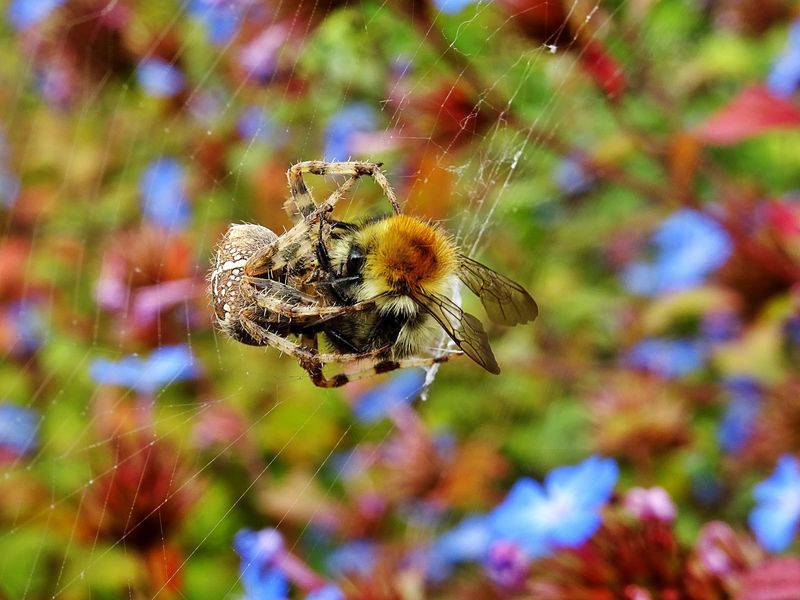
August remains one of the peak seasons for insect activity across New England. Mosquitoes, gnats, moths, beetles, and flies are all at their highest numbers of the entire year.
Spiders are opportunistic hunters, and they go where the food is. When insects swarm in your yard, spiders follow right behind them, drawn by the same activity.
Gardens full of late-summer blooms attract pollinators by the thousands. Those pollinators, in turn, attract spiders who want an easy meal without doing much chasing.
Tall grass, dense shrubs, and leafy vegetable gardens create perfect insect habitats. More habitat means more bugs, and more bugs means more spiders setting up shop nearby.
A single orb weaver web can catch a significant number of insects in a single night during peak August conditions. The spider basically set up a passive food supply without moving a muscle.
This predator-prey relationship is one of the most important reasons Massachusetts yards are suddenly full of spider webs in August. Spiders are simply tracking their food supply.
If you have standing water, compost bins, or ripe fruit in your yard, you are essentially creating an attractive feeding ground for insects. Spiders will absolutely show up as uninvited guests.
The upside is that spiders keep insect populations from getting out of control. Without them, your late-summer cookouts would be significantly more miserable than they already are.
Spiders are, without question, some of the most effective pest controllers your yard will ever have. Free of charge, no pesticides needed.
5. Shorter Days Trigger Breeding Behavior
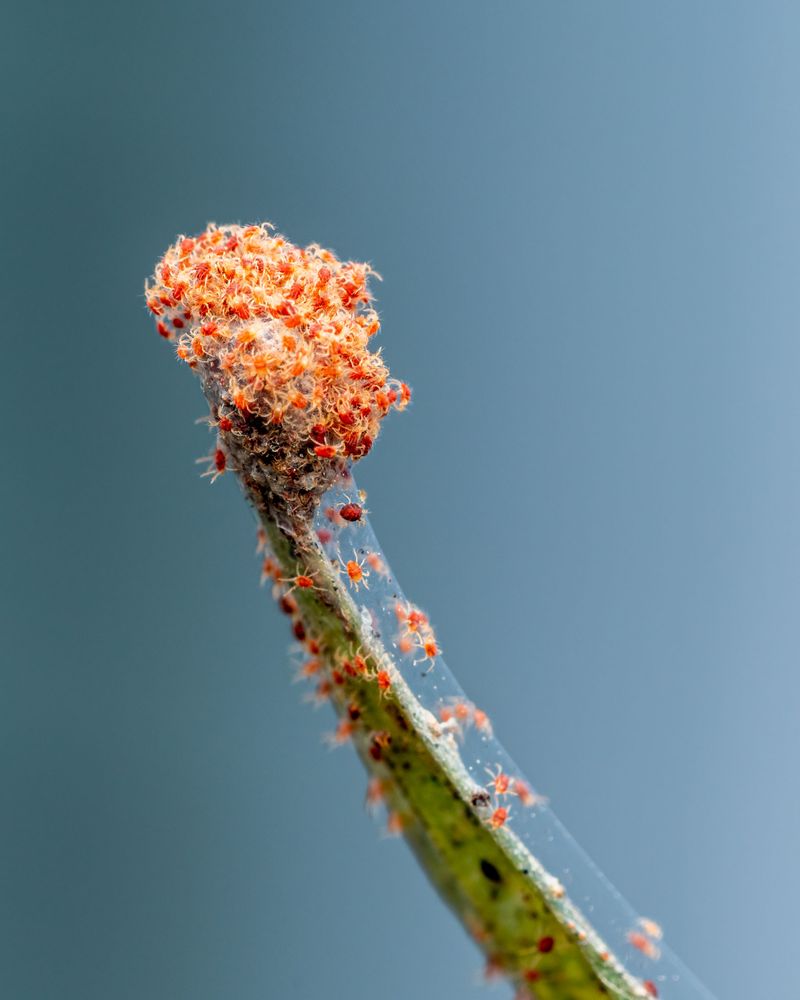
Spiders are surprisingly sensitive to changes in daylight. As August progresses, the days get noticeably shorter, and that shift in light acts as a biological cue for many species.
Decreasing daylight hours signal to spiders that summer is winding down. For many species, instinct kicks in hard, pushing them to mate and lay eggs before cold weather arrives.
This photoperiod response, triggered by light changes, causes spiders to become more active and more visible during late summer. They stop hiding and start moving.
Female spiders ramp up web-building activity to maximize food intake before the energy demands of egg-laying hit. A well-fed female produces larger, healthier egg sacs with better survival rates.
Male spiders increase their roaming behavior, covering more ground each night in search of mates. That extra movement means more web encounters and more webs being disturbed, rebuilt, or relocated.
This breeding urgency is one of the quieter reasons Massachusetts yards are suddenly full of spider webs in August. The spiders are responding to a seasonal shift they sense but don’t consciously anticipate.
Shorter days also mean cooler temperatures arrive earlier in the evening. Spiders often spin fresh webs right at dusk, taking advantage of the insect activity that peaks around sunset.
The combination of biological urgency and perfect environmental timing creates a sharp increase in web-building that peaks in mid to late August. Your yard isn’t unusual; it’s simply hosting a burst of natural spider activity.
6. Spiderlings Disperse And Build New Webs
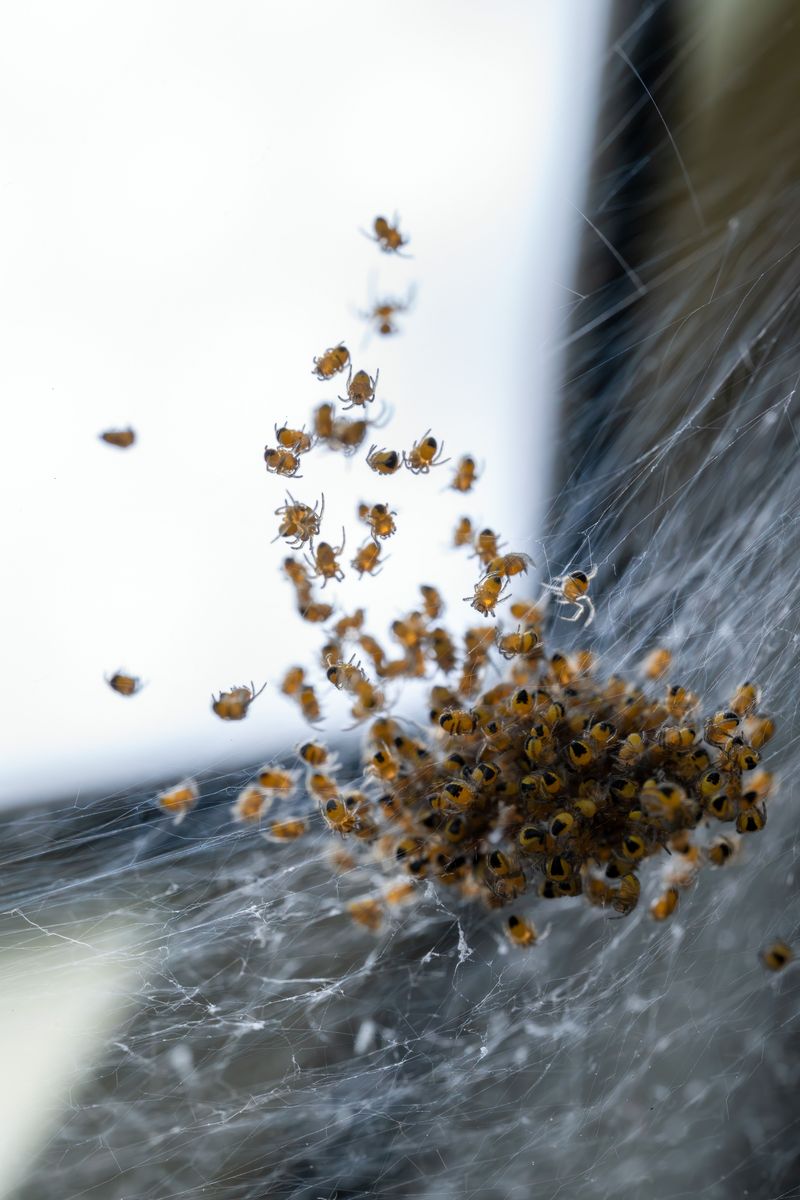
One of the most notable moments in the spider world happens in late summer when spiderlings leave the nest. Hundreds of tiny babies emerge from a single egg sac and immediately start making their own webs.
This dispersal event is called ballooning, and it is as striking as it sounds. Spiderlings release a strand of silk into the breeze and literally float away to find new territory.
Once a spiderling lands in your yard, it gets straight to work. Even at just a few millimeters long, these babies can spin functional webs capable of catching small prey.
A single egg sac can contain anywhere from a few dozen to several hundred eggs, though some species produce far more. When all those spiderlings hatch and disperse at once, your yard can fill with tiny webs almost overnight.
Spiderlings tend to build webs low to the ground at first, tucked into grass blades, flower stems, and leaf litter. As they grow through August, their webs move higher and become more visible.
This dispersal behavior is a major contributor to why Massachusetts yards are suddenly full of spider webs in August. It is not one spider spinning more; it is hundreds of new spiders all spinning at once.
The sheer number of new web-builders arriving in a short window creates that sudden, almost overnight increase of silk you notice in your garden. It catches most people completely off guard.
Watching spiderlings balloon on a breezy August morning is a striking natural behavior to observe. Bring a magnifying glass and prepare to be amazed.
7. Outdoor Lighting Attracts Prey And Spiders
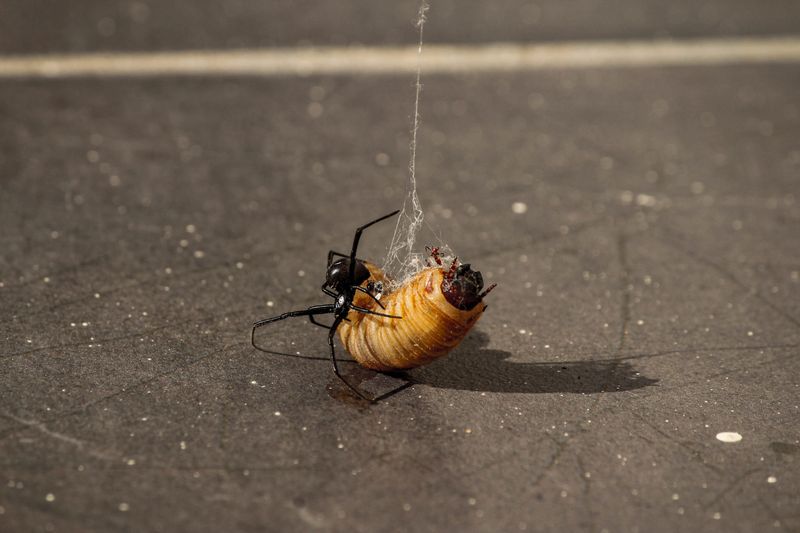
Porch lights, string lights, and floodlights are basically spider magnets during August nights. Artificial light draws insects like moths, gnats, and beetles in enormous numbers after dark.
Spiders figured out this trick a long time ago. Positioning a web near a light source gives spiders consistent access to prey.
You might notice webs appearing near your outdoor lights seemingly out of nowhere. A smart spider will rebuild in the same spot night after night because the food keeps coming reliably.
Porch ceilings, light fixtures, and the corners of windows are prime real estate for web-building spiders in late summer. The steady insect traffic makes those locations irresistible.
Some spider species have been observed favoring artificial light zones over natural areas. They have learned that humans inadvertently create some of the best hunting grounds available.
This lighting effect is a significant reason Massachusetts yards are suddenly full of spider webs in August. More outdoor evening gatherings mean more lights, which means more bugs, which means more webs.
Switching to yellow or amber outdoor bulbs can reduce insect attraction significantly. Fewer bugs near your lights means fewer spiders deciding to set up permanent residence on your porch.
LED lights marketed as bug lights are also worth trying if the web situation near your entry door is getting out of hand.
A small change in bulb color can make a surprisingly big difference. Your porch light effectively works as bait for insects, and spiders take advantage of it.
8. Less Yard Maintenance Leaves Webs Unnoticed
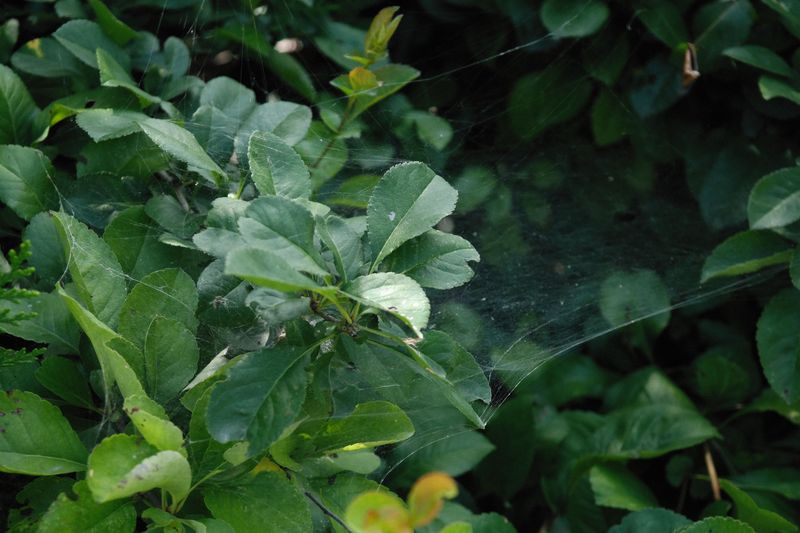
By August, a lot of homeowners have mentally checked out of their yard maintenance routines. The excitement of early summer gardening fades, and the weeding and trimming slow way down.
Tall grass, overgrown shrubs, and unpruned garden beds create perfect anchoring points for spider webs. More structure means more spots to attach silk, and more webs go up as a result.
When you stop walking through certain parts of the yard regularly, webs build up undisturbed for days or even weeks. A web that survives long enough becomes enormous and nearly impossible to miss.
Neglected corners of a yard, like the space behind the shed or under the deck, can accumulate dozens of webs by mid-August. Out of sight really does mean out of mind until suddenly it is not.
This is one of the more human-driven reasons Massachusetts yards are suddenly full of spider webs in August. The spiders did not change their behavior; the homeowners changed theirs.
Regular light trimming and walking through your yard paths every few days naturally disrupts web construction. Spiders will rebuild, but frequent disturbance keeps the silk from piling up in visible areas.
A garden that gets regular attention also signals to spiders that high-traffic zones are not ideal for permanent webs. They tend to relocate to quieter spots when disturbed consistently.
August is actually a great time to reconnect with your yard before fall cleanup season begins. A slow walk through the garden might surprise you with how much has quietly changed since June.