Reasons Your Ohio Tomatoes Stayed Small This Year And How To Fix Them Fast
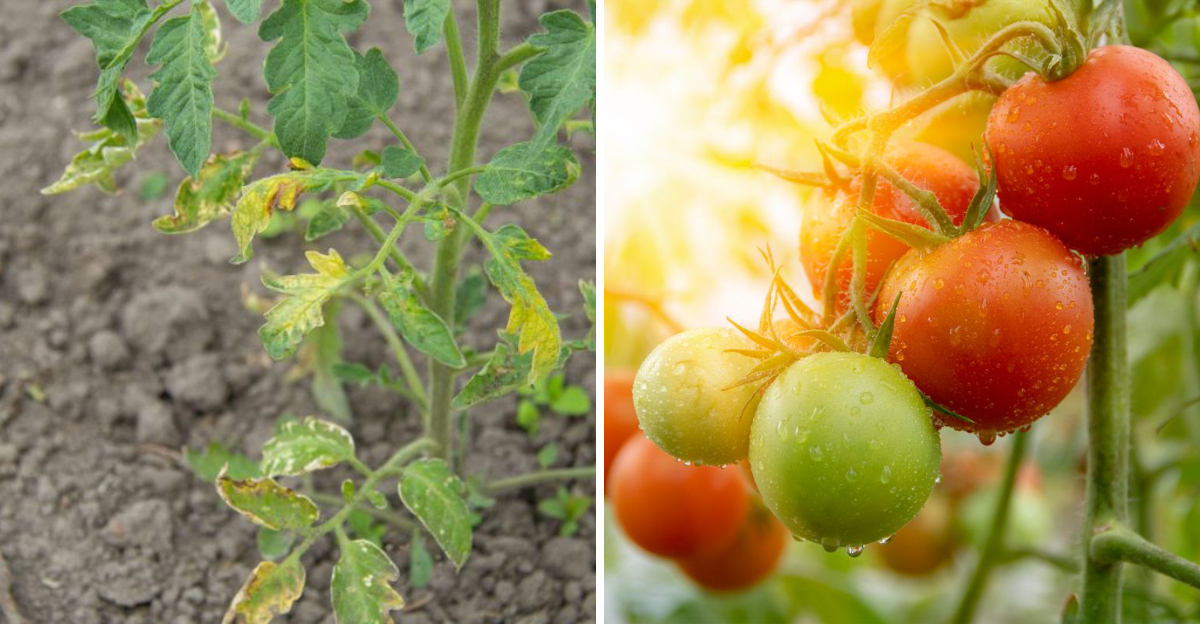
Small tomatoes at the end of an Ohio season sting in a specific way. The plant grew, it fruited, it looked like it was doing its job.
The harvest just never matched what the effort suggested it should. That gap between expectation and yield is almost always traceable to something specific that happened earlier in the season.
Small tomatoes are not a mystery. They are feedback.
The plant recorded every watering inconsistency, every nutrient gap, every pruning decision that sent energy in the wrong direction. The fruit size at the end of the season is the receipt.
The fixes are not complicated. Several can still be applied this season to improve what is left on the vine.
Others set up next year’s garden to avoid the same outcome entirely. Small tomatoes one year and large ones the next is not luck.
It is a correctable problem with a specific list of causes.
1. Check The Variety Before Blaming The Plant
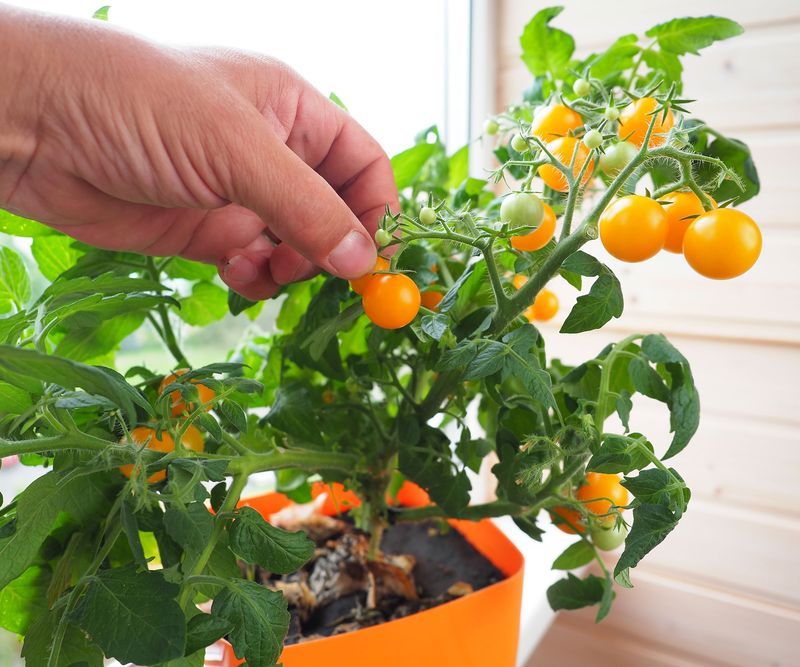
A cluster of ripe red tomatoes sits in your palm, looking perfectly formed but noticeably compact. Before reaching for extra fertilizer or adjusting your watering, check the plant tag, seed packet, or purchase record.
This confirms what size this cultivar is actually supposed to produce. Cherry, grape, plum, paste, salad, and slicing tomatoes each fall into a different size range.
Comparing a cherry variety to beefsteak standards will always lead to disappointment.
Determinate and indeterminate labels describe how a plant grows, not how large the fruit will be. A determinate plant sets most of its fruit at once and stops growing taller, while an indeterminate plant keeps producing through the season.
Neither term guarantees a specific fruit size. Reliable cultivar descriptions from breeders or university extension programs, such as Ohio State’s, list the expected fruit weight or diameter.
Those numbers are your most accurate reference point.
Lost plant tags and unlabeled seedlings create unrealistic expectations without any fault in the growing conditions. A tomato can ripen normally, taste excellent, and remain compact simply because that size is coded into its genetics.
No amount of extra water, fertilizer, or pruning will push a naturally small cultivar past its genetic ceiling. Harvest the fruit at proper ripeness, enjoy the flavor, and record the cultivar name now.
If larger fruit is the goal, choose a verified large-fruited variety for next season.
2. Cool Heat Stress Before Growth Stalls
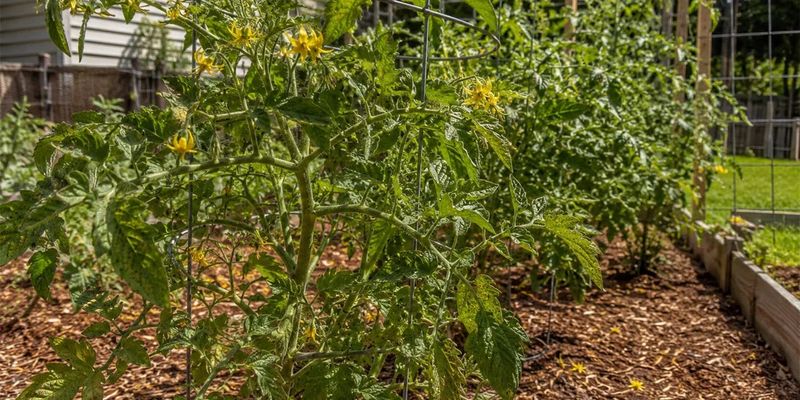
A week of sweltering Ohio afternoons passes, and suddenly the flower clusters look thin, with tiny dried blossoms scattered on the soil below. Prolonged high temperatures affect tomatoes in several ways.
The impact on flowering and fruit set is often more immediate than any effect on the size of fruit already developing. Heat can reduce pollen viability and interfere with fertilization, meaning fewer fruits form in the first place.
Responses vary by cultivar, humidity, nighttime temperature, plant condition, and how many consecutive hot days occur. No single daytime temperature marks a universal failure point for all tomatoes.
Heat stress may also slow overall plant growth, limiting the energy and water available to fruit that is actively expanding. Containers are especially vulnerable because the root zone in a pot can warm and dry out much faster than in-ground soil.
Your Ohio Garden Changes Every Week. Your Plan Should Too.
Gardening in Ohio changes quickly throughout the season. Every Friday you’ll receive a simple weekly plan showing exactly what to plant, prune, fertilize, harvest, and protect so you never miss the right timing.
Practical steps can begin today. Check soil moisture at the root zone and water deeply if the soil is dry several inches down.
Apply a layer of mulch over the root area to slow moisture loss between waterings, keeping the mulch a few inches away from the stem.
A shade cloth can reduce afternoon heat load on container plants or raised beds when extension guidance recommends it for your region.
Cooler overnight temperatures tend to help later flowers develop more normally. But fruit that has already stalled may not gain significant size even after conditions improve.
3. Keep Water Steady While Fruit Sizes Up
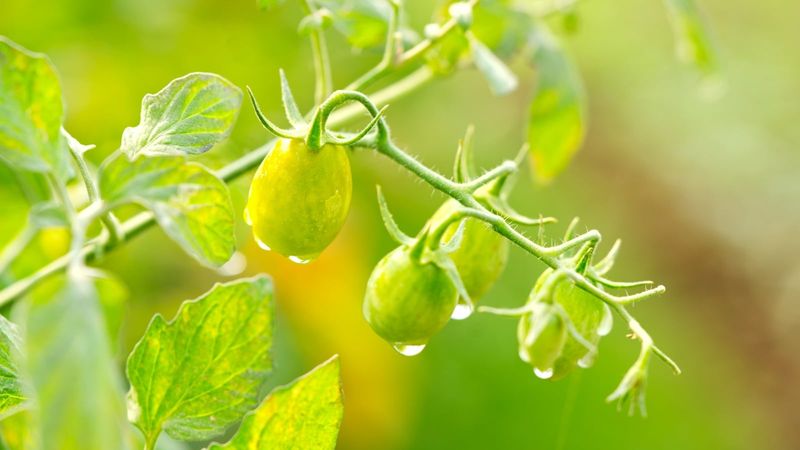
Soil that crumbles to powder one afternoon and sits waterlogged two days later puts developing tomato fruit in a difficult position.
Roots need access to steady moisture while fruit is actively expanding, and swings between drought and saturation disrupt that process.
Repeated cycles of dry soil followed by sudden heavy watering can also contribute to fruit cracking and blossom end rot, both of which reduce the usable harvest.
Steady moisture does not mean keeping the soil constantly saturated. Roots also need oxygen, and soil that stays soggy can suffocate them over time.
Repeated light surface watering may encourage roots to stay shallow, leaving them more exposed to temperature swings and rapid drying.
Soil type, plant size, air temperature, recent rainfall, mulch coverage, container size, and typical Ohio humidity patterns all affect how often and how much water a plant needs.
No single gallon amount applies to every situation.
Check the root zone before watering by pressing a finger or a thin trowel into the soil several inches deep. If the soil feels dry at that depth, water the root zone thoroughly rather than applying a brief sprinkle at the surface.
Container plants need more frequent checks because their limited soil volume dries faster than garden beds. Leaves that wilt during the hottest part of the day do not always signal dry roots.
Confirm soil moisture before adding water, then keep future waterings as consistent as weather and soil conditions allow.
4. Feed The Fruit Instead Of The Foliage
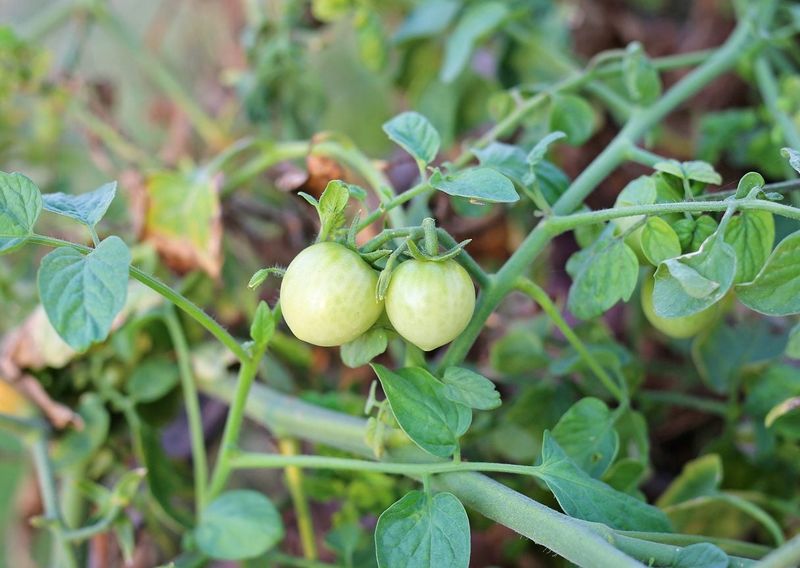
A tall, deep-green plant loaded with leaves but carrying only a handful of compact fruit is a recognizable sight in many gardens. Excessive nitrogen encourages vigorous leafy growth and can delay or reduce the energy the plant puts toward fruit development.
That does not mean nitrogen is always the problem. Inadequate nutrition can also limit plant vigor and slow fruit expansion, so the answer is not simply to add more or less of everything.
Before adding any fertilizer, review what has already been applied this season. Consider the planting history of the bed, the soil type, any visible leaf symptoms, and whether the plants are growing in containers or in-ground.
Container plants may lose nutrients through frequent watering and may need regular replenishment based on product guidelines and extension recommendations.
In-ground gardens benefit most from a soil test – many Ohio county extension offices offer this service – which identifies actual nutrient levels rather than guessing.
Excess fertilizer can damage roots and worsen nutrient imbalances, so applying more without a confirmed need is a risk.
Home remedies such as Epsom salt, eggshell water, or banana peels should not be used without a verified deficiency and reliable evidence that the remedy addresses it.
If a deficiency is confirmed, choose an appropriate labeled product and apply it at the recommended rate. Fertilizer cannot push fruit beyond what the cultivar’s genetics allow.
But correcting a real deficiency can help green fruit still on the vine reach its natural potential.
5. Give Crowded Roots More Room To Grow
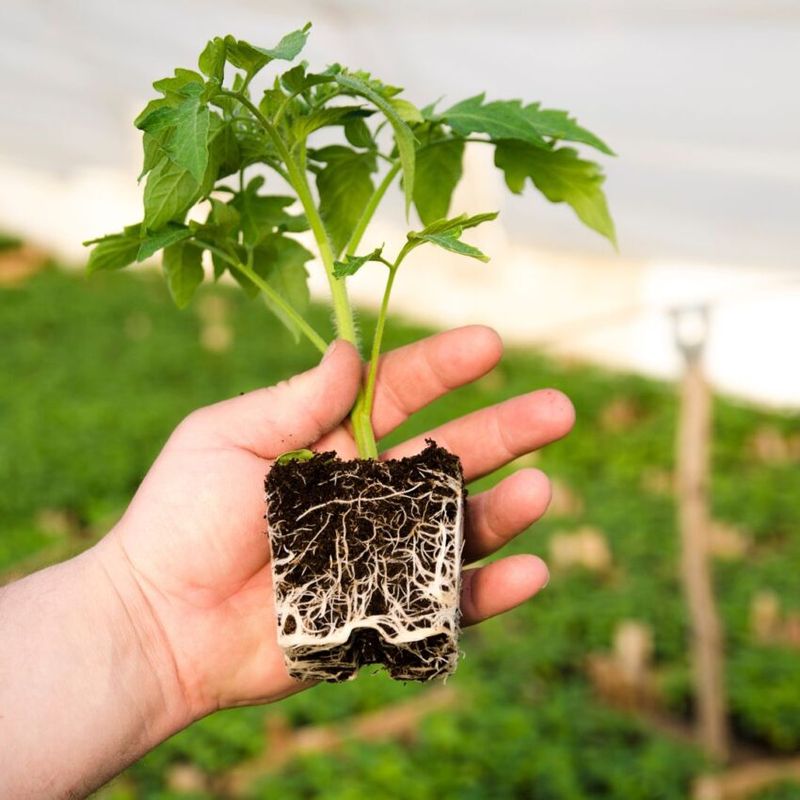
A full-size tomato vine growing from a pot that dries out within hours of watering is sending a clear message about root space. Roots confined to a small volume of soil cannot take up water and nutrients efficiently enough to support a heavily fruiting plant.
Signs of limited root space include rapid drying, stalled plant growth, roots circling or emerging from drainage holes, and repeated wilting even after watering.
Larger cultivars generally need more root space than compact patio or dwarf types. Ohio Extension guidelines suggest that most standard tomato cultivars benefit from containers holding several gallons of quality potting mix.
Adequate depth is needed for the root system to develop. Garden soil placed in a container tends to compact over time, restricting drainage and limiting the oxygen roots need.
A quality potting mix designed for containers maintains better structure and drainage through the season.
Repotting a large, actively fruiting plant carries real risk. Moving it can disturb roots and cause additional stress at a time when the plant is already working hard.
If a container plant is manageable in size, moving it into a larger pot with minimal root disturbance is worth considering. For plants that cannot be moved, focus on consistent watering, appropriate feeding, and mulch to reduce heat buildup in the pot.
In garden beds, remove competing weeds carefully without digging deeply near tomato roots. More root space can support later growth, but it will not transform fruit that has already reached maturity.
6. Restore Full Sun To Fuel Bigger Tomatoes
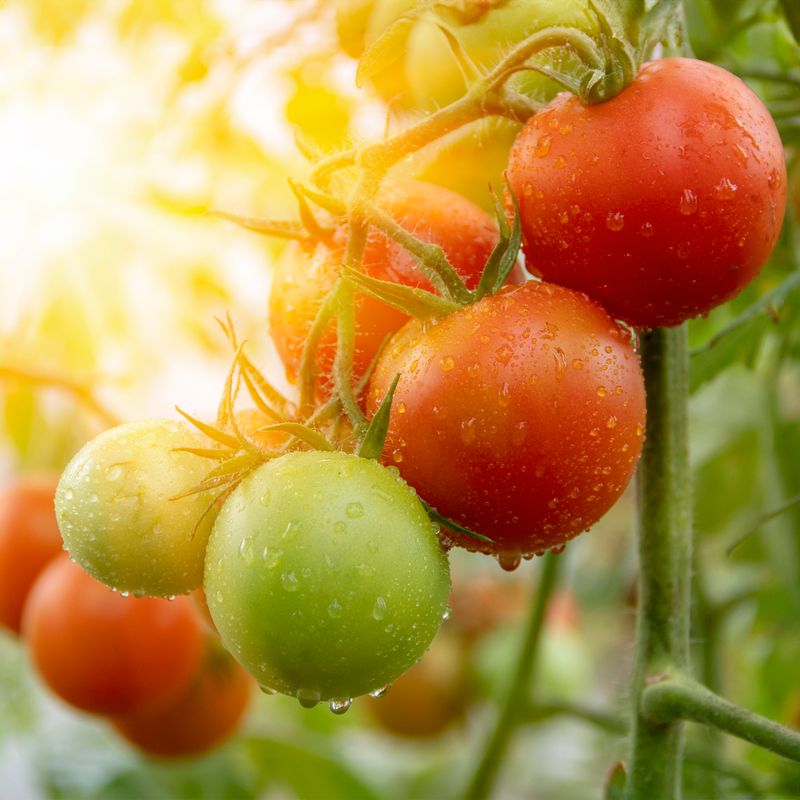
A bed that received strong spring sunshine may now sit under the lengthening shadow of a nearby tree, fence, or taller crop that has grown in through the season. Tomatoes use light to produce the carbohydrates that fuel growth, flowering, and fruit development.
Most extension programs, including Ohio State University Extension, recommend that tomatoes receive at least six to eight hours of direct sun daily, though more is generally better for fruit production.
Shade can reduce plant vigor, slow ripening, and lower total output over the season. Tracking sunlight requires more than a quick glance at midday.
Observe the site in the morning, midday, and late afternoon to understand how shadows move across it. A smartphone compass and sun-tracking tool can help map light patterns more accurately than estimating by eye.
Container plants can often be moved to a brighter position if the pot can be handled safely. Sprawling tomato stems that shade one another can be tied or supported to open up the canopy.
Vegetation outside the garden that blocks light can sometimes be trimmed, provided it belongs to you and can be pruned without harming the plant. Stripping healthy tomato leaves to expose fruit is not a sound approach.
Foliage contributes to photosynthesis and protects developing fruit from intense direct sun. A plant may need strong daily light while also benefiting from some afternoon protection during a severe heat event.
Major site corrections, such as relocating a garden bed, are best planned for next season.
7. Protect Healthy Leaves To Keep Fruit Growing
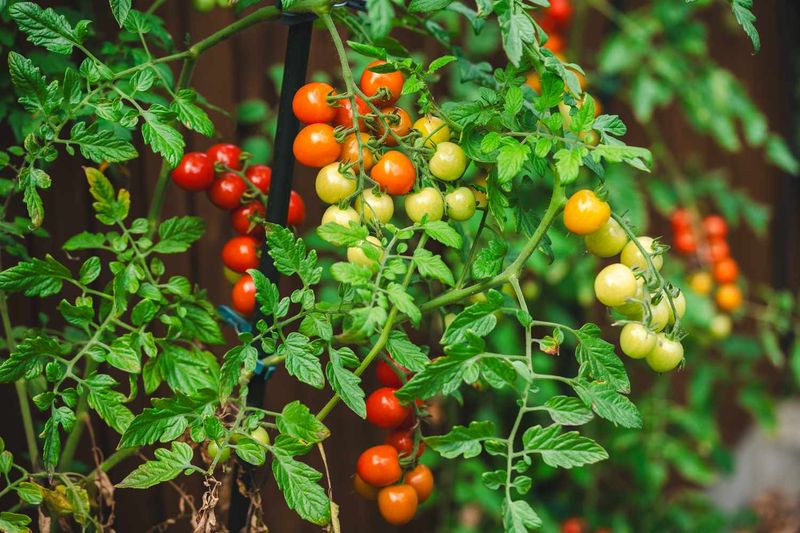
Fruit hanging on a vine that has lost much of its green canopy has fewer resources available to reach its full size. Leaves produce carbohydrates through photosynthesis.
A plant that has been heavily stripped or severely defoliated by disease cannot support developing fruit as effectively as a plant with a healthy canopy.
Removing large amounts of foliage in a single session puts the plant under additional stress at a time when it may already be struggling.
Spotting, yellowing, lesions, and lower leaves declining upward can all signal leaf disease, but none of these symptoms alone confirms a specific problem.
Yellow leaves may result from disease, water stress, nutrient imbalance, root damage, or natural aging as lower leaves mature.
Confirming the cause before removing leaves or applying any treatment prevents unnecessary damage to healthy tissue.
Practical steps to protect remaining foliage include staking or caging the plant to improve airflow. It also helps to water near the soil surface rather than overhead and remove only leaves that show confirmed disease signs.
Clean pruning tools between plants to avoid spreading pathogens. Diseased leaf material should not be composted at home.
The exception is if a reliable source confirms that your composting method reaches temperatures high enough to neutralize the pathogen.
Removed leaves will not grow back, but healthy new growth and the foliage that remains can still support fruit that is actively expanding.
A fungicide is worth considering only after the problem has been identified and extension guidance confirms that treatment can still be effective at this stage.
8. Stop Pests And Disease From Draining The Plant
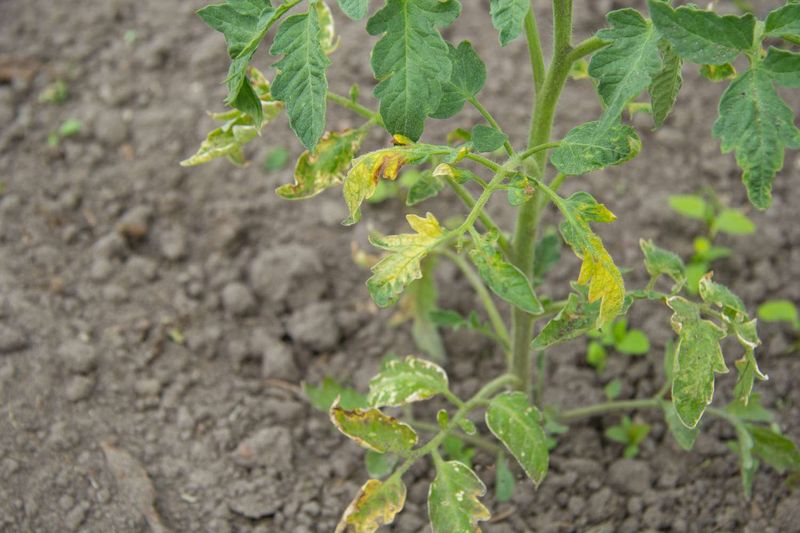
Adequate sun, consistent moisture, enough root space, and a reasonable feeding schedule have all been addressed. Yet the plant remains stunted and the fruit stays compact.
At that point, biological problems deserve a closer look. Pests and diseases are real possibilities, but they should be investigated after environmental and care factors have been reviewed rather than assumed from the start.
Inspect the plant thoroughly before drawing any conclusion. Check the upper and lower surfaces of leaves, the stems, the soil line, and any fruit showing unusual markings.
Look at nearby plants for similar symptoms. Sap-feeding insects such as aphids, whiteflies, and mites can reduce plant vigor when populations are high.
Defoliating caterpillars remove leaf tissue rapidly. Root-knot nematodes damage the root system below the soil surface and are difficult to detect without pulling the plant or examining roots directly.
Vascular wilt diseases block water movement through the stem and may cause rapid wilting that does not recover overnight.
Handpick large caterpillars when they can be identified with confidence. Water sprays or insecticidal soap can reduce soft-bodied insect populations, but insecticidal soap must contact the insects directly to be effective.
Avoid broad pesticide applications without a confirmed identification, as they can affect beneficial insects that support pollination. Contact a local Ohio extension office or plant diagnostic service if the plant is wilting badly or declining without a clear cause.
Also reach out if it’s showing symptoms that do not match any pest or disease you can identify. A precise diagnosis leads to a more targeted response than any general treatment.