What Oregon Gardeners Near Wildlands Should Clear In August Before Fire Season Peaks
By August, an Oregon yard near wildland vegetation can hold more fire fuel than it appears to.
Dry ornamental grasses, dry flower stalks, fallen needles, weeds, and tangled blackberry canes all catch and carry embers.
The most important cleanup starts beside the house, especially around decks, fences, sheds, vents, and gutters.
Remove brittle plant material, rake up debris, trim grasses, and cut back branches that touch structures or hang over roofs.
Look for shrubs growing beneath trees, since they can help flames climb into the canopy. Wood piles, bark mulch, and outdoor clutter also deserve a closer look if they sit near buildings.
The goal is not a bare, lifeless landscape. It is a yard with fewer easy ignition points and clearer breaks between plants.
A few deliberate hours of cleanup now can make your property easier to defend when Oregon’s hottest, driest weeks arrive later in the fire season.
1. Blackberry Canes Build Up More Fire Fuel Than You Think
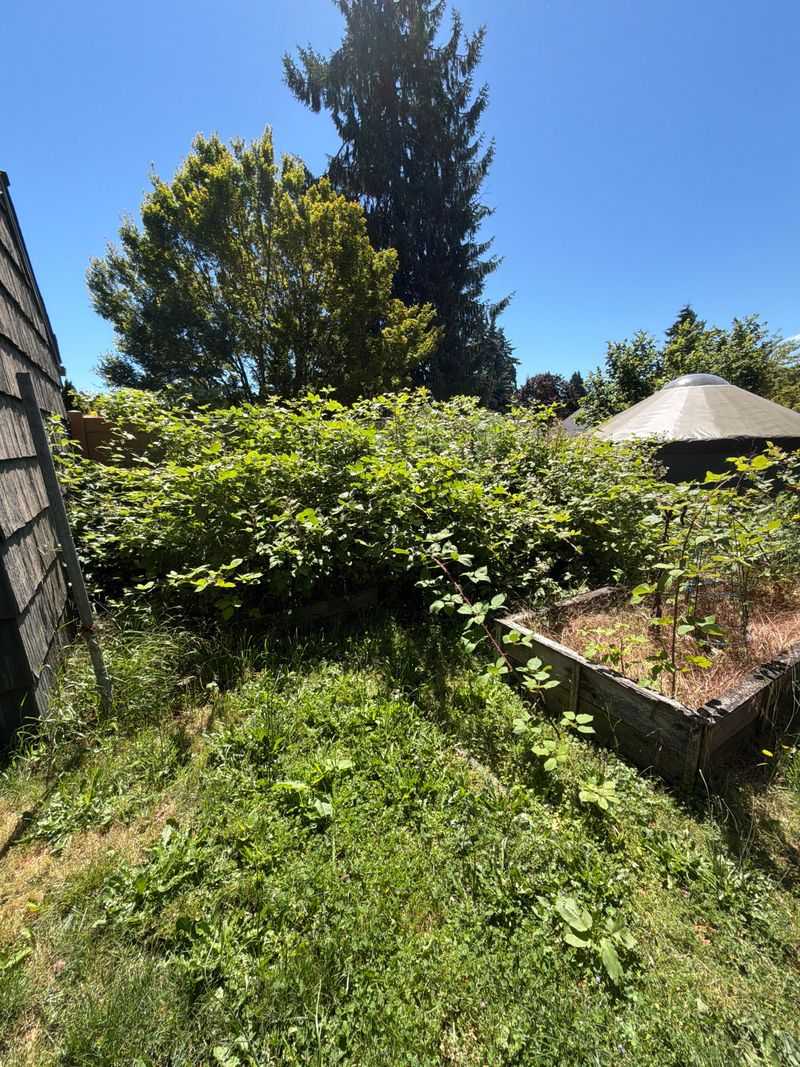
Few plants spread as fast or build up as much dry material as wild blackberry. By August, the canes that grew all spring and summer have become stiff, dry, and highly flammable.
A tangled mass of old canes can hold heat and carry fire across a yard faster than most people expect.
Cutting back blackberry is tough work, but it pays off. Use heavy gloves and loppers to cut canes as close to the ground as possible.
Do not just push the cut canes aside. Bag them or haul them away from your home right away, because loose dry canes on the ground are still a hazard.
Old canes from previous seasons are especially dangerous. They dry out completely and break down into fine, papery material that catches sparks easily.
A patch that looks manageable from a distance can hold hundreds of pounds of dry fuel once you start cutting into it.
Focus on any blackberry growing within 30 feet of your home, garage, or fence first. Then work outward toward the edges of your property.
If the patch is large, tackle it in sections over several weekends. Removing even half of the overgrowth makes a noticeable difference.
Local fire districts often remind residents that blackberry is one of the top unmanaged fire fuels found near homes each season.
2. Climbing Vines Can Carry Fire To Rooflines
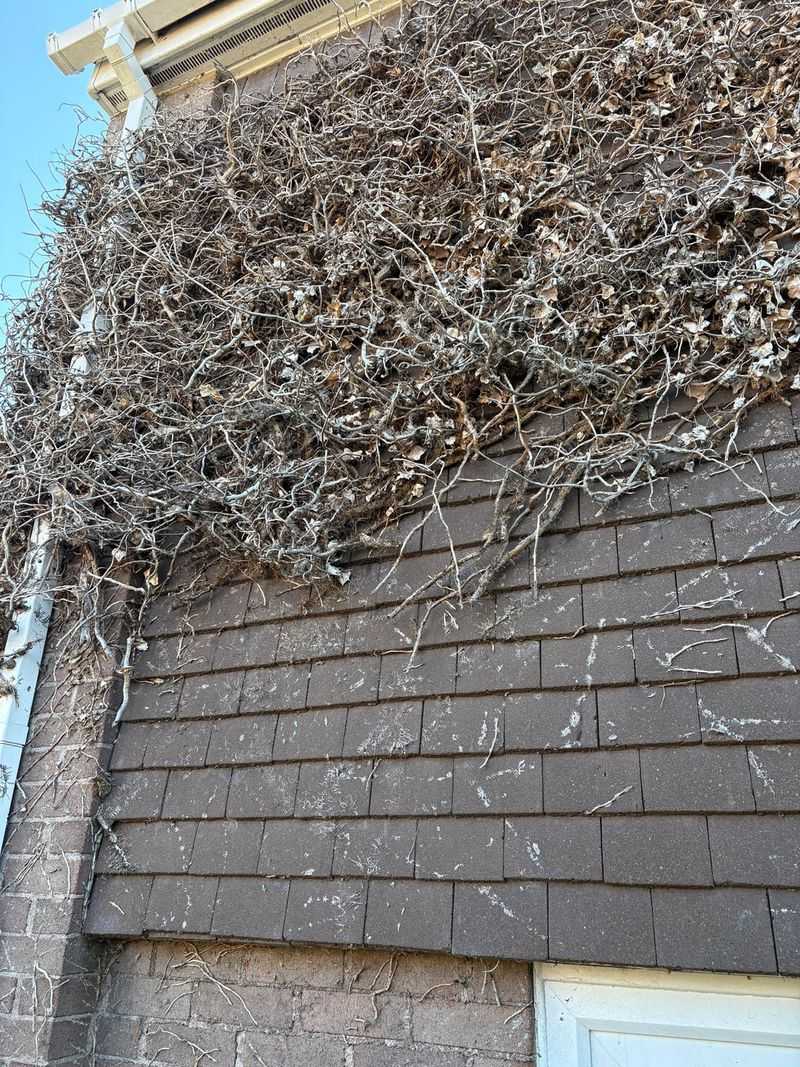
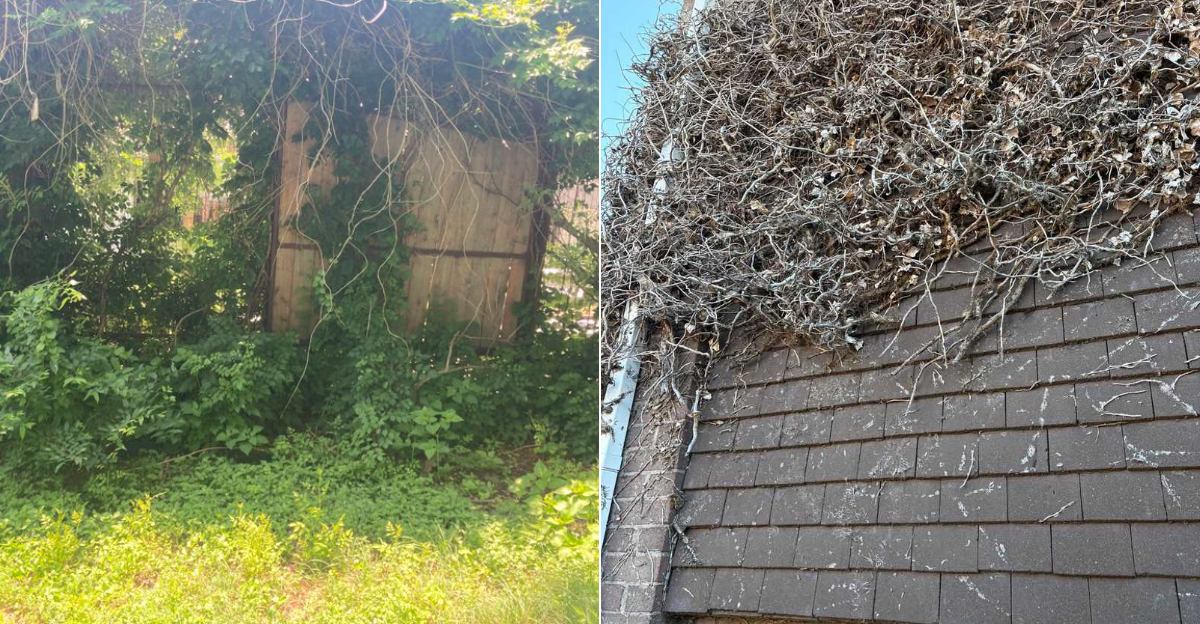
Climbing vines look beautiful on fences and trellises in spring, but by late summer they become something far more dangerous. Vines like Virginia creeper, wild grape, and English ivy dry out in the August heat.
Their stems and leaves turn into a connected ladder of dry fuel that can carry flames from the ground straight up to your roof.
Many gardeners do not think of vines as a fire risk because they associate them with lush, green coverage. But even green-looking vines can have dry interior stems and withered leaves tucked inside.
Once a fire reaches the base of a vine-covered wall, it can climb to the eaves in seconds.
Trim any vines that touch your home’s siding, window frames, or roofline. Cut them back at least three feet from the structure.
Your Oregon Garden Changes Every Week. Your Plan Should Too.
Gardening in Oregon changes quickly throughout the season. Every Friday you’ll receive a simple weekly plan showing exactly what to plant, prune, fertilize, harvest, and protect so you never miss the right timing.
Do not leave the cut material piled against the house. Bag it and move it to your green waste bin or a pickup location away from any buildings.
Pay special attention to vines growing over wooden fences that connect to your yard. A burning fence can act as a pathway, and vines make that pathway much more efficient.
Removing or cutting back vines along fence lines that face open land or neighbor properties is a smart step every August. Oregon’s fire agencies list attached vegetation as one of the fastest ways fire reaches a home’s exterior.
3. Juniper Shrubs Can Burn Hotter Than Expected
Junipers are one of the most popular landscaping shrubs across Oregon, but they carry a serious fire risk that many homeowners overlook. The oils inside juniper needles and wood make them burn intensely.
A mature juniper shrub can ignite and produce a large, fast-moving flame that spreads quickly to nearby plants and structures.
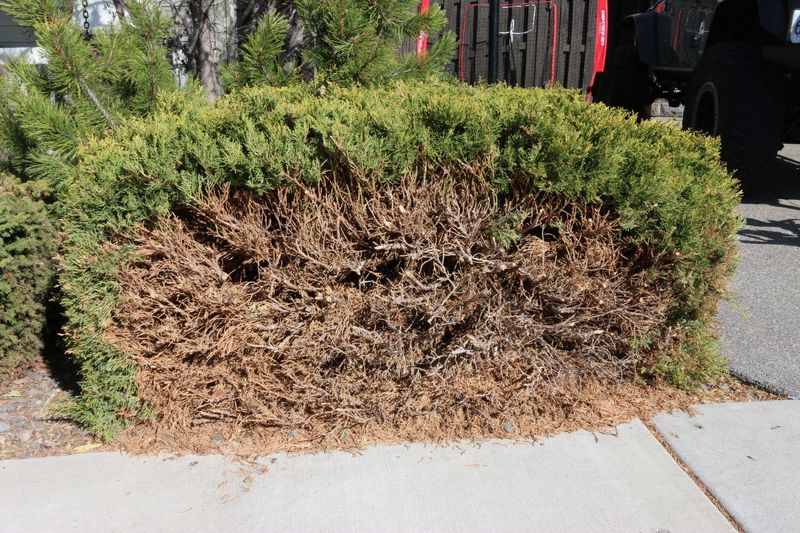
By August, the inner branches of a juniper are packed with years of dry material. From the outside, the shrub may look full and green.
Inside, though, it is often full of brown, brittle twigs and compressed dry debris. That hidden material is what makes junipers so unpredictable during fire season.
If you have junipers within 30 feet of your home, August is the time to act. Remove dry material from the inside of each shrub by hand or with pruning shears.
Trim the lower branches so the shrub sits at least two feet off the ground. This removes the pathway that allows ground-level fire to climb into the plant.
Consider removing junipers that are very close to your home entirely, especially if they are large and overgrown. Replacing them with low-water, fire-resistant plants is a long-term improvement many fire-smart homeowners choose to make.
Local nurseries often carry native plants that offer beauty without the same level of fire risk that dense, oil-rich shrubs like junipers present during dry months.
4. Dry Ornamental Grasses Ignite Easily In Late Summer
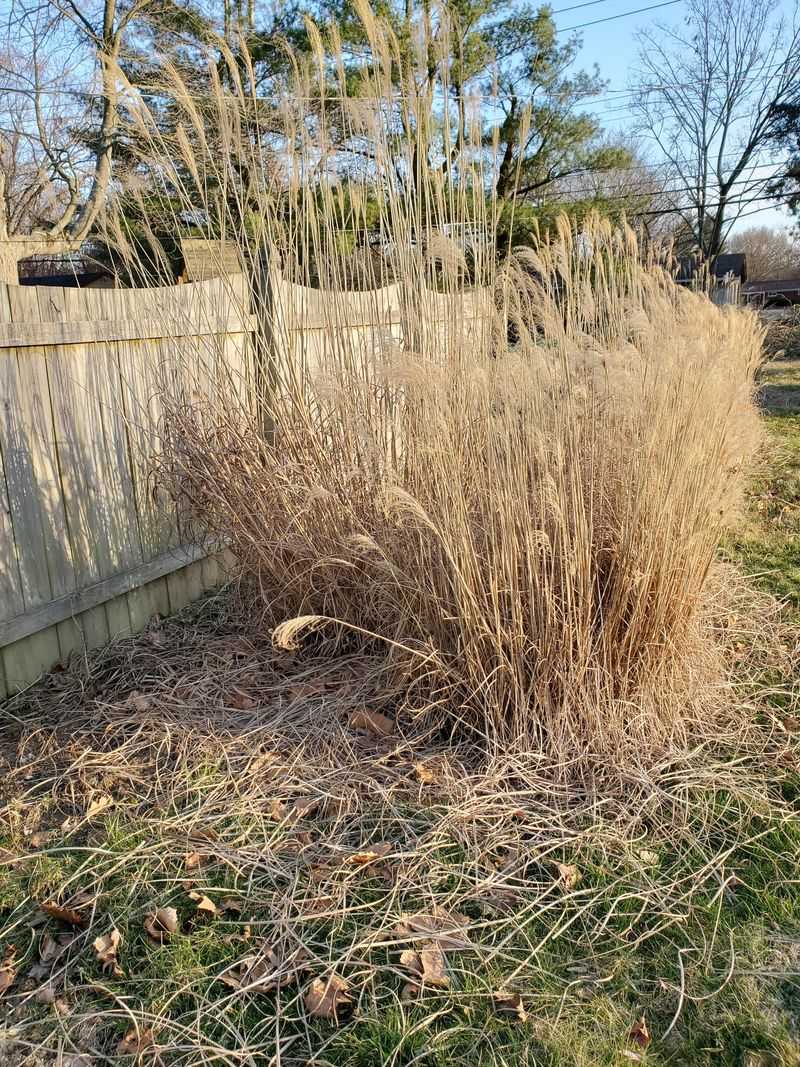
Ornamental grasses are a favorite in Pacific Northwest gardens for their texture and movement. But when August arrives and the rain disappears, those same grasses turn into some of the most flammable plants in your yard.
Their long, fine blades dry out quickly and catch sparks with very little effort.
Many popular varieties, including pampas grass, feather reed grass, and miscanthus, grow tall and dense by late summer. A single clump can hold a large volume of dry material.
When a spark lands in the center of a mature clump, the fire can spread outward in all directions almost instantly.
Cutting ornamental grasses back in August is one of the most effective things you can do to reduce fire risk. Cut each clump down to about six inches from the ground.
Bag the cut material and remove it from your property. Do not leave piles of cut grass sitting near fences, decks, or outbuildings.
If you have grasses planted close to your home or along a fence line that borders open land, consider relocating them or replacing them with low-growing, fire-resistant ground covers.
Succulents, low-growing sedums, and native groundcovers are great alternatives that look attractive without creating the same level of risk.
Many fire-smart landscaping guides used across Oregon specifically list tall ornamental grasses as a high-priority plant to manage or remove before fire season peaks each year.
5. Old Bark Mulch Breaks Down Into Fine Fuels
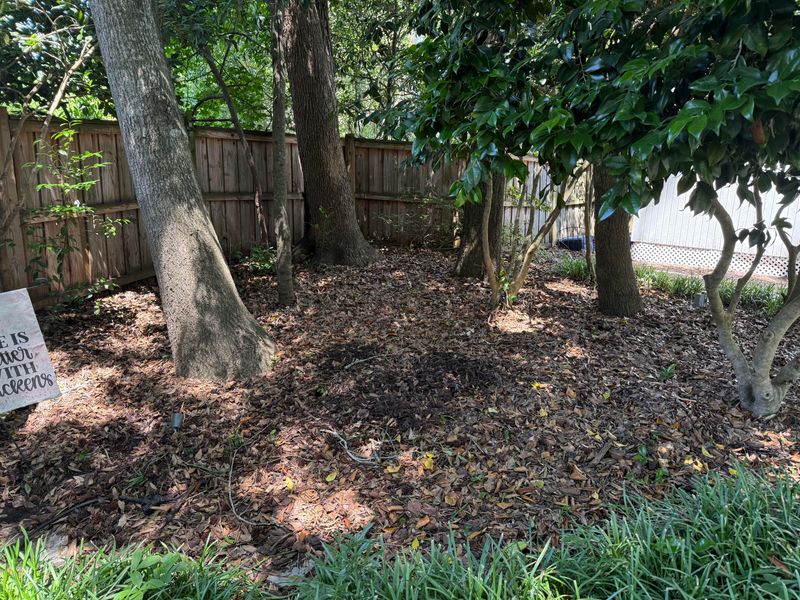
Bark mulch is one of the most common materials used in gardens across our state. It looks tidy, holds moisture early in the season, and suppresses weeds.
But by August, mulch that has been sitting in garden beds for a year or more has broken down into something far more dangerous than it looks.
As bark mulch ages, it dries and crumbles into fine particles. These tiny pieces are much easier for embers to ignite than fresh, chunky bark.
A layer of old mulch around the base of your home acts like a welcome mat for airborne sparks during a fire event. Embers can travel far from a wildfire and land in mulched beds near your foundation.
Rake out old mulch from beds within five feet of your home and replace it with non-combustible materials like gravel, decomposed granite, or river rock.
These materials still protect plant roots and look attractive, but they do not carry fire toward your home the way organic mulch does.
For beds farther from the house, turning and thinning the mulch layer helps reduce the risk. Keep mulch no deeper than two to three inches.
Remove any mulch that has become very fine or powdery, as that material burns the fastest.
Checking and refreshing your mulch before fire season peaks is a simple step that many fire-safe landscaping programs across our state recommend every August.
6. Stored Lumber Becomes A Fire Hazard Near Homes
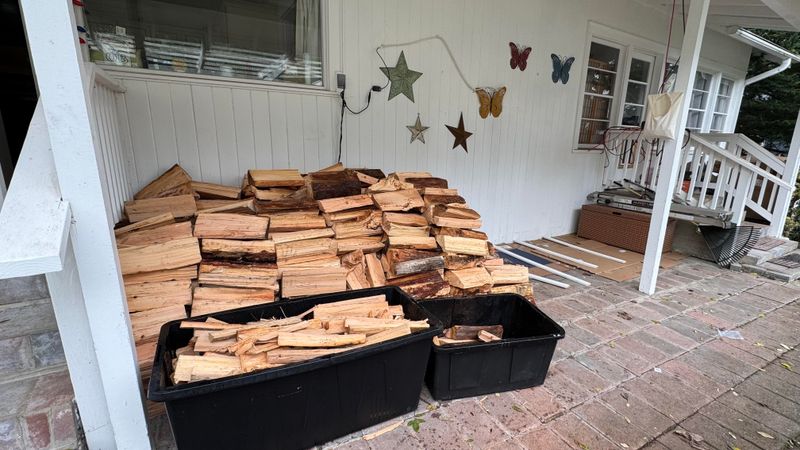
A stack of lumber sitting against the side of your house might not seem like a big deal, but during fire season it becomes one of the most serious hazards on your property.
Dry wood ignites easily, burns hot, and can transfer fire directly to your home’s siding, eaves, or windows.
Many home losses during wildfires start with wood stored too close to the structure.
Leftover building materials, unused fence boards, and firewood are all common in yards near forested areas of our state. Homeowners often store them along the side of the house for convenience.
But convenience during fire season can cost you dearly. Moving stored wood at least 30 feet from your home is one of the most impactful steps you can take in August.
If you have a large woodpile for winter heating, store it away from the house and cover it with a non-combustible cover. A metal-roofed woodshed placed well away from the main structure is a great long-term solution.
Do not stack wood under decks or inside open garages if those spaces connect directly to your home.
Check for any scrap lumber, old boards, or construction debris that may have accumulated near your fence, shed, or home. Even small pieces of dry wood can act as kindling.
Clearing this material in August, before conditions reach their driest point, is a practical step that fire-safe homeowners across fire-prone communities in our state take every year.
7. Unused Garden Supplies Trap Dry Plant Debris
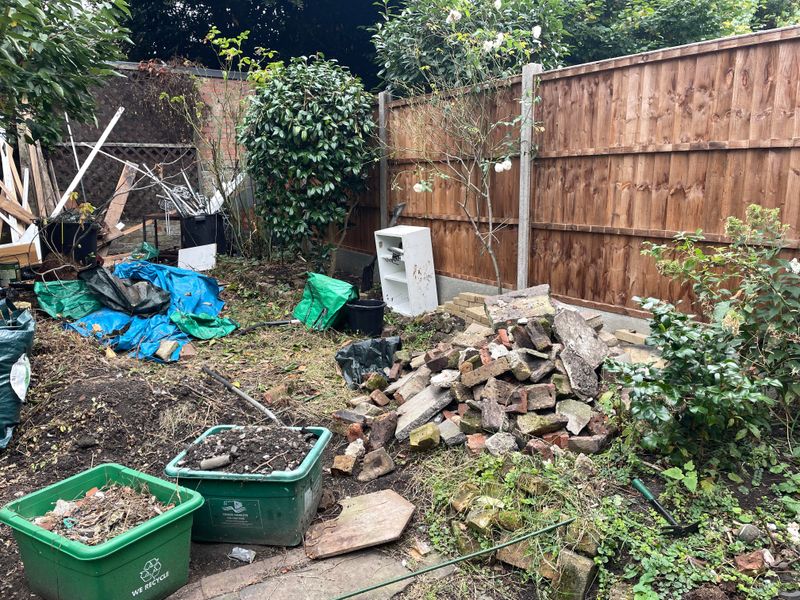
Most gardeners have a corner of the yard where things accumulate. Old pots, empty bags, coiled hoses, broken trellises, and forgotten containers pile up over the season.
What many people do not realize is that these items trap dry plant debris underneath and around them, creating hidden pockets of fire fuel.
Leaves, seed pods, dried grass clippings, and bits of bark collect in the spaces between stored items. By August, that material is bone dry.
A spark landing in a cluttered corner can smolder in that debris for a long time before anyone notices. By then, the fire may have already spread to a fence or structure nearby.
Go through your garden storage areas in August and clear out everything that has built up. Shake out old pots and stack them neatly.
Dispose of empty fertilizer bags and torn plastic sheeting. Sweep or rake the area underneath shelves and benches to remove all accumulated debris.
Organizing your garden supplies also helps you spot items you no longer need. Old wooden trellises, broken cold frames, and rotting raised bed materials can all be fire hazards if left in place.
Replacing wooden structures with metal alternatives is a longer-term improvement worth considering.
Keeping your garden storage area clean and free of debris is a habit that pays off most during the dry weeks of August and September, when fire risk across our state is at its highest point of the year.
8. Neglected Fence Lines Collect Hidden Fire Fuels
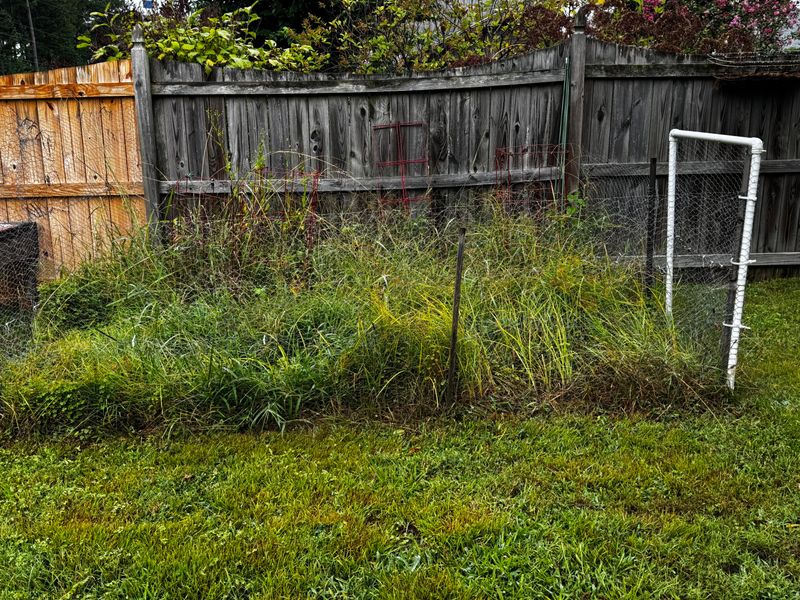
Fence lines are easy to ignore. They sit at the edges of the property, and unless something is obviously wrong, most homeowners walk right past them.
But by August, a neglected fence line can hold a surprising amount of dry plant debris, vines, and compacted leaves that burn readily and carry fire fast.
Wooden fences are especially problematic. They act as both a fuel source and a pathway, connecting open land at the edge of your property to structures closer to your home.
A fire that starts in dry grass beyond the fence can travel along the fence line and reach your garage or deck in a short amount of time.
Walk your entire fence line in August and clear out everything that has built up along the base.
Rake away leaves, pull out grass, and remove any vines that are growing on or through the fence boards.
Pay extra attention to corners and gate areas where debris tends to collect most heavily.
If sections of your wooden fence are rotting or very dry, consider replacing them with a non-combustible material like metal or composite.
Even adding a gravel strip along both sides of the fence base reduces the amount of fuel available at ground level.
Homeowners in fire-prone areas of our state who maintain clean fence lines give themselves a meaningful advantage when fire conditions become severe during the final weeks of summer.
9. Overgrown Property Edges Connect Wildlands To Your Yard
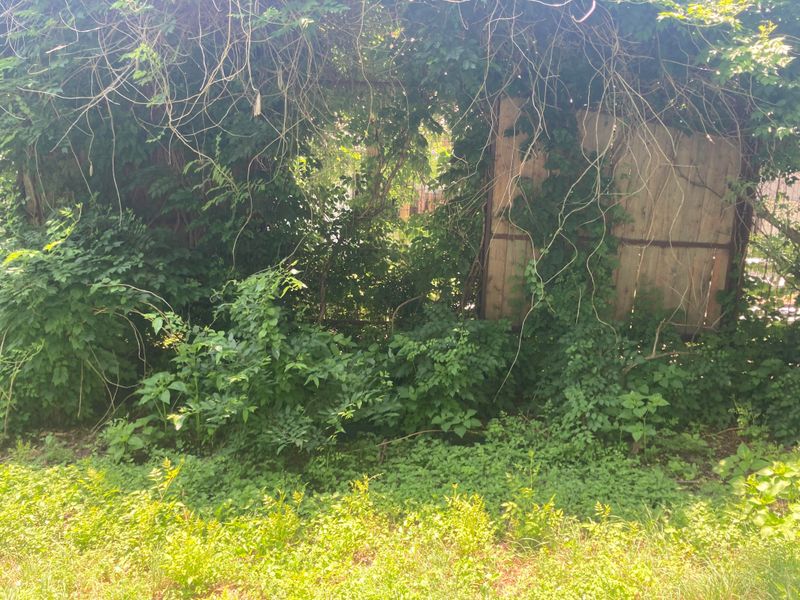
The edge of your property is where your yard meets the wild. In Oregon, that boundary often borders grasslands, forests, or brushy slopes that dry out completely by August.
When that edge is overgrown, it creates a direct connection between wildland fuels and everything on your property. That connection is what fire agencies call a fuel pathway.
Tall dry grass, dense shrubs, and accumulated plant litter along property edges give fire an easy road into your yard.
Once fire enters through an overgrown edge, it can reach structures quickly, especially if other fuels like mulch, woodpiles, or stored materials are nearby.
Clearing the edge breaks that pathway before it becomes a problem.
Mow or cut all grass along your property edge down to no more than four inches. Remove or cut back shrubs that are growing into the boundary zone.
Rake up all clippings and dry plant material and haul it away from the property. Do not let it pile up along the fence or edge, where it continues to pose a risk.
Creating a cleared buffer zone of at least 10 feet along property edges that border open land makes a real difference.
Covering that zone with gravel or low-water, fire-resistant plants keeps it manageable through the rest of the season.
Fire agencies across our state encourage homeowners to treat property edges as their first line of defense during August, when wildfire risk in wildland-adjacent neighborhoods reaches its annual peak.