Ohio Plants That Attract Dragonflies And Reduce August Mosquito Activity
August around an Ohio pond can feel like a tiny airport for mosquitoes.
You step outside with coffee, sandals, or one heroic citronella candle, and the air starts buzzing before you reach the chair.
The pond looks calm. The yard looks pretty. Your ankles have a different opinion. Right by the patio, of course.
A better pond edge does not start with panic. It starts with habitat.
The right shoreline plants give dragonflies places to perch, climb, rest, and hunt. Some stand in shallow water. Some grip damp banks. Some bring insects that keep the whole pond margin lively enough for aerial predators to patrol.
No plant acts like a mosquito force field. Standing water still needs movement, aeration, fish, or proper treatment.
A neglected tub with leaves and warm water is not wildlife gardening. It is mosquito real estate with terrible rent control.
So which plants turn an Ohio pond edge into a better dragonfly zone, and help make August evenings feel less like a snack bar for mosquitoes?
1. Plant Blue Flag Iris At Pond Edges
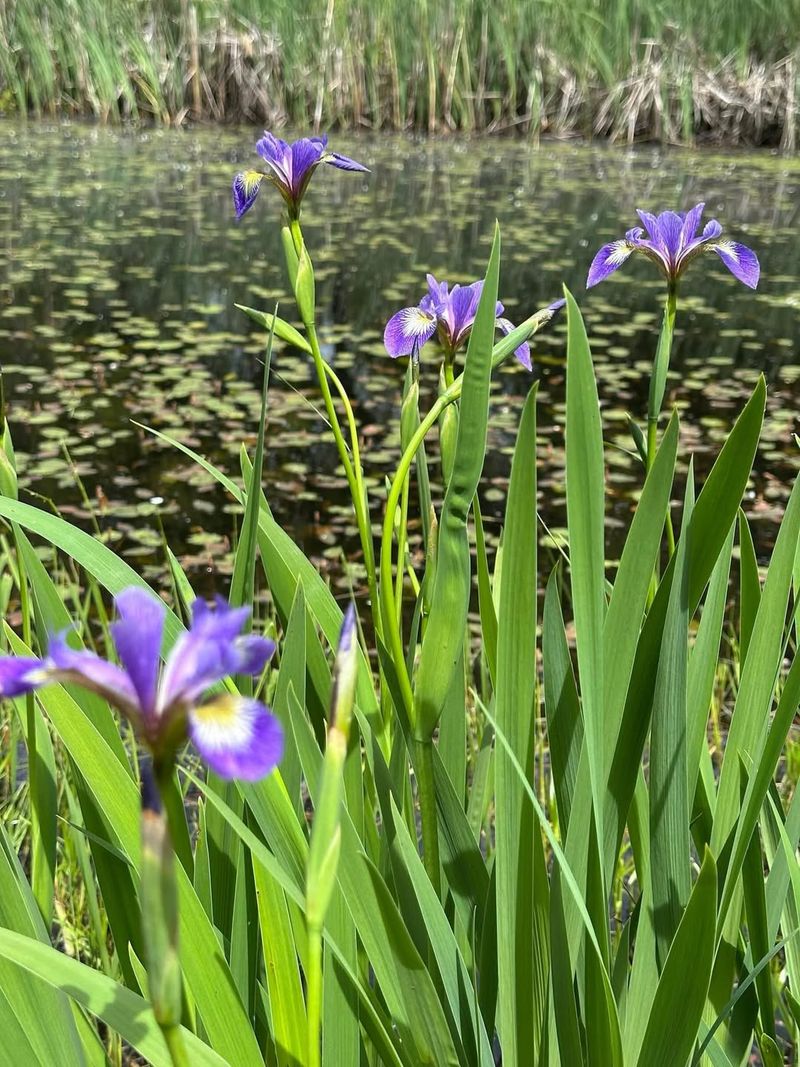
Blue flag iris gives a pond edge instant structure.
Its upright, sword-like leaves rise from moist margins and shallow edges, creating the kind of sturdy vertical grip dragonflies need. When nymphs crawl from the water and prepare for adult life, firm stems and leaves make that climb much easier.
The flowers are a bonus, and a very pretty one. Blue-violet blooms appear in late spring, then the foliage keeps working all summer as a perch station.
Plant it where the crown sits at or just above the waterline. The roots enjoy steady moisture, but the crown should not sit buried under several inches of water.
Full sun gives the strongest growth. Rich, damp soil along a pond margin suits it well.
Space clumps about 18 inches apart. That gives them room to spread without turning the whole edge into an iris convention.
Divide crowded clumps every few years in late summer or early fall. Healthy divisions can move to bare pond edges that need more cover.
Do not cut the foliage back in August. Those leaves are still feeding the rhizomes and offering dragonflies a landing zone.
Blue flag iris is pond-edge architecture with flowers attached. Nice work, iris. No hard hat required.
2. Add Pickerelweed For Emergent Perches
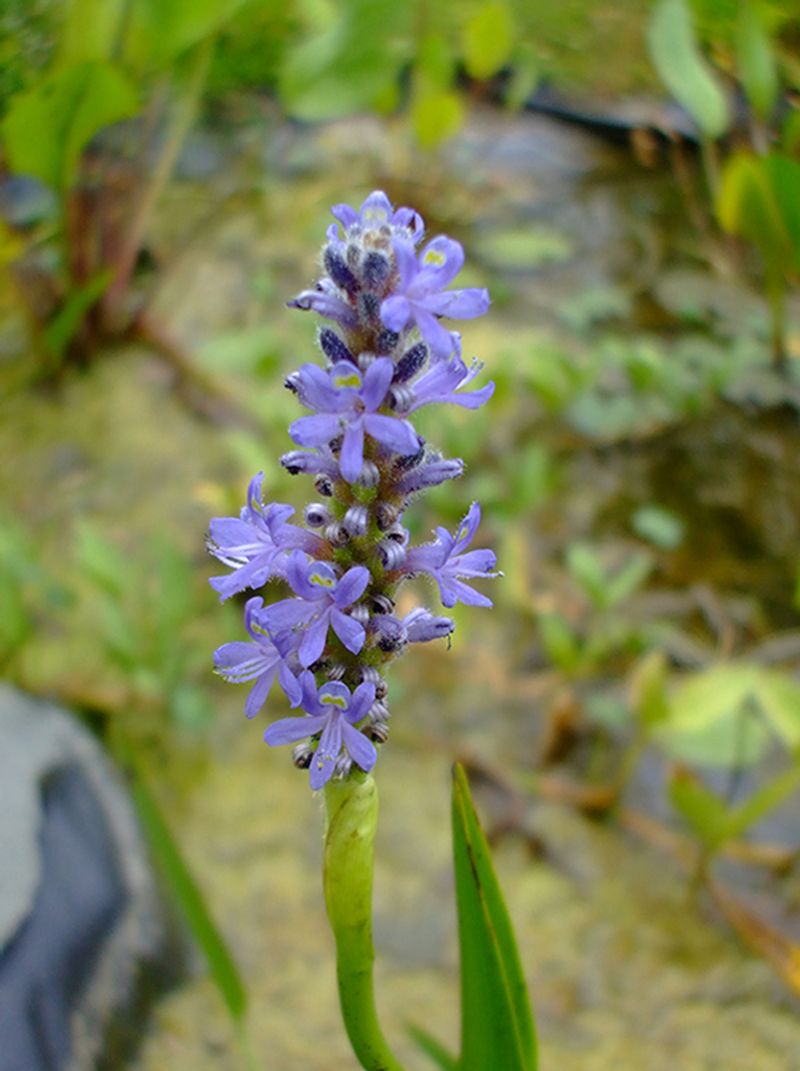
Pickerelweed knows how to stand in the right place.
It roots below the water and sends leaves and purple flower spikes above the surface. That emergent habit makes it one of the most useful plants for dragonflies around an Ohio pond.
Dragonflies need vertical stems near water. Pickerelweed provides plenty of them.
The flower spikes bring their own charm. Bumblebees and other pollinators visit through summer, adding more activity around the pond margin.
Plant it in shallow water, often around 6 to 18 inches deep. Smaller ponds do best with pickerelweed in aquatic containers, because this plant can spread when it feels too comfortable.
Use a fabric aquatic pot with heavy loam or pond soil. That keeps roots contained while still letting stems rise naturally.
Your Ohio Garden Changes Every Week. Your Plan Should Too.
Gardening in Ohio changes quickly throughout the season. Every Friday you’ll receive a simple weekly plan showing exactly what to plant, prune, fertilize, harvest, and protect so you never miss the right timing.
Do not place it in a stagnant tub and expect a mosquito miracle. Warm, still water can invite the exact problem you hoped to reduce.
Keep pond water moving with circulation, aeration, or responsible management. Plants support habitat, but they do not replace basic water care.
In small ponds, one or two containers may be enough. Too much pickerelweed can shade other plants and crowd the edge.
Pickerelweed is the tall friend at the party. It stands out, helps everyone find the place, and somehow brings bees too.
3. Use Arrowhead In Shallow Water
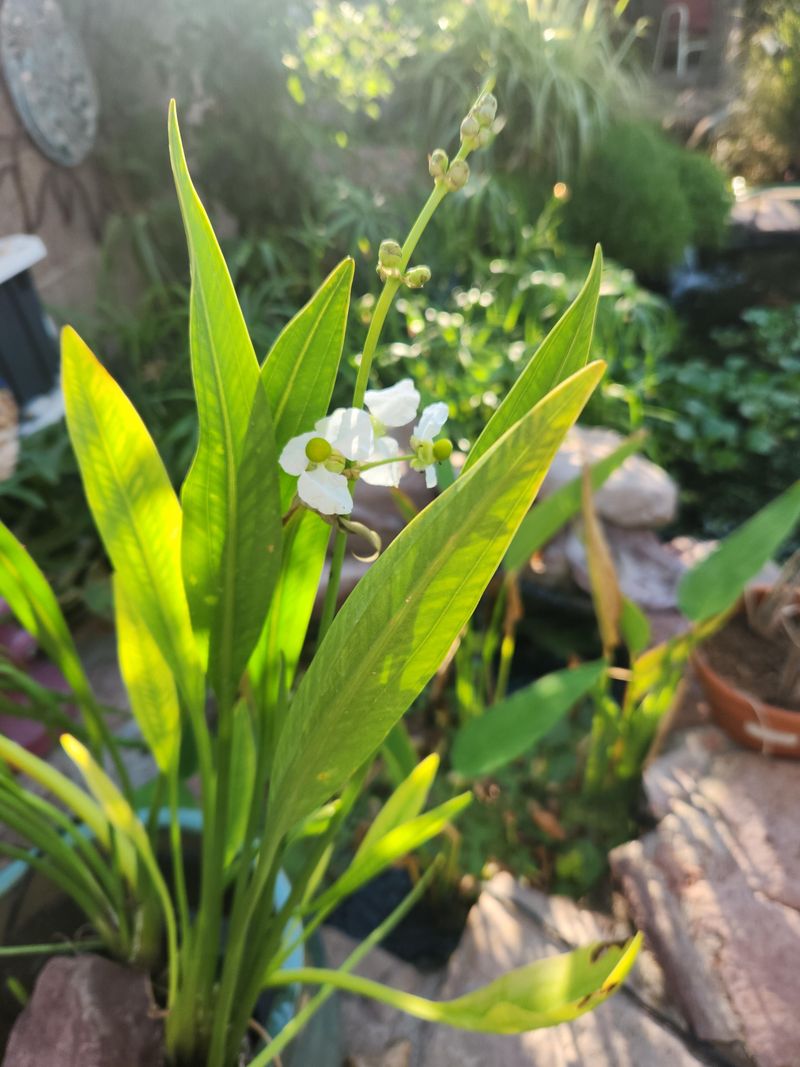
Arrowhead brings drama without needing a stage.
Its pointed leaves rise from shallow water and look exactly like the name promises. That bold shape gives an Ohio pond edge a wild, wetland feel while also creating useful climbing structure for dragonflies.
The stems matter. Newly emerging dragonflies need places to leave the water, cling, and let their wings harden.
Arrowhead can help with that transition. It is not just decoration floating near the edge.
Plant it in water no deeper than about 12 inches for best growth. A submerged container is a smart move in backyard ponds, since arrowhead can spread by rhizomes and tubers.
That spreading habit is great for wildlife in larger wet areas. In a small pond, it can become a bit too enthusiastic. Adorable, but still enthusiastic.
The white summer flowers add quiet beauty above the waterline. They are not flashy, but they fit the pond scene beautifully.
Waterfowl and other wildlife may use the tubers and seeds, giving the plant value beyond dragonfly support.
Keep the surrounding water healthy and moving. Arrowhead in a balanced pond supports habitat. Arrowhead in a warm, forgotten water tub just gives mosquitoes a lease agreement.
Use it where shallow water needs texture, height, and a little wetland personality.
4. Grow Swamp Milkweed Near Sunny Banks
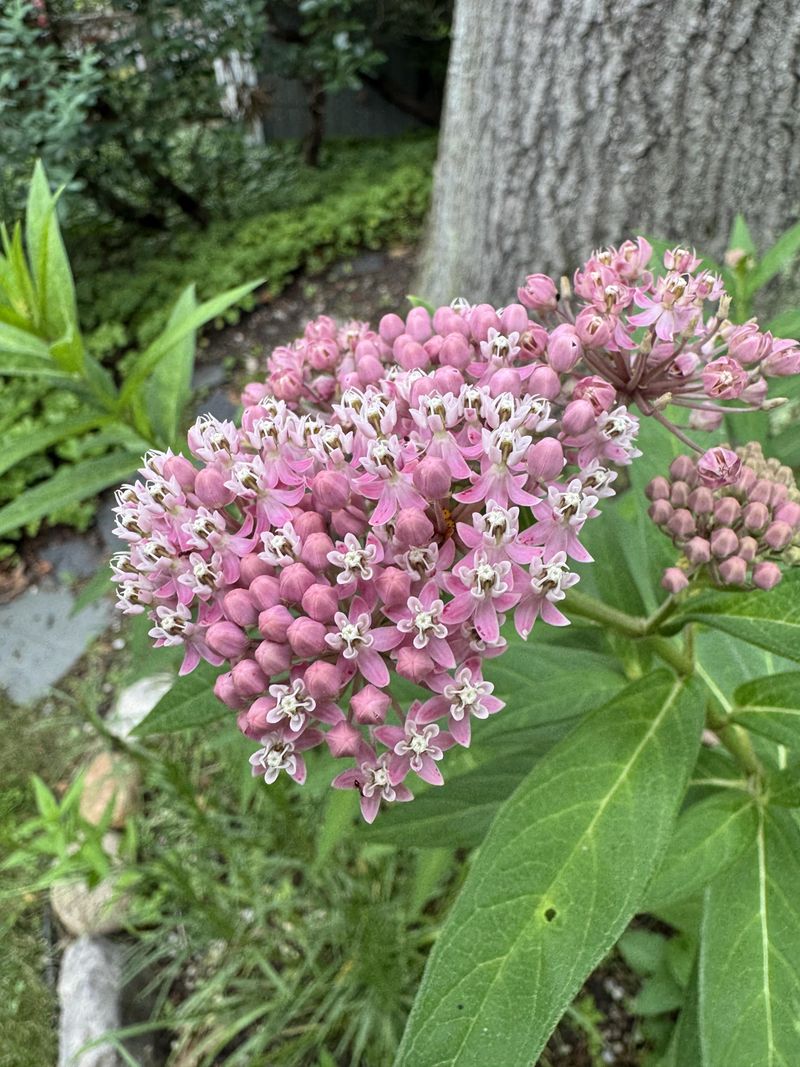
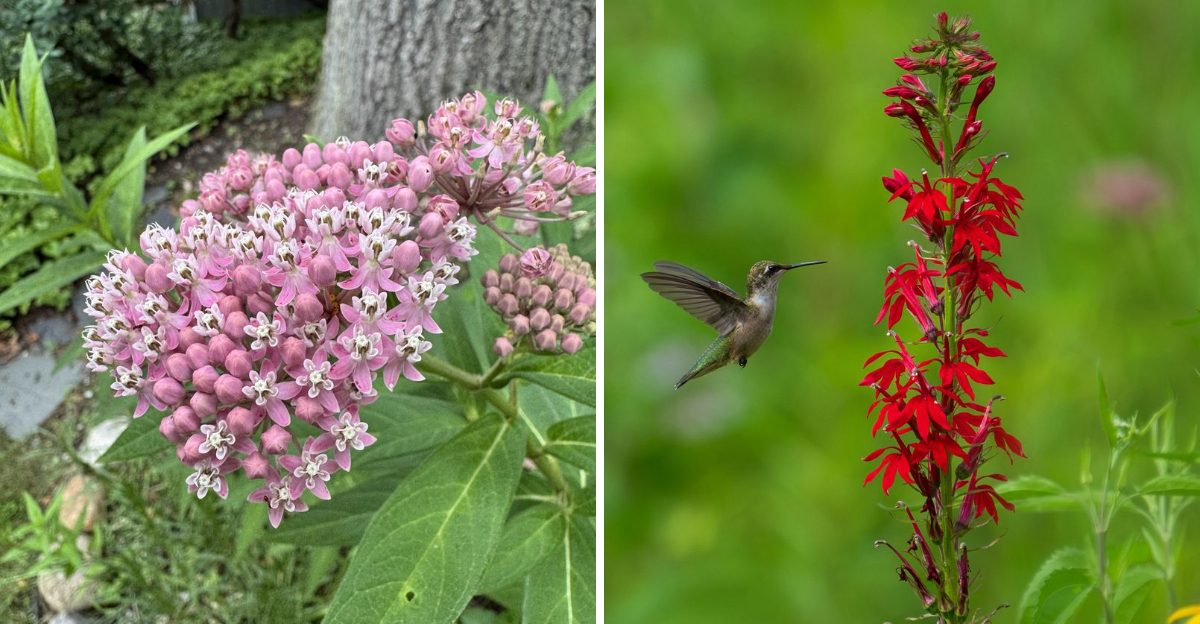
Swamp milkweed is the bright pink overachiever near the pond.
It belongs above the permanently flooded zone, in soil that stays moist but does not keep the crown under water. That makes it perfect for sunny pond banks, rain garden edges, and damp margins just beyond open water.
The flowers arrive in mid to late summer. Pink clusters bring monarchs, bees, wasps, butterflies, and all kinds of small insect traffic.
That insect activity matters. Dragonflies hunt in active places. A lively pond bank gives them more reasons to patrol nearby.
This plant does not repel mosquitoes. It supports the bigger food web around the pond, which is a smarter and more honest role.
Full sun keeps stems strong and flowers abundant. Too much shade can make the plant weaker and less floriferous.
Water new plants consistently through the first growing season. Once established, swamp milkweed handles ordinary dry stretches better than its name suggests.
Do not panic over caterpillar-chewed leaves. Monarch caterpillars use milkweed foliage, and a few ragged leaves can be part of the point.
Plant it in small groups for better visual impact. One lonely stem looks brave. A cluster looks intentional.
Swamp milkweed gives the pond edge color, life, and a little monarch drama. The good kind, with wings.
5. Plant Buttonbush Beside Larger Ponds
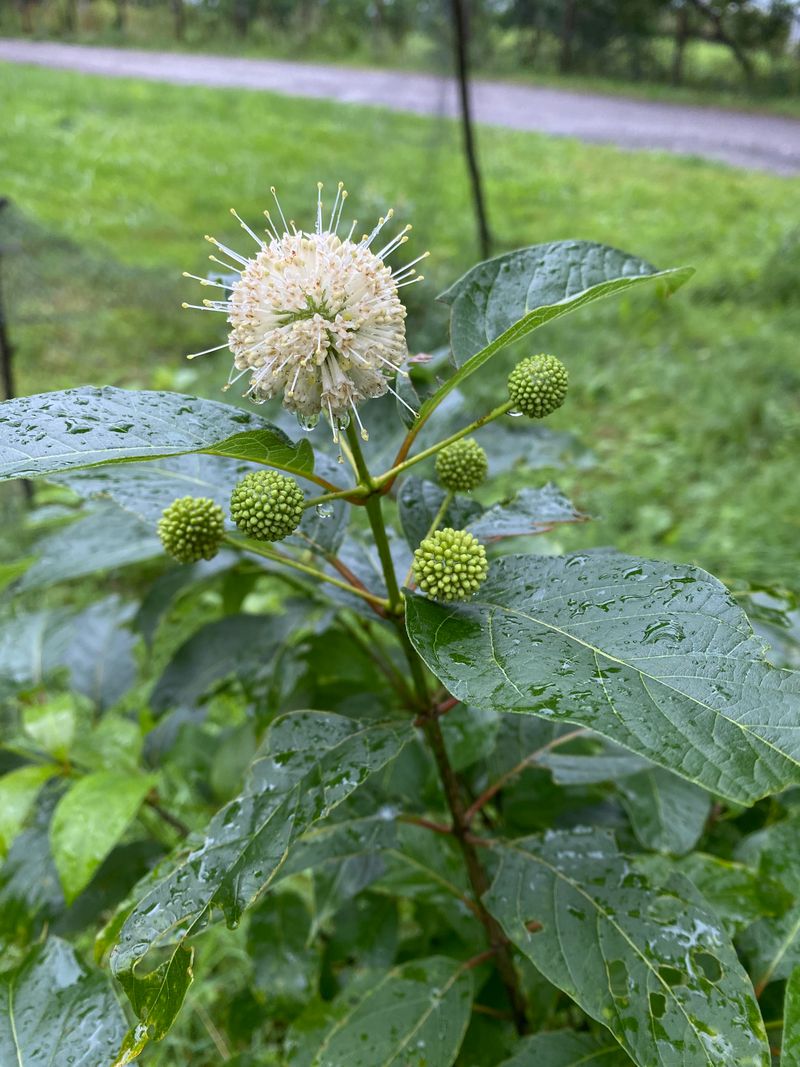
Buttonbush is not a tiny accent plant.
It is a real shrub with real presence, and that makes it best for larger pond edges where it has room to spread. Given space, it becomes a strong shoreline anchor with flowers, cover, and structure.
The round white blooms look like little pincushions. Bees, butterflies, and other pollinators often visit them in midsummer, right when pond life feels busiest.
Dragonflies can use the shrub’s outer twigs and nearby stems as lookout points. They like good hunting perches, and buttonbush brings plenty of branching structure.
Plant it in full sun to partial shade. It handles saturated soil and periodic flooding better than many shrubs.
Give it room. Mature plants can reach 6 to 12 feet tall and wide, which is wonderful along a pond but ridiculous beside a tiny patio bowl. Nobody needs a shrub swallowing the goldfish view.
Use it along larger ponds, wet ditches, naturalized basins, or broad low spots.
Do not cram it into a small water garden. Smaller emergent plants will behave better there.
Buttonbush also helps stabilize damp banks. Its roots can hold soil where heavy rain might otherwise move it around.
This is the plant for pond owners who want habitat with backbone. It brings privacy, pollinators, perches, and a whole lot of shoreline confidence.
6. Add Soft Rush For Landing Stems
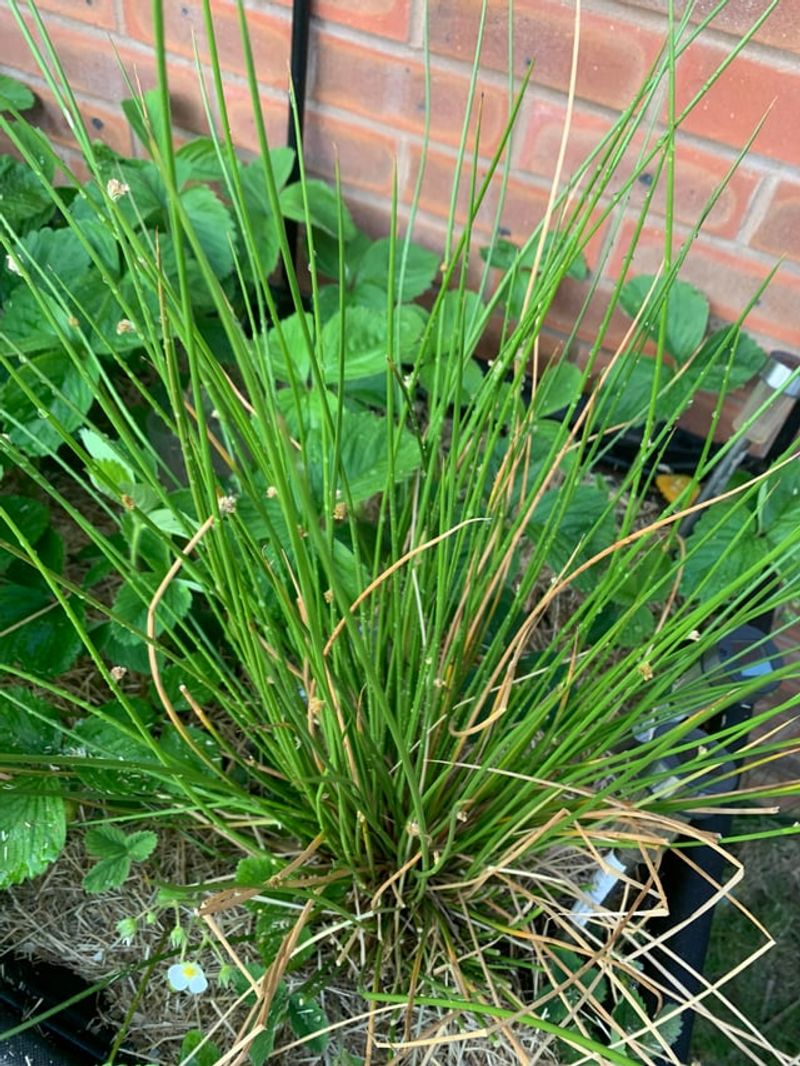
Soft rush may not be flashy, but it works hard.
Its round green stems rise in dense clumps from wet soil, giving dragonflies clean vertical landing spots around the pond margin. Sometimes the most useful plant in the habitat is the one not shouting for attention.
The stems are smooth, upright, and steady. That makes them helpful for dragonflies that need a place to rest or complete their emergence from the water.
Plant soft rush where soil stays consistently wet. The crown can handle seasonal flooding, but it does not need to sit deep in open water.
It fits the transition zone beautifully. That is the area between pond water and drier garden soil, where many plants act dramatic and give up.
Soft rush also helps hold the bank. Its roots grip damp soil and can reduce erosion during heavy rain.
Keep it away from pump intakes, liner seams, and pond hardware. The root system can become dense, and nobody wants a maintenance surprise wearing a green disguise.
Leave at least 18 inches from equipment. That gives the plant space without turning pond care into a wrestling match.
Divide clumps in spring when they get crowded. Fresh divisions can fill other damp gaps.
Soft rush is simple, steady, and useful. It may not stop traffic, but dragonflies know a good landing strip when they see one.
7. Use Cardinal Flower Along Damp Margins
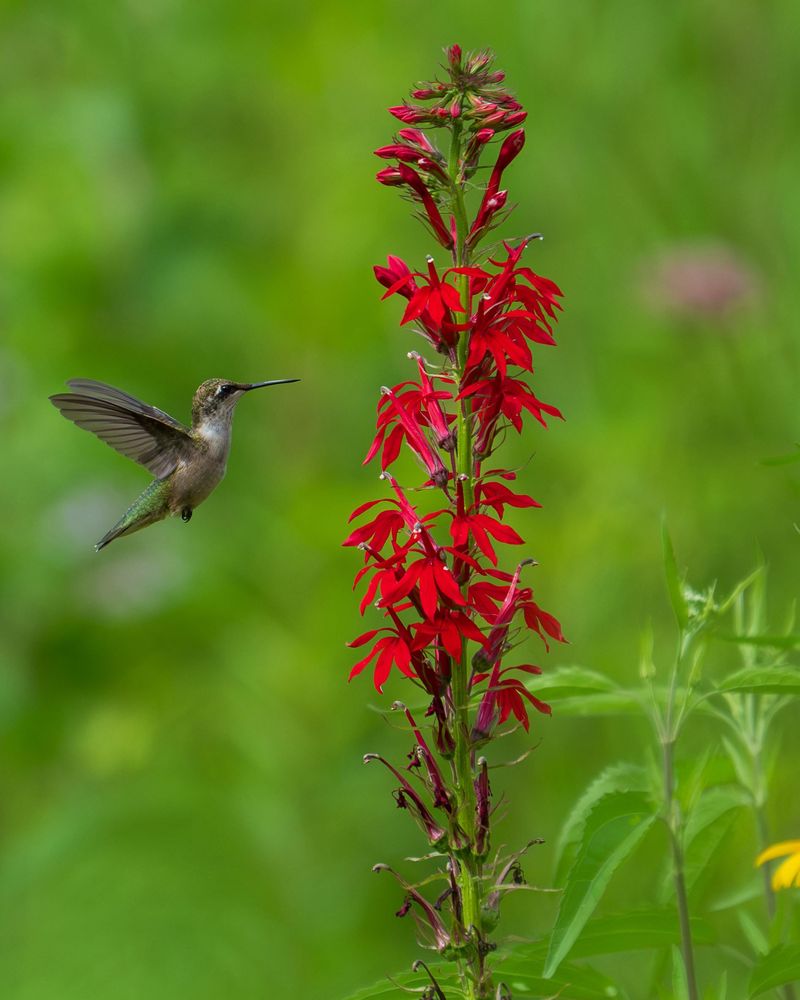
Cardinal flower brings the red carpet to the pond edge.
Its vivid scarlet spikes show up in late summer, just when many damp-margin plantings need fresh color. Hummingbirds often notice it fast, and honestly, they have excellent taste.
For dragonfly habitat, cardinal flower works as part of the larger pond-edge food web. The blooms bring nectar visitors. More insect activity around the margin can keep predators patrolling the area.
Plant it in consistently moist soil. It does best along damp banks, stream edges, rain gardens, and pond margins that do not dry hard in August.
Full sun can work when moisture stays steady. In hotter southern Ohio spots, afternoon shade can help the plant stay fresher.
Group plants in clusters of three to five. A single plant is pretty. A small drift looks like the pond planned its outfit.
Cardinal flower can behave like a short-lived perennial. Let some seed form, and watch for young plants or basal offsets to keep the patch going.
Do not bury the crown under mulch. Keep the base open enough for air and new growth.
Water new plants well during dry spells. Established plants still appreciate steady moisture in late summer.
Cardinal flower is not a mosquito repellent. It is better than that. It brings motion, color, hummingbirds, and a livelier pond edge.