The One Thing You Must Do To Ohio Basil In July Before It Bolts
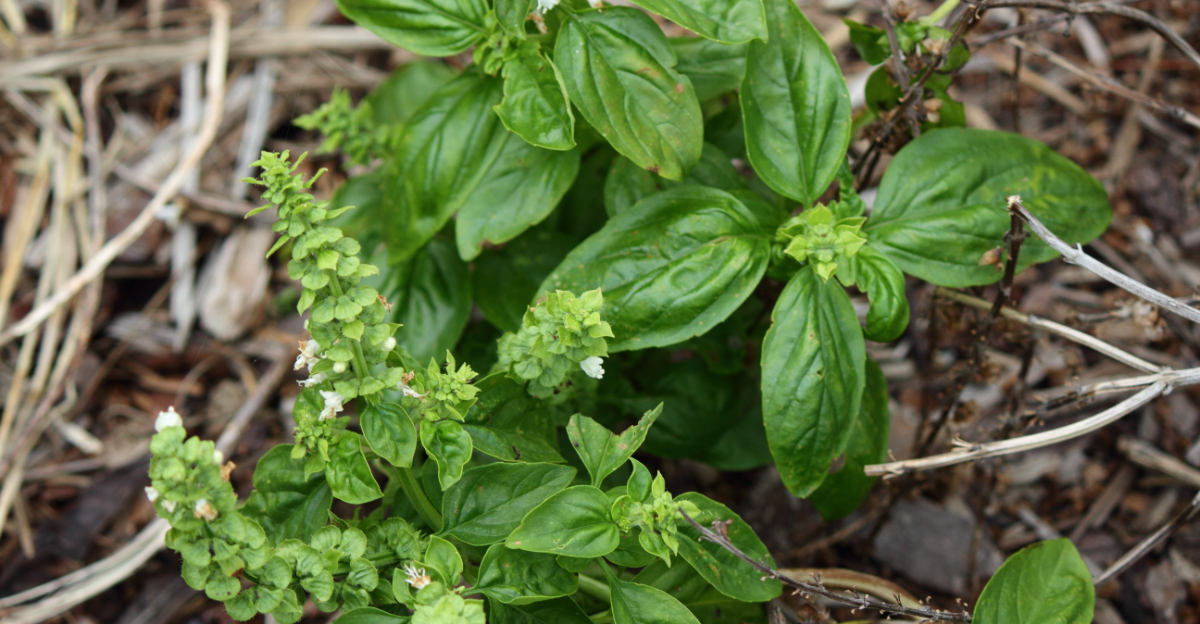
Ohio basil in July is in a race most gardeners do not realize they are losing. The plant looks productive, the leaves are coming in strong.
Nothing about it signals urgency. Underneath that healthy appearance, basil is reading the heat and the long days as a signal to shift gears.
Away from leaves. Toward something the gardener never wanted.
Bolting changes everything. Leaf production drops, flavor weakens, and the plant becomes something you are constantly cutting back just to stay ahead of.
There is one task in July that interrupts that process before it takes hold. It takes minutes.
The difference it makes runs through the rest of the season. Most Ohio gardeners find out about it after their first bolted basil plant.
There is no reason to learn it the hard way.
1. Pinch Basil Tips Before Flower Spikes Form
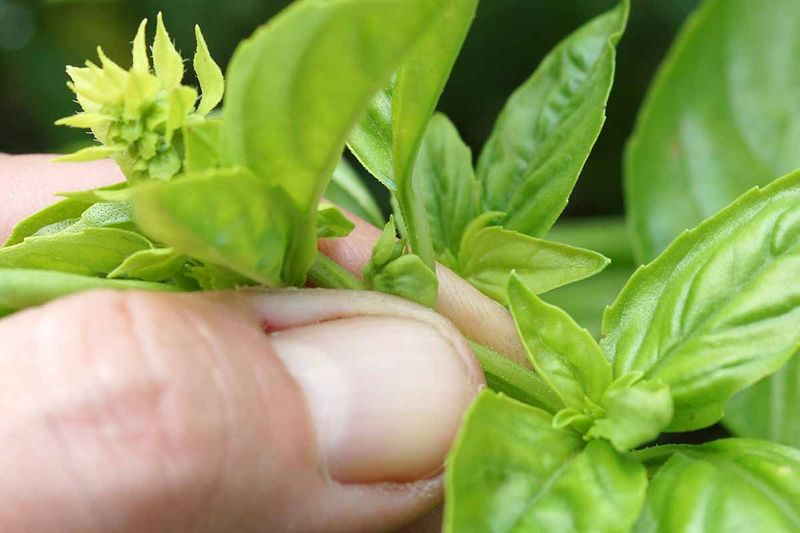
A tiny bud at the top of a basil stem is the plant’s quiet signal that leaf season is shifting. Once that bud opens into a flower, the plant puts its energy into seeds rather than leaves.
July is when this happens fast in local Ohio herb gardens, so checking your plants every few days matters.
Look at the very top of each stem. If you see a small cluster of buds forming, pinch them off right away with your fingers or small scissors.
You do not need special tools. Just catch the tip before it opens and remove it cleanly.
One pinch does not solve the whole season. Basil keeps trying to flower, especially during hot July stretches.
Plan to check every three to five days and remove any new buds you spot. The more consistently you do this, the longer the plant stays in leaf-making mode.
Heat, long daylight hours, and plant maturity all push basil toward flowering. Pinching slows that process but does not stop it permanently.
Think of it as buying yourself more time for better harvests while summer cooking is at its peak.
2. Cut Above A Leaf Pair To Force Bushier Growth
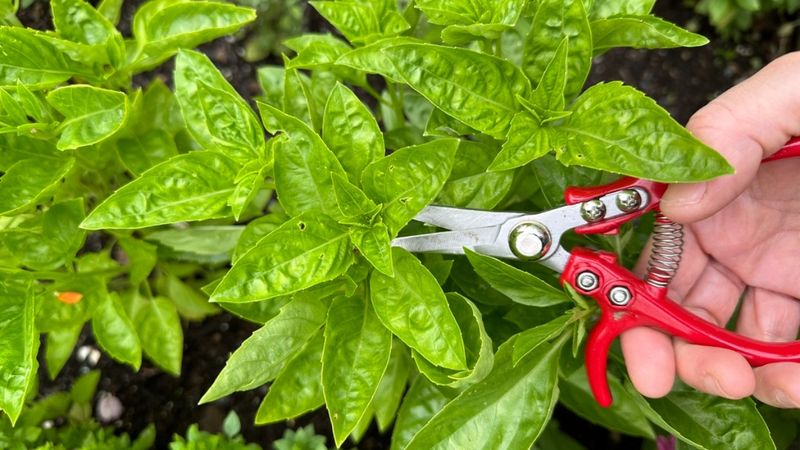
A leggy basil plant with one tall stem and few side branches is usually the result of cutting in the wrong spot. The place where you make your cut matters just as much as how often you cut.
Snipping just above a healthy leaf pair tells the plant to send out two new shoots from that spot instead of continuing upward.
Use clean scissors or garden snips for this. You can also pinch with your fingers if the stem is soft and young.
Find a healthy pair of leaves partway down the stem and cut just above that pair, leaving the leaves attached to the plant.
Avoid cutting below all the leaves or leaving a bare stem above the soil. Bare woody stems at the base of basil do not always push new growth reliably.
Stay above healthy leaf pairs and let the plant work from there.
Over a few weeks of consistent cutting above leaf pairs, your basil will become fuller and more branched. More branches mean more tips, and more tips mean more chances to harvest tender leaves.
Your Ohio Garden Changes Every Week. Your Plan Should Too.
Gardening in Ohio changes quickly throughout the season. Every Friday you’ll receive a simple weekly plan showing exactly what to plant, prune, fertilize, harvest, and protect so you never miss the right timing.
This technique works in containers, raised beds, and in-ground herb gardens across this state.
3. Harvest Often So The Plant Keeps Making Leaves
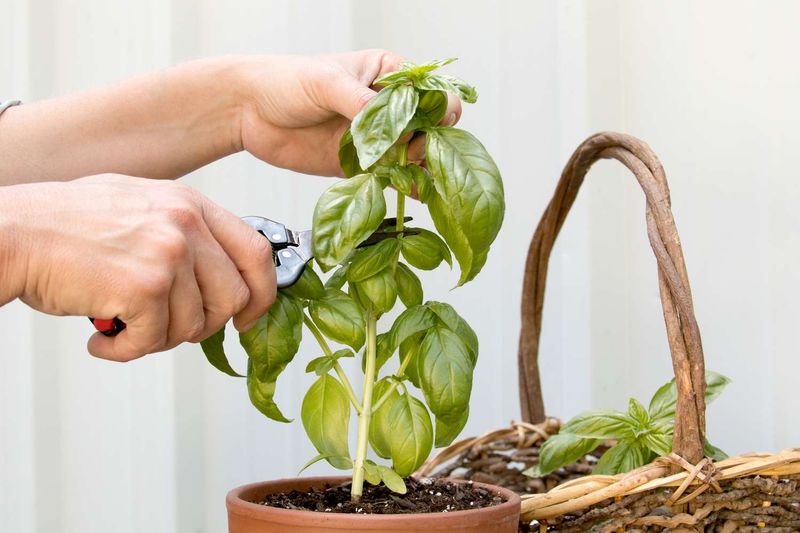
Regular harvesting is one of the most practical things you can do to keep basil producing through July. When you harvest from the top of each stem rather than randomly plucking lower leaves, you signal the plant to keep making new growth.
Leaving the plant untouched for weeks is one of the quickest ways to end up with a tall, flowering plant with few usable leaves.
Aim to harvest at least once a week during July. If your basil is growing quickly in the heat, every five days works even better.
Take stems from the top, cutting above a leaf pair each time, and use what you harvest in the kitchen right away or store it properly.
Pulling only a few random leaves from the bottom does not give the plant the same signal. Top-growth harvesting keeps the canopy active and encourages side shoots to fill in below.
The result is a plant that stays compact, leafy, and useful longer into the season.
Even if you have more basil than you can use fresh, keep harvesting anyway. Make a simple basil oil, freeze leaves in ice cube trays, or blend a quick pesto.
Consistent harvesting is worth the effort.
4. Watch For Tiny Buds In The Center Of Stems
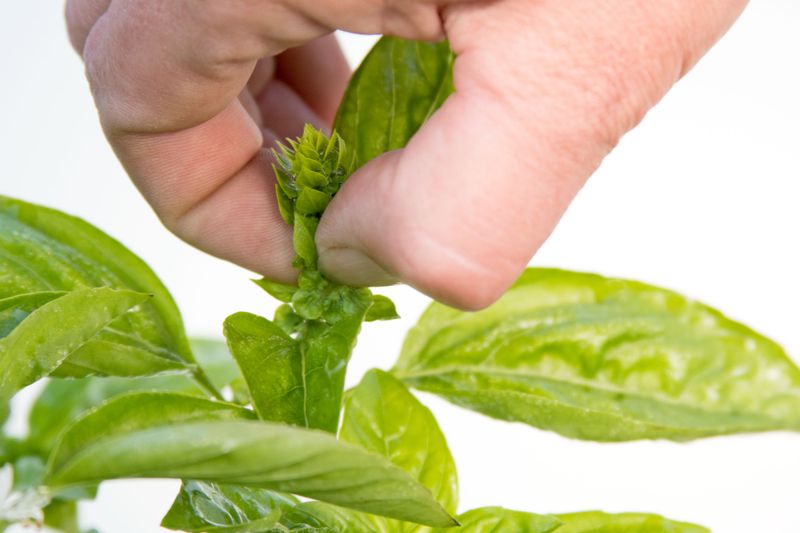
Spotting basil’s early warning signs takes a little practice, but once you know what to look for, it becomes second nature. The first clue is a small cluster of tiny buds forming right at the center of the stem tip.
These buds are easy to miss if you only glance at the plant from a distance.
Get close to your plants every few days during July. Look down into the center of each stem where the newest growth is.
If you see a tight cluster of small, pointed buds forming among the tiny leaves, the plant is preparing to flower. Catch it at this stage and pinch it off before the buds open.
In this state, July heat can accelerate bud formation quickly. A plant that looked fine on Monday might show visible buds by Thursday, especially during a stretch of hot, dry days.
Checking more often during heat waves is worth the few minutes it takes.
Once the buds open into flowers, leaves near the top tend to get smaller and less flavorful over time. Catching the buds before they open keeps that flavor shift from happening as quickly.
Early observation is the simplest tool in your July basil routine in Ohio.
5. Water Deeply Before July Heat Stresses The Roots
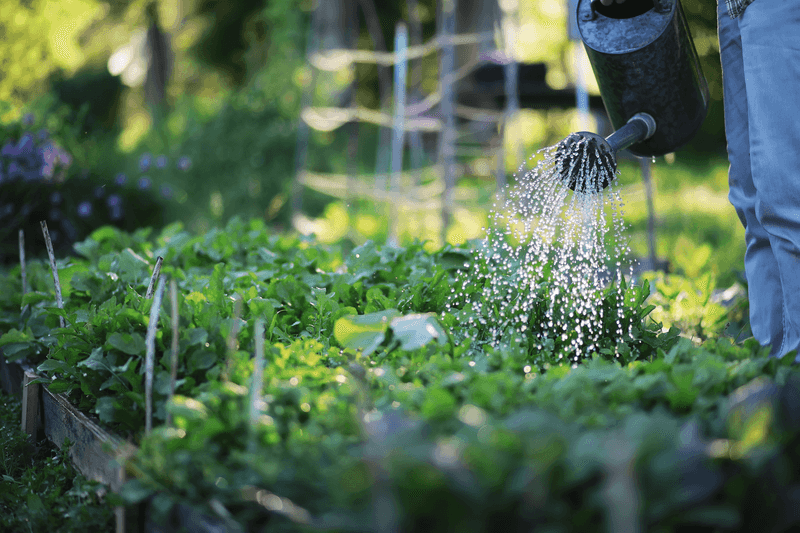
Dry roots during a July heat wave push basil toward stress faster than almost anything else. When basil is thirsty and hot at the same time, it tends to rush toward flowering as a survival response.
Keeping the soil consistently moist, without letting it get soggy, helps the plant stay in better shape through summer heat.
Check the soil before you water rather than watering on a fixed schedule. Push your finger about an inch into the soil.
If it feels dry at that depth, it is time to water. If it still feels damp, wait another day and check again.
Water at the base of the plant, not overhead. Wet leaves in hot sun can lead to spotting and other problems.
Water deeply so moisture reaches the roots, then let the soil surface dry slightly before watering again.
Container-grown basil dries out faster than in-ground plants because pots heat up quickly in direct sun. Patio pots and small containers may need checking once a day during July heat waves.
Dark-colored containers absorb more heat and dry out even faster. Moving pots to a slightly cooler spot during the hottest part of the afternoon can reduce moisture loss and root stress.
6. Skip Heavy Feeding That Pushes Weak Growth
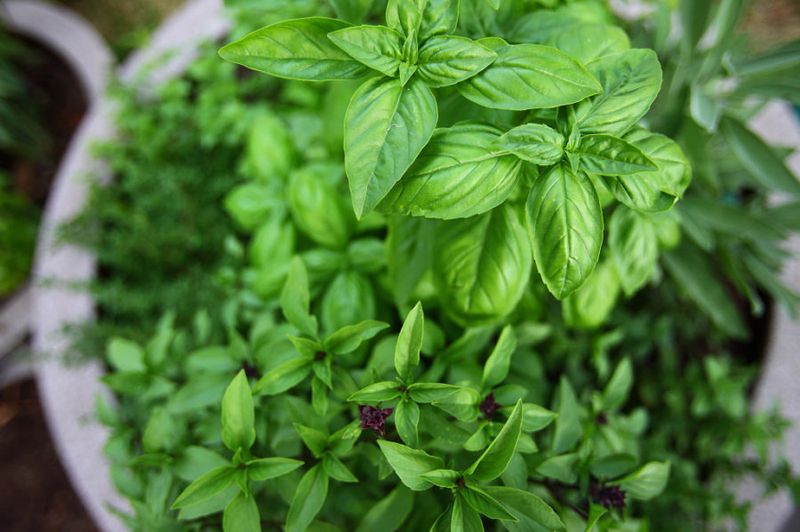
More fertilizer does not mean more flavor, and it definitely does not fix bolting caused by heat, plant age, or missed harvests. Heavy feeding in July can push basil to produce soft, watery growth that wilts quickly in the heat and does not hold up well for cooking.
Moderation is the smarter approach during the hottest part of the growing season.
If your basil is in good garden soil or a quality potting mix, it may not need much supplemental feeding at all during July. Check the color of your leaves.
Pale or yellowish leaves on a well-watered plant might signal a nutrient need. Deep green, healthy leaves on an actively growing plant usually do not.
If you choose to feed, follow the product directions and lean toward the lower end of the recommended rate. A diluted liquid fertilizer applied every few weeks is generally enough for container basil.
In-ground basil in amended soil often needs even less.
Avoid the idea that a feeding boost will reverse bolting. Once heat and long days push the plant toward flowering, fertilizer will not undo that.
Focus your energy on pinching, harvesting, and watering instead. Those habits do more for July basil than any fertilizer schedule.
7. Give Basil Morning Sun And Afternoon Relief In Extreme Heat
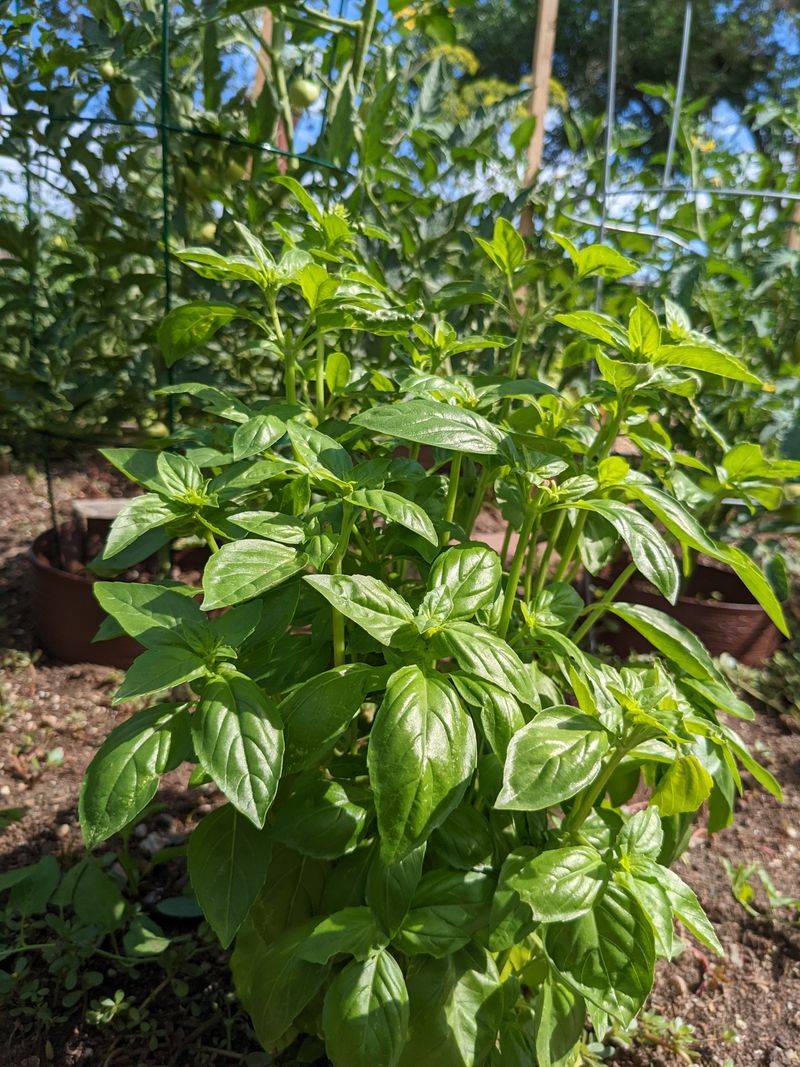
Hot afternoon sun in July can push basil past its comfort zone, especially when plants are growing in pots or containers on exposed patios and decks. Basil genuinely loves warmth and needs good sun to grow well.
But there is a difference between a warm, sunny morning and a scorching afternoon with reflected heat off concrete or dark surfaces.
Morning sun is ideal for basil. It warms the plant gently and dries any overnight moisture from leaves.
Afternoon sun during a heat wave, however, can cause wilting, leaf curl, and added stress that speeds up flowering. This is especially noticeable in container basil during hot July stretches across this state.
If your pots are in a spot that gets intense afternoon sun and temperatures are climbing well above 90 degrees, moving them to a spot with afternoon relief is reasonable. A spot that gets sun from morning through early afternoon and then some shade is often a good summer location for containers.
Basil is not a shade herb. Do not move it to a dark corner or a shaded spot that gets little direct light.
The goal is to reduce extreme heat stress during the worst afternoon hours, not to keep the plant out of the sun. A little afternoon relief goes a long way.
8. Keep Cutting Through July For Better Late-Summer Leaves
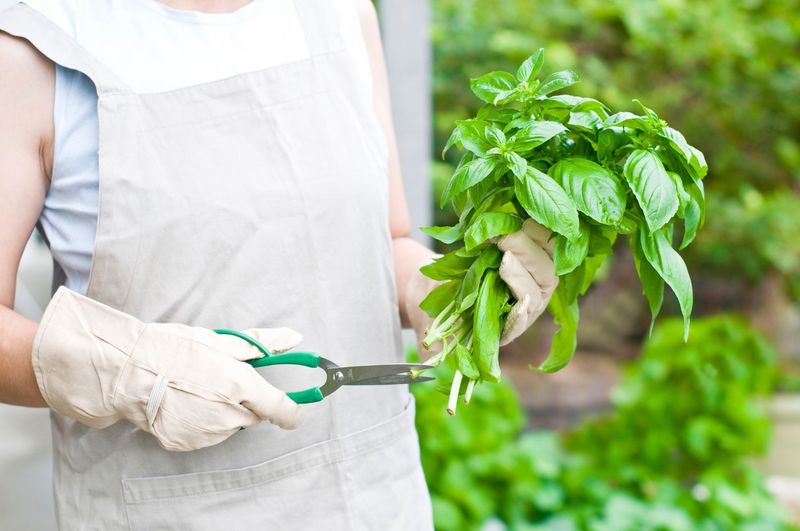
The Ohio basil gardeners who end up with the best late-summer harvests are usually the ones who kept cutting all the way through July without stopping. It is easy to get distracted during a busy summer and let a week or two slip by without checking the plants.
But that gap is often when flower spikes take over and the plant shifts away from leaf production.
Commit to a simple July routine. Check your basil every few days, pinch any flower buds, cut above leaf pairs when harvesting, and keep the soil from drying out completely.
None of these steps takes long, and the payoff is a fuller, more productive plant heading into August.
Basil that has been cut back consistently tends to have more side branches and more tender leaf growth than a plant that was ignored for stretches of time.
Even if your plant does start to flower despite your efforts, cutting it back early enough can sometimes encourage a fresh flush of leafy growth.
Late-summer basil is worth the effort. Fresh leaves in August pair well with ripe tomatoes, summer pastas, and end-of-season cooking.
Keep cutting through July and give your basil the best chance of staying useful right up to the first cool nights of early fall.