The Signs Of Downy Mildew Spreading Fast In Michigan Gardens This Humid Week
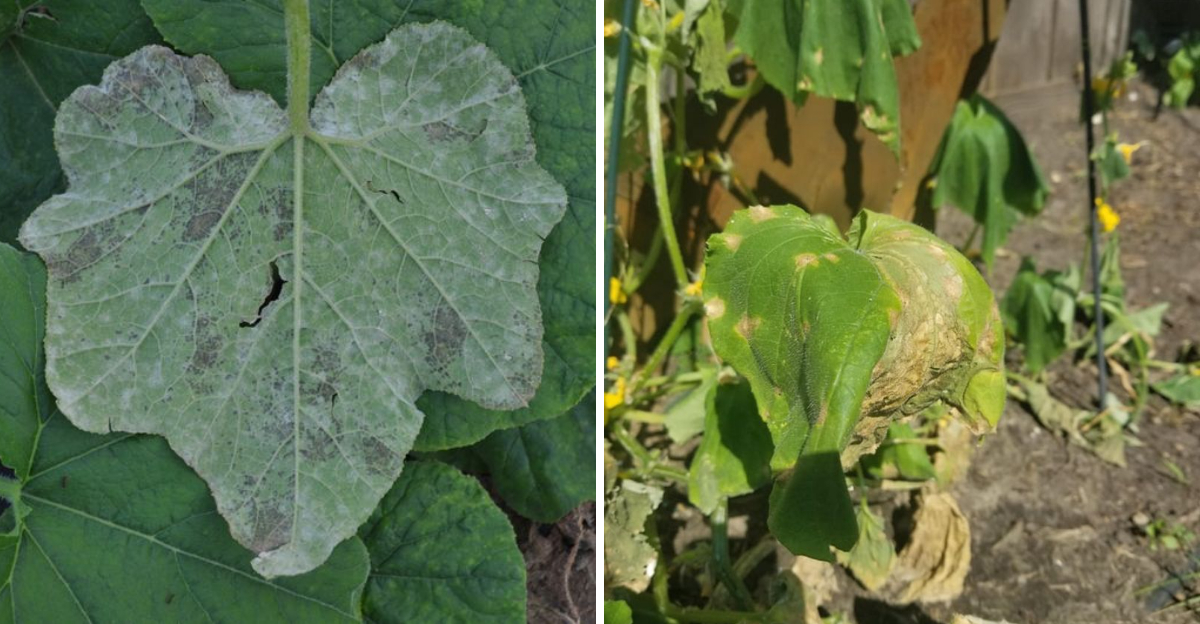
Michigan cucumber vines can look fine on Monday and suspicious by Thursday.
That is what makes this disease so sneaky during a humid week. The leaves start with pale little patches, almost too faint to worry about.
Then the spots sharpen, the undersides grow a dusty gray-purple cast, and the canopy begins to look tired long before the gardener feels ready to give up on the harvest.
Downy mildew does not need a dramatic entrance. It travels by spores, favors moisture, and can move fast when nights stay damp and leaves do not dry quickly.
Cucumbers usually show the problem first, but other cucurbits still deserve a closer look when weather turns sticky.
The good news is that early clues are visible if you scout at the right time and look in the right places.
So what should Michigan gardeners check before this week’s humidity turns one sick leaf into a row-wide problem?
Start with the top of the leaf, then flip it over. The real warning often hides underneath.
1. Pale Yellow Spots Appear On Upper Leaves
The first clue can look almost too ordinary.
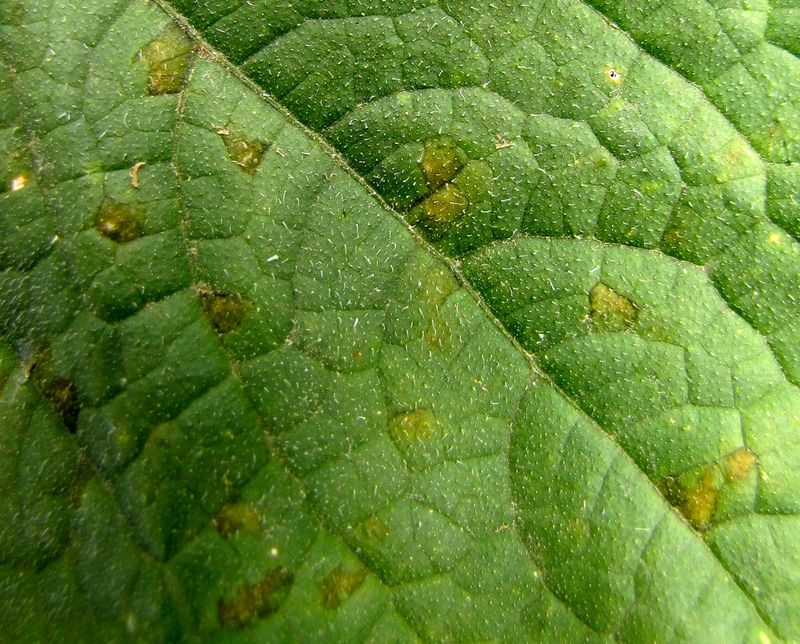
A cucumber leaf develops a pale yellow patch, maybe the size of a pencil eraser. It does not look dramatic. It does not scream disease. It just looks a little off, which is why gardeners can miss the first stage so easily.
During a humid Michigan week, those faint spots deserve attention.
Downy mildew often starts on the upper leaf surface as small chlorotic patches. They may appear scattered across older or middle leaves first, especially inside the canopy where moisture lingers after dew or rain.
Check cucumbers before anything else. They are often the first cucurbit to show trouble, and they can give you an early warning before the whole patch looks rough.
Scout in bright morning light. Pale spots stand out better when the sun hits the leaf surface, and the plant has not yet wilted or curled from daytime heat.
Look across several plants, not just one leaf. One yellow mark could be nutrient stress, old damage, or ordinary weirdness. Several pale patches on multiple leaves tell a more serious story.
Hold a suspect leaf toward the light. Early downy mildew areas can look slightly translucent or water-soaked compared with healthy green tissue.
Do not rub the leaf while checking. Spores can move easily once the disease is active.
Take a photo and mark the plant location. A quick record helps you compare changes two days later, which matters when the weather stays muggy and the disease speeds up.
2. Angular Lesions Stop At Leaf Veins
The shape of the spot tells a bigger story.
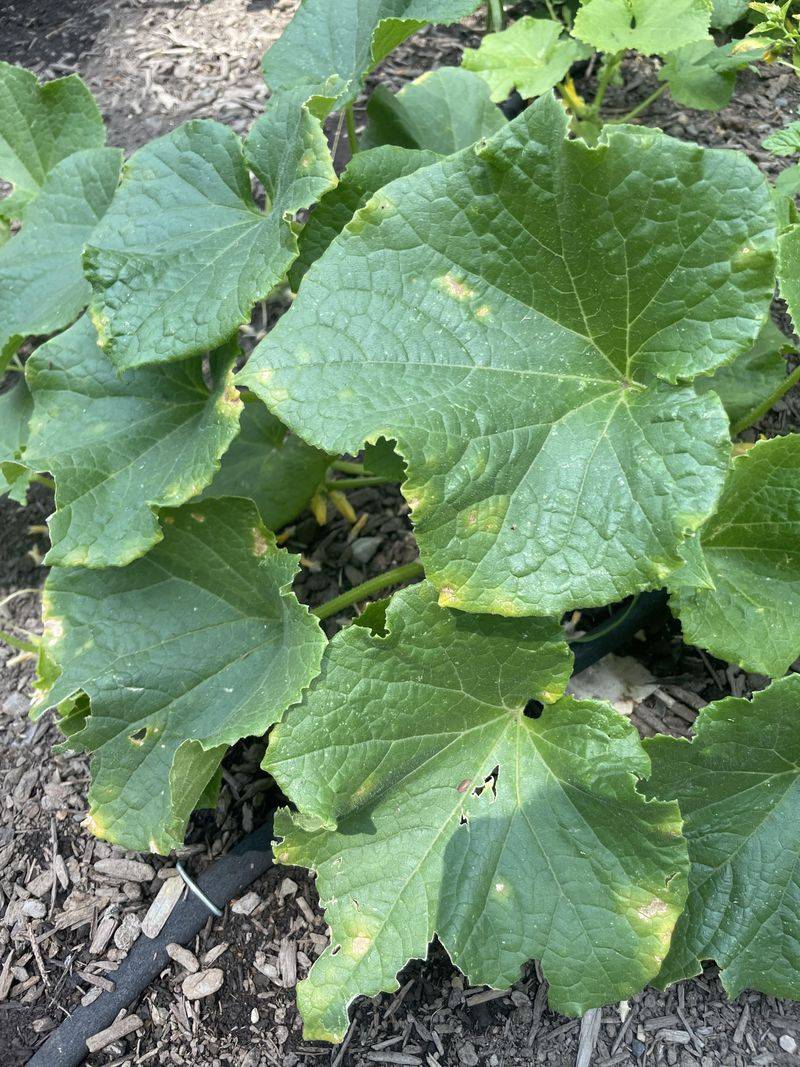
Downy mildew lesions often look blocky because they stop at leaf veins. Instead of perfect circles, the yellow or tan areas form angular patches with straight or uneven edges.
The veins act like little walls, giving the leaf a patchwork look that stands out once you know to notice it.
That pattern is one of the best field clues for gardeners.
Your Michigan Garden Changes Every Week. Your Plan Should Too.
Gardening in Michigan changes quickly throughout the season. Every Friday you’ll receive a simple weekly plan showing exactly what to plant, prune, fertilize, harvest, and protect so you never miss the right timing.
A cucumber leaf with pale, vein-bounded spots deserves a closer look, especially during humid weather. The disease may still be early, but the shape can help separate it from random yellowing or sun scorch.
Do not diagnose from the top alone. Angular leaf spot, a bacterial disease, can also create vein-bounded marks. Heat stress, old spray injury, and nutrient problems can add more confusion.
Flip the leaf over and check the underside. Downy mildew is more likely when the upper angular marks match darker, fuzzy growth below.
Fresh bacterial lesions may look greasy or water-soaked, and older ones can tear or dry in a different way. Downy mildew tends to keep a drier upper surface while producing spores underneath when conditions are moist.
Look at where the marks appear too. Sun scorch often hits exposed edges or the most sun-baked leaves. Downy mildew can show up inside the canopy, where humidity stays higher.
Use pattern plus timing. A humid stretch followed by angular yellow patches across several cucumber leaves should put downy mildew high on the concern list.
The leaf is giving you geometry homework. Annoying, yes, but useful.
3. Gray Purple Fuzz Forms Underneath
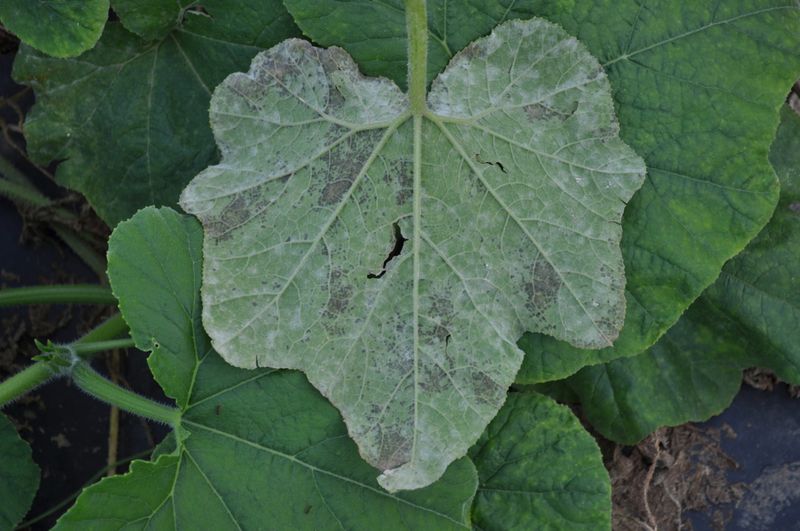
The underside of the leaf is where the case gets stronger.
A cucumber leaf may look only mildly yellow from above, but when you flip it over in the morning, a faint gray-purple fuzz may cling to the lower surface. That dusty growth is one of the clearest signs that downy mildew is active.
It may not look thick. Early sporulation can be subtle, especially if the leaf has started to dry.
Check before the sun fully warms the garden. Morning moisture makes the fuzz easier to spot, and humid nights give the pathogen a better chance to produce fresh spores.
Use a hand lens if you have one. Even a basic magnifier can make the gray-purple growth more obvious along the underside of yellowed, angular lesions.
Do not confuse it with powdery mildew. Powdery mildew usually shows white, powdery growth on upper leaf surfaces. Downy mildew hides mostly below, which feels rude but very on brand for this disease.
Handle suspect leaves gently. Avoid brushing them against healthy vines as you inspect. If you remove a leaf for a closer look, place it directly into a bag.
Photograph both sides. A top-side photo shows the angular pattern. An underside photo can show the fuzz that makes the diagnosis more likely.
If you cannot tell what you are seeing, send photos or a sample through a local diagnostic route before spraying blindly.
The underside check takes seconds, and it can change the whole response.
4. Morning Moisture Reveals Fresh Sporulation
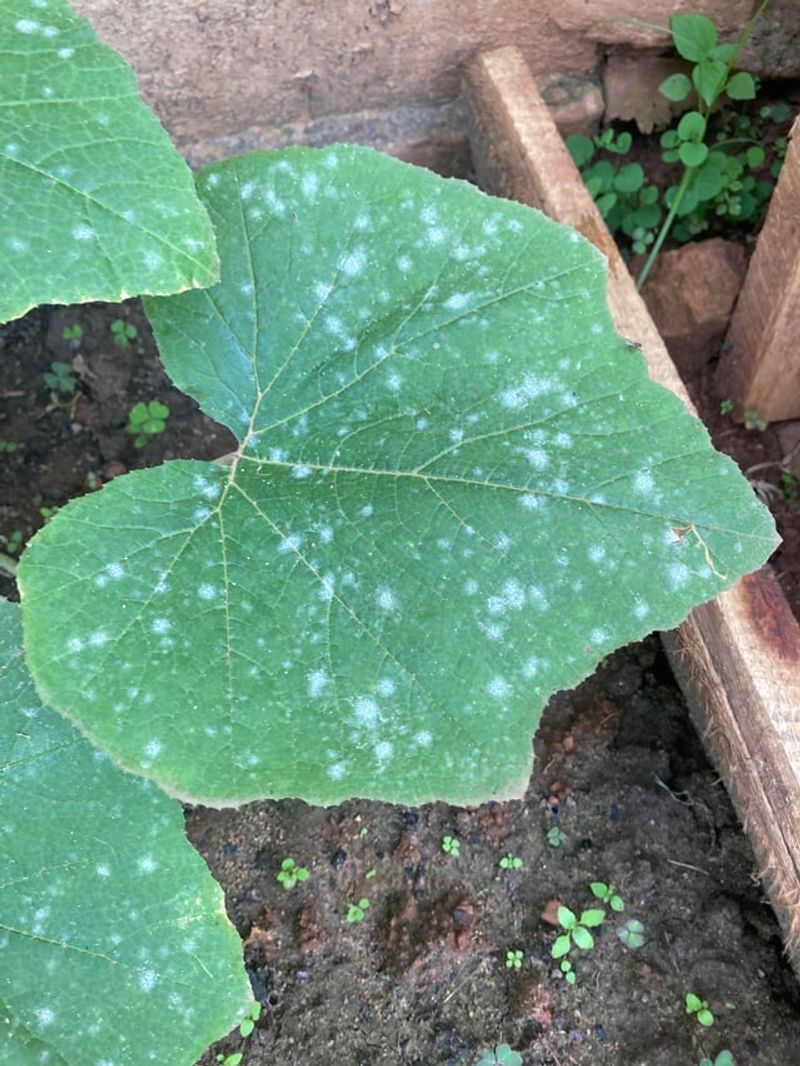
Morning is the best time to catch downy mildew in the act. Overnight humidity, dew, and damp leaves create the conditions that make fresh sporulation easier to see.
By afternoon, the leaf surface may dry, the fuzz may look faint, and the garden can trick you into thinking the problem is less active than it really is.
Scout early when the air still feels wet.
Bring your phone. Take photos while moisture is still present, especially of leaf undersides. Those images can be much more useful than dry afternoon pictures that show only yellow patches and frustration.
Start with the lower and middle canopy. Those leaves stay damp longer and often reveal symptoms before the newest vine tips show much change.
Move carefully from healthy-looking plants to suspicious ones, not the other way around. That simple order can reduce the chance of carrying spores on fingers, sleeves, or tools.
After scouting, wash your hands before touching other cucurbits. Wipe tools that contacted suspect foliage.
Skip overhead watering when downy mildew is suspected. Wet leaves extend the disease-friendly window, especially when humidity already refuses to leave.
Water at the base instead. Drip irrigation, a soaker hose, or careful hand watering near the soil helps keep foliage drier.
Morning scouting also gives you time to act before the day gets busy. You can remove heavily affected leaves, document changes, or contact a diagnostic lab without making rushed decisions at dusk.
With this disease, early eyes beat late panic.
5. Older Leaves Brown Around The Edges
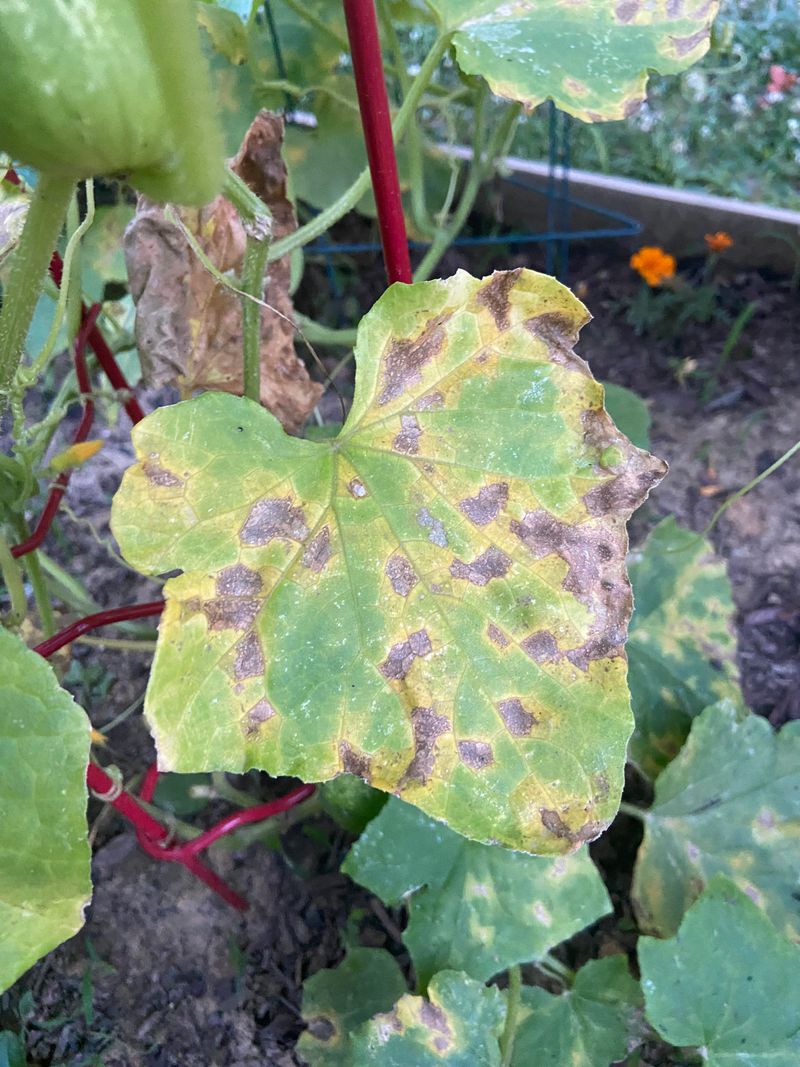
Older leaves often show the decline first.
As downy mildew lesions age, the pale yellow patches can turn tan, then brown. The affected tissue may dry, curl, or look papery around the edges.
On cucumber vines, this change can happen quickly when humidity stays high and nights remain damp.
Do not mistake every brown edge for downy mildew.
Drought, wind, nutrient stress, and old leaf age can all create browning. The surrounding pattern matters. Brown edges combined with angular yellow spots and gray-purple fuzz underneath point more strongly toward downy mildew.
Look low in the canopy. Older leaves near the base often sit in still, humid air, especially in dense plantings. They also tend to stay wet longer after rain, dew, or overhead irrigation.
If lower leaves show many mature lesions, the disease may already be producing spores that can move to healthier foliage.
Remove only the leaves that are heavily affected or clearly collapsing. Do not strip the plant bare in panic. The vine still needs healthy leaves to feed fruit.
Bag removed foliage right away. Do not leave it in the path, toss it into the compost, or carry it uncovered across the garden like a little spore parade.
After cleanup, improve airflow if possible. Lift vines gently, thin nearby weeds, and avoid crowding from other plants.
Browning older leaves are not just ugly. They can signal that the disease has moved from early warning to active spread.
That is the moment to tighten your scouting schedule.
6. Lesions Merge Across The Canopy
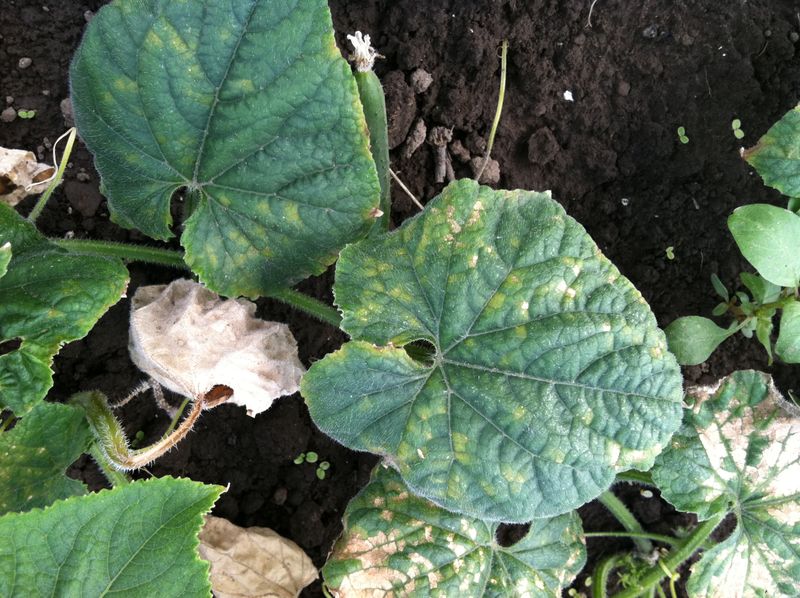
This is when the plant starts looking bad fast.
Separate yellow spots become larger tan patches. Larger patches touch. Then whole sections of leaves turn brown, dry, and ragged. That merging process can make a cucumber vine look like it aged two weeks in two days.
Once lesions merge across the canopy, the plant loses working leaf surface.
That matters because leaves are not decoration. They feed fruit, shade developing cucumbers, and keep the plant productive. A leaf that is mostly brown does very little work.
During humid Michigan weather, this stage can arrive quickly after the first spots appear. That is why weekly scouting may not be enough when conditions favor downy mildew.
Check every two to three days during muggy stretches. Low areas, shaded plots, crowded beds, and gardens near water may need the closest attention.
Look for a pattern across plants. One old leaf collapsing is not the same as several vines showing expanding angular patches at once.
If the disease appears widespread, do not rely on leaf removal alone. Sanitation helps reduce spore load, but it may not stop an active outbreak.
At this point, a confirmed diagnosis matters. Different cucumber diseases can overlap visually, and the wrong response wastes precious time.
Contact local Extension resources or a plant diagnostic lab when symptoms move fast across the row.
A canopy-wide shift is the garden waving both arms. It is not the time to shrug and hope tomorrow looks better.
7. Vines Lose Leaf Cover Fast
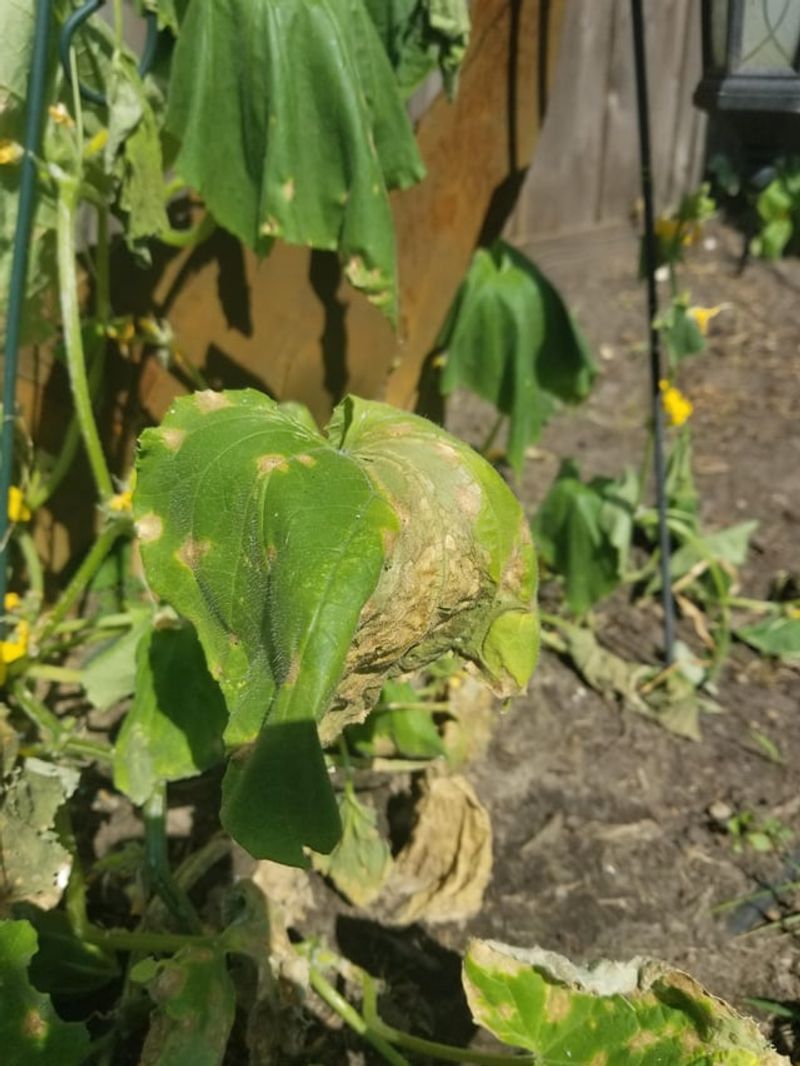
Severe leaf loss is the stage every cucumber grower dreads.
Once downy mildew strips too much foliage, the vine loses more than good looks. It loses shade, energy production, and the leaf cover that protects developing fruit from harsh sun.
Exposed cucumbers can develop pale, sunken, or papery sunscald patches. Fruit may stop sizing up well. The plant may keep a few green tips while the main canopy fades into brown, tired leaves.
That is a hard stage to reverse.
If most leaves are already affected, fungicides may offer limited value for home gardeners. Many products work best as protectants before disease spreads widely or at the very first signs. Late rescue sprays rarely bring a collapsed canopy back.
Read labels carefully if you use any product. It must be labeled for cucurbit downy mildew and for the crop you are treating. Follow rates, harvest intervals, protective gear, and application timing exactly.
Remove and bag heavily infected plant material. Do not compost diseased vines in a backyard pile. The goal is to reduce local spread and keep the garden cleaner for the next crop.
Harvest usable fruit promptly if the canopy is failing. Waiting for perfect size can backfire when the plant no longer has enough leaf power to support growth.
Make notes for next year too. Resistant cucumber varieties, wider spacing, drip irrigation, and better airflow can reduce risk.
Downy mildew can move fast, but your records can make next season’s response faster.
That is how one rough August teaches the garden something useful.