These Are The Native Florida Ground Covers To Replace Asian Jasmine Before It Takes Over
Asian jasmine goes in as a ground cover and stays as a commitment. It spreads beyond the bed, climbs whatever is nearby, and develops a root system that makes removal a project nobody scheduled and nobody wanted.
The appeal that sold it at the nursery fades fast once the yard starts managing it instead of the other way around. Florida has native ground covers that do the same job without the fine print.
Low, spreading, capable of holding a bed and suppressing weeds without treating the surrounding landscape as an expansion opportunity. Several of them look better than Asian jasmine at its best.
A few support wildlife in ways that a non-native monoculture never could. All of them stay where they are planted without requiring annual boundary enforcement.
The replacement is not a compromise. It is a ground cover that works for the yard instead of against it.
1. Put Sunshine Mimosa To Work In Bright Open Areas
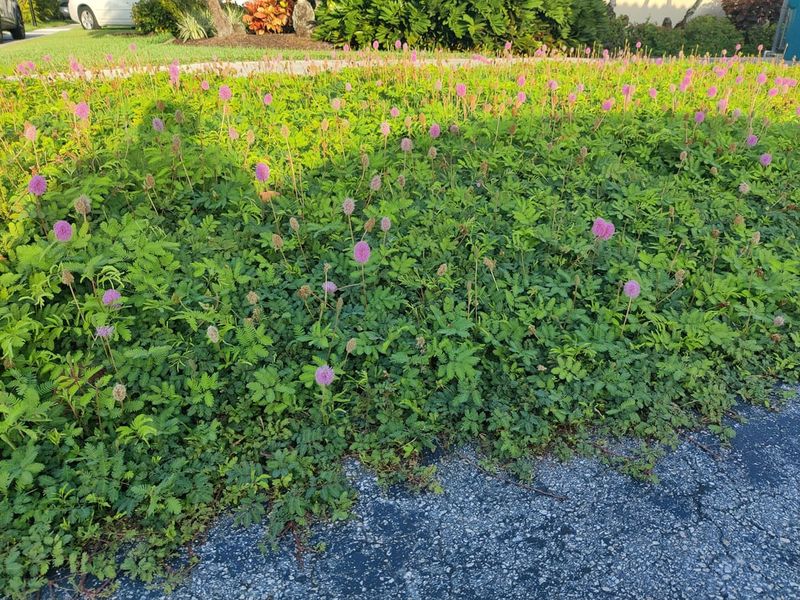
Pink powder-puff flowers rise above a mat of feathery green leaflets, and the whole plant folds its leaves shut when touched.
Sunshine mimosa (Mimosa strigillosa) is a low, sprawling perennial native to much of Florida, and it earns its place in bright open beds.
The stems stay close to the ground, rarely topping a few inches, and spread outward to form a living cover over time.
Full sun suits it best. It performs well in sandy or well-drained loamy soil and handles the dry spells common to central and northern areas.
Standing water or consistently wet ground is not its preference. During establishment, regular watering helps the stems root along the soil surface, but once settled it becomes quite drought tolerant.
One practical advantage is its response to mowing. A light pass with a mower set high keeps the mat tidy and encourages fresh growth.
It can handle occasional light foot traffic, though it is not a substitute for a lawn path. In winter, cooler temperatures may cause the foliage to thin or brown in northern regions, but new growth returns in spring.
Pollinators, especially bumblebees, visit the flowers regularly. Weeds need attention while the stems are filling bare patches, so plan on some hand-pulling during the first season.
For a sunny former jasmine bed, this is a rewarding, low-growing swap.
2. Let Frogfruit Weave A Pollinator Friendly Carpet
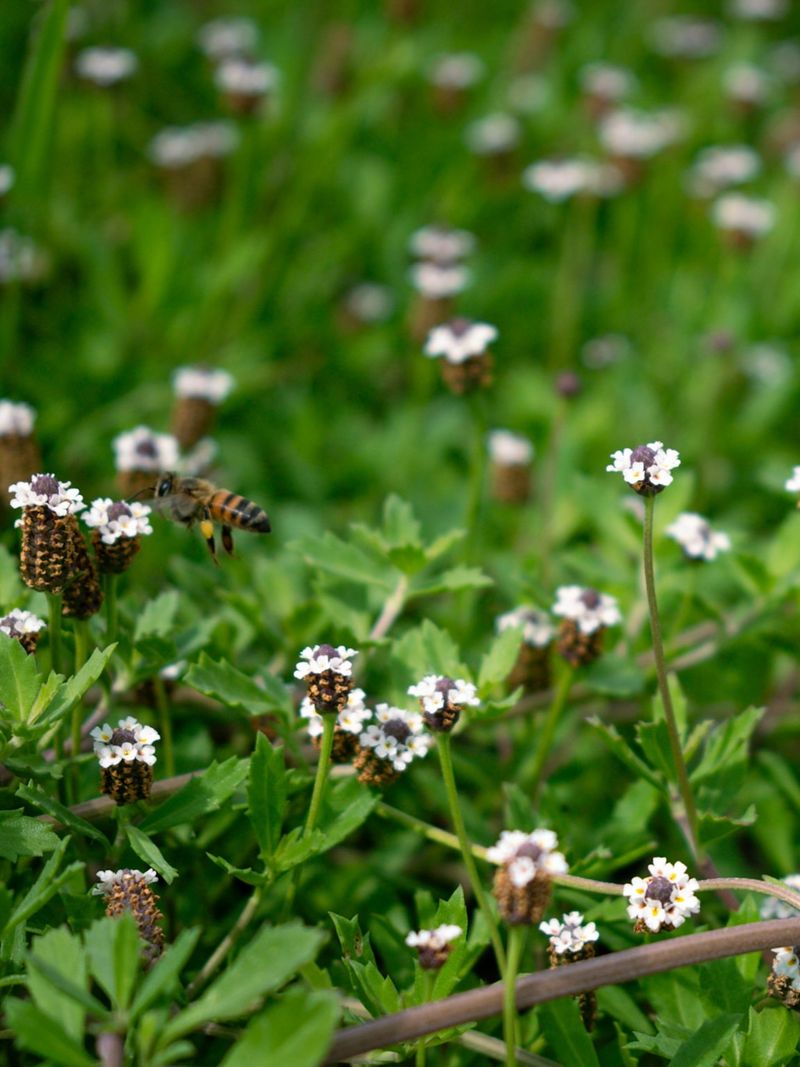
Tiny white and lavender flowers appear in tight clusters among weaving stems that press close to the ground. Frogfruit (Phyla nodiflora), also called turkey tangle fogfruit, is a native creeping perennial found across much of Florida and into coastal areas.
Its stems root at the nodes as they trail outward, gradually filling open ground with a loose, informal cover.
It adapts to full sun and partial shade, and it handles both moist and briefly dry conditions reasonably well. Unlike the rigid uniformity of clipped Asiatic jasmine, frogfruit has a more relaxed, natural appearance.
The texture is softer, and the small flowers keep appearing through warm months, drawing in butterflies and small bees. Expect the planting to look lively rather than perfectly manicured.
Your Florida Garden Changes Every Week. Your Plan Should Too.
Gardening in Florida changes quickly throughout the season. Every Friday you’ll receive a simple weekly plan showing exactly what to plant, prune, fertilize, harvest, and protect so you never miss the right timing.
Mowing is possible and helps keep stems from mounding. It tolerates occasional light foot traffic, though heavy or daily use will thin it over time.
Edging near paths or neighboring beds is worth doing regularly, since the creeping stems move outward without much encouragement.
In a partly shaded bed that receives morning sun and afternoon relief, frogfruit can fill in steadily over one to two growing seasons. Starting with plugs spaced about twelve inches apart gives the stems room to weave together.
Source plants from a reputable native nursery rather than collecting from roadsides or natural areas.
3. Use Twinflower For Soft Color In Partial Shade
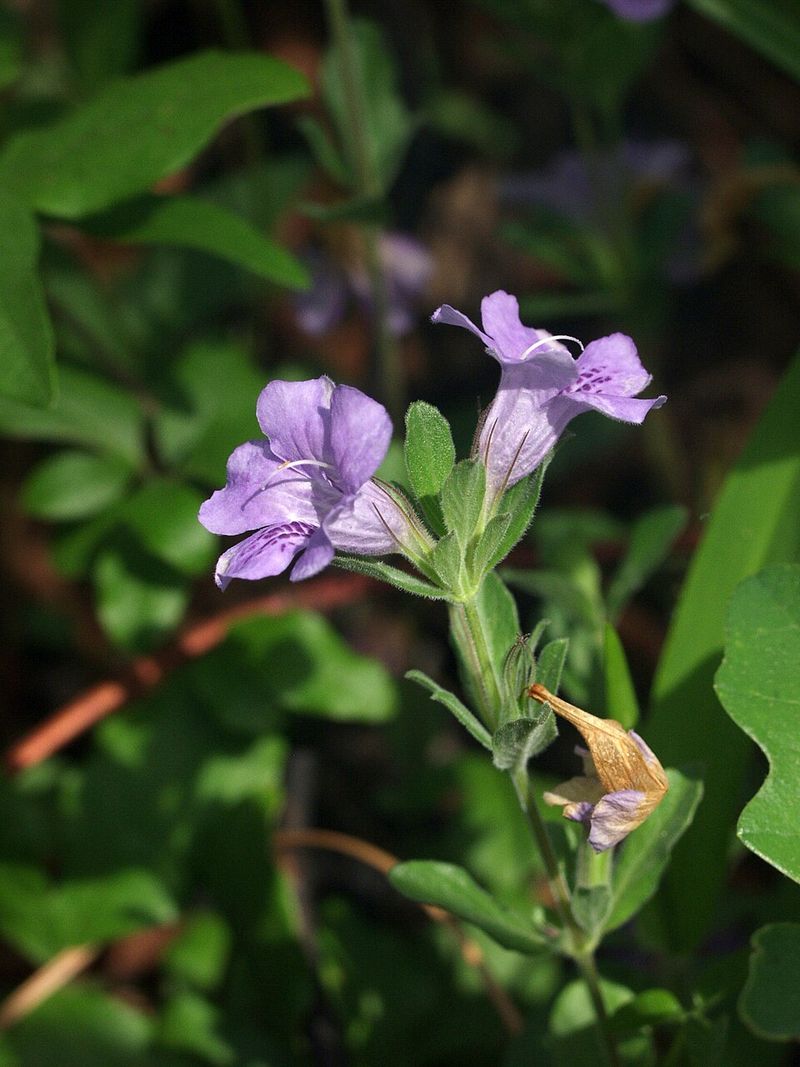
Paired purple flowers brighten filtered shade with a softness that few low-growing natives can match. The twinflower suited to central and northern areas of the state is Dyschoriste oblongifolia.
It’s a low perennial with small oblong leaves and delicate blooms that appear in warm months. It stays close to the ground and spreads gradually through a combination of reseeding and gentle stem growth.
Partial shade is where it performs most consistently. A spot with morning light and afternoon shade, or dappled canopy coverage, suits it well.
It prefers moist to moderately moist, well-drained soil with some organic content. Consistently dry, exposed conditions are not a good match, and neither is dense compacted clay without amendment.
Mature plants typically reach only a few inches tall and spread modestly over time. Filling a bed takes patience, since this is not a fast colonizer.
Spacing plugs about eight to ten inches apart and keeping the area weeded during establishment gives each plant the best chance. Coverage develops over multiple seasons rather than a single summer.
Its soft, informal growth looks nothing like the dense evergreen mat of Asiatic jasmine. That makes it a better fit for naturalistic beds beneath open-canopy trees or along a lightly shaded border.
Sourcing from a specialist Florida native nursery is the most reliable way to confirm the correct species.
4. Tuck Partridgeberry Beneath Trees And Shrubs
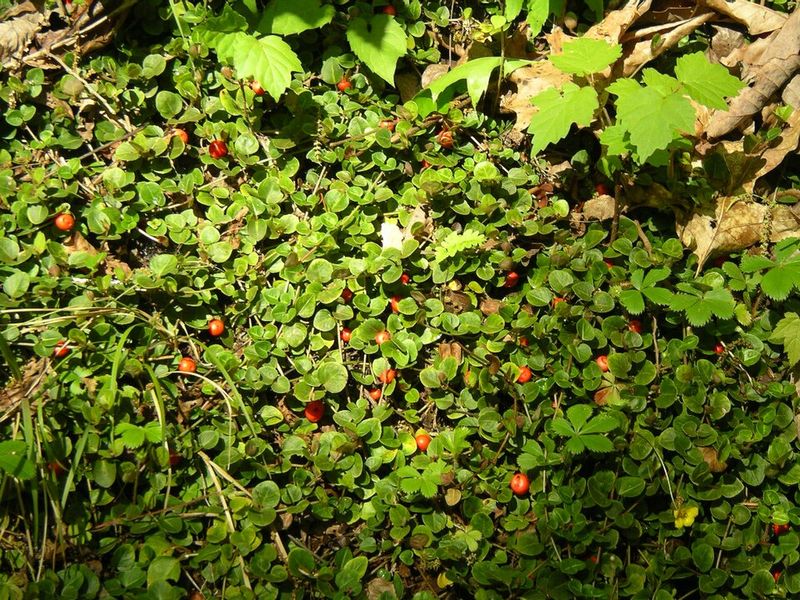
A single red berry resting above a quiet carpet of small, rounded leaves signals that partridgeberry (Mitchella repens) has found a comfortable home.
This delicate native evergreen creeps along the forest floor, rooting as it goes and forming a thin, fine-textured mat.
Paired white flowers appear in late spring, and the red fruit that follows persists through winter, offering a quiet seasonal show.
Partridgeberry is native to woodland areas in northern and parts of central Florida, so it is not a statewide option. It requires shaded conditions, moist acidic soil with good organic content, and reliable drainage.
Dry shade beneath shallow-rooted trees can stress it, and heavy foot traffic is not something it can handle. Keeping it away from busy walkways is the right call.
Establishment is slow. Covering a large former jasmine bed with partridgeberry alone is not realistic in a single season.
It works best as a quiet, long-term cover in small shaded pockets or along a woodland edge. It also does well tucked beneath camellias or Florida native azaleas where the leaf litter stays light and conditions stay cool and moist.
A thin natural leaf layer can protect its stems without smothering them. Thick mulch piled over the foliage does more harm than good.
Birds eat the berries, which adds wildlife value to an already appealing plant. Buy from a reputable native nursery and confirm the species before purchasing.
5. Spread Beach Sunflower Across Hot Sandy Ground
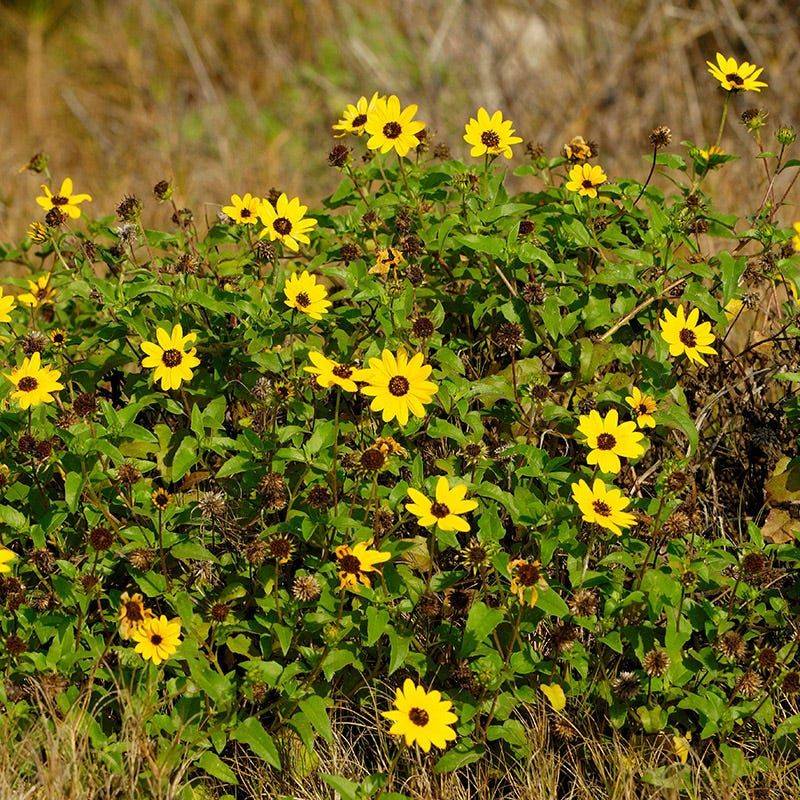
Yellow flowers open wide over pale sand, and the sprawling stems of beach sunflower reach outward in every direction from the center of the plant. The species native to Florida’s coastal and some inland sandy areas is Helianthus debilis.
It’s a fast-growing perennial that covers open ground with bold, cheerful blooms through much of the warm season. It grows taller than a flat ground cover, typically reaching one to two feet in height with stems spreading several feet wide.
Hot, open, sandy, and well-drained sites are where it performs best. It handles salt air, wind, and drought once established, making it a strong candidate for coastal-facing beds, sandy banks, and sunny borders with lean soil.
Compacted or frequently wet ground does not suit it. Expecting it to behave like a low, even mat will lead to disappointment, because the stems are bold and sprawling.
Blooms attract bees and butterflies, and the seeds draw in birds later in the season. Cold sensitivity varies by region, and plants in northern areas may decline after hard freezes, though they often return from the root crown.
Stems that cross paths or cover smaller neighboring plants can be trimmed back selectively.
For a sunny, sandy bank where Asiatic jasmine once sprawled, beach sunflower fills the space quickly and adds color that plain green stems never offered. Purchase nursery-grown plants from a reputable native source.
6. Send Railroad Vine Over Dry Coastal Slopes
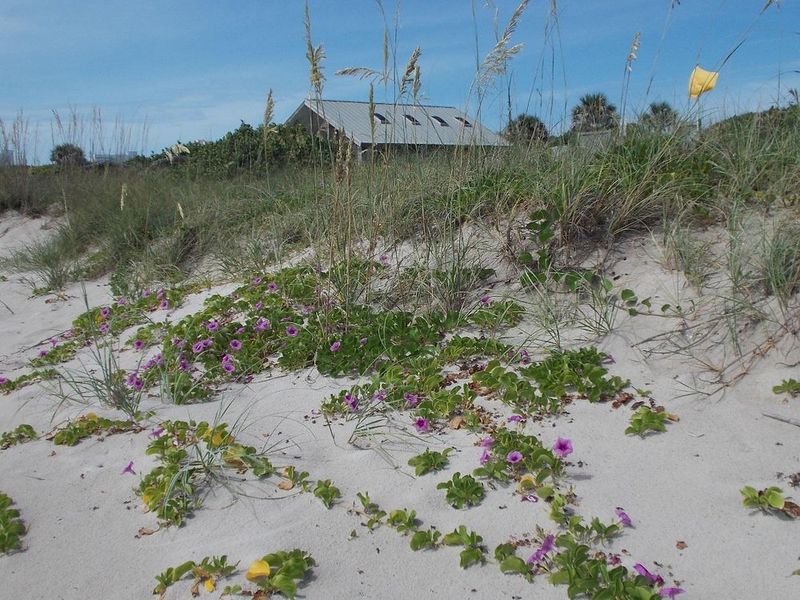
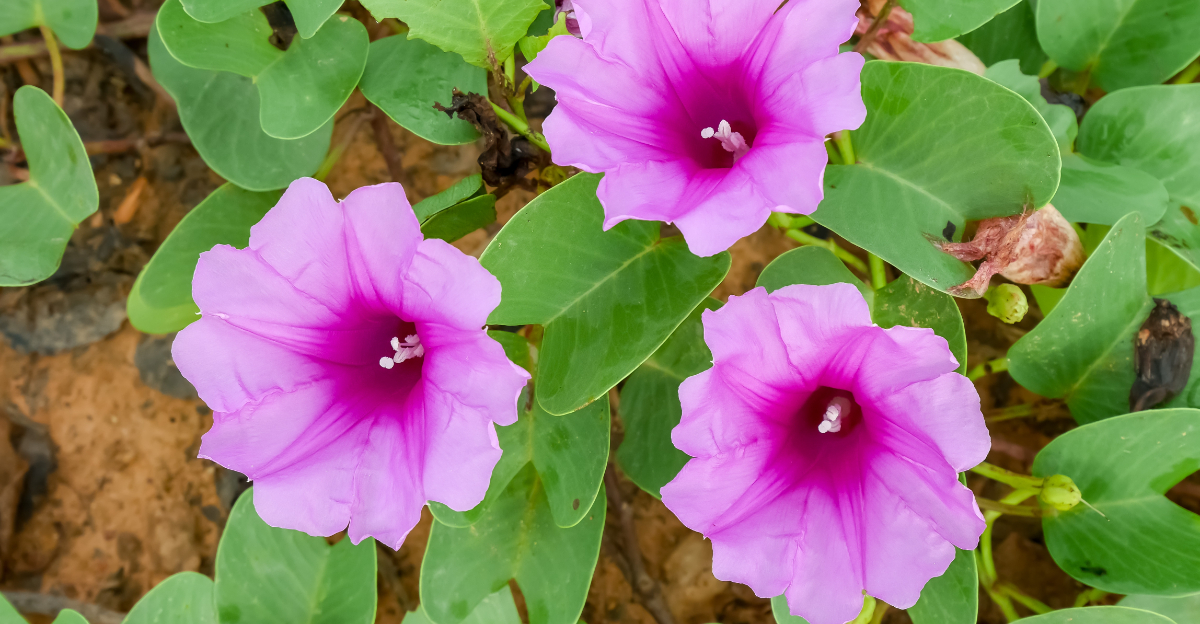
A long vine races across an exposed coastal slope, its thick rounded leaves catching the salt breeze while funnel-shaped pink-purple flowers open toward the morning sun.
Railroad vine (Ipomoea pes-caprae) is a robust Florida native trailer built for open sand, coastal dunes, and sun-baked sites where few other plants hold their ground.
Its stems can extend many feet from a single root crown, covering large stretches of bare or shifting ground.
Heat, drought, salt, wind, and sandy soil are conditions it handles with ease. These are not traits shared by most ornamental ground covers, which is exactly why railroad vine earns its place in the right setting.
Inland clay soil, regular shade, or poorly drained ground are not suitable, and placing it in a small ornamental bed without a containment plan invites frustration.
Cold sensitivity is a real factor. In northern areas, hard freezes may set it back significantly, and it performs most reliably in central and southern coastal zones.
Mature spread can be dramatic, so consider the surrounding space carefully before installing it.
Protected dunes are a different matter entirely. Planting on designated conservation dunes without proper permits is not advisable, and wild collection is never appropriate.
For an open, sunny, coastal-facing slope where a vigorous trailer can roam freely, railroad vine is a genuinely effective choice. Use only nursery-grown stock from a verified native source.
7. Plant Gopher Apple Where Sandy Soil Stays Lean
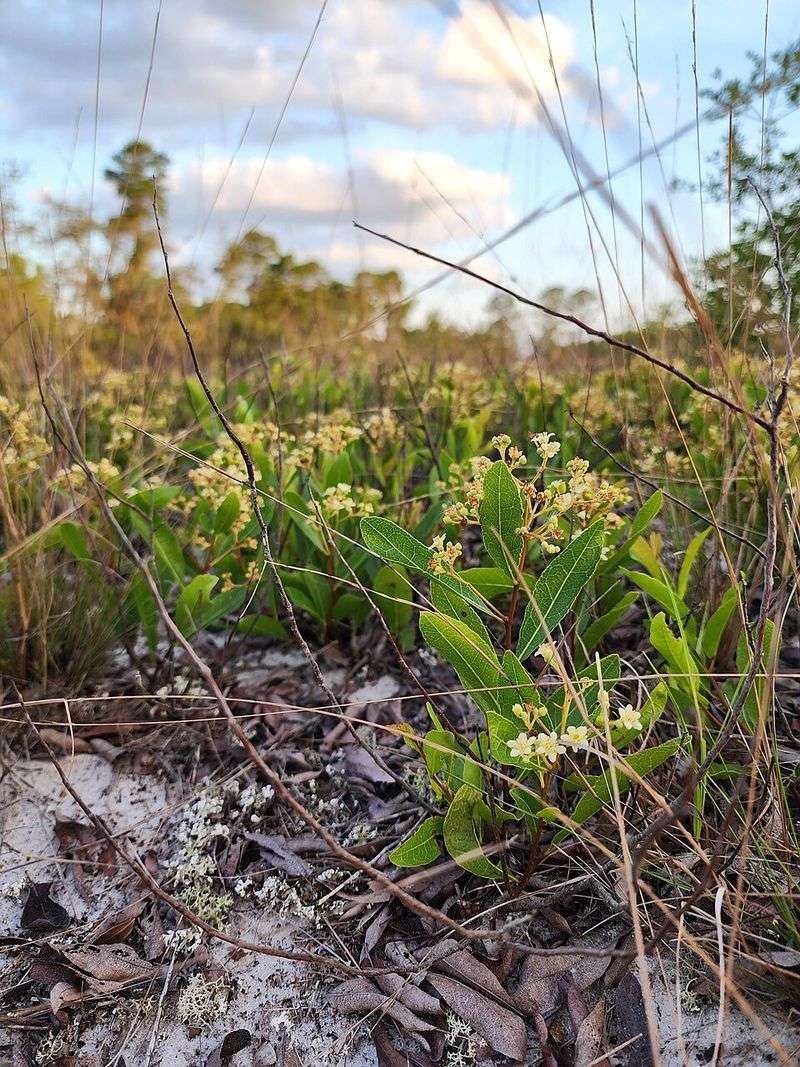
Stiff, leathery evergreen leaves push up from lean sandy soil, low and steady, with no interest in rich amended beds or frequent irrigation. Gopher apple, currently accepted as Geobalanus oblongifolius (formerly placed in Licania), is a low woody shrub.
It’s native to sandy, well-drained habitats across much of the state. It spreads through underground stems to form a slow, durable colony over time.
Full sun and dry, sandy, nutrient-poor soil are its preferred conditions. It is well-suited to fire-prone scrub and sandhill habitats, and its deep root system makes it genuinely drought tolerant once established.
Damp shade, irrigated beds, or compacted clay are poor matches. Expecting quick coverage is also unrealistic, since this plant moves on its own schedule.
Mature height is typically low, often under two feet, but the spreading colony can widen gradually over years. That slow pace is an asset in naturalistic areas where long-term stability matters more than fast results.
Gopher tortoises and other wildlife feed on the fruit, which adds ecological value to a plant already suited for low-input sites.
Finding gopher apple at ordinary garden centers can be difficult. Specialist native nurseries are the right place to look, and wild collection is never acceptable.
For a dry, sunny, sandy area where Asiatic jasmine once struggled to look tidy, this plant offers a durable and genuinely site-matched alternative.
8. Fill Damp Shade With Native Swamp Fern
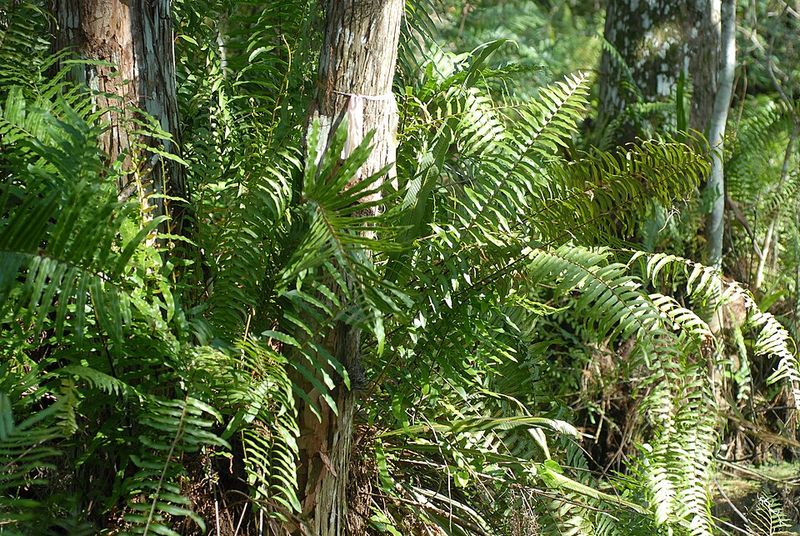
Tall green fronds fill a damp shaded corner with a lush, upright presence that changes the entire feel of the space.
Swamp fern (Telmatoblechnum serrulatum, previously known as Blechnum serrulatum) is a colony-forming native fern found across much of the state.
Its fronds stand one to three feet tall, and the plant spreads through rhizomes to gradually cover moist, shaded areas with a bold, textured mass.
Consistently moist to wet soil is what it needs. Edges of drainage swales, low woodland beds, pond margins, and shaded areas with seasonal wetness are where it performs well.
It tolerates brief standing water and handles partial shade to full shade without complaint. Dry, sunny ground is not appropriate for it, and placing it in a hot exposed bed will lead to poor results.
Because the colony expands steadily, monitoring its spread in a smaller yard is worth doing. Rhizomes can move into adjacent areas, so edging or physical barriers may be needed near paths or neighboring plantings.
Fronds may brown in colder winters in northern areas, though the plant generally recovers as temperatures rise.
Its height means it can obscure low windows, utilities, or shorter companion plants if sited carelessly. Used well, though, it fills a damp shaded corner that few ornamental options can handle.
The best native choice for any site will often look nothing like Asiatic jasmine, and that is not a problem. Match the plant to the place, and the results take care of themselves.