Common Oregon Nest Types Every Homeowner Should Recognize Before Disturbing Them
A nest tucked beneath an eave, hidden in a shrub, or built inside a quiet corner of the yard can be easy to miss until someone gets too close.
Oregon homes and gardens attract many nest-building visitors, and their structures can look surprisingly similar at first glance.
Some are active only for a season, some are reused, and others may be abandoned long before you discover them.
The safest response depends on what built the nest, where it sits, and how much activity surrounds it.
A harmless nursery in a tree calls for a very different approach than a defensive colony beside a doorway or play area.
Before trimming branches, moving furniture, clearing sheds, or spraying anything, pause and study the shape, material, entrance, and traffic around it.
Recognizing a few common nest types can prevent stings, protect wildlife, and help homeowners decide when to leave the area alone or seek professional help.
1. Paper Wasp Nests Hiding Under The Eaves
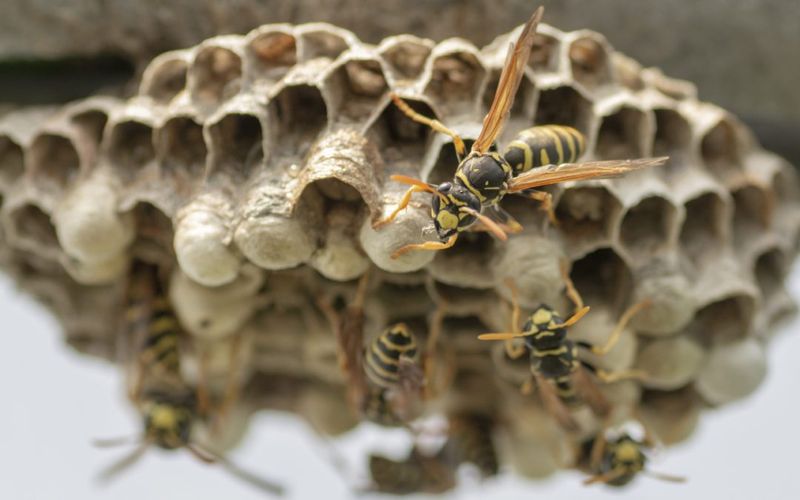
That papery, umbrella-shaped cluster hanging under your roofline is almost certainly a paper wasp nest. It looks delicate, almost like something made from gray tissue paper, but do not let that fool you.
The wasps that built it are very protective of their home.
Paper wasps chew up wood fibers and mix them with saliva to create their signature material. The result is a lightweight comb with open, hexagonal cells where eggs are laid.
You can often spot the queen and workers moving in and out throughout the day.
These nests show up most often under eaves, porch ceilings, and deck railings. They prefer sheltered spots that stay dry.
A nest can grow from a few cells in spring to the size of a large fist by late summer.
Paper wasps are not as aggressive as yellowjackets, but they will sting if they feel threatened. Never swat at the nest or block their entry point.
If the nest is in a low-traffic area, many experts suggest leaving it until winter, when the colony naturally ends.
If removal is necessary, contact a pest control professional. Attempting to knock it down with a stick or spray it without protection is a quick way to end up with multiple stings.
A little patience goes a long way with these insects.
2. Yellowjacket Nests Tucked Into The Ground
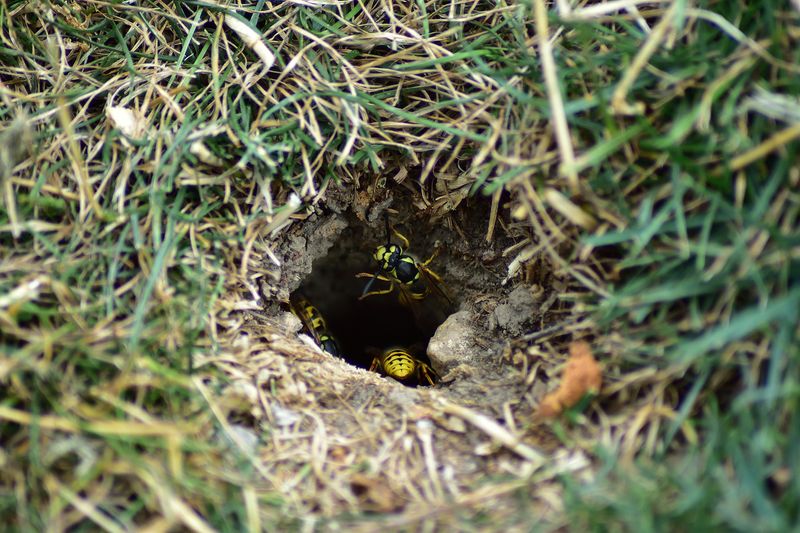
Stepping near a yellowjacket ground nest by accident is one of the most startling experiences a homeowner can have. One moment you are mowing the lawn, and the next, an angry swarm is coming up from the soil beneath your feet.
These insects build their nests underground, often using abandoned rodent burrows as a starting point.
The entrance to the nest looks like a small hole in the ground, about the size of a quarter. You might notice increased wasp activity near a particular spot in your yard before you ever see the hole.
That is a good sign to back away slowly and observe from a distance.
Underground nests can grow surprisingly large by late summer. A mature colony may contain several thousand workers packed into a network of paper combs hidden beneath the surface.
Your Oregon Garden Changes Every Week. Your Plan Should Too.
Gardening in Oregon changes quickly throughout the season. Every Friday you’ll receive a simple weekly plan showing exactly what to plant, prune, fertilize, harvest, and protect so you never miss the right timing.
This is why disturbing one can trigger such an intense response.
Yellowjackets are far more aggressive than paper wasps and will sting repeatedly without much provocation.
They are also attracted to sweet foods and garbage, which is why they tend to show up at outdoor gatherings.
If you find a ground nest near a walkway, play area, or garden, do not try to flood it with water or pour anything into the hole. Call a licensed pest professional who has the right protective gear and treatment options to handle it safely.
3. Mud Dauber Tubes Stuck To Walls And Sheds
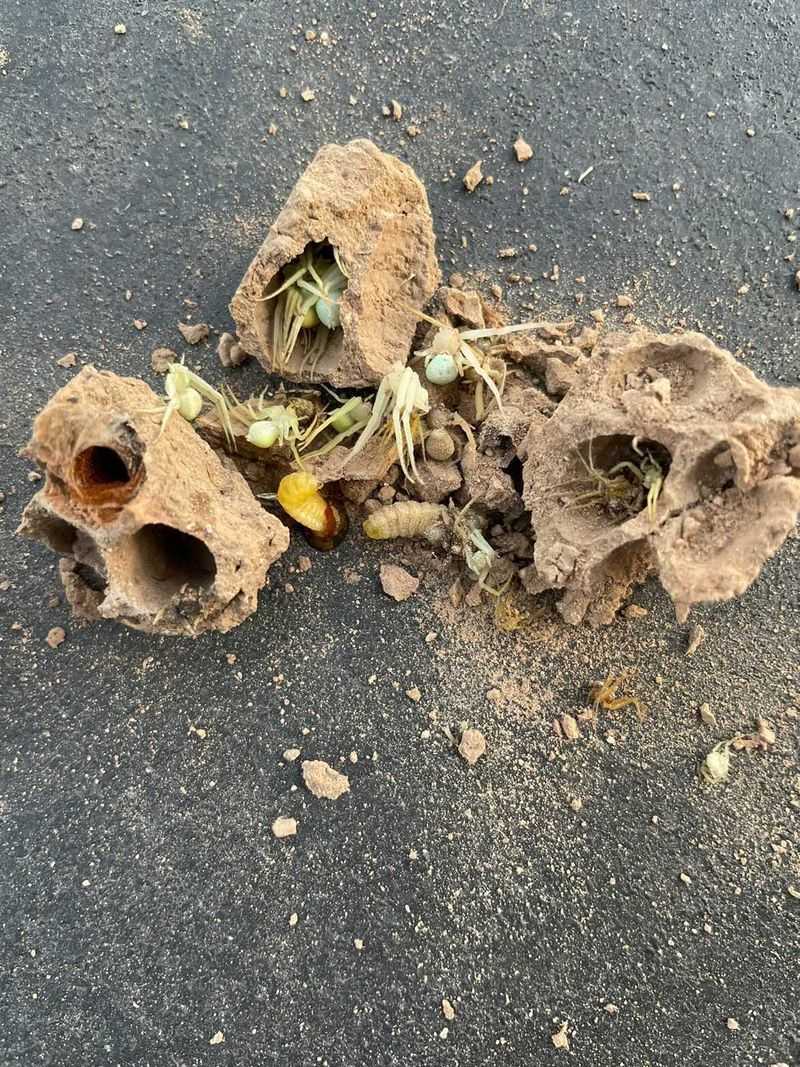
Mud daubers are some of the most fascinating builders in the insect world. They gather wet mud from puddles or stream banks and carry it back to construct their narrow, tube-shaped nests on walls, sheds, fences, and even the sides of houses.
The finished product looks like a bunch of dried mud pipes stuck to a hard surface.
Unlike yellowjackets or paper wasps, mud daubers are solitary insects. Each female builds her own set of tubes and fills them with paralyzed spiders as food for her larvae.
Once the eggs are laid and the chambers are sealed, she moves on. There is no colony defending the nest.
Because of this, mud dauber nests are considered low-risk for homeowners. The wasps are not aggressive and rarely sting unless physically handled.
You are more likely to be bothered by the look of the nest than by the insect itself.
Old, abandoned mud dauber tubes are sometimes taken over by other insects, including other solitary wasps or even small spiders. So the nest you see may not have anything active inside it at all.
Removing them is straightforward. A stiff brush or putty knife can scrape them off most surfaces.
Doing this in winter or early spring, when no activity is present, is the easiest and safest approach. Sealing cracks and gaps in siding can help prevent them from returning the following year.
4. Bald-Faced Hornet Nests Hanging Like Gray Footballs
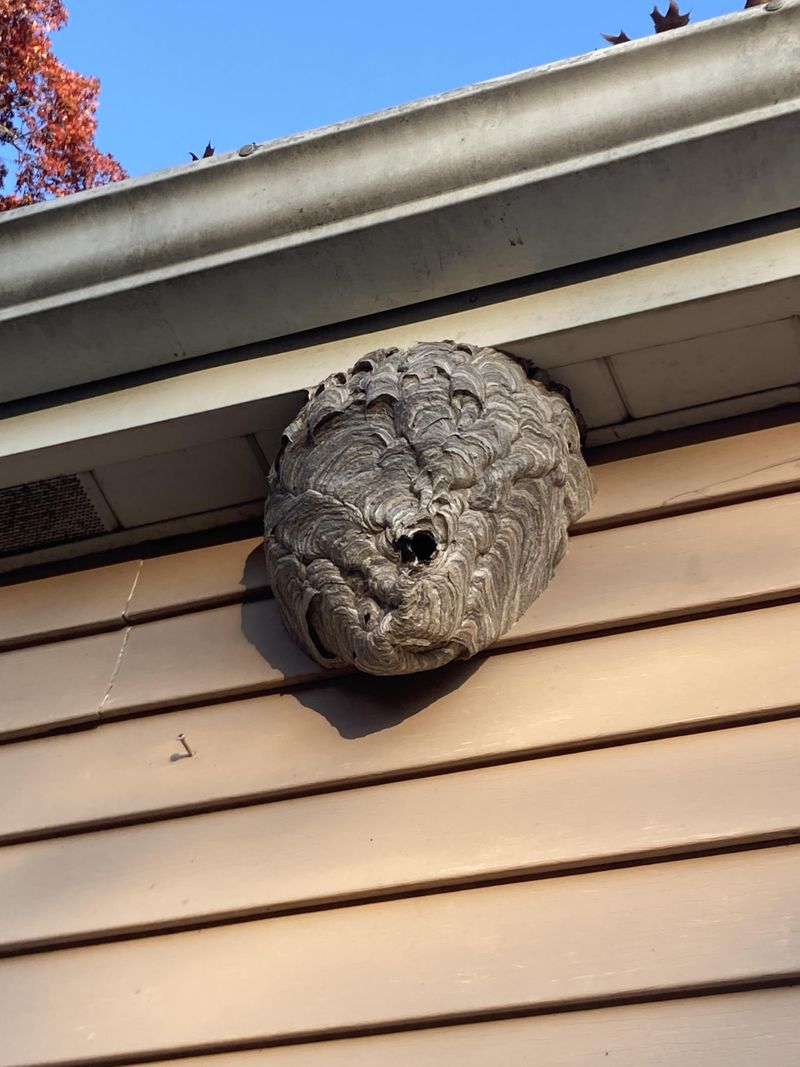
Few things stop a homeowner in their tracks quite like spotting a bald-faced hornet nest hanging from a tree or tucked under a roofline. These nests are hard to miss.
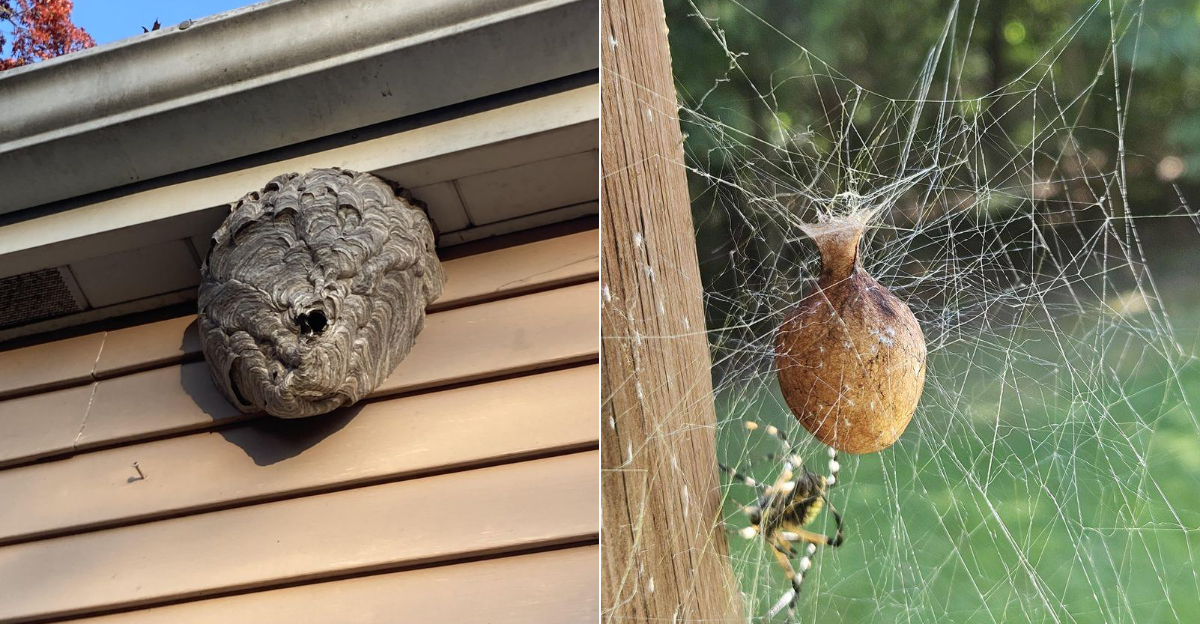
They are large, round, and covered in a thick gray paper shell that looks almost like a balloon made from old newspaper.
Bald-faced hornets are actually a type of yellowjacket, not a true hornet. They build their nests by chewing weathered wood and mixing it with saliva, layer by layer, until the structure can reach the size of a basketball or larger.
Inside, there are multiple tiers of paper combs where larvae develop.
The colony starts small in spring, built by a single queen. By late summer, hundreds of workers can be living inside.
The nest is most active and most dangerous during this peak period. Any vibration or perceived threat near the nest can trigger a fast and painful defensive response.
These nests are commonly found in trees, shrubs, under eaves, and along fence lines. If you spot one early in the season when it is still small, a pest professional can remove it more easily.
Waiting until fall, after the colony has ended naturally, is another option for nests in low-traffic areas.
Never attempt to remove an active nest on your own. The hornets inside will defend it aggressively, and the results can be serious, especially for anyone with insect allergies.
5. Bumblebee Nests Hiding In Old Rodent Holes
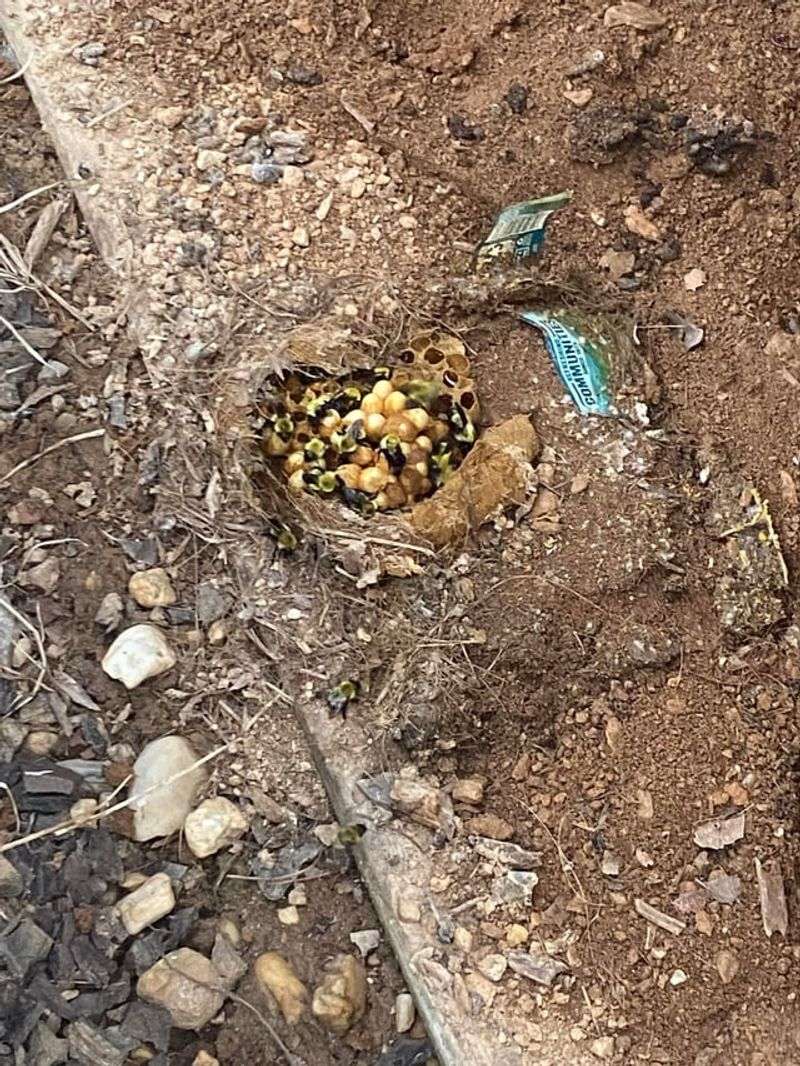
Bumblebees have a charming reputation, and for good reason. They are round, fuzzy, and generally easygoing.
But finding one of their nests in your yard can still catch you off guard, especially since they tend to set up in spots you would never expect.
Old rodent burrows are a favorite nesting location. A queen bumblebee scouts out these ready-made tunnels in early spring and moves in, lining the chamber with dry grass, moss, or fur she finds nearby.
She then raises her first batch of workers before the colony grows through the warmer months.
The entrance to a bumblebee nest looks similar to a yellowjacket ground nest, just a small hole in the soil.
The key difference is that bumblebees move in and out slowly and deliberately, while yellowjackets tend to dart quickly.
Watching the traffic near the hole for a few minutes can help you tell them apart.
Bumblebees are important pollinators, and several species in Oregon are considered vulnerable. If the nest is in a low-traffic part of your yard, the best option is to leave it alone.
The colony will naturally end in fall, and the nest will not be reused the following year.
If the nest is in a spot where people or pets regularly walk, contact a local beekeeper or wildlife organization before calling a pest company. Relocation is sometimes possible and is always the preferred choice when dealing with these beneficial insects.
6. Bird Nests Built Inside Vents And Gutters
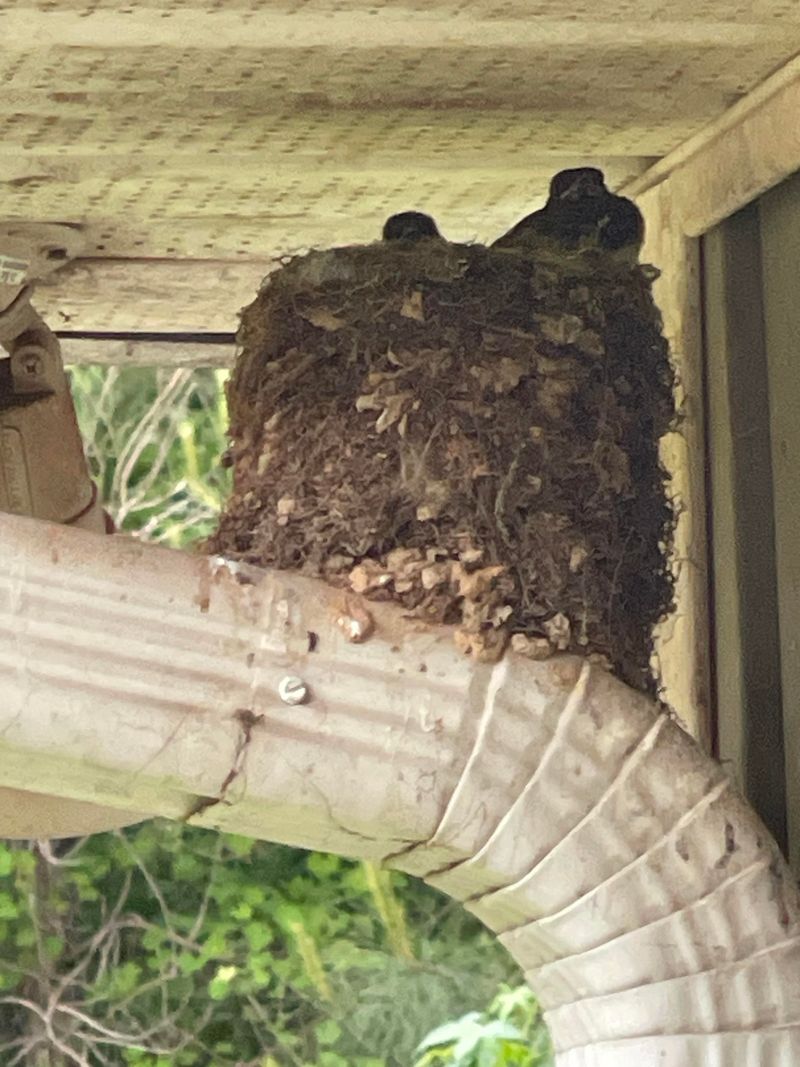
Birds are resourceful builders, and they have figured out that human structures offer some of the best nesting real estate around.
Gutters, dryer vents, bathroom exhaust vents, and even gaps under roof tiles are all popular choices.
The problem is that nests in these spots can cause real damage if left unaddressed.
A nest packed into a dryer vent, for example, blocks airflow and creates a fire risk over time. Gutters filled with nesting material hold standing water and can pull away from the roofline under the added weight.
These are not small concerns, especially in rainy seasons common to our region.
Starlings, house sparrows, and robins are among the most common birds to nest in and around homes here.
Robins often build neat mud-lined cups in sheltered spots, while starlings and sparrows tend to stuff vents and gaps with loose grass and feathers.
Before removing any nest, check whether it is active. An active nest with eggs or young birds inside may be protected under federal law.
The Migratory Bird Treaty Act covers most native bird species, meaning removal during nesting season can result in fines.
Once the nest is empty and the season has ended, clean out the area thoroughly and install vent covers or mesh guards to prevent future nesting. Doing this in late fall gives you plenty of time before birds start scouting locations again in early spring.
7. Squirrel Dreys Piled High In Tree Branches
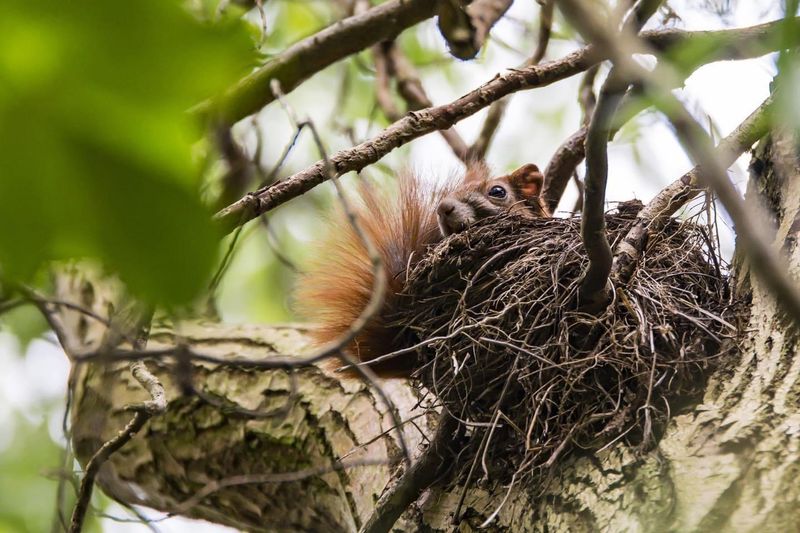
High up in the branches of a tall oak or maple, you might spot what looks like a messy ball of leaves and sticks. That is a squirrel drey, and it is far more structured than it appears from the ground.
Squirrels are skilled builders, and their dreys are designed to hold up through wind, rain, and cold temperatures.
A drey is built in layers. The outer shell is made from loosely woven twigs and leaves that shed water.
The inner chamber is lined with soft materials like moss, fur, shredded bark, and even bits of paper or fabric. The result is a surprisingly warm and dry shelter.
Squirrels in Oregon build and maintain multiple dreys throughout the year. They use them for sleeping, raising young, and sheltering during storms.
A single squirrel may have two or three dreys in nearby trees, switching between them regularly.
The concern for homeowners usually comes when squirrels move from trees into attics. A drey in a tree is harmless, but a squirrel that finds a gap in your roofline may build a nest inside your insulation instead.
That is when damage to wiring and structural materials becomes a real issue.
If you notice squirrel activity near your roofline, inspect for gaps or loose fascia boards. Trim back branches that hang over the roof to reduce easy access.
Addressing entry points early prevents a much bigger problem from developing inside your home.
8. Rabbit Nests Hidden Under Loose Grass
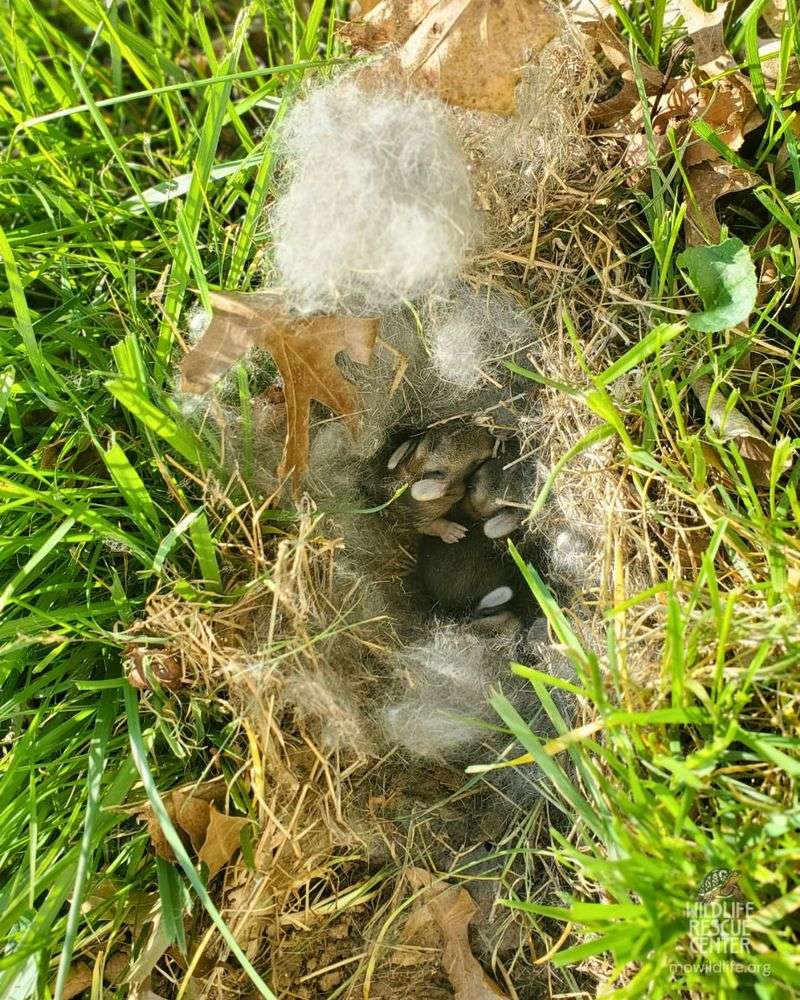
A rabbit nest is one of the easiest things to accidentally stumble across in a yard, and one of the most surprising.
You might be pulling weeds or raking leaves and suddenly uncover a small hollow in the ground lined with dry grass and soft fur.
Inside, there may be a group of tiny, pink, or lightly furred baby rabbits curled together.
Cottontail rabbits in Oregon nest in shallow depressions called forms. The mother digs a small bowl in the soil, lines it with dried plant material, and then pulls fur from her own belly to create a warm, insulating layer on top.
The whole nest is designed to blend into the surrounding lawn or garden bed.
Mother rabbits visit the nest only twice a day, usually at dawn and dusk, to avoid drawing attention from predators. So if you find a nest with no adult rabbit in sight, that does not mean the babies have been abandoned.
In most cases, mom is nearby and watching.
If you accidentally uncover the nest, gently replace the fur and grass covering and step away. Mark the area with small flags or sticks so others in your household know to avoid it.
The young rabbits will be ready to leave the nest in about three weeks.
Keep pets away from the area during this time. Dogs and cats are a serious threat to ground-nesting rabbits, and even brief contact can cause the babies significant harm.
9. Mouse Nests Packed Into Garages And Storage Boxes
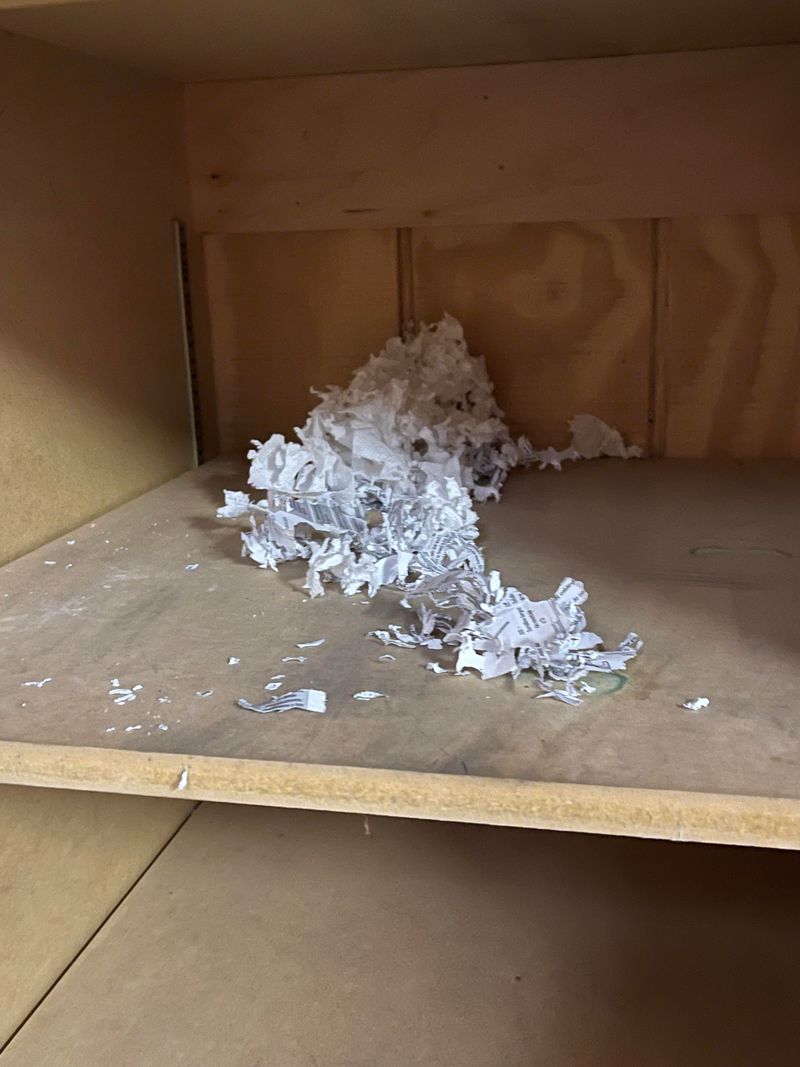
Mice are expert nesters, and they are not picky about location. A quiet corner of your garage, a stack of old cardboard boxes, a drawer full of holiday decorations, or a forgotten bag of dog food can all become the foundation of a cozy mouse nest.
By the time you find one, it is usually well established. A mouse nest is a tight, rounded ball of shredded material.
Mice use whatever soft items they can find, including paper, fabric, insulation, dried plant matter, and even pet fur.
The inside is smooth and compact, shaped by the mouse’s own body as it moves around inside.
Finding a nest is a clear sign that mice have been living in your space for a while. A single female mouse can have multiple litters in a year, so one nest can quickly become several.
Look for droppings, gnaw marks on boxes or wiring, and greasy rub marks along walls as additional signs of activity.
Cleaning up a mouse nest requires care. Rodent droppings and nesting material can carry harmful pathogens.
Wear gloves and a dust mask, and avoid sweeping or vacuuming dry droppings, which can send particles into the air. Dampen the area with a disinfectant spray before wiping it up.
After cleanup, seal any entry points you can find. Mice can squeeze through a gap the size of a dime.
Steel wool and caulk are effective for blocking small holes in walls, floors, and around pipes.
10. Spider Egg Sacs Mistaken For Tiny Nests
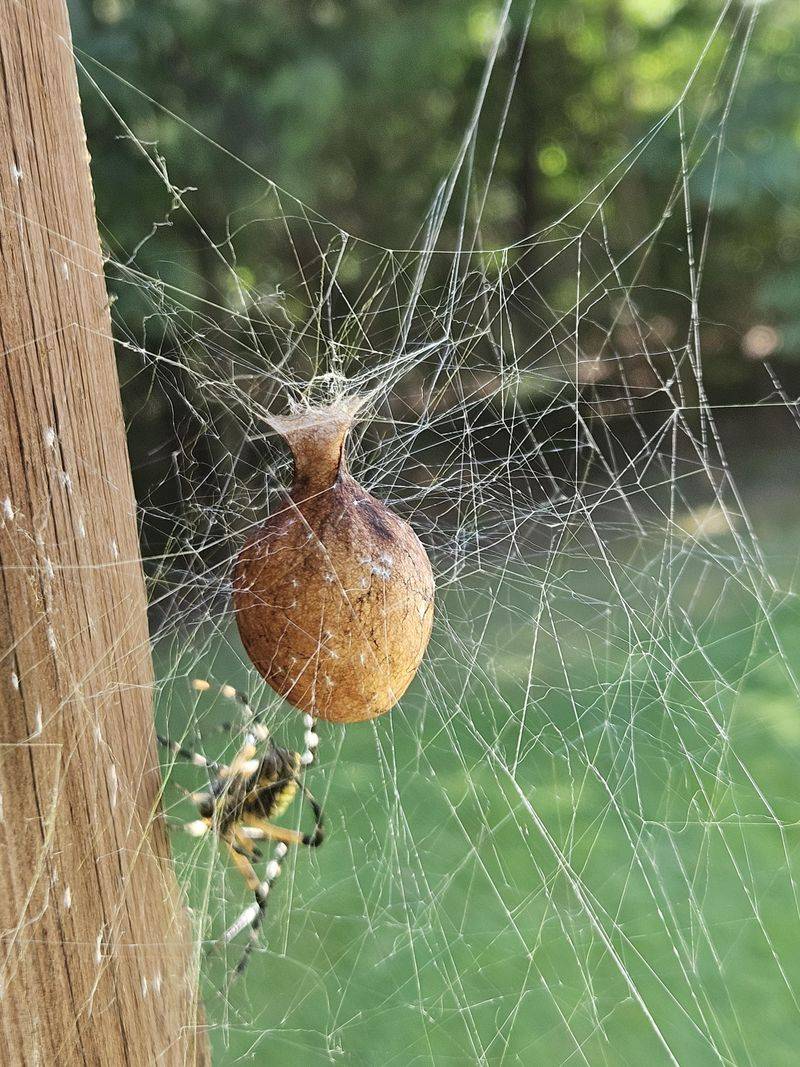
Not every small, silky bundle you find around your home is a nest in the traditional sense, but spider egg sacs are often mistaken for one.
They show up on fences, window frames, garden furniture, the undersides of leaves, and in the corners of sheds.
Some look like tiny white balls of cotton, while others are flat, papery discs wrapped in silk.
Each egg sac is produced by a female spider and contains dozens to hundreds of eggs, depending on the species. The silk casing protects the eggs from moisture, temperature changes, and predators.
Some species guard their egg sacs actively, carrying them around or staying nearby until the eggs hatch.
Common Oregon spiders that produce visible egg sacs include orb weavers, garden spiders, and house spiders. Most of these species are harmless to people and actually help control populations of flies, mosquitoes, and other insects around your home and garden.
If you find an egg sac and are unsure of the species, take a clear photo and compare it to local spider identification resources before touching it. A few species in our region, like the hobo spider, are worth identifying accurately before handling.
Leaving most egg sacs in place is actually beneficial for your garden. The spiderlings that hatch become natural pest controllers almost immediately.
If removal is necessary, use a stick or gloved hand to relocate the sac to a sheltered outdoor spot rather than destroying it outright.