10 Reasons Oregon Cucumber Vines Suddenly Stop Producing
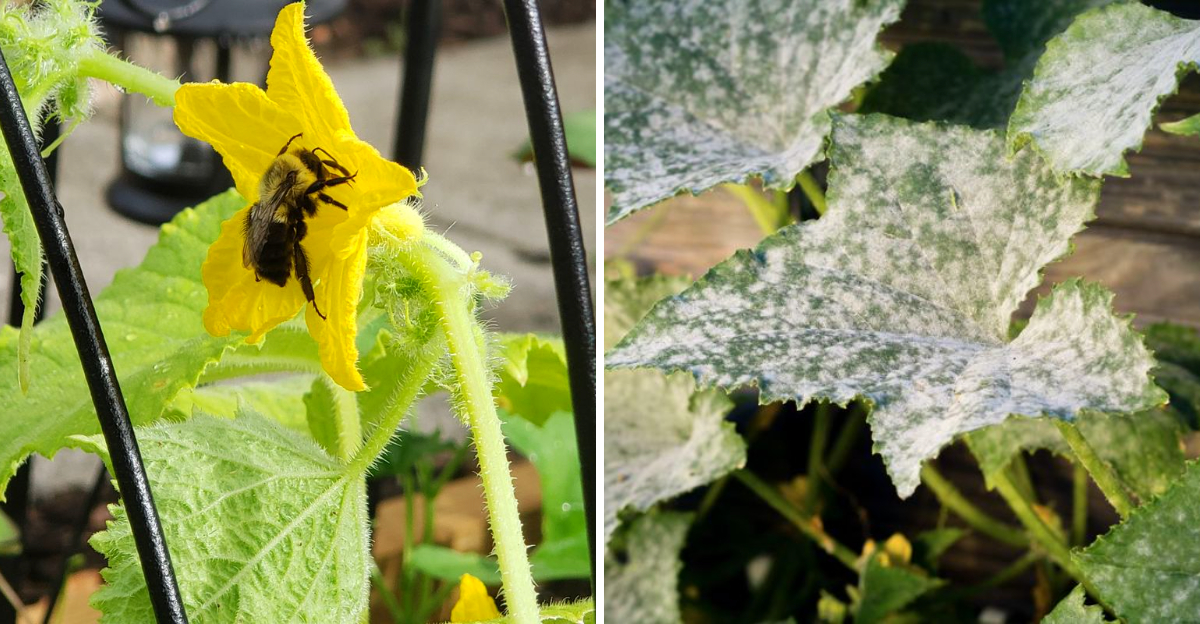
There is something genuinely baffling about a cucumber vine that looks absolutely thriving, deep green leaves, vigorous growth, plenty of flowers, and then produces almost nothing worth picking.
Oregon gardeners run into this more often than you might expect, and the frustrating part is that there is rarely one obvious culprit to point at.
Oregon summers throw a lot of variables at cucumber plants. Temperature swings, cloudy stretches that interrupt pollination, cool nights that slow fruit development, soil moisture that goes from fine to problematic faster than anyone noticed.
A production slowdown can come from several directions at once, which means a quick look at just one thing rarely gives you the full picture.
Checking the flowers, leaves, soil, and overall vine condition together is almost always a more useful starting point than guessing.
1. Poor Pollination During Cool, Rainy, Or Cloudy Weather
Oregon summers are not always the warm, sunny stretches that cucumbers prefer. Stretches of cool, rainy, or overcast weather can quietly disrupt the pollination process, leaving gardeners wondering why their vines have flowers but almost no fruit.
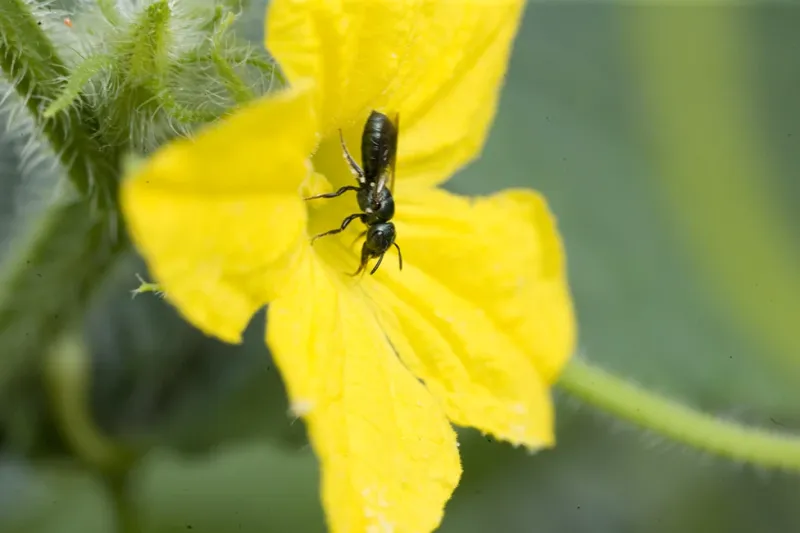
Most standard cucumber varieties produce separate male and female flowers on the same plant and depend on bees and other insects to carry pollen between them.
When temperatures drop or skies stay cloudy for several days, pollinator activity often slows down noticeably. Without enough insect visits, female flowers may fail to develop into fruit even when the vine appears perfectly healthy.
Some parthenocarpic varieties can set fruit without pollination, so this concern does not apply equally to every cucumber type.
Gardeners growing standard varieties during a cool, rainy Oregon stretch may notice small cucumbers forming behind female flowers but then stopping development or yellowing and dropping off.
Checking the forecast and noting when cloudy periods align with low fruit set can help identify whether weather and pollination are contributing factors.
Waiting for a warmer, sunnier spell may improve results without any other changes.
2. Reduced Bee Activity Around Female Flowers
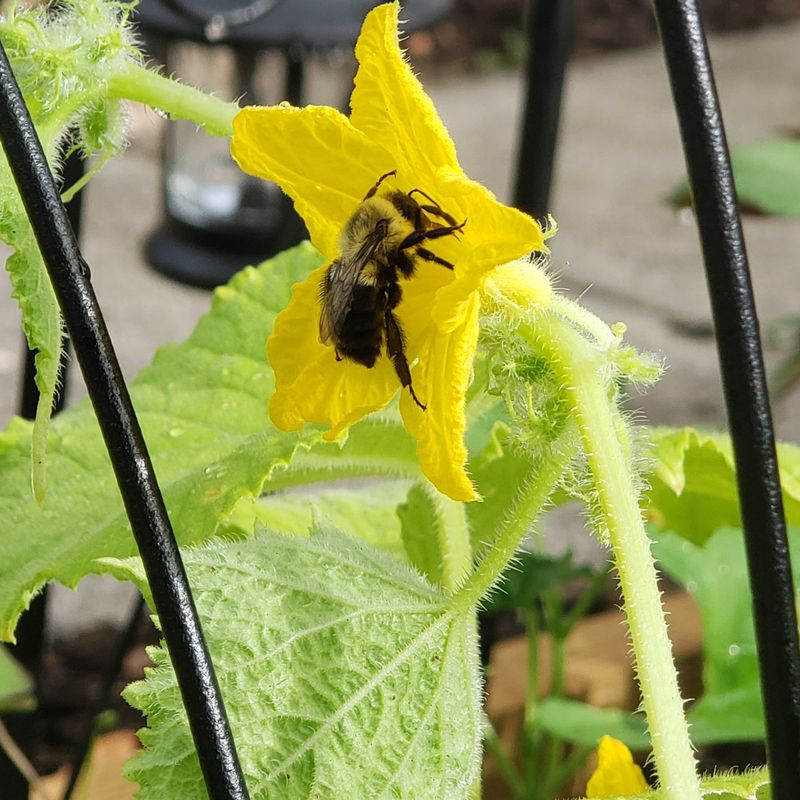
Spotting a tiny immature cucumber tucked behind a blossom is a reliable way to identify a female flower on your vine. That small fruit is the potential cucumber, but it needs a bee or another pollinator to bring pollen from a male flower before it can grow.
When bee activity around your Oregon garden is low, those small immature fruits may stay undeveloped, become misshapen, turn yellow, or shrivel without growing any further.
Reduced bee visits can happen for several reasons beyond just cool weather. Nearby pesticide applications, a lack of flowering plants that attract pollinators, or simply a low natural bee population in your area may all play a role.
Gardeners sometimes apply insecticides while cucumbers are flowering, which can affect visiting bees.
Identifying any pest problem carefully and following current extension guidance and product label directions before applying any pesticide is a reasonable step to protect pollinators.
Planting flowers that attract bees near your cucumber patch may encourage more pollinator visits over time.
Keep in mind that moisture stress, temperature swings, and overall plant health can also cause young cucumbers to stop developing, so poor bee activity may not be the only explanation when fruit fails to form.
Your Oregon Garden Changes Every Week. Your Plan Should Too.
Gardening in Oregon changes quickly throughout the season. Every Friday you’ll receive a simple weekly plan showing exactly what to plant, prune, fertilize, harvest, and protect so you never miss the right timing.
3. Leaving Overmature Cucumbers On The Vine
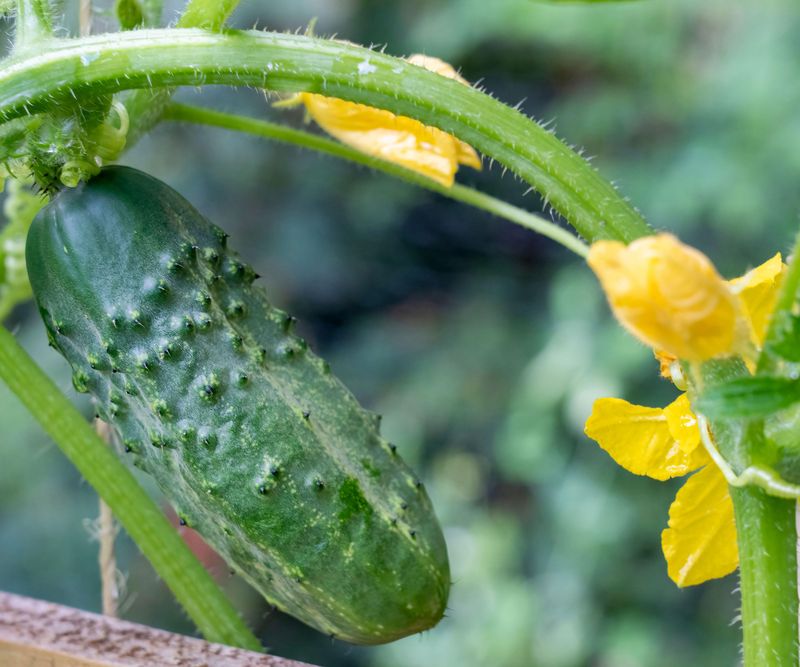
Tucked beneath a canopy of broad leaves, a cucumber can grow well past its ideal harvest size before a gardener even notices it. Once a cucumber becomes overmature, it turns yellow, swells, and sends a signal to the plant that seed production is complete.
At that point, the vine tends to slow down or stop forming new fruit because, from the plant’s perspective, its job is done.
Regular harvesting is one of the most straightforward ways to encourage a vine to keep producing. Checking plants frequently, especially every two to three days during peak season, helps gardeners catch cucumbers before they become overripe.
Pushing aside the leaves and looking beneath the foliage is important because hidden fruit is easy to miss during a quick glance.
Removing mature cucumbers promptly rather than leaving them attached gives the vine a reason to continue flowering and setting new fruit.
That said, harvesting alone may not restore production if another issue such as disease, poor pollination, or plant stress is also affecting the vine.
Checking for overmature fruit is a good first step, but it works best alongside a broader look at overall plant health and growing conditions in your Oregon garden.
4. Inconsistent Watering And Moisture Stress
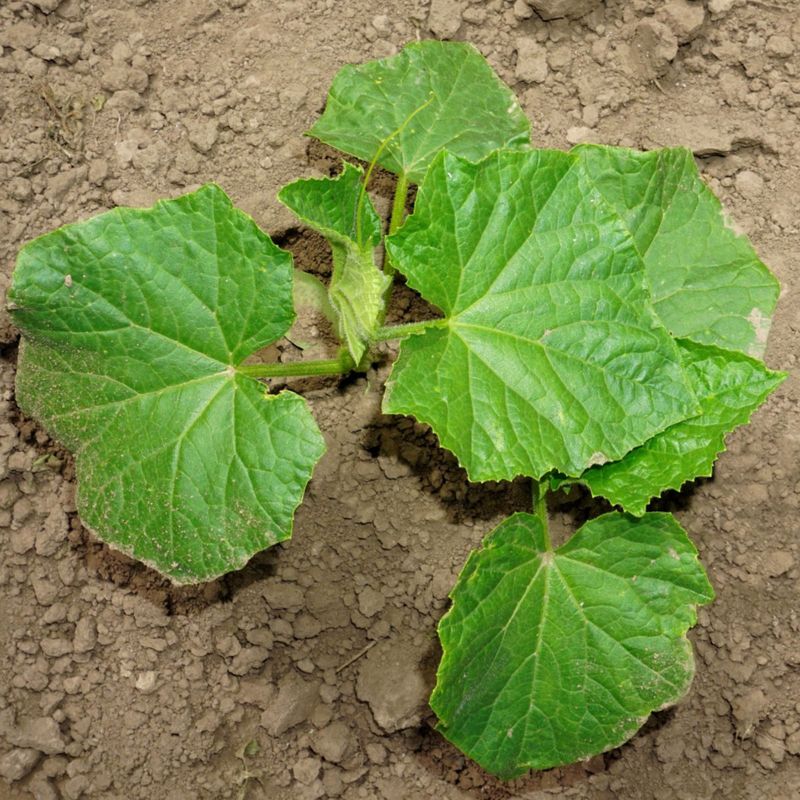
Cucumbers have a high water demand, and uneven soil moisture can quietly stress a vine even when the plant looks reasonably green.
In Oregon, summer heat combined with wind, low humidity, or a stretch of dry days can draw moisture out of the soil faster than gardeners expect.
Containers and raised beds tend to dry out more quickly than in-ground garden plots, making consistent monitoring especially important in those settings.
When soil moisture swings between too dry and too wet, cucumbers may drop flowers, produce misshapen fruit, or slow down fruit development.
Checking the soil moisture near the root zone before watering gives a more accurate picture than simply following a fixed schedule.
Pushing a finger several inches into the soil or using a simple moisture meter can help avoid both underwatering and overwatering.
Watering the root zone deeply and less frequently tends to encourage roots to grow deeper, which can help the plant handle brief dry periods more easily. Mulching around the base of the vine helps slow moisture loss from the soil surface.
Poorly drained soil that stays saturated for long periods can contribute to root problems, so good drainage matters just as much as regular moisture in Oregon gardens.
5. Excessive Fertility That Encourages Leaves Instead Of Fruit
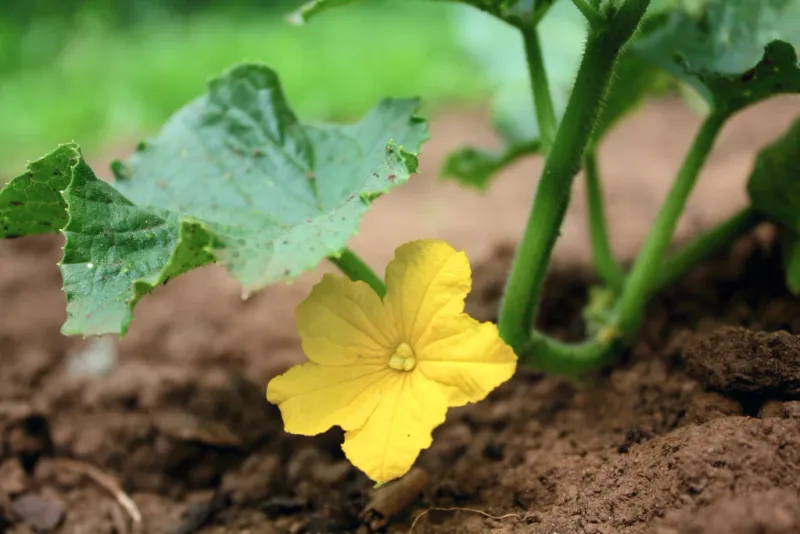
A cucumber vine that looks impressively leafy and vigorous but produces almost no fruit can be a sign that something is off with soil fertility.
When nitrogen levels in the soil are high, plants often put their energy into producing large, dark green leaves and fast vine growth rather than flowers and fruit.
The result is a vine that looks healthy from a distance but delivers little at harvest time.
Fertilizer needs vary depending on what is already present in the soil, so applying more nutrients without knowing your soil’s baseline can sometimes create imbalances.
A soil test is one of the most practical tools an Oregon gardener can use before adding any fertilizer.
Results from a soil test take the guesswork out of the process and help avoid over-application of nitrogen or other nutrients.
Vigorous foliage combined with limited flowering or fruiting is worth investigating, but large leaves alone do not confirm that excessive nitrogen is the problem. Weather, pollination issues, and plant age can also affect fruit development.
Reviewing recent fertilizer applications and comparing them to soil test recommendations is a reasonable starting point before making any changes to your fertilization routine in the garden.
6. Low Fertility That Limits Vine Growth And Flowering
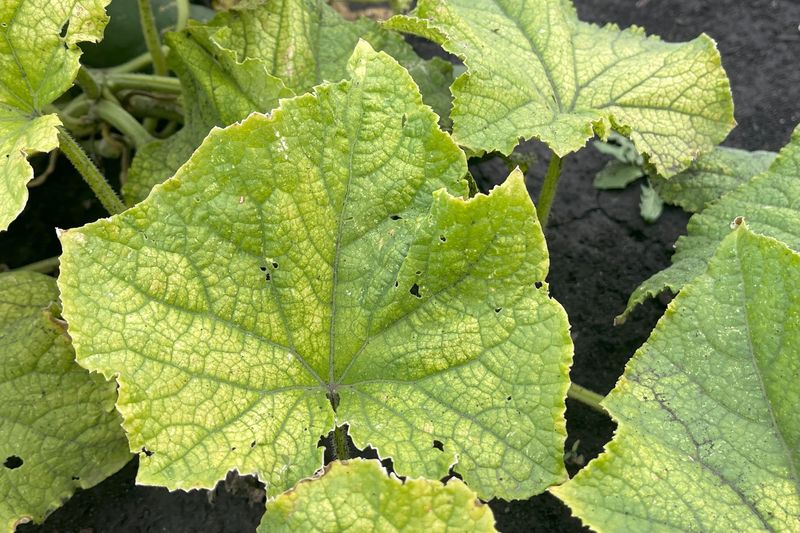
Not every fertility problem involves too much of a good thing. A vine struggling in nutrient-poor soil may produce pale leaves, slow growth, and very few flowers, which naturally leads to little or no fruit.
Sandy soils, heavily leached soils, or garden beds that have not been amended in several seasons can gradually become depleted of the nutrients cucumbers need to grow and flower well.
Pale or yellowish leaves combined with slow, weak vine growth may suggest that the plant is not getting enough of one or more nutrients.
However, yellowing leaves can result from several different causes including disease, waterlogging, root damage, or pest feeding, so a soil test is a more reliable way to confirm whether low fertility is actually the issue.
Applying fertilizer without that information may not help and could create a different imbalance.
When a soil test points to a specific deficiency, following the recommended application rates and timing for cucumbers is a sensible approach.
Oregon State University Extension and other regional resources offer soil testing guidance and fertilizer recommendations suited to Pacific Northwest growing conditions.
Addressing low fertility early in the season gives vines a better foundation for sustained flowering and fruit development throughout the summer.
7. Root Damage From Deep Cultivation Near The Vines
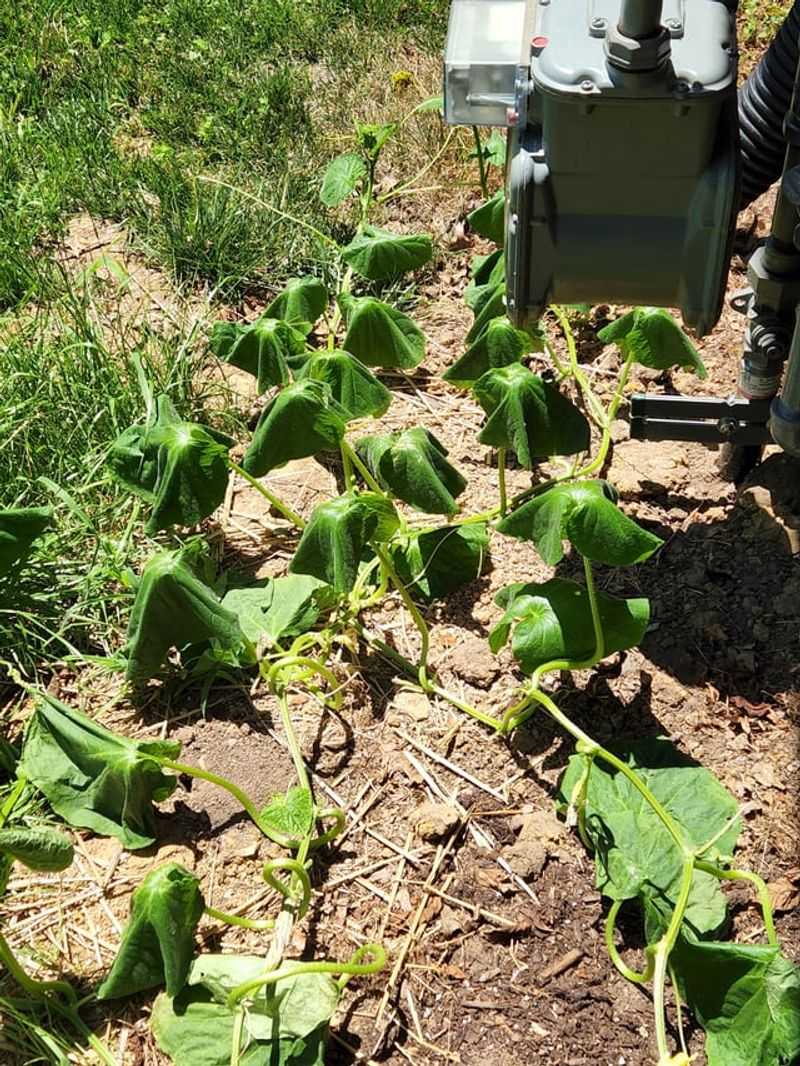
Cucumber roots spread widely and stay relatively close to the soil surface, which makes them more vulnerable to damage from cultivation tools than many gardeners realize.
Running a hoe or cultivator through the soil near the base of a vine to manage weeds can sever feeder roots without leaving any visible sign above ground.
A day or two later, the vine may appear stressed, wilted, or noticeably less productive, and the connection to the earlier cultivation is easy to miss.
Root damage can reduce the vine’s ability to take up water and nutrients, which affects flowering and fruit development.
In Oregon’s summer heat, a vine with a compromised root system may show wilting during the warmest part of the day even when the soil has adequate moisture.
Recovery depends on how extensive the damage is and how favorable growing conditions are afterward.
Keeping cultivation shallow and staying well away from the base of the vine can help protect the root system. Laying mulch between rows to suppress weeds reduces the need for frequent cultivation near the plants.
Pulling weeds by hand close to the vine base is often safer than using a tool in that area. Protecting the roots helps the vine maintain steady growth, consistent flowering, and better fruit production through the Oregon growing season.
8. Powdery Mildew Reducing Leaf Health And Yield
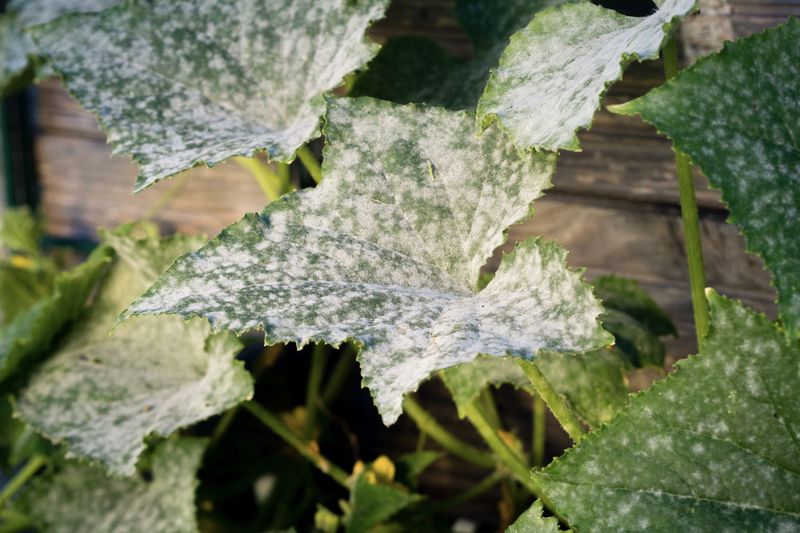
A pale or white powdery coating on cucumber leaves and stems is a familiar sight in many Oregon gardens by midsummer.
Powdery mildew is a fungal disease that spreads through airborne spores and tends to develop when days are warm, nights are cool, and air circulation around the plants is limited.
It does not require wet leaves to establish, which sets it apart from some other garden fungal problems.
When the infection becomes severe, it can cover large portions of leaf surface, reduce photosynthesis, and gradually weaken the vine’s ability to support fruit development. Yield may decline as the season progresses and more leaf area becomes affected.
Not every white mark or pale spot on a cucumber leaf is powdery mildew, so looking closely at the pattern and texture of the growth can help with identification before taking action.
Improving air movement by spacing plants adequately and avoiding unnecessary crowding can help reduce conditions that favor the disease. Selecting resistant cucumber varieties when available is a practical long-term approach.
Removing heavily affected leaves when appropriate may slow the spread.
For gardeners considering a labeled product, following Pacific Northwest extension guidance and product label directions is the recommended approach rather than applying untested home remedies.
9. Root Or Stem Diseases Causing Wilting And Vine Decline
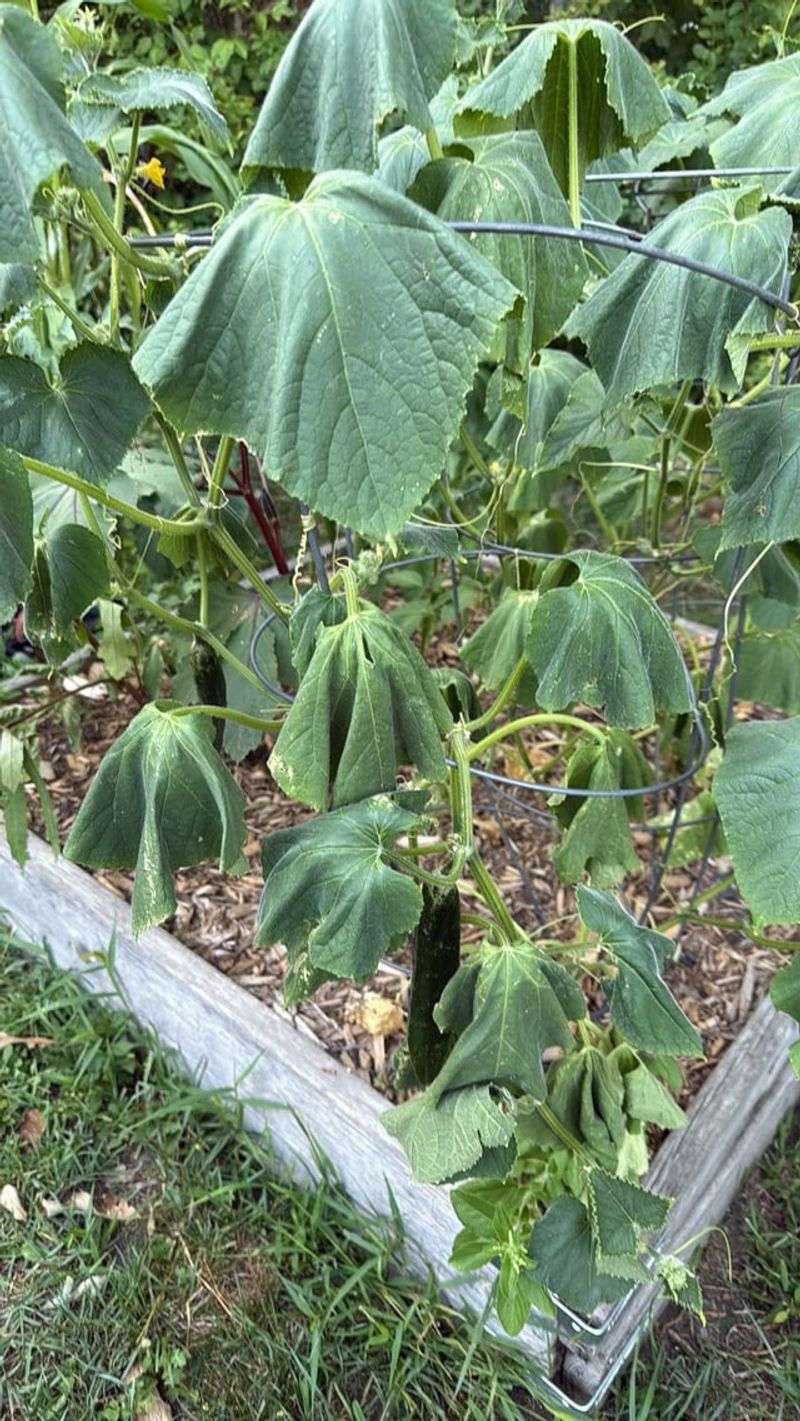
When a cucumber vine begins to wilt even though the soil has plenty of moisture, something below the surface or at the stem base may be affecting the plant’s ability to move water through its tissues.
Several different root and stem diseases can produce symptoms that look similar from a distance, including yellowing, wilting, darkened stem tissue near the soil line, or a gradual collapse of part or all of the vine.
Pythium root rot, Phytophthora crown rot, and Fusarium wilt are among the diseases that can affect cucumbers in Oregon, particularly in poorly drained soils or during periods of excessive moisture.
Because these diseases share overlapping symptoms, visual inspection alone may not be enough to identify the exact cause.
Examining the stem base, checking root color and texture, and observing the drainage pattern of the affected area can all provide useful clues.
Reaching out to a local OSU Extension office or a plant diagnostic clinic for help with identification is a reasonable step before attempting any treatment.
Rotating cucumbers to a different garden area in future seasons, improving soil drainage, and avoiding overwatering are practical measures that can reduce conditions favorable to several of these diseases in Oregon home gardens.
10. Cucumber Beetle Damage Or Bacterial Wilt
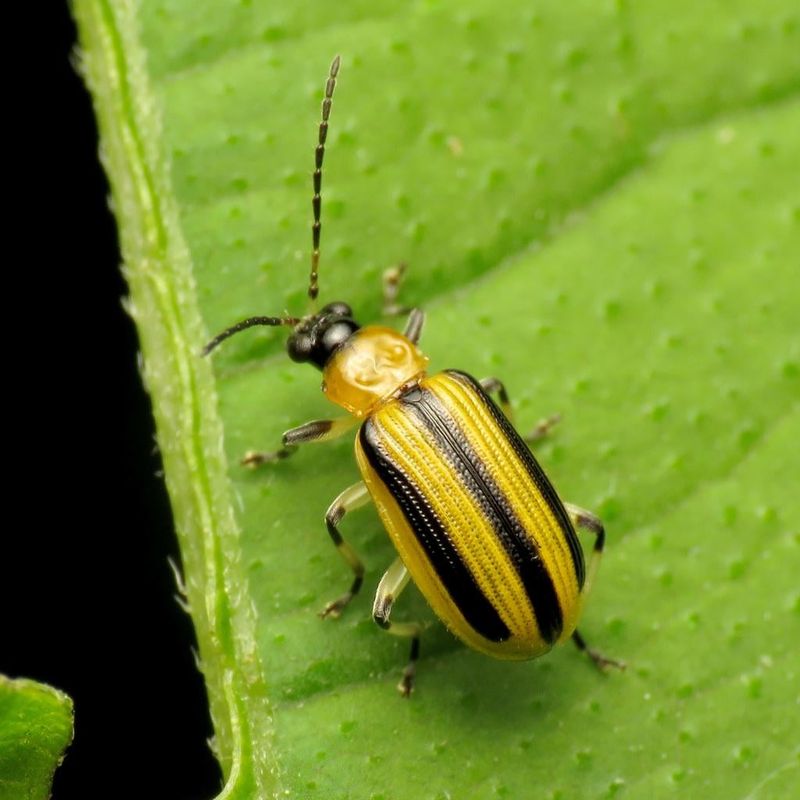
Striped cucumber beetles are small, yellow-and-black striped insects that feed on cucumber leaves, flowers, and other plant tissues. Their feeding can weaken vines, reduce leaf area, and interfere with flowering during the season.
Beyond the direct feeding damage, striped cucumber beetles are also capable of transmitting the bacterium associated with bacterial wilt, a disease that can cause rapid vine collapse under certain conditions.
Bacterial wilt does occur in Oregon, though it is not a common problem across every part of the state. Affected vines may wilt suddenly and fail to recover even when soil moisture is adequate.
A simple field test sometimes used by diagnosticians involves cutting a wilted stem and touching the cut ends together briefly before pulling them apart slowly, looking for thin, thread-like strands of bacterial ooze.
However, similar wilting symptoms can result from root damage, heat stress, or other diseases, so correct identification matters before drawing conclusions.
Managing cucumber beetles through early monitoring, row covers during early plant establishment, and following current Pacific Northwest extension recommendations can help reduce feeding pressure.
Identifying the pest accurately and consulting extension resources or product label directions before applying any pesticide is the most reliable approach for Oregon home gardeners dealing with cucumber beetle activity.