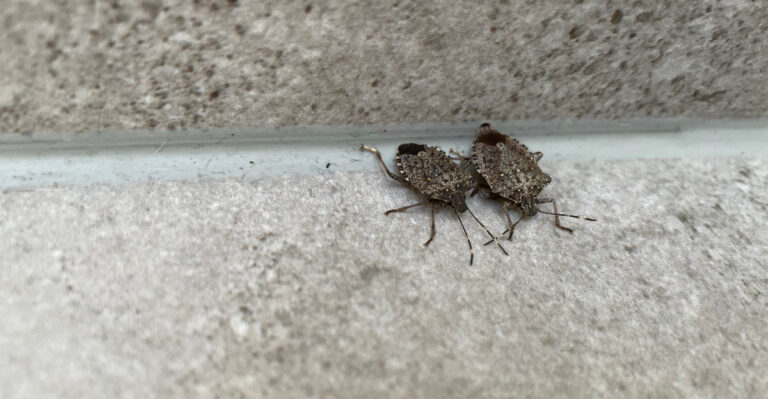
What It Really Means When Spotted Lanternflies Show Up In Your North Carolina Yard
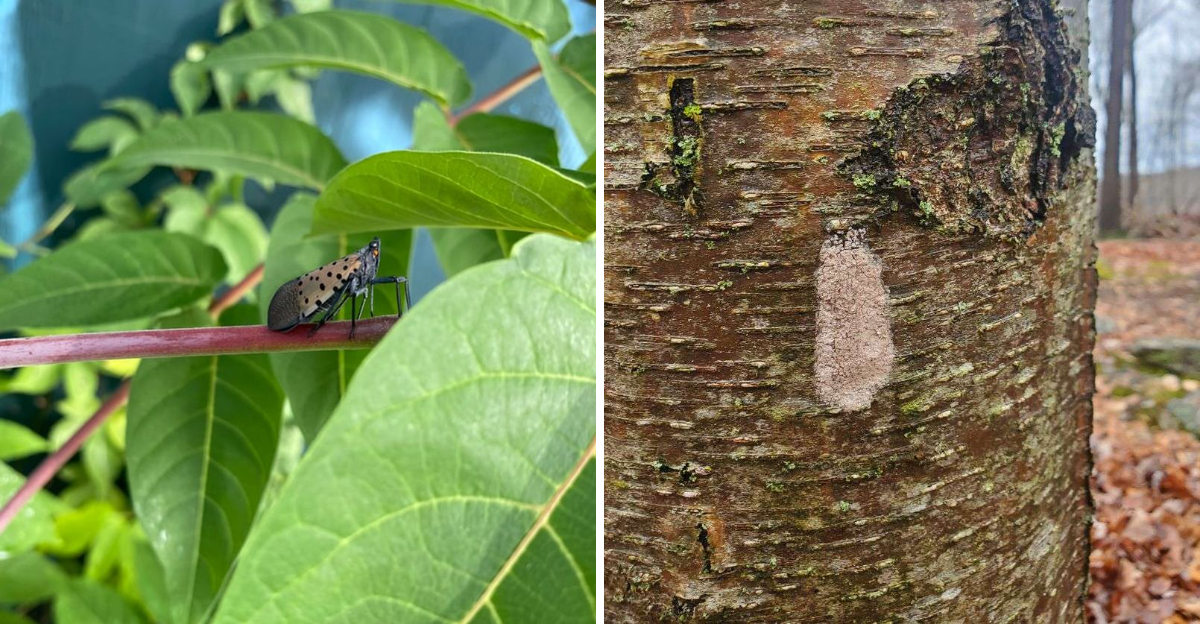
A spotted lanternfly sighting has a way of turning an ordinary yard moment into a full inspection.
One insect on a fence does not mean your trees are ruined. It also does not mean you should shrug and walk away.
In North Carolina, this invasive planthopper is still important enough that new sightings can help officials track movement and slow spread.
NCDA&CS currently lists established areas in Guilford, Forsyth, and Davidson counties, while reports from other counties help monitor new activity.
That makes your phone almost as useful as your shovel.
The right response is calm and specific: confirm the insect, photograph it, check key host plants, inspect hard surfaces for egg masses, and report new locations through official channels.
So what does it really mean when one lands in your yard?
It means the hunt starts carefully, not frantically. Look closely, document everything, and resist the urge to spray before you know what you are dealing with.
1. Confirm The Insect Before Taking Action
A flash of red on a tree trunk can make any North Carolina gardener tense up.
Before you grab a spray, stomp the insect, or call a pest-control company, confirm the identification. Several insects can fool a fast glance, and acting on the wrong target can harm harmless or helpful species that were never causing trouble.
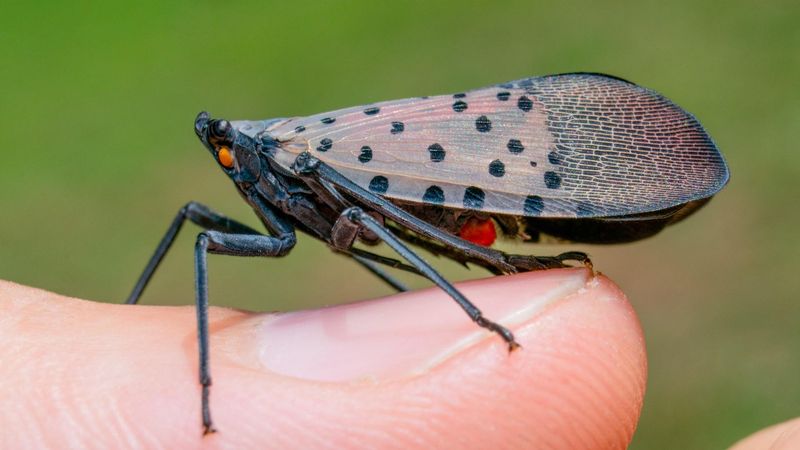
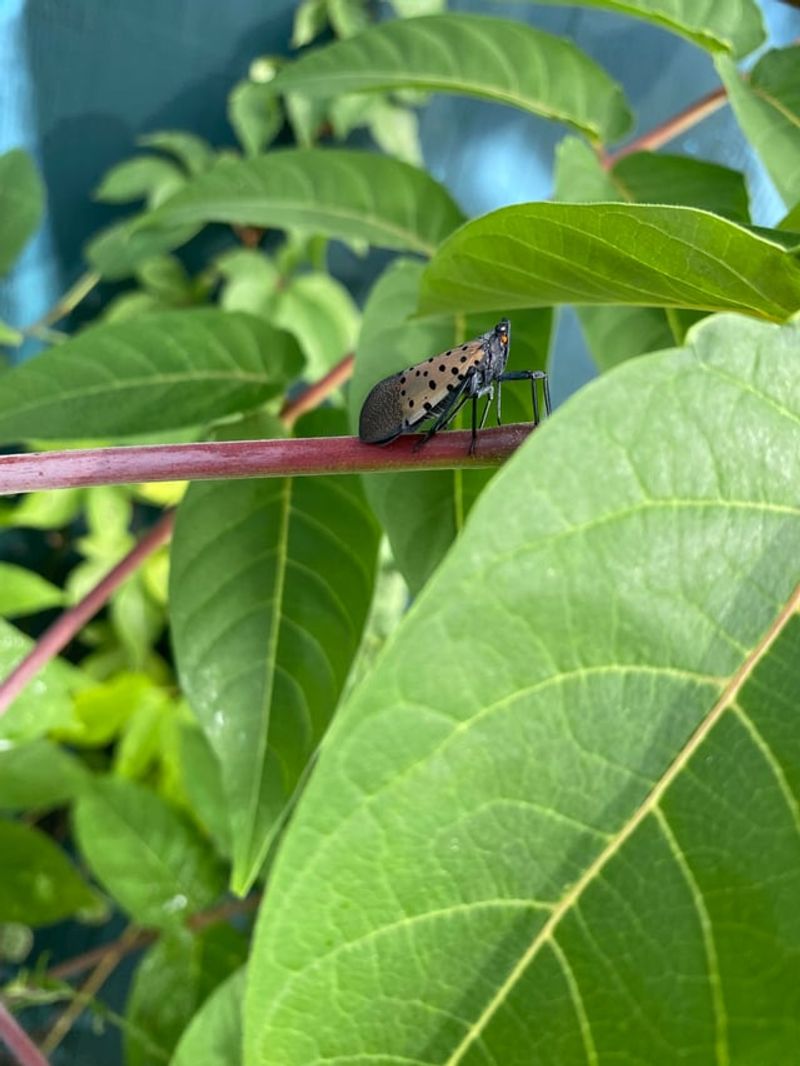
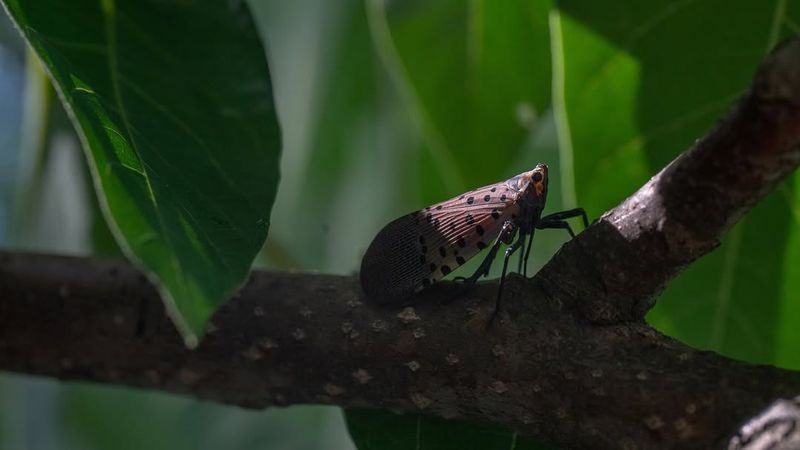
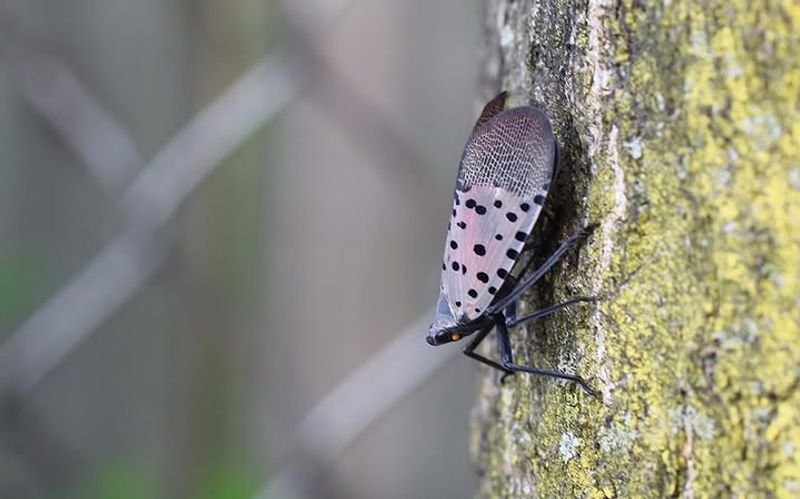
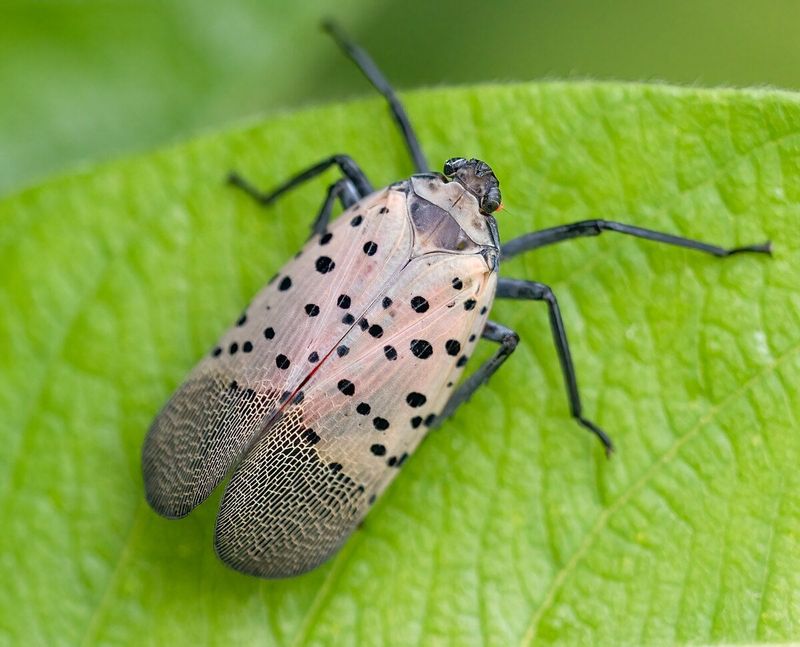
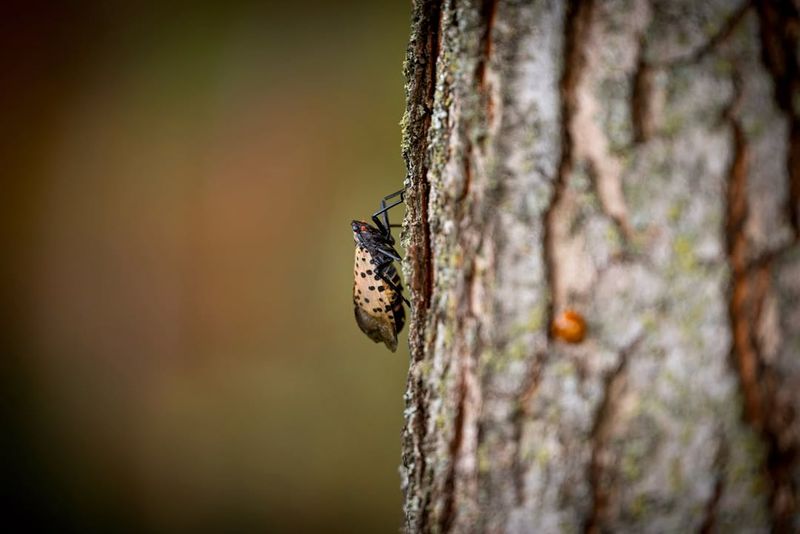
Adult spotted lanternflies are about one inch long. At rest, their gray forewings show black spots and darker, brick-like markings near the tips.
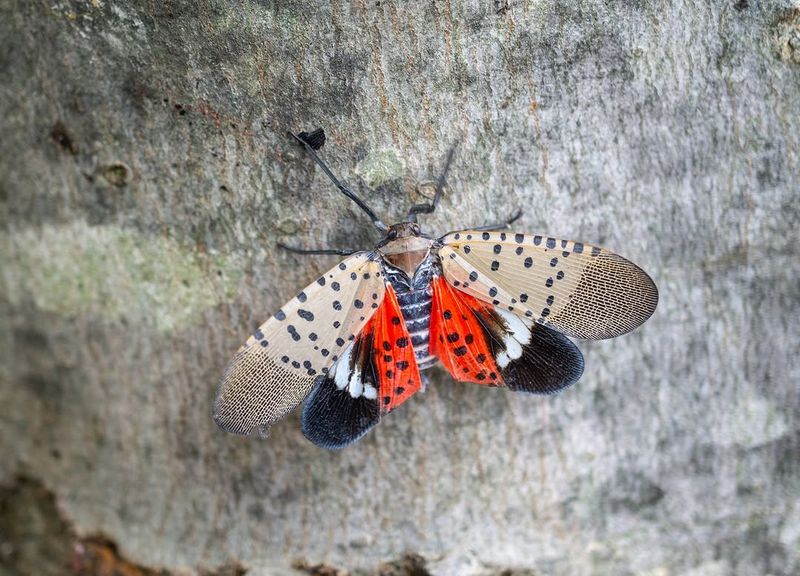
When the wings open, the red hindwings appear with black spots and pale bands. The body can show yellow and black striping.
The younger stages look completely different. Early nymphs are small, black, and dotted with white. Later nymphs add bright red patches before they become adults.
NC State notes that adults in North Carolina are expected from late summer through November, while egg masses are usually visible from mid-October into spring.
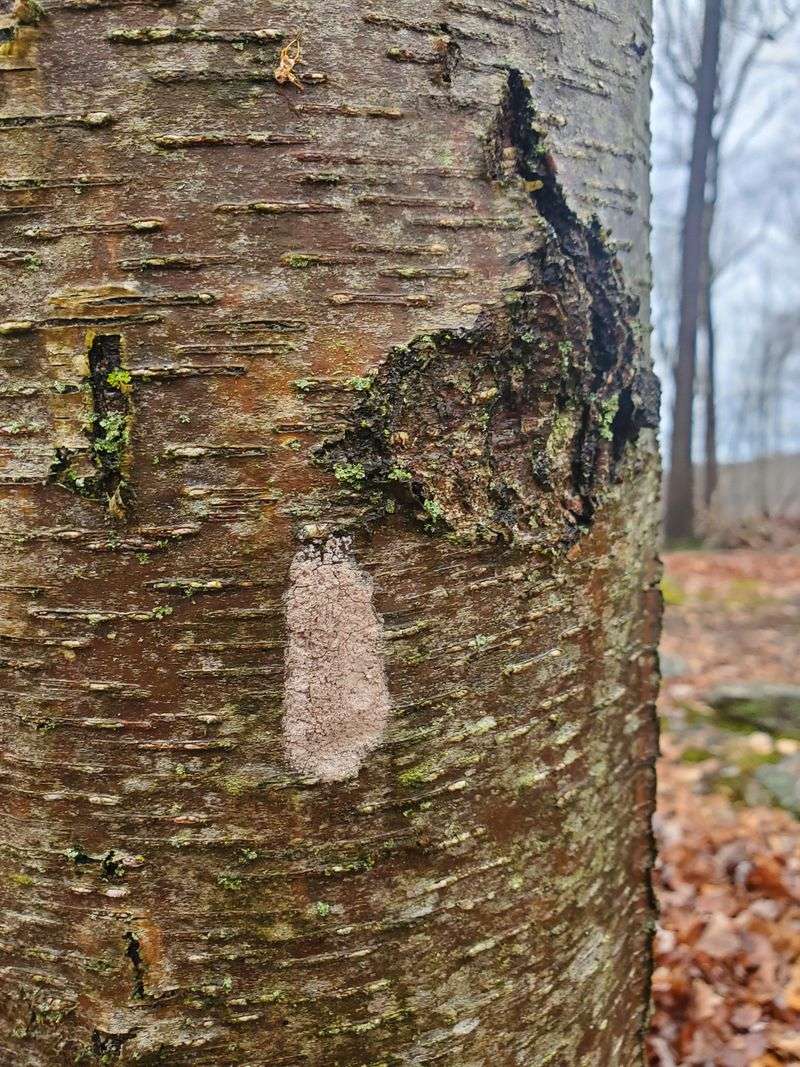
Egg masses are easy to miss because they look like a smear of dried mud or old putty on bark, stone, metal, plastic, or outdoor furniture. Fresh ones may look smoother and gray. Older ones can crack and dull as they weather.
Take clear photos before disturbing anything. Get the whole insect, the wing pattern, the surface it is on, and a size reference if possible.
A confirmed ID gives every next step value. A guessed ID only creates noise.
2. Treat Adults As A Local Warning
One adult spotted lanternfly does not prove your yard is crawling with them.
It does mean you should pay attention. Adults can move on their own, and they also hitchhike on vehicles, outdoor gear, nursery stock, firewood, furniture, and other items people move without thinking.
That mix of flight and human-assisted travel is one reason this pest spreads so efficiently.
NC State describes spotted lanternfly as an invasive plant-sucking insect that was first found in North Carolina in 2022 and can feed on more than 100 plant species, with major concern around grapevines and landscape plants.
Treat the first confirmed adult like a warning flag.
Your North Carolina Garden Changes Every Week. Your Plan Should Too.
Gardening in North Carolina changes quickly throughout the season. Every Friday you’ll receive a simple weekly plan showing exactly what to plant, prune, fertilize, harvest, and protect so you never miss the right timing.
Walk the yard slowly. Check fences, tree trunks, grapevines, patio furniture, stacked firewood, storage bins, vehicles, and any smooth outdoor surface where adults might rest or lay eggs later in the season.
Look especially near the edges of the property. Roadsides, wooded borders, vacant lots, and disturbed areas may hide tree-of-heaven or other hosts where lanternflies can gather before drifting into a home landscape.
Write down the date, time, plant or surface, and the number of insects found. If you find more than one, photograph the grouping.
Do not panic over a single insect, but do not ignore it either. A quick inspection now is much easier than finding egg masses months later.
Think of the adult as a messenger. It is telling you to look closer, report correctly, and avoid moving anything that might carry the pest farther.
3. Check Nearby Tree-Of-Heaven
Tree-of-heaven is the plant you want to learn before lanternflies make you learn it the hard way.
This invasive tree, Ailanthus altissima, is one of spotted lanternfly’s preferred hosts.
NCDA&CS notes that late nymphs and adults show a strong preference for tree-of-heaven, and NC State calls it a strong preferred host even though the insect can feed on many plants.
The tree often grows along roadsides, alleys, fence lines, vacant lots, woodland edges, and disturbed soil. That means it may not be in your garden bed at all. It might be just beyond the fence, behind a shed, or across the street.
Look for huge compound leaves that can reach several feet long, with many leaflets arranged along a central stem.
Each leaflet often has small glandular notches near the base. Crush a leaflet, and the smell is usually unpleasant, often compared to rancid peanut butter.
Do not confuse it with native look-alikes. Black walnut, sumac, and elderberry can appear similar at first glance. The leaflet notches and odor help separate tree-of-heaven from those plants.
If you find it, do not simply cut it down and celebrate. Cutting without a plan can trigger vigorous root suckering, leaving you with many more stems than you started with.
Contact Extension or use current guidance before managing large trees. Control usually takes timing and herbicide strategy, especially for established female trees that have already seeded around the area.
For lanternfly monitoring, tree-of-heaven is your first inspection stop. If the pest is nearby, this is often where the crowd gathers.
4. Inspect Grapes And Woody Hosts
Grapevines deserve immediate attention after a confirmed sighting.
Spotted lanternflies feed by piercing plant tissue and drawing sap. Grapes are among the hosts of greatest concern because sustained feeding can weaken vines, reduce fruit quality, and create serious management problems for vineyards and backyard growers alike.
NC State lists grapes among important hosts and highlights viticulture as a major concern for this pest.
Start with the trunk and main stems. Adults often gather on woody tissue, especially later in the season. Check smooth bark, vine forks, trellis posts, and shaded parts of the plant where clusters may sit out of direct sun.
Do not stop with grapes. Inspect fruit trees and hardwoods too. Apples, peaches, plums, cherries, maples, walnuts, willows, dogwoods, oaks, sycamores, black gum, and other woody plants can serve as feeding hosts.
Look for the insect itself, but also look for evidence. Sticky honeydew below feeding spots, black sooty mold, oozing sap, wasp activity, and clusters of insects along trunks all point toward sustained feeding rather than one wandering adult.
Young nymphs may be harder to spot because they move around and do not always gather in the same obvious way adults do. Later adults can become much more visible.
If you grow grapes, check several times a week during late summer and fall. The earlier you catch activity, the easier it is to document and respond.
A grapevine loaded with fruit is already doing a lot of work. Do not let hidden sap feeders add stress unnoticed.
5. Watch For Honeydew And Sooty Mold
Sometimes the sticky mess shows up before the insect does.
Spotted lanternflies produce large amounts of honeydew as they feed. That sugary liquid can coat leaves, trunks, decks, patio furniture, cars, railings, and anything sitting below an active feeding group.
NCDA&CS notes that honeydew buildup can attract stinging insects such as wasps and ants and can lead to black sooty mold on plants, homes, and businesses.
That means a sticky table or sudden wasp traffic near a tree is worth investigating.
Honeydew itself is not the whole damage story. It is a clue. It tells you sap-feeding insects have been working overhead, and spotted lanternfly may be one possible culprit in areas where the pest is present.
Sooty mold follows the honeydew. It looks like a black coating on leaves or surfaces. The mold does not usually invade plant tissue directly, but heavy coverage can block light and reduce photosynthesis.
That adds stress to plants already losing sap.
Check above the sticky area. Look up the trunk, along branches, under vine stems, and on nearby host plants. Lanternflies often feed in groups, so the source may be concentrated in one area rather than evenly spread across the yard.
Honeydew also attracts other insects. Yellow jackets, ants, bees, flies, and hornets may cluster around the sugar. Do not mistake those visitors for the original problem.
Document sticky surfaces and visible insects together. Photos of honeydew, sooty mold, and feeding groups help officials or Extension staff understand the scale of the activity.
The mess is annoying, but it is also useful evidence.
6. Search Hard Surfaces For Egg Masses
Spotted lanternfly eggs are sneaky because they are not picky about surfaces.
They can appear on tree bark, but they can also show up on patio furniture, stone walls, trailers, firewood, grills, vehicles, metal railings, plastic bins, outdoor toys, and almost anything firm that sits outside long enough.
NC State warns that egg masses on manmade objects can allow the pest to move long distances when those objects are transported.
This is the part homeowners can genuinely help with.
In fall and early spring, inspect anything that has been stored outdoors. Look before moving firewood, furniture, camping gear, trailers, landscaping supplies, or garden equipment out of the yard.
Egg masses are usually about an inch long and may look like gray-brown mud, old caulk, or dried putty.
Each mass can contain dozens of eggs, and NCDA&CS describes egg masses as roughly one inch in size with about 35 eggs. NC State gives a broader range of 30 to 50 eggs per mass.
Scraping must be thorough. If instructed to remove a mass, scrape it into a bag or container rather than flicking it onto the ground. Follow current state guidance for disposal and reporting, especially outside known established areas.
Take photos first. Include the object, the egg mass, and a close-up with a size reference.
Do not move suspicious materials to another county before checking them. Good intentions can spread the pest faster than the insect could travel on its own.
Egg masses do not run, jump, or hide. That makes them one of the best stages for homeowners to catch.
7. Report New Locations To Officials
A good report can be more valuable than a frantic reaction.
State officials use public sightings to track where spotted lanternfly is moving, especially outside established infestation areas.
NCDA&CS currently says reports from counties outside the established area help track spread in North Carolina, while residents in parts of established areas such as western Guilford County and eastern Forsyth County do not need to report routine home sightings.
That distinction matters because reporting instructions can change.
Before submitting, check the current NCDA&CS spotted lanternfly page. Do not rely on an old social media post, a screenshot from last year, or a neighbor’s memory of the rules.
A useful report includes clear photos, exact location, date, number of insects or egg masses, and the plant or surface where you found them.
NCDA&CS asks people to include a photo, location, date, and contact information when reporting suspected spotted lanternfly.
Add a size reference when possible. A coin, pen, finger, or ruler in the photo can help with confirmation.
If the insect got away, photograph the place where you saw it. That may still help officials decide if the report needs follow-up.
Do not carry a live insect to an office, garden center, or friend’s house for identification unless officials specifically ask you to do so. Moving a specimen can accidentally move the problem.
For homeowners in known established areas, local Extension offices can help with property-level management plans.
Your report is not busywork. It is part of the tracking system that helps North Carolina respond while the pest is still expanding.
8. Avoid Broad Sprays Without A Plan
The biggest spray in the garage is rarely the smartest first move. Spotted lanternflies are frustrating, visible, and invasive, so the urge to spray immediately makes sense.
But broad insecticide use can harm bees, predatory insects, parasitoid wasps, butterflies, and other beneficial species working in the same landscape.
It may also fail to solve the real problem. Adults are mobile, and new insects can move in from nearby properties, roadsides, or wooded edges after a treatment.
A single spray does not address egg masses on hard surfaces, unmanaged tree-of-heaven, or regional spread.
Start with integrated pest management. Confirm the insect. Monitor the property. Check tree-of-heaven. Inspect grapes and woody hosts. Search hard surfaces for egg masses. Report new locations. Then decide if treatment belongs in the plan.
NC State recommends that homeowners in quarantined areas can use tools such as scraping egg masses, sticky bands or traps, removal of preferred host plants, and registered insecticides when appropriate.
Sticky bands and traps need care. Sticky material can catch birds, lizards, small mammals, and beneficial insects if used poorly. Use guards or safer trap designs recommended by Extension guidance.
If a pesticide is needed, choose one labeled for the pest and the plant. Follow the label exactly. Avoid treating open blooms where pollinators are active, and never assume a stronger rate means better control.
Contact your county Extension office before buying products, especially if the pest is new in your area.
A plan protects more than one tree. It protects the garden, the beneficial insects, and the wider effort to slow spotted lanternfly in North Carolina.