How to Get a Newly Sodded North Carolina Lawn Through Its First Freeze
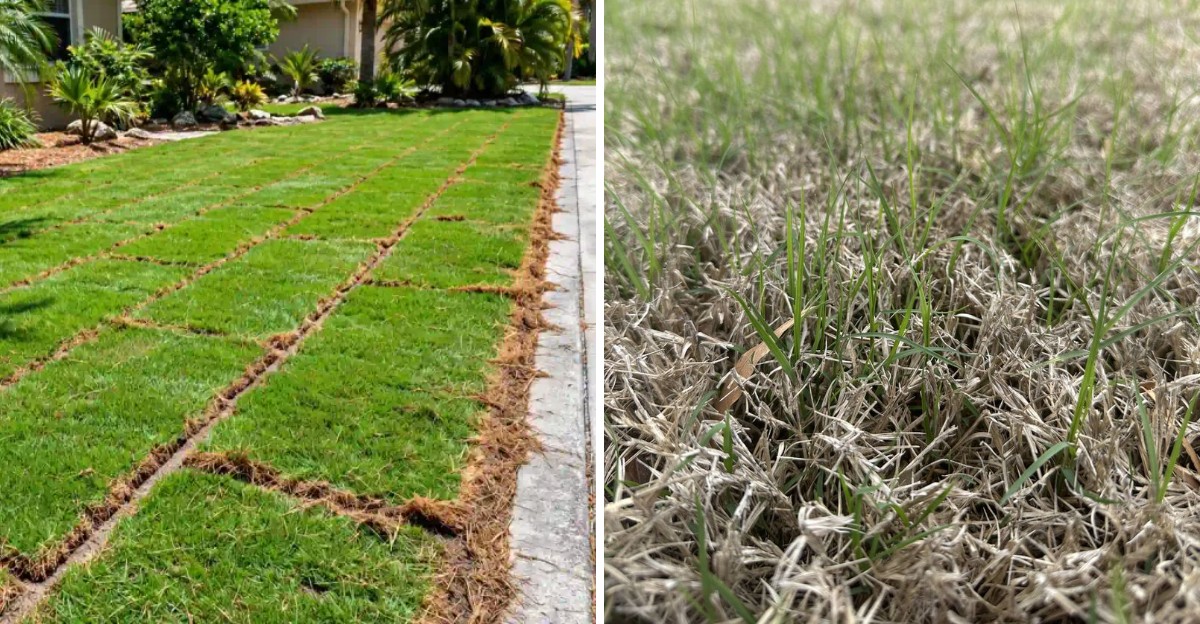
Grass blades can wear frost on a night when the thermometer by your door reads 36 degrees. Cold air sinks and settles close to the ground on clear, calm nights, so your lawn often feels the chill first.
That matters a lot more when the grass arrived on a pallet just a few weeks ago. Those fresh rolls have short, shallow roots that are still learning to grip the soil underneath.
I know how nerve-wracking it can be to watch a brand-new yard go crunchy and silver at sunrise. You paid for every square foot, and you hauled most of it yourself.
In North Carolina, that first freeze can show up anytime from early October in the high mountains to mid-November near the coast. The real question is whether your young turf is ready for it, and what small moves this week could make the biggest difference.
1. The Shallow Roots Under Your New Sod Are What Need Protecting

Frosty blades look scary, but they are usually the least of your worries. The grass leaves can take a cosmetic hit and bounce back. The real action happens an inch or two down, where brand-new roots are trying to knit into your yard.
Fresh sod arrives with most of its roots sliced off at the farm. Until new ones push into the soil below, the whole mat sits on top like a rug. That thin layer dries out quickly and swings in temperature much faster than established turf.
Warm-season grasses such as Bermuda, zoysia, and centipede slow their root growth as soil cools toward the mid-50s.
Once they go dormant, rooting mostly pauses until spring. Tall fescue, the cool-season favorite in the Piedmont and mountains, keeps building roots through cool weather, which gives fall-laid fescue a head start.
So the goal for a first freeze is simple. Keep the crowns and roots moist, firm against the soil, and free from extra stress.
Cold, drying winds over thirsty sod cause far more winter injury than one silvery morning, so the steps ahead focus on that hidden layer.
2. A Deep Watering Before the Cold Front Helps Sod Hold Its Heat
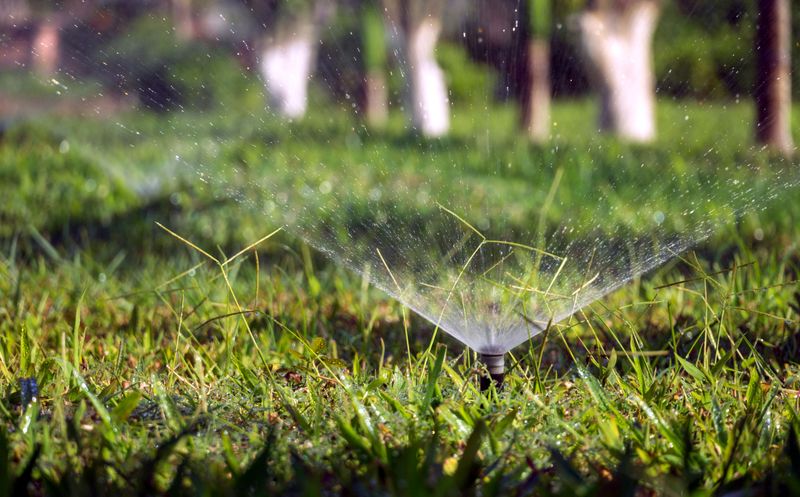
Moist soil acts like a little heat battery. Water stores and releases warmth more slowly than air pockets in dry dirt, so a damp root zone stays steadier when temperatures crash overnight. Winter drought is a quiet troublemaker for sod that has not rooted yet.
Check the forecast and water a day or two before a hard freeze is expected. Aim for the morning or early afternoon so the surface has time to dry before dark. Puddles that sit into the evening can turn into icy patches right on top of your new grass.
For a quick check, lift a corner of a sod piece and press a finger into the soil beneath it. You want it to feel like a wrung-out sponge, not soupy and not dusty. Newly laid rolls need much less water once nights turn cold, so cut back from the daily summer routine.
Skip irrigation while the ground is frozen solid, since roots cannot take it up and the extra water just sits there.
Winterize sprinkler lines before deep cold arrives, too. During a dry, windy stretch in December or January, a mild afternoon is a fine time to give dormant sod a light drink.
3. Frosty Grass Blades Snap Under Your Boots, So Stay Off
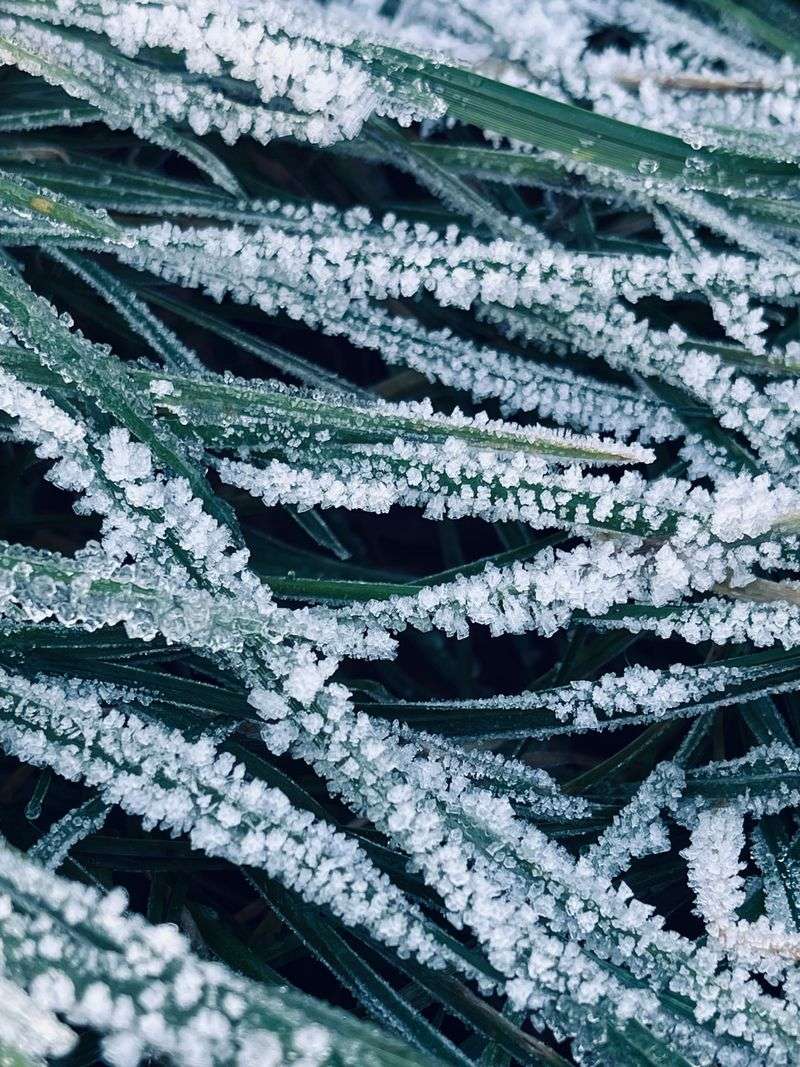
Walk across a frozen lawn at dawn and you might notice footprints that linger for days. Those dark tracks are crushed grass. Ice crystals inside and on the leaves make them stiff, and the pressure of a shoe can rupture the cells.
Established turf usually shrugs this off. Fresh sod has less to spare, and heavy steps on soft, wet soil can also shift pieces, open seams, and squash the soil that new roots are trying to explore. Frosty footprints can show up as tan or brown trails later in the week.
Wait until the frost melts and the blades feel soft before crossing the yard. On most sunny mornings that happens by mid to late morning. Shaded spots on the north side of the house can stay crunchy much longer.
Plan ahead for the busy season. Route holiday guests along a driveway or path, and set out stepping stones or a temporary plank walkway if the mail or trash route cuts across new turf. Kids and dogs love a frosty yard, so a little fun redirection goes a long way.
Hold off on parking, ladder work, or stacking firewood on the sod, too. The weight can leave lasting ruts in soil that has not settled yet.
4. Brown Bermuda and Zoysia Sod After a Freeze Is Usually Just Sleeping
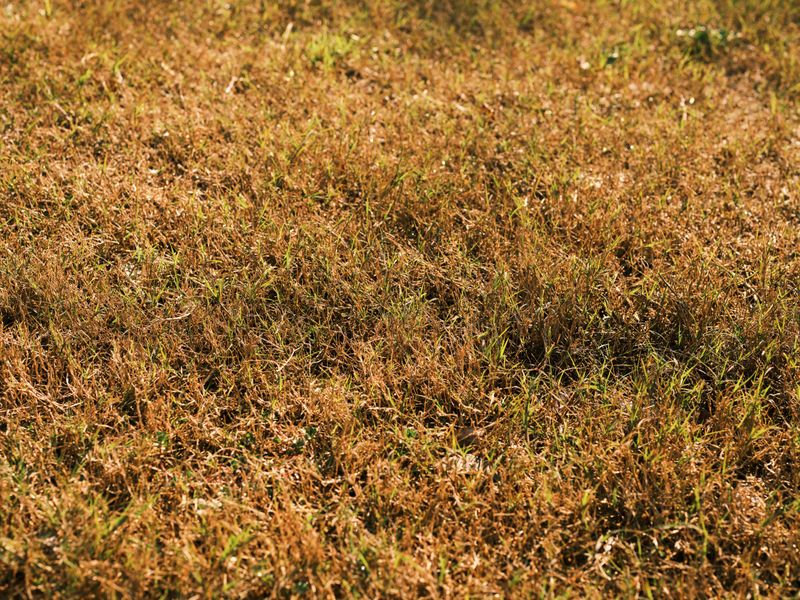
Plenty of new lawn owners panic the first time their green carpet turns the color of straw. Relax for a moment. Warm-season grasses are built to go dormant after the first hard freeze, and that tan color is their winter outfit.
Bermuda, zoysia, centipede, and St. Augustine all brown out across much of North Carolina by late fall. The leaves stop growing, but the crowns, stolons, and rhizomes stay alive below. Green-up returns in spring as soil warms.
Tall fescue plays by different rules. This cool-season grass usually stays green through winter, though a sharp cold snap can tip the blades a purplish or tan shade. New fescue growth often follows within a few weeks of milder weather.
Worry shows up in patterns, not color. Look for sod pieces that shrink and pull apart at the seams, patches that feel loose when you tug, or low spots where water pools and freezes. Those suggest drying or drainage issues rather than normal dormancy.
St. Augustine and centipede carry the least cold tolerance of the group. In colder pockets of the Piedmont, they deserve extra care through their first winter, especially on exposed slopes.
Rolls laid in October have the slimmest root systems heading into cold weather.
5. Hold the Nitrogen on Warm-Season Sod Until Spring Green-Up
Fertilizer feels like a kind gesture before winter. For warm-season sod, it can backfire. NC State Extension advises against nitrogen on Bermuda, zoysia, centipede, and St. Augustine in late fall, because it pushes soft new growth just as cold weather arrives.
That tender growth is more prone to cold injury and to diseases like large patch, which shows up as brown rings in zoysia and St. Augustine during cool, wet spells. Save the nitrogen for after the lawn fully greens up in spring.
Potassium is a different story. Many turf pros believe it supports winter hardiness, but the smart move is a soil test first.
North Carolina residents can submit samples to the NCDA&CS lab, which offers free testing for much of the year and charges a small fee during the busy winter season.
Tall fescue flips the script. Fall is its main feeding window, with the Extension calendar calling for applications from September into November. Follow your sod farm’s guidance and the soil test rather than a generic bag schedule.
One more habit worth keeping is sweeping stray fertilizer pellets off driveways, where rain can wash them into storm drains.
6. Set Your Mower High and Skip the Pre-Winter Scalp
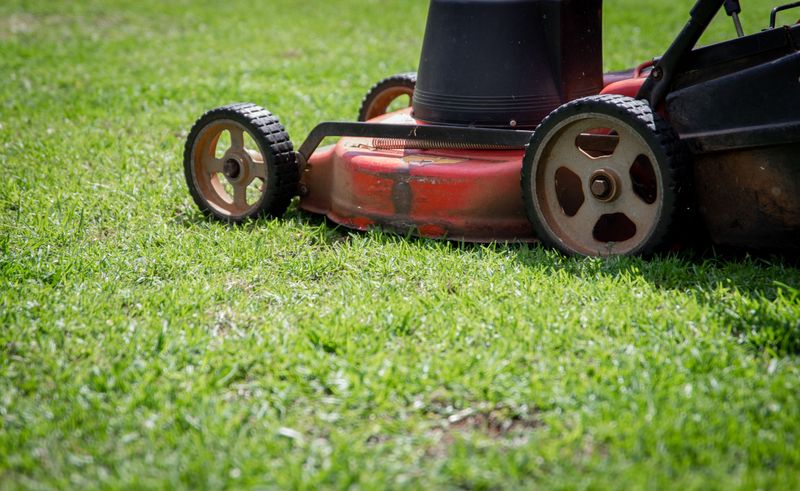
A buzz cut sounds tidy before winter, yet it strips away the insulation your new grass needs. Leaf blades shade the crowns and trap a little warmth near the soil. Cutting them short leaves the growing points exposed to cold, drying air.
Hold off on the first mow until sod roots resist a gentle tug, often two to three weeks after installation in warm weather. Rooting takes longer as temperatures fall, so be patient. Mowing loose sod can drag pieces out of place.
When you do mow, follow the one-third rule and keep each cut light. Tall fescue looks and performs best around 3 to 3.5 inches. Bermuda and zoysia sit lower, but avoid dropping them below their normal range right before dormancy.
Once warm-season grass browns out, the mower can mostly rest. A dormant lawn barely grows, and repeated passes over brittle blades only add wear. Use a mulching blade or a leaf blower to clear fallen leaves instead.
Mow only when the turf is dry, and keep the blade sharp. Ragged tears give fungi easy entry points during long, damp winter weeks. Heavy mats of oak leaves can smother new sod and hold too much moisture against it.
7. Seams and Edges of New Sod Need a Little Extra Attention
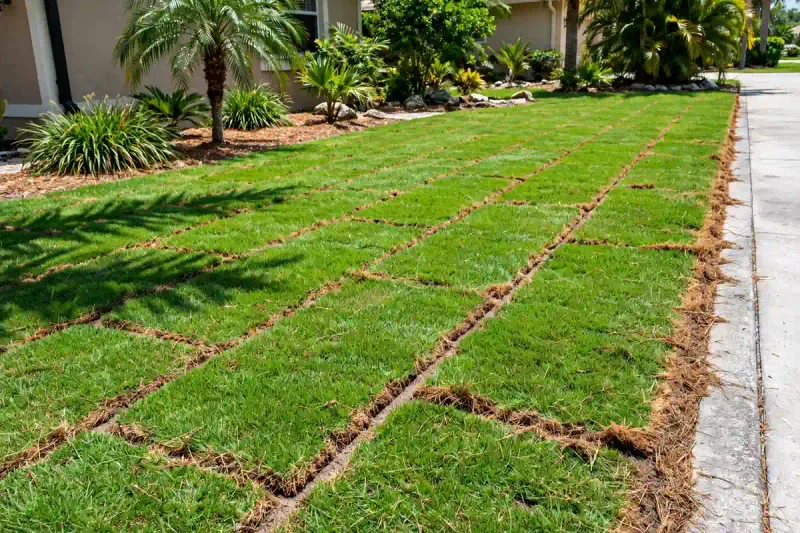
Walk the yard with a cup of coffee and look closely at the joints between sod pieces. Gaps that open up in cold weather are a sign the turf is drying and shrinking.
Edges along driveways and sidewalks dry fastest because pavement soaks up and radiates heat.
Fill any gaps with sandy topsoil or native soil from your yard, then water it in lightly. This keeps edges from curling and stops cold air from slipping underneath. Press lifted corners back down by hand or with a light roller so roots touch soil.
Low spots deserve a look after rain. Standing water that freezes over turf can smother and injure grass, and soggy soil invites root rot. Note where puddles form so you can regrade or add drainage in spring.
Slopes and windy, sunny exposures are another trouble zone, especially on Piedmont red clay that sheds water fast.
A breathable frost cloth or burlap pinned over small, exposed areas during a severe cold snap can cut wind drying. Remove it once temperatures rise so the grass gets light. Small fixes now spare you from patching bare strips in April.
8. Your Tug Test in Spring Shows Whether the New Lawn Made It
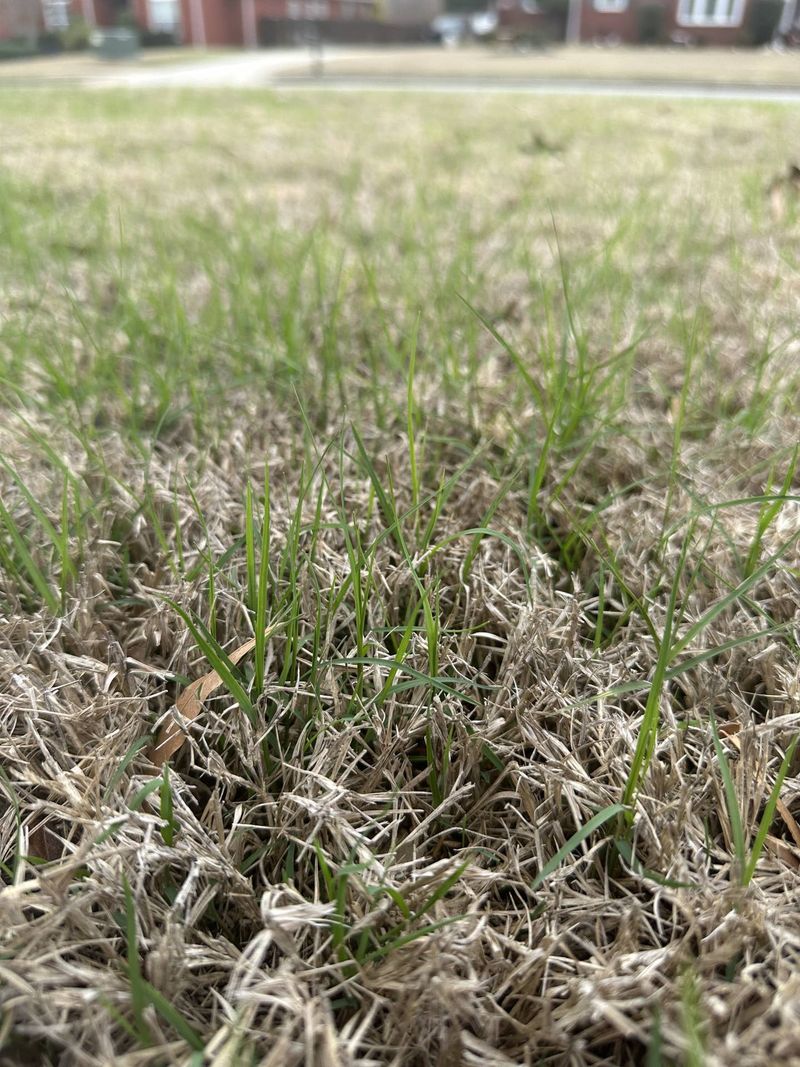
Spring brings the report card. Once soil warms, grab a corner of the turf and give it a gentle pull. Firm resistance means roots have anchored, while easy lifting means that section needs more time and steady moisture.
Bermuda and zoysia typically green up in April or May across much of North Carolina, with the mountains running later than the coast. Wait until the lawn is mostly green before the first nitrogen feeding. Soil temperatures near 65 degrees are a solid cue.
Patchy spots that stay brown well after neighboring lawns green up may need a closer look. Scratch the area to check for white, healthy roots or firm crowns. Thin areas can be plugged or patched with fresh sod pieces from a local farm.
Keep notes on what happened this winter. Which corner flooded, where frost lingered, and which edge dried out will help you plan next fall.
The biggest lesson for most homeowners is timing. Warm-season sod settles in best when laid from late spring through summer, giving it months to root before cold arrives.
Fescue does best when installed in early fall. Fall-laid warm-season sod can still pull through, and a little extra care during that first freeze gives it a fair shot.